There are 2 current discussions about this work.
On This Page
Description
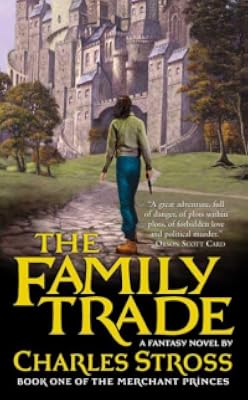
A bold new fantasy, The Merchant Princes is a sweeping series from the hottest new writer in science fiction!Miriam Beckstein is happy in her life. She's a successful reporter for a hi-tech magazine in Boston, making good money doing what she loves. When her researcher brings her iron-clad evidence of a money-laundering scheme, Miriam thinks she's found the story of the year. But when she takes it to her editor, she's fired on the spot and gets a death threat from the criminals she has show more uncovered.
Before the day is over, she's received a locket left by the mother she never knew—the mother who was murdered when she was an infant. Within is a knotwork pattern, which has a hypnotic effect on her. Before she knows it, she's transported herself to a parallel Earth, a world where knights on horseback chase their prey with automatic weapons, and where world-skipping assassins lurk just on the other side of reality—a world where her true family runs things.
The six families of the Clan rule the kingdom of Gruinmarkt from behind the scenes, a mixture of nobility and criminal conspirators whose power to walk between the worlds makes them rich in both. Braids of family loyalty and intermarriage provide a fragile guarantee of peace, but a recently-ended civil war has left the families shaken and suspicious.
Taken in by her mother's people, she becomes the star of the story of the century—as Cinderella without a fairy godmother. As her mother's heir, Miriam is hailed as the prodigal countess Helge Thorold-Hjorth, and feted and feasted. Caught up in schemes and plots centuries in the making, Miriam is surrounded by unlikely allies, forbidden loves, lethal contraband, and, most dangerous of all, her family. Her unexpected return will supersede the claims of other clan members to her mother's fortune and power, and whoever killed her mother will be happy to see her dead, too.
Behind all this lie deeper secrets still, which threaten everyone and everything she has ever known. Patterns of deception and interlocking lies, as intricate as the knotwork between the universes. But Miriam is no one's pawn, and is determined to conquer her new home on her own terms.
Blending creativity and humor, and the rigor and scope of a science-fiction writer on the grandest scale, Charles Stross has set a new standard for fantasy epics.
. show less
Tags
Recommendations
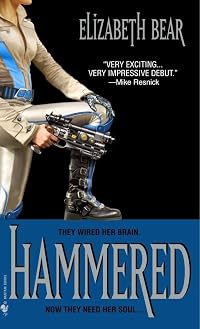
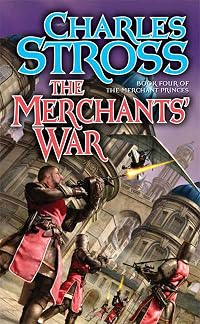
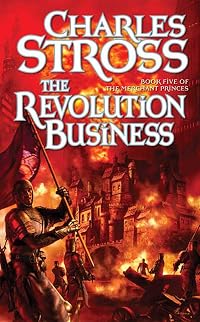
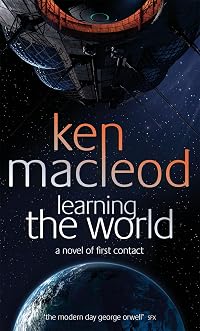
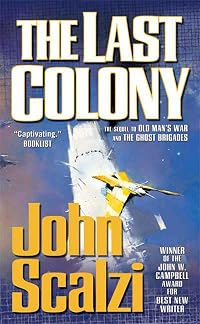
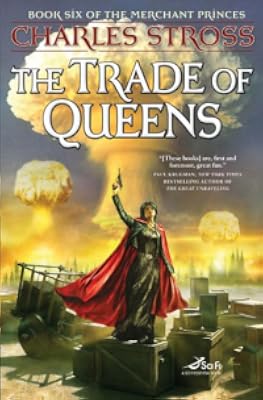
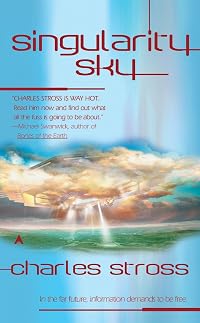
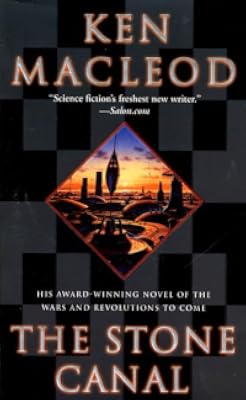
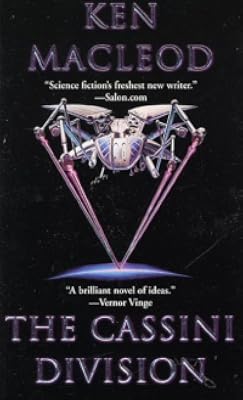
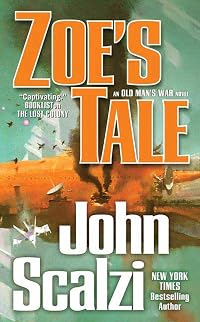
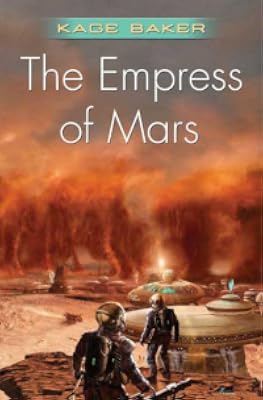
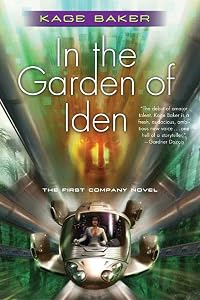
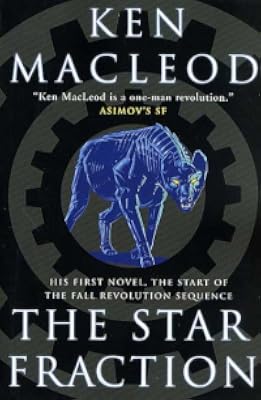
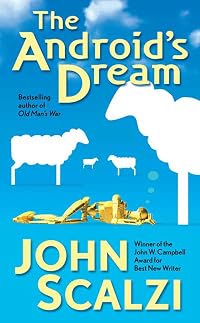
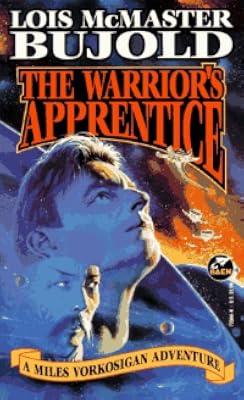

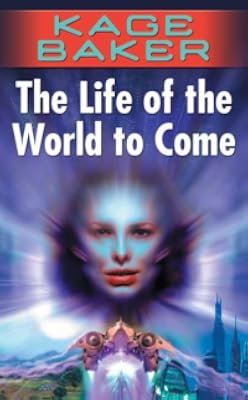
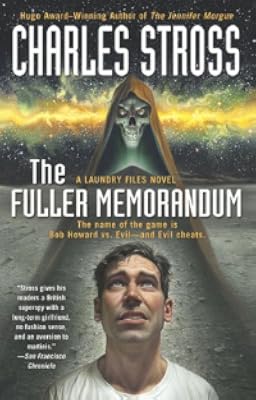

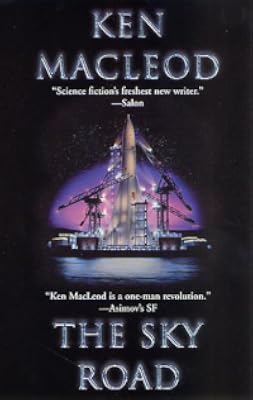
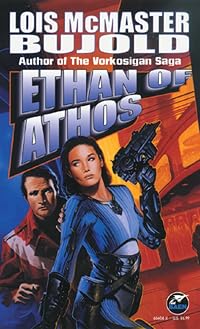
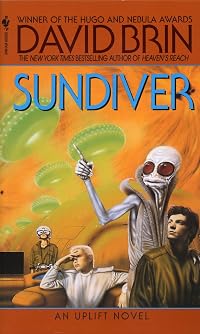
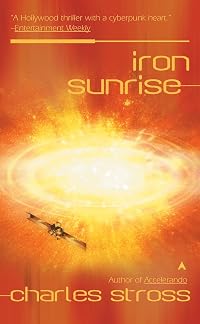
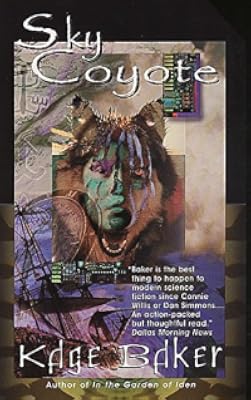
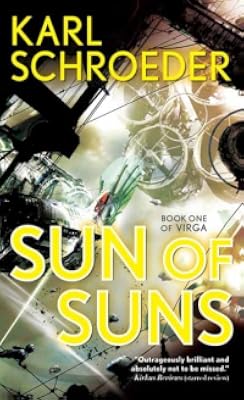
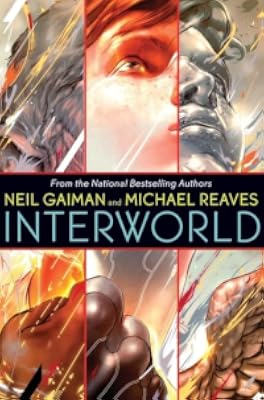

Member Recommendations

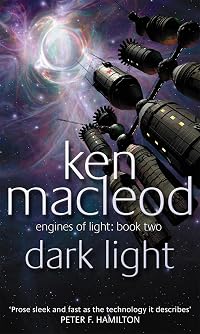
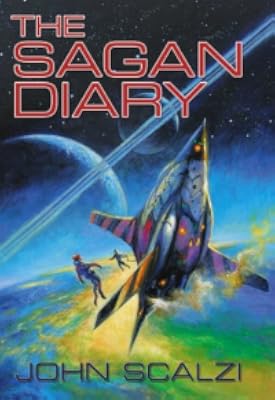
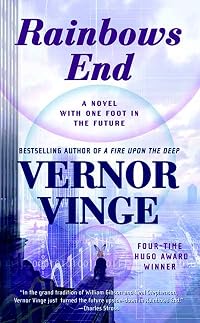
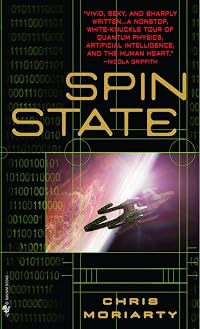
AlanPoulter Both novels explore alternate USA's but the Merchant Princes series is much better.
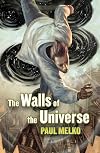
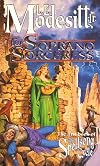
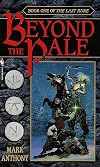
amberwitch Modern day protagonists travel to medieval parallel world
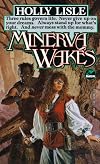
amberwitch Family complications and world travel
amberwitch Fantastic series about war spanning several parallel worlds, with great worldbuilding and believable characters.
Member Reviews
A riff on the old "down-on-her-luck orphan finds out that she's a princess in an alternate world but when her parent's enemies find out she's alive try to kill her" story.
In addition to the predictable factions and conspiracies and alliances and threats, there's a lot of socioeconomics that make it interesting, a cut above the typical fantasy adventure. One of the challenges is how to best use the ability to travel between worlds to make money, preferably legally. Made more challenging by the other world being pre-technological with a feudal system. And how to quickly transform a society with a 17th century economy into the 21st century. All while wearing frilly ball gowns and dodging assassins.
On the negative side, there's no attempt show more at resolving anything at the end of the book, clearly it's meant to feed directly into the next one in the series. I would have preferred at least some sort of subplot that gets wrapped up, like in the Laundry Files. show less
In addition to the predictable factions and conspiracies and alliances and threats, there's a lot of socioeconomics that make it interesting, a cut above the typical fantasy adventure. One of the challenges is how to best use the ability to travel between worlds to make money, preferably legally. Made more challenging by the other world being pre-technological with a feudal system. And how to quickly transform a society with a 17th century economy into the 21st century. All while wearing frilly ball gowns and dodging assassins.
On the negative side, there's no attempt show more at resolving anything at the end of the book, clearly it's meant to feed directly into the next one in the series. I would have preferred at least some sort of subplot that gets wrapped up, like in the Laundry Files. show less
http://nhw.livejournal.com/493161.html
I had been looking forward to reading this for some time. Reviews that I had skimmed (and indeed hints dropped by the author) led me to understand that it borrows the feudal and feuding families who can walk between the worlds of Roger Zelazny's Amber series, a firm favourite of mine from an early age. But my anticipation was mixed with a little trepidation: even Zelazny was unable to really pull it off in the end - while the Amber books contain some of his most lyrical prose, the plot has holes you can drive an army of dark, clawed, fanged, furry man-like creatures through, and his own interest and energy had very obviously faded by the middle of the second series. And as for the Betancourt show more prequels - critical reaction has been pretty unanimous, so I don't think I'll bother.
Well, I think Charlie has pulled it off. He's taken Zelazny's idea and wondered what people with that ability would actually do with it in today's world; applied an economic model to it, if you like. Amber was always supposedly a great trading nexus (Corwin had written its anthem, the Ballad of the Water Crossers), but the evidence of this was pretty minimal - rather than wealth, its children seemed to be more attracted to power, and went off to find kingdoms and wars of their own. In the Stross version, there is a convincing business model using the fact that those with the gift can shift between our world and one where the Vikings settled North America and Europe never developed (and, we suspect, at least one other such parallel universe). Also in the Stross version, we have a plot that makes sense and is compelling reading; and some very interesting and complex characters. The Family Trade doesn't have the vivid imagery of some of his other work, but I sat up much later than I should have last night to finish it, and now can't wait for the sequel, The Hidden Family. show less
I had been looking forward to reading this for some time. Reviews that I had skimmed (and indeed hints dropped by the author) led me to understand that it borrows the feudal and feuding families who can walk between the worlds of Roger Zelazny's Amber series, a firm favourite of mine from an early age. But my anticipation was mixed with a little trepidation: even Zelazny was unable to really pull it off in the end - while the Amber books contain some of his most lyrical prose, the plot has holes you can drive an army of dark, clawed, fanged, furry man-like creatures through, and his own interest and energy had very obviously faded by the middle of the second series. And as for the Betancourt show more prequels - critical reaction has been pretty unanimous, so I don't think I'll bother.
Well, I think Charlie has pulled it off. He's taken Zelazny's idea and wondered what people with that ability would actually do with it in today's world; applied an economic model to it, if you like. Amber was always supposedly a great trading nexus (Corwin had written its anthem, the Ballad of the Water Crossers), but the evidence of this was pretty minimal - rather than wealth, its children seemed to be more attracted to power, and went off to find kingdoms and wars of their own. In the Stross version, there is a convincing business model using the fact that those with the gift can shift between our world and one where the Vikings settled North America and Europe never developed (and, we suspect, at least one other such parallel universe). Also in the Stross version, we have a plot that makes sense and is compelling reading; and some very interesting and complex characters. The Family Trade doesn't have the vivid imagery of some of his other work, but I sat up much later than I should have last night to finish it, and now can't wait for the sequel, The Hidden Family. show less
I went in hoping to like this, and I got more and more demoralised as I kept reading. I at least liked the protagonist, but found the plot and premise increasingly wearying. About halfway through, much was redeemed when a second female character was rounded out, showing that the protagonist had been relying on stereotypes and not thinking things through very much. And this second(ary) character, Olga, was very much my favourite by the end of the book.
The story itself runs straight in to a brick wall, with clear indication that there will be more machinations in the second and subsequent books, but I don't think that I'm going to bother. Yes, it was a nice conceit for how to put a self-aware, somewhat empowered modern woman in a feudal show more fantasy setting, but it really didn't work for me. What it felt like was an allegory of my life -- this isn't fantasy/prediction, this is the life that people (women. powerless minorities. other oppressed groups) are living Right Now, it has just been written by someone who isn't living it*. Which isn't to say that I think Stross is ignorant of the way that life can be oppressive even for educated white women, but that the contrast fell so flat for me, because it didn't feel like a contrast at all, other than in how blatant the control and manipulation was.
Characterisation was good, although depressing. World-building was good, but depressing. Writing was good. Plotting was murky.
* I don't know enough about Stross to say whether he is/isn't a member of any of the groups that struggle against oppression/discrimination/etc. What I am saying is that the book *read* as if he hasn't experienced these things. show less
The story itself runs straight in to a brick wall, with clear indication that there will be more machinations in the second and subsequent books, but I don't think that I'm going to bother. Yes, it was a nice conceit for how to put a self-aware, somewhat empowered modern woman in a feudal show more fantasy setting, but it really didn't work for me. What it felt like was an allegory of my life -- this isn't fantasy/prediction, this is the life that people (women. powerless minorities. other oppressed groups) are living Right Now, it has just been written by someone who isn't living it*. Which isn't to say that I think Stross is ignorant of the way that life can be oppressive even for educated white women, but that the contrast fell so flat for me, because it didn't feel like a contrast at all, other than in how blatant the control and manipulation was.
Characterisation was good, although depressing. World-building was good, but depressing. Writing was good. Plotting was murky.
* I don't know enough about Stross to say whether he is/isn't a member of any of the groups that struggle against oppression/discrimination/etc. What I am saying is that the book *read* as if he hasn't experienced these things. show less
I don't like it. It's well-written, excellent characterization, fascinating universe and "magic" - but I have the same headache as Miriam does trying to work out who's doing what why. The manipulation, plotting, tricks, and flat lies that make up the storyline are overwhelming. Now I've finished it, I still have very little idea what's going on; the new enemy is reasonably clear, but the older one is still obscure to me - is it Angbard, Miriam's direct relatives, someone else? Honestly, at this point I don't even care. And the fact that the sample of the next book has an entirely new set of characters (well, almost entirely new) and portentously announces that the rather boring meeting that's described is very important some way doesn't show more particularly appeal. Not for me, I think - someone who enjoys this kind of double- and triple-thinking would love it, but I won't bother to get the next one. show less
This is a book with a somewhat typical fantasy premise. Adopted girl finds out that her birth parents are from an alternate Earth, and that she is actually royalty. The beginning of the book was a bit slow for me and I wasn't very impressed with Miriam, the main character. However, the alternate Earth and the Family that Miriam finds herself pulled back into are interesting; just the politics and economics of a group of people who can cross over between our world and an alternate Earth makes for some fascinating what-ifs. By the end of the book, I was totally drawn in to Miriam's troubles and the larger political struggle going on.
The Family Trade – Charles Stross (2004, My Copy 2007 U.K paperback
This is the first of The Merchant Princes books. In total there are 9 books but the first 6 have been reprinted in 3 Omnibus editions in the U.K, containing two books in each edition. Even though these have been slightly rewritten the plot is unchanged. I decided to approach these books as the separate editions as I’m a fan of smaller books.
I normally like to mention the covers in my reviews this U.K edition in my opinion has a terrible cover, the U.S edition has a far better cover. To me you do judge a book by it’s cover and if I had seen this in a shop on a shelf, I would not have picked it up. A cover is what visually sells a book and this one totally fails on show more that level.
The Merchant princes is a Parallel world/Alternate History series. I wonder if the title of the series is a nod towards Asimov and one of the stories in the original Foundation trilogy. This first book, Family Trade, follows Mirriam Beckstein who is a successful Journalist in Technology and Economics, when she uncovers an obvious large-scale fraud, after informing her boss she then loses her job and receives death threats. In a visit to her adoptive mother, she is given a locket from her birth mother which manages to transport her to a parallel world.
The general set up obviously owes a nod to Roger Zelazny’s Amber series it also got me at points in thinking of Piers Anthony Apprentice Adept series. I like the idea of Parallel worlds but it’s always how it’s used as a plot mechanism that decides if it works. This was a bit of a strange read for me, for the first half of the book I was convinced I was going to get to the end of the book and decide not to continue with the series, but at the end I was pulled in enough to care and want to know what happens next.
Charles Stross’s Protaganist isn’t the most likeable of characters, which isn’t necessarily a bad thing, but she does suffer from literary intelligence, in that she appears in another unfamiliar world and seems able to navigate it and its politics better than those that have lived it all their lives. This was part of the reason I struggled with the first half of the book, I think once I let myself go and got a little more invested in the story, I was able to look past this and see the ideas the author was playing with. There are obvious themes about how economically richer more technically advanced nations attempt to bring less advanced nations up to them. I hope in further books this and the morality of it is explored more deeply. There are a lot of different avenues these themes could take.
Unsurprisingly being the first book of a longer series there are many threads left open which I hope are addressed in future books. This is my first experience of Charles Stross’s writing and prose whilst being quite straightforward in his writing he can pull you in and explain ideas well. There is a central relationship within the book that I think could have been a bit more three dimensional but hopefully that will develop in time.
If you’re a fan of books with interesting politics and manoeuvring, you could do far worse than take a look at The Merchant Princes series. I think this first book shows some promise of developing very well into an interesting narrative. It also reinforces my personal stance that I don’t DNF a book as you never know how it will develop in the end. If I had abandoned at the first 50% of the book I would have missed the developments within the story that make you want to go on and read the sequels.
Goodreads ratings are pretty limiting, my benchmark using those ratings are anything 3 or above is a good strong recommendation that I would happily reread at some point
My Blog http://www.backawayfromthedonkey.co.uk/ show less
This is the first of The Merchant Princes books. In total there are 9 books but the first 6 have been reprinted in 3 Omnibus editions in the U.K, containing two books in each edition. Even though these have been slightly rewritten the plot is unchanged. I decided to approach these books as the separate editions as I’m a fan of smaller books.
I normally like to mention the covers in my reviews this U.K edition in my opinion has a terrible cover, the U.S edition has a far better cover. To me you do judge a book by it’s cover and if I had seen this in a shop on a shelf, I would not have picked it up. A cover is what visually sells a book and this one totally fails on show more that level.
The Merchant princes is a Parallel world/Alternate History series. I wonder if the title of the series is a nod towards Asimov and one of the stories in the original Foundation trilogy. This first book, Family Trade, follows Mirriam Beckstein who is a successful Journalist in Technology and Economics, when she uncovers an obvious large-scale fraud, after informing her boss she then loses her job and receives death threats. In a visit to her adoptive mother, she is given a locket from her birth mother which manages to transport her to a parallel world.
The general set up obviously owes a nod to Roger Zelazny’s Amber series it also got me at points in thinking of Piers Anthony Apprentice Adept series. I like the idea of Parallel worlds but it’s always how it’s used as a plot mechanism that decides if it works. This was a bit of a strange read for me, for the first half of the book I was convinced I was going to get to the end of the book and decide not to continue with the series, but at the end I was pulled in enough to care and want to know what happens next.
Charles Stross’s Protaganist isn’t the most likeable of characters, which isn’t necessarily a bad thing, but she does suffer from literary intelligence, in that she appears in another unfamiliar world and seems able to navigate it and its politics better than those that have lived it all their lives. This was part of the reason I struggled with the first half of the book, I think once I let myself go and got a little more invested in the story, I was able to look past this and see the ideas the author was playing with. There are obvious themes about how economically richer more technically advanced nations attempt to bring less advanced nations up to them. I hope in further books this and the morality of it is explored more deeply. There are a lot of different avenues these themes could take.
Unsurprisingly being the first book of a longer series there are many threads left open which I hope are addressed in future books. This is my first experience of Charles Stross’s writing and prose whilst being quite straightforward in his writing he can pull you in and explain ideas well. There is a central relationship within the book that I think could have been a bit more three dimensional but hopefully that will develop in time.
If you’re a fan of books with interesting politics and manoeuvring, you could do far worse than take a look at The Merchant Princes series. I think this first book shows some promise of developing very well into an interesting narrative. It also reinforces my personal stance that I don’t DNF a book as you never know how it will develop in the end. If I had abandoned at the first 50% of the book I would have missed the developments within the story that make you want to go on and read the sequels.
Goodreads ratings are pretty limiting, my benchmark using those ratings are anything 3 or above is a good strong recommendation that I would happily reread at some point
My Blog http://www.backawayfromthedonkey.co.uk/ show less
I'm a big fan of Chuck Stross's science fiction -- SINGULARITY SKY, ACCELERANDO. But this one left me cold. Why?
For one thing, the conceit is heavily purloined from Narnia: the hero is a boring person here, but a crucial person Over (or Under) There. Neil
Gaiman found a way to take the curse off it in NEVERWHERE: his restless, mundane hero makes the mistake of helping a runaway girl from Under There, and soon starts to become a nonentity Over Here. Stross goes another way: his heroine simply makes a series of logical decisions that she is in more danger Over Here and therefore ought to scamper Over There. You hardly want to be transported to a land of magic and wonder because it is the most sensible thing to do.
I wonder if the problem show more is the great yawning divide between SF and F. Star Wars is Fantasy; the Force is magic. Star Trek is Science Fiction: the science is balderdash but it is still science. When Star Wars tried to explain Annakin Skywalker's talent for the Force -- he had a high midichlorian count? -- it felt like a betrayal of the genre. Stross has created a fantasy premise - magic locket transports those of the Blood -- but then approaches the story rationally, like an SF author. What sort of things would you do if you could walk between the worlds? Open a courier service, natch. You can Fedex things in this world that would take a long tme to travel in that world. You can smuggle huge quantities of drugs, slowly but surely, across the Other World.
Who cares?
This, I think, was my big problem. I felt there was no real emotional issue. Nothing that could only be solved by the heart; nothing without whose solving the heart would remain forever restless.
Dorothy wants to get home.
THE LION, THE WITCH AND THE WARDROBE was about kids who were unimportant in this world feeling terribly important in this world. (Oh, and it's an allegory for the last days of Jesus Christ. Sorry.)
I did not know what the main character wanted. Or rather, she wanted too many sensible things. She wants safety. She wants a guy. She wants to liberate the peasants.
So what? show less
For one thing, the conceit is heavily purloined from Narnia: the hero is a boring person here, but a crucial person Over (or Under) There. Neil
Gaiman found a way to take the curse off it in NEVERWHERE: his restless, mundane hero makes the mistake of helping a runaway girl from Under There, and soon starts to become a nonentity Over Here. Stross goes another way: his heroine simply makes a series of logical decisions that she is in more danger Over Here and therefore ought to scamper Over There. You hardly want to be transported to a land of magic and wonder because it is the most sensible thing to do.
I wonder if the problem show more is the great yawning divide between SF and F. Star Wars is Fantasy; the Force is magic. Star Trek is Science Fiction: the science is balderdash but it is still science. When Star Wars tried to explain Annakin Skywalker's talent for the Force -- he had a high midichlorian count? -- it felt like a betrayal of the genre. Stross has created a fantasy premise - magic locket transports those of the Blood -- but then approaches the story rationally, like an SF author. What sort of things would you do if you could walk between the worlds? Open a courier service, natch. You can Fedex things in this world that would take a long tme to travel in that world. You can smuggle huge quantities of drugs, slowly but surely, across the Other World.
Who cares?
This, I think, was my big problem. I felt there was no real emotional issue. Nothing that could only be solved by the heart; nothing without whose solving the heart would remain forever restless.
Dorothy wants to get home.
THE LION, THE WITCH AND THE WARDROBE was about kids who were unimportant in this world feeling terribly important in this world. (Oh, and it's an allegory for the last days of Jesus Christ. Sorry.)
I did not know what the main character wanted. Or rather, she wanted too many sensible things. She wants safety. She wants a guy. She wants to liberate the peasants.
So what? show less
Members
- Recently Added By
Lists

Female Protagonist
1,056 works; 57 members

Books read in 2015
213 works; 5 members

Books Read in 2014
2,343 works; 86 members

Books Read in 2025
4,091 works; 97 members

Tagged Parallel Worlds
43 works; 11 members
Talk Discussions
Current Discussions
Found: Alt world series in Name that Book (September 2025)
Found: Woman that can transport to Alternate Earth Sci Fi Series? in Name that Book (August 2025)
Author Information

119+ Works 45,435 Members
Born in Leeds, England, Charles Stross knew he wanted to be a science fiction writer from the age of six. Despite this, he went to university in London and qualified as a Pharmacist. He made his first writing sale to Interzone in 1986, and sold about a dozen stories elsewhere throughout the late 1980s and early 1990s. He now writes fiction show more full-time, has sold about 16 novels, has won one Hugo award and been nominated nearly a dozen times, and has been translated into about a dozen languages. He is the author of the Merchant Princes series. His latest book, The Revolution Business, is the fifth in this series. He lives in Edinburgh, Scotland, with his wife Feorag. (Bowker Author Biography) show less
Some Editions
Awards and Honors
Awards
Distinctions
Series

Work Relationships
Is contained in
Common Knowledge
- Canonical title
- The Family Trade
- Original title
- The Family Trade
- Original publication date
- 2004
- People/Characters
- Miriam Beckstein
- Important places
- Boston, Massachusetts, USA; Gruinmarkt
- Dedication
- For Steve and Jenny Glover
- First words
- The sky was the color of a dead laptop display, silver-grey and full of rain.
- Quotations
- She looked into his eyes. They were wide and appealing: He was a transparently gallant, well-meaning young man -- Young? He's only a couple of years younger than I am -- with a great ass, and she instinctively distrust... (show all)ed that.
"Cinderella 2.0", p.108 - Last words
- (Click to show. Warning: May contain spoilers.)"What makes you think it isn't?"
- Blurbers
- Card, Orson Scott; Resnick, Mike; Anderson, Kevin J.; Farland, David; Modesitt, L. E., Jr.
- Original language
- English
Classifications
Statistics
- Members
- 1,883
- Popularity
- 11,399
- Reviews
- 62
- Rating
- (3.47)
- Languages
- Czech, English, Estonian, French
- Media
- Paper, Audiobook, Ebook
- ISBNs
- 15
- UPCs
- 1
- ASINs
- 10