On This Page
Description
An American woman struggles with the genital mutilation she endured as a child in Africa in a New York Times bestseller "as compelling as The Color Purple" (San Francisco Chronicle).In Tashi's tribe, the Olinka, young girls undergo female genital mutilation as an initiation into the community. Tashi manages to avoid this fate at first, but when pressed by tribal leaders, she submits. Years later, married and living in America as Evelyn Johnson, Tashi's inner pain emerges. As she questions show more why such a terrifying, disfiguring sacrifice was required, she sorts through the many levels of subjugation with which she's been burdened over the years.
In Possessing the Secret of Joy, Alice Walker exposes the abhorrent practice of female genital mutilation in an unforgettable, moving novel.
This ebook features an illustrated biography of Alice Walker including rare photos from the author's personal collection.
Possessing the Secret of Joy is the 3rd book in the Color Purple Collection, which also includes The Color Purple and The Temple of My Familiar. show less
Tags
Recommendations























Member Recommendations
Member Reviews
i don't love the way this is written with the too-short alternating point of view chapters, but it isn't badly done. i just wanted a little more from many of the chapters. because of how much it bounces around, there isn't a lot of detail given, but you get all of the backstory that you need.
far more important is the subject matter. this is a tough book to read as she takes female genital mutilation head on. the main character, tashi, who was in the african pages in the color purple, introduces us to the horror of the ritual itself and the lifelong aftereffects of what she euphemistically calls "bathing". it's an intense thing to read about, and walker ties it nicely into the ways that men use it to keep women and sex under their own show more control.
she also touches on the slaughter of african animals (specifically monkeys) in the name of big pharm, as well as the possibility that this is how the aids virus was first actually transmitted; an infected monkey was used in the making of a polio vaccine and so began the spread of hiv. but really this book is about the torture that women and girls undergo and perpetuate generation to generation. there isn't a lot of graphic detail, but there is enough to know how incredibly horrendous this practice is.
i remember having an argument with a friend in college (maybe in 1996) about this topic. her view was that we can't judge someone else's culture, that i have no right to say that this is an "incredibly horrendous" practice. i do understand that viewpoint; i think alice walker makes a nice case against that with this story.
this is a hard, but important book.
an epigraph that is from a bumper sticker: "When the axe came into the forest, the trees said the handle is one of us."
"No, no, he used to correct me. They behave this way not because I'm black but because they are white."
"...men refuse to remember things that don't happen to them."
"They do not want to hear what their children suffer. They've made the telling of the suffering itself taboo. Like visible signs of menstruation. Signs of woman's mental power. Signs of the weakness and uncertainty of men. When they say the word 'taboo' I try to catch their eye. Are they saying something is 'sacred' and therefore not to be publicly examined for fear of disturbing the mystery; or are they saying it is so profane it must not be exposed, for fear of corrupting the young? Or are they saying simply that they can not and will not be bothered to listen to what is said about an accepted tradition of which they are a part, that has gone on, as far as they know, forever.
These are the kinds of questions my father taught me to ask, alas. Adam, he would say, What is the fundamental question one must ask of the world? I would think of and posit many things, but the answer was always the same: Why is the child crying?"
"Now of course every little girl is given a doll to drag around. A little figure of a woman as toy, with the most vacuous face imaginable, and no vagina at all."
"Religion is an elaborate excuse for what man has done to women and to the earth, says Raye, bitterly."
"There is for human beings no greater hell to fear than the one on earth." show less
far more important is the subject matter. this is a tough book to read as she takes female genital mutilation head on. the main character, tashi, who was in the african pages in the color purple, introduces us to the horror of the ritual itself and the lifelong aftereffects of what she euphemistically calls "bathing". it's an intense thing to read about, and walker ties it nicely into the ways that men use it to keep women and sex under their own show more control.
she also touches on the slaughter of african animals (specifically monkeys) in the name of big pharm, as well as the possibility that this is how the aids virus was first actually transmitted; an infected monkey was used in the making of a polio vaccine and so began the spread of hiv. but really this book is about the torture that women and girls undergo and perpetuate generation to generation. there isn't a lot of graphic detail, but there is enough to know how incredibly horrendous this practice is.
i remember having an argument with a friend in college (maybe in 1996) about this topic. her view was that we can't judge someone else's culture, that i have no right to say that this is an "incredibly horrendous" practice. i do understand that viewpoint; i think alice walker makes a nice case against that with this story.
this is a hard, but important book.
an epigraph that is from a bumper sticker: "When the axe came into the forest, the trees said the handle is one of us."
"No, no, he used to correct me. They behave this way not because I'm black but because they are white."
"...men refuse to remember things that don't happen to them."
"They do not want to hear what their children suffer. They've made the telling of the suffering itself taboo. Like visible signs of menstruation. Signs of woman's mental power. Signs of the weakness and uncertainty of men. When they say the word 'taboo' I try to catch their eye. Are they saying something is 'sacred' and therefore not to be publicly examined for fear of disturbing the mystery; or are they saying it is so profane it must not be exposed, for fear of corrupting the young? Or are they saying simply that they can not and will not be bothered to listen to what is said about an accepted tradition of which they are a part, that has gone on, as far as they know, forever.
These are the kinds of questions my father taught me to ask, alas. Adam, he would say, What is the fundamental question one must ask of the world? I would think of and posit many things, but the answer was always the same: Why is the child crying?"
"Now of course every little girl is given a doll to drag around. A little figure of a woman as toy, with the most vacuous face imaginable, and no vagina at all."
"Religion is an elaborate excuse for what man has done to women and to the earth, says Raye, bitterly."
"There is for human beings no greater hell to fear than the one on earth." show less
Alice Walker admits there is a connection between Possessing the Secret of Joy and The Color Purple. If you know your Purple you might remember Tashi as a minor character. She, among others, is back in Possessing the Secret of Joy to tell her own heartbreaking story. Except, told from the first person perspective of several different characters, Possessing the Secret of Joy is more of an ode to culture, courage, identity, and resilience. Do not be fooled by the short and deceptively simple chapters. Read carefully because details can be disjointed. One minute you are in Paris, France. The next you are in a London courtroom. Every chapter is packed with a deeper meaning. Self mutilation hints of a much larger trauma hidden beneath the show more surface.
At the heart of the story is Tashi/Evelyn Johnson, a tribal African woman. Despite being married to Adam, Tashi/Evelyn has Olinka society taboos tattooed in her brain. She knows is it wrong to make love in an open field; genital mutilation is the norm despite missionaries being against any kind of scarification. The mythology surrounding female circumcision and the price one pays for noncompliance is akin to the ancient practice of Chinese foot binding. When are ancestral cultural norms abolished for their cruelty and antiquity? Should ancient practices continue just because of the history? Are tribal roots deep enough to forego life-altering violence? show less
At the heart of the story is Tashi/Evelyn Johnson, a tribal African woman. Despite being married to Adam, Tashi/Evelyn has Olinka society taboos tattooed in her brain. She knows is it wrong to make love in an open field; genital mutilation is the norm despite missionaries being against any kind of scarification. The mythology surrounding female circumcision and the price one pays for noncompliance is akin to the ancient practice of Chinese foot binding. When are ancestral cultural norms abolished for their cruelty and antiquity? Should ancient practices continue just because of the history? Are tribal roots deep enough to forego life-altering violence? show less
Alice Walker is such a beautiful writer. This book begins with Adam and Olivia, children of black missionaries, meeting Tashi, an African child in an African area called Olinka, which holds very traditional values. What "traditional" means in this case is that female genital mutilation is considered mandatory for girls who hope to marry a good man and have a respectable place in Olinkan society. The book details the lives of these 3 people as they grow to adulthood and struggle with Tashi's trauma from her upbringing. Her life, her personal choices, made on a background of trauma and pain, lead us to a place of deep insight regarding the treatment of women, the violence of colonialism and the lack of healing in a supposedly free society show more after colonialism ends. There is violence here but also intense sweetness and love. Alice Walker has been a strong advocate of women's rights and education to end the practice of FGM. I have such admiration for her and her incredible writing. The aching desire to end suffering comes through so clearly and so beautifully. show less
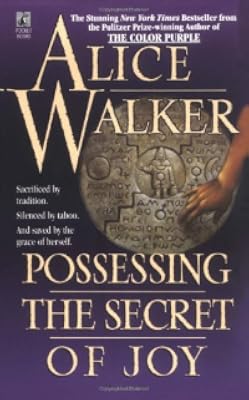
To be honest when this arrived, I was put off by the dreadful cover. It looked like a dodgy romance, how wrong could I be! I actually read this over 2 nights, completely drawn in by the style and the story.
In an attempt to reconnect, Tashi undergoes female circumcision, not really realising what she will lose. She is not a child when it is done, as is normal, but rather a sexually active adult. Living in America with her American husband, she is haunted by her past, which is allowed to dominate her future. It is not just the loss of sexual pleasure, but seem to be more about control, women lose control of their own bodies. Sadly, as is said in an afterword, this practice is still going on, not just in Africa, but in the West.
As a woman, show more I think this is an important read, but also a good insight for the men as it brings up other stereotypes about men and women. show less
In an attempt to reconnect, Tashi undergoes female circumcision, not really realising what she will lose. She is not a child when it is done, as is normal, but rather a sexually active adult. Living in America with her American husband, she is haunted by her past, which is allowed to dominate her future. It is not just the loss of sexual pleasure, but seem to be more about control, women lose control of their own bodies. Sadly, as is said in an afterword, this practice is still going on, not just in Africa, but in the West.
As a woman, show more I think this is an important read, but also a good insight for the men as it brings up other stereotypes about men and women. show less
Possessing the Secret of Joy is a powerful read, written in Alice Walker's usual evocative style. Tashi, who has appeared in the peripheries of Ms.Walker's other novels, takes the centre in this book.
Through Tashi, Ms.Walker not only creates a condemnation of FGM, but also leaves the reader with insights into how it plays into a victim's psyche and life. The entire book progresses through short first person narratives from all the major characters. While we learn of Tashi's life and how a misguided loyalty to her tradition makes her voluntarily submit to FGM, we also learn of how that moment comes to be. There are forces at play- colonial, patriarchal, religious- that displace and alienate Tashi, while also subjugating her.
We also show more learn of why and how this subjugation sustains itself- an experience that is, in a way, universal. There are cultures of silence that surround such oppression- making it seem, then, as though the silenced bear their pain happily.
In a particularly reflective moment, Tashi says, "If you lie to yourself about your own pain, you will be killed by those who will claim you enjoyed it."
The wisdom encapsulated in the above line from the book captures the crux of Tashi's story itself.
Possessing the Secret of Joy startles you, from the get-go. There are several moments of Tashi's account that horrify the reader. It is by no means an easy read. But it is a read that is worth the process. show less
Through Tashi, Ms.Walker not only creates a condemnation of FGM, but also leaves the reader with insights into how it plays into a victim's psyche and life. The entire book progresses through short first person narratives from all the major characters. While we learn of Tashi's life and how a misguided loyalty to her tradition makes her voluntarily submit to FGM, we also learn of how that moment comes to be. There are forces at play- colonial, patriarchal, religious- that displace and alienate Tashi, while also subjugating her.
We also show more learn of why and how this subjugation sustains itself- an experience that is, in a way, universal. There are cultures of silence that surround such oppression- making it seem, then, as though the silenced bear their pain happily.
In a particularly reflective moment, Tashi says, "If you lie to yourself about your own pain, you will be killed by those who will claim you enjoyed it."
The wisdom encapsulated in the above line from the book captures the crux of Tashi's story itself.
Possessing the Secret of Joy startles you, from the get-go. There are several moments of Tashi's account that horrify the reader. It is by no means an easy read. But it is a read that is worth the process. show less
"Religion is an elaborate excuse for what men has done to women and to the earth."
In this novel Alice Walker looks at the horrifying practice and consequences of female genital mutilation, according to the author's note at the end of book is believed to have been inflicted upon between ninety and one hundred million girls and women alive today. The practice varies from simple excision of the clitoris to a full-scale removal of the labia, thus denying the victim sexual pleasure,.
Tashi, the main protagonist of this novel, made a brief appearance in 'The Colour Purple' as an African woman living in America who returned to Africa to have the operation as a gesture of solidarity with the women of her village, 'Possessing the Secret of Joy' show more is her story.
I must admit that the book's fractured and non-chronological structure initially made it a little difficult for me to differentiate between the various voices, especially as many of them seem had differing names, an African and an American one. Equally as a European I struggled to comprehend why any female would feel the need to return to Africa to undergo such a barbaric experience just to somehow feel whole. However, once I had overcome these obstacles the story had me totally gripped if extremely uncomfortable.
This book raises some interesting questions because alongside genital mutilation it also touches on a possible origin for AIDS and the use of chimpanzees in medical experiments.
"There is for human beings no greater hell to fear than the one on earth."
Personally I felt that Walker spent a bit too much time sensationalising the actual operation that the plot suffered a little but I fully understand why she felt the need to do so. This is an important message that needs to be made especially when you realise that 'tradition' is being misused as a reason to justify it and it's often men who insist on it's continuance .
"Men refuse to remember things that don't happen to them." show less
In this novel Alice Walker looks at the horrifying practice and consequences of female genital mutilation, according to the author's note at the end of book is believed to have been inflicted upon between ninety and one hundred million girls and women alive today. The practice varies from simple excision of the clitoris to a full-scale removal of the labia, thus denying the victim sexual pleasure,.
Tashi, the main protagonist of this novel, made a brief appearance in 'The Colour Purple' as an African woman living in America who returned to Africa to have the operation as a gesture of solidarity with the women of her village, 'Possessing the Secret of Joy' show more is her story.
I must admit that the book's fractured and non-chronological structure initially made it a little difficult for me to differentiate between the various voices, especially as many of them seem had differing names, an African and an American one. Equally as a European I struggled to comprehend why any female would feel the need to return to Africa to undergo such a barbaric experience just to somehow feel whole. However, once I had overcome these obstacles the story had me totally gripped if extremely uncomfortable.
This book raises some interesting questions because alongside genital mutilation it also touches on a possible origin for AIDS and the use of chimpanzees in medical experiments.
"There is for human beings no greater hell to fear than the one on earth."
Personally I felt that Walker spent a bit too much time sensationalising the actual operation that the plot suffered a little but I fully understand why she felt the need to do so. This is an important message that needs to be made especially when you realise that 'tradition' is being misused as a reason to justify it and it's often men who insist on it's continuance .
"Men refuse to remember things that don't happen to them." show less
Title: Possessing the Secret of Joy
Author: Alice Walker
Publisher: Open Road Media
Series: The Color Purple Collection Book 3
Reviewed By: Arlena Dean
Rating: Five
Review:
"Possessing the Secret of Joy" by Alice Walker
My Insight:
"Possessing the Secret of Joy" courageously tackles the challenging issue of female circumcision, and the author's sensitivity in addressing this complex topic is truly impressive. Although I found it to be a demanding read, I am so thankful I decided to dive in. For those who enjoyed "The Color Purple," you'll be delighted to encounter Tashi, the daughter-in-law of Celie, who makes a heartfelt appearance in this story.
I don't want to give too much away, but I genuinely encourage you to explore "Possessing the Secret show more of Joy." The author has a unique gift for bringing tough themes to life, and their storytelling is nothing short of extraordinary.
As we navigate the narrative, we are reminded of the tragic reality that many children have suffered due to this practice, with some losing their lives or facing lifelong challenges. While it may be a challenging read, it is significant and opens our eyes to crucial truths that deserve our attention. You won't regret picking this one up! show less
Author: Alice Walker
Publisher: Open Road Media
Series: The Color Purple Collection Book 3
Reviewed By: Arlena Dean
Rating: Five
Review:
"Possessing the Secret of Joy" by Alice Walker
My Insight:
"Possessing the Secret of Joy" courageously tackles the challenging issue of female circumcision, and the author's sensitivity in addressing this complex topic is truly impressive. Although I found it to be a demanding read, I am so thankful I decided to dive in. For those who enjoyed "The Color Purple," you'll be delighted to encounter Tashi, the daughter-in-law of Celie, who makes a heartfelt appearance in this story.
I don't want to give too much away, but I genuinely encourage you to explore "Possessing the Secret show more of Joy." The author has a unique gift for bringing tough themes to life, and their storytelling is nothing short of extraordinary.
As we navigate the narrative, we are reminded of the tragic reality that many children have suffered due to this practice, with some losing their lives or facing lifelong challenges. While it may be a challenging read, it is significant and opens our eyes to crucial truths that deserve our attention. You won't regret picking this one up! show less
Members
- Recently Added By
Lists

1001 Books You Must Read Before You Die
1,448 works; 1,134 members

500 Great Books by Women
507 works; 60 members

Black Authors
384 works; 32 members

Top Five Books of 2015
811 works; 241 members

1,001 BYMRBYD Concensus
723 works; 27 members

Five star books
1,767 works; 110 members

Books That Made Us Cry
278 works; 145 members
Author Information

96+ Works 40,776 Members
Alice Walker won the Pulitzer Prize and the American Book Award for her novel The Color Purple. Her other bestselling novels include By the Light of My Father's Smile, Possessing the Secret of Joy, and The Temple of My Familiar. She is also the author of two collections of short stories, three collections of essays, five volumes of poetry, and show more several children's books. Her books have been translated into more than two dozen languages. Born in Eaton, Georgia, Walker now lives in Northern California. Like so many characters in her fiction, Alice Walker was born into a family of sharecroppers in Eaton, Georgia. She began Spelman College on a scholarship and graduated from Sarah Lawrence College in 1965. While still in college, Walker became active in the civil rights movement and continued her involvement after she graduated, serving as a voter registration worker in Georgia. She also worked in a Head Start program in Mississippi and was on the staff of the New York City welfare department. She has lectured and taught at several colleges and universities and currently operates a publishing house, Wild Trees Press, of which she is a co-founder. Walker began her literary career as a poet, publishing Once: Poems in 1968. The collection reflects her experiences in the civil rights movement and her travels in Africa. Her second collection of poetry, Revolutionary Petunias and Other Poems (1973), is a celebration of the struggle against oppression and racism. In between these two collections, she published her first novel, The Third Life of Grange Copeland (1970), the story of Ruth Copeland, a young black girl, and her grandfather, Grange, who brutalizes his own family out of the frustrations of racial prejudice and his own sense of inadequacy. Walker's first collection of short stories, In Love and Trouble: Stories of Black Women (1973), established her special concern for the struggles, hardships, loyalties, and triumphs of black women, a powerful force in the rest of her fiction. Meridian (1976), her second novel, is the story of Meridian Hill, a civil rights worker. In her second collection of short stories, You Can't Keep A Good Woman Down (1981), Walker again portrays black women struggling against sexual, racial, and economic oppression. Walker's third novel, The Color Purple (1982), brought her the national recognition denied her earlier works. Through this story of the sharecropper Celie and the abuses she endures, Walker draws together the themes that have run through her earlier work into a concentrated and powerful attack on racism and sexism, and produces a triumphant celebration of the spirit and endurance of black women. The book received the Pulitzer Prize and was made into a successful film. Walker describes her most recent novel, The Temple of My Familiar (1989) as "a romance of the last 500,000 years." The book is a blend of myth and history revolving around three marriages. As the married couples tell their stories, they explore both their origins and the inner life of modern African Americans. (Bowker Author Biography) show less
Some Editions
Awards and Honors
Series

Belongs to Publisher Series
Rainbow pocketboeken (192)
Work Relationships
Common Knowledge
- Original publication date
- 1992
- People/Characters
- Tashi "Evelyn" Johnson; Adam Johnson; Benny Johnson; Lisette; Dura; M'Lissa (show all 7); Carl Jung
- Important places
- Olinka
- Dedication
- This Book is Dedicated With Tenderness and Respect To the Blameless Vulva
- Quotations
- If you lie to yourself about your own pain, you will be killed by those who will claim you enjoyed it.
- Original language
- English
Classifications
Statistics
- Members
- 2,389
- Popularity
- 8,203
- Reviews
- 35
- Rating
- (3.89)
- Languages
- 9 — Arabic, Dutch, English, French, German, Italian, Japanese, Norwegian (Bokmål), Spanish
- Media
- Paper, Audiobook, Ebook
- ISBNs
- 32
- ASINs
- 20