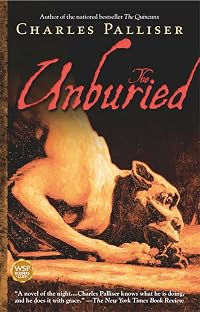
The Unburied
by Charles Palliser
On This Page
Description
A historical sleuth in Victorian England solves an 11th century murder by reading manuscripts in a cathedral library. While there, a real-life murder occurs and he turns sleuth, but his sleuthing is a fiasco, casting doubt on his earlier findings and therefore his integrity as a historian.Tags
Recommendations

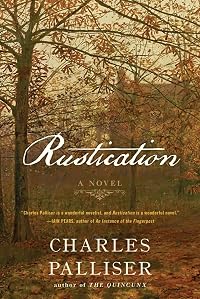
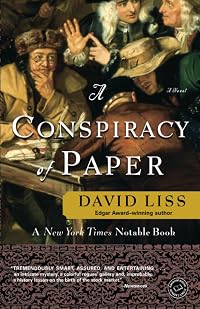
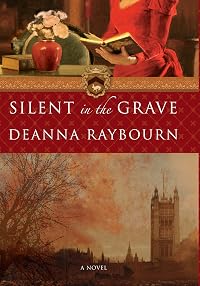


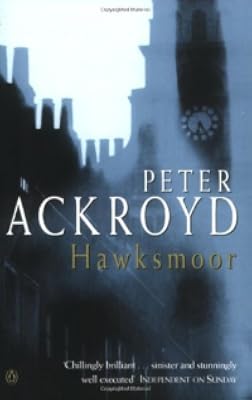
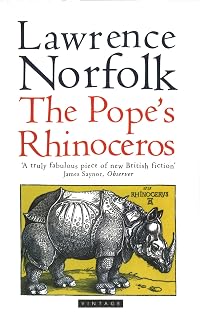
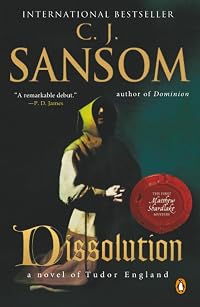
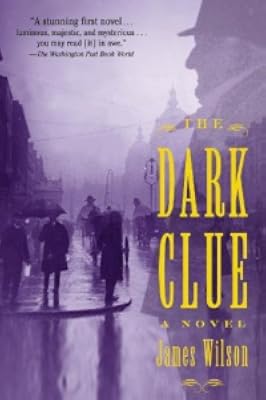
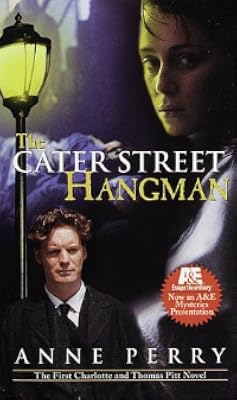
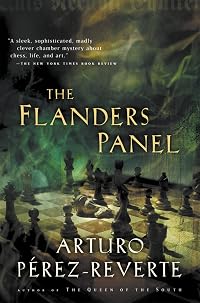
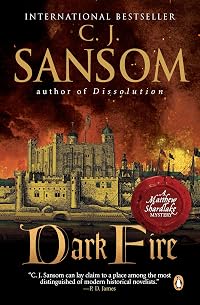
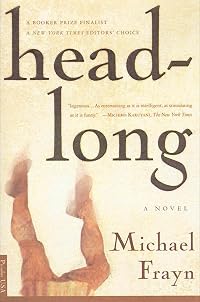



Member Recommendations
Member Reviews
If you like your horror with a healthy side of jump-scares, The Unburied definitely isn’t for you. But if you enjoy slowly unfolding tales of eerie disquiet and intellectual suspense, you’ve come to the right place.
This tasty Victorian-gothic-murder mystery is a deft mashup of Sheridan Le Fanu by way of Wilkie Collins with an infusion of Matthew Lewis’s The Monk and a pinch of Umberto Eco for extra zing. Think naïve Victorian narrator, creepy Cathedral town, a religious community harboring dark secrets, a historical mystery that becomes entangled with a current murder investigation, enigmatic medieval documents, frightening fairy tales, rotting corpses, lust, greed, perversion, revenge, and perhaps a ghost or two, all folded show more into an elaborate confection by a skilled storyteller … now set aside about 6hrs of your life and hunker down to enjoy this engrossing tale.
I invoke the work “intellectual” deliberately, because Palliser doesn’t believe in coddling his readers. To fully enjoy the pleasures on offer, you’re going to need to be attentive enough to spot the numerous clues that Palliser peppers throughout the narrative, patient enough to keep track of dozens of narratives, many of them teasingly unreliable, and intelligent enough to appreciate the craft of the meticulously clever reveal that begins about 4/5ths of the way through the book and continues right up until the last paragraph of the last page.
Just like Collin’s The Moonstone or Lewis’s The Monk, there are stories within stories here, but they all explore a common theme – in this case, to what extent are stories shaped by the self-interest and prejudices of the people who tell them, and is it ever possible to be sure of the truth? Much of the fun of this tale is realizing the extent to which reason and logic can be insufficient - even untrustworthy - when it comes to trying to dealing with elemental forces like love and hate, truth and untruth, good and evil. show less
This tasty Victorian-gothic-murder mystery is a deft mashup of Sheridan Le Fanu by way of Wilkie Collins with an infusion of Matthew Lewis’s The Monk and a pinch of Umberto Eco for extra zing. Think naïve Victorian narrator, creepy Cathedral town, a religious community harboring dark secrets, a historical mystery that becomes entangled with a current murder investigation, enigmatic medieval documents, frightening fairy tales, rotting corpses, lust, greed, perversion, revenge, and perhaps a ghost or two, all folded show more into an elaborate confection by a skilled storyteller … now set aside about 6hrs of your life and hunker down to enjoy this engrossing tale.
I invoke the work “intellectual” deliberately, because Palliser doesn’t believe in coddling his readers. To fully enjoy the pleasures on offer, you’re going to need to be attentive enough to spot the numerous clues that Palliser peppers throughout the narrative, patient enough to keep track of dozens of narratives, many of them teasingly unreliable, and intelligent enough to appreciate the craft of the meticulously clever reveal that begins about 4/5ths of the way through the book and continues right up until the last paragraph of the last page.
Just like Collin’s The Moonstone or Lewis’s The Monk, there are stories within stories here, but they all explore a common theme – in this case, to what extent are stories shaped by the self-interest and prejudices of the people who tell them, and is it ever possible to be sure of the truth? Much of the fun of this tale is realizing the extent to which reason and logic can be insufficient - even untrustworthy - when it comes to trying to dealing with elemental forces like love and hate, truth and untruth, good and evil. show less
This book is primarily a murder mystery with more than one murder. The main murder mystery is set in the late nineteenth century, but there is another murder, or possibly more, to be solved from 250 years earlier. In addition, the professional reputation of the main character depends on finding a seventeenth century document containing an account of an event that took place in the ninth century. Round all this off with events that take place in the early twentieth century and you have part of the recipe of Charles Palliser’s novel, The Unburied.
Other ingredients include highlighting the treatment of women in the nineteenth century, troubled relationships, prejudice, hints of paedophilia, treacherous friends, old quarrels, and show more fairy-tales, all set in an old cathedral town. Academic jealousy and internal politics all play a part in the events of Palliser’s 1999 novel.
Palliser seems to revel in creating multi-layered stories with events in one timeline paralleling those in another. In this case he also has fairy-tales that seem to reflect the live action and emotional turmoil.
There is much of the Gothic in this novel. Not just the cathedral and its dark and dismal surroundings, but also the unnerving behaviour of some of the characters, family secrets, hidden places, an ancient library, and plenty of deception and ulterior motives.
This is the third Charles Palliser novel I have read and I have enjoyed all three. Like his latest novel, Rustication, Palliser has used the mechanism of an old document being the core of his book with the document sandwiched between a foreword and afterword by the “editor”. Another of his techniques is keeping the reader wondering how reliable the narrator is. As with Rustication I felt, right up to the end, that the narrator could be spinning the reader a big yarn. Misdirection is a real skill of Palliser and I think The Unburied is a very enjoyable read. show less
Other ingredients include highlighting the treatment of women in the nineteenth century, troubled relationships, prejudice, hints of paedophilia, treacherous friends, old quarrels, and show more fairy-tales, all set in an old cathedral town. Academic jealousy and internal politics all play a part in the events of Palliser’s 1999 novel.
Palliser seems to revel in creating multi-layered stories with events in one timeline paralleling those in another. In this case he also has fairy-tales that seem to reflect the live action and emotional turmoil.
There is much of the Gothic in this novel. Not just the cathedral and its dark and dismal surroundings, but also the unnerving behaviour of some of the characters, family secrets, hidden places, an ancient library, and plenty of deception and ulterior motives.
This is the third Charles Palliser novel I have read and I have enjoyed all three. Like his latest novel, Rustication, Palliser has used the mechanism of an old document being the core of his book with the document sandwiched between a foreword and afterword by the “editor”. Another of his techniques is keeping the reader wondering how reliable the narrator is. As with Rustication I felt, right up to the end, that the narrator could be spinning the reader a big yarn. Misdirection is a real skill of Palliser and I think The Unburied is a very enjoyable read. show less
Does “The Unburied” really deserve five stars? I’m not sure, but for me this was a case of the “right book at the right time”, the novel I really needed. I received it in the run-up to Christmas, just as I was starting to tune in to carol broadcasts and to get out my choral CDs, whilst secretly wishing that my Mediterranean December would turn a tad foggier, colder and, generally, more “Northern”. And here was this atmospheric Gothic novel, set in a late 19th century English cathedral city in the days before Christmas.
It is difficult to give a comprehensible overview of the novel’s convoluted plot without giving any of the twists away, but I’ll try. The main body of the book consists of an account by one Dr Courtine, a show more Cambridge historian who is invited to spend part of the festive season in Thurchester with Austin Fickling, an old college friend. Courtine and Fickling had become estranged, and Courtine eagerly accepts the invitation, seeing it as an opportunity to heal old wounds. He also is keen on spending time in the Cathedral library where he hopes to find an ancient manuscript which could shed light on a problematic episode regarding the reign of Alfred the Great. Once in Thurchester, however, Courtine becomes obsessed with two other historical, albeit more recent, mysteries – the 17th century murder of Cathedral Treasurer William Burgoyne (and the subsequent disappearance of prime suspect Mason John Gambrill) and the killing of Dean Freeth, ostensibly for political reasons but possibly for darker motives. Like the sleepy but deadly villages in “The Midsomer Murders”, Thurchester seems to be a veritable hotbed of criminality and intrigue. Before long, in fact, Courtine is embroiled in contemporary mysteries as well – chief amongst which is the puzzling behaviour of Fickling who, having invited Courtine to his house, now comes across as an increasingly reluctant and grumpy host. The evil which lurks in the historic city clearly goes beyond the petty "church politics" of the Cathedral canons.
In style, “The Unburied” is a veritable mash-up of Victorian genre fiction – the Gothic, the “English” ghost story, crime and sensation fiction are all thrown into the mix. It is rather as if Sheridan Le Fanu and Wilkie Collins teamed up to write a novel, with some help from M.R. James and (!) Anthony Trollope. In the initial chapters, the Gothic has the upper hand, as Courtine travels to a solitary, foggy train station and arrives at Fickling’s dark, creaky house; as the Cathedral (quite literally) throws up its dead and cloaked ghosts appear in the night. The novel’s debt towards the Gothic is also evident in its concern with old manuscripts and journals, unreliable narratives and multiple viewpoints.
Eventually, as secrets are slowly revealed – more tantalisingly than in a burlesque show – the sensation and crime novel elements come into play. The ending more or less manages to tie up all the loose ends (too tidily, perhaps?) - it is ingenious and satisfying and, considering the premises of the novel, does not unduly test the limits of our belief.
Like a glass of hot punch, “The Unburied” is a real delight – a seasonal one, perhaps, but a delight nonetheless.
https://endsoftheword.blogspot.com/2018/12/christmas-gothic-charles-pallisers.ht... show less
It is difficult to give a comprehensible overview of the novel’s convoluted plot without giving any of the twists away, but I’ll try. The main body of the book consists of an account by one Dr Courtine, a show more Cambridge historian who is invited to spend part of the festive season in Thurchester with Austin Fickling, an old college friend. Courtine and Fickling had become estranged, and Courtine eagerly accepts the invitation, seeing it as an opportunity to heal old wounds. He also is keen on spending time in the Cathedral library where he hopes to find an ancient manuscript which could shed light on a problematic episode regarding the reign of Alfred the Great. Once in Thurchester, however, Courtine becomes obsessed with two other historical, albeit more recent, mysteries – the 17th century murder of Cathedral Treasurer William Burgoyne (and the subsequent disappearance of prime suspect Mason John Gambrill) and the killing of Dean Freeth, ostensibly for political reasons but possibly for darker motives. Like the sleepy but deadly villages in “The Midsomer Murders”, Thurchester seems to be a veritable hotbed of criminality and intrigue. Before long, in fact, Courtine is embroiled in contemporary mysteries as well – chief amongst which is the puzzling behaviour of Fickling who, having invited Courtine to his house, now comes across as an increasingly reluctant and grumpy host. The evil which lurks in the historic city clearly goes beyond the petty "church politics" of the Cathedral canons.
In style, “The Unburied” is a veritable mash-up of Victorian genre fiction – the Gothic, the “English” ghost story, crime and sensation fiction are all thrown into the mix. It is rather as if Sheridan Le Fanu and Wilkie Collins teamed up to write a novel, with some help from M.R. James and (!) Anthony Trollope. In the initial chapters, the Gothic has the upper hand, as Courtine travels to a solitary, foggy train station and arrives at Fickling’s dark, creaky house; as the Cathedral (quite literally) throws up its dead and cloaked ghosts appear in the night. The novel’s debt towards the Gothic is also evident in its concern with old manuscripts and journals, unreliable narratives and multiple viewpoints.
Eventually, as secrets are slowly revealed – more tantalisingly than in a burlesque show – the sensation and crime novel elements come into play. The ending more or less manages to tie up all the loose ends (too tidily, perhaps?) - it is ingenious and satisfying and, considering the premises of the novel, does not unduly test the limits of our belief.
Like a glass of hot punch, “The Unburied” is a real delight – a seasonal one, perhaps, but a delight nonetheless.
https://endsoftheword.blogspot.com/2018/12/christmas-gothic-charles-pallisers.ht... show less
Does “The Unburied” really deserve five stars? I’m not sure, but for me this was a case of the “right book at the right time”, the novel I really needed. I received it in the run-up to Christmas, just as I was starting to tune in to carol broadcasts and to get out my choral CDs, whilst secretly wishing that my Mediterranean December would turn a tad foggier, colder and, generally, more “Northern”. And here was this atmospheric Gothic novel, set in a late 19th century English cathedral city in the days before Christmas.
It is difficult to give a comprehensible overview of the novel’s convoluted plot without giving any of the twists away, but I’ll try. The main body of the book consists of an account by one Dr Courtine, a show more Cambridge historian who is invited to spend part of the festive season in Thurchester with Austin Fickling, an old college friend. Courtine and Fickling had become estranged, and Courtine eagerly accepts the invitation, seeing it as an opportunity to heal old wounds. He also is keen on spending time in the Cathedral library where he hopes to find an ancient manuscript which could shed light on a problematic episode regarding the reign of Alfred the Great. Once in Thurchester, however, Courtine becomes obsessed with two other historical, albeit more recent, mysteries – the 17th century murder of Cathedral Treasurer William Burgoyne (and the subsequent disappearance of prime suspect Mason John Gambrill) and the killing of Dean Freeth, ostensibly for political reasons but possible for darker motives. Like the sleepy but deadly villages in “The Midsomer Murders”, Thurchester seems to be a veritable hotbed of criminality and intrigue. Before long, in fact, Courtine is embroiled in contemporary mysteries as well – chief amongst which is the puzzling behaviour of Fickling who, having invited Courtine to his house, now comes across as an increasingly reluctant and grumpy host. The evil which lurks in the historic city clearly goes beyond the petty "church politics" of the Cathedral canons.
In style, “The Unburied” is a veritable mash-up of Victorian genre fiction – the Gothic, the “English” ghost story, crime and sensation fiction are all thrown into the mix. It is rather as if Sheridan Le Fanu and Wilkie Collins teamed up to write a novel, with some help from M.R. James and (!) Anthony Trollope. In the initial chapters, the Gothic has the upper hand, as Courtine travels to a solitary, foggy train station and arrives at Fickling’s dark, creaky house; as the Cathedral (quite literally) throws up its dead and cloaked ghosts appear in the night. The novel’s debt towards the Gothic is also evident in its concern with old manuscripts and journals, unreliable narratives and multiple viewpoints.
Eventually, as secrets are slowly revealed – more tantalisingly than in a burlesque show – the sensation and crime novel elements come into play. The ending more or less manages to tie up all the loose ends (too tidily, perhaps?) - it is ingenious and satisfying and, considering the premises of the novel, does not unduly test the limits of our belief.
Like a glass of hot punch, “The Unburied” is a real delight – a seasonal one, perhaps, but a delight nonetheless. show less
It is difficult to give a comprehensible overview of the novel’s convoluted plot without giving any of the twists away, but I’ll try. The main body of the book consists of an account by one Dr Courtine, a show more Cambridge historian who is invited to spend part of the festive season in Thurchester with Austin Fickling, an old college friend. Courtine and Fickling had become estranged, and Courtine eagerly accepts the invitation, seeing it as an opportunity to heal old wounds. He also is keen on spending time in the Cathedral library where he hopes to find an ancient manuscript which could shed light on a problematic episode regarding the reign of Alfred the Great. Once in Thurchester, however, Courtine becomes obsessed with two other historical, albeit more recent, mysteries – the 17th century murder of Cathedral Treasurer William Burgoyne (and the subsequent disappearance of prime suspect Mason John Gambrill) and the killing of Dean Freeth, ostensibly for political reasons but possible for darker motives. Like the sleepy but deadly villages in “The Midsomer Murders”, Thurchester seems to be a veritable hotbed of criminality and intrigue. Before long, in fact, Courtine is embroiled in contemporary mysteries as well – chief amongst which is the puzzling behaviour of Fickling who, having invited Courtine to his house, now comes across as an increasingly reluctant and grumpy host. The evil which lurks in the historic city clearly goes beyond the petty "church politics" of the Cathedral canons.
In style, “The Unburied” is a veritable mash-up of Victorian genre fiction – the Gothic, the “English” ghost story, crime and sensation fiction are all thrown into the mix. It is rather as if Sheridan Le Fanu and Wilkie Collins teamed up to write a novel, with some help from M.R. James and (!) Anthony Trollope. In the initial chapters, the Gothic has the upper hand, as Courtine travels to a solitary, foggy train station and arrives at Fickling’s dark, creaky house; as the Cathedral (quite literally) throws up its dead and cloaked ghosts appear in the night. The novel’s debt towards the Gothic is also evident in its concern with old manuscripts and journals, unreliable narratives and multiple viewpoints.
Eventually, as secrets are slowly revealed – more tantalisingly than in a burlesque show – the sensation and crime novel elements come into play. The ending more or less manages to tie up all the loose ends (too tidily, perhaps?) - it is ingenious and satisfying and, considering the premises of the novel, does not unduly test the limits of our belief.
Like a glass of hot punch, “The Unburied” is a real delight – a seasonal one, perhaps, but a delight nonetheless. show less
The title of this book may suggest a horror story complete with zombies and vampires, but The Unburied is actually a scholarly murder mystery which reminded me of The Name of the Rose by Umberto Eco or An Instance of the Fingerpost by Iain Pears. I wanted to read it because a few years ago I read another Charles Palliser book, The Quincunx, which I really enjoyed. Like The Quincunx, this one is set (mostly) in Victorian England. It begins with a mock 'Editor's Foreword' in which we are told that we are about to read an account which will throw new light on the controversial Thurchester Mystery. This account, known as The Courtine Account, forms the bulk of the book.
Dr Edward Courtine, a historian from Cambridge University, has been show more invited to spend the week before Christmas with Austin Fickling, an old friend from his student days who is now teaching at a school in the cathedral city of Thurchester. He and Austin haven't seen each other since they parted on bad terms twenty years ago, and Courtine is eager to renew their friendship. He also has another reason for wanting to visit Thurchester – he has been studying King Alfred the Great and has learned that an ancient manuscript detailing the events of Alfred's reign may be available in Thurchester Library. On the night of Courtine's arrival he hears the story of a murder that took place in the cathedral two centuries earlier. Courtine is fascinated, but as he begins to investigate he becomes involved in another murder mystery – and discovers Austin's true motive for inviting him to Thurchester.
As the main narrator of the book, I found Courtine very irritating, but at the same time I felt slightly sorry for him. For such an obviously intelligent person he was completely lacking in perception, constantly saying the wrong things, missing important clues and failing to notice people behaving suspiciously. Sometimes he would tell us that he was beginning to form a theory or that an idea had occurred to him, but he didn’t let us know what it was. This was good in one way, as it encouraged me to work things out for myself, but it also annoyed me because I was already finding it difficult enough to keep all the threads of the story straight.
Although the town of Thurchester and its community are vividly depicted, I didn’t find any of the characters particularly memorable. The fact that some of them had similar names (Slattery, Sheldrick, Sisterton for example) didn't help. There is actually a character list at the back of the book but I was trying not to look at it in case I came across any spoilers. As for the plot, it's so intricate you really need to read this book in as few sittings as possible so you don’t forget any important details. There seemed to be a constant stream of unexplained deaths and forged documents, with at least three separate mysteries from different eras all running parallel to each other – and different characters giving different versions of what may or may not have happened. I wished I had been taking notes from the beginning.
This is a very atmospheric book with lots of gothic elements, from the freezing fog that accompanies Courtine's arrival in Thurchester to the obligatory 'ghost' supposedly haunting the cathedral. It would have been a good book to read in front of the fire on a cold winter's night. In spite of the slow pace the book was relatively quick to read and although it was certainly confusing, I did enjoy it, especially when the various mysteries began to unravel towards the end. Not as good as The Quincunx, though – if you've never read a Charles Palliser book before, try that one first. show less
Dr Edward Courtine, a historian from Cambridge University, has been show more invited to spend the week before Christmas with Austin Fickling, an old friend from his student days who is now teaching at a school in the cathedral city of Thurchester. He and Austin haven't seen each other since they parted on bad terms twenty years ago, and Courtine is eager to renew their friendship. He also has another reason for wanting to visit Thurchester – he has been studying King Alfred the Great and has learned that an ancient manuscript detailing the events of Alfred's reign may be available in Thurchester Library. On the night of Courtine's arrival he hears the story of a murder that took place in the cathedral two centuries earlier. Courtine is fascinated, but as he begins to investigate he becomes involved in another murder mystery – and discovers Austin's true motive for inviting him to Thurchester.
As the main narrator of the book, I found Courtine very irritating, but at the same time I felt slightly sorry for him. For such an obviously intelligent person he was completely lacking in perception, constantly saying the wrong things, missing important clues and failing to notice people behaving suspiciously. Sometimes he would tell us that he was beginning to form a theory or that an idea had occurred to him, but he didn’t let us know what it was. This was good in one way, as it encouraged me to work things out for myself, but it also annoyed me because I was already finding it difficult enough to keep all the threads of the story straight.
Although the town of Thurchester and its community are vividly depicted, I didn’t find any of the characters particularly memorable. The fact that some of them had similar names (Slattery, Sheldrick, Sisterton for example) didn't help. There is actually a character list at the back of the book but I was trying not to look at it in case I came across any spoilers. As for the plot, it's so intricate you really need to read this book in as few sittings as possible so you don’t forget any important details. There seemed to be a constant stream of unexplained deaths and forged documents, with at least three separate mysteries from different eras all running parallel to each other – and different characters giving different versions of what may or may not have happened. I wished I had been taking notes from the beginning.
This is a very atmospheric book with lots of gothic elements, from the freezing fog that accompanies Courtine's arrival in Thurchester to the obligatory 'ghost' supposedly haunting the cathedral. It would have been a good book to read in front of the fire on a cold winter's night. In spite of the slow pace the book was relatively quick to read and although it was certainly confusing, I did enjoy it, especially when the various mysteries began to unravel towards the end. Not as good as The Quincunx, though – if you've never read a Charles Palliser book before, try that one first. show less
In a winterbound cathedral town a history professor visits and old friend he hasn't seen in twenty years, hoping to search the cathedral library for a historical document he bleieves he has traced through scholarly research. Cloaked in fog, the cathedral and its surrounds are riddled with old mysteries and secrets, the professor is drawn into more than one old story with no clear resolution and is himself embroiled in a plot, all unawares. The reader will be a few steps ahead of the narrator, who is intelligent but occasionally obtuse, sometimes frustratingly so, in piecing together the truth, but Palliser has at least one little detail which the reader might be late in cottoning on to. Betrayal, deception, murder, hatred, hidden love show more and the underlying spectre of awful abuse give the book its atmosphere of barely contrained horror, a counterpoint to the evocation of the stories and horrors of MR James. show less
I found this a completely muddled mess that dragged on and on. There was a manuscript mystery, two historical and one current murder, and some past love triangle or not plus a maze of characters and the usual jumble of people associated with an English Cathedral that I never bother to keep track of. Way too many characters and the various plots never really held together and the forward and afterword didn't help much. I was completely disinterested by the time the final reveal came along so any shock was more of a eh.
Members
- Recently Added By
Lists

Jones & Newman: Best Horror Books Further Recommended Reading
577 works; 4 members
Author Information

12 Works 4,436 Members
Charles Palliser has taught modern literature and creative writing at universities in Glasgow, London, and the United States. Since 1990 he has been a fulltime writer. He lives in London.
Some Editions
Awards and Honors
Awards
Common Knowledge
- Canonical title
- The Unburied
- Original title
- The unburied
- Original publication date
- 1999
- People/Characters*
- Edward Courtine; Alfred de Grote
- Important places
- England, UK
- Dedication
- To E.R.
- First words
- While my memory is fresh I am going to describe exactly what I saw and heard on the occasion, less than a week past, when I encountered a man who was walking about just like you and me - despite the inconvenience of having be... (show all)en brutally done to death.
Few books in recent times have created as much controversy as 'The Thurchester Mystery' when it was published three years ago. - Last words
- (Click to show. Warning: May contain spoilers.)Towards midnight I heard a familiar creaking and knew that Dr. Sheldrick was creeping up the stairs to rub embrocation of my bruises.
- Blurbers
- Sutherland, John; Hennigan, Brian; Potts, Robert; Horguelin, Thierry; Carcassonne, Manuel; Lively, Penelope
*Some information comes from Common Knowledge in other languages. Click "Edit" for more information.
Classifications
Statistics
- Members
- 1,088
- Popularity
- 23,440
- Reviews
- 24
- Rating
- (3.55)
- Languages
- 6 — Dutch, English, French, German, Russian, Spanish
- Media
- Paper, Ebook
- ISBNs
- 25
- ASINs
- 6