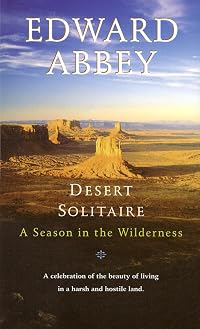
Desert Solitaire: A Season in the Wilderness
by Edward Abbey
On This Page
Description
When Desert Solitaire was first published in 1968, it became the focus of a nationwide cult. Rude and sensitive. Thought-provoking and mystical. Angry and loving. Both Abbey and this book are all of these and more. Here, the legendary author of The Monkey Wrench Gang, Abbey's Road, and many other critically acclaimed books vividly captures the essence of his life during three seasons as a park ranger in southeastern Utah. This is a rare view of a quest to experience nature in its purest show more form-the silence, the struggle, the overwhelming beauty. But this is also the gripping, anguished cry of a man of character who challenges the growing exploitation of the wilderness by oil and mining interests, as well as by the tourist industry.Abbey's observations and challenges remain as relevant now as the day he wrote them. Today, Desert Solitaire asks if any of our incalculable natural treasures can be saved before the bulldozers strike again. show lessTags
Recommendations


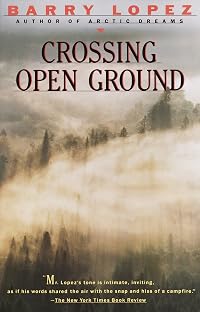
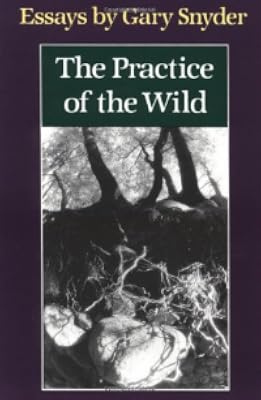
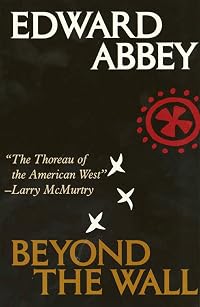
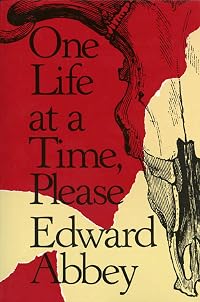
Member Recommendations

The Man Who Walked through Time: The Story of the First Trip Afoot through the Grand Canyon by Colin Fletcher
Stbalbach Both published in 1968, they are twin peaks at the beginning of a new awakening about the environment.
12


Member Reviews
2026-04-25
Edward Abbey joins some of the authors I most admire (Annie Dillard, Peter Mathiessen, Loren Eiseley) in one of my favorite groups- superb writers who have discovered that their experience of immersion in the natural world is the source of deep, if always shifting and elusive, meaning – perhaps the only meaning, the only kind of meaning.
I didn’t rush to read the man because an egotistical and misogynistic crank persona outlived him, but that’s little in evidence (maybe it hadn’t been fully developed yet) here. It is true that there’s no inkling of female subjectivity in this book – the perceivers and doers, for good or ill, are all male, and whenever he addresses a larger audience, the receivers are all imagined to be male show more too. Very old school. But what Auden said about “Kipling and his views” is true of Abbey: “Time…pardons him for writing well.”
Because he writes beautifully, bringing all the tools of the greats: factual knowledge, superb memory, fine storytelling, lyricism, humor, polemic, expert use of detail, appropriation from the classics – to this work, and the full power of the desert as a place unfolds before you.
Maybe he gets a bit more tendentious toward the end, but this is such a long, rich book that’s a very minor quibble. I haven’t felt as completely engrossed in a book in a while. And the chapter about a ten-day drift on a raft through the incomparable, ageless Glen Canyon – just before it was drowned forever by the massive dam that created the bizarre and pointless Lake Powell - was so understatedly idyllic that the final effect was horrifying, literally heart-wrenching, exactly as I’m sure he intended it to be. show less
I didn’t rush to read the man because an egotistical and misogynistic crank persona outlived him, but that’s little in evidence (maybe it hadn’t been fully developed yet) here. It is true that there’s no inkling of female subjectivity in this book – the perceivers and doers, for good or ill, are all male, and whenever he addresses a larger audience, the receivers are all imagined to be male show more too. Very old school. But what Auden said about “Kipling and his views” is true of Abbey: “Time…pardons him for writing well.”
Because he writes beautifully, bringing all the tools of the greats: factual knowledge, superb memory, fine storytelling, lyricism, humor, polemic, expert use of detail, appropriation from the classics – to this work, and the full power of the desert as a place unfolds before you.
Maybe he gets a bit more tendentious toward the end, but this is such a long, rich book that’s a very minor quibble. I haven’t felt as completely engrossed in a book in a while. And the chapter about a ten-day drift on a raft through the incomparable, ageless Glen Canyon – just before it was drowned forever by the massive dam that created the bizarre and pointless Lake Powell - was so understatedly idyllic that the final effect was horrifying, literally heart-wrenching, exactly as I’m sure he intended it to be. show less
4/5
I first read Desert Solitaire when I was maybe fourteen, and it became a book that I would eventually trace my passion for the natural world, and more specifically the desert southwestern U.S., back to. I understand that Desert Solitaire is decisive to say the least amongst the environmental community, and for a lot of good reasons. I think that Abbey as a person has a few traits that make him a total asshole. His views in this book are laced with a quiet, and sometimes booming: sexism, racism, and self-obsession. His actions and words speak to both the time in which the book was written, and his own backwards attitudes that had no excuses even in his own time.
The heart and beauty in this book can be found when Abbey describes his show more environment. I think what draws me to his prose is that his brain views the natural world in a similar way to my own. His prose can be short and blunt, and yet he still finds a way to describe things with artistry, philosophy, and reverence. Particularly important I think is the lengthy chapter detailing his float down Glen Canyon. It seems that there are so few written descriptions of that place, in comparison with how important it was, and Abbey transported me there in such a passionate way. In addition, his humor, sarcasm, and loathing for the federal government, tourism, and the American way of life seem especially relevant today. Abbey tends to go on rants that read like George Carlin sets, and I could understand feeling anyway about them, even though I myself enjoy them greatly.
I think when reading Desert Solitaire, the reader has to detach their opinion of the author and his detestable ideas, from the real point and value of the book. If Abbey doesn't speak to you personally when it comes to the natural world, then it heartily deserves a low low score. But for whatever reason, I can't help but be transfixed by it. show less
I first read Desert Solitaire when I was maybe fourteen, and it became a book that I would eventually trace my passion for the natural world, and more specifically the desert southwestern U.S., back to. I understand that Desert Solitaire is decisive to say the least amongst the environmental community, and for a lot of good reasons. I think that Abbey as a person has a few traits that make him a total asshole. His views in this book are laced with a quiet, and sometimes booming: sexism, racism, and self-obsession. His actions and words speak to both the time in which the book was written, and his own backwards attitudes that had no excuses even in his own time.
The heart and beauty in this book can be found when Abbey describes his show more environment. I think what draws me to his prose is that his brain views the natural world in a similar way to my own. His prose can be short and blunt, and yet he still finds a way to describe things with artistry, philosophy, and reverence. Particularly important I think is the lengthy chapter detailing his float down Glen Canyon. It seems that there are so few written descriptions of that place, in comparison with how important it was, and Abbey transported me there in such a passionate way. In addition, his humor, sarcasm, and loathing for the federal government, tourism, and the American way of life seem especially relevant today. Abbey tends to go on rants that read like George Carlin sets, and I could understand feeling anyway about them, even though I myself enjoy them greatly.
I think when reading Desert Solitaire, the reader has to detach their opinion of the author and his detestable ideas, from the real point and value of the book. If Abbey doesn't speak to you personally when it comes to the natural world, then it heartily deserves a low low score. But for whatever reason, I can't help but be transfixed by it. show less
Shortly after my daughter was born, my in-laws came to visit us in California. While there, they drove to Yosemite National Park for a few days. When they got back, my spouse asked them what they'd seen while they were there. "Everything," his dad replied. What they meant, of course, was everything they could see within a fifty-yard walk from their car.
It turns out my in-laws are just the kind of national park tourists Abbey pities and despises. "So long as they are unwilling to crawl out of their cars they will not discover the treasures of the national parks and will never escape the stress and turmoil of those urban-suburban complexes which they had hoped, presumably, to leave behind for a while." (52)
Abbey opines in 1968 that show more automobiles are ruining the parks by necessitating the construction of roads and parking lots and ruining the experience for the visitors by keeping them encapsulated in steel and separated from the very experiences they've come to experience. He proposes a solution: ban automobiles from the parks. He has it all planned out. At the park entrance, people will park their cars and be equipped with bicycles, free of charge, for their use while in the park. All of their camping supplies will be waiting for them at their campsite, brought out by the Park Service while the visitors explore the park on their bicycles. There, too, will be "concessioners waiting, ready to supply whatever needs might have been overlooked, or to furnish rooms and meals for those who don't want to camp out." (53) As someone who has both envied and feared for the safety of bicyclists on park roads, this sounds like an excellent idea to me. Biking is much safer when one isn't sharing the road with cars.
Abbey anticipates problems with his plan (and is especially uninterested in finding ways to accommodate the elderly, those with mobility issues, and children), but his confidence in the adventurous spirit of the average American allows him to dismiss these concerns quickly:
I look at the interest of GenXers and Millennials in homemade bread and home-fermented foods, LPs, manual typewriters, instant cameras, and dragging logs and running obstacle courses through the mud for exercise, and I suspect Abbey's right. There's something tactile we're missing in our touch-screen, climate-controlled, supermarket lives that we're trying to recapture by going back to a pre-digital time. Things are too easy here, and yet so full of stress and artificiality, and I suspect that a "yearning for adventure, difficulty, challenge"---for things that are real---is part of this trend for the retro.
And even my Boomer in-laws have changed over the twelve years since that Yosemite visit. They began bicycling, and with a cyclist's eyes, they began to see their condo complex for what it is: an island accessible only by automobile. Once they'd experienced the freedom and slower pace and satisfying physical challenge of getting about by bicycle, this arrangement was no longer tenable; they sold their condo and moved to a more bikeable location. If after more than six decades of life they can discover the wonders of the world outside of their cars, perhaps most of the population of the U.S. could do the same, if given a chance.
But the chips are stacked against this kind of change. Our country is set up for cars. We have interstates rather than bike lanes, strip malls instead of sidewalks. Those of us who wish to get around without our cars risk our lives; I don't blame those who choose not to take this risk at the same time that I resent them for not pushing for changes that would make biking and walking---outside of a gym---less risky.
There's also the difficulty of time. Our jobs and our need for possessions and housing and health insurance and college tuition for our children puts our employers in a position of power. We can't even get paid time off to care for our newborns; how could we take the time necessary to explore without our cars? To cycle through even a smaller park like Joshua Tree National Park would take far longer than exploring the park by car, driving to a trailhead and hiking for the day and then driving back out to stay at a hotel or Airbnb.
Abbey writes, "We are preoccupied with time. If we could learn to love space as deeply as we are now obsessed with time, we might discover a new meaning in the phrase to live like men" (emphasis in the original). (58) This is probably true, but it's also easier said than done. Even those of us lucky enough to have paid vacation don't often have enough of it---or the freedom to untether ourselves from our jobs even while on vacation---to take the time to travel slower and experience the places we're visiting without the steel shell surrounding us. We get the Instagram post and then it's time to leave so we can get back to the suburbs and continue our lives of quiet desperation.
This is a book of pull and push. Abbey loves the desert, but even he feels the pull of civilization, the company of people, the bustle of the metropolis. Even with all of his rhetoric, Abbey recognizes that the lure of the desert, the lure of the wild is something that's not necessarily for the desert itself:
Knowing the wilderness is out there may be enough to keep us going, even in our constructed world. But, as Abbey worries again and again throughout this book, there's a real danger of these wild spaces being lost to development. Areas of wilderness face continuous dangers, including both the road- and dam-building against which Abbey primarily rails and the current dangers of development for the purposes of resource extraction in places like Bears Ears National Monument and the Arctic National Wildlife Refuge. We as a culture keep pushing for growth in the form of an ever-increasing GDP, but what happens to us if this growth is at the expense of those wild spaces that provide us with the possibility of escape (even putting aside the ecological impacts that are already affecting us)?
About the developers' plan to put in dams and divert water from desert waterways to population centers: "What for? 'In anticipation of future needs, in order to provide for the continued industrial and population growth of the Southwest.' And in such an answer we see that it's only the old numbers game again, the monomania of small and very simple minds in the grip of an obsession. They cannot see that growth for the sake of growth is cancerous madness, that Phoenix and Albuquerque will not be better cities to live in when their populations are doubled again and again. They would never understand that an economic system which can only expand or expire must be false to all that is human." (127)
This is something I've never quite understood. What's wrong with leaving areas to develop only as the resources in that area allow? If an area can only grow to a point of homeostasis with the environment, what's the problem if those who live there are healthy and happy, fulfilled and living their best lives? Why the need for constant growth? What would happen if we chose to define "growth" as spiritual growth, intellectual growth, emotional growth rather than only in terms of population and finance? Finance is constructed, abstract. It will not feed our souls or our bodies. It won't protect us from our own mortality; it will only distract us from life.
It comes back to that need for the real that's pulling at hipsters and housewives (and hipster housewives) of the post-Boomer generations. And if we're seeking reality, Abbey asserts, the desert has what we're looking for.
"Under the desert sun, in that dogmatic clarity, the fables of theology and the myths of classical philosophy dissolve like mist. The air is clean, the rock cuts cruelly into flesh; shatter the rock and the odor of flint rises to your nostrils, bitter and sharp. Whirlwinds dance across the salt flats, a pillar of dust by day; the thorn bush breaks into flame at night. What does it mean? It means nothing. It is as it is and has no need for meaning. The desert lies beneath and soars beyond any possible human qualification. Therefore, sublime." (194)
This book is a love letter to the desert and a preemptive farewell to a wilderness that is not-so-slowly being consumed. I read it and I want to get in my car and drive to the desert, park my car and walk until night then camp under the stars (perhaps on a cot because scorpions and snakes and tarantulas are a little too real for me). This book gives me a bittersweet sort of hope that our culture might find a balance before all of the wild places are lost and there's nowhere left for escape. show less
It turns out my in-laws are just the kind of national park tourists Abbey pities and despises. "So long as they are unwilling to crawl out of their cars they will not discover the treasures of the national parks and will never escape the stress and turmoil of those urban-suburban complexes which they had hoped, presumably, to leave behind for a while." (52)
Abbey opines in 1968 that show more automobiles are ruining the parks by necessitating the construction of roads and parking lots and ruining the experience for the visitors by keeping them encapsulated in steel and separated from the very experiences they've come to experience. He proposes a solution: ban automobiles from the parks. He has it all planned out. At the park entrance, people will park their cars and be equipped with bicycles, free of charge, for their use while in the park. All of their camping supplies will be waiting for them at their campsite, brought out by the Park Service while the visitors explore the park on their bicycles. There, too, will be "concessioners waiting, ready to supply whatever needs might have been overlooked, or to furnish rooms and meals for those who don't want to camp out." (53) As someone who has both envied and feared for the safety of bicyclists on park roads, this sounds like an excellent idea to me. Biking is much safer when one isn't sharing the road with cars.
Abbey anticipates problems with his plan (and is especially uninterested in finding ways to accommodate the elderly, those with mobility issues, and children), but his confidence in the adventurous spirit of the average American allows him to dismiss these concerns quickly:
"Critics of my program will argue that it is too late for such a radical reformation of a people's approach to the out-of-doors, that the pattern is too deeply set, and that the majority of Americans would not be willing to emerge from the familiar luxury of their automobiles, even briefly, to try the little known and problematic advantages of the bicycle, the saddle horse, and the footpath. This might be so; but how can we be sure unless we attempt the experiment? I, for one, suspect that millions of our citizens, especially the young, are yearning for adventure, difficulty, challenge---they will respond with enthusiasm." (56)
I look at the interest of GenXers and Millennials in homemade bread and home-fermented foods, LPs, manual typewriters, instant cameras, and dragging logs and running obstacle courses through the mud for exercise, and I suspect Abbey's right. There's something tactile we're missing in our touch-screen, climate-controlled, supermarket lives that we're trying to recapture by going back to a pre-digital time. Things are too easy here, and yet so full of stress and artificiality, and I suspect that a "yearning for adventure, difficulty, challenge"---for things that are real---is part of this trend for the retro.
And even my Boomer in-laws have changed over the twelve years since that Yosemite visit. They began bicycling, and with a cyclist's eyes, they began to see their condo complex for what it is: an island accessible only by automobile. Once they'd experienced the freedom and slower pace and satisfying physical challenge of getting about by bicycle, this arrangement was no longer tenable; they sold their condo and moved to a more bikeable location. If after more than six decades of life they can discover the wonders of the world outside of their cars, perhaps most of the population of the U.S. could do the same, if given a chance.
But the chips are stacked against this kind of change. Our country is set up for cars. We have interstates rather than bike lanes, strip malls instead of sidewalks. Those of us who wish to get around without our cars risk our lives; I don't blame those who choose not to take this risk at the same time that I resent them for not pushing for changes that would make biking and walking---outside of a gym---less risky.
There's also the difficulty of time. Our jobs and our need for possessions and housing and health insurance and college tuition for our children puts our employers in a position of power. We can't even get paid time off to care for our newborns; how could we take the time necessary to explore without our cars? To cycle through even a smaller park like Joshua Tree National Park would take far longer than exploring the park by car, driving to a trailhead and hiking for the day and then driving back out to stay at a hotel or Airbnb.
Abbey writes, "We are preoccupied with time. If we could learn to love space as deeply as we are now obsessed with time, we might discover a new meaning in the phrase to live like men" (emphasis in the original). (58) This is probably true, but it's also easier said than done. Even those of us lucky enough to have paid vacation don't often have enough of it---or the freedom to untether ourselves from our jobs even while on vacation---to take the time to travel slower and experience the places we're visiting without the steel shell surrounding us. We get the Instagram post and then it's time to leave so we can get back to the suburbs and continue our lives of quiet desperation.
This is a book of pull and push. Abbey loves the desert, but even he feels the pull of civilization, the company of people, the bustle of the metropolis. Even with all of his rhetoric, Abbey recognizes that the lure of the desert, the lure of the wild is something that's not necessarily for the desert itself:
"A man could be a lover and defender of the wilderness without ever in his lifetime leaving the boundaries of asphalt, powerlines, and right-angled surfaces. We need wilderness whether or not we ever set foot in it. We need a refuge even though we may never need to go there. I may never in my life get to Alaska, but I am grateful that it's there. We need the possibility of escape as surely as we need hope; without it the life of the cities would drive all men into crime or drugs or psychoanalysis." (129)
Knowing the wilderness is out there may be enough to keep us going, even in our constructed world. But, as Abbey worries again and again throughout this book, there's a real danger of these wild spaces being lost to development. Areas of wilderness face continuous dangers, including both the road- and dam-building against which Abbey primarily rails and the current dangers of development for the purposes of resource extraction in places like Bears Ears National Monument and the Arctic National Wildlife Refuge. We as a culture keep pushing for growth in the form of an ever-increasing GDP, but what happens to us if this growth is at the expense of those wild spaces that provide us with the possibility of escape (even putting aside the ecological impacts that are already affecting us)?
About the developers' plan to put in dams and divert water from desert waterways to population centers: "What for? 'In anticipation of future needs, in order to provide for the continued industrial and population growth of the Southwest.' And in such an answer we see that it's only the old numbers game again, the monomania of small and very simple minds in the grip of an obsession. They cannot see that growth for the sake of growth is cancerous madness, that Phoenix and Albuquerque will not be better cities to live in when their populations are doubled again and again. They would never understand that an economic system which can only expand or expire must be false to all that is human." (127)
This is something I've never quite understood. What's wrong with leaving areas to develop only as the resources in that area allow? If an area can only grow to a point of homeostasis with the environment, what's the problem if those who live there are healthy and happy, fulfilled and living their best lives? Why the need for constant growth? What would happen if we chose to define "growth" as spiritual growth, intellectual growth, emotional growth rather than only in terms of population and finance? Finance is constructed, abstract. It will not feed our souls or our bodies. It won't protect us from our own mortality; it will only distract us from life.
It comes back to that need for the real that's pulling at hipsters and housewives (and hipster housewives) of the post-Boomer generations. And if we're seeking reality, Abbey asserts, the desert has what we're looking for.
"Under the desert sun, in that dogmatic clarity, the fables of theology and the myths of classical philosophy dissolve like mist. The air is clean, the rock cuts cruelly into flesh; shatter the rock and the odor of flint rises to your nostrils, bitter and sharp. Whirlwinds dance across the salt flats, a pillar of dust by day; the thorn bush breaks into flame at night. What does it mean? It means nothing. It is as it is and has no need for meaning. The desert lies beneath and soars beyond any possible human qualification. Therefore, sublime." (194)
This book is a love letter to the desert and a preemptive farewell to a wilderness that is not-so-slowly being consumed. I read it and I want to get in my car and drive to the desert, park my car and walk until night then camp under the stars (perhaps on a cot because scorpions and snakes and tarantulas are a little too real for me). This book gives me a bittersweet sort of hope that our culture might find a balance before all of the wild places are lost and there's nowhere left for escape. show less
Abbey sets himself the paradoxical task to communicate, write about and describe the American desert wilderness of the canyonlands of Utah using language, metaphor and simile, whilst trying to “see it as it is in itself, devoid of all humanly ascribed qualities”. Although written up and published in 1968, it is mainly based upon the journals he kept from two stints as a seasonal ranger (April to September) for the United States National Park Service at Arches National Monument, near the town of Moab, Utah in 1956 and 1957. Introducing the area by describing his work maintaining trails, greeting visitors who seem to only visit at weekends, and collecting campground fees, Abbey writes with the hindsight of having seen the area show more developed.
He describes the conflict between the scenic wilderness and the necessarily degrading “civilisation” that “industrial” tourism demands.
After Abbey’s spends chapters describing the Arches rock formations, which remind me of (on a much smaller scale) Brimham Rocks in Yorkshire and the vast barrenness of the deserts (which remind me of inland Iceland), Abbey inserts a “polemic” about industrial tourism, a chapter with a meandering, fictionalised story of uranium prospecting, adultery and murder.
Chapters follow on Cowboys (excellent descriptions of herding cattle from the canyons in June up to summer pastures, helping old timers in debt) and Indians (meandering generalised comments and observations about the Navajo), foreseeing their demise, and advocating birth control, although I suspect this is in general rather than particular to the Navajo.
There is a wonderful long chapter (Down the River) about a seven or eight day trip in rubber boats down the Glen Canyon section of the Colorado River, incorporating a day’s detour on foot up the Escalante “river”, to enter into and absorb the wilderness, before it was dammed and lost forever. This chapter alone makes it worth reading the book. There are other shorter but equally fine chapters about climbing Tukuhnikivats and descending into The Maze.
Abbey writes with an easy and civilised style, referring to the poets with familiarity, Dante’s Paradise and Housman’s A Shropshire Lad. He can describe the plant life in a romantic style: Purple sage: crush the leaves between thumb and finger and you release that characteristic odor, pungent and bittersweet which means canyon country, high lonesome mesaland, the winds that blow from far away. (Page 49)
Or after a recollection of Eliot’s The Waste Land, his dichotomy between civilisation and wilderness:
Here I am, relaxing into memories of ancient books - a surefire sign of spiritual fatigue. That screen of words, that veil of ideas, issuing from the brain like a mental smog that keeps getting between a man and the world, obscuring vision. (Page 227)
Overall the book works very well for me, even though it is full of contradictions in its focus, changing chapter to chapter from descriptive travelogue, political rant, fictionalised anecdote, and ecstatic nature writing. It is the travelogue and nature writing that stand out and make the book; read it for that journey.
On my bookshelves I have Henry Miller’s The Colossus of Maroussi, a travelogue of Greece just before the Second World War which I read many years ago, and I am going to have to revisit this, as I recall it having the same rambling energy of Abbey’s book. show less
He describes the conflict between the scenic wilderness and the necessarily degrading “civilisation” that “industrial” tourism demands.
After Abbey’s spends chapters describing the Arches rock formations, which remind me of (on a much smaller scale) Brimham Rocks in Yorkshire and the vast barrenness of the deserts (which remind me of inland Iceland), Abbey inserts a “polemic” about industrial tourism, a chapter with a meandering, fictionalised story of uranium prospecting, adultery and murder.
Chapters follow on Cowboys (excellent descriptions of herding cattle from the canyons in June up to summer pastures, helping old timers in debt) and Indians (meandering generalised comments and observations about the Navajo), foreseeing their demise, and advocating birth control, although I suspect this is in general rather than particular to the Navajo.
There is a wonderful long chapter (Down the River) about a seven or eight day trip in rubber boats down the Glen Canyon section of the Colorado River, incorporating a day’s detour on foot up the Escalante “river”, to enter into and absorb the wilderness, before it was dammed and lost forever. This chapter alone makes it worth reading the book. There are other shorter but equally fine chapters about climbing Tukuhnikivats and descending into The Maze.
Abbey writes with an easy and civilised style, referring to the poets with familiarity, Dante’s Paradise and Housman’s A Shropshire Lad. He can describe the plant life in a romantic style: Purple sage: crush the leaves between thumb and finger and you release that characteristic odor, pungent and bittersweet which means canyon country, high lonesome mesaland, the winds that blow from far away. (Page 49)
Or after a recollection of Eliot’s The Waste Land, his dichotomy between civilisation and wilderness:
Here I am, relaxing into memories of ancient books - a surefire sign of spiritual fatigue. That screen of words, that veil of ideas, issuing from the brain like a mental smog that keeps getting between a man and the world, obscuring vision. (Page 227)
Overall the book works very well for me, even though it is full of contradictions in its focus, changing chapter to chapter from descriptive travelogue, political rant, fictionalised anecdote, and ecstatic nature writing. It is the travelogue and nature writing that stand out and make the book; read it for that journey.
On my bookshelves I have Henry Miller’s The Colossus of Maroussi, a travelogue of Greece just before the Second World War which I read many years ago, and I am going to have to revisit this, as I recall it having the same rambling energy of Abbey’s book. show less
During the 1950s Edward Abbey spent several summers working as a park ranger in Arches National Park near Moab, Utah. At that time relatively few people knew about the area or wanted to vacation there, especially since the roads weren't paved and were sometimes difficult to get through, the campsites were primitive compared to today's standards, and you had to hike several miles to see some of the formations. This book came from the journals Abbey kept during those years and is a reflection about the majesty of the desert and nature in general comparable to Thoreau's Walden. It is also a call for the preservation of the American wilderness at the expense of making national parks more accessible to tourists.
I think Abbey himself sums up show more the book best in the introduction: "I quite agree that much of the book will seem coarse, rude, bad-tempered, violently prejudiced, unconstructive--even frankly antisocial in its point of view. Serious critics, serious librarians, serious associate professors of English will if they read this work dislike it intensely; at least I hope so. To others I can only say that if the book has virtues they cannot be disentangled from the faults; that there is a way of being wrong which is also sometimes necessarily right."
The introduction to the book floored me, and I was really excited to start reading the rest of it. I was disappointed with the rest of the book, however, because of Abbey's militant attitude (which he did warn us about, so it really shouldn't have been a surprise). The more I think about it, though, the more I appreciate the book for what it is, faults and all. As Abbey said, sometimes it's necessary to be wrong because it gets the discussion started. I've also realized that when one person has a spiritual experience while communing with nature, like Abbey and Thoreau both did, it's really hard to convey that experience to anyone else because it is so intensely personal. I recommend reading this one. You probably won't love it, but that's not the point. show less
I think Abbey himself sums up show more the book best in the introduction: "I quite agree that much of the book will seem coarse, rude, bad-tempered, violently prejudiced, unconstructive--even frankly antisocial in its point of view. Serious critics, serious librarians, serious associate professors of English will if they read this work dislike it intensely; at least I hope so. To others I can only say that if the book has virtues they cannot be disentangled from the faults; that there is a way of being wrong which is also sometimes necessarily right."
The introduction to the book floored me, and I was really excited to start reading the rest of it. I was disappointed with the rest of the book, however, because of Abbey's militant attitude (which he did warn us about, so it really shouldn't have been a surprise). The more I think about it, though, the more I appreciate the book for what it is, faults and all. As Abbey said, sometimes it's necessary to be wrong because it gets the discussion started. I've also realized that when one person has a spiritual experience while communing with nature, like Abbey and Thoreau both did, it's really hard to convey that experience to anyone else because it is so intensely personal. I recommend reading this one. You probably won't love it, but that's not the point. show less
It's hard to fathom if Mr. Abbey is hemmed in by his own curmudgeonly views and we don't get to learn about his gentler humane side. He professes to be a humanist inside the book. I don't seriously think he is the misanthrope he might like us to believe he is.
He can write beautifully and succinctly about his subject, in this case Arches National Monument in Utah. His description of a canoe trip down Glen Canyon, Colorado River just prior to the construction of the Glen Canyon Dam is classic adventure stuff and a highlight of the book.
We must also bear in mind that the book is around sixty years old and that he writes of a time within memory of some, but one that is changed for neither better nor worse. What remains for today's reader show more are Mr. Abbey's abiding love of the desert and his deep respect for its unforgiving nature. It's an environment that will reward the visitor who gets off the road and is prepared to be overawed by one of nature's most splendid prospects. show less
He can write beautifully and succinctly about his subject, in this case Arches National Monument in Utah. His description of a canoe trip down Glen Canyon, Colorado River just prior to the construction of the Glen Canyon Dam is classic adventure stuff and a highlight of the book.
We must also bear in mind that the book is around sixty years old and that he writes of a time within memory of some, but one that is changed for neither better nor worse. What remains for today's reader show more are Mr. Abbey's abiding love of the desert and his deep respect for its unforgiving nature. It's an environment that will reward the visitor who gets off the road and is prepared to be overawed by one of nature's most splendid prospects. show less
Members
- Recently Added By
Lists

Recommended Nature Writing
346 works; 180 members

Best Autobiographies and Memoirs
370 works; 67 members

Best Biographies, Autobiographies and Memoirs
465 works; 160 members

The Desert: A Reading List
5 works; 1 member

Books With Time Words in the Title
160 works; 4 members

Books Read in 2021
5,361 works; 114 members

Mustich's 1000 Books to Read Before You Die: A Life Changing List
1,001 works; 20 members

Best Sellers / Popular 1968
237 works; 5 members

Books We Love to Reread
695 works; 298 members

Books That Changed Our Perspective
423 works; 168 members
Author Information

43+ Works 14,062 Members
Edward Abbey was born January 29, 1927 in Indiana, Pennsylvania, and grew up in nearby Home. After military service in Naples, Italy, from 1945-47, he enrolled in Indiana University of Pennsylvania for a year before traveling to the West. He fell in love with the desert Southwest and eventually attended the University of New Mexico, where he show more obtained both graduate and post-graduate degrees. Abbey was a Fulbright Fellow from 1951-52. Abbey was an anarchist and a radical environmentalist; these positions are reflected in his writings. His novel Fire on the Mountain won the Western Heritage Award for Best Novel in 1963. Desert Solitaire: A Season in the Wilderness, considered by many to be his best work, is nonfiction that reflects Abbey's love for the American Southwest and draws on his experiences as a park ranger. Among his best-known works are The Brave Cowboy (1956), The Monkey Wrench Gang (1975), and The Fool's Progress (1988). In 1966 The Brave Cowboy was made into a movie titled Lonely Are the Brave, starring Kirk Douglas. Two collections of essays have been published since his death in 1989: Confessions of a Barbarian in 1994 and The Serpents of Paradise the following year. In 1987, Abbey was offered the American Academy of Arts and Letters Award, but he declined. Abbey died in March 1989, near Tucson, Arizona, from complications following surgery. He did not want a traditional burial but rather requested to be buried in the Arizona desert, where he could nourish the earth which had been the subject of so many of his works. (Bowker Author Biography) show less
Some Editions
Awards and Honors
Awards
Distinctions
Notable Lists
Series
Belongs to Publisher Series
Work Relationships
Has as a student's study guide
Common Knowledge
- Canonical title
- Desert Solitaire: A Season in the Wilderness
- Original title
- Desert Solitaire: A Season in the Wilderness
- Original publication date
- 1968 (1e édition originale américaine) (1e édition originale américaine); 1992 (1e traduction et édition française, Le grand dehors, Hoëbecke) (1e traduction et édition française, Le grand dehors, Hoëbecke); 1998 (Réédition française, Petite bibliothèque, Payot) (Réédition française, Petite bibliothèque, Payot); 2006 (Réédition française, Petite bibliothèque, Payot) (Réédition française, Petite bibliothèque, Payot); 2010-10-07 (Nouvelle traduction par Jacques Mailhos et édition française, Nature writing, Gallmeister) (Nouvelle traduction par Jacques Mailhos et édition française, Nature writing, Gallmeister); 2018-08-23 (Réédition française, Totem, Gallmeister) (Réédition française, Totem, Gallmeister)
- People/Characters
- Edward Abbey
- Important places
- Arizona, USA; Arches National Park, Utah, USA; Moab, Utah, USA; Utah, USA
- Epigraph
- Give me silence, water, hope
Give me struggle, iron, volcanoes
-Neruda - Dedication
- for Josh and Aaron
- First words
- About ten years ago I took a job as a seasonal park ranger in a place called Arches National Monument near the little town of Moab in southeast Utah.
- Last words
- (Click to show. Warning: May contain spoilers.)If I return.
- Blurbers
- Teale, Edwin Way
- Disambiguation notice*
- Pb CK :
Date de première publication
1968 (1e édition originale américaine)
1992 (1e traduction par André le Bihan et édition française, Le grand dehors, Hoëbecke)
1998 (Réédition fr... (show all)ançaise, Petite bibliothèque, Payot)
2006 (Réédition française, Petite bibliothèque, Payot)
2010-10-07 (Nouvelle traduction par Jacques Mailhos et édition française, Nature writing, Gallmeister)
2018-08-23 (Réédition française, Totem, Gallmeister)
*Some information comes from Common Knowledge in other languages. Click "Edit" for more information.
Classifications
Statistics
- Members
- 4,518
- Popularity
- 3,272
- Reviews
- 100
- Rating
- (4.23)
- Languages
- 8 — English, Finnish, French, German, Italian, Japanese, Spanish, Chinese, traditional
- Media
- Paper, Audiobook, Ebook
- ISBNs
- 43
- ASINs
- 46