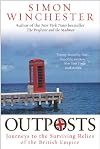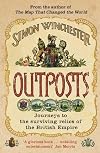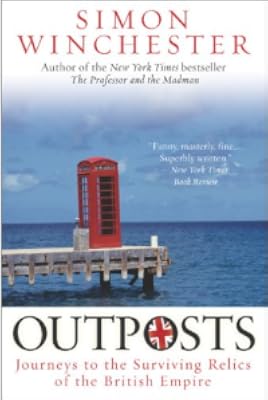
Outposts: Journeys to the Surviving Relics of the British Empire
by Simon Winchester
On This Page
Description
The New York Times bestselling author of Krakatoa and The Professor and the Madman takes readers on a quirky and charming tour of the last outpost of the British empireOriginally published in 1985, Outposts is Simon Winchester's journey to find the vanishing empire, “on which the sun never sets.” In the course of a three-year, 100,000 mile journey—from the chill of the Antarctic to the blue seas of the Caribbean, from the South of Spain and the tip of China to the utterly remote show more specks in the middle of gale-swept oceans—he discovered such romance and depravity, opulence and despair tht he was inspired to write what may be the last contemporary account of the British empire. Written with Winchester's captivating style and breadth, here are conversations and anecdotes, myths and political analysis, scenery and history—a poignant and colorful record of the lingering beat of what was once the heart of the civilized world.
. show less
Tags
Recommendations


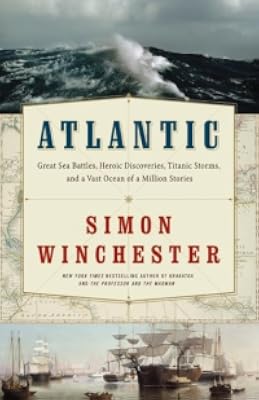




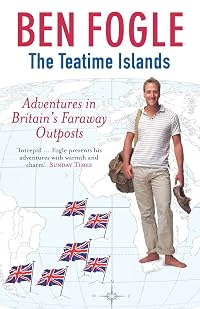





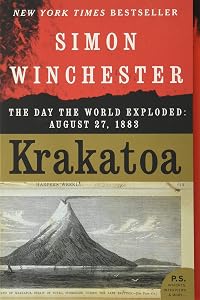


















Member Recommendations
John_Vaughan Outposts details a return to the place of Napolean's excile..

John_Vaughan Futher reading on the exploration of man and countries.


Member Reviews
Oh did I love this book. Winchester's look at the rocks and atolls and little plots that constitute the remaining remnants of the British Empire is colorful, funny, and smart. Winchester has deep empathy for the people he meets, and is able to discuss both the good and the bad of the world's Brit-flavored places and societies. Winchester always has an opinion, and it's frequently an uncommon one. That's just one of the reasons I like his writing so much.
The humor is often droll, and insular. And I just love that. It's sometimes work to follow everything he's saying, but for me it's a labor of love.
The humor is often droll, and insular. And I just love that. It's sometimes work to follow everything he's saying, but for me it's a labor of love.
The copy I have of this book was published in 1984, so much of the political and other information is very out of date. However, as a travelogue with some very astute and perhaps controversial observations it is still a very enjoyable read. Winchester is a favorite author of mine, Krakatoa and A Crack In The Edge of the World being a couple of my favorites. In Outposts however Winchester relates his personal travels to the (at the time) remaining colonial outposts of the British Empire. He also shares his thoughts on how the British government has ignored or short-changed the residents of these outposts. He does at time seem to take a long time to reach a point, and often skims over many aspects of where he visits with nary an show more explanation, but if you are willing to let him be the guide you will find it an enjoyable if sometimes frustrating journey. show less
Simon Winchester's travels to the remnants of the British Empire serves as a genial introduction to the remote places one is unlikely to visit (Gibraltar, Hong Kong and the collection of islands around the Caribbean excepted). To control the world's shipping lanes, the British Empire established posts and colonies in every strategic location. While most spots with a sizable number of inhabitants have nowadays declared their independence, Britannia still rules over the forgotten rocks of Saint Helena and Tristan. There is a curious mix between tourist (Bermuda, Gibraltar, etc.) and military destinations (Diego Garcia, Saint Helena, Gibraltar). The book having been written during the Cold War in 1984, with Soviet nuclear submarines show more lurking beyond Bermuda, the military obviously didn't like the presence of a snooping journalist.
Winchester draws a perverse joy out of not following protocol (a bit of research, which he surely had done beforehand, would have informed him that he could not simply walk from Spain to Gibraltar). This rebellious spirit lives in perfect conformity in drinking tea with the local governor in his best British Untertan mode. The two themes of the books are pride in British accomplishments and glory that contrasts with somewhat dire British living conditions that lag behind US/First World standards. In reality, the British presence at many of these locations is but to serve as landlord to American tourists and American military forces. Insofar as the current British Empire now only rules over distant rocks and gulls it has become a benevolent institution, similar from the transformation of many crusading orders that lost their territories but have reinvented themselves into modern healthcare providers.
A fast and fun read. show less
Winchester draws a perverse joy out of not following protocol (a bit of research, which he surely had done beforehand, would have informed him that he could not simply walk from Spain to Gibraltar). This rebellious spirit lives in perfect conformity in drinking tea with the local governor in his best British Untertan mode. The two themes of the books are pride in British accomplishments and glory that contrasts with somewhat dire British living conditions that lag behind US/First World standards. In reality, the British presence at many of these locations is but to serve as landlord to American tourists and American military forces. Insofar as the current British Empire now only rules over distant rocks and gulls it has become a benevolent institution, similar from the transformation of many crusading orders that lost their territories but have reinvented themselves into modern healthcare providers.
A fast and fun read. show less
Simon Winchester decided to visit the remnants of the remaining British Empire, and this is the story of his travels, over several years, to those remote outposts. I will say first that I"ve never quite gotten on with Simon Winchester--something about his smugness and attitude of unconscious privilege rubs me the wrong way, and there's a bit of that here. But I was really interested in the topic of exploring these remote places, and decided to read this.
My biggest problem with the book is that it is way out of date, something I should have realized, but did not, before beginning it. It was written in the mid 1980's, when Hong Kong was still a colony, so I can't help wondering what the status of the other places he visited is today. In show more addition, I couldn't help wondering, as he described these remote places, how accurate these descriptions would be now, nearly 40 years later, and whether these places would even be recognizable today. For example, at the time of his visit, the Cayman Islands were not the overseas financial center for tax shelters they are today. I personally would not recommend this book, but if what the British Empire looked like 40 years ago is of interest to you, go ahead.
Just for informational purposes, here are the British colonies Winchester visited:
1. British Indian Ocean Territory (Diego Garcia)--He didn't step foot on land here, but spent the night on a boat anchored in the lagoon. All natives were evicted by the British, and the island leased to the Americans for a military base. This has led to court proceedings by the natives who want to return to their homeland. Not sure what the status is today.
2.Tristan da Cunha--This remote island was settled by the British military to prevent Napoleon from excaping from St. Helena. Winchester describes it as the "tiniest and loneliest" of the remaining dependencies.
3. Gibraltar--Basically a British naval base. Under a 1970's emigration act, Gibraltans are one of only 2 former British colonies with full rights to emigrate to Great Britain.
4. Ascension Island--Basically a mid-Atlantic volcano, "Earth in its raw state." It was originally classified as a ship, and was settled, like Tristan, to prevent Napoleon from escaping. At the time of Winchester's visit, it was a relay station for the BBC, a cable center, a stopover for the British military on the way to the Falklands, and full of electronic spies and satellite monitoring stuff.
5. St. Helena--in his view the loveliest major outpost, but now an "imperial slum," its need largely ignored by the British government. Once the site of Napoleon's exile, there is now no on-island work for the inhabitants, who frequently go to Ascension Island for months at a time to work.
6. Hong Kong--skyscrapers, bankers and millionaires.
7. Bermuda--British, but utterly dependent on the US. There's a large US military base, and he views it more as an American colony than British.
8. The British West Indies--consisting of the Turks and Caicos, the British Virgin Islands, Anguilla, Montserrat, and the Cayman Islands.
9. The Falkland Islands--Winchester was there at the beginning of the Falkland War with Argentina.
10. Pitcairn Island--settled by the Bounty mutineers. Two supply ships visit it annually, so a traveler's choice is to stay 10 hours (while the supply ship is in port) or to wait 6 months for the next ship. Winchester did not visit here.
2 1/2 stars show less
My biggest problem with the book is that it is way out of date, something I should have realized, but did not, before beginning it. It was written in the mid 1980's, when Hong Kong was still a colony, so I can't help wondering what the status of the other places he visited is today. In show more addition, I couldn't help wondering, as he described these remote places, how accurate these descriptions would be now, nearly 40 years later, and whether these places would even be recognizable today. For example, at the time of his visit, the Cayman Islands were not the overseas financial center for tax shelters they are today. I personally would not recommend this book, but if what the British Empire looked like 40 years ago is of interest to you, go ahead.
Just for informational purposes, here are the British colonies Winchester visited:
1. British Indian Ocean Territory (Diego Garcia)--He didn't step foot on land here, but spent the night on a boat anchored in the lagoon. All natives were evicted by the British, and the island leased to the Americans for a military base. This has led to court proceedings by the natives who want to return to their homeland. Not sure what the status is today.
2.Tristan da Cunha--This remote island was settled by the British military to prevent Napoleon from excaping from St. Helena. Winchester describes it as the "tiniest and loneliest" of the remaining dependencies.
3. Gibraltar--Basically a British naval base. Under a 1970's emigration act, Gibraltans are one of only 2 former British colonies with full rights to emigrate to Great Britain.
4. Ascension Island--Basically a mid-Atlantic volcano, "Earth in its raw state." It was originally classified as a ship, and was settled, like Tristan, to prevent Napoleon from escaping. At the time of Winchester's visit, it was a relay station for the BBC, a cable center, a stopover for the British military on the way to the Falklands, and full of electronic spies and satellite monitoring stuff.
5. St. Helena--in his view the loveliest major outpost, but now an "imperial slum," its need largely ignored by the British government. Once the site of Napoleon's exile, there is now no on-island work for the inhabitants, who frequently go to Ascension Island for months at a time to work.
6. Hong Kong--skyscrapers, bankers and millionaires.
7. Bermuda--British, but utterly dependent on the US. There's a large US military base, and he views it more as an American colony than British.
8. The British West Indies--consisting of the Turks and Caicos, the British Virgin Islands, Anguilla, Montserrat, and the Cayman Islands.
9. The Falkland Islands--Winchester was there at the beginning of the Falkland War with Argentina.
10. Pitcairn Island--settled by the Bounty mutineers. Two supply ships visit it annually, so a traveler's choice is to stay 10 hours (while the supply ship is in port) or to wait 6 months for the next ship. Winchester did not visit here.
2 1/2 stars show less
This is the fascinating narrative of Winchester's travels to the remnants of the British Empire in the early 1980s. He traveled to every then-remaining British Colony with the exception of the Pitcairn Islands (though he says he has visited twice since he wrote the original book in the forward to the 2004 edition), British Antarctica and St. George Island. He provides a brief history of each colony, a nice narrative of the visit itself, and insight into the colonist's lives. He was actually in the Falkland Islands at the start of the war with Argentina, and was subsequently imprisoned in Argentina as a suspected spy (I'd love to read his book about that experience - Prison Diary: Argentina). My only problem with the book was his show more pessimism about British handling of these last remnants of her great Empire. I would expect more of her, and wish the forward to the new edition would have discussed this more. He did at least mention that the loyal citizens of St. Helena now enjoy almost complete rights as citizens of Great Britain (along with Gibralter and the Falklands), but it seems that most of the remaining colonies are still in a state of exclusion from the rights of full citizenship. Highly recommended. show less
I never thought I would say this about a book written by Simon Winchester, but it's boring. His pompousness (what's with former British colonies being "better" than their French/Dutch/Italian counterparts) I can take, but after reading a full sentence filled with names of obscure places that I don't care to know about, I decided that I didn't have the patience to go on with this book.
I've always wanted to visit St. Helena, and this book only reaffirms that. Winchester does and admirable job of introducing some of the most isolated places on earth to the reader.
I love travel writing, but one thing that always gets me about it is how timid many writers can be in calling a spade a spade. If a town or a region is a depressing dump, say so. Winchester says so. He loves the physical beauty of the Falklands, but bemoans the air of defeat in the capitol and the seeming unwillingness of the Islanders to help themselves along.
Same goes for Turks & Caicos and Gibraltar.
That being said, I'd still give my left arm to travel to every one of these places.
I love travel writing, but one thing that always gets me about it is how timid many writers can be in calling a spade a spade. If a town or a region is a depressing dump, say so. Winchester says so. He loves the physical beauty of the Falklands, but bemoans the air of defeat in the capitol and the seeming unwillingness of the Islanders to help themselves along.
Same goes for Turks & Caicos and Gibraltar.
That being said, I'd still give my left arm to travel to every one of these places.
Members
- Recently Added By
Lists

Best of Travel Narratives
142 works; 28 members

Best British Empire History Books
39 works; 8 members
Author Information

53+ Works 38,718 Members
Simon Winchester was born in London, England on September 28, 1944. He read geology at St. Catherine's College, Oxford. After graduation in 1966, he joined a Canadian mining company and worked as field geologist in Uganda. The following year he decided to become a journalist. His first reporting job was for The Journal, Newcastle upon Tyne. In show more 1969, he joined The Guardian and was named Britain's Journalist of the Year in 1971. He also worked for the Daily Mail and the Sunday Times before becoming a freelancer. He is the author of numerous books including In Holy Terror, The River at the Center of the World, The Alice Behind Wonderland, The Professor and the Madman: A Tale of Murder, Insanity, the Making of the Oxford English Dictionary, and.Exactly: How Precision Engineers Created the Modern World. In 2006, he was made an Officer of the Order of the British Empire for services to journalism and literature. (Bowker Author Biography) show less
Work Relationships
Common Knowledge
- Original title
- Outposts: Journeys to the Surviving Relics of the British Empire
- Alternate titles
- The Sun Never Sets: Travels to the Remaining Outposts of the British Empire
- Original publication date
- 1985
- Important places
- Ascension Island; Bermuda; British Empire; Caribbean Region; Cayman Islands; Chagos Archipelago (show all 13); Diego Garcia; Gibraltar; Hong Kong; Pitcairn Island; St Helena; Tristan da Cunha; British Indian Ocean Territory
- Important events
- Chagos eviction
- Dedication
- For Elaine
[Dedication of 1985 edition] For my Father and Mother. - First words
- Like most long journeys into the unknown,this one begins with an idea- an idea that was triggered by a strange story I read one wet Sunday afternoon in a recent early spring,on the front page of a London newspaper. ... (show all)
- Last words
- (Click to show. Warning: May contain spoilers.)Before another hour has gone it becomes simple to muse that if there ever were an outpost of the Empire back there, or anywhere, it lingers on only in the memory, and on the maps that no one these days seems to have time to read.
- Original language
- English
- Disambiguation notice
- American title: The Sun Never Sets: Travels to the Remaining Outposts of the British Empire
Classifications
- Genres
- Travel, Nonfiction, General Nonfiction
- DDC/MDS
- 910.9171241 — History & geography Geography & travel modified standard subdivisions of Geography and travel Explorers & Travelers Geography of and travel in areas, regions, places in general Socioeconomic Regions By Political Orientation
- LCC
- DA11 .W627 — History of Europe, Asia, Africa and Oceania Great Britain History of Great Britain British Empire. Commonwealth of Nations. The
- BISAC
Statistics
- Members
- 739
- Popularity
- 38,429
- Reviews
- 13
- Rating
- (3.77)
- Languages
- Dutch, English
- Media
- Paper, Audiobook, Ebook
- ISBNs
- 13
- ASINs
- 7