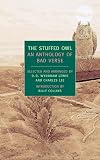
The Stuffed Owl: An Anthology of Bad Verse
by D. B. Wyndham Lewis (Editor), Charles Lee (Editor)
On This Page
Description
The editors of this legendary and hilarious anthology write: "It would seem at a hasty glance that to make an anthology of Bad Verse is on the whole a simple matter ... On the contrary ... There is bad Bad Verse and good Bad Verse." Here one finds the best of the worst of the greatest English poets, with an index ("Manure, adjudged a fit subject for the Muse, page 91") that is itself an inspired work of folly. Annotation. Just in time for National Poetry Month--the legendary and hilarious show more anthology containing the best of the worst poetry ever written by some of the world's most celebrated wordsmiths of the English language, including Dryden, Wordsworth, and Keats. show lessTags
Recommendations





















Member Recommendations


Member Reviews
This is a classic, and very funny, anthology of found humour in the form of bad poetry, ranging from errors by major poets -- Dryden, Wordsworth, Byron, and Tennyson all show up, and the title is that of a Wordsworth sonnet ("Yet, helped by Genius -- untired Comforter,/ The presence even of a stuffed Owl for her / Can cheat the time") -- to those who are famous precisely as bad poets, with Julia Moore in pride of place, and a fair selection of Pope's dunces. (As Hugh Kenner pointed out, Pope himself had too keen an ear and too precise a sense of what he is doing to drop to this level: but the book can be considered in some sense a supplement to Pope's Peri Bathous.) Well worth keeping on one's shelves to dip into from time to time (a show more straight read-through would be like overdosing on a heavy dessert). show less
There are some truly amazing and hilarious examples of bad verse in this book — and some of the worst offenders have familiar names (I'm looking at you, Wordsworth!). It has made me want to seek out the book by Julia Moore, the Sweet Singer of Michigan, that gave such pleasure to Mark Twain. The book suffers a bit from the attitude and style of the editors, especially their assumption that all readers have the educational background of an upper-class Englishman of the 1930s-40s, leaving some of the humor impenetrable to me. But overall it is funny and enjoyable, and will enjoy a place of honor near my McGonagall collection.
A very tongue-in-the-cheek 'Anthology of Bad Verse', compiled, prefaced, hilariously annotated, sub-titled and indexed by D. B. Wyndham Lewis and Charles Lee, includes a masterpiece of humorous indexing in its nine-page index. All entries are perfectly valid, some object-lessons in subjectheadings for brevity and perception.
Full of bathos and just plain bad poetry, but you have to take it in small bites, otherwise you just get overwhelmed.
To mend the movement of your heart, How great is my delight!
Gently to wind your morals up And set your hand aright!
--From "A Runcible Thought" by Edward Young. Noted as addressed to the poet's "dear friend, Voltaire," then in his sixty-eighth year and quite incorrigible.
Many morals get wound up, but I don't think that's what Young had in mind.
Here's another excerpt:
How brave a prospect is a bright backside!--Henry Vaughan
It has one of the best indexes I've ever seen:
Acts of Parliament
Adam, his internal fluids
Bards, dead, common objects on the sea-shore
Dentist, refuge of the suffering fair
Drains. See Sewage system
Okay, I'm show more stopping now show less
To mend the movement of your heart, How great is my delight!
Gently to wind your morals up And set your hand aright!
--From "A Runcible Thought" by Edward Young. Noted as addressed to the poet's "dear friend, Voltaire," then in his sixty-eighth year and quite incorrigible.
Many morals get wound up, but I don't think that's what Young had in mind.
Here's another excerpt:
How brave a prospect is a bright backside!--Henry Vaughan
It has one of the best indexes I've ever seen:
Acts of Parliament
Adam, his internal fluids
Bards, dead, common objects on the sea-shore
Dentist, refuge of the suffering fair
Drains. See Sewage system
Okay, I'm show more stopping now show less
I just love this book.
I was directed to it via [b:The Book of Heroic Failures: The Official Handbook of the Not Terribly Good Club of Great Britain|2272168|The Book of Heroic Failures The Official Handbook of the Not Terribly Good Club of Great Britain|Stephen Pile|http://photo.goodreads.com/books/1329607535s/2272168.jpg|2278188] so was quite pleased indeed when I came across it (and only at $3!)
This is unabashedly bad poetry. The book starts off with a some 1 or 2 line excerpts but it's the longer ones which I enjoy most
An example:
What is liquid - Margaret Cavendish, Duchess of Newcastle
All that doth flow we cannot liquid name,
Or else would fie and water be the same;
But that is liquid which is moist and wet;
Fire that propriety can show more never get:
Then 'tis not cold that doth the fire put out,
But 'tis the wet that makes it die, no doubt. show less
I was directed to it via [b:The Book of Heroic Failures: The Official Handbook of the Not Terribly Good Club of Great Britain|2272168|The Book of Heroic Failures The Official Handbook of the Not Terribly Good Club of Great Britain|Stephen Pile|http://photo.goodreads.com/books/1329607535s/2272168.jpg|2278188] so was quite pleased indeed when I came across it (and only at $3!)
This is unabashedly bad poetry. The book starts off with a some 1 or 2 line excerpts but it's the longer ones which I enjoy most
An example:
What is liquid - Margaret Cavendish, Duchess of Newcastle
All that doth flow we cannot liquid name,
Or else would fie and water be the same;
But that is liquid which is moist and wet;
Fire that propriety can show more never get:
Then 'tis not cold that doth the fire put out,
But 'tis the wet that makes it die, no doubt. show less
Over two centuries' worth of bad poetry, some by obscure poets others by major figures like Wordsworth and Poe. Should bring a chuckle even to the most jaded reader.
Illus by Beerbohm. J.M. Dent: London, 1930. 2nd edition, purchased Tavistock, 2004. Earlier edition.
Though many bad verses here derive from lesser poets like Dyer, Colley Cibber, M. Cavendish (Duchess of Newcastle), Cottle, Dobell and R. Montgomery, big names abound: Cowley, Dryden, Longfellow, Addison, Isaac Watts, even Keats, Browning and Tennyson. Longfellow he faults for a single Latin comparative, “Excelsior.”
Cowley you recall starred in Sam Johnson’s critique of the metaphysicals. Curiously, Abraham opposed Donne’s preferred puns in his "Ode. Of Wit,"
"’Tis not when like words make up one noise;
Jests for Dutch Men, and English Boys."
Oddly, he adds,
"Nor upon all things to obtrude
And force some odd similitude."
“Evidently show more he considered his own ‘odd similitudes’— very largely drawn, by Donne’s example, from the learned languages of science and religion—conventional comparisons” —quoted from my Ph.D. thesis, This Critical Age, p.76. In “Friendship in Absence,” Cowley’s poem on being separated from his love, he compares their love to stars’ conjunctions, but soon uses classical allusion defending wit:
’tis not without Cause that she,
Who fled the God of Wit, was made a tree.”
Or as Marvell has it, “Apollo hunted Daphne so/ Only that she might Laurel grow,” wittily arguing that A desired poetry, the Laurel, not Daphne herself. (My This Critical Age focused on metapoetry in mid-17C England— Cleveland and Marvell, following 16C Berni and DuBellay “Contre Les Petrarquistes.”)
Wyndham Lewis includes Cowley’s “Ode Upon Dr. Harvey,” starting with Nature a virgin, unknown, until Harvey appeared, and Nature
"Began to tremble and to flee,
Took sanctuary, like Daphne, in a tree;
There Daphne’s lover stop, and thought it much
The very leaves of her to tourh,
But Harvey, our Apollo, stops not so,
Into the bark and root he after her did go..
He so exactly does the work survey
As if he hired the workers by the day." (p.25)
Others besides Shelley wrote of the Skylark, like James Hogg,
"Bird of the wilderness,
Blithesome and cumberless." (3)
R.W. Emerson is included, his verse, not essays. His bust features in my U.U Church, New Bedford MA, because he was our interim minister in 1831; he may have learned to reject communion from our own Mary Rotch, who left the service when communion was served. (Forgive making communion sound like a restaurant.) Emerson’s “Efficiency,”
Earth, crowded, cries, “Too many men!”
My counsel is, kill nine in ten,
And bestow the shares of all
On the remnant decimal.
Add their nine lives to this cat.. (165)
Contrast his great poem, “The Titmouse,” (chickadee) where he concludes that a Chickadee saved him, miles from home in a blizzard, its birdtalk very like Caesar’s:
I, who dreamed not when I came here
to find the antidote of fear
Now hear thee say in Roman key,
Paean! Veni, Vidi, Vici.
(Poems of R.W.Emerson.Walter Scott: London, n.d)
D.B. Wyndham Lewis fully expects a few readers to “dash this volume to the book-shop floor, crying derisively that one might as well pay admission to South Kensington to find the glass cases full of dead mice and little bits of string” (vii). He does not include faults in verse craftsmanship, suggests what makes it bad, “The most obvious tint is bathos: that sudden slip and swoop and slither as down a well-buttered slide”(x). show less
Though many bad verses here derive from lesser poets like Dyer, Colley Cibber, M. Cavendish (Duchess of Newcastle), Cottle, Dobell and R. Montgomery, big names abound: Cowley, Dryden, Longfellow, Addison, Isaac Watts, even Keats, Browning and Tennyson. Longfellow he faults for a single Latin comparative, “Excelsior.”
Cowley you recall starred in Sam Johnson’s critique of the metaphysicals. Curiously, Abraham opposed Donne’s preferred puns in his "Ode. Of Wit,"
"’Tis not when like words make up one noise;
Jests for Dutch Men, and English Boys."
Oddly, he adds,
"Nor upon all things to obtrude
And force some odd similitude."
“Evidently show more he considered his own ‘odd similitudes’— very largely drawn, by Donne’s example, from the learned languages of science and religion—conventional comparisons” —quoted from my Ph.D. thesis, This Critical Age, p.76. In “Friendship in Absence,” Cowley’s poem on being separated from his love, he compares their love to stars’ conjunctions, but soon uses classical allusion defending wit:
’tis not without Cause that she,
Who fled the God of Wit, was made a tree.”
Or as Marvell has it, “Apollo hunted Daphne so/ Only that she might Laurel grow,” wittily arguing that A desired poetry, the Laurel, not Daphne herself. (My This Critical Age focused on metapoetry in mid-17C England— Cleveland and Marvell, following 16C Berni and DuBellay “Contre Les Petrarquistes.”)
Wyndham Lewis includes Cowley’s “Ode Upon Dr. Harvey,” starting with Nature a virgin, unknown, until Harvey appeared, and Nature
"Began to tremble and to flee,
Took sanctuary, like Daphne, in a tree;
There Daphne’s lover stop, and thought it much
The very leaves of her to tourh,
But Harvey, our Apollo, stops not so,
Into the bark and root he after her did go..
He so exactly does the work survey
As if he hired the workers by the day." (p.25)
Others besides Shelley wrote of the Skylark, like James Hogg,
"Bird of the wilderness,
Blithesome and cumberless." (3)
R.W. Emerson is included, his verse, not essays. His bust features in my U.U Church, New Bedford MA, because he was our interim minister in 1831; he may have learned to reject communion from our own Mary Rotch, who left the service when communion was served. (Forgive making communion sound like a restaurant.) Emerson’s “Efficiency,”
Earth, crowded, cries, “Too many men!”
My counsel is, kill nine in ten,
And bestow the shares of all
On the remnant decimal.
Add their nine lives to this cat.. (165)
Contrast his great poem, “The Titmouse,” (chickadee) where he concludes that a Chickadee saved him, miles from home in a blizzard, its birdtalk very like Caesar’s:
I, who dreamed not when I came here
to find the antidote of fear
Now hear thee say in Roman key,
Paean! Veni, Vidi, Vici.
(Poems of R.W.Emerson.Walter Scott: London, n.d)
D.B. Wyndham Lewis fully expects a few readers to “dash this volume to the book-shop floor, crying derisively that one might as well pay admission to South Kensington to find the glass cases full of dead mice and little bits of string” (vii). He does not include faults in verse craftsmanship, suggests what makes it bad, “The most obvious tint is bathos: that sudden slip and swoop and slither as down a well-buttered slide”(x). show less
Members
- Recently Added By
Published Reviews
added by KayCliff
Lists

Trinity College Booklist (1951): Class Ten, English Literature
358 works; 5 members
Author Information

Some Editions
Series
Belongs to Publisher Series
Common Knowledge
- Canonical title
- The Stuffed Owl: An Anthology of Bad Verse
- Original publication date
- 1930-02
- Epigraph
- Yet, helped by Genius -- untired Comforter, / The presence even of a stuffed Owl for her / Can cheat the time... (Wordsworth)
Video meliora proboque, / Deteriora sequor (Ovid, Metamorphoses, VII, 20) "We scan and approve of the better, / We go for the worse." - First words
- A certain delicacy, which the most abandoned reader will hardly dare to flout, or the most fastidious presume to improbate, excludes from these pages many honoured names of the present moment.
- Quotations
- Angels - not immune from curiosity, 31, 162; give Mr. Purcell a flying lesson, 37; patrol the British sky, 47; invited to take up permanent quarters at Whitehall, 50; & Britons, mixed choir of, ibid. (Dryden, Pollock, She... (show all)ffield, Watts, Watts, Watts.) Ankles, oedematous, S. Lee's, 146 (Words worth.) Arden, Enoch, his expensive obsequies, 8; his early married life, 247 (Tennyson). Bates, charming Mr., 49 (Watts) Botanist, as mountaineer, inferior to goat, 82 (Shenstone)
Fish, Tennyson contrives to avoid mentioning
George II, his fortunate philoprogenitiveness (Cibber)
German place-names, the poet does his best with (Cibber)
Gill, Harry, his extensive but inadequate wardrobe (Word... (show all)sworth)
Heaven, unexpected grandeur of its architecture (Watts)
Immortality, hope of, distinguishes man from silk-worm (Wordsworth)
Maiden, Swiss, coming-on disposition of (Longfellow)
Muse, reformed by a pension (Young)
Pond, 3ft. x 2ft. (Wordsworth)
Surprise, unqualified, Jonah’s (Young)
Wet-nurses, male parents useless as (Wordsworth)
York, Duke of, a cargo in himself (Dryden). - Last words
- (Click to show. Warning: May contain spoilers.)York, Duke of, a cargo in himself
Classifications
- Genres
- Poetry, Fiction and Literature
- DDC/MDS
- 821.008 — Literature & rhetoric English & Old English literatures British Poetry English poetry {by more than one author} Modified standard subdivisions Collections of literary texts not limited by time period or kind of form
- LCC
- PR1175 .S784 — Language and Literature English English Literature Collections of English literature
- BISAC
Statistics
- Members
- 276
- Popularity
- 116,519
- Reviews
- 9
- Rating
- (3.91)
- Languages
- English
- Media
- Paper
- ISBNs
- 6
- ASINs
- 14