
On This Page
Description
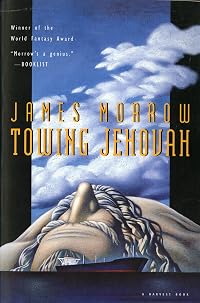
God is dead, and Anthony Van Horne must tow the corpse to the Arctic (to preserve Him from sharks and decomposition). En route Van Horne must also contend with ecological guilt, a militant girlfriend, sabotage both natural and spiritual, and greedy hucksters of oil, condoms, and doubtful ideas. Winner of a 1995 World Fantasy Award.Tags
Recommendations









Member Recommendations

anonymous user Questions the unquestionable

by anonymous user

paradoxosalpha Naturalistic fantasy fiction that presents absurd features of Christian metaphysics in order to seriously consider their moral and psychological dimensions. Oh, and deicide.
Member Reviews
I can't remember when I last read a book as delightfully satirical, exciting, and brilliantly multi-layered as this.
It's very firmly couched in bloody-minded literalism, but don't let that fool you. This is one SMART COOKIE.
Yes, God is a main character. But unlike so many other humorists, this version is dead. But unlike any number of humorist novels out there, Morrow throws out all the lame ideas and goes ahead and picks the most interesting choices. Every Single Time. Like choosing a God that is FREAKING HUGE before dumping him in the ocean.
Add the Vatican with some really anxious and embarrassed angels hiring a disgraced captain to tow the Godhead to his makeshift burying ground, throw the boat into a rather awesome reversal of show more Darwin's Voyage of the Beagle, raise an island that is a crude, glitsy porn palace as a post-deist playground of unnatural selection, some mutineers, a hardcore rationalist subplot, and a bunch of nutty WWII re-enactment hobbyists, and you might get a tiny idea about where this might be headed.
This ain't philosophy. But then again, maybe it is. Hardcore philosophy behind a leering, jeering, madcap Monty-Pythonesque prose. Including the parrot.
I will never forget the parody of the transubstantiation.
I have found my next best favorite book. No holds were barred. Everyone, no matter who you are, is invited up to the table to get a punch in the nose. :)
All this aside, you know what I really, really want?
I want this book done as an Amazon Prime or a full-budget HBO miniseries. Including the gigantic corpse. All the frantic sailors trying to keep the predators off God's body. The air battle. The quiet, desperate times with full close-ups for the actors to show the deep conflict, the absurdist humor, the pathos.
It works on SO many levels.
This book has the probability to become one of the most brilliant adaptations ever.
I just wish. show less
It's very firmly couched in bloody-minded literalism, but don't let that fool you. This is one SMART COOKIE.
Yes, God is a main character. But unlike so many other humorists, this version is dead. But unlike any number of humorist novels out there, Morrow throws out all the lame ideas and goes ahead and picks the most interesting choices. Every Single Time. Like choosing a God that is FREAKING HUGE before dumping him in the ocean.
Add the Vatican with some really anxious and embarrassed angels hiring a disgraced captain to tow the Godhead to his makeshift burying ground, throw the boat into a rather awesome reversal of show more Darwin's Voyage of the Beagle, raise an island that is a crude, glitsy porn palace as a post-deist playground of unnatural selection, some mutineers, a hardcore rationalist subplot, and a bunch of nutty WWII re-enactment hobbyists, and you might get a tiny idea about where this might be headed.
This ain't philosophy. But then again, maybe it is. Hardcore philosophy behind a leering, jeering, madcap Monty-Pythonesque prose. Including the parrot.
I will never forget the parody of the transubstantiation.
I have found my next best favorite book. No holds were barred. Everyone, no matter who you are, is invited up to the table to get a punch in the nose. :)
All this aside, you know what I really, really want?
I want this book done as an Amazon Prime or a full-budget HBO miniseries. Including the gigantic corpse. All the frantic sailors trying to keep the predators off God's body. The air battle. The quiet, desperate times with full close-ups for the actors to show the deep conflict, the absurdist humor, the pathos.
It works on SO many levels.
This book has the probability to become one of the most brilliant adaptations ever.
I just wish. show less
When I sought out this novel about God's corpse being towed across the ocean by a disgraced oil rig captain, I was expecting a hilarious farce along the lines of Douglas Adams' Hitchhiker's series, playing fast and loose with religious beliefs. Not so, I found, as the humor was much more dark and subtle, and nowhere near as zany as the subject matter would suggest. Not laugh out loud funny, but rather a sly and knowledgeable humor, a wink and a nudge, say no more. But this wasn't a disappointment, for what I found that Morrow handled successfully was the motivations behind both blind faith and lack thereof. Devout Christians and Atheists are represented at their most extreme, both rational and irrational, and neither side is truly taken show more by Morrow in his endeavor to explore God's true nature, both in reality and our mind's eye. Its not a comedy as much as it is a thinking-man's comedy of errors, and that's the best way I can think to recommend it. show less
Not a stunner, but an enjoyable trip to the Arctic circle with the unimaginably gigantic corpse of a Judeo-Christian diety in tow. After the extremely extensive remains of what looks like a picture-book version of Our Holy Father, a disgraced captain obviously based on Joseph Hazlewood, the skipper of the Exxon Valdez, a Jesuit priest, a Carmelite nun, and a few dozen members of the merchant marine are tasked with towing him to His final resting place. "Towing Jehova" is something of a good, old-fashioned sea story: Morrow almost certainly read up extensively on modern navigation and shipbuilding while writing it. His real focus is, as always, more directly theological: what does the definitive confirmation, or the rejection, of show more somebody's religious beliefs do to them? How excruciatingly physical can God be? (The answer, by the way, is "very.") Would God's death shake up atheists or believers more? A lot of these questions aren't treated as deeply as a of readers might like; the book has a "first in a series of three" feel to it. But I don't think it's as superficial as some other reviewers contend, either, and Morrow's writing, which is well-crafted, witty, and, in places, surprisingly evocative, rises to the task. The book is also peppered with some unforgettable imagery: biblical symbols thrust into the modern world in surprising and beautiful ways. Some of the plot episodes detailed here do seem out of place -- I'm not too sure how many members of the merchant marine are regular churchgoers who'd have their morals unmoored by the Almighty's passing, for example. But the huge body that is a constant presence in this novel seems to constantly remind the reader of the consequences and perils of confronting God in the most literal sense. The most fun to be had here involves, as others have also mentioned, a society of World War II reenactors nostalgic for a past they never lived through. As Morrow lives in eastern Pennsylvania, I wonder if he isn't poking fun at the Civil War do-over crowd that descends upon Gettysburg on a regular basis. Not as good a place to start with Morrow as "Only Begotten Daughter" or "City of Truth," but I'm looking forward to reading the other two books in the trilogy. show less
Never judge a book by its cover, right? Does going on the title count?
We all do that, of course, and it was the title that first grabbed me, then the description made it a must read. Morrow is a writer that I was only vaguely aware of, but the reviews appealed to me immediately. So when the Atheist Book Club group were looking for fiction recommendations I just had to put it forward, and am very glad I did – although I was slightly worried that the book was perhaps less atheistic than I had anticipated.
The initial set up just sounds so inventive and funny: The archangels come to the Vatican to tell them that god has died and his two mile long corpse is floating in the mid Atlantic. They have hollowed out an iceberg off Svalbard and show more want it towing to this tomb before corruption sets in, so the Vatican hires a former super tanker Captain, disgraced since being in charge when his vessel caused the world's most damaging oil slick – along with his former ship – to do the job.
I confess that what I expected was fairly straightforward, irreverent humour and plenty of digs at the absurdities of religion, but I was somewhat wide of the mark. Don't get me wrong, it is a very funny book (although more in way of later Pratchett with the humour leavening more serious episodes than early, slapstick Pratchett) and I'm sure that many people would consider it irreverent simply because of the subject, but Morrow does much, much more than take the easy option. What he gives us is an incredibly smart book about how we define our beliefs as much as they define us, about the roots of morality (of course), about hypocrisy, about how people react when their most cherished beliefs are threatened and the ends that they'll go to to protect those beliefs and, most of all, about personal redemption in the face of an uncaring universe.
The author draws his cast of characters superbly well – all, arguably and to varying degrees, caricatures perhaps, but also with subtlety and humanity. And as often as not, any cartooning of characters or situations is there to wrongfoot us, to show up our own assumptions. For instance, when the crew of the tanker begin to lose all moral perspective I admit that I was initially disappointed that Morrow seemed to be showing the collapse of morality without an omnipresent god but, as at every turn of the novel, he had of course anticipated me and lead me down a path that would bring me to a far more thorough – and entertaining – discussion of the questions than I had given him credit for.
This is one of those rare books that not only kept me gripped and entertained from cover to cover, but kept me thinking more profoundly than I could have before I read it for long after. An instant favourite, and I think I will be spending quite some time in Mr Morrow's company. show less
We all do that, of course, and it was the title that first grabbed me, then the description made it a must read. Morrow is a writer that I was only vaguely aware of, but the reviews appealed to me immediately. So when the Atheist Book Club group were looking for fiction recommendations I just had to put it forward, and am very glad I did – although I was slightly worried that the book was perhaps less atheistic than I had anticipated.
The initial set up just sounds so inventive and funny: The archangels come to the Vatican to tell them that god has died and his two mile long corpse is floating in the mid Atlantic. They have hollowed out an iceberg off Svalbard and show more want it towing to this tomb before corruption sets in, so the Vatican hires a former super tanker Captain, disgraced since being in charge when his vessel caused the world's most damaging oil slick – along with his former ship – to do the job.
I confess that what I expected was fairly straightforward, irreverent humour and plenty of digs at the absurdities of religion, but I was somewhat wide of the mark. Don't get me wrong, it is a very funny book (although more in way of later Pratchett with the humour leavening more serious episodes than early, slapstick Pratchett) and I'm sure that many people would consider it irreverent simply because of the subject, but Morrow does much, much more than take the easy option. What he gives us is an incredibly smart book about how we define our beliefs as much as they define us, about the roots of morality (of course), about hypocrisy, about how people react when their most cherished beliefs are threatened and the ends that they'll go to to protect those beliefs and, most of all, about personal redemption in the face of an uncaring universe.
The author draws his cast of characters superbly well – all, arguably and to varying degrees, caricatures perhaps, but also with subtlety and humanity. And as often as not, any cartooning of characters or situations is there to wrongfoot us, to show up our own assumptions. For instance, when the crew of the tanker begin to lose all moral perspective I admit that I was initially disappointed that Morrow seemed to be showing the collapse of morality without an omnipresent god but, as at every turn of the novel, he had of course anticipated me and lead me down a path that would bring me to a far more thorough – and entertaining – discussion of the questions than I had given him credit for.
This is one of those rare books that not only kept me gripped and entertained from cover to cover, but kept me thinking more profoundly than I could have before I read it for long after. An instant favourite, and I think I will be spending quite some time in Mr Morrow's company. show less
Fun fiction based on the premise that God has died and needs to be transported to his final resting place. This imaginative plot tie together the Catholic Church hierarchy, a Jesuit priest and a nun, a ship captain who has lost his license, a group of atheists, and a bunch of Nazi sympthizers in a twisty, quirky plot that asks the question "What would happen if there were no God?". I don't agree with the author's answer, but it's fun getting there. Unfortunately, some of the characters were unbelievable stereotypes, particularly the atheists, and the ending was pure Hollywood pap.
God is dead and his corpse is floating somewhere in the middle of the Atlantic Ocean. The angels choose a disgraced ship captain to lead a disparate crew on a secret mission to tow the holy vessel to a final resting place in the arctic circle. Weirdness ensues.
It started out good – the writing is pretty great and the weird was a good weird. But then is just…stayed…weird…with no real dynamics. And the characters were more annoying than eccentric. So, in the end, sort of disappointing.
It started out good – the writing is pretty great and the weird was a good weird. But then is just…stayed…weird…with no real dynamics. And the characters were more annoying than eccentric. So, in the end, sort of disappointing.
Originally posted @ http://tnt-tek.com/reviews/review-towing-jehovah-by-james-morrow/
Browsing the bestseller lists these days you’d be forgiven for having the impression that the world is black and white, right and wrong. Politico’s churn out screeching treatises at an alarming rate, painting their opposition in the most unflattering colors and declaring victory for themselves with little or no intellectual effort. Seems it’s enough to believe you’re right. Believe it hard enough and others will believe it with you. Debate becomes less of a discussion and more of a shouting down in anger.
So, when I opened Towing Jehovah by James Morrow, a book about religious topics written by a skeptic, I was prepared for a screed. What I got show more was a thoughtful reflection on what the meaning of God is to a diverse group of people and what it would mean to them if God were proven to exist. There were no diatribes on morality. No derisive atheists lecturing the faithful on the brutality of their creator. Certainly there were characterizations of the type, but all of them were balanced to ensure an even-handed discourse. Perhaps the middle 90′s was a more civilized age.
The book opens with Anthony Van Horne, disgraced sea captain of the Carpco Valparaiso, being visited by the archangel Raphael who tells him that God is dead and his body is floating in the middle of the Atlantic. Soon Van Horne is joined by the Pope’s representative, Thomas Ockham, aboard the Valparaiso and leads the expedition to rescue the Corpus Dei from equatorial ruin by towing its two mile long frame to the Arctic Sea. There, the angels have created His tomb, and, if they hurry, the Vatican’s supercomputer thinks they may be able to revive the deity.
It would’ve been easy at this point for Morrow to let the wheels come off and score some philosophical points about godlessness. Maybe rip up the Catholic church a bit. But he plays it straight down the middle. No straw men allowed. And that’s not to say he doesn’t have fun with the subject matter. The Central Park West Enlightenment League learns of the plot, tipped off by one of their own aboard the ship and abetted by a crystal toting feminist who, even in the presence of God, resents His misogyny. One genuinely funny moment comes as the League decides its course of action. Oliver, heir to a condom fortune, is committed to destroying the corpse to preserve the little bastion of rationality they’ve been able to carve out for themselves. He finds his foil in Sylvia, the eldest member of the group objects to the plan, saying “Assuming for the moment the Valparaiso is really towing what Cassie Fowler says it’s towing, shouldn’t we have the collective courage, if not the simple decency, to admit we’ve been wrong all these years?” ”Wrong?” another member objects, “That’s rather an extreme word.”
Towing Jehovah reveals the humanity of it’s characters religious belief. To Oliver and the Enlightenment League, it’s not blind rationality but their community that matters. Same with the Catholics, who want the body hidden from the world for their own reasons. Van Horne tows God out of a sense of duty, a testament to his surviving the cruelty of his family life. Ockham seeks answers in the human design, morality without deity. Morrow treats the subject with respect and lets his people be more than stereotypes and as a result creates poignant and touching moments between overtures of absurdity.
Not everyone will appreciate the level of satire and symbolism present in Towing Jehovah. Obviously, one needs be a student in matters both religious and areligious in order to understand the story from both viewpoints. To those who get it, this book is a gem. To those who don’t, well, they were expecting a screed when the debate broke out. Highly Recommended. show less
Browsing the bestseller lists these days you’d be forgiven for having the impression that the world is black and white, right and wrong. Politico’s churn out screeching treatises at an alarming rate, painting their opposition in the most unflattering colors and declaring victory for themselves with little or no intellectual effort. Seems it’s enough to believe you’re right. Believe it hard enough and others will believe it with you. Debate becomes less of a discussion and more of a shouting down in anger.
So, when I opened Towing Jehovah by James Morrow, a book about religious topics written by a skeptic, I was prepared for a screed. What I got show more was a thoughtful reflection on what the meaning of God is to a diverse group of people and what it would mean to them if God were proven to exist. There were no diatribes on morality. No derisive atheists lecturing the faithful on the brutality of their creator. Certainly there were characterizations of the type, but all of them were balanced to ensure an even-handed discourse. Perhaps the middle 90′s was a more civilized age.
The book opens with Anthony Van Horne, disgraced sea captain of the Carpco Valparaiso, being visited by the archangel Raphael who tells him that God is dead and his body is floating in the middle of the Atlantic. Soon Van Horne is joined by the Pope’s representative, Thomas Ockham, aboard the Valparaiso and leads the expedition to rescue the Corpus Dei from equatorial ruin by towing its two mile long frame to the Arctic Sea. There, the angels have created His tomb, and, if they hurry, the Vatican’s supercomputer thinks they may be able to revive the deity.
It would’ve been easy at this point for Morrow to let the wheels come off and score some philosophical points about godlessness. Maybe rip up the Catholic church a bit. But he plays it straight down the middle. No straw men allowed. And that’s not to say he doesn’t have fun with the subject matter. The Central Park West Enlightenment League learns of the plot, tipped off by one of their own aboard the ship and abetted by a crystal toting feminist who, even in the presence of God, resents His misogyny. One genuinely funny moment comes as the League decides its course of action. Oliver, heir to a condom fortune, is committed to destroying the corpse to preserve the little bastion of rationality they’ve been able to carve out for themselves. He finds his foil in Sylvia, the eldest member of the group objects to the plan, saying “Assuming for the moment the Valparaiso is really towing what Cassie Fowler says it’s towing, shouldn’t we have the collective courage, if not the simple decency, to admit we’ve been wrong all these years?” ”Wrong?” another member objects, “That’s rather an extreme word.”
Towing Jehovah reveals the humanity of it’s characters religious belief. To Oliver and the Enlightenment League, it’s not blind rationality but their community that matters. Same with the Catholics, who want the body hidden from the world for their own reasons. Van Horne tows God out of a sense of duty, a testament to his surviving the cruelty of his family life. Ockham seeks answers in the human design, morality without deity. Morrow treats the subject with respect and lets his people be more than stereotypes and as a result creates poignant and touching moments between overtures of absurdity.
Not everyone will appreciate the level of satire and symbolism present in Towing Jehovah. Obviously, one needs be a student in matters both religious and areligious in order to understand the story from both viewpoints. To those who get it, this book is a gem. To those who don’t, well, they were expecting a screed when the debate broke out. Highly Recommended. show less
Members
- Recently Added By
Published Reviews
ThingScore 88
"Morrow makes it happen with Vonnegutian verve and wit and an enviable expertise in fields ranging from seamanship to junk food to Bob Hope routines to theology."
added by bookfitz
"There's an unnecessary death that deprives the narrative of the perspective of one of its potentially most interesting characters, but this clever novel still stands as a wry, boisterous celebration."
added by bookfitz
Lists

Arthur C. Clarke Award Winners and Shortlisted Books
219 works; 14 members

Books Read in 2018
4,360 works; 110 members

Biggest Disappointments
606 works; 168 members

Books I Read Before The Invention Of The Internet.
144 works; 1 member
Author Information

68+ Works 7,964 Members
Some Editions
Awards and Honors
Awards
Notable Lists
Series

Work Relationships
Common Knowledge
- Canonical title
- Towing Jehovah
- Original title
- Towing Jehovah
- Original publication date
- 1994
- People/Characters
- Anthony Van Horne; Cassie Fowler
- Important places
- Atlantic Ocean
- Epigraph
- We have left the land and embarked. We have burned our bridges behind us -- indeed, we have gone farther and destroyed the land behind us. Now, little ship, look out! Beside you is the ocean: to be sure, it does not always ro... (show all)ar, and at times it lies spread out like silk and gold and reveries of graciousness. But hours will come when you will realize that it is infinite and that there is nothing more awesome than infinity! Oh, the poor bird that felt free and now strikes the wall of this cage! Woe, when you feel homesick for the land as if it had offered more freedom--and there is no longer any "land."
--Friederich Nietzsche,
"In the Horizon of the Infinite",
The Gay Science
And the Lord said, "Behold ... I will take away mine hand and thou shalt see my back parts: but my face shall not be seen.:
--The Book of Exodus - Dedication
- To the memory of my father-in-law, Albert L. Pierce
- First words
- The irreducible strangeness of the universe was first made manifest to Anthony Van Horne on his fiftieth birthday, when a despondent angel named Raphael, a being with luminous white wings and a halo that blinked on and off li... (show all)ke a neon quoit, appeared and told him of the days to come.
- Last words
- (Click to show. Warning: May contain spoilers.)And then, like those canny Dutch traders who inhabited their blood, they'd set out toward the sun, steady as she goes: the captain and his cabin boy, off with the morning tide.
- Original language
- English
Classifications
- Genres
- Fiction and Literature, Fantasy, General Fiction, Science Fiction
- DDC/MDS
- 813.54 — Literature & rhetoric American literature in English American fiction in English 1900-1999 1945-1999
- LCC
- PS3563 .O876 .T6 — Language and Literature American literature American literature Individual authors 1961-
- BISAC
Statistics
- Members
- 1,228
- Popularity
- 20,061
- Reviews
- 34
- Rating
- (3.77)
- Languages
- 6 — English, French, German, Italian, Polish, Spanish
- Media
- Paper, Audiobook, Ebook
- ISBNs
- 19
- ASINs
- 9