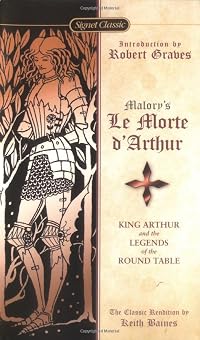
Le Morte d'Arthur
by Thomas Malory
On This Page
Description
Of all the legends of Western civilisation, perhaps the glorious adventures of King Arthur and the Knights of the Round Table are the best known. The Quest for the Holy Grail, and the undying illicit love between Sir Launcelot and Queen Guenever, have provided inspiration for storytellers and poets down the ages, and sparked so many films and books of our own time. 15th-century knight Sir Thomas Malory penned the book with relish, packing his story with tales of heroism, treachery and show more revenge, noble suitors, beautiful princesses, dragons, sorcerers, giants and bloody deeds of derring-do on and off the jousting field. show lessTags
Recommendations



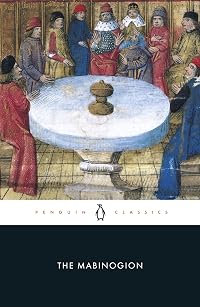

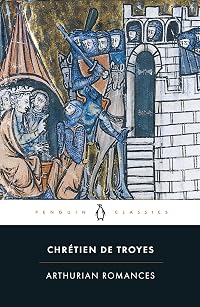
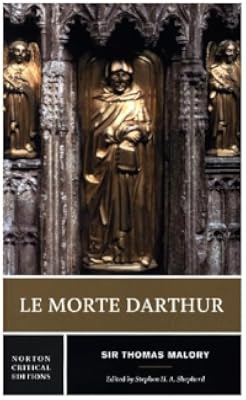

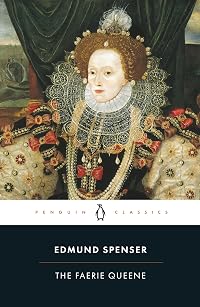
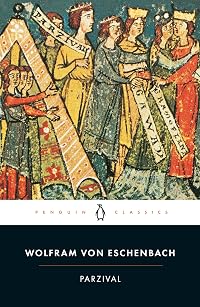
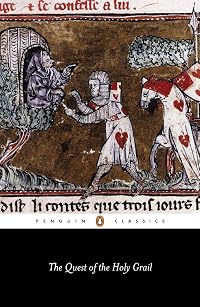
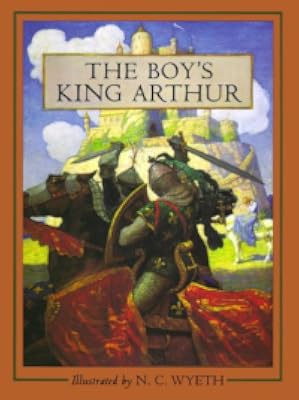
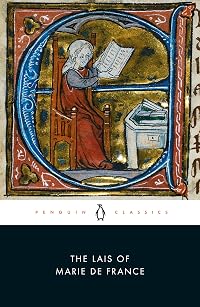
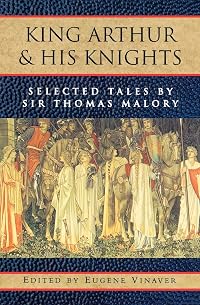
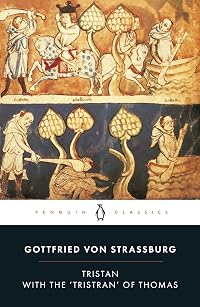


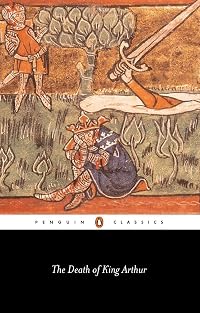

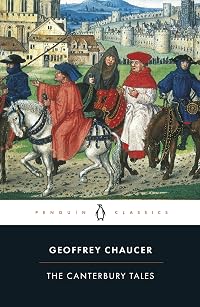





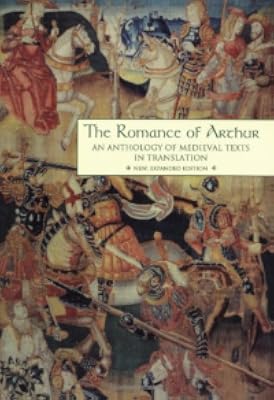
Member Recommendations

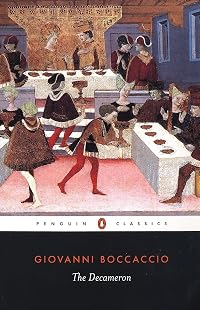
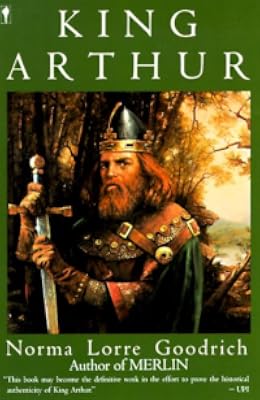
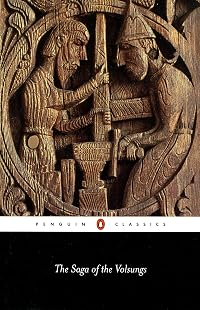
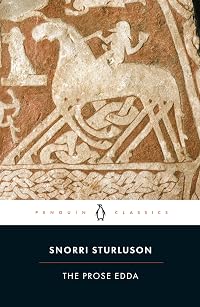
Shuffy2 See the similarities between the two love triangles of King Arthur, Lancelot, and Guenevere AND King Mark, Isolde, and Tristan
20
CGlanovsky Read the two concurrently and got a good sense of the kind of chivalric literature that gave birth to Quixote's madness.
Member Reviews
I know Le Mort d'Arthur is supposed to be a great classic and the definitive Arthur, but damn it, I'm 377 pages in and I can't do it anymore. It is just too much of the same flipping story over and over and over and over again. And not just the same story (knight jousts with knight), but almost the same exact wording with each battle.
The only thing to have sparked my interest in about 200 pages was this line: "The King Arthur overtook her [a false lady and sorceress], and with the same sword he smite off her head, and the Lady of the Lake took up her head and hung it up by the hair to her saddle-bow." THAT is pretty damn awesome, but it's also just one line out of all those 200 pages, and it made me long for a Lady of the Lake story, show more not more and more of these knights smacking each other around and talking about how knightly and courtly they are because they are big strong men who can politely knock another guy off a horse.
I am so wonderfully wroth at this book that I'm about to come at all of these damn knights like thunder and smote them down with their own damn lances. (PS. If I never see the words "wroth", "smote", or "came together like thunder" again, it will be too soon.) Seriously, don't these guys have anything better to do than run around the forests or hang out a bridges and joust with each other? Isn't there farming or something to be done? Anything? Please? I mean, I'll read about the wheat in the fields at this point.
Did I also mention that it's over 900 pages? Well, it is, and apparently this is the SHORT version. The other version is in like three volumes or something. Since it's getting the point that I'm starting to hate Arthur and his knights, I need to just put in the towel and read something — anything — else for a while.
Right now, I'm really looking forward to rereading Simon Armitag's translation of Sir Gawain and the Green Knight, because I need something to remind me why I used to love Arthurian stories so much. show less
The only thing to have sparked my interest in about 200 pages was this line: "The King Arthur overtook her [a false lady and sorceress], and with the same sword he smite off her head, and the Lady of the Lake took up her head and hung it up by the hair to her saddle-bow." THAT is pretty damn awesome, but it's also just one line out of all those 200 pages, and it made me long for a Lady of the Lake story, show more not more and more of these knights smacking each other around and talking about how knightly and courtly they are because they are big strong men who can politely knock another guy off a horse.
I am so wonderfully wroth at this book that I'm about to come at all of these damn knights like thunder and smote them down with their own damn lances. (PS. If I never see the words "wroth", "smote", or "came together like thunder" again, it will be too soon.) Seriously, don't these guys have anything better to do than run around the forests or hang out a bridges and joust with each other? Isn't there farming or something to be done? Anything? Please? I mean, I'll read about the wheat in the fields at this point.
Did I also mention that it's over 900 pages? Well, it is, and apparently this is the SHORT version. The other version is in like three volumes or something. Since it's getting the point that I'm starting to hate Arthur and his knights, I need to just put in the towel and read something — anything — else for a while.
Right now, I'm really looking forward to rereading Simon Armitag's translation of Sir Gawain and the Green Knight, because I need something to remind me why I used to love Arthurian stories so much. show less
I didn't read it so much as scanned each of the chapter headings for the last 400 pages to bypass all the instances of redundant redundancy, such as the two million instances of "and man and horse fell to the earth" or the genius of "much blood they bled both, that all the place there as they fought was overbled with blood." I could never in good conscience recommend this to anyone as something to read for entertainment purposes. Malory destroys souls.
Keith Baines' edited version of Sir Thomas Malory's Le Morte d'Arthur renders Malory's compendium of Arthurian legends into modern idiom. Malory's Arthur and Knights of the Round Table would likely appear strange to those familiar with the Arthur stories from Tennyson's Idylls of the King and T.H. White's The Once and Future King. In Malory's 15th-century retelling of the traditional legends, the knights frequently behead those they best in jousting, beget bastards on various ladies, and regard chivalry more in its original meaning of horsemanship rather than the later Victorian ideals. That shouldn't alienate those who come to these stories from their later reworkings, as Malory seems to set his Arthur in all times, blending elements show more from 500 C.E. through the 1100's.
The stories overlap at times, but, for the sake of ease, Malory divides them into eight books: The Tale of King Arthur; The Tale of King Arthur and the Emperor Lucius; The Tale of Sir Launcelot du Lake; The Tale of Sir Gareth; The Book of Sir Tristram of Lyoness; The Tale of the Sangreal; The Book of Sir Launcelot and Queen Gwynevere; and Le Morte d'Arthur. All of the books fit together to make one larger narrative, though The Book of Sir Tristram of Lyoness (a retelling of Tristan and Iseult) stands alone and could serve as its own book. While the story of Tristan and Iseult likely predates the Arthurian legends, by Malory's time it had been incorporated into that body of work (after it had likely influenced the relationship of LLancelot and Guinevere). The strongest books in the series are The Tale of King Arthur, The Tale of the Sangreal, The Book of Sir Launcelot and Queen Gwynevere, and Le Morte d'Arthur.
If looking for an edition of Le Morte d'Arthur to serve as an introduction to the larger Arthurian tradition, Baines' translation is a serviceable work. show less
The stories overlap at times, but, for the sake of ease, Malory divides them into eight books: The Tale of King Arthur; The Tale of King Arthur and the Emperor Lucius; The Tale of Sir Launcelot du Lake; The Tale of Sir Gareth; The Book of Sir Tristram of Lyoness; The Tale of the Sangreal; The Book of Sir Launcelot and Queen Gwynevere; and Le Morte d'Arthur. All of the books fit together to make one larger narrative, though The Book of Sir Tristram of Lyoness (a retelling of Tristan and Iseult) stands alone and could serve as its own book. While the story of Tristan and Iseult likely predates the Arthurian legends, by Malory's time it had been incorporated into that body of work (after it had likely influenced the relationship of LLancelot and Guinevere). The strongest books in the series are The Tale of King Arthur, The Tale of the Sangreal, The Book of Sir Launcelot and Queen Gwynevere, and Le Morte d'Arthur.
If looking for an edition of Le Morte d'Arthur to serve as an introduction to the larger Arthurian tradition, Baines' translation is a serviceable work. show less
I think I read this over and over when I was a child, and when I came back to it as an adult, I still loved it. These tales are an ingrained part of western culture and are still a weather value for the rough winds of our morality.
Of course Mallory's tales of Arthur are a fifteenth century re-modelling but what glorious new dressing has been added. Each tale is a short story in its own right, and each combines effortlessly to create the picture of heroes and a kingdom in which people mattered, in which civilisation was something to strive for and not something to endure.
Maybe I'm just a sucker for Arthurian tales. They still delight and captivate me (all except the recent film version with Clive Owen and Keira Knightly) and I'm glad show more they do. We all know right and wrong is more complex than in Mallory's tales, but at least he makes living up to even simple choices filled with hurdles and pitfalls. Maybe that's why they work, because every hero wears his failings as openly as he wears his sword and shield. show less
Of course Mallory's tales of Arthur are a fifteenth century re-modelling but what glorious new dressing has been added. Each tale is a short story in its own right, and each combines effortlessly to create the picture of heroes and a kingdom in which people mattered, in which civilisation was something to strive for and not something to endure.
Maybe I'm just a sucker for Arthurian tales. They still delight and captivate me (all except the recent film version with Clive Owen and Keira Knightly) and I'm glad show more they do. We all know right and wrong is more complex than in Mallory's tales, but at least he makes living up to even simple choices filled with hurdles and pitfalls. Maybe that's why they work, because every hero wears his failings as openly as he wears his sword and shield. show less
The first time I read this I was a college student immersed in literature. I loved the language and imagery, truly felt transported to another time and place. With this second reading I see James Bond. Arthur roams the countryside, bedding/leaving damsels, fighting/killing whatever gets in his way, getting himself wrapped up in conspiracies and evil plots, all without losing his smirk. OK, maybe Malory doesn't mention the smirk, but you know it's there.
I agree with the reviewer who said this is not for the faint of heart, and few general readers are going to find this a great read. If you're looking for an absorbing, entertaining read with characters you can relate to and root for, you're absolutely, positively in the wrong place. Read instead Arthurian novels such as T.H. White's The Once and Future King or Mary Stewart's Merlin Trilogy. There are countless other such novels inspired by this material worth reading, and I've read a lot of them.
But I did find it interesting at times going through this, one of the ur-texts as it were of Arthurian legend. There are other, earlier works of Arthurian literature: Geoffrey of Monmouth's The History of the Kings of Britain (1136), Chrétien show more de Troyes's Arthurian Romances in the 12th century and Wolfram von Eschenbach's Parzival in the 13th century are among the most notable. But Malory drew from several sources, so much so he's often described more as the "compiler" than the author of the work. I own a edition in two volumes that comes close to 1,000 pages. So this is an exhaustive resource of all sorts of facets of the legend. The story of Tristram and Iseult is here, for instance.
And this is a medieval work, so it's imbued with its assumptions and attitudes. Obviously a source of outrage to some reviewers, and even by the standards of the time, comparing this to how women are treated in say Boccaccio's Decameron and Chaucer's Canterbury Tales--well, women don't come off well here. Misogyny abounds. And knights are held up as paragons who commit a lot of heinous acts and just plain WTF. A lot is repetitive and a slog--as one reviewer put it too much is "joust, joust, joust." And this was written about half-way between Chaucer and Shakespeare. With the spelling regularized it's quite readable, much more so than unmodernized Chaucer. But with those that choose to preserve the archaic words, that means wading through words such as "hight" (is called) and "mickle" (much). And there's just so much that can be excused by, well, "it's the times"--I found plenty of medieval writers who were wonderful reads, and just plain more humane: Dante, Boccaccio, Chaucer. I can't see Malory as their equal--not remotely. But as a fan of Arthurian literature and someone fascinated by the Middle Ages, this did from time to time have its fascinations. show less
But I did find it interesting at times going through this, one of the ur-texts as it were of Arthurian legend. There are other, earlier works of Arthurian literature: Geoffrey of Monmouth's The History of the Kings of Britain (1136), Chrétien show more de Troyes's Arthurian Romances in the 12th century and Wolfram von Eschenbach's Parzival in the 13th century are among the most notable. But Malory drew from several sources, so much so he's often described more as the "compiler" than the author of the work. I own a edition in two volumes that comes close to 1,000 pages. So this is an exhaustive resource of all sorts of facets of the legend. The story of Tristram and Iseult is here, for instance.
And this is a medieval work, so it's imbued with its assumptions and attitudes. Obviously a source of outrage to some reviewers, and even by the standards of the time, comparing this to how women are treated in say Boccaccio's Decameron and Chaucer's Canterbury Tales--well, women don't come off well here. Misogyny abounds. And knights are held up as paragons who commit a lot of heinous acts and just plain WTF. A lot is repetitive and a slog--as one reviewer put it too much is "joust, joust, joust." And this was written about half-way between Chaucer and Shakespeare. With the spelling regularized it's quite readable, much more so than unmodernized Chaucer. But with those that choose to preserve the archaic words, that means wading through words such as "hight" (is called) and "mickle" (much). And there's just so much that can be excused by, well, "it's the times"--I found plenty of medieval writers who were wonderful reads, and just plain more humane: Dante, Boccaccio, Chaucer. I can't see Malory as their equal--not remotely. But as a fan of Arthurian literature and someone fascinated by the Middle Ages, this did from time to time have its fascinations. show less
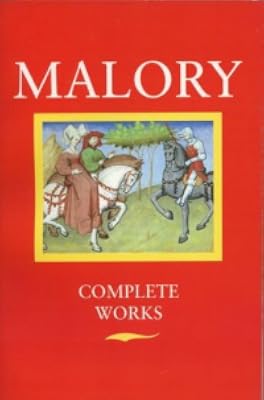
This Edition is based on Caxton's text: It therefore very largely contains the original detailed content - alterations have been confined almost entirely to spellings and a little grammar.
This is the 'Romance' as conceived by Malory; every human strength and frailty explored through a tale of fair and foul maidens bestowing favours and demanding submission from manly counterparts, valiant and timid knights gripped by purity of motives and the basest of desires, the noble pursuit of mystical religious objects, considerable magic worked for good and bad, lived folk-lore, and at its core a legendary great King whose moral reputation, avowed love and sincere loyalty for his fellows in the face of every sort of affliction, assault and show more treachery survives unsullied to the present day.
Be he real or imagined - Arthur - is one of the greatest characters ever written down in the English language - with his gallant, chivalric recruits to the Round Table, their strong-willed female companions and array of adversaries the range of all future English Literature (and much for Europe and modern America) is given a riveting basis for its later global success.
It is said (by many) Cervantes' Don Quixote was the first modern novel - I disagree - 'The Death of Arthur' in my estimation has that significant role. show less
This is the 'Romance' as conceived by Malory; every human strength and frailty explored through a tale of fair and foul maidens bestowing favours and demanding submission from manly counterparts, valiant and timid knights gripped by purity of motives and the basest of desires, the noble pursuit of mystical religious objects, considerable magic worked for good and bad, lived folk-lore, and at its core a legendary great King whose moral reputation, avowed love and sincere loyalty for his fellows in the face of every sort of affliction, assault and show more treachery survives unsullied to the present day.
Be he real or imagined - Arthur - is one of the greatest characters ever written down in the English language - with his gallant, chivalric recruits to the Round Table, their strong-willed female companions and array of adversaries the range of all future English Literature (and much for Europe and modern America) is given a riveting basis for its later global success.
It is said (by many) Cervantes' Don Quixote was the first modern novel - I disagree - 'The Death of Arthur' in my estimation has that significant role. show less
Members
- Recently Added By
Lists

Classics you know you should have read but probably haven't
421 works; 408 members

Best Arthurian Fiction
104 works; 33 members

100 Books to Read in a Lifetime (That Are Older Than 200 Years)
415 works; 175 members

Best of British Literature
226 works; 41 members

The Telegraph's 110 Best Books: The Perfect Library
101 works; 18 members

Favourite Medieval Books
49 works; 17 members

Best Books About Journeys and Quests
117 works; 30 members

The Top Ten: Writers Pick Their Favorite Books
240 works; 31 members

Harold Bloom - The Western Canon: B. The Aristocratic Age
231 works; 13 members

Fiction For Men
142 works; 11 members

Lovecraft's 'Supernatural Horror in Literature' Reading List
216 works; 8 members

The 100 Best Fantasy Books of All Time
100 works; 15 members

Books You Read During High School (For School)
301 works; 52 members

Epic Fantasy
12 works; 7 members
Blue Pyramid 1,276 Best Books of All Time
1,248 works; 32 members

Books Read in 2023
5,547 works; 145 members

Reading list inspired by The Librarians
5 works; 1 member
Trinity College Booklist (1951): Class Ten, English Literature
358 works; 5 members

DigitalDreamDoor top 300
300 works; 4 members

Greatest Books, allegedly
484 works; 9 members

Our Favorite Comfort Reads
334 works; 200 members

Books Read in 2024
4,623 works; 126 members

Recommended Reading : 600 Classics Reviewed, Editors of Salem Press, 2015
634 works; 6 members

Books We Love to Reread
688 works; 296 members

In Our Time books
4,934 works; 2 members

Lectuurlijst
63 works; 1 member
1964 College Preparatory Reading List
202 works; 8 members

A Reading List
100 works; 3 members

Books mentioned in Fire and Hemlock by Diana Wynne Jones
33 works; 1 member

Mensa for Kids Excellence in Reading Award Program (Grades 7-8)
62 works; 1 member

Mensa for Kids Excellence in Reading Award Program (Grades 7-8)
62 works; 3 members

Edad Media
33 works; 1 member

Generation Joshua
115 works; 3 members
GreatBooks Worldview Academy Lists
133 works; 4 members

Inheritance and Succession Literature
24 works; 5 members

Books We Resisted Reading
178 works; 110 members

Unread books
1,063 works; 87 members
Author Information

234+ Works 17,789 Members
Sir Thomas Malory, 1405 - 1471 Sir Thomas Malory's works (consisting of the legends of Sir Lancelot, Sir Gareth, Sir Tristram, and the Holy Grail, as well as the stories of King Arthur's coming to the throne, his wars with the Emperor Lucius, and his death) are the most influential expression of Arthurian material in English. The author's sources show more are principally French romances; his own contributions are substantial, however, and the result is a vigorous and resonant prose. "Le Morte d'Arthur," finished between March 1469 and March 1470, was first printed in 1485 by William Caxton, the earliest English printer. Malory is presumed to have been a knight from an old Warwickshire family, who inherited his father's estates about 1433 and spent 20 years of his later life in jail accused of various crimes. The discovery of a manuscript version of "Le Morte d'Arthur" in 1934 in the library of Winchester College, supported the identification of Malory the author with Malory the traitor, burglar, and rapist. It showed that many of the inconsistencies in the printed text were traceable to the printing house rather than to the author. The most reliable modern version, therefore, is one like Eugene Vinaver's that is based on the Winchester manuscript. (Bowker Author Biography) show less
Some Editions
Awards and Honors
Notable Lists
Greatest Books algorithm (469)
Series
Belongs to Publisher Series
Penguin English Classics (43-44)
Work Relationships
Is contained in
Contains
Is retold in
Has the adaptation
Is abridged in
Inspired
Has as a commentary on the text
Has as a student's study guide
Common Knowledge
- Canonical title
- Le Morte d'Arthur
- Original title
- le morte Darthur
- Alternate titles
- The Death of Arthur
- Original publication date
- 1485
- People/Characters
- King Arthur; Uther Pendragon; Lancelot du Lac; Igraine; Guinevere; Merlin (show all 12); Tristan; Iseult the Fair; Morgan le Fay; Sir Gawain; Mordred; Lucius Tiberius
- Important places
- Camelot; England, UK; Almesbury; Astolat; Salisbury Plain, Wiltshire, England, UK
- Important events
- Middle Ages
- Related movies
- Excalibur (1981 | IMDb)
- Dedication
- For Anna
To Frances Strachey
Her father inscribes this book
the introduction to which
could not have been now re-written
without her help
in making the ear familiar with words
which the eye can no longer read. - First words
- King Uther Pendragon, ruler of all Britain, had been at war for many years with the Duke of Tintagil in Cornwall when he was told of the beauty of Lady Igraine, the duke's wife.
- Last words
- (Click to show. Warning: May contain spoilers.)For this book was ended the ninth yere of the reygne of King Edward the Fourth, by Syr Thomas Maleore, Knyght, as Jesu helpe hym for hys grete myght, as he is the servaunt of Jesu bothe day and nyght.
- Blurbers
- Graves, Robert
- Original language
- English (Middle) (Middle); Middle English
- Canonical DDC/MDS
- 398.22
- Canonical LCC
- PR2043
- Disambiguation notice
- This is the entry for the complete, unabridged text. Please don't combine with selections or retellings!
Classifications
Statistics
- Members
- 8,084
- Popularity
- 1,379
- Reviews
- 58
- Rating
- (3.85)
- Languages
- 14 — Chinese, Czech, Dutch, English, Finnish, French, German, Greek, Hungarian, Italian, Russian, Spanish, Swedish, Portuguese (Portugal)
- Media
- Paper, Audiobook, Ebook
- ISBNs
- 180
- UPCs
- 2
- ASINs
- 158