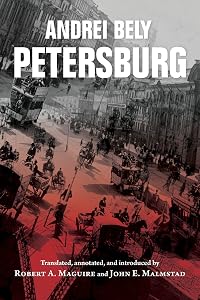
Petersburg
by Andrei Bely
On This Page
Description
Andrei Bely's novel Petersburg is considered one of the four greatest prose masterpieces of the 20th century. In this new edition of the best-selling translation, the reader will have access to the translators' detailed commentary, which provides the necessary historical and literary context for understanding the novel, as well as a foreword by Olga Matich, acclaimed scholar of Russian literature.Set in 1905 in St. Petersburg, a city in the throes of sociopolitical conflict, the novel show more follows university student Nikolai Apollonovich Ableukhov, who has gotten entangled with a revolutionary terrorist organization with plans to assassinate a government official-Nikolai's own father, Apollon Apollonovich Ableukhov. With a sprawling cast of characters, set against a nightmarish city, it is all at once a historical, political, philosophical, and darkly comedic novel. show lessTags
Recommendations


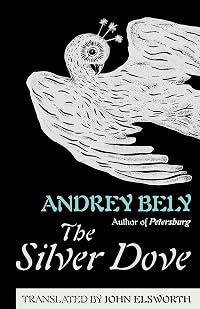

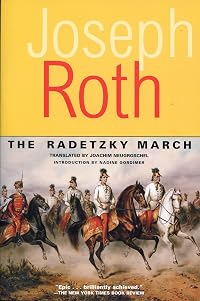
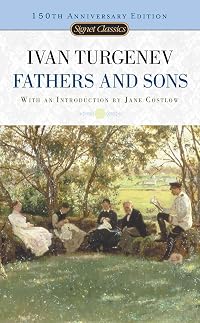
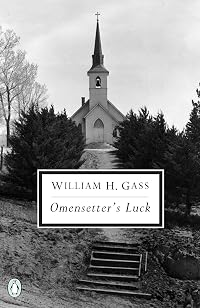
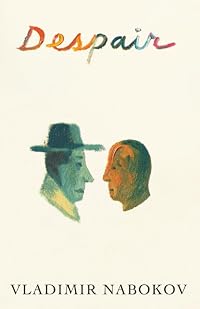

Member Recommendations
kitzyl "The turbulent late years of the Russian empire produced not one but two novels about terrorist plots that abound in images of carnivalesque horror. Dostoevsky’s Demons (1873) and Andrei Bely’s Petersburg (1913, revised 1922 [!]) both dramatize the activities of radical terrorist groups. Members of terrorist cells engaged in secretly planned and spectacularly performed acts of violence, and both Dostoevsky and Bely employ theatrical imagery to represent the dual nature of terror, as a both private and public phenomenon. This theatricality ranges from Shakespearean allusions to acts of costuming and scripting to images of puppets and clowns." Issue 35 of Hypocrite Reader
40
Member Reviews
“He was simply seized by an animal feeling for his own invaluable life; he had no desire to return from the corridor; he did not have the courage to glance into his own rooms; he now had neither strength nor time to look for the bomb a second time; everything got mixed up in his head, and he could no longer remember exactly either the minute or the hour when the time expired: any moment might prove to be the fatal one. All he could do was wait here trembling in the corridor until daybreak.”
One of the most unusual novels I have read. It is set in Petersburg in 1905 during the first Russian Revolution (the one we have largely forgotten). Published in 1913, this book portrays the city just before a series of revolutions that would show more dramatically change the course of history. It is not typical Russian literature – it does not follow a straight-forward plot or structure. The city itself serves as one of the main characters.
The narrative is infused with shapes:
“After the line, of everything symmetrical the figure that soothed him most was the square. He would give himself over for long periods to the unreflecting contemplation of: pyramids, triangles, parallelepipeds, cubes, trapezoids. Disquiet took hold of him only at the contemplation of a truncated cone. Zigzag lines he could not bear.”
and a whirl of colors:
“To their left the last gold and the last crimson fluttered in the leaves of the garden; on coming closer, a blue tit could be seen; a rustling thread stretched submissively from the garden on to the stones, to wind and chase between the feet of a passing pedestrian, and to murmur as it wove from leaves a red-and-yellow web of words.”
It is slow-paced. There are many digressions. It is occasionally absurd – the statue of the Bronze Horseman (Peter the Great) jumps off its pedestal and gallops around the city. The tone is one of foreboding. It is mostly dark, with a few hints of humor.
I read the English translation by John Elsworth. His afterword sheds light on some of the difficulties in translating it. This book is considered a classic and is worth reading for the historical perspective alone. I recognize the literary merit of this book but did not always enjoy reading it. I found it inventive and modernistic for its time. show less
One of the most unusual novels I have read. It is set in Petersburg in 1905 during the first Russian Revolution (the one we have largely forgotten). Published in 1913, this book portrays the city just before a series of revolutions that would show more dramatically change the course of history. It is not typical Russian literature – it does not follow a straight-forward plot or structure. The city itself serves as one of the main characters.
The narrative is infused with shapes:
“After the line, of everything symmetrical the figure that soothed him most was the square. He would give himself over for long periods to the unreflecting contemplation of: pyramids, triangles, parallelepipeds, cubes, trapezoids. Disquiet took hold of him only at the contemplation of a truncated cone. Zigzag lines he could not bear.”
and a whirl of colors:
“To their left the last gold and the last crimson fluttered in the leaves of the garden; on coming closer, a blue tit could be seen; a rustling thread stretched submissively from the garden on to the stones, to wind and chase between the feet of a passing pedestrian, and to murmur as it wove from leaves a red-and-yellow web of words.”
It is slow-paced. There are many digressions. It is occasionally absurd – the statue of the Bronze Horseman (Peter the Great) jumps off its pedestal and gallops around the city. The tone is one of foreboding. It is mostly dark, with a few hints of humor.
I read the English translation by John Elsworth. His afterword sheds light on some of the difficulties in translating it. This book is considered a classic and is worth reading for the historical perspective alone. I recognize the literary merit of this book but did not always enjoy reading it. I found it inventive and modernistic for its time. show less
Petersburg is an exhausting book. Not exhausting in the sense that you just want to crawl off to bed, but rather exhausting because it is full of motion; there is no rest. Things are always moving, they never stay still. Just when the reader might think there is a pause, Bely will repeat some actions, some sentences.
All this movement is accompanied by colours and sound, often smells, adding layers of depth to the narrative.
The Petersburg street in autumn penetrates your whole organism: it turns the marrow of your bones to ice and tickles your freezing spine; but as soon as you escape from it into a warm room, the Petersburg street flows in your veins like a fever. The stranger now experienced the quality of this street as he entered a show more grimy vestibule, densely crammed with black, blue, grey and yellow overcoats, swanky hats, lop-eared hats, dock-tailed hats, and galoshes of every description. A warm dampness enveloped him; in the air hung a milky steam: steam that smelled of the pancakes.
As the book progresses, it becomes clear that the different colours represent different people and states of mind. A character's change of colour choice often indicates a change of mind. The one constant is the green swirling mist, coming in off the marshes, hiding who knows what, enveloping the Bronze Horseman who created it all. There is a threat out there, undefined as yet, but in October 1905 Petersburg, everyone sensed it.
Just like navigating in a mist, nothing is ever clear. There is a plot on the part of radicals to kill a high government official, but who dreamed it up? Was it the person entrusted to carry out the assassination, or was it the bomb-maker, the Fugitive? Maybe it was even the Person, he who directs it all (maybe). The designated killer and the Fugitive both obsess over ten days until nothing is clear to either. The reader too is often left befuddled until the action circles around again and more is revealed and then a bit more.
This world of obsession and hallucination makes the omniscient narrator work hard; circling back, making connections, speaking up when things get too absurd. Nothing is sure until the very end, when suddenly everything is resolved.
This is a book I imagine people spend years studying, reading it over and over. Despite an excellent translation, I suspect it can only ever be fully grasped in the original Russian. This Pushkin edition did not have notes and they were sorely missed. Reading it, there was always a feeling of "If only I knew more about..."; "If only I knew more about the accepted stereotypes behind regions and family names"; "If only...". This is not to take away from the book in any way whatsoever. Rather, it is to suggest that there is always something more [Petersburg] has to offer the reader. As the quote from the New York Times Book Review on the back cover put it, this book is regarded by many as "The most important, most influential, and most perfectly realized Russian novel written in the twentieth century." show less
All this movement is accompanied by colours and sound, often smells, adding layers of depth to the narrative.
The Petersburg street in autumn penetrates your whole organism: it turns the marrow of your bones to ice and tickles your freezing spine; but as soon as you escape from it into a warm room, the Petersburg street flows in your veins like a fever. The stranger now experienced the quality of this street as he entered a show more grimy vestibule, densely crammed with black, blue, grey and yellow overcoats, swanky hats, lop-eared hats, dock-tailed hats, and galoshes of every description. A warm dampness enveloped him; in the air hung a milky steam: steam that smelled of the pancakes.
As the book progresses, it becomes clear that the different colours represent different people and states of mind. A character's change of colour choice often indicates a change of mind. The one constant is the green swirling mist, coming in off the marshes, hiding who knows what, enveloping the Bronze Horseman who created it all. There is a threat out there, undefined as yet, but in October 1905 Petersburg, everyone sensed it.
Just like navigating in a mist, nothing is ever clear. There is a plot on the part of radicals to kill a high government official, but who dreamed it up? Was it the person entrusted to carry out the assassination, or was it the bomb-maker, the Fugitive? Maybe it was even the Person, he who directs it all (maybe). The designated killer and the Fugitive both obsess over ten days until nothing is clear to either. The reader too is often left befuddled until the action circles around again and more is revealed and then a bit more.
This world of obsession and hallucination makes the omniscient narrator work hard; circling back, making connections, speaking up when things get too absurd. Nothing is sure until the very end, when suddenly everything is resolved.
This is a book I imagine people spend years studying, reading it over and over. Despite an excellent translation, I suspect it can only ever be fully grasped in the original Russian. This Pushkin edition did not have notes and they were sorely missed. Reading it, there was always a feeling of "If only I knew more about..."; "If only I knew more about the accepted stereotypes behind regions and family names"; "If only...". This is not to take away from the book in any way whatsoever. Rather, it is to suggest that there is always something more [Petersburg] has to offer the reader. As the quote from the New York Times Book Review on the back cover put it, this book is regarded by many as "The most important, most influential, and most perfectly realized Russian novel written in the twentieth century." show less
Three stars for my enjoyment plus two for my respect. Given the date of its composition (first published in 1916), this is a mind-numbingly original and remarkable book. The story is so simple it can be told in a sentence or two. But this is a book that, ultimately, defies easy explanation or, indeed, translation. It is so clearly and deeply rooted in Russian culture, in St. Petersburg (both history and culture), and in its times (about the 1905 revolution) that one simply has to either know about those things (i.e., be born Russian) or rely as I did upon very substantial and extensive notes. Don’t misunderstand: the notes were brilliant and indispensable. But the more I read, the more I realized that this almost impossibly inventive show more book is inextricably interwoven with its context. (Example: the lengthy note explaining the significance in why a particular building is painted yellow!) All that said: read this book! I highly recommend the translation I read (Maguire and Malmstad: 290 pages plus 60 pages of notes). I simply would not have understood this book at all without the notes. And I cannot praise it highly enough. It’s not entirely my cup of tea, but the achievement is so plain, so enormous, and so…mind-boggling, that I can understand why Nabokov considered it one of the four greatest books of the 20th century.
I enjoyed Petersburg. Really. It is, I think unarguably, a very dense work, though, and a fair amount of work on the part of the reader. I will say, however, that the narrative is mostly very clear. Indeed, sometimes I think Bely was trying to be purposefully obtuse. Still, though I started it with great apprehension, I did enjoy it and I would recommend it. show less
I enjoyed Petersburg. Really. It is, I think unarguably, a very dense work, though, and a fair amount of work on the part of the reader. I will say, however, that the narrative is mostly very clear. Indeed, sometimes I think Bely was trying to be purposefully obtuse. Still, though I started it with great apprehension, I did enjoy it and I would recommend it. show less
“He was simply seized by an animal feeling for his own invaluable life; he had no desire to return from the corridor; he did not have the courage to glance into his own rooms; he now had neither strength nor time to look for the bomb a second time; everything got mixed up in his head, and he could no longer remember exactly either the minute or the hour when the time expired: any moment might prove to be the fatal one. All he could do was wait here trembling in the corridor until daybreak.”
One of the most unusual novels I have read. It is set in Petersburg in 1905 during the first Russian Revolution (the one we have largely forgotten). Published in 1913, this book portrays the city just before a series of revolutions that would show more dramatically change the course of history. It is not typical Russian literature – it does not follow a straight-forward plot or structure. The city itself serves as one of the main characters.
The narrative is infused with shapes:
“After the line, of everything symmetrical the figure that soothed him most was the square. He would give himself over for long periods to the unreflecting contemplation of: pyramids, triangles, parallelepipeds, cubes, trapezoids. Disquiet took hold of him only at the contemplation of a truncated cone. Zigzag lines he could not bear.”
and a whirl of colors:
“To their left the last gold and the last crimson fluttered in the leaves of the garden; on coming closer, a blue tit could be seen; a rustling thread stretched submissively from the garden on to the stones, to wind and chase between the feet of a passing pedestrian, and to murmur as it wove from leaves a red-and-yellow web of words.”
It is slow-paced. There are many digressions. It is occasionally absurd – the statue of the Bronze Horseman (Peter the Great) jumps off its pedestal and gallops around the city. The tone is one of foreboding. It is mostly dark, with a few hints of humor.
I read the English translation by John Elsworth. His afterword sheds light on some of the difficulties in translating it. This book is considered a classic and is worth reading for the historical perspective alone. I recognize the literary merit of this book but did not always enjoy reading it. I found it inventive and modernistic for its time. show less
One of the most unusual novels I have read. It is set in Petersburg in 1905 during the first Russian Revolution (the one we have largely forgotten). Published in 1913, this book portrays the city just before a series of revolutions that would show more dramatically change the course of history. It is not typical Russian literature – it does not follow a straight-forward plot or structure. The city itself serves as one of the main characters.
The narrative is infused with shapes:
“After the line, of everything symmetrical the figure that soothed him most was the square. He would give himself over for long periods to the unreflecting contemplation of: pyramids, triangles, parallelepipeds, cubes, trapezoids. Disquiet took hold of him only at the contemplation of a truncated cone. Zigzag lines he could not bear.”
and a whirl of colors:
“To their left the last gold and the last crimson fluttered in the leaves of the garden; on coming closer, a blue tit could be seen; a rustling thread stretched submissively from the garden on to the stones, to wind and chase between the feet of a passing pedestrian, and to murmur as it wove from leaves a red-and-yellow web of words.”
It is slow-paced. There are many digressions. It is occasionally absurd – the statue of the Bronze Horseman (Peter the Great) jumps off its pedestal and gallops around the city. The tone is one of foreboding. It is mostly dark, with a few hints of humor.
I read the English translation by John Elsworth. His afterword sheds light on some of the difficulties in translating it. This book is considered a classic and is worth reading for the historical perspective alone. I recognize the literary merit of this book but did not always enjoy reading it. I found it inventive and modernistic for its time. show less
Yana N.
Yana N.'s Reviews > Petersburg
Petersburg by Andrei Bely
Petersburg
by Andrei Bely, J.D. Elsworth (Translator)
44823137
Yana N.'s review
Oct 06, 2017 · edit
it was amazing
bookshelves: classics, fiction, russian
Amazing. I can barely find words to describe this book, not least because anything I write seems stale in comparison to Bely's prickly prose. Where to begin? Petersburg is not a novel that can be described - it is much greater than the sum of its parts, which themselves are considerable. A story about a father and a son, about a city and a swamp, about the absurdity of life. A summary? When Nikolai Apollonovich is charged with a mission to assassinate his own father by bomb, chaos ensues. And what chaos...
The plot itself takes show more the backseat to the unimaginably exceptional prose of this novel. The descriptions of hallucinations, of the ever-present Petersburg mists, of the tender gaze that burgeons between Apollon Apollonovich and Anna Petrovna - all of it is simply brilliant! There is such a richness of imagery, such inventive forms and metaphors, a fascinating use of recurring images and fixed expressions as in an ancient epic, a wealth of biblical allusions and style that makes one's heart pound in visceral reaction. The depth of abstract feeling that assails the characters is rendered to perfection in its intensity and complexity. The density of prose and opaqueness of certain turns of phrase do nothing to take away from that experience of perfect unity with the characters, with the city, with Bely's entire universe, which sucked me in and still won't let me out. There is even something fitting about the fact that I didn't understand everything, that certain references went over my head and that more than one or two words might have necessitated a trip to the dictionary... This is not a book to be understood, but one to be felt in the flesh. I am simply beside myself, so I'll just stop here. Maybe when I reread Petersburg one day, I will manage a more coherent review. For now, I will just bask in the wonder that was this novel. show less
Yana N.'s Reviews > Petersburg
Petersburg by Andrei Bely
Petersburg
by Andrei Bely, J.D. Elsworth (Translator)
44823137
Yana N.'s review
Oct 06, 2017 · edit
it was amazing
bookshelves: classics, fiction, russian
Amazing. I can barely find words to describe this book, not least because anything I write seems stale in comparison to Bely's prickly prose. Where to begin? Petersburg is not a novel that can be described - it is much greater than the sum of its parts, which themselves are considerable. A story about a father and a son, about a city and a swamp, about the absurdity of life. A summary? When Nikolai Apollonovich is charged with a mission to assassinate his own father by bomb, chaos ensues. And what chaos...
The plot itself takes show more the backseat to the unimaginably exceptional prose of this novel. The descriptions of hallucinations, of the ever-present Petersburg mists, of the tender gaze that burgeons between Apollon Apollonovich and Anna Petrovna - all of it is simply brilliant! There is such a richness of imagery, such inventive forms and metaphors, a fascinating use of recurring images and fixed expressions as in an ancient epic, a wealth of biblical allusions and style that makes one's heart pound in visceral reaction. The depth of abstract feeling that assails the characters is rendered to perfection in its intensity and complexity. The density of prose and opaqueness of certain turns of phrase do nothing to take away from that experience of perfect unity with the characters, with the city, with Bely's entire universe, which sucked me in and still won't let me out. There is even something fitting about the fact that I didn't understand everything, that certain references went over my head and that more than one or two words might have necessitated a trip to the dictionary... This is not a book to be understood, but one to be felt in the flesh. I am simply beside myself, so I'll just stop here. Maybe when I reread Petersburg one day, I will manage a more coherent review. For now, I will just bask in the wonder that was this novel. show less
Wonderfully told. Humorous, elegiac, chaotic, and energetic. The vacuousness of the aristocracy as well as the revolutionaries is expressed without cynicism. There is sympathy-empathy, really for the characters shown in all their self-absorbed idiocy. The rottenness of all our human edifices- society most of all, is splayed out in the story.
imperial tsarist russia’s hottest new club is: PETERSBURG! you may at first be attracted by its bartender’s newest concoction—a tangy bacilli-packed slurry called the neva—but at *this* Party of the people there’s everything and so much more: human myriapods, parallelepipeds, your long-lost mother, heterosexual ballroom dancing, a rope soaping station, your long-lost brother as bouncer wearing a glue-on pushkin beardpiece who makes you do mental multiplication problems where you carry the 1, streets, a specter of… the orient, that report on salt consumption in the netherlands you should’ve had on your boss’ desk by, like, yesterday, and a dashing young revolutionary with a [spoiler] in his [spoiler] who, dangerous as he show more may seem, you just can’t help but want to blow you out of the neva… ;) show less
Members
- Recently Added By
Lists

Russian Literature
184 works; 35 members

1910s
90 works; 16 members

20th Century Literature
1,161 works; 54 members

Canon de la narrativa universal del siglo XX
254 works; 6 members
Most difficult novels
68 works; 27 members

Blue Pyramid 1,276 Best Books of All Time
1,248 works; 32 members

Harold Bloom - The Western Canon: D. The Chaotic Age
833 works; 24 members

Modernism
140 works; 8 members

Books set in Saint Petersburg
16 works; 1 member

Speculative Fiction from around the World
610 works; 18 members

Books Read in 2022
5,166 works; 112 members

DigitalDreamDoor top 300
300 works; 4 members

el
1,139 works; 1 member

First published in 1916
68 works; 4 members

Canon de la narrativa universal del s. XX (cicutadry)
499 works; 3 members

The 150 Greatest Novels of All Time
150 works; 6 members

Read These Too
458 works; 9 members

Take Four Books
130 works; 1 member
Talk Discussions
Past Discussions
Bely's Petersburg in Fans of Russian authors (July 2019)
Author Information

85+ Works 2,265 Members
A symbolist poet, Andrei Bely was also a literary critic and theorist and one of the most important figures in twentieth-century Russian fiction. His Petersburg (1916-35) is one of the century's great novels. He initially studied science but had begun his literary career even before graduation. His early poetry was shaped by mystical beliefs show more associated with the concept of the Divine Wisdom, beliefs shared by Aleksandr Blok and other younger symbolist poets. In later years, Bely was deeply affected by the German anthroposophist Rudolf Steiner, whom he began to follow in 1912. Blok's writings from that time on bear the imprint of his commitment to Steiner's teachings. Bely's prose continued the stylistic traditions of Nikolai Gogol, about whose work he wrote. Brilliantly innovative in language, composition, and subject matter, Bely's fiction had a great impact on early Soviet literature. His novels The Silver Dove (1910), and St. Petersburg (1913) deal with Russian history in broad cultural perspective, focusing especially on East-West opposition. Kotik Letaev (1918), anticipated stream-of-consciousness techniques in Western fiction in its depiction of the psyche of a developing infant. The Christened Chinaman (1927), an autobiographical novel, is also highly innovative in its language and three-level narrative. (Bowker Author Biography) show less
Some Editions
Awards and Honors
Awards
Notable Lists
Daniel S. Burt's Novel 100 (055 – 55)
Series
Belongs to Publisher Series
Work Relationships
Is contained in
Common Knowledge
- Canonical title
- Petersburg
- Original title
- Петербург
- Original publication date
- 1916 (1st ed.) (1st ed.); 1922 (rev. ed., Berlin) (rev. ed., Berlin); 1928 (USSR) (USSR); 1967 (French transl.) (French transl.)
- People/Characters
- Apollon Apollonovich Ableukhov; Nikolai Apollonovich Ableukhov; Sofia Petrovno Likhutina; Sergei Sergeich Likhutin; Alexandr Ivanovich Dudkin
- Important places
- St. Petersburg, Russia
- Important events
- Russian Revolution (1905)
- Dedication
- To Isabelle Satterthwaite
- First words
- Your Excellencies, Your Lordships, Your Honors, Citizens!
- Last words
- (Click to show. Warning: May contain spoilers.)His parents had died.
- Blurbers
- Nabakov, Vladimir; Berlin, Isaiah; Burgess, Anthony
- Original language
- Russian
Classifications
- Genres
- General Fiction, Fiction and Literature
- DDC/MDS
- 891.733 — Literature & rhetoric Literatures of other languages East Indo-European and Celtic literatures Russian and East Slavic languages Russian fiction 1800–1917
- LCC
- PG3453 .B84 .P513 — Language and Literature Slavic languages and literatures. Baltic languages. Albanian language Slavic. Baltic. Albanian Russian literature Individual authors and works 1870-1917
- BISAC
Statistics
- Members
- 1,719
- Popularity
- 12,880
- Reviews
- 29
- Rating
- (4.09)
- Languages
- 18 — Catalan, Czech, Danish, Dutch, English, Finnish, French, German, Hebrew, Hungarian, Italian, Norwegian (Bokmål), Portuguese, Russian, Serbian, Spanish, Swedish, Turkish
- Media
- Paper, Audiobook, Ebook
- ISBNs
- 72
- ASINs
- 29