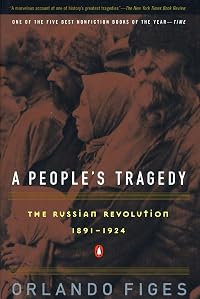
A People's Tragedy: The Russian Revolution 1891-1924
by Orlando Figes
On This Page
Description
It is history on an epic yet human scale. Vast in scope, exhaustive in original research, written with passion, narrative skill, and human sympathy, A People's Tragedy is a profound account of the Russian Revolution for a new generation. Many consider the Russian Revolution to be the most significant event of the twentieth century. Distinguished scholar Orlando Figes presents a panorama of Russian society on the eve of that revolution, and then narrates the story of how these social forces show more were violently erased. Within the broad stokes of war and revolution are miniature histories of individuals, in which Figes follows the main players' fortunes as they saw their hopes die and their world crash into ruins. Unlike previous accounts that trace the origins of the revolution to overreaching political forces and ideals, Figes argues that the failure of democracy in 1917 was deeply rooted in Russian culture and social history and that what had started as a people's revolution contained the seeds of its degeneration into violence and dictatorship. A People's Tragedy is a masterful and original synthesis by a mature scholar, presented in a compelling and accessibly human narrative. show lessTags
Recommendations

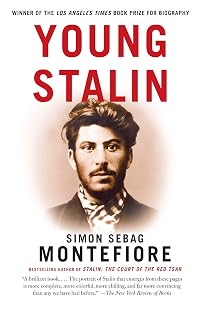
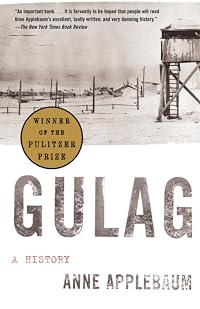
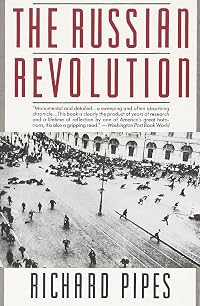


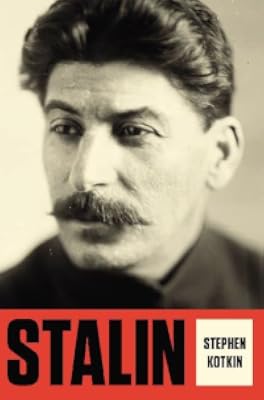






Member Recommendations
GabrielF Written in 1940, Darkness at Noon really takes you into the minds of the revolutionary generation during Stalin's purges. A People's Tragedy is a very readable, thorough and fascinating history of the revolution.
Member Reviews
While I was halfway through this, an ‘inspirational quote’ from Lenin happened to come up on my reddit feed. Something from one of those early speeches, about equality for all. I left a comment to suggest – I thought quite mildly – that it was, perhaps, ethically questionable to be quoting with approbation someone responsible for the deaths of hundreds of thousands of people – only to be downvoted into oblivion by other users. ‘You're probably thinking about Stalin,’ said one. ‘Fuck off,’ clarified another. ‘Lenin was actually very socially liberal, and kept his word about democracy for the people.’
This would be the same Lenin who shut down Russia's constituent assembly, who sidelined trade unions and had striking show more workers shot for desertion, who turned the country into a police state, built a chain of concentration camps and institutionalised terrorism as a matter of deliberate policy. Painful to see him held up as a beacon of humanitarianism by people who apparently haven't even understood Animal Farm. It's interesting, though, because even when I was growing up the far left was always quite cool in a way that the far right never was; its unelectability made it harmless, and it gained a certain cachet from its opposition to a string of unpopular Tory governments and by association with various cult figures like Morrissey or Alexi Sayle. It was always kind of a joke. People referred to each other with smiles as ‘fellow travellers’, ‘old Trots’ – and still do.
There was a feeling I had when I was reading this book; an uncomfortable, itchy feeling which made me fidget while I was reading, shift in my seat and scratch my nose or my neck every few minutes as I turned the pages. Eventually I realised what this sensation was: hatred. I just loathed the people responsible for prosecuting this grotesque experiment. Now I realise this is, of course, a pathetically inadequate response, but partly it came from a kind of surprise. A feeling that they had somehow got away with it, that their reputations are nowhere near as dismal as they should be. At one point, Orlando Figes offers in passing a suggestion as to why this might be so:
The Bolshevik programme was based on the ideals of the Enlightenment – it stemmed from Kant as much as from Marx – which makes Western liberals, even in this age of post-modernism, sympathise with it, or at least obliges us to try and understand it, even if we do not share its political goals; whereas the Nazi efforts to ‘improve mankind’, whether through eugenics or genocide, spat in the face of the Enlightenment and can only fill us with revulsion.
And perhaps there's something in this: inasmuch as reality has (in Stephen Colbert's words) a liberal bias; inasmuch as we are living, historically speaking, in a leftist world, there is a sense in which the Communist experiment seems like something that went wrong, not something that was wrong inherently. But the enormities of Lenin's politics were built-in ab initio; terror, Figes writes, was ‘implicit in the regime from the start…the resort to rule by terror was bound to follow from Lenin's violent seizure of power and his rejection of democracy’. And despite all the slogans of equality and democracy, the turnaround was much faster than I had ever realised.
None of the democratic organisations established before October 1917 survived more than a few years of Bolshevik rule, at least not in their democratic form. By 1921, if not earlier, the revolution had come full circle, and a new autocracy had been imposed on Russia which in many ways resembled the old one.
The thousand pages of Figes's history give plenty of scope for examining in detail what this meant for Russian citizens. It isn't pretty but it is instructive. There was the Civil War, with widespread terror on both sides; famine, exacerbated by shitty agricultural policy; and eventually the tightening grip of a one-party state. There are moments of acute revulsion and misery, alongside a recurring sense of absurdity: at one point, currency depreciation becomes so severe that it costs more to print the rouble than the rouble is actually worth; the post and telegraph service have to be made free because the state is losing money by printing and charging rouble notes for them. ‘The situation was surreal – but then this was Russia,’ Figes remarks, showing a grasp of the irony which this story demands.
Whole books have been written, of course, about the failure of the left outside Russia to accept the reality of what was happening there under Communism, or to blame it on a perversion of noble principles. What's so rewarding, and upsetting, and moving about this book is that it illustrates how naturally the consequences followed from the initial conditions, and how unimportant the political debate is compared with its effects on real people. There, as the title of the book suggests, Figes's summary is blunt.
Instead of being a constructive cultural force the revolution had virtually destroyed the whole of Russian civilisation; instead of human liberation it had merely brought human enslavement; and instead of the spiritual improvement of humanity it had led to degradation.
What makes it worse is that this whole catalogue of misery is in some sense being positioned only as a prelude. Looming up over the narrative is the lengthening shadow of the Georgian, Ioseb Jughashvili, alias Stalin, and where this book ends his story is just beginning.
Although this was written twenty years ago, in some ways it's become more relevant than ever, and not just because next year marks the revolution's centenary. In an impassioned final chapter, Figes calls for urgent reevaluation of the political capitalism of the West, pointing out that extremist rhetoric of the sort that fuelled the Bolshevik party is periodically going to prove popular ‘as long as the mass of the ordinary people remain alienated from the political system and feel themselves excluded from the benefits of the emergent capitalism. Perhaps even more worrying,’ he adds, ‘authoritarian nationalism has begun to fill the void…’ Is this sounding familiar to anybody? show less
This would be the same Lenin who shut down Russia's constituent assembly, who sidelined trade unions and had striking show more workers shot for desertion, who turned the country into a police state, built a chain of concentration camps and institutionalised terrorism as a matter of deliberate policy. Painful to see him held up as a beacon of humanitarianism by people who apparently haven't even understood Animal Farm. It's interesting, though, because even when I was growing up the far left was always quite cool in a way that the far right never was; its unelectability made it harmless, and it gained a certain cachet from its opposition to a string of unpopular Tory governments and by association with various cult figures like Morrissey or Alexi Sayle. It was always kind of a joke. People referred to each other with smiles as ‘fellow travellers’, ‘old Trots’ – and still do.
There was a feeling I had when I was reading this book; an uncomfortable, itchy feeling which made me fidget while I was reading, shift in my seat and scratch my nose or my neck every few minutes as I turned the pages. Eventually I realised what this sensation was: hatred. I just loathed the people responsible for prosecuting this grotesque experiment. Now I realise this is, of course, a pathetically inadequate response, but partly it came from a kind of surprise. A feeling that they had somehow got away with it, that their reputations are nowhere near as dismal as they should be. At one point, Orlando Figes offers in passing a suggestion as to why this might be so:
The Bolshevik programme was based on the ideals of the Enlightenment – it stemmed from Kant as much as from Marx – which makes Western liberals, even in this age of post-modernism, sympathise with it, or at least obliges us to try and understand it, even if we do not share its political goals; whereas the Nazi efforts to ‘improve mankind’, whether through eugenics or genocide, spat in the face of the Enlightenment and can only fill us with revulsion.
And perhaps there's something in this: inasmuch as reality has (in Stephen Colbert's words) a liberal bias; inasmuch as we are living, historically speaking, in a leftist world, there is a sense in which the Communist experiment seems like something that went wrong, not something that was wrong inherently. But the enormities of Lenin's politics were built-in ab initio; terror, Figes writes, was ‘implicit in the regime from the start…the resort to rule by terror was bound to follow from Lenin's violent seizure of power and his rejection of democracy’. And despite all the slogans of equality and democracy, the turnaround was much faster than I had ever realised.
None of the democratic organisations established before October 1917 survived more than a few years of Bolshevik rule, at least not in their democratic form. By 1921, if not earlier, the revolution had come full circle, and a new autocracy had been imposed on Russia which in many ways resembled the old one.
The thousand pages of Figes's history give plenty of scope for examining in detail what this meant for Russian citizens. It isn't pretty but it is instructive. There was the Civil War, with widespread terror on both sides; famine, exacerbated by shitty agricultural policy; and eventually the tightening grip of a one-party state. There are moments of acute revulsion and misery, alongside a recurring sense of absurdity: at one point, currency depreciation becomes so severe that it costs more to print the rouble than the rouble is actually worth; the post and telegraph service have to be made free because the state is losing money by printing and charging rouble notes for them. ‘The situation was surreal – but then this was Russia,’ Figes remarks, showing a grasp of the irony which this story demands.
Whole books have been written, of course, about the failure of the left outside Russia to accept the reality of what was happening there under Communism, or to blame it on a perversion of noble principles. What's so rewarding, and upsetting, and moving about this book is that it illustrates how naturally the consequences followed from the initial conditions, and how unimportant the political debate is compared with its effects on real people. There, as the title of the book suggests, Figes's summary is blunt.
Instead of being a constructive cultural force the revolution had virtually destroyed the whole of Russian civilisation; instead of human liberation it had merely brought human enslavement; and instead of the spiritual improvement of humanity it had led to degradation.
What makes it worse is that this whole catalogue of misery is in some sense being positioned only as a prelude. Looming up over the narrative is the lengthening shadow of the Georgian, Ioseb Jughashvili, alias Stalin, and where this book ends his story is just beginning.
Although this was written twenty years ago, in some ways it's become more relevant than ever, and not just because next year marks the revolution's centenary. In an impassioned final chapter, Figes calls for urgent reevaluation of the political capitalism of the West, pointing out that extremist rhetoric of the sort that fuelled the Bolshevik party is periodically going to prove popular ‘as long as the mass of the ordinary people remain alienated from the political system and feel themselves excluded from the benefits of the emergent capitalism. Perhaps even more worrying,’ he adds, ‘authoritarian nationalism has begun to fill the void…’ Is this sounding familiar to anybody? show less
In 824 pages, "A People's Tragedy: The Russian Revolution, 1891-1924" historian Orlando Figes guides the reader through the many tragedies of the Russian revolution. The depth of research - Figes says he researched the book for 6 years - comes through in depth in every chapter. The black and white photographs are haunting. We see the brief rise and fall of Russian liberal democracy. The untold suffering caused by the First World War, the revolution and the civil wars.
The book is also impressive for the conclusions offered on some of the big questions of the period. For example, in the civil war period following 1917, Figes points out the Whites (the loose set of groups that opposed the Bolsheviks) failed primarily due to political show more shortcomings rather than military considerations. It is also sad to see how often the various regimes resorted to repression and violence. There is comparatively little effort to earn and maintain popular support in many cases. Figes also examines the contrasting objectives and political goals of key people such as Lenin, Trotsky and Stalin. show less
The book is also impressive for the conclusions offered on some of the big questions of the period. For example, in the civil war period following 1917, Figes points out the Whites (the loose set of groups that opposed the Bolsheviks) failed primarily due to political show more shortcomings rather than military considerations. It is also sad to see how often the various regimes resorted to repression and violence. There is comparatively little effort to earn and maintain popular support in many cases. Figes also examines the contrasting objectives and political goals of key people such as Lenin, Trotsky and Stalin. show less
I'm not so sure he called it "the people's tragedy" because it was a failure "of the people" so much as because it was a tragedy "for the people". The Russian peasants and workers were by and large uneducated and particularly uneducated politically. Many (as shown in the war) didn't ever even identify themselves with a country. They didn't fight for a country but for the Tsar who was to them a sort of a god, at the very least a father who took care of them from high places. Most had little experience of anything but their own villages and what education they had had taught them nothing of government or nationhood. In the US Civil War many soldiers had never left their tiny rural communities before but they'd been taught a sense of show more nationhood with its attendant benefits and values. That never happened in Russia. Civics for Russian peasants was "the Tsar will take care of you". The makers of the revolution were intellectuals. The Liberals (Kadets, etc.) were mainly upper class (enlightened sons of nobles and government officials) influenced by ideas outside Russia, though most wanted a constitutional monarchy, maybe like Britain. Most didn't want "revolution" in the sense of major upheaveal and violence. The more radical parties, including the Bolsheviks, tended to come from lower classes, but they too were intellectuals, knowledgable about Russia's revolutionary history, steeped in European ideas about how society should be organized (more influenced by Marx and the Paris Commune experience than ideas of constitutional monarchy) who had lived most of the time before WWI in internal or external exile. None of them really represented "the people" and the Bolsheviks who ultimately come to power promised "the people" (both workers and peasants) everything they wanted (redistribution of land, local governments, a share in running factories and farms, etc. etc.) but then took it all back when they'd consolidated power.The people had no chance and I think that's the main message of Figes' book. They rallied to the cause at first because they were promised the world and weren't canny enough to recognize it wasn't possible and certainly not likely that the new regime would relinquish enough power to deliver on promises. Many rebelled--viciously--when they saw the reality and they ended up oppressed from a different end of the political spectrum. They were seen as participating in their own hoodwinking, no question, but given their past not much else was predictable. It seems to me that Marx was probably right about the level of sophistication among the people needed for a revolution in the name of the people. It's true that Figes frequently talks about what might have been done to avert one tragedy or another, but just as often he demonstrates how that was just not in the cards given the nature of the groups involved or the circumstances. The Bolsheviks ruled "in the name of the people" but the "people" who rallied to their cause were converted into apparatchiks who benefited from the power of the state and joined the new oppressors. Everyone else was outmaneuvered from early on by a government that was pretty heartless from the onset.What I found most interesting about this book was that Figes presented Lenin as cold and committed primarily to ideas (never to people) and was perfectly willing to sacrifice any constituency that got in the way. I think there was a generation or two of historians, both Western and Russian, who wanted to think that Lenin was an idealist and that if he had not died, he would have moderated the state (as with The New Economic Policy--NEP) into a more reasonable state that was maybe centrally planned but allowed for a certain amount of economical entrepreneurship, real power to the people, etc. etc. Figes pretty much destroys that illusion by quoting secret directives and writings of Lenin (available only since the fall of the USSR) in the 20ies which shows him as hard, cold, intellectual and wily and NEP as a necessity of the moment to keep power only. That information undermines the notion that (1) Russia might really have developed into a successful government of and for the people had Lenin not died when he did and (2) it was Stalin who was the primary architect of the repressive state which show less
I have the late, great David Bowie to thank for bringing this one to my attention, because he included it on his list of 100 Books To Read in a Lifetime.
So I have this interest in Russian history and a lifetime, so I sat down several times and got myself all the way through this book. This was heavy going but rewarding.
Figes has a wonderful gift with a concise style that feels as readable as a historical fiction novel. I particularly liked that he followed the stories of several ordinary Russian people throughout the book. This was brilliant because it really brought home the sheer impact of these events when I was reading about someone again and again as time went on. This is also what made my friend want to give this one a try, so show more well done!!!
Five stars. So glad I committed the time to read this one carefully. I have advanced my education and also have a legitimate topic for conversation, in case I ever have the pleasure of meeting David Bowie in the great hereafter. I am sure he will be relieved that somebody has something to say other than, "I really liked your music." show less
So I have this interest in Russian history and a lifetime, so I sat down several times and got myself all the way through this book. This was heavy going but rewarding.
Figes has a wonderful gift with a concise style that feels as readable as a historical fiction novel. I particularly liked that he followed the stories of several ordinary Russian people throughout the book. This was brilliant because it really brought home the sheer impact of these events when I was reading about someone again and again as time went on. This is also what made my friend want to give this one a try, so show more well done!!!
Five stars. So glad I committed the time to read this one carefully. I have advanced my education and also have a legitimate topic for conversation, in case I ever have the pleasure of meeting David Bowie in the great hereafter. I am sure he will be relieved that somebody has something to say other than, "I really liked your music." show less
Written in a narrative style that captures both the scope and detail of the Russian revolution, Orlando Figes' history is certain to become one of the most important contemporary studies of Russia as it was at the beginning of the 20th century. With an almost cinematic eye, Figes captures the broad movements of war and revolution, never losing sight of the individuals whose lives make up his subject. He makes use of personal papers and personal histories to illustrate the effects the revolution wrought on a human scale, while providing a convincing and detailed understanding of the role of workers, peasants, and soldiers in the revolution. He moves deftly from topics such as the grand social forces and mass movements that made up the show more revolution to profiles of key personalities and representative characters.
Figes' themes of the Russian revolution as a tragedy for the Russian people as a whole and for the millions of individuals who lost their lives to the brutal forces it unleashed make sense of events for a new generation of students of Russian history. Sympathy for the charismatic leaders and ideological theorising regarding Hegelian dialectics and Marxist economics--two hallmarks of much earlier writing on the Russian revolution--are banished from these clear-eyed, fair-minded pages of A People's Tragedy. The author's sympathy is squarely with the Russian people. That commitment, together with the benefit of historical hindsight, provides a standpoint Figes can take full advantage of in this masterful history. show less
Figes' themes of the Russian revolution as a tragedy for the Russian people as a whole and for the millions of individuals who lost their lives to the brutal forces it unleashed make sense of events for a new generation of students of Russian history. Sympathy for the charismatic leaders and ideological theorising regarding Hegelian dialectics and Marxist economics--two hallmarks of much earlier writing on the Russian revolution--are banished from these clear-eyed, fair-minded pages of A People's Tragedy. The author's sympathy is squarely with the Russian people. That commitment, together with the benefit of historical hindsight, provides a standpoint Figes can take full advantage of in this masterful history. show less
This is the best account of the Russian Revolution I have read. It is a brilliantly written book, organized in four parts, and giving a panoramic view of the Revolution. It starts with a description of the social actors at the end of the Old Regime (Part 1), and then proceeds with the history of the last phase of the tsarist autocracy, in particular the two great crisis at the turn of the century: the 1891 famine and the 1905 revolution (Part 2). The remaining two thirds of this 900+ pages work deal with the core events of the 1917 revolutions until the signing of the Teatry of Brest-Litovsk in March of 1918 and the start of the one party dictatorship (Part 3), and the civil war years and the first phase of the Communist regime up until show more the death of Lenin in 1924 (Part 4). This great overview is not only a monumental piece of scholarship but also a remarkably sensitive one, in which the author make us understand the events and their participants in their own terms, although not refraining from pointing out the short sightedness, callouseness, or sheer cruelty, of some of their actions. A piece of historical writing of the highest caliber about the most important and seminal historical event of the twentieth century. Compulsory reading! show less
Ótimo livro sobre a revolução russa se você tem interesse pelo diálogo entre os grandes escritores russos e a revolução de 17, além de suas opiniões privadas daquilo que a precedeu e a sucedeu. Perfeito livro se você tem interesse pelo diálogo entre Maxim Gorki e a revolução de 17, além de suas opiniões privadas daquilo que a precedeu e a sucedeu.
Figes (que eu só descobri agora que se pronuncia Faiges) faz um panorama muito detalhado e interessante do que levou à Revolução Russa. É difícil poder afirmar peremptório que fez uma análise imparcial, sem deixar detalhes relevantes de fora por causas outras quando não se é um especialista no assunto, mas Figes passa confiança. Tem suas opiniões, mas é até melhor show more que elas estejam bem claras.
O livro é fluido e tem aquele fatalismo britânico que é sempre adorável. Serve pra você poder sentir com mais propriedade a frustração de ver que ninguém que fala da revolução e do comunismo russo faz qualquer ideia de coisa alguma. show less
Figes (que eu só descobri agora que se pronuncia Faiges) faz um panorama muito detalhado e interessante do que levou à Revolução Russa. É difícil poder afirmar peremptório que fez uma análise imparcial, sem deixar detalhes relevantes de fora por causas outras quando não se é um especialista no assunto, mas Figes passa confiança. Tem suas opiniões, mas é até melhor show more que elas estejam bem claras.
O livro é fluido e tem aquele fatalismo britânico que é sempre adorável. Serve pra você poder sentir com mais propriedade a frustração de ver que ninguém que fala da revolução e do comunismo russo faz qualquer ideia de coisa alguma. show less
Members
- Recently Added By
Lists

David Bowie's Top 100
97 works; 23 members

r/AskHistorians' Recommended Books
1,068 works; 18 members

Non-Fiction Worth Reading
1,015 works; 261 members

David Bowie's List of Top 100 Books
94 works; 6 members

Five star books
1,755 works; 108 members

Favourite Books
1,819 works; 308 members

THE WAR ROOM
813 works; 24 members
David Bowie’s Top 100 Favourite Reads
100 works; 3 members

Russia / Ukraine
13 works; 1 member
Author Information

29+ Works 7,814 Members
Awards and Honors
Awards
Distinctions
Work Relationships
Common Knowledge
- Canonical title
- A People's Tragedy: The Russian Revolution 1891-1924
- Original title
- A People's Tragedy. The Russian Revolution 1891-1924
- Original publication date
- 1996 (1e édition originale anglaise) (1e édition originale anglaise); 2007-10-11 (1e traduction et édition française, Denoël) (1e traduction et édition française, Denoël); 2009-09-24 (Réédition française en 2 volumes poche, Folio, Gallimard) (Réédition française en 2 volumes poche, Folio, Gallimard)
- People/Characters
- Leon Trotsky; Nicholas II, Emperor of Russia; Vladimir Lenin; Alexander Kerensky; Alexander II, Emperor of Russia; Alexander III, Emperor of Russia (show all 14); Alexei Brusilov; Maxim Gorky; Georgii Lvov; Lev Kamenev; Sergei Semenov; Joseph Stalin; Leo Tolstoy; Grigori Zinoviev
- Important places
- Russian Empire; Russia; USSR; Austro-Hungarian Empire; Germany; Poland (show all 8); Ukraine; Siberia, Russia
- Important events
- Russian Revolution; World War I; Bolshevik Revolution; Russian Civil War
- Blurbers
- Andrew, Christopher; Ascherson, Neal; Hobsbawm, Eric; Miller, Lucasta
- Original language
- English
- Canonical DDC/MDS
- 947.083
- Canonical LCC
- DK260
- Disambiguation notice*
- Problem CK .fr :
Date de première publication :
1996 (1e édition originale anglaise)
- 2007-10-11 (1e traduction et édition française, Denoël)
- 2009-09-24 (Réédition française en 2 volumes p... (show all)oche, Folio, Gallimard)
*Some information comes from Common Knowledge in other languages. Click "Edit" for more information.
Classifications
- Genres
- History, General Nonfiction, Nonfiction
- DDC/MDS
- 947.083 — History & geography History of Europe Eastern European Counties and Russia Russian & Slavic History by Period 1855- Nicholas II, 1894-1917
- LCC
- DK260 — History of Europe, Asia, Africa and Oceania Russia. Soviet Union. Former Soviet Republics – Poland History of Russia. Soviet Union. Former Soviet Republics History House of Romanov, 1613-1917
- BISAC
Statistics
- Members
- 1,965
- Popularity
- 10,751
- Reviews
- 21
- Rating
- (4.24)
- Languages
- 10 — Czech, Dutch, English, French, German, Italian, Polish, Portuguese, Slovenian, Spanish
- Media
- Paper, Audiobook, Ebook
- ISBNs
- 32
- ASINs
- 11