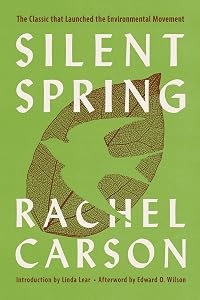
Silent Spring
by Rachel Carson
On This Page
Description
Rachel Carson's Silent Spring was first published in three serialized excerpts in the New Yorker in June of 1962. The book appeared in September of that year and the outcry that followed its publication forced the banning of DDT and spurred revolutionary changes in the laws affecting our air, land, and water. Carson's passionate concern for the future of our planet reverberated powerfully throughout the world, and her eloquent book was instrumental in launching the environmental movement. It show more is without question one of the landmark books of the twentieth century. show lessTags
Recommendations






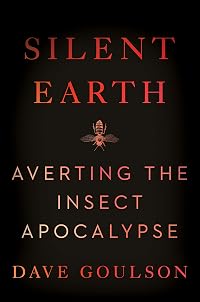
Member Recommendations

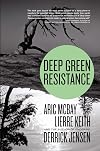
SonoranDreamer Deep Green Resistance is a book about a strategy for those who are frustrated with the ongoing poisoning of our planet even after all this time after Silent Spring was published.
20
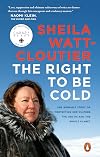
The Right to Be Cold: One Woman's Story of Protecting Her Culture, the Arctic and the Whole Planet by Sheila Watt-Cloutier
thebookpile In Silent Spring, Rachel Carson says that to get away from contamination from DDT and other harmful chemicals one would have to move to the far north, which at that time wasn't exposed to them. Ironically, 60 years later, the situation is almost reversed, as described by Sheila Watt-Cloutier in The Right to Be Cold.
Noisy Risk (Chapter 10) gives the counterpoint to Silent Spring, showing up the ignorance of probability and statistics embodied in the demonising of cancer. Rising relative rates of cancer - a disease of an aging population - also indicate a falling rate of diseases such as tuberculosis and enteritis.
14
Member Reviews
I can't believe I took so long to read this amazing, accurate and accessible warning about man's war on nature - or how unbelievably angry Rachel Carson's research made me! The original book was published in 1962, and the author sadly died in 1964, but a quick Google tells me that nothing has changed, and in fact the use of pesticides and other 'chemical warfare' has increased; the infamous DDT (referenced by Joni Mitchell - 'hey farmer, farmer, put away your DDT now/Give me spots on my apples, but leave me the birds and the bees' - which came on the radio while I was reading) was banned in some countries, but other, stronger chemicals have taken its place.
Rachel Carson presents her arguments against spraying chemicals to combat show more insignificant little problems - ants, gnats, tree fungus - in clear and powerful language. The dependence on chemicals, instead of natural or biological control of pests, came about after WW2, as a derivative of nerve gas - and was promoted by the Department of Agriculture and the mercenary manufacturers of DDT and the like, especially in the good old USA. The air, soil and waterways, and therefore the food chain, were all irrevocably polluted by spray-happy farmers and even suburbanites who blindly followed the 'science', which was motivated by money and lacked any research into the after effects:
The 'control of nature' is a phrase conceived in arrogance, born of the Neanderthal age of biology and philosophy, when it was supposed that nature exists for the convenience of man. ... It is our alarming misfortune that so primitive a science has armed itself with the most modern and terrible weapons, and that in turning them against the insects, it has also turned them against the earth.
You tell 'em, Rachel! I could almost picture the arrogant little 'experts' and chemical men while reading her words - impotent pen pushers who took pleasure in blasting the earth with the worst pollutants, watching birds and fish die rather than the target 'pests', which became immune to the pesticides and came back bigger and stronger anyway, and then refusing to listen to the complaints and the protests because men know best.(They also turned on Rachel for presenting the truth and spoiling their monopoly on death and destruction, calling her 'hysterical'.) I kind of wish the conservationists could have sprayed the manufacturers with their own chemicals. At the very least, I hope the (mutant) cockroaches win the war and eat us all.
An infuriating history of man's arrogance, but sadly still relevant - this book should be required reading at school. show less
Rachel Carson presents her arguments against spraying chemicals to combat show more insignificant little problems - ants, gnats, tree fungus - in clear and powerful language. The dependence on chemicals, instead of natural or biological control of pests, came about after WW2, as a derivative of nerve gas - and was promoted by the Department of Agriculture and the mercenary manufacturers of DDT and the like, especially in the good old USA. The air, soil and waterways, and therefore the food chain, were all irrevocably polluted by spray-happy farmers and even suburbanites who blindly followed the 'science', which was motivated by money and lacked any research into the after effects:
The 'control of nature' is a phrase conceived in arrogance, born of the Neanderthal age of biology and philosophy, when it was supposed that nature exists for the convenience of man. ... It is our alarming misfortune that so primitive a science has armed itself with the most modern and terrible weapons, and that in turning them against the insects, it has also turned them against the earth.
You tell 'em, Rachel! I could almost picture the arrogant little 'experts' and chemical men while reading her words - impotent pen pushers who took pleasure in blasting the earth with the worst pollutants, watching birds and fish die rather than the target 'pests', which became immune to the pesticides and came back bigger and stronger anyway, and then refusing to listen to the complaints and the protests because men know best.(They also turned on Rachel for presenting the truth and spoiling their monopoly on death and destruction, calling her 'hysterical'.) I kind of wish the conservationists could have sprayed the manufacturers with their own chemicals. At the very least, I hope the (mutant) cockroaches win the war and eat us all.
An infuriating history of man's arrogance, but sadly still relevant - this book should be required reading at school. show less
'Future historians may well be amazed by our distorted sense of proportion. How could intelligent beings seek to control a few unwanted species by a method that contaminated the entire environment and brought the threat of disease and death even to their own kind? Yet this is precisely what we have done.'
Here's a book which I have read more for its historical value than for everything else. It's quite heavy on chemistry, and so many passages quite flew over my head. Having said that, this approach from the author is certainly not a bad thing! On the contrary, Rachel Carson was building a case, hence had no other alternative than to be on point and thorough when outlining what the chemicals she denounced truly implied for us all and our show more environment. What else?
Now, of course, reading it nowadays seems quite baffling. I personally found it astounding to see how irresponsibly reckless and stupid the chemical industry and agricultural industry were back in the days; showing no consideration for population, caution, ecology, and, over all, the long term potential effects of their policies (despite serious warning signs popping up all over!). Astounding also was to see go-along politicians, preferring to follow lobbyists over the science. Have we got any better, though?
The retelling of soil pollution, water contamination, catastrophic impact upon human health, disastrous consequences upon domesticated and wildlife, and, more importantly perhaps, near uselessness of pesticides when it comes to "controlling" a problem (not only the use of pesticides could have no effect whatsoever upon targeted pest but, at times, it also created a whole lot of new problems!) makes for a sad and damning exposé. In the face of such sheer irresponsible and reckless stupidity, it's easy, even, to shrug it all as: 'these were other times! we're past that now!'. And indeed, hasn't DDT, since then, be outlawed as a pesticide? Thing is...
The thing is, in our time when climate change has become a pressing issue yet deniers are not lacking, a time when certain lobbying still over rides expert sciences in matter of political decisions despite disastrous impacts (from human health to our environment) being all around us to be seen by whose with eyes to see, such a book still remains a must-read. When it comes to our disproportionate sense of proportion indeed, let alone ability to bring disease and death to our own kind while priding ourselves as being intelligent beings, we haven't changed much since then.
Here's a classic and compelling read, then, still highly relevant not because of its targets, but because of the still existing and prevalent attitudes and behaviours that it exposes. Future historians will have a lot to ponder about indeed... show less
Here's a book which I have read more for its historical value than for everything else. It's quite heavy on chemistry, and so many passages quite flew over my head. Having said that, this approach from the author is certainly not a bad thing! On the contrary, Rachel Carson was building a case, hence had no other alternative than to be on point and thorough when outlining what the chemicals she denounced truly implied for us all and our show more environment. What else?
Now, of course, reading it nowadays seems quite baffling. I personally found it astounding to see how irresponsibly reckless and stupid the chemical industry and agricultural industry were back in the days; showing no consideration for population, caution, ecology, and, over all, the long term potential effects of their policies (despite serious warning signs popping up all over!). Astounding also was to see go-along politicians, preferring to follow lobbyists over the science. Have we got any better, though?
The retelling of soil pollution, water contamination, catastrophic impact upon human health, disastrous consequences upon domesticated and wildlife, and, more importantly perhaps, near uselessness of pesticides when it comes to "controlling" a problem (not only the use of pesticides could have no effect whatsoever upon targeted pest but, at times, it also created a whole lot of new problems!) makes for a sad and damning exposé. In the face of such sheer irresponsible and reckless stupidity, it's easy, even, to shrug it all as: 'these were other times! we're past that now!'. And indeed, hasn't DDT, since then, be outlawed as a pesticide? Thing is...
The thing is, in our time when climate change has become a pressing issue yet deniers are not lacking, a time when certain lobbying still over rides expert sciences in matter of political decisions despite disastrous impacts (from human health to our environment) being all around us to be seen by whose with eyes to see, such a book still remains a must-read. When it comes to our disproportionate sense of proportion indeed, let alone ability to bring disease and death to our own kind while priding ourselves as being intelligent beings, we haven't changed much since then.
Here's a classic and compelling read, then, still highly relevant not because of its targets, but because of the still existing and prevalent attitudes and behaviours that it exposes. Future historians will have a lot to ponder about indeed... show less
Save Charles Darwin’s The Origin of Species, Silent Spring is the book that has had the greatest impact on science, according to Sir David Attenborough. Yet, what would the late Rachel Carson think of the world today?
Granted, her seminal work did lead to the banning of DDT, its cousin DDD, parathion, heptachlor, dieldrin, aldrin, endrin and malathion (although the later was relegalized in 2022). But what would Carson think of the ubiquitousness of plastic on our land and oceans? The nonchalance the public has toward a world that’s already over 2 degrees Fahrenheit warmer than it was in the late 19th century? An elite class hell bound on exploiting the earth so that the oceans become 4 degrees warmer by 2100, which — combined with show more pollution, overfishing and habitat destruction — will decimate ocean life?
Having recently read The Sixth Extinction: An Unnatural History, plowing through the book that launched the modern environmental movement proved equal parts depressing and encouraging. Are Americans evenly more stubbornly stupid than I realized? Well, yes. However, Carson, in her day, faced widespread environmental ignorance and a pesticides industry that was just as rapacious and deceitful as the plastics, fossil-fuels and factory-farm industries are today. And she managed to change America’s direction. While it won’t be easy, Carson showed that it’s possible. show less
Granted, her seminal work did lead to the banning of DDT, its cousin DDD, parathion, heptachlor, dieldrin, aldrin, endrin and malathion (although the later was relegalized in 2022). But what would Carson think of the ubiquitousness of plastic on our land and oceans? The nonchalance the public has toward a world that’s already over 2 degrees Fahrenheit warmer than it was in the late 19th century? An elite class hell bound on exploiting the earth so that the oceans become 4 degrees warmer by 2100, which — combined with show more pollution, overfishing and habitat destruction — will decimate ocean life?
Having recently read The Sixth Extinction: An Unnatural History, plowing through the book that launched the modern environmental movement proved equal parts depressing and encouraging. Are Americans evenly more stubbornly stupid than I realized? Well, yes. However, Carson, in her day, faced widespread environmental ignorance and a pesticides industry that was just as rapacious and deceitful as the plastics, fossil-fuels and factory-farm industries are today. And she managed to change America’s direction. While it won’t be easy, Carson showed that it’s possible. show less
A legendary book from the 1960s that I had never read until now.
Carson tells the story of the (mis)application of toxic chemicals intended as insect pest controls. As she vividly points out in the book, the pesticides failed signally in their objective, and caused untold (until she wrote) collateral damage to wildlife and humans.
The author writes beauftiful text - the sense flows effortlessly off the page. While she was clearly as mad as hell, she restrains herself in the writing, and makes every effort to present facts dispassionately - this was not the twitter era.
I read in the afterword that she was ferociously attacked by vested interests following publication of the book. But, she won - she was right, they were wrong, and she show more roused such a public reaction that the toxic chemical industry was forced to buckle under some governmental constraints - not a perfect ending, but quite a vindication for a brave author. show less
Carson tells the story of the (mis)application of toxic chemicals intended as insect pest controls. As she vividly points out in the book, the pesticides failed signally in their objective, and caused untold (until she wrote) collateral damage to wildlife and humans.
The author writes beauftiful text - the sense flows effortlessly off the page. While she was clearly as mad as hell, she restrains herself in the writing, and makes every effort to present facts dispassionately - this was not the twitter era.
I read in the afterword that she was ferociously attacked by vested interests following publication of the book. But, she won - she was right, they were wrong, and she show more roused such a public reaction that the toxic chemical industry was forced to buckle under some governmental constraints - not a perfect ending, but quite a vindication for a brave author. show less
Fun fact: Rachel Carson and I attended the same college, she graduated from Pennsylvania College for Women in 1929 as a biology major. I graduated from Chatham College in 2005 not as a biology major. Chatham has updated it's name multiple times: it started as Pennsylvania Female College in 1869, then became PA College for Women in 1890, then Chatham College in 1955, and finally Chatham University in 2007. When I was there, the graduate programs admitted men, but undergraduate was still a women's college. It became a co-ed undergraduate program in 2015 (this was not a popular decision with alum).
Silent Spring has been on my radar since 2001, I'd never heard of Ms Carson before I started at Chatham where her name is frequently dropped as show more she's the most famous alum. I've read the first couple chapters multiple times but never made it through the entire tome until now, when I listened and kept my paperback copy close to highlight.
It's amazing the impact this book had on our world, but also amazing how much we've forgotten about the dangers of using novel chemicals and trusting corporations. I firmly believe corporations are vampires, they live forever and can't be destroyed. 3M and their forever chemicals, J&J and their asbestos -- these companies are not trustworthy, as a society we do not hold them accountable, the powers that be at these corporations are protected by hiding behind the company. It's infuriating. (I'm going to skip going into my tirade about how billionaires shouldn't exist. You're welcome.)
This is a must read for anyone interested in nature and the human impact on our world, I think it shows how important it is to be skeptical of corporations and scientists paid by those corporations. I'm not saying we shouldn't trust science, I'm saying we should allow science to play out every scenario before we dive in on using novel chemicals, pharmaceuticals, and other products; because at the end of the day corporations care about money, not people. They do not care about future generations, they care about how much money they can make today.
I've gotta work on cutting corporate cords, but geez, they make it so damn hard. Freakin' Amazon. show less
Silent Spring has been on my radar since 2001, I'd never heard of Ms Carson before I started at Chatham where her name is frequently dropped as show more she's the most famous alum. I've read the first couple chapters multiple times but never made it through the entire tome until now, when I listened and kept my paperback copy close to highlight.
It's amazing the impact this book had on our world, but also amazing how much we've forgotten about the dangers of using novel chemicals and trusting corporations. I firmly believe corporations are vampires, they live forever and can't be destroyed. 3M and their forever chemicals, J&J and their asbestos -- these companies are not trustworthy, as a society we do not hold them accountable, the powers that be at these corporations are protected by hiding behind the company. It's infuriating. (I'm going to skip going into my tirade about how billionaires shouldn't exist. You're welcome.)
This is a must read for anyone interested in nature and the human impact on our world, I think it shows how important it is to be skeptical of corporations and scientists paid by those corporations. I'm not saying we shouldn't trust science, I'm saying we should allow science to play out every scenario before we dive in on using novel chemicals, pharmaceuticals, and other products; because at the end of the day corporations care about money, not people. They do not care about future generations, they care about how much money they can make today.
I've gotta work on cutting corporate cords, but geez, they make it so damn hard. Freakin' Amazon. show less
I learned a lot from this book, and although parts of it are dated, others are still very relevant for today.
One of the things I did not know was that the pesticides Rachel Carson was talking about actually killed birds outright. Up till now I had thought that the title referred to the eggshell thinning caused by DDT, which would cause a gradual decline in bird populations. But at the time this effect was not known; what was known was that pigeons would die in midflight and fall from the skies and songbirds would die in convulsions after the application of the pesticides, and so the "silent spring" would come much sooner.
Contrary to popular belief, Silent Spring did not call for a ban on either DDT or any other pesticide. Instead it show more called for the more thoughtful and more responsible use of pesticides. But the message the public received appears to have been almost the reverse: DDT et al have all been banned in the US, while other broad-spectrum insecticides and herbicides continue to be applied with much less thought (glyphosate, I’m looking at you).
This book was not just scaremongering; according to a 1999 report prepared by the National Pesticide Information Center DDT is a dangerous neurotoxin.
So I do think this book is still relevant today. And I would say that what is most disturbing now is that the ignorance of the harm pesticides were causing has been replaced with indifference. show less
One of the things I did not know was that the pesticides Rachel Carson was talking about actually killed birds outright. Up till now I had thought that the title referred to the eggshell thinning caused by DDT, which would cause a gradual decline in bird populations. But at the time this effect was not known; what was known was that pigeons would die in midflight and fall from the skies and songbirds would die in convulsions after the application of the pesticides, and so the "silent spring" would come much sooner.
Contrary to popular belief, Silent Spring did not call for a ban on either DDT or any other pesticide. Instead it show more called for the more thoughtful and more responsible use of pesticides. But the message the public received appears to have been almost the reverse: DDT et al have all been banned in the US, while other broad-spectrum insecticides and herbicides continue to be applied with much less thought (glyphosate, I’m looking at you).
This book was not just scaremongering; according to a 1999 report prepared by the National Pesticide Information Center DDT is a dangerous neurotoxin.
So I do think this book is still relevant today. And I would say that what is most disturbing now is that the ignorance of the harm pesticides were causing has been replaced with indifference. show less
The scary thing about reading this book at a fifty year remove, is not that one learns of new threats to our ecosphere, or even that many of the dangers highlighted are still in existence, it is that the corporate powers had to be dragged, screaming and kicking, into an admission of each threat. We have no reason to presume that this reluctance has passed into history and so, all that the last fifty years has accomplished is that the apologists have learned more subtle ways to gain-say the danger.
In 1962, the poison producers simply brushed aside the concerns of the people, nowadays, they cry their best crocodile tears and promise that they are moving mountains to reverse the situation whilst, in reality, they blithely ignore the show more issues, as before.
Back to the book, history has proved Carson correct on almost every fear that she expressed. Admittedly, the planet still exists but, it would be interesting to know how many deaths might have been avoided had the "progressives" accepted the flaws in their approach: indeed, had they so done, maybe the knee jerk reaction to genetic engineering and fracking would not be so universally negative. If the general public could have any belief that safeguards were in place, I am sure that a far greater number would be willing to allow this research, without attempts to disrupt.
You may feel that this review is at a tangent to the book but, these are the areas which Ms. Carson would, I am sure, be tackling, were she to be writing now. The issues have changed, the response has not. The evidence of current misdemeanour's is kept from us, it is only by reminding ourselves of the historical position that we can see how to proceed now. show less
In 1962, the poison producers simply brushed aside the concerns of the people, nowadays, they cry their best crocodile tears and promise that they are moving mountains to reverse the situation whilst, in reality, they blithely ignore the show more issues, as before.
Back to the book, history has proved Carson correct on almost every fear that she expressed. Admittedly, the planet still exists but, it would be interesting to know how many deaths might have been avoided had the "progressives" accepted the flaws in their approach: indeed, had they so done, maybe the knee jerk reaction to genetic engineering and fracking would not be so universally negative. If the general public could have any belief that safeguards were in place, I am sure that a far greater number would be willing to allow this research, without attempts to disrupt.
You may feel that this review is at a tangent to the book but, these are the areas which Ms. Carson would, I am sure, be tackling, were she to be writing now. The issues have changed, the response has not. The evidence of current misdemeanour's is kept from us, it is only by reminding ourselves of the historical position that we can see how to proceed now. show less
Members
- Recently Added By
Lists

Books that changed the world
67 works; 64 members

Recommended Nature Writing
346 works; 180 members

Non-Fiction Worth Reading
1,016 works; 263 members

To Read - Non Fiction
46 works; 4 members

100 books to read in a lifetime
102 works; 37 members

25 Greatest Science Books of All Time
33 works; 6 members

Newsweek's Top 100 Books: The Meta-List
100 works; 18 members

Best Environmental Books
32 works; 2 members

New York Public Library's Books of the Century - All
170 works; 14 members

Modern Library 100 Best Nonfiction Books
100 works; 8 members

Unread books
1,063 works; 87 members

Política - Clásicos
164 works; 2 members

Recommended Reading : 600 Classics Reviewed, Editors of Salem Press, 2015
634 works; 6 members

Habitat Hero books
37 works; 1 member
Books That Changed Our Perspective
423 works; 168 members

Non-Fiction
68 works; 1 member

Club Read's Recommended Nonfiction Written by Women
618 works; 30 members

Read in 1999–2000
24 works; 1 member

Books We Love to Reread
695 works; 298 members

Reading LIst
648 works; 1 member

Books in the Bibliography of Humans: A Monstrous History by Surekha Davies
346 works; 1 member

GREAT 1960s BOOKS
37 works; 1 member

Books in the Bibliography of The Alchemy of Us by Ainissa Ramirez
181 works; 1 member

BlackDog's Complete Paperbacks From Hell List
639 works; 3 members

The Well-Educated Mind, Susan Wise Bauer, 2016
179 works; 3 members

The r/AskScience Reading List
159 works; 3 members

Books Read in 2024
4,727 works; 128 members

Best Biographies of Notable Women
279 works; 101 members

Mustich's 1000 Books to Read Before You Die: A Life Changing List
1,001 works; 20 members

Schwob Nederland
207 works; 2 members

Greatest Books, allegedly
484 works; 9 members

My Favourite Books
86 works; 4 members

Blackwell's Five Foot Bookshelf
72 works; 4 members
The Great Courses: Earth at the Crossroads
48 works; 1 member

Penguin Random House
458 works; 4 members

al.vick-parents books
301 works; 1 member

Blue Pyramid 1,276 Best Books of All Time
1,248 works; 32 members

Environmental History
46 works; 8 members
500 Great Books by Women
507 works; 60 members
Folio Society
831 works; 53 members

.
396 works; 1 member
Author Information

29+ Works 13,636 Members
Rachel Carson was for many years a marine biologist and then editor-in-chief of the United States Fish and Wildlife Service's publications. She was also the author of Silent Spring, Under the Sea-Wind, and At the Edge of the Sea. She died in 1964. Sylvia Earle is a marine biologist, oceanographer, and National Geographic Society Explorer in show more Residence. Her books include Blue Hope: Exploring and Caring for Earth's Magnificent Ocean and Ocean An Illustrated Atlas. show less
Some Editions
Awards and Honors
Awards
Distinctions
Notable Lists
Series
Belongs to Publisher Series
Work Relationships
Is contained in
Is abridged in
Has as a study
Has as a student's study guide
Common Knowledge
- Canonical title*
- Primavera silenziosa
- Original title
- Silent Spring
- Original publication date
- 1962-05; 1962
- Epigraph
- The sedge is wither'd from the lake,
and no bird sings. Keats.
I am pessimistic about the human race because it is too ingenious for its own good. Our approach to nature is to beat it into submission. We would stand a better chance of survival if we accommodated ourselves to this planet ... (show all)and viewed it appreciatively instead of sceptically and dictatorially. E B White. - Dedication
- To Albert Schweitzer who said "Man has lost the capacity to foresee and to forestall. He will end by destroying the earth.'
- First words
- In a letter written in January 1958, Olga Owens Huckins told me of her own bitter experience of a small world made lifeless, and so brought my attention sharply back to a problem with which I had long been concerned. (Acknowl... (show all)edgments)
There was once a town in the heart of America where all life seemed to be in harmony with its surroundings. (1. A Fable for Tomorrow) - Last words
- (Click to show. Warning: May contain spoilers.)It is our alarming misfortune that so primitive a science has armed itself with the most modern and terrible weapons, and that in turning them againstthe insects it has also turned them against the earth.
- Original language
- English
*Some information comes from Common Knowledge in other languages. Click "Edit" for more information.
Classifications
- Genres
- Science & Nature, General Nonfiction, Nonfiction
- DDC/MDS
- 363.7384 — Society, government, & culture Social problems and social services Public Safety - Police, Crime Investigation Environmental Issues - Pollution, Recycling, Global Warming Pollution Pollutants by source Toxic chemicals
- LCC
- QH545 .P4 .C38 — Science Natural history – Biology Biology (General) Ecology
- BISAC
Statistics
- Members
- 7,744
- Popularity
- 1,470
- Reviews
- 119
- Rating
- (4.05)
- Languages
- 16 — Chinese, Danish, Dutch, English, Estonian, Finnish, French, German, Greek, Italian, Japanese, Norwegian (Bokmål), Spanish, Swedish, Turkish, Portuguese (Portugal)
- Media
- Paper, Audiobook, Ebook
- ISBNs
- 105
- UPCs
- 6
- ASINs
- 103