
Our Share of Night
by Mariana Enriquez
On This Page
Description
"In 1981, a young father and son set out on a road trip across Argentina, devastated by the mysterious death of the wife and mother they both loved. United in grief, the pair travels to her family home near Iguazú Falls, where they must confront the horrific legacy she has bequeathed. For the woman they are grieving came from a family like no other--a centuries-old secret society called the Order that pursues eternal life through ghastly rituals. For Gaspar, the son, this cult is his show more destiny. As Gaspar grows up he must learn to harness his developing supernatural powers, while struggling to understand what kind of man his mother wanted him to be. Meanwhile Gaspar's father tries to protect his son from his wife's violent family while still honoring the woman he loved so desperately"-- show lessTags
Recommendations
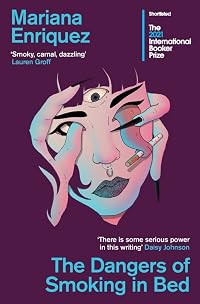
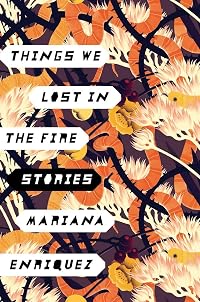






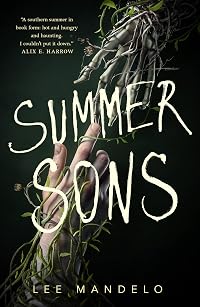
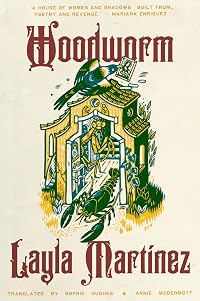
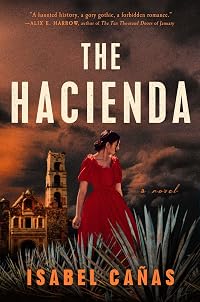
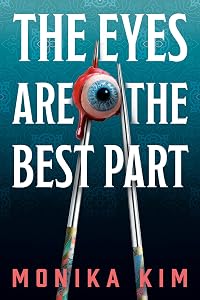

Member Recommendations
Member Reviews
There’s a heaviness in this book that, while indeed long, is more about the horrors humans inflict upon each other, especially for greed. Cruelty and trauma are side by side in each chapter. I started it full of curiosity but that feeling quickly built into a gross miasma as I read. Folk magic and disturbed secret societies gather around power where they can find it and get rid of anyone necessary along the way. If you like the dark, you’ll enjoy the humanity in the book as well. If you don’t, I don’t recommend it.
I read both of Enriquez's short story collections, and while I loved them, they each left me desperately curious about what Enriquez would be able to do with a novel, so I was thrilled to see this one get its release. And, truly, there's no disappointment to be had here--in fact, I only hope there are many more long novels to come from her.
Our Share of Night is a carefully layered novel of history, trauma, horror, and family of all kinds. The characters and their struggles are painfully real, as are the horrors they face, and Enriquez's careful weaving in of real history and cultural struggle makes for a novel that's all the more powerful.
Truly, this one will haunt me, and I can only hope she'll write a sequel or others like it.
Our Share of Night is a carefully layered novel of history, trauma, horror, and family of all kinds. The characters and their struggles are painfully real, as are the horrors they face, and Enriquez's careful weaving in of real history and cultural struggle makes for a novel that's all the more powerful.
Truly, this one will haunt me, and I can only hope she'll write a sequel or others like it.
An insane, towering achievement. I have never read a book like this before, and I doubt I will again. There are books that people use to signify who they are as a reader – people on their first read of Infinite Jest or Ulysses. I will forever remember my experience reading this.
I'm not even sure what to say this book is about. A ghost story, a family saga, I don't know. I couldn't read it at night because the nightmares got too real for me. And also I couldn't stop reading it, I had to follow through. There are so many questions I have about the ending, but they don't matter in the long run. The descriptions of Juan and his unnatural beauty and horrifying illness are arresting. Gaspar's fury and confusion are visceral and near the show more surface. Some descriptions are so vivid I ended up gulping and gulping so that I wouldn't throw up. This is a book I will read again and again for the rest of my life. The cameo from David Bowie was also incredible and charming and felt like a real gesture of love and honor, same with the passing allusions to Prince and Paisley Park.
Five stars. show less
I'm not even sure what to say this book is about. A ghost story, a family saga, I don't know. I couldn't read it at night because the nightmares got too real for me. And also I couldn't stop reading it, I had to follow through. There are so many questions I have about the ending, but they don't matter in the long run. The descriptions of Juan and his unnatural beauty and horrifying illness are arresting. Gaspar's fury and confusion are visceral and near the show more surface. Some descriptions are so vivid I ended up gulping and gulping so that I wouldn't throw up. This is a book I will read again and again for the rest of my life. The cameo from David Bowie was also incredible and charming and felt like a real gesture of love and honor, same with the passing allusions to Prince and Paisley Park.
Five stars. show less
Deep in the heart of the Argentine jungle, the remnants of a black magic cult called the Order are obsessed with the quest for eternal life. To achieve that goal, they must have a person who can serve as a conduit between this world and the evil Darkness that may grant their immortality. The Order is vicious in finding and controlling anyone with the gift to be a medium, but functioning in that role is almost certainly a quick death sentence. Juan, the current medium who was raised by the Order from childhood, has seen his powers fade recently and is desperate to keep the cult from turning to his young son Gaspar as his replacement. Rosario, Juan’s wife and Gaspar’s mother, has been killed under mysterious circumstances and Juan show more suspects she was murdered by her own family, themselves leading figures in the Order. Can Gaspar be saved to lead a normal life or will he be conscripted to serve the Order’s nefarious purposes?
That is the essential tale told in Our Share of Night, Mariana Enríquez’ first full-length novel to be translated into English after two remarkable collections of short fiction (The Things We Lost in the Fire and The Dangers of Smoking in Bed). That publishing history is useful to understand because, at their best, the author’s short stories are unsettling and effective combinations of gritty urban realism, gothic horror elements, and pointed commentary on the political situation in her country. Creating such a combination is what appears to have been the intention here as well; think of crossing the horror fiction of Stephen King with the politically based, multi-generational family sagas of Isabelle Allende and you will have a good idea of what this novel tries to be. For all its craft and imagination, though, those parts did not really come together as convincingly in this book of more than 600 pages as they do in a 15- or 20-page short story.
Indeed, the sheer length of this novel might be its biggest drawback. The world that Enríquez creates is certainly dramatic and well-drawn, but the occurrences of outright horror were spread out way too far to be emotionally effective, although an impending sense of doom was always present. For me, the family story also fell a little flat in that two of the main protagonists—Rosario and Juan—are essentially out of the picture by about halfway through the story, which left far too much time to learn how Gaspar navigates his joyless teenage years with his small circle of friends and the uncle who adopts him. Finally, other than some occasional references to people who “disappeared” and Argentina’s economic struggles, the political critique remained largely in the background. In all, this felt like a story that could have been told in hundreds of fewer pages. So, while Our Share of Night still merits a mild recommendation, readers new to this talented author’s work might do better to start with her short fiction instead. show less
That is the essential tale told in Our Share of Night, Mariana Enríquez’ first full-length novel to be translated into English after two remarkable collections of short fiction (The Things We Lost in the Fire and The Dangers of Smoking in Bed). That publishing history is useful to understand because, at their best, the author’s short stories are unsettling and effective combinations of gritty urban realism, gothic horror elements, and pointed commentary on the political situation in her country. Creating such a combination is what appears to have been the intention here as well; think of crossing the horror fiction of Stephen King with the politically based, multi-generational family sagas of Isabelle Allende and you will have a good idea of what this novel tries to be. For all its craft and imagination, though, those parts did not really come together as convincingly in this book of more than 600 pages as they do in a 15- or 20-page short story.
Indeed, the sheer length of this novel might be its biggest drawback. The world that Enríquez creates is certainly dramatic and well-drawn, but the occurrences of outright horror were spread out way too far to be emotionally effective, although an impending sense of doom was always present. For me, the family story also fell a little flat in that two of the main protagonists—Rosario and Juan—are essentially out of the picture by about halfway through the story, which left far too much time to learn how Gaspar navigates his joyless teenage years with his small circle of friends and the uncle who adopts him. Finally, other than some occasional references to people who “disappeared” and Argentina’s economic struggles, the political critique remained largely in the background. In all, this felt like a story that could have been told in hundreds of fewer pages. So, while Our Share of Night still merits a mild recommendation, readers new to this talented author’s work might do better to start with her short fiction instead. show less
This is as hard to get back to as it is to give up. Evil is bad for children and other living things. I'm not sure why I found it as readable as I did, but it was possibly because the gross happenings in the narrative are dwarfed by those recalled - except in one final incident, and we view the destruction from the point of view of those struggling against it. It is the characters and the care they occasionally have for each other as they struggle with themselves and their doomed entanglement.
Just about every trigger warning (well not tentacles) would be appropriate for this book although very little of the truly unspeakable is in-your-face.
Just about every trigger warning (well not tentacles) would be appropriate for this book although very little of the truly unspeakable is in-your-face.
In its opening pages, Our Share of Night throws the reader in at the deep end, right in mid-action, with little explanation as to what is happening. We know – from the title of the chapter – that we are in January 1981. We can gather that young Gaspar and his father Juan are leaving Buenos Aires, on the run from someone or something. We learn that Gaspar’s mum Rosario died in a horrendous traffic accident and that Juan has serious health problems. But the story is not told linearly, and readers must put in some effort to orientate themselves. And there’s ample time to do so, as this is a tome of a novel, running at over 700 pages. In this sort of novel, spoilers would be criminal and so I will only give a high-level indication show more of the plot. It turns out that Juan is a natural medium who not only “sees dead people” like the guy in The Sixth Sense but, more chillingly, is a conduit for a demonic entity referred to as “The Darkness”. His supernatural powers are harnessed by a group of rich and high-class families who are part of “The Order”, a society which seeks to communicate with the Darkness for its devious ends, not least achieving immortality. Although close to the Order, Juan does not trust its members and, realising that Gaspar has inherited his supernatural traits, wants to spare Gaspar the fate which seems reserved for him.
The novel has a largely symmetrical structure – the second and fifth (of six chapters) are much shorter than the others and are somewhat self-contained, although they are better understood in the context of the remaining chapters, which are much longer. Some chapters revisit earlier material, reproposing it in a different light or presenting it from the perspective of a different character. Most of the novel takes place in Argentina, although a good part of the fourth chapter, which centres on the story Gaspar’s mother Rosario, is set in 60s London, thus allowing a bizarre cameo appearance by David Bowie. The timeline is fluid, moving backwards and forwards and ultimately covering close to four decades from 1960 to 1997. Attention to historical detail gives each section its specific aura – whether its the 1986 World Cup (in the third chapter) or the Aids crisis and the protest movements of the 80s and 90s (particularly in the final segment).
Mariana Enríquez has, so far, been best known in the English-speaking(reading) world for her collections of short stories The Dangers of Smoking in Bed and Things We Lost in the Fire. These were compared to the works of Borges and Shirley Jackson and wowed both the Gothic/horror crowd and readers of more mainstream “literary” fiction. I must admit that I hadn’t read either of those books before tackling her novel Our Share of Night but, based on the reviews of her shorter fiction I was expecting an experimental work which would give me a tough time. I was (pleasantly) surprised to discover that this novel is, in many ways, quite a traditional narrative-driven epic which held my attention despite its length (lately, I rarely manage books exceeding four hundred pages, let alone twice that).
There are certainly many dark delights in here for lovers of the Gothic to savour. Whatever Gothic trope you can think of will probably be lurking within these pages, possibly reworked, but still recognisable: there are ghosts, monsters, body horror, folk horror, South American beliefs and superstitions, occult rituals, a dose of Catholicism for good measure, decaying jungle mansions, secret passages, nightly ceremonies, secret societies redolent of the Geheimbundroman, tarot, spells, haunted houses (whose area, House-of-Leaves-like, is different on the inside than on the outside), family secrets. And true to the Gothic tradition of social consciousness, the story also doubles as not-so-subtle political commentary. The Order is close to Argentina’s junta, and the sadistic, ritual violence of sect – described, at times, in stomach-churning detail, ultimately reflects and feeds off the real-life thuggery of the higher political echelons. The Order also represents the evils of capitalism, with the expendable mediums representing the downtrodden, used and abused by the system.
This political dimension, coupled with the unusual non-linear narrative, gives Our Share of Night its contemporary vibe. However, apart from this, there’s some great “old-fashioned” storytelling here which only starts to fall apart in the final section. Here I thought that certain loose ends were tied up too quickly, while others were left open and unaddressed.
Like her short stories, Mariana Enríquez’s novel is rendered in a masterful English translation by Megan McDowell, with illustrations by Pablo Gerardo Camacho adding to the work’s macabre atmosphere.
https://endsoftheword.blogspot.com/2022/07/our-share-of-night-by-mariana-enrique... show less
The novel has a largely symmetrical structure – the second and fifth (of six chapters) are much shorter than the others and are somewhat self-contained, although they are better understood in the context of the remaining chapters, which are much longer. Some chapters revisit earlier material, reproposing it in a different light or presenting it from the perspective of a different character. Most of the novel takes place in Argentina, although a good part of the fourth chapter, which centres on the story Gaspar’s mother Rosario, is set in 60s London, thus allowing a bizarre cameo appearance by David Bowie. The timeline is fluid, moving backwards and forwards and ultimately covering close to four decades from 1960 to 1997. Attention to historical detail gives each section its specific aura – whether its the 1986 World Cup (in the third chapter) or the Aids crisis and the protest movements of the 80s and 90s (particularly in the final segment).
Mariana Enríquez has, so far, been best known in the English-speaking(reading) world for her collections of short stories The Dangers of Smoking in Bed and Things We Lost in the Fire. These were compared to the works of Borges and Shirley Jackson and wowed both the Gothic/horror crowd and readers of more mainstream “literary” fiction. I must admit that I hadn’t read either of those books before tackling her novel Our Share of Night but, based on the reviews of her shorter fiction I was expecting an experimental work which would give me a tough time. I was (pleasantly) surprised to discover that this novel is, in many ways, quite a traditional narrative-driven epic which held my attention despite its length (lately, I rarely manage books exceeding four hundred pages, let alone twice that).
There are certainly many dark delights in here for lovers of the Gothic to savour. Whatever Gothic trope you can think of will probably be lurking within these pages, possibly reworked, but still recognisable: there are ghosts, monsters, body horror, folk horror, South American beliefs and superstitions, occult rituals, a dose of Catholicism for good measure, decaying jungle mansions, secret passages, nightly ceremonies, secret societies redolent of the Geheimbundroman, tarot, spells, haunted houses (whose area, House-of-Leaves-like, is different on the inside than on the outside), family secrets. And true to the Gothic tradition of social consciousness, the story also doubles as not-so-subtle political commentary. The Order is close to Argentina’s junta, and the sadistic, ritual violence of sect – described, at times, in stomach-churning detail, ultimately reflects and feeds off the real-life thuggery of the higher political echelons. The Order also represents the evils of capitalism, with the expendable mediums representing the downtrodden, used and abused by the system.
This political dimension, coupled with the unusual non-linear narrative, gives Our Share of Night its contemporary vibe. However, apart from this, there’s some great “old-fashioned” storytelling here which only starts to fall apart in the final section. Here I thought that certain loose ends were tied up too quickly, while others were left open and unaddressed.
Like her short stories, Mariana Enríquez’s novel is rendered in a masterful English translation by Megan McDowell, with illustrations by Pablo Gerardo Camacho adding to the work’s macabre atmosphere.
https://endsoftheword.blogspot.com/2022/07/our-share-of-night-by-mariana-enrique... show less
The best kind of horror is one that is equal parts horrifying and beautiful, showcasing the heights and depths of the human experience. Mariana Enriquez in 'Our Share of Night' has created such an experience, with colorful and vivacious descriptions of Argentina, but also shocking horrors that come from the military dictatorships and the shadowy cult that operates in this country. The way Enriquez weaves together these aspects is nothing short of masterful, as this is what truly makes the horror hit the gut in a way that deeply leaves its mark.
Before even the horror begins, Enriquez drew me in with her descriptions of the culture, characters, and history of the country. In a way, I felt like I was watching a travel documentary, show more immersing myself in the locale before sinking my teeth into the horrors ahead. Her prose was at the height of detail, really pulling together different senses to paint beautiful or horrifying pictures in the mind, but it never really felt particularly long to read. There was a rhythm in the book that kept it a page-turner for me, letting me take in the vistas of her writing before being thrust into the dark plot once more.
Another part of the story that really gripped me was the creation of these beautifully realized characters and their interactions. Characters like Juan and his son Gaspar show an equally beautiful and dark parent-child relationship that hits home for many people who share a complicated relationship with their own parents. These aren't shining protagonists. They are messy, damaged, trying to work in a world that is filled with horrors that sit in the world of magic and mortals. Even with the inclusion of dark magic and cults, the book feels quite grounded and realistic, which made the horrors all the more possible in my own mind.
The horror content in the book is absolutely A-grade. There are scenes that will disgust you, chill you to the bone, and it all still fits into the narrative without sounding like a gratuitous festival of violence. This book was also one of the few ones to get me truly scared with a haunted-house setting, which is not something I find scary a lot of times in horror media. The inclusion of cult and ritual magic, feels truly dark, making you feel like you truly sat through a kind of profane event, the events swirling in your mind, long after you've closed the cover. If anything, it made the calmer parts of the story something I kind of looked forward to, before I would go into the dark once more.
I don't have a lot of bad things to say about the book, but there are some things that did leave me wanting. The coming-of-age arc for Gaspar ends on a fitting and logical note, but there are certain characters that I still wanted to see more of. I feel like at least having a sort of epilogue or short catch-up on the aftermath of these other characters would have felt more complete, considering that this book most likely wouldn't get a sequel (as far as I can tell at least). Overall, I would say that this book is very much a masterwork in horror, and it could be a treat for anyone who might want a horror story steeped in culture and history.
My final rating would be 4/5 stars
Find reviews like this one and more on my blog: thenightdiver.blog show less
Before even the horror begins, Enriquez drew me in with her descriptions of the culture, characters, and history of the country. In a way, I felt like I was watching a travel documentary, show more immersing myself in the locale before sinking my teeth into the horrors ahead. Her prose was at the height of detail, really pulling together different senses to paint beautiful or horrifying pictures in the mind, but it never really felt particularly long to read. There was a rhythm in the book that kept it a page-turner for me, letting me take in the vistas of her writing before being thrust into the dark plot once more.
Another part of the story that really gripped me was the creation of these beautifully realized characters and their interactions. Characters like Juan and his son Gaspar show an equally beautiful and dark parent-child relationship that hits home for many people who share a complicated relationship with their own parents. These aren't shining protagonists. They are messy, damaged, trying to work in a world that is filled with horrors that sit in the world of magic and mortals. Even with the inclusion of dark magic and cults, the book feels quite grounded and realistic, which made the horrors all the more possible in my own mind.
The horror content in the book is absolutely A-grade. There are scenes that will disgust you, chill you to the bone, and it all still fits into the narrative without sounding like a gratuitous festival of violence. This book was also one of the few ones to get me truly scared with a haunted-house setting, which is not something I find scary a lot of times in horror media. The inclusion of cult and ritual magic, feels truly dark, making you feel like you truly sat through a kind of profane event, the events swirling in your mind, long after you've closed the cover. If anything, it made the calmer parts of the story something I kind of looked forward to, before I would go into the dark once more.
I don't have a lot of bad things to say about the book, but there are some things that did leave me wanting. The coming-of-age arc for Gaspar ends on a fitting and logical note, but there are certain characters that I still wanted to see more of. I feel like at least having a sort of epilogue or short catch-up on the aftermath of these other characters would have felt more complete, considering that this book most likely wouldn't get a sequel (as far as I can tell at least). Overall, I would say that this book is very much a masterwork in horror, and it could be a treat for anyone who might want a horror story steeped in culture and history.
My final rating would be 4/5 stars
Find reviews like this one and more on my blog: thenightdiver.blog show less
Members
- Recently Added By
Lists

Stuff from Bard
70 works; 1 member

Nightmares Not Included
175 works; 3 members

Books for Birute
39 works; 1 member

Dublin Literary Award 2024 Longlist
66 works; 4 members

Kate & Cheyanne's Horror Extravaganza
144 works; 6 members

Horror: Creature Features
70 works; 9 members

Horror Spotlight Readalong Buddy Reads
14 works; 1 member

Ghoulish Book Club
9 works; 1 member

Favorite Books in Translation
320 works; 133 members

Top Five Books of 2025
954 works; 303 members

Books for Dustin
19 works; 1 member

For Commonweal
25 works; 1 member

NTS Book Channel
316 works; 1 member
Author Information

42+ Works 5,178 Members
Some Editions
Awards and Honors
Awards
Distinctions
Notable Lists
Common Knowledge
- Canonical title
- Our Share of Night
- Original title
- Nuestra parte de noche
- Original publication date
- 2019
- People/Characters*
- Juan Peterson; Gaspar Peterson; Rosario Reyes Bradford; Mercedes Bradford; Tali; Stephen Margarall (show all 12); Florence Mathers; Adela Alvarez; Victoria Peirano (Vicky); Pablo Fonzi; Luis Peterson; Beatriz Bradford (Betty)
- Important places*
- Argentina; Londra, Inghilterra, Regno Unito
- Epigraph
- Who is the third who walks always beside you? -T.S. Eliot, The Waste Land
- First words
- There was so much light that morning and the sky was so clear, its warm blue marred by a single while smirch, more like a plume of smoke than a cloud. It was already late and he needed to go and that hot day was going to be j... (show all)ust like the next: if it rained and he was hit with the river's humidity and the stifling Buenos Aires heat, he would never be able to leave the city. -I: The Claws of the Living God, January 1981
- Last words*
- (Click to show. Warning: May contain spoilers.)Un bagliore, il silenzio, un altro bagliore, come un cuore esausto.
- Original language
- Spanish
- Canonical DDC/MDS
- 863.64
- Canonical LCC
- PQ7798.N75
*Some information comes from Common Knowledge in other languages. Click "Edit" for more information.
Classifications
- Genres
- Horror, Fiction and Literature, General Fiction, Fantasy
- DDC/MDS
- 863.64 — Literature & rhetoric Spanish Literature Spanish fiction 20th Century 1945-2000
- LCC
- PQ7798 .N75 — Language and Literature French, Italian, Spanish and Portuguese literatures Spanish literature Provincial, local, colonial, etc. Spanish America
- BISAC
Statistics
- Members
- 1,605
- Popularity
- 14,168
- Reviews
- 44
- Rating
- (3.93)
- Languages
- 11 — Dutch, English, Finnish, French, German, Greek, Italian, Polish, Portuguese, Spanish, Swedish
- Media
- Paper, Audiobook, Ebook
- ISBNs
- 34
- ASINs
- 16