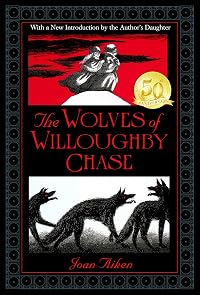
The Wolves of Willoughby Chase
by Joan Aiken
Wolves Chronicles (Publication Order) (1), Wolves Chronicles (Chronological Order) (1)
On This Page
Description
Juvenile Fiction. Juvenile Literature. HTML:Wicked wolves and a grim governess threaten Bonnie and her cousin Sylvia when Bonnie's parents leave Willoughby Chase for a sea voyage. Left in the care of the cruel Miss Slighcarp, the girls can hardly believe what is happening to their once happy home. The servants are dismissed, the furniture is sold, and Bonnie and Sylvia are sent to a prison-like orphan school. It seems as if the endless hours of drudgery will never cease.With the help of show more Simon the gooseboy and his flock, they escape. But how will they ever get Willoughby Chase free from the clutches of the evil Miss Slighcarp? show less
Tags
Recommendations




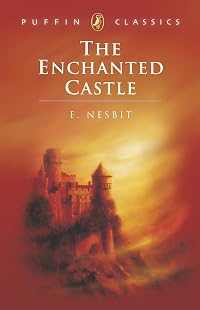
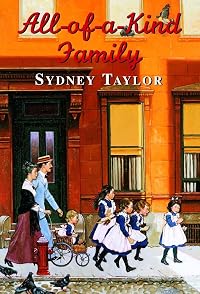
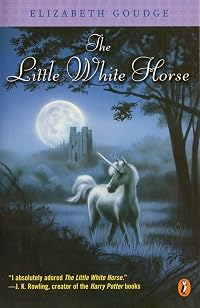
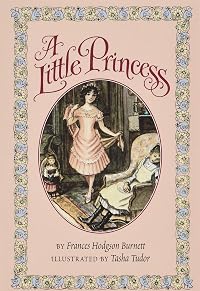
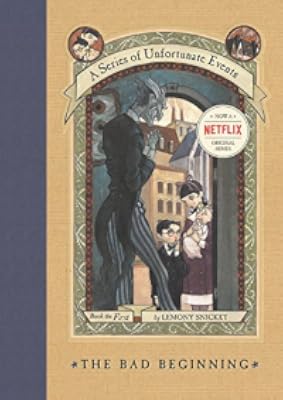
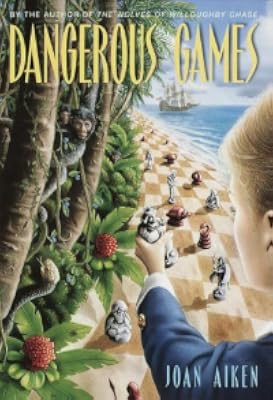
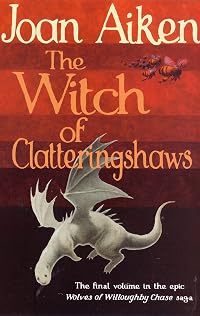
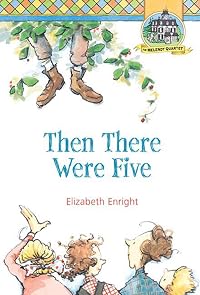

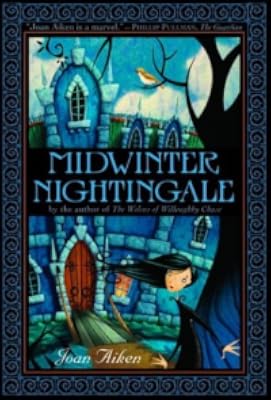
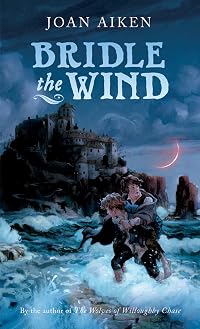
Member Recommendations
themulhern Fun and British, with period language.
20
Member Reviews
I approached this book with a little apprehension as I have had past experience of re-reading old childhood favourites and feeling letdown, but there was no problem with this novel, set in an alternative 1832 where the monarch is James III (implying that the House of Hanover never came to the throne) and wolves have entered England during a bad winter by crossing the Channel Tunnel (not opened in our reality until 1994).
Unlike the children's books of today - this was first published in the early 1960s - the whole thing proceeds at a riproaring pace with very little build-up. We plunge straight into the situation: the wealthy parents of Bonnie are about to embark on a trip abroad for the mother's health, and a governess, Miss Slighcarp, show more who is also a distant relation, has been hired to run the estate and teach Bonnie and her cousin, Sylvia. Meanwhile, Sylvia, raised by the impoverished sister of Bonnie's father, who is too proud to admit her situation, is put aboard a train to travel to the country estate. A seemingly jovial man travels in the same compartment and makes himself useful when the train is attacked by wolves, but soon after arrival, both he and the governess show their true colours and the adventure is underway, incorporating boys who live in the woods, geese, a Dickensian orphange and a shipwreck, among other elements.
The story is told in bold strokes with melodrama, larger than life villains, faithful retainers who are indispensible to the children's safety, and parents or guardians who are conveniently got out of the way by various mechanisms. The only slight detraction is that the wolves of the title fade away by the time the weather warms, and the book does not feature Dido Twite, who I recall as being the streetwise heroine of Aiken's alternative 19th century tales, but who is not introduced until Black Hearts in Battersea. But otherwise an engaging and speedy read which earns 4 stars from me. show less
Unlike the children's books of today - this was first published in the early 1960s - the whole thing proceeds at a riproaring pace with very little build-up. We plunge straight into the situation: the wealthy parents of Bonnie are about to embark on a trip abroad for the mother's health, and a governess, Miss Slighcarp, show more who is also a distant relation, has been hired to run the estate and teach Bonnie and her cousin, Sylvia. Meanwhile, Sylvia, raised by the impoverished sister of Bonnie's father, who is too proud to admit her situation, is put aboard a train to travel to the country estate. A seemingly jovial man travels in the same compartment and makes himself useful when the train is attacked by wolves, but soon after arrival, both he and the governess show their true colours and the adventure is underway, incorporating boys who live in the woods, geese, a Dickensian orphange and a shipwreck, among other elements.
The story is told in bold strokes with melodrama, larger than life villains, faithful retainers who are indispensible to the children's safety, and parents or guardians who are conveniently got out of the way by various mechanisms. The only slight detraction is that the wolves of the title fade away by the time the weather warms, and the book does not feature Dido Twite, who I recall as being the streetwise heroine of Aiken's alternative 19th century tales, but who is not introduced until Black Hearts in Battersea. But otherwise an engaging and speedy read which earns 4 stars from me. show less
The previous reviewers have done this work justice and more, so here's a personal commentary. As a young teen, for some nights after reading this story, I used to lie in bed thinking of those wolves --the enormous slavering beasts -- and imagine the terror of running for my life through the snow with them on my trail. Years later, I can still feel that scene. On rereading the book recently, I was a little disappointed to find the wolves played a small role in the tale. The real wolves in this story, of course, are the evil adults who try to rob the newly orphaned children of their inheritances....
This was a quick one on audio, read by the author’s daughter, Lizza Aiken, including a nice introduction about what the author and family were going through when she wrote the book. The behavior of the wolves was bananas (before they dropped out of the plot completely), the villains were extra villainous, and there was a point when I considered joining the grumpsters who disliked the book and wrote cranky reviews. Instead, I bumped up the speed and carried on.
I loved where things went after Simon the goose boy helped Sylvia and Bonnie escape Miss Brisket, and I had to laugh at how quickly Miss Pattern (heh heh) whipped up clothing for the girls. A lot of it had the feel of kids making things up while playing: the secret passageways, show more the girls loving each other the instant they met (I quite liked that, though), Simon’s cave and his goose business, Mr. Wilderness’s remedies, and the doctor proclaiming that Aunt Jane was too ill to take anything but champaign, administered to her by the teaspoon. By the end, I just had to laugh and enjoy the ride.
I’m not sure what modern children would make of this book, where a little girl (who happens to own her own gun, a fowling piece) exclaims, “How vexatious!” and her father uses “minx” and “hussy” as affectionate nicknames when he teases his spoiled but good hearted girl. I would probably be more likely to recommend it to adults who like children’s books than actual children. show less
I loved where things went after Simon the goose boy helped Sylvia and Bonnie escape Miss Brisket, and I had to laugh at how quickly Miss Pattern (heh heh) whipped up clothing for the girls. A lot of it had the feel of kids making things up while playing: the secret passageways, show more the girls loving each other the instant they met (I quite liked that, though), Simon’s cave and his goose business, Mr. Wilderness’s remedies, and the doctor proclaiming that Aunt Jane was too ill to take anything but champaign, administered to her by the teaspoon. By the end, I just had to laugh and enjoy the ride.
I’m not sure what modern children would make of this book, where a little girl (who happens to own her own gun, a fowling piece) exclaims, “How vexatious!” and her father uses “minx” and “hussy” as affectionate nicknames when he teases his spoiled but good hearted girl. I would probably be more likely to recommend it to adults who like children’s books than actual children. show less
I thoroughly enjoyed The Wolves of Willoughby Chase by Joan Aiken as part of the British Author Challenge. This book is really part of the reason I look at the challenges: I had not encountered Aiken and would not have without BAC. So, thank you to the curators of these challenges.
This was an adventure series featuring two girls who encounter what I could only think of as a series of unfortunate events (all due respect to Lemony Snickett). Adults are not what they seem and they are forced to rely on their own talents and resources to save themselves and their families.
This was an adventure series featuring two girls who encounter what I could only think of as a series of unfortunate events (all due respect to Lemony Snickett). Adults are not what they seem and they are forced to rely on their own talents and resources to save themselves and their families.
Wicked wolves and a grim governess threaten Bonnie and her cousin Sylvia when Bonnie's parents leave Willoughby Chase for a sea voyage. Left in the care of the cruel Miss Slighcarp, the girls can hardly believe what is happening to their once happy home. The servants are dismissed, the furniture is sold, and Bonnie and Sylvia are sent to a prison-like orphan school. It seems as if the endless hours of drudgery will never cease.
With the help of Simon the gooseboy and his flock, they escape. But how will they ever get Willoughby Chase free from the clutches of the evil Miss Slighcarp?
With the help of Simon the gooseboy and his flock, they escape. But how will they ever get Willoughby Chase free from the clutches of the evil Miss Slighcarp?
I can't imagine how Joan Aiken escaped me when I was growing up. Her books have just the right amount of gothic to have fired my childhood imagination. And yet somehow she never hit my radar until I was an adult. So I was more than pleased to see one of her books included in Shelf Discovery, giving me the perfect excuse to read it. (As if I needed the excuse! The book was already sitting on my own children's bookshelves unappreciated and untouched so it was only a matter of time before I snagged it and tried to entice them with it anyway.)
Bonnie's parents are leaving in order to try and strengthen her mother, who is frail and ill, and have found a shirt-tail relative to act as Bonnie's governess while they are gone. This personage show more strides into the book nasty and parsimonious and prune-faced. She's a puppy kicker of the first degree. Shortly after her arrival, Bonnie's cousin Sylvia arrives as well, having come by train and braved the terrifying, ravening wolves that live and prey on things near Willoughby Chase. With her is a man who has been struck unconscious on the train. As in the best gothic traditions, he will turn out to be not as he appeared on the train and will add to the menace of horrible Miss Slighcarp. Need I mention that somehow the terrible Miss Slighcarp arrived without having to face the awfully frightening wolves?
Once Bonnie's parents have gone, things go from bad to worse for forthright Bonnie and shy Sylvia. All the servants, except for those who are untrustworthy anyway, are turned off. The lowly governess takes to wearing Lady Willoughby's clothing. And finally, Miss Slighcarp informs them that Bonnie's parents have died when their ship went down, sending them off to a hideous school that is more a children's workhouse than anything resembling a school. The girls must escape to survive. Relying on the kindness of the goose boy and former servants, they manage to evade capture and head off to foil the dastardly plans of Miss Slighcarp and her compatriots in crime.
I love that there is no Disney Dead Mom syndrome here. Yes, Bonnie's parents must disappear for the girls to have their scary adventure but we aren't faced with the plucky orphan syndrome that pervades so much of children's literature and film these days. Aiken has created a delightfully gothic world that won't be too terrifying for children but she maintains the important conventions like having the weather and the natural world reflect the plot. Her wolves are scary and the visual of the girls slogging through an initially grey, winter world on the way to London and redemption in the colorful spring pays homage to the best of gothic writing. Bonnie and Sylvia are charming characters, if Sylvia's tendency to weakness and all around goodness is a tad irritating. The secondary characters are not intrusive but help move the little girls along in their quest, providing the warmth that counteracts the nastiness of the adults ostensibly in charge. I can't say how this would hold up as a re-read but as a first read, even as an adult, it's a delight. Good is rewarded and evil punished but there's no heavy handed moralizing here. I do think middle grade readers will eat it up, given half a chance and adults who appreciate middle grade books will find much to appreciate as well. show less
Bonnie's parents are leaving in order to try and strengthen her mother, who is frail and ill, and have found a shirt-tail relative to act as Bonnie's governess while they are gone. This personage show more strides into the book nasty and parsimonious and prune-faced. She's a puppy kicker of the first degree. Shortly after her arrival, Bonnie's cousin Sylvia arrives as well, having come by train and braved the terrifying, ravening wolves that live and prey on things near Willoughby Chase. With her is a man who has been struck unconscious on the train. As in the best gothic traditions, he will turn out to be not as he appeared on the train and will add to the menace of horrible Miss Slighcarp. Need I mention that somehow the terrible Miss Slighcarp arrived without having to face the awfully frightening wolves?
Once Bonnie's parents have gone, things go from bad to worse for forthright Bonnie and shy Sylvia. All the servants, except for those who are untrustworthy anyway, are turned off. The lowly governess takes to wearing Lady Willoughby's clothing. And finally, Miss Slighcarp informs them that Bonnie's parents have died when their ship went down, sending them off to a hideous school that is more a children's workhouse than anything resembling a school. The girls must escape to survive. Relying on the kindness of the goose boy and former servants, they manage to evade capture and head off to foil the dastardly plans of Miss Slighcarp and her compatriots in crime.
I love that there is no Disney Dead Mom syndrome here. Yes, Bonnie's parents must disappear for the girls to have their scary adventure but we aren't faced with the plucky orphan syndrome that pervades so much of children's literature and film these days. Aiken has created a delightfully gothic world that won't be too terrifying for children but she maintains the important conventions like having the weather and the natural world reflect the plot. Her wolves are scary and the visual of the girls slogging through an initially grey, winter world on the way to London and redemption in the colorful spring pays homage to the best of gothic writing. Bonnie and Sylvia are charming characters, if Sylvia's tendency to weakness and all around goodness is a tad irritating. The secondary characters are not intrusive but help move the little girls along in their quest, providing the warmth that counteracts the nastiness of the adults ostensibly in charge. I can't say how this would hold up as a re-read but as a first read, even as an adult, it's a delight. Good is rewarded and evil punished but there's no heavy handed moralizing here. I do think middle grade readers will eat it up, given half a chance and adults who appreciate middle grade books will find much to appreciate as well. show less
The Wolves of Willoughby Chase by Joan Aiken is a fairly straightforward story of children dealing with powerful and abusive adults, with everything coming right in the end. But the lovely Gothic undertones, perfect prose, and fun characters combine to make this conventional story a more memorable read than its plot might suggest.
Bonnie, daughter of the house at the wealthy manor Willoughby Chase, is excited when her cousin Sylvia comes to stay with her. But Bonnie's parents are leaving for a long trip and the governess they employ, Miss Slighcarp, soon proves to be a cruel woman intent on plundering Willoughby Chase for all it's worth. The girls are sent to a terrible school reminiscent of Charlotte Brontë's Lowood and Charles show more Dickens' Dotheboys Hall. They eventually make their escape, aided by a friendly country boy (who reminded me of Frances Hodgson Burnett's Dickon). From there they make their way to London, where they are just in time to save their Aunt Jane from starvation and get the family lawyer on the case to see justice done and provide a happy ending all around.
The story pits children against adults, but at least the villainous grownups are balanced by the good ones—even if some of the good ones, like Mr Willoughby, are so kind as to be utterly blind. Aiken does a lovely job with her two leading characters, Bonnie and Sylvia. I especially liked her description of Sylvia's life with Aunt Jane, her journey to Willoughby Chase, and her emotions as she adjusted to her new life. Maybe because Sylvia reminds me a little of myself.
One thing I didn't quite understand was the wolves. They are so ravenous that they will attack stopped trains and devour anyone foolish enough to step outside without a weapon. But beyond scaring Sylvia and creating a vague atmosphere of tension very much in the background of the story, they don't do much. Maybe that's just what Aiken intended, though, for the wolves to represent the vague danger of the outside world for children, a hostility all the more ominous for being on the outskirts. I understand there are more books set in this world; perhaps the wolves play a more important role in later stories.
I didn't find this a very humorous book, as one of the back-cover blurbs seems to think it was, but I do agree with that same blurb that the language is "so fantastically right." It's not exactly Austenian, but that is probably the closest comparison I can come up with. Every now and then I'd get whiffs of that delicate phrasing and spare narrative that so distinguish Austen. I think I read somewhere that Aiken is quite the Austen fan, and it doesn't surprise me at all.
Overall I enjoyed this story and will be looking for the rest of Aiken's books. show less
Bonnie, daughter of the house at the wealthy manor Willoughby Chase, is excited when her cousin Sylvia comes to stay with her. But Bonnie's parents are leaving for a long trip and the governess they employ, Miss Slighcarp, soon proves to be a cruel woman intent on plundering Willoughby Chase for all it's worth. The girls are sent to a terrible school reminiscent of Charlotte Brontë's Lowood and Charles show more Dickens' Dotheboys Hall. They eventually make their escape, aided by a friendly country boy (who reminded me of Frances Hodgson Burnett's Dickon). From there they make their way to London, where they are just in time to save their Aunt Jane from starvation and get the family lawyer on the case to see justice done and provide a happy ending all around.
The story pits children against adults, but at least the villainous grownups are balanced by the good ones—even if some of the good ones, like Mr Willoughby, are so kind as to be utterly blind. Aiken does a lovely job with her two leading characters, Bonnie and Sylvia. I especially liked her description of Sylvia's life with Aunt Jane, her journey to Willoughby Chase, and her emotions as she adjusted to her new life. Maybe because Sylvia reminds me a little of myself.
One thing I didn't quite understand was the wolves. They are so ravenous that they will attack stopped trains and devour anyone foolish enough to step outside without a weapon. But beyond scaring Sylvia and creating a vague atmosphere of tension very much in the background of the story, they don't do much. Maybe that's just what Aiken intended, though, for the wolves to represent the vague danger of the outside world for children, a hostility all the more ominous for being on the outskirts. I understand there are more books set in this world; perhaps the wolves play a more important role in later stories.
I didn't find this a very humorous book, as one of the back-cover blurbs seems to think it was, but I do agree with that same blurb that the language is "so fantastically right." It's not exactly Austenian, but that is probably the closest comparison I can come up with. Every now and then I'd get whiffs of that delicate phrasing and spare narrative that so distinguish Austen. I think I read somewhere that Aiken is quite the Austen fan, and it doesn't surprise me at all.
Overall I enjoyed this story and will be looking for the rest of Aiken's books. show less
Members
- Recently Added By
Lists

Favorite Childhood Books
1,651 works; 515 members
1001 Children's Books You Must Read Before You Grow Up
774 works; 101 members

Best Children's Books You've Read
197 works; 75 members

Best Fantasy Novels
821 works; 361 members

Best Alternate History
111 works; 60 members
NPRs Ultimate Backseat Bookshelf: 100 Must-Reads for kids 9-14
222 works; 30 members

Best middle grade books
130 works; 24 members

School Library Journal - 2012 Top 100 Children's Novels
68 works; 8 members

Elevenses
316 works; 88 members

Books Set in Great Britain
191 works; 13 members
Childhood Favorites
427 works; 24 members
Honey For a Child's Heart
1,152 works; 25 members

Sonlight Books
1,487 works; 25 members
Satori Smiles Children's Book List
262 works; 7 members

Female Author
1,234 works; 65 members
Female Protagonist
1,056 works; 57 members

Reading history in Children's Books
78 works; 3 members

1960s, Best books published therein
254 works; 22 members

Books with Twins
175 works; 12 members

CCE 1000 Good Books List
1,033 works; 12 members

Bookshelf from Interstellar
62 works; 1 member

Books Read in 2025
4,128 works; 98 members

Favorite Kids Books (chapter, middle grade)
170 works; 4 members

EGBERTINA'S List of childhood books worthy of merit or unspeakable delight
155 works; 7 members

Books We Loved As Children
610 works; 254 members

Books With the Most Memorable Titles
478 works; 158 members

Best books read in the first half of 2012
38 works; 6 members

Before Austen Comes Aesop
318 works; 9 members
1960s
281 works; 16 members

Books Read in 2017
4,249 works; 130 members

Books mentioned in Fire and Hemlock by Diana Wynne Jones
33 works; 1 member
Animals in the Title
498 works; 11 members

Books Read in 2019
4,052 works; 110 members

Twins, fantasy -- children's/young adult fiction
62 works; 6 members

Huxley's Reading Log 2018
37 works; 1 member

Edward Gorey Covers
150 works; 8 members
Children's Adventure
53 works; 4 members

BlackDog's Complete Paperbacks From Hell List
639 works; 3 members

Best Young Adult
413 works; 102 members
Author Information

216+ Works 19,860 Members
Joan Delano Aiken was born in Rye, Sussex, England, on September 4, 1924, the daughter of the Pulitzer Prize winner, writer Conrad Aiken. She was raised in a rural area and home schooled by her mother until the age 12. She then attended Wychwood School, a boarding school in Oxford. Her work first appeared in 1941 when the British Broadcasting show more Corporation, where she worked as a librarian, broadcast some of her short stories on their Children's Hour program. Aiken also worked at St. Thomas's Hospital, and in 1943 she moved to the reference department of the London office of the United Nations, where she collected information about resistance movements. She worked for the UN until 1949, all the while continuing to write stories. In 1953 a collection of short fiction called All You've Ever Wanted and Other Stories was published. While writing The Wolves of Willoughby Chase, begun in 1952, her husband became ill and died of lung cancer in 1955. After working for five years as a copy editor at Argosy Magazine, and at the J. Walter Thompson Advertising Firm, she returned and finished the book in 1963. The Wolves of Willoughby Chase won the Lewis Carroll Shelf Award and was made into a successful film in 1988. In 1969 The Whispering Mountain won the Guardian Children's Book Award, and in 1972, Night Fall won America's Edgar Allen Poe Award for juvenile mystery. Aiken is best known for her adult "fantasy" stories. She has received awards for children's fiction and for mystery fiction, and has also written ''sequels'' to Jane Austen books. She collaborated with her daughter to write many episodes of her Arabel and Mortimer the raven series for the BBC. In all, Aiken wrote 92 novels - including 27 for adults - as well as plays, poems and short stories, although she was best known as a writer of children's stories. Joan Aiken died in January of 2004 at the age of 79. (Bowker Author Biography) show less
Some Editions
Awards and Honors
Notable Lists
Series

Wolves Chronicles (Publication Order)
11 works (1)

Wolves Chronicles (Chronological Order)
11 works (1)
Belongs to Publisher Series
Work Relationships
Is contained in
Has the adaptation
Common Knowledge
- Canonical title
- The Wolves of Willoughby Chase
- Original title
- The Wolves of Willoughby Chase
- Original publication date
- 1962
- People/Characters
- Bonnie Green; Letitia Slighcarp; Sylvia Green; Simon Bayswater; Lord Willoughby Green; Jane Green (Aunt Jane) (show all 17); Miss Pattern; James [Wolves Chronicles]; Josiah Grimshaw; Gertrude Brisket; Dr. Gabriel Field; Lady Sophia Green; Abednego Gripe; Diana Brisket; Emma [Wolves Chronicles]; Lucy [Wolves Chronicles]; Mr. Wilderness
- Important places
- London, England, UK; Blastburn, UK
- Related movies
- The Wolves of Willoughby Chase (1989 | IMDb)
- Dedication
- For JOHN and ELIZABETH and TORQUEMADA
- First words
- It was dusk—winter dusk.
- Last words
- (Click to show. Warning: May contain spoilers.)"Aratu," said Dr. Talisman, nodding at the silhouette.
- Original language
- English
Classifications
- Genres
- Children's Books, Fiction and Literature, Kids, Tween, Fantasy
- DDC/MDS
- 823.914 — Literature & rhetoric English & Old English literatures English fiction 1900- 1901-1999 1945-1999
- LCC
- PZ7 .A2695 .W — Language and Literature Fiction and juvenile belles lettres Fiction and juvenile belles lettres Juvenile belles lettres
- BISAC
Statistics
- Members
- 3,905
- Popularity
- 4,067
- Reviews
- 99
- Rating
- (4.06)
- Languages
- 6 — English, French, German, Italian, Spanish, Swedish
- Media
- Paper, Audiobook, Ebook
- ISBNs
- 55
- ASINs
- 43