On This Page
Description
Escapades of a lucky little girl who lives with a horse and a monkey--but without any parents--at the edge of a Swedish village.Tags
Recommendations
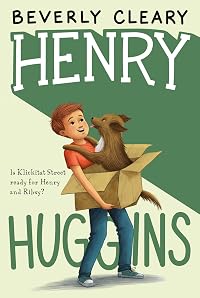
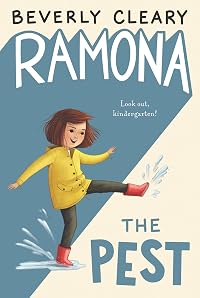

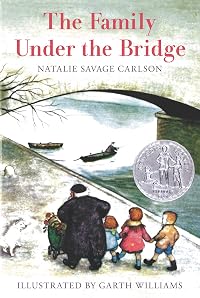
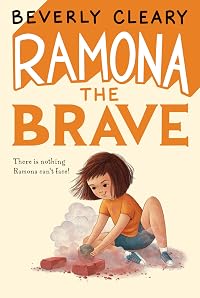
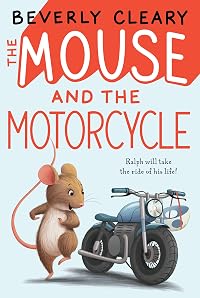
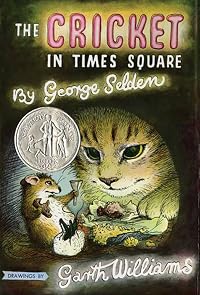
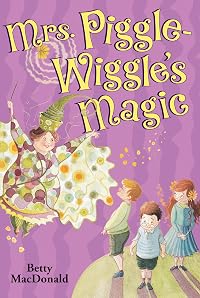


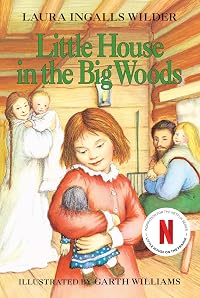
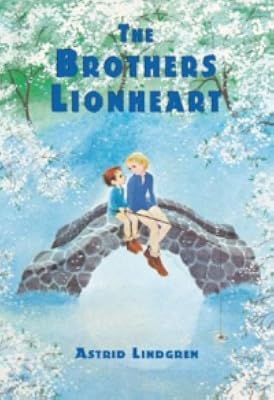
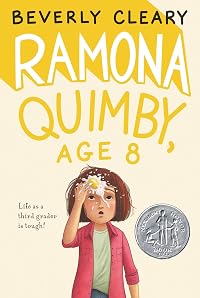
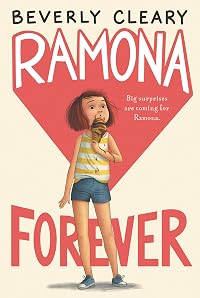

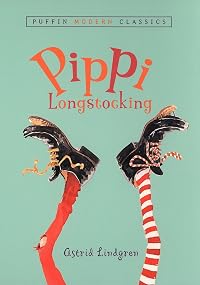
Member Recommendations
owen1218 Pippi is almost a satirical exaggeration of Anne but both are great!
MissBrangwen Friendship between ordinary children and an extraordinary character!

by owen1218
Member Reviews
Published in English as Pippi Longstocking
Where do I even start? Should I open with a standard guilty disclaimer for disliking yet another childhood staple? How about a shameful admission that reading between the lines has never worked for me? Or perhaps a simple statement about being too old to enjoy children's books?
First and foremost, we have the super-duper-awesome Pippi, who, despite being an orphaned 9-year old, is filthy rich, strong, independent, and does whatever the hell she pleases, albeit firmly within the boundaries of kindness. At the same time, our enterprising heroine's antics are almost always compared to her friends' complete rule-abiding behavior, making the latter seem a prerequisite of sorts.
The end result is a show more story made up of an odd mix of "eff the rules" vs "rules exist for a reason". Should children follow Pippi's lead in being more independent, thinking for themselves and always questioning authority before conforming? Or should they go the tried and true route, like Tommy and Annika did, and thus managing to seamlessly integrate into the adult society.
I kept being baffled by Pippi's immediate hostility in non-threatening situations (being quizzed on her Math knowledge at school), or her default kindness in clearly threatening situations (serving cookies to burglars who just tried to rob her).
Most of the time however, it seemed impossible not to pity the poor girl: constantly being told that she lacked manners, yet never explaining the how and whys of them. Even the school teacher, otherwise the nicest adult Pippi comes in contact with, ends up suggesting that Pippi come back later, in lieu of learning to behave.
Did she think Pippi was an unripe fruit, that'd "magically" gain manners after being left out in the sun for a bit?!
Score: 2/5 stars
I swear I tried to read up on reviews both favorable and unfavorable. Except for Manny's explanation regarding children's rights, or rather, lack thereof, none of them helped shed a light on the book's message.
For all that I'm not normally expecting to have a moral at the end of a story, Pippi's felt like it was trying to hit you over the head with one. If only I could figure out what exactly the anvil-sized lesson was meant to be all about... show less
Where do I even start? Should I open with a standard guilty disclaimer for disliking yet another childhood staple? How about a shameful admission that reading between the lines has never worked for me? Or perhaps a simple statement about being too old to enjoy children's books?
First and foremost, we have the super-duper-awesome Pippi, who, despite being an orphaned 9-year old, is filthy rich, strong, independent, and does whatever the hell she pleases, albeit firmly within the boundaries of kindness. At the same time, our enterprising heroine's antics are almost always compared to her friends' complete rule-abiding behavior, making the latter seem a prerequisite of sorts.
The end result is a show more story made up of an odd mix of "eff the rules" vs "rules exist for a reason". Should children follow Pippi's lead in being more independent, thinking for themselves and always questioning authority before conforming? Or should they go the tried and true route, like Tommy and Annika did, and thus managing to seamlessly integrate into the adult society.
I kept being baffled by Pippi's immediate hostility in non-threatening situations (being quizzed on her Math knowledge at school), or her default kindness in clearly threatening situations (serving cookies to burglars who just tried to rob her).
Most of the time however, it seemed impossible not to pity the poor girl: constantly being told that she lacked manners, yet never explaining the how and whys of them. Even the school teacher, otherwise the nicest adult Pippi comes in contact with, ends up suggesting that Pippi come back later, in lieu of learning to behave.
Did she think Pippi was an unripe fruit, that'd "magically" gain manners after being left out in the sun for a bit?!
Score: 2/5 stars
I swear I tried to read up on reviews both favorable and unfavorable. Except for Manny's explanation regarding children's rights, or rather, lack thereof, none of them helped shed a light on the book's message.
For all that I'm not normally expecting to have a moral at the end of a story, Pippi's felt like it was trying to hit you over the head with one. If only I could figure out what exactly the anvil-sized lesson was meant to be all about... show less
Régóta terveztem, hogy elolvasom, mint nagy klasszikust... Néhány részletét láttam tiniként - akkor eléggé idegesített. Most, felnőttként érdekes volt a számomra az a bátorság, ahogy a másságát kezeli, ahogy a saját szokásait, gondolkodásmódját védi. És persze az is, hogy sok mindent kipróbál, amit érdekesnek talál és levonja a következtetéseket a tapasztalatokból. Mint pl. az iskola kapcsán. Szórakoztató és elgondolkodtató. Mint egy mini-Münchausen, vagy egy ügyes provokátor, aki egyszerre irányítja a figyelmet a lehetetlen és a képzelet határaira.
Unique, astonishing, and brilliant. Lindgren understood a few key things about childhood, or childlike-ness, and she understood them so clearly that they rolled out like a brash, tuneless song on a sunny afternoon. Effortless excellence.
Pippi Longstocking by Astrid Lundgren is a classic children’s story about a unique little girl. Pippi does everything that children aren’t supposed to do which, of course, endears her to the hearts of children of all ages. Pippi is never mean spirited or bad, she just looks at the world in a different way.
She tells outrageous lies and never simply obeys an adult’s order, she lives by her own rules. She is also the strongest little girl in the world.
Whether she goes to the circus for the first time, thwarts two burglars or attends a ladies coffee party she does so in her own way with hilarious results. But everything about Pippi is not lighthearted and gay as she lives alone with no parents to guide her. Of her missing parents we show more learn that her mother has gone to live with the angels and her father is off becoming the Cannibal King but we do learn that he was washed overboard and considered lost at sea. Pippi lives in a small town in Sweden and livens up the lives of everyone she meets especially the two children that live next door to her. These children are alternately enthralled and delighted or appalled and horrified at her behavior, while we, the readers, are always entertained by her cheeky ways.
Pippi Longstocking was published in Sweden in 1945 and was very successful, but in 1954 when it was translated and published in English it became a world-wide hit and has gone on to become a classic. I listened to an audio version and so missed out on the highly rated illustrations that are in the book. Although chaos follows her, Pippi is generous and always means well. This is a book that well deserves a place of honor in any child’s library. show less
She tells outrageous lies and never simply obeys an adult’s order, she lives by her own rules. She is also the strongest little girl in the world.
Whether she goes to the circus for the first time, thwarts two burglars or attends a ladies coffee party she does so in her own way with hilarious results. But everything about Pippi is not lighthearted and gay as she lives alone with no parents to guide her. Of her missing parents we show more learn that her mother has gone to live with the angels and her father is off becoming the Cannibal King but we do learn that he was washed overboard and considered lost at sea. Pippi lives in a small town in Sweden and livens up the lives of everyone she meets especially the two children that live next door to her. These children are alternately enthralled and delighted or appalled and horrified at her behavior, while we, the readers, are always entertained by her cheeky ways.
Pippi Longstocking was published in Sweden in 1945 and was very successful, but in 1954 when it was translated and published in English it became a world-wide hit and has gone on to become a classic. I listened to an audio version and so missed out on the highly rated illustrations that are in the book. Although chaos follows her, Pippi is generous and always means well. This is a book that well deserves a place of honor in any child’s library. show less
Pippi Longstocking, translated by Tiina Nunnally, illustrated by Lauren Child.
Pippilotta Viktualia Rullgardina Krusmynta Efraimsdotter Långstrump -
Pippilotta Comestibles Windowshade Curlymint Ephraimsdaughter Longstocking, in this particular English translation - first appeared on the scene in 1945, and I think it would not be an exaggeration to say that she took the world of children's literature by storm. Translated into multiple languages, the subject of a number of film adaptations, Pippi's story is both well-known and well-loved. I myself read an earlier English translation, done by Florence Lamborn, when I was a girl, but when Pippi Longstocking was chosen as our February selection, over in the International Children's Book Club show more to which I belong, where we are "visiting" Sweden, I decided to take a chance on this new translation by Tiina Nunnally, with artwork by Lauren Child. I'm glad I did!
I know that some, being deeply attached to "their" version of Pippi - the one they grew up reading - are less than thrilled with this new translation, but it's been so long since I myself last read the book, that I almost felt as if I were starting fresh. Certainly, I had no feeling of disappointment while reading, this time around, and no consciousness that things were not as they should be. The tale itself, and its heroine, were as entertaining as ever, and the collage artwork by Lauren Child was delightfully expressive. I was particularly appreciative of some of the two-page illustrations, with their color backdrops, as well as the distinctive typographic layout to be found on certain pages (words curling like a tail, or climbing and descending the page at diagonals).
Like Lauren Child, I've always thought of Pippi - a parent-free, gold-coin-rich, super-strong young girl - as a "free spirit," a child with a vision of her own, and little interest in the strange subterfuges of adulthood. In so many ways, she is the fulfillment of a child's dream of independence, and a reflection of a child's vision of what that independence might mean, if it came in childhood rather than adulthood. But it occurs to me, after my recent reread, that although Pippi is invariably honest - "that was a lie," she is always admitting, after some particularly outrageous statement - she is something of a trickster, particularly when confronted with the person, child or adult, who is lacking in the proper respect. Tricksters are by their nature undomesticated, eternally eluding us, despite our longing to know and understand them. With this in mind, Pippi's sincere friendship with Tommy and Annika suddenly seems to be wish fulfillment of another kind: a satisfying of the common desire to know what can't be known, to bring the inalterably wild into the smaller circle of our domestic world, to tame it through the force of love. A fantasy indeed!
For that added perspective alone, my reread was worthwhile, and while I would not describe this as one of my all-time favorite children's novels, the pleasure I took in story and artwork were significant. show less
Pippilotta Viktualia Rullgardina Krusmynta Efraimsdotter Långstrump -
Pippilotta Comestibles Windowshade Curlymint Ephraimsdaughter Longstocking, in this particular English translation - first appeared on the scene in 1945, and I think it would not be an exaggeration to say that she took the world of children's literature by storm. Translated into multiple languages, the subject of a number of film adaptations, Pippi's story is both well-known and well-loved. I myself read an earlier English translation, done by Florence Lamborn, when I was a girl, but when Pippi Longstocking was chosen as our February selection, over in the International Children's Book Club show more to which I belong, where we are "visiting" Sweden, I decided to take a chance on this new translation by Tiina Nunnally, with artwork by Lauren Child. I'm glad I did!
I know that some, being deeply attached to "their" version of Pippi - the one they grew up reading - are less than thrilled with this new translation, but it's been so long since I myself last read the book, that I almost felt as if I were starting fresh. Certainly, I had no feeling of disappointment while reading, this time around, and no consciousness that things were not as they should be. The tale itself, and its heroine, were as entertaining as ever, and the collage artwork by Lauren Child was delightfully expressive. I was particularly appreciative of some of the two-page illustrations, with their color backdrops, as well as the distinctive typographic layout to be found on certain pages (words curling like a tail, or climbing and descending the page at diagonals).
Like Lauren Child, I've always thought of Pippi - a parent-free, gold-coin-rich, super-strong young girl - as a "free spirit," a child with a vision of her own, and little interest in the strange subterfuges of adulthood. In so many ways, she is the fulfillment of a child's dream of independence, and a reflection of a child's vision of what that independence might mean, if it came in childhood rather than adulthood. But it occurs to me, after my recent reread, that although Pippi is invariably honest - "that was a lie," she is always admitting, after some particularly outrageous statement - she is something of a trickster, particularly when confronted with the person, child or adult, who is lacking in the proper respect. Tricksters are by their nature undomesticated, eternally eluding us, despite our longing to know and understand them. With this in mind, Pippi's sincere friendship with Tommy and Annika suddenly seems to be wish fulfillment of another kind: a satisfying of the common desire to know what can't be known, to bring the inalterably wild into the smaller circle of our domestic world, to tame it through the force of love. A fantasy indeed!
For that added perspective alone, my reread was worthwhile, and while I would not describe this as one of my all-time favorite children's novels, the pleasure I took in story and artwork were significant. show less
I struggled a bit with how to rate this one, though ultimately I think most of those struggles are more about an adult reading a children’s book than it is genuine problems with the book.
This is quite a bit more episodic than I tend to prefer, it’s more a series of adventures than a plot, the characters don’t do much in the way of growing or changing, it felt odd how little effort any adult puts in with Pippi when she’s all alone in the world, and near the end its more than a little disturbing when nine year old Pippi starts playing with pistols.
But while episodic isn’t really my thing, it probably does work well for the children this book is actually intended for, making it easy and convenient to read bite-size segments of show more the book, particularly handy I’m sure for reluctant readers.
Those same kids won’t likely dwell on the lack of adult care for Pippi like I did, they’ll embrace that Pippi is so independent, she makes her own rules, has her own house and bakes a million sweet treats any time she pleases. I’m sure those aspects of the book probably held a ton of appeal to me back when I first read this, too.
Most importantly, it’s really easy to love Pippi. She’s fun and funny, she says nonsensical things, and has a pet monkey. And there still aren’t enough books out there where the girl is the mischief maker, where the girl is perfectly comfortable in her own skin, where the girl is something of a superhero, so in the end it’s not that hard to overlook the weirdly complacent adult characters and the even weirder presence of pistols (actually that is still pretty hard to overlook) and just appreciate Pippi for the literary legend that she deservedly is. show less
This is quite a bit more episodic than I tend to prefer, it’s more a series of adventures than a plot, the characters don’t do much in the way of growing or changing, it felt odd how little effort any adult puts in with Pippi when she’s all alone in the world, and near the end its more than a little disturbing when nine year old Pippi starts playing with pistols.
But while episodic isn’t really my thing, it probably does work well for the children this book is actually intended for, making it easy and convenient to read bite-size segments of show more the book, particularly handy I’m sure for reluctant readers.
Those same kids won’t likely dwell on the lack of adult care for Pippi like I did, they’ll embrace that Pippi is so independent, she makes her own rules, has her own house and bakes a million sweet treats any time she pleases. I’m sure those aspects of the book probably held a ton of appeal to me back when I first read this, too.
Most importantly, it’s really easy to love Pippi. She’s fun and funny, she says nonsensical things, and has a pet monkey. And there still aren’t enough books out there where the girl is the mischief maker, where the girl is perfectly comfortable in her own skin, where the girl is something of a superhero, so in the end it’s not that hard to overlook the weirdly complacent adult characters and the even weirder presence of pistols (actually that is still pretty hard to overlook) and just appreciate Pippi for the literary legend that she deservedly is. show less
I grew up loving the 1988 film version of Pippi Longstocking, but I never read the book until this year. I was glad to discover the two are very similar. The fun-loving, feisty Pippi that I was a fan of in the movie is there in full effect in the book. Pippilotta Delicatessa Windowshade Mackrelmint Efraim's Daughter Longstocking lives by herself with only her horse and her monkey to keep her company. Pippi is separate from her father during a storm at sea and moves into her house, Villa Villekulla. She has superhuman strength and doesn’t follow the regular rules of society.
One of the things I always loved about Pippi when I was growing up is her freedom. There are no parents. She doesn’t have to go to school if she doesn’t want show more to. Of course that would appeal to a kid! As much as I loved my parents, I think half of the pretend games I played with my brother and sister started off with us being orphaned somehow. It’s like your imagination has so much more freedom when you remove any form of supervision from the equation.
BOTTOM LINE: Read it with a child-like heart and you’ll enjoy it. It’s fun and playful, but obviously as a parent you’re going to be worried about the orphaned girl. show less
One of the things I always loved about Pippi when I was growing up is her freedom. There are no parents. She doesn’t have to go to school if she doesn’t want show more to. Of course that would appeal to a kid! As much as I loved my parents, I think half of the pretend games I played with my brother and sister started off with us being orphaned somehow. It’s like your imagination has so much more freedom when you remove any form of supervision from the equation.
BOTTOM LINE: Read it with a child-like heart and you’ll enjoy it. It’s fun and playful, but obviously as a parent you’re going to be worried about the orphaned girl. show less
Members
- Recently Added By
Lists

Favorite Childhood Books
1,651 works; 515 members

1001 Books You Must Read Before You Die
1,448 works; 1,134 members
1001 Children's Books You Must Read Before You Grow Up
774 works; 101 members
501 Must-Read Books
529 works; 72 members

Best Children's Books You've Read
197 works; 74 members

Best middle grade books
130 works; 24 members

Read the book and saw the movie
1,170 works; 195 members

School Library Journal - 2012 Top 100 Children's Novels
68 works; 8 members
Childhood Favorites
427 works; 24 members

Mensa for Kids Excellence in Reading Award Program (Grades K-3)
64 works; 6 members

Best Friendship Stories
205 works; 16 members
Five books to read aloud to your kids
35 works; 17 members
my children books reading list-from 100 great books
101 works; 7 members

Comfort Reads
221 works; 41 members

Best Family Stories
241 works; 22 members
Honey For a Child's Heart
1,152 works; 25 members

Sonlight Books
1,487 works; 25 members

Books About Girls
219 works; 17 members

1940s
221 works; 25 members

A Child's Book Tour of Sweden
38 works; 3 members

Female Protagonist
1,056 works; 57 members

Satori Smiles Children's Book List
262 works; 7 members

Fiction with Women's Names in the Title
378 works; 15 members

Brightly Beaming Curriculum Books
281 works; 8 members
Books with a Character's Name as the Title
130 works; 10 members

Children's Chapter Books from 1940s, ...
77 works; 4 members

Geek Dad Read to Your Kids Additions List
66 works; 4 members
The bookshelf of Lisa Simpson
23 works; 4 members

CCE 1000 Good Books List
1,033 works; 12 members

4th Grade Books
312 works; 5 members
Movie Adaptations
111 works; 4 members

Favorite children's chapter books
15 works; 1 member
Stories set in Scandinavia
5 works; 2 members

KID BOOKS
54 works; 1 member

Books about pirates
29 works; 10 members
Novels featuring Orphans
76 works; 10 members

Book Talks 9/13/17
46 works; 1 member

75 Books for Fall Literacy Block - Dr. Reed
67 works; 2 members

Youth: Personal Values
252 works; 1 member

.
194 works; 2 members

Before Austen Comes Aesop
318 works; 9 members
Children's Literature 1900 - 1950 in order
413 works; 8 members

Books Read in 2016
4,666 works; 199 members

Read Aloud Revival
108 works; 4 members

Favorite Kids Books (chapter, middle grade)
170 works; 4 members

1970s
657 works; 23 members

EGBERTINA'S List of childhood books worthy of merit or unspeakable delight
155 works; 6 members

Favorite Books in Translation
320 works; 133 members

Books We Loved As Children
603 works; 252 members

Book Worlds We'd Like To Visit
322 works; 158 members

Widely acclaimed, one book per year
105 works; 3 members

Children's Humor
51 works; 6 members
First Novels
373 works; 17 members

al.vick-wishlist-YA
127 works; 3 members

Best Feminist Literature
188 works; 26 members

Books Read in 2021
5,361 works; 114 members
Five star books
1,767 works; 110 members
Overdue Podcast
806 works; 9 members

Europe
205 works; 6 members
Daria Morgendorffer's Bookshelf
70 works; 5 members

Books Read in 2012 (Numbered)
168 works; 6 members

The 100 Best Books of All Time by Norwegian Book Club (World Library)
104 works; 23 members
Female Author
1,234 works; 67 members

Books related to Films By Studio Ghibli
12 works; 3 members

recalling favorites...
105 works; 2 members

Books Read in 2013
1,630 works; 51 members

BingoDOG 2015 Challenge
49 works; 3 members

The Five Books That Represent Us
391 works; 148 members
Author Information

827+ Works 45,999 Members
Astrid Lindgren: November 7, 1907 - January 28, 2002 There are few children's authors more famous than Astrid Lindgren, creator of the feisty, legendary heroine, Pippi Longstocking. Lindgren was born on November 14, 1907, in Sweden. Her work has been acclaimed with many prestigious awards, among them the Hans Christian Andersen Medal (1958), the show more Lewis Carroll Shelf Award (1978), and the International Book Award (1993). This truly internationally known author was the recipient of the Albert Schweitzer Medal and has been honored repeatedly in her native Sweden. There is a bronze statue of her in a Stockholm park. Her picture is on a postage stamp. The "World of Astrid Lindgren" is a theme park featuring the wholesome characters of her books. The annual children's literature award is known as the Astrid Lindgren Prize. The inspiration for this long and illustrious career, spanning five decades, is the author's own childhood. Her memories - of free and often wild play with her brothers and sister, of loving parents, of a close-knit farm community, of reading about heroines like Pollyanna and Anne of Green Gables - became the foundations of her books. Lindgren has said, "I write to amuse the child within me, and I can only hope that in this way other children as well can have a little fun." Lindgren amused her own children by telling them stories. Her daughter, Karin, named Pippi Longstocking, and the first written story was given to Karin as a birthday gift. The next year, 1945, Pippi Longstocking won a best children's book competition and Lindgren began writing the perennially child-pleasing stories that make up her enormous body of work, some of which are the series based on "Children of Noisy Village", the fable "The Tomten", the rambunctious "Karlson-On-the-Roof", the irrepressible"Lotta on Troublemaker Street" , the controversial "The Brothers Lionheart", and the unforgettable, wildly funny superheroine, Pippi, was featured in other books and became a star of stage, screen and television. Lindgren has been called the world's most read author of children's books. She is hailed as the third most translated children's book author after H.C. Andersen and the Grimm brothers. Her impact on the world of children's literature is immeasurable. Astrid Lindgren died in her sleep, in her home in Sweden on January 28, 2002 at the age of 94. (Bowker Author Biography) show less

Astrid Lindgren has a Legacy Library. Legacy libraries are the personal libraries of famous readers, entered by LibraryThing members from the Legacy Libraries group.
Some Editions
Awards and Honors
Series

Belongs to Publisher Series
Work Relationships
Is contained in
Is an adaptation of
Has the adaptation
Has as a teacher's guide
Common Knowledge
- Canonical title
- Pippi Longstocking
- Original title
- Pippi Långstrump
- Original publication date
- 1945-11-01
- People/Characters
- Pippi Longstocking; Tommy Settergren; Annika Settergren; Mr. Nilsson (monkey)
- Important places
- Villa Villekulla (fictitious house)
- Related movies
- Pippi Långstrump (1949 | IMDb); Pippi Långstrump (1969 | IMDb); The New Adventures of Pippi Longstocking (1988 | IMDb); Pippi Longstocking (1997 | IMDb); ABC Weekend Specials: Pippi Longstocking (1977 | s9e4 | IMDb)
- First words
- Way out at the end of a tiny little town was an overgrown garden, and in the garden was an old house, and in the house lived Pippi Longstocking.
At the end of a little Swedish town lay an old, overgrown orchard.
(translated by Edna Hurup, 1954) - Last words
- (Click to show. Warning: May contain spoilers.)"I'm going to be a pirate when I grow up," she cried. "Are you?"
(translated by Edna Hurup, 1954) - Original language
- Swedish
- Disambiguation notice
- This is the first book in the series about Pippi Longstocking. Please don't combine with omnibus editions.
Classifications
- Genres
- Children's Books, Fiction and Literature
- DDC/MDS
- 839.7374 — Literature & rhetoric German & related literatures Other Germanic literatures Swedish literature Swedish fiction 1900-1999 1945-1999
- LCC
- PZ7 .L6585 .P — Language and Literature Fiction and juvenile belles lettres Fiction and juvenile belles lettres Juvenile belles lettres
- BISAC
Statistics
- Members
- 12,869
- Popularity
- 627
- Reviews
- 174
- Rating
- (3.96)
- Languages
- 37 — Afrikaans, Arabic, Basque, Bosnian, Bulgarian, Chinese, Czech, Danish, Dutch, English, Esperanto, Estonian, Finnish, French, German, Greek, Hungarian, Indonesian, Italian, Japanese, Khmer, Latin, Lithuanian, Low German, Norwegian (Bokmål), Norwegian, Polish, Portuguese, Russian, Serbian, Croatian, Slovak, Slovenian, Spanish, Swedish, Ukrainian, Welsh
- Media
- Paper, Audiobook, Ebook
- ISBNs
- 266
- UPCs
- 4
- ASINs
- 70