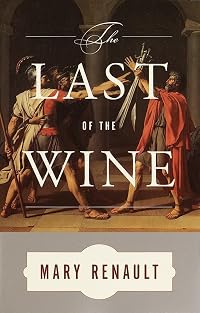
The Last of the Wine
by Mary Renault
On This Page
Description
Alexias is a young aristocrat living during the end of Athens's Golden Age. Prized for his beauty and athletic prowess, Alexias studies under Sokrates with his closest friend, Lysis. Together, the young men come of age in an Athens on the verge of great upheaval. They attend the Olympics, partake in symposia, fight on the battlefields of the Peloponnesian War, and fall in love. The first of Mary Renault's celebrated historical novels of ancient Greece, The Last of the Wine follows Alexias show more and Lysis into adulthood, when Athens is defeated by Sparta, the Thirty Tyrants take hold of the city, and the lives of both men are changed forever. Through their friendship, Renault opens a vista onto ancient Greek life, uncovering its vibrancy, culture, and political strife, and offers an unforgettable story of love, honor, loyalty, and the remarkable bond between two men. This ebook features an illustrated biography of Mary Renault including rare images of the author. show lessTags
Recommendations























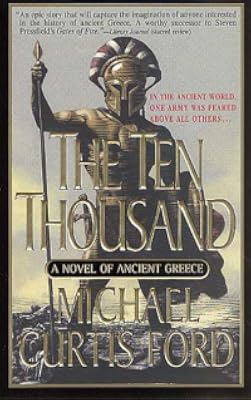


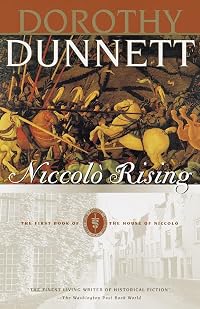
Member Recommendations

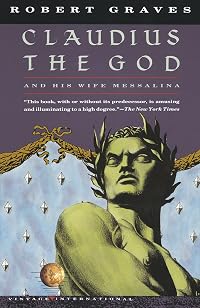
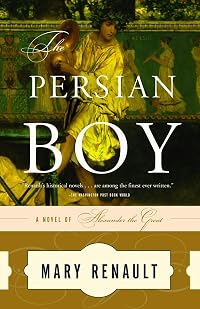
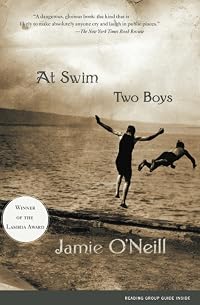
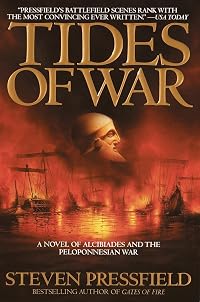
themulhern Socrates is a well-liked character in both.

themulhern "The Last of the Wine" is for adults and "Marathon Looks on the Sea" is a young adult novel. But they are similar in structure, as in each a boy is born and grows up in the midst of events that finally culminate in an historic ending.

themulhern Two contrasting, fictional, first person accounts of growing up during the Pelopnnesian War.
Member Reviews
I've read a few blurbs about this that tried to play up the bruising Athene versus Sparta war action, but though the war shapes the course of much of this novel, it is first and foremost a romantic epic with a pair of lovers who find each other while their world is on the brink of falling apart. The two lovers are men, or rather and man and youth, embodiments of Greek ideals in terms of physical prowess, intellectual ability, honour and commitment to the defence of their city. Alexias, the youth entering the first flower of manhood, and Lysis, the older, who held back from approaching young Alexias too soon lest he mold him into something lesser than he would have become on his own, heeding sage advice from on Sokrates, who is their show more teacher and friend.
Competing in Games, fighting frontier wars, managing family and friends, learning to think, striving for goodness as the fortunes of war ebb and flow and the politics of their beloved city turn deadly, Alexias and Lysis grow and mature and strive to stay true to themselves and each other.
Meanwhile, women are a bit of an afterthought. It's not even really polite to talk about them at all, so they don't come up often and they certainly aren't romantic figures, let alone influential or significant outside of domestic matters. Even as one reads the beautiful prose, falls in love with the young heroes and their hopes and dreams, their piety, their intellectual strivings, their heroism in battle, their ethical rightness, one has a sense that this is only an ideal and egalitarian society for some. Alexias never considers even for a moment that things should be other than they are, but why should he? Sokrates doesn't either.
A brilliant, beautiful, vivid, sweeping epic that will make you fall in love with Anceint Greece all over again, for all its shortcomings. show less
Competing in Games, fighting frontier wars, managing family and friends, learning to think, striving for goodness as the fortunes of war ebb and flow and the politics of their beloved city turn deadly, Alexias and Lysis grow and mature and strive to stay true to themselves and each other.
Meanwhile, women are a bit of an afterthought. It's not even really polite to talk about them at all, so they don't come up often and they certainly aren't romantic figures, let alone influential or significant outside of domestic matters. Even as one reads the beautiful prose, falls in love with the young heroes and their hopes and dreams, their piety, their intellectual strivings, their heroism in battle, their ethical rightness, one has a sense that this is only an ideal and egalitarian society for some. Alexias never considers even for a moment that things should be other than they are, but why should he? Sokrates doesn't either.
A brilliant, beautiful, vivid, sweeping epic that will make you fall in love with Anceint Greece all over again, for all its shortcomings. show less
Frustrated with the state of the world, my friend Nada formed a peace studies group: a book club, really, where we read books about conflict and then discussed them. This work, which depicts humans being human during the Polypenesian wars, introduced me to Mary Renault. Astonishing writing, and a structure that lends itself to all sorts of things. The depiction of the certainty of the "rightness" of going to war was useful for our discussion group, but the book itself altered how I think of books, language, love, and so forth. I've gone on to read other books by Renault, but this one feels above them all.
Picked up on a whim, Mary Renault’s The Last of the Wine was a wonderful revelation. The language is so rich and her descriptions of ancient Athens so vivid and well-realized that I was in thrall to words in a way that I haven’t been in ages and ages. It was a delight just taking my time in drinking in the delicious prose. The story, set in Periclean Athens during the time of the Peloponnesian War is a shining example of historical fiction done right. And I say this as someone who is generally not a big fan of historical fiction.
Athenian society with all its warts and glory is brought to life. The story is told in the first person, with the conceit that it is a written biographical account of one Alexis, a childhood friend of show more Xenaphon and student of Socrates. The only complaint I suppose is that the book ends when one felt and hoped that it could go on and on. Apparently Renault’s The Mask of Apollo picks up the tale from not long after (though apparently from a different perspective) and that book has, of course, gone on to my ‘Must Buy’ list. show less
Athenian society with all its warts and glory is brought to life. The story is told in the first person, with the conceit that it is a written biographical account of one Alexis, a childhood friend of show more Xenaphon and student of Socrates. The only complaint I suppose is that the book ends when one felt and hoped that it could go on and on. Apparently Renault’s The Mask of Apollo picks up the tale from not long after (though apparently from a different perspective) and that book has, of course, gone on to my ‘Must Buy’ list. show less
I’ve been interested in the peloponnesian war for a bit now, so this was a great book to read because the narrator is simply just a guy. Alexias does not shape history, he witnesses it.
The novel follows him from youth to adulthood, from his athletic career to the soldier’s life. The major political events are relayed to him. There are no grand battle scenes, devious plots or high suspense. He simply lives his life and tries to do good and there are periods of normalcy despite the ongoing war.
The 20th century writing style put more distance between the characters and the reader, but it also gave the book a grand scope, as if I could see the life of this one character at once.
The novel follows him from youth to adulthood, from his athletic career to the soldier’s life. The major political events are relayed to him. There are no grand battle scenes, devious plots or high suspense. He simply lives his life and tries to do good and there are periods of normalcy despite the ongoing war.
The 20th century writing style put more distance between the characters and the reader, but it also gave the book a grand scope, as if I could see the life of this one character at once.
By reading The Last of the Wine after Glorious Exploits, I felt I had a deeper understanding of the world and the other side of the conflict. The contrast between the marginally working class of Glorious Exploits and those clinging to the equine class of The Last of the Wine is enlightening as well.
As much as I admire the presentation of 5th-century Athenian democrats as normal guys, I find that reduces the humanity of the lead characters, Alexias the beautiful, and his mentor/lover Lysis. They were all that was honorable in ancient Athens, and hence only that.
As much as I admire the presentation of 5th-century Athenian democrats as normal guys, I find that reduces the humanity of the lead characters, Alexias the beautiful, and his mentor/lover Lysis. They were all that was honorable in ancient Athens, and hence only that.
As historical novels go, it doesn't get too much better than this adroit little tale. If that's the case, why did I give it just 3.5 stars?
Well, I find Renault's dry language a bit off-putting at times, but I know that others will find her style much more agreeable. It depends on personal taste. I find it slightly stuffy, others will see it as rich and evocative.
Anyway, this book takes place during a particularly fascinating era in Ancient Greek history, the time of the Peloponnesian War. The city of Athens had reached its highest point and after the war it would never again be what it was. The characters in this book do not know that however, and that's what makes the story so bittersweet and compelling.
Bonus appearances from Socrates show more and his associates provide extra flavor for those who like a bit of philosophy in their fiction. Others will be annoyed by the pontificatory tangents. Once again, it's a matter of taste.
Also, since this is a Renault book, you should know that the romantic love of two young men is a central plot point. I personally find it refreshingly unconventional. (It certainly was refreshingly unconventional in 1956 when this novel was first published! Mary Renault deserves approbation for being a trailblazer in LGBT fiction, but if you have problems with the subject you can skip it. You will be missing out on top-notch historical fiction though.) show less
Well, I find Renault's dry language a bit off-putting at times, but I know that others will find her style much more agreeable. It depends on personal taste. I find it slightly stuffy, others will see it as rich and evocative.
Anyway, this book takes place during a particularly fascinating era in Ancient Greek history, the time of the Peloponnesian War. The city of Athens had reached its highest point and after the war it would never again be what it was. The characters in this book do not know that however, and that's what makes the story so bittersweet and compelling.
Bonus appearances from Socrates show more and his associates provide extra flavor for those who like a bit of philosophy in their fiction. Others will be annoyed by the pontificatory tangents. Once again, it's a matter of taste.
Also, since this is a Renault book, you should know that the romantic love of two young men is a central plot point. I personally find it refreshingly unconventional. (It certainly was refreshingly unconventional in 1956 when this novel was first published! Mary Renault deserves approbation for being a trailblazer in LGBT fiction, but if you have problems with the subject you can skip it. You will be missing out on top-notch historical fiction though.) show less
My introduction to Mary Renault was The King Must Die, the first of two novels about Theseus. What impressed me so much there was how she took a figure out of myth and grounded him historically. After that I quickly gobbled up all of Renault's works of historical fiction set in Ancient Greece. The two novels about Theseus and the trilogy centered on Alexander the Great are undoubtedly her most famous of those eight novels--but this is every bit as good. It centers on Alexias, a young Athenian during the Peloponnese War against Sparta and in the midst of the heights and lows of Greek civilization--Alexias is a student of Socrates.
Alexias is involved romantically with another man--Lysis. That was probably a shock to me as a sheltered show more young teen, pre-AIDS when homosexuality just wasn't very visible. What was amazing was the picture of a society where this was not just tolerated but completely accepted, and this novel (and the Alexander novels also featuring a homosexual relationship) made an indelible impression on me--more than any kind of lecture on tolerance. And this was one of those books that cemented my love of historical fiction and fascination with Ancient Greece. So this is part of the reason I'd go on to read Thucydides' The History Peloponnesian War and the works of Plato. And doing so only made Renault's achievement in bringing this ancient civilization to life only more remarkable. show less
Alexias is involved romantically with another man--Lysis. That was probably a shock to me as a sheltered show more young teen, pre-AIDS when homosexuality just wasn't very visible. What was amazing was the picture of a society where this was not just tolerated but completely accepted, and this novel (and the Alexander novels also featuring a homosexual relationship) made an indelible impression on me--more than any kind of lecture on tolerance. And this was one of those books that cemented my love of historical fiction and fascination with Ancient Greece. So this is part of the reason I'd go on to read Thucydides' The History Peloponnesian War and the works of Plato. And doing so only made Renault's achievement in bringing this ancient civilization to life only more remarkable. show less
Members
- Recently Added By
Lists

Best Historical Fiction
620 works; 259 members

Best historical fiction set in the ancient world
126 works; 40 members

Historical Fiction
889 works; 91 members

Pre-1969 LGBTQ Literature
182 works; 69 members

1950s
340 works; 22 members

Bibliography for Among Others
159 works; 15 members

History novels (not too romancey)
37 works; 5 members

once upon a time ~ ancient world
46 works; 7 members

SomethingAwful TBB BOTM
66 works; 2 members

I Can't Finish This Book
189 works; 22 members

Read This Next
120 works; 3 members
Overdue Podcast
806 works; 9 members

Books Read in 2022
5,166 works; 114 members

Good LGBT fiction for LGBT folk and friends
545 works; 54 members

Nifty Fifties
129 works; 14 members

Books Read in 2021
5,361 works; 114 members

THE WAR ROOM
813 works; 24 members
Author Information

25+ Works 18,966 Members
Some Editions
Awards and Honors
Series
Belongs to Publisher Series
Common Knowledge
- Canonical title*
- Der Läufer und sein Held
- Original title
- The Last of the Wine
- Original publication date
- 1956
- People/Characters
- Alexias; Lysis; Socrates; Phaedo; Alcibiades (Alkibiades); Myron (show all 12); Xenophon; Critias (Kritias); Charmides; Thalia (wife of Lysis); Kydilla; Sostias
- Important places
- Athens, Greece; Ancient Greece
- Important events
- Peloponnesian War; Battle of Munichia; Sicilian Expedition; The Rule of the Thirty Tyrants; plagues (Plague of Athens, 430-429)
- First words
- When I was a young boy, if I was sick or in trouble, or had been beaten at school, I used to remember that on the day I was born my father had wanted to kill me.
- Quotations
- When you are man enough to carry a shield, you will learn how it happens that men are sold into slavery, and their children born in it. Till then, it is enough for you to know that Amasis and the rest are slaves, not through ... (show all)any merit of yours, but by the destiny of heaven.
Why do I argue with a man who thinks whatever will earn him his freedom in two years? He can think what he likes then. It seems I can be more just than Midas, not because I am good, but because I am free.
the good must first be wrought with toil out of a man's own self, like the statue from the block.
It is the true teacher's gift, they say, to discover a man to himself.
I would feel my soul climb love as a mountain, which at the foot has wide slopes with rocks and streams and woods, and fields of every kind, but at the top one peak, to which if you go upward all paths lead; and beyond it, th... (show all)e blue ether where the world swims like a fish in its ocean, and the winged soul flies free. And thence returning, for a while I found nothing created that I could not love.
There is a labyrinth in the heart of every man; and to each comes the day when he must reach the centre, and meet the Minotaur.
A man who thinks himself as good as everyone else will be at no pains to grow better.
Since this war began we have spent more than silver; more than blood even; something of our souls.
So I came back to philosophy. . . . I had come to it as a boy from wonder at the visible world; to know the causes of things; and to feel the sinews of my mind, as one feels one's muscles in the palaestra. But now we searched... (show all) the nature of the universe, and our own souls, more like physicians in time of sickness.
And from this time on, there began to be two nations in the City. For it was no longer enough that a man, to be safe, should guard his tongue. It was necessary to surrender the soul; and many surrendered it.
the want of hope unmans one more than the want of food
No tyranny is safe while men can reason.
Men worship such words; and then, feeling themselves a part of what can do no wrong, swell up in hubris, thinking only how much higher they are than another set of men, not how much lower than the gods. - Last words
- (Click to show. Warning: May contain spoilers.)ALEXIAS, son of Myron, Phylarch of the Athenian horse to the divine Alexander, King of Macedon, Leader Supreme of all the Hellenes.
- Original language*
- Englisch
*Some information comes from Common Knowledge in other languages. Click "Edit" for more information.
Classifications
Statistics
- Members
- 1,840
- Popularity
- 11,766
- Reviews
- 30
- Rating
- (4.10)
- Languages
- 8 — Czech, Danish, English, German, Hebrew, Italian, Russian, Spanish
- Media
- Paper, Audiobook, Ebook
- ISBNs
- 36
- ASINs
- 29