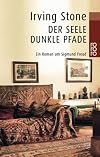
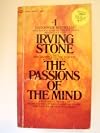
The Passions of the Mind: A Novel of Sigmund Freud
by Irving Stone
On This Page
Description
A novel about Sigmund Freud--the complex man whose life was a tumultuous drama of courage, conflict, love, and daring, as he ripped away the shrouds of secrecy from our shames, our guilts, our sexuality, and our human potential.Tags
Recommendations
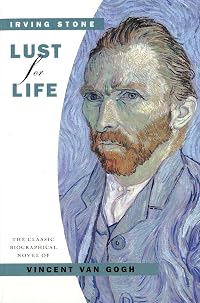





















Member Recommendations

Member Reviews
I am in a grudge battle to the death with Freud.
I am determined to finish this damned book if it kills me - but at this stage I’m unsure which way it will go.
The whole thing feels like Stone got his hands on every single document Freud ever wrote - every letter, every grocery list, every restaurant review - and was determined to shoehorn every single one of them into this book in the name of accuracy.
So by a third of the way through, Freud still isn’t practicing psychology he’s just going on and on about how lovely the architecture in Vienna is and how much he hates being poor and wants to be married already.
I’m beginning to wonder if the book itself is not some kind of psychological experiment in resilience of the human show more spirit.
You picked it up because you wanted to learn about the earliest theories on sexual perversions, paraphilias, etc and the views on hysteria. Wanted to hear from Freud how he defined the Oedipus complex.
You’re now halfway through and he’s only just starting to consider human sexuality as a subject.
You know more about the layout of Vienna than you ever wanted to. You are more familiar with the internal structure of Viennese apartments than you anticipated being. You know more about how Viennese food compares to German fare than can ever be useful.
What IS this book?! show less
I am determined to finish this damned book if it kills me - but at this stage I’m unsure which way it will go.
The whole thing feels like Stone got his hands on every single document Freud ever wrote - every letter, every grocery list, every restaurant review - and was determined to shoehorn every single one of them into this book in the name of accuracy.
So by a third of the way through, Freud still isn’t practicing psychology he’s just going on and on about how lovely the architecture in Vienna is and how much he hates being poor and wants to be married already.
I’m beginning to wonder if the book itself is not some kind of psychological experiment in resilience of the human show more spirit.
You picked it up because you wanted to learn about the earliest theories on sexual perversions, paraphilias, etc and the views on hysteria. Wanted to hear from Freud how he defined the Oedipus complex.
You’re now halfway through and he’s only just starting to consider human sexuality as a subject.
You know more about the layout of Vienna than you ever wanted to. You are more familiar with the internal structure of Viennese apartments than you anticipated being. You know more about how Viennese food compares to German fare than can ever be useful.
What IS this book?! show less
Although I love The Agony and the Ecstasy and Lust for Life, and found the Greek Treasure one of the best books I have ever read about Schliemann, this is still my favourite Irving Stone work. Like all of Stone's work, it is to be taken with a grain of salt (having subsequently read several biograhies of Freud, its is clear he was by no means the likeable figure he is presented as here). However, as a very readable account of the difficulties Freud had to go through to have his theories accepted, it has great merit, and its evocation of fin-de-siecle Vienna is very alluring. Perhaps lacking the whimsy and fluid style of The Agony and the Ecstasy (but then again its dealing with science, not art), but that doesnt detract from its worthiness.
This fictionalized biography of Sigmund Freud managed to endear itself to me despite the fact that as fiction it’s stilted and verbose to the point of stultifying, nothing at all like Stone’s excellent The Agony and The Ecstasy. At least I got the sense that the author’s massive research was leaving me with a real biography of Freud. I had to wonder why the author just didn’t write a straight biography, then thought that he probably was so used to thinking of himself as a writer of fictionalized biographies that his novelistic method was the only way to go about it. But though as a novel this work is a flop, my interest in the subject kept me going, aided by taking several months to read the book as I occasionally switched off show more to more interesting titles. The dialog in this novel is not credible, with Freud speaking what suspiciously appears to be lengthy extracts from his published works, and most characters apparently trying to sum up the essence of their psychoanalytic theories in long-winded, paragraphic declamations. Overwhelming details ranging from the contents of Freud’s apartment to minutiae about what happened on various vacations is apparently intended to fully call forth the late nineteenth and early twentieth centuries in Vienna, but there is just so much of it that you suspect the author simply failed to succinctly nail down the theater stage where his characters would walk.
A sense of drama finally emerges in the last hundred pages out of 823, as Jung splits away from Freud, rival psychoanalytic factions take root, World War I devastates the family finances, and mouth cancer introduces Freud to physical suffering and personal mortality. The last section on his refusal to leave Vienna in 1938 even amid Nazi occupation, changing his mind only when his own daughter is arrested, then fleeing to England, is quite interesting, but we don’t get any further information after Freud arrives in England. Is the author trying to leave an impression of escape from evil and arrival in a new land, and some sense of immortality? But the last year of his life, including his assisted death by morphine in September 1939, would seem to be worthy of inclusion, as it’s part of his character. show less
A sense of drama finally emerges in the last hundred pages out of 823, as Jung splits away from Freud, rival psychoanalytic factions take root, World War I devastates the family finances, and mouth cancer introduces Freud to physical suffering and personal mortality. The last section on his refusal to leave Vienna in 1938 even amid Nazi occupation, changing his mind only when his own daughter is arrested, then fleeing to England, is quite interesting, but we don’t get any further information after Freud arrives in England. Is the author trying to leave an impression of escape from evil and arrival in a new land, and some sense of immortality? But the last year of his life, including his assisted death by morphine in September 1939, would seem to be worthy of inclusion, as it’s part of his character. show less
Quite an enjoyably written story about the life of Sigmund Freud, and the creation of Psychoanalysis. A Good place to start in learning about Freud, and his view of the psyche.
BIBLIOGRAPHY, GLOSSARY OF PSYCHOANALYTIC TERMS; THIS IS VIENNA
Ratings
Members
- Recently Added By
Lists

Publisher's Weekly Bestsellers - Part II - 1940 - 1979
355 works; 6 members
Author Information

68+ Works 13,029 Members
Irving Stone was born Irving Tenenbaum in San Francisco, California on July 14, 1903. He received a bachelor's degree from the University of California, Berkeley in 1923 and a master's degree from the University of Southern California in 1924. He was known for his historically accurate fictionalized biographies. His first book, Lust for Life, was show more published in 1934. His other works include Clarence Darrow for the Defense, They Also Ran, Immortal Wife, President's Lady, Love Is Eternal, The Agony and the Ecstasy, The Passions of the Mind, and The Origin. He won a Western Spur Award for Men to Match My Mountains. He died on August 26, 1989 at the age of 86. (Bowker Author Biography) show less
Awards and Honors
Distinctions
Series
Belongs to Publisher Series
rororo (23004)
Work Relationships
Common Knowledge
- Canonical title*
- Der Seele dunkle Pfade
- Original title
- The Passions of the Mind
- Original publication date
- 1971
- People/Characters
- Sigmund Freud
- Important places
- Vienna, Austria
- First words
- They moved up the trail vigorously, their slim young figures in rhythmic cadence.
*Some information comes from Common Knowledge in other languages. Click "Edit" for more information.
Classifications
- Genres
- Fiction and Literature, Biography & Memoir, Historical Fiction
- DDC/MDS
- 813.5 — Literature & rhetoric American literature in English American fiction in English 1900-1999
- LCC
- PZ3 .S87872 .P — Language and Literature Fiction and juvenile belles lettres Fiction and juvenile belles lettres Fiction in English
- BISAC
Statistics
- Members
- 635
- Popularity
- 46,028
- Reviews
- 5
- Rating
- (3.65)
- Languages
- 9 — Czech, English, Finnish, French, German, Italian, Polish, Spanish, Swedish
- Media
- Paper
- ISBNs
- 24
- UPCs
- 1
- ASINs
- 28