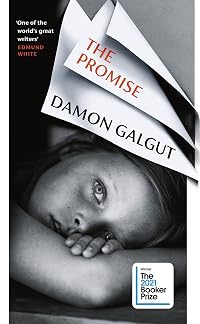
The Promise
by Damon Galgut
On This Page
Description
WINNER OF THE 2021 BOOKER PRIZEA NEW YORK TIMES EDITORS' CHOICE
A modern family saga written in gorgeous prose by three-time Booker Prize-shortlisted author Damon Galgut.
Haunted by an unmet promise, the Swart family loses touch after the death of their matriarch. Adrift, the lives of the three siblings move separately through the uncharted waters of South Africa; Anton, the golden boy who bitterly resents his life's unfulfilled potential; Astrid, whose beauty is her power; and the show more youngest, Amor, whose life is shaped by a nebulous feeling of guilt.
Reunited by four funerals over three decades, the dwindling family reflects the atmosphere of its countryâ??one of resentment, renewal, and, ultimately, hope. The Promise is an epic drama that unfurls against the unrelenting march of national history, sure to please current fans and attract many new ones.
"Simply: you must read it."â??Claire Messud, Harper's Magazin show less
Tags
Recommendations
























Member Recommendations
Member Reviews
What an extraordinary novel. Using the story of a disfunctional Africaner family, Galgut traces the history of South Africa from apartheid to full democracy. The story opens with the death of Rachel, mother of three, and a promise she has extracted from her husband that her youngest, Amor, age 13, is witness to. Each decade, this promise is raised at the funeral of one of the family, coincident with major events in the country itself. At the end, we are left to realize that time has destroyed the value of the promise, the family, and in some ways, the dream of South Africa. Each member of the family is in a way contaminated by the promise, apartheid and the subsequent changes.
Galgut uses what we might call an omniscient narrator, but show more the voice is very close to us, practically whispering the stories in our ears. Each family member's history, character and trauma is revealed through an ironic South African Afrikaner lens. The writing is wonderful, lush, pointed - it brings you in close to this story and situation.
This novel certainly deserves its Booker award. show less
Galgut uses what we might call an omniscient narrator, but show more the voice is very close to us, practically whispering the stories in our ears. Each family member's history, character and trauma is revealed through an ironic South African Afrikaner lens. The writing is wonderful, lush, pointed - it brings you in close to this story and situation.
This novel certainly deserves its Booker award. show less
★★★★★ — well deserving of the 2021 Booker Prize
I found The Promise quietly unsettling and deeply poignant. On the surface it’s about a single promise made and repeatedly broken within one white South African family, but it’s impossible to separate that story from the larger backdrop of apartheid and its aftermath. The personal and the political are constantly bleeding into each other.
One of the most striking aspects of the novel is the narrator, omnipresent and drifting, sometimes slipping inside a character’s thoughts, sometimes hovering above the story altogether, even commenting on itself. It gives the book a strange, dreamlike quality. You never feel fully settled, and that unease feels deliberate.
None of the show more characters feel whole. The family itself is deeply dysfunctional: between parents and children, and even among the siblings, there is little sense of genuine closeness. Astrid is brittle and insecure, obsessed with appearances. Anton is angry and self-destructive, permanently at odds with his father and the world. Amor carries the moral weight of the novel, but even she feels powerless, burdened by guilt over a promise she remembers clearly yet struggles to act on. Everyone seems damaged in small, ordinary ways, which somehow makes it worse.
What stayed with me most was the ending. When the promise is finally fulfilled, I didn’t feel relieved or moved — just hollow. There’s a lingering sense of what’s the point now? Justice arrives, but so late and so drained of meaning that it barely registers as justice at all. It made me think about how often promises — personal or political — are used to postpone responsibility, until they become indistinguishable from lies.
Salome, the woman to whom the promise is made, is kept mostly at the edges of the novel. She appears only in brief moments, rarely given any real interior life. At first this feels frustrating, even wrong, but over time it begins to feel intentional. She is the reason for everything, yet she remains peripheral — talked about, argued over, but never truly centred. That absence feels like part of the book’s moral argument. Even when injustice is acknowledged, those most affected are often denied a voice.
By the end, The Promise offers no comfort or closure. It leaves you sitting with discomfort, with the sense that doing the right thing too late doesn’t undo what’s already been lost. It’s a cold book in some ways, but that coldness feels honest. It doesn’t try to redeem its characters or the history they’re part of — it simply shows how damage lingers, even after the promise is finally kept.
P/S: After finishing the last page, I found myself unable to linger on the book’s cover for long. That, in itself, felt telling. show less
I found The Promise quietly unsettling and deeply poignant. On the surface it’s about a single promise made and repeatedly broken within one white South African family, but it’s impossible to separate that story from the larger backdrop of apartheid and its aftermath. The personal and the political are constantly bleeding into each other.
One of the most striking aspects of the novel is the narrator, omnipresent and drifting, sometimes slipping inside a character’s thoughts, sometimes hovering above the story altogether, even commenting on itself. It gives the book a strange, dreamlike quality. You never feel fully settled, and that unease feels deliberate.
None of the show more characters feel whole. The family itself is deeply dysfunctional: between parents and children, and even among the siblings, there is little sense of genuine closeness. Astrid is brittle and insecure, obsessed with appearances. Anton is angry and self-destructive, permanently at odds with his father and the world. Amor carries the moral weight of the novel, but even she feels powerless, burdened by guilt over a promise she remembers clearly yet struggles to act on. Everyone seems damaged in small, ordinary ways, which somehow makes it worse.
Salome, the woman to whom the promise is made, is kept mostly at the edges of the novel. She appears only in brief moments, rarely given any real interior life. At first this feels frustrating, even wrong, but over time it begins to feel intentional. She is the reason for everything, yet she remains peripheral — talked about, argued over, but never truly centred. That absence feels like part of the book’s moral argument. Even when injustice is acknowledged, those most affected are often denied a voice.
By the end, The Promise offers no comfort or closure. It leaves you sitting with discomfort, with the sense that doing the right thing too late doesn’t undo what’s already been lost. It’s a cold book in some ways, but that coldness feels honest. It doesn’t try to redeem its characters or the history they’re part of — it simply shows how damage lingers, even after the promise is finally kept.
P/S: After finishing the last page, I found myself unable to linger on the book’s cover for long. That, in itself, felt telling. show less
The Promise is not only a very engaging story penned by a master storyteller, it also offers great riches for readers who are alert to passing allusions. Even the surname of the white family that is central to the story has meaning: 'Swart' is an Afrikaans surname meaning 'black', and the word 'swart' is also an archaic form of 'swarthy', so for a story that begins in South Africa under apartheid where skin colour determined every aspect of life, Galgut has employed ironic naming for these racist characters. Also, the origin of the surname in England comes from a family seat as Lords of the Manor of Sward in Cornwall, and the Swart family of The Promise certainly regard themselves as lords of their estate in Pretoria, as did landowners show more throughout South Africa in the apartheid era.
A graven image who is unseen.
Ironies abound in The Promise.
The Promise traces the fate of five main characters, linked by a sequence of funerals. The story begins with the death of Rachel Swart from cancer in 1986. 13-year-old Amor, sent away for the last phase of her mother's illness, is recalled for the funeral, and collected by her aunt Marina who is hungry for drama and gossip and cheap spectacle. Tannie Marina is outraged that Ma has betrayed the whole family by changing her religion, to going back to her old religion. To being a Jew!
Religion has never been a force for good in South Africa. Believers have cherry-picked the Bible for scripture to support apartheid, and post-apartheid, false traditional beliefs have hindered efforts to contain HIV. These beliefs and other forms of denialism — notably by President Thabo Mbeki— have led to South Africa having 7.5 million people living with HIV, the highest in the world. A tsunami of suffering that Amor cannot hope to ease in her work as a palliative care nurse.
Unconscious of the fact that apartheid routinely separates Black South Africans in death, Manie Swart is distraught that his wife's decision about religion means that they will not be buried together in the same family plot. At the funeral service we see the divisions in society laid bare. Salome, the servant who nursed Ma in her last days, did all the jobs that people in her own family didn't want to do, too dirty or too intimate, is not present. It doesn't occur to anyone that she should be there, so she offers up a prayer for Rachel in the privacy of the shack she lives in. Whatever god Salome and her disenfranchised fellow-Blacks have been praying to over the long years of thankless servitude, he hasn't been listening.
To read the rest of my review please visit https://anzlitlovers.com/2021/09/18/the-promise-by-damon-galgut/ show less
...the person in the room isn't Ma. It's Salome, of course, who has been here on the farm forever, or that's how it feels. My grandfather always talked about her like that, Oh, Salome, I got her along with the land.
Pause a moment to observe, as she takes the sheets off the bed. A stout, solid woman, wearing a second-hand dress, given to her by Ma years ago. A headscarf tied over her hair. She is barefoot, and the soles of her feet are cracked and dirty. Her hands have marks on them too, the scuffs and scars of innumerable collisions. Same age as Ma supposedly, forty, though she looks much older. Hard to put an exact number on her. Not much shows in her face, she wears her life like a mask, like a graven image. (p.18)
A graven image who is unseen.
She was with Ma when she died, right there next to the bed, though nobody seems to see her, she is apparently invisible. And whatever Salome feels is invisible too. (p.19)
Ironies abound in The Promise.
The Promise traces the fate of five main characters, linked by a sequence of funerals. The story begins with the death of Rachel Swart from cancer in 1986. 13-year-old Amor, sent away for the last phase of her mother's illness, is recalled for the funeral, and collected by her aunt Marina who is hungry for drama and gossip and cheap spectacle. Tannie Marina is outraged that Ma has betrayed the whole family by changing her religion, to going back to her old religion. To being a Jew!
Religion has never been a force for good in South Africa. Believers have cherry-picked the Bible for scripture to support apartheid, and post-apartheid, false traditional beliefs have hindered efforts to contain HIV. These beliefs and other forms of denialism — notably by President Thabo Mbeki— have led to South Africa having 7.5 million people living with HIV, the highest in the world. A tsunami of suffering that Amor cannot hope to ease in her work as a palliative care nurse.
Unconscious of the fact that apartheid routinely separates Black South Africans in death, Manie Swart is distraught that his wife's decision about religion means that they will not be buried together in the same family plot. At the funeral service we see the divisions in society laid bare. Salome, the servant who nursed Ma in her last days, did all the jobs that people in her own family didn't want to do, too dirty or too intimate, is not present. It doesn't occur to anyone that she should be there, so she offers up a prayer for Rachel in the privacy of the shack she lives in. Whatever god Salome and her disenfranchised fellow-Blacks have been praying to over the long years of thankless servitude, he hasn't been listening.
To read the rest of my review please visit https://anzlitlovers.com/2021/09/18/the-promise-by-damon-galgut/ show less
"Apartheid has fallen, see, we die right next to each other now, in intimate proximity. It’s just the living part we still have to work out."
This multilayered, rich and insightful Booker Prize shortlisted novel of an ordinary white South African family living in a farm outside of Johannesburg begins in 1986, during the end of the apartheid regime. Rachel Swart has died after a long illness, and her grieving husband and three teenage children convene with extended family to mourn her loss. Just before she died Amor, the introspective and sensitive 13 year old youngest member of the family, overhears a conversation that her parents have in their bedroom, in which Rachel expresses one last wish to her husband:
"Do you promise me, show more Manie?"
Holding on to him, skeleton hands grabbing, like in a horror film.
"Ja, I’ll do it."
"Because I really want her to have something. After everything she’s done."
"I understand," he says.
"Promise me you’ll do it. Say the words."
"I promise," Pa says, choked-sounding.
The "she" who Rachel is referring to is Salome, the longtime black housekeeper on the Swart farm, who is Rachel's age and one of her closest companions, although she is invisible and given little consideration by the rest of the Swart family, save for Amor. Although it is not overly mentioned Amor interprets her mother's deathbed wish as legally granting over the Lombard house, a rundown shack on the edge of the farm, to Salome, a property purchased years ago by Rachel's father to prevent it from being purchased by an Indian family. This promise could not be fulfilled, as blacks were not allowed to own property, and nothing more was said or done at that time.
The novel consists of four chronologically separate parts over four decades, each part corresponding to one of four members of the Swart family: Rachel, her husband Manie, and their two oldest children, Anton and Astrid. The two characters who are constantly present are Amor and Salome, who maintain a warm friendship despite their physical distance, in a changing South Africa where blacks and whites live uncomfortably alongside each other:
"But enough, we are the rainbow nation, which is to say it’s a mixed and motley and mongrel assembly in the church today, restive and ill at ease, like antagonistic elements from the periodic table."
The promise that Manie made to Rachel remains unfulfilled, which troubles only Salome and Amor, and it serves as a metaphor for the promise of true equality made to black South Africans after the end of apartheid, as whites continue to hold on to their valuable property, which they view as their birthright and something only to be shared with their descendants.
'The Promise' is a compelling look into the life of an ordinary white South African family during the waning years of apartheid and the years that followed, which also permits the reader with a glimpse of modern day South Africa, and relations between the two main races, which leaves out the sizable mixed race and Indian communities. I'm a fan of Damon Galgut's work, most notably his novels 'The Impostor', 'In a Strange Room', 'The Good Doctor' and 'Arctic Summer', but this is his best novel yet, and one that is worthy of this year's Booker Prize. show less
This multilayered, rich and insightful Booker Prize shortlisted novel of an ordinary white South African family living in a farm outside of Johannesburg begins in 1986, during the end of the apartheid regime. Rachel Swart has died after a long illness, and her grieving husband and three teenage children convene with extended family to mourn her loss. Just before she died Amor, the introspective and sensitive 13 year old youngest member of the family, overhears a conversation that her parents have in their bedroom, in which Rachel expresses one last wish to her husband:
"Do you promise me, show more Manie?"
Holding on to him, skeleton hands grabbing, like in a horror film.
"Ja, I’ll do it."
"Because I really want her to have something. After everything she’s done."
"I understand," he says.
"Promise me you’ll do it. Say the words."
"I promise," Pa says, choked-sounding.
The "she" who Rachel is referring to is Salome, the longtime black housekeeper on the Swart farm, who is Rachel's age and one of her closest companions, although she is invisible and given little consideration by the rest of the Swart family, save for Amor. Although it is not overly mentioned Amor interprets her mother's deathbed wish as legally granting over the Lombard house, a rundown shack on the edge of the farm, to Salome, a property purchased years ago by Rachel's father to prevent it from being purchased by an Indian family. This promise could not be fulfilled, as blacks were not allowed to own property, and nothing more was said or done at that time.
The novel consists of four chronologically separate parts over four decades, each part corresponding to one of four members of the Swart family: Rachel, her husband Manie, and their two oldest children, Anton and Astrid. The two characters who are constantly present are Amor and Salome, who maintain a warm friendship despite their physical distance, in a changing South Africa where blacks and whites live uncomfortably alongside each other:
"But enough, we are the rainbow nation, which is to say it’s a mixed and motley and mongrel assembly in the church today, restive and ill at ease, like antagonistic elements from the periodic table."
The promise that Manie made to Rachel remains unfulfilled, which troubles only Salome and Amor, and it serves as a metaphor for the promise of true equality made to black South Africans after the end of apartheid, as whites continue to hold on to their valuable property, which they view as their birthright and something only to be shared with their descendants.
'The Promise' is a compelling look into the life of an ordinary white South African family during the waning years of apartheid and the years that followed, which also permits the reader with a glimpse of modern day South Africa, and relations between the two main races, which leaves out the sizable mixed race and Indian communities. I'm a fan of Damon Galgut's work, most notably his novels 'The Impostor', 'In a Strange Room', 'The Good Doctor' and 'Arctic Summer', but this is his best novel yet, and one that is worthy of this year's Booker Prize. show less
Third time lucky for Damon Galgut with The Promise (Chatto & Windus), having been shortlisted twice before for The Booker Prize. It’s the first of his books that I have read, and what a brilliant and accessible book to start with. It seems from the unanimous acclaim that this is fully deserved and not one of those where the wrong book from an author won it on the basis of the cumulative effect of multiple, unsuccessful shortlistings. It is set around four funerals within a family over several decades, the forces that bring them together or, more often, push them apart, and an unfulfilled promise that threads through the book. It’s very human and has a clever humour that consistently seasons the text. The characters are acutely show more drawn, particularly Amor, the youngest daughter of three siblings, and is set against the backdrop of a country with a massive landscape but facing many issues. It’s an exceptional novel and a worthy winner amongst a really high quality shortlist. show less
“There is nothing unusual or remarkable about the Swart family, oh no, they resemble the family from the next farm and the one beyond that, just an ordinary bunch of white South Africans, and if you don’t believe it then listen to us speak. We sound no different from the other voices, we sound the same and we tell the same stories, in an accent squashed underfoot, all the consonants decapitated and the vowels stove in. Something rusted and rain-stained and dented in the soul, and it comes through in the voice.”
Story of a white South African family living on a farm near Pretoria. The family consists of parents Manie and Rachel, son Anton, and daughters Astrid and Amor. It opens with Rachel near death. Amor hears her mother promise show more Salome, the family’s domestic employee, that she will be given title to the small property on the edge of the farm. This promise is ignored, deferred, and bickered over among the siblings for the next three decades.
Parts of this book work well for me. I like the first half very much. I think the setup of a promise unfulfilled is a fitting symbol for post-Apartheid-related history. Each of four section is centered around a specific family member and is effective in portraying the decade in which it is set (from 1986 to 2018). The writing is strong. The author has a way with word that makes it easy to picture the scenes:
“There’s a hot wind gusting now, and black clouds rolling in from the east. Thunder gargling away in the back throat of the sky. Time to get moving, and to use haste to cover what would otherwise crack the heart. Both women know they won’t see each other again. But why does it matter? They’re close, but not close. Joined but not joined. One of the strange, simple fusions that hold this country together. Sometimes only barely.”
I am not as fond of other elements. The characters are thinly drawn – they feel more like archetypes than real people. This creates distance and makes it harder to remain fully engaged. The narrative voice is all over the place, changing a number of times, even within the same sentence, which I find distracting. I am disappointed that the black characters are given little voice, though it seems this is intentional. Salome is the reason for the promise in the first place, but we learn little about her. I found it worth reading but, for me, it falls short of its potential. show less
Story of a white South African family living on a farm near Pretoria. The family consists of parents Manie and Rachel, son Anton, and daughters Astrid and Amor. It opens with Rachel near death. Amor hears her mother promise show more Salome, the family’s domestic employee, that she will be given title to the small property on the edge of the farm. This promise is ignored, deferred, and bickered over among the siblings for the next three decades.
Parts of this book work well for me. I like the first half very much. I think the setup of a promise unfulfilled is a fitting symbol for post-Apartheid-related history. Each of four section is centered around a specific family member and is effective in portraying the decade in which it is set (from 1986 to 2018). The writing is strong. The author has a way with word that makes it easy to picture the scenes:
“There’s a hot wind gusting now, and black clouds rolling in from the east. Thunder gargling away in the back throat of the sky. Time to get moving, and to use haste to cover what would otherwise crack the heart. Both women know they won’t see each other again. But why does it matter? They’re close, but not close. Joined but not joined. One of the strange, simple fusions that hold this country together. Sometimes only barely.”
I am not as fond of other elements. The characters are thinly drawn – they feel more like archetypes than real people. This creates distance and makes it harder to remain fully engaged. The narrative voice is all over the place, changing a number of times, even within the same sentence, which I find distracting. I am disappointed that the black characters are given little voice, though it seems this is intentional. Salome is the reason for the promise in the first place, but we learn little about her. I found it worth reading but, for me, it falls short of its potential. show less
The story of five diverse and complicated members of an Afrikaner family, bridging the end of apartheid, and cleverly condensed into snapshots set around the funerals of four of them. At the heart of the story is the promise made by Manie Swart to his dying wife Rachel to give a house to their black servant Salome, the person who had shouldered the heavy burden of Rachel's care during her last illness. At each missed opportunity for realising the promise, the value of the gift and the difference it could make to Salome's life become progressively less, in what's presumably a complicated allegory of South Africa and the end of minority rule.
Galgut's writing is fresh and witty, and the main characters and the storyline are complex and show more surprisingly free from the obvious clichés the context would lead you to expect — some of the minor characters descend into caricature, though, especially the various priests, the undertaker, and the Random-Army-Buddy-who-keeps-popping-up, who perhaps have a bit too much of the Evelyn Waugh minor character about them.
A very interesting and quite moving book about the moral and intellectual failure of a culture. show less
Galgut's writing is fresh and witty, and the main characters and the storyline are complex and show more surprisingly free from the obvious clichés the context would lead you to expect — some of the minor characters descend into caricature, though, especially the various priests, the undertaker, and the Random-Army-Buddy-who-keeps-popping-up, who perhaps have a bit too much of the Evelyn Waugh minor character about them.
A very interesting and quite moving book about the moral and intellectual failure of a culture. show less
Members
- Recently Added By
Published Reviews
ThingScore 92
Damon Galgut’s stunning new novel charts the decline of a white family during South Africa’s transition out of apartheid. It begins in 1986, with the death of Rachel, a 40-year-old Jewish mother of three on a smallholding outside Pretoria. The drama of the novel turns on a promise that her Afrikaner husband, Manie, made to her before she died, overheard by their youngest daughter, Amor: show more that Manie would give their black maid, Salome, the deeds to the annexe she occupies. Now that Rachel is dead, Manie has apparently forgotten and doesn’t care to be reminded. Nor does his bigoted family, who regard Amor’s stubborn insistence that Salome should own her home as the kind of talk that “now appears to have infected the whole country”. show less
added by kidzdoc
For three decades the South African writer Damon Galgut has been assessing his country through scrutiny of its white people. His prior novels include the Booker Prize finalist “The Good Doctor,” set at a clinic in one of apartheid’s forlorn “homelands,” and “The Impostor,” an account of a poet self-exiled to the lonely countryside. Galgut’s new work, “The Promise,” studies show more the Swart family, descendants of Voortrekker settlers, clinging to their farm amid tumultuous social and political change — “just an ordinary bunch of white South Africans,” he writes, “holding on, holding out.” Beginning in 1986, the novel moves toward the present, following Ma, Pa and the alliterative trio of Swart children: Anton, a military deserter and failed novelist; Astrid, a narcissistic housewife; and Amor, an introspective loner who eventually becomes a nurse. show less
added by kidzdoc
In scope, seriousness, and experimental ambition, modernist writing like {Virginia} Woolf’s sometimes appears to have expired along with its serious and experimental epoch, a moment when political and moral disenchantment was met by a belief in literature’s regenerative power. Yet Damon Galgut’s remarkable new novel, “The Promise” (Europa), suggests that the demands of history and show more the answering cry of the novel can still powerfully converge. As a white South African writer, Galgut inherits a subject that must feel, at different times, liberating in its dimensions and imprisoning in its inescapability. (J. M. Coetzee once argued that South African literature is a “literature in bondage,” because a “deformed and stunted” society produces a deformed and stunted inner life.) “The Promise” is drenched in South African history, a tide that can be seen, in the end, to poison all “promise.” The book moves from the dying days of apartheid, in the eighties, to the disappointment of Jacob Zuma’s Presidency of the past decade, and the tale is told as the fable of a family curse: first the mother dies, then the father, then one of their daughters, then their only son. show less
added by kidzdoc
Lists

Top Five Books of 2022
736 works; 272 members

Booker Prize
491 works; 62 members
Favourite Booker Prize contenders
73 works; 21 members

Top Five Books of 2021
604 works; 181 members

Books Read in 2023
5,638 works; 147 members

Anticipated 2021 Reads
231 works; 7 members

FT Best books of 2021: Fiction
12 works; 1 member

The Economist Best Books 2021: Fiction
8 works; 1 member

Books Read in 2022
5,226 works; 115 members

Evan's Reading List 2022
18 works; 1 member

Maybe This Year? Books to Look Forward To
412 works; 9 members

Books Read in 2021
5,361 works; 113 members

Big Jubilee List
70 works; 3 members

Books Read in 2025
4,128 works; 98 members

Top Five Books of 2025
954 works; 303 members
Talk Discussions
Past Discussions
2021 Booker Prize Longlist: The Promise by Damon Galgut in Booker Prize (October 2021)
Author Information

14+ Works 3,856 Members
Some Editions
Awards and Honors
Work Relationships
Common Knowledge
- Canonical title
- The Promise
- Original title
- The Promise
- Original publication date
- 2021
- People/Characters
- Amor Swart, daughter and main character; Rachel, mother; Manie Swart, father; Anton Swart, son; Astrid, daugther; Salomé, the black help
- Important places
- South Africa; Pretoria, South Africa
- Epigraph
- This morning I met a woman with a golden nose.
She was riding in a Cadillac with a monkey in her arms.
Her driver stopped and she asked me, "Are you Fellini?"
With this metallic voice she continued,
"Why is it ... (show all)that in your movies, there is not even one normal person?"
—FEDERICO FELLINI - Dedication
- to Antonio and Petruchio
for all the agentry, cookery and travelry - First words
- The moment the metal box speaks her name, Amor knows it's happened.
- Last words
- (Click to show. Warning: May contain spoilers.)Leaves the urn there, no point in bringing it along, and starts to climb down the roof, step by step, towards whatever it is that happens next.
- Blurbers
- Toibin, Colm; Byrne, Gabriel; Hope, Anna; Cameron, Peter; Hadley, Tessa; Gale, Patrick (show all 7); Greenwell, Garth
- Original language
- English
Classifications
Statistics
- Members
- 1,491
- Popularity
- 15,600
- Reviews
- 76
- Rating
- (4.00)
- Languages
- 13 — Catalan, Dutch, English, French, German, Greek, Italian, Norwegian, Polish, Portuguese, Spanish, Swedish, Turkish
- Media
- Paper, Audiobook, Ebook
- ISBNs
- 32
- ASINs
- 13