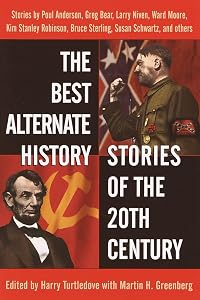
The Best Alternate History Stories of the 20th Century
by Martin Harry Greenberg (Editor), Harry Turtledove (Editor)
On This Page
Description
Explore fascinating, often chilling “what if” accounts of the world that could have existed—and still might yet . . .Science fiction’s most illustrious and visionary authors hold forth the ultimate alternate history collection. Here you’ll experience mind-bending tales that challenge your views of the past, present, and future, including:
• “The Lucky Strike”: When the Lucky Strike is chosen over the Enola Gay to drop the first atomic bomb, fate takes an unexpected turn show more in Kim Stanley Robinson’s gripping tale.
• “Bring the Jubilee”: Ward Moore’s novella masterpiece offers a rebel victory at Gettysburg which changes the course of the Civil War . . . and all of American history.
• “Through Road No Wither”: After Hitler’s victory in World War II, two Nazi officers confront their destiny in Greg Bear’s apocalyptic vision of the future.
• “All the Myriad Ways”: Murder or suicide, Ambrose Harmon’s death leads the police down an infinite number of pathways in Larry Niven’s brilliant and defining tale of alternatives and consequences.
• “Mozart in Mirrorshades”: Bruce Sterling and Lewis Shiner explore a terrifying era as the future crashes into the past—with disastrous results.
. . . as well as “The Winterberry” by Nicholas A. DiChario • “Islands in the Sea” by Harry Turtledove • “Suppose They Gave a Peace” by Susan Shwartz • “Manassas, Again” by Gregory Benford • “Dance Band on the Titanic” by Jack L. Chalker • “Eutopia” by Poul Anderson • “The Undiscovered” by William Sanders • “The Death of Captain Future” by Allen Steele • and “Moon of Ice” by Brad Linaweaver
The definitive collection: fourteen seminal alternate history tales drawing readers into a universe of dramatic possibility and endless wonder. show less
Tags
Recommendations
















Member Reviews
Contains the Original Novella “Bring the Jubilee”
Alternate history buffs might enjoy this volume for a few reasons, not the least of which being the inclusion of Ward Moore’s original novella version of Bring the Jubilee that appeared in The Magazine of Fantasy & Science Fiction (1952) prior to the novel version (1953). It’s notable for being one of the earlier alternate history novels and is national and international in its scope. That is somewhat the opposite of the other shorter selections in this collection, many of which are at best marginally alternate history fiction.
Generally, though, you’ll find good, thoughtful writing here, and some very intriguing stories. It would take too much space to comment on all, but here show more are a few many may find intriguing:
“The Winterberry,” by Nicolas A. DiChario. What if JFK had through some miracle survived the 1963 assassination? DiChario’s take on this is not what you might expect, and really tender when you sit back and contemplate it.
“The Undiscovered,” by William Sanders. Sanders wonders aloud about what would have become of Bill Shakespeare if he had been banished to the New World and captured by native tribes. This story is at once arresting for its simple style, fascinating for its alternate cultural perspective, and poignant because Bill can’t seem to see beyond his own desire.
“The Death of Captain Future,” by Allen Steele. Those of a certain age who remember pulpy science fiction and the cheaply made TV shows Captain Video and His Video Rangers and Tom Corbett, Space Cadet will find Steele’s story tailor-made for them. Here, a delusional captain of a space scow has collected, read, and digested all the adventures of his hero Captain Future and his Futuremen. In his mind he is Captain Future, and claims all the prerogatives of such a hero, to the consternation of his newest crew member. When a distress signal comes in, opportunity presents itself, and reader hope gets dashed.
“Moon of Ice,” by Brad Linaweaver. In his “what if the Nazis won,” Linaweaver visits Goebbels and extracts a revenge of sorts on his. It’s the mid 1960s, the world’s pretty much divided between the U.S. and the Nazis, Hitler’s on his deathbed, and Goebbels reminisces. He’s equally troubled by his daughter Hilda (who in fact was his daddy’s little girl, murdered by him in 1945) who is too much of a freethinker, and his soon-to-be SS son. One day, shortly before his departure for Burgundy, a country made for and by the SS, to see his son graduated into the SS ranks, Hilda comes to her father with two startling revelations, one being his own pending assassination. Lots of color and terrific moments in this story. For instance, how often does Hanns Hörbiger’s discredited Welteislehre (World Ice Theory) get trotted out? Best part though is Goebbels subjected to the extreme conclusion of his virulent racial hatred.
You’ll find this a bit of an uneven but overall enjoyable collection. show less
Alternate history buffs might enjoy this volume for a few reasons, not the least of which being the inclusion of Ward Moore’s original novella version of Bring the Jubilee that appeared in The Magazine of Fantasy & Science Fiction (1952) prior to the novel version (1953). It’s notable for being one of the earlier alternate history novels and is national and international in its scope. That is somewhat the opposite of the other shorter selections in this collection, many of which are at best marginally alternate history fiction.
Generally, though, you’ll find good, thoughtful writing here, and some very intriguing stories. It would take too much space to comment on all, but here show more are a few many may find intriguing:
“The Winterberry,” by Nicolas A. DiChario. What if JFK had through some miracle survived the 1963 assassination? DiChario’s take on this is not what you might expect, and really tender when you sit back and contemplate it.
“The Undiscovered,” by William Sanders. Sanders wonders aloud about what would have become of Bill Shakespeare if he had been banished to the New World and captured by native tribes. This story is at once arresting for its simple style, fascinating for its alternate cultural perspective, and poignant because Bill can’t seem to see beyond his own desire.
“The Death of Captain Future,” by Allen Steele. Those of a certain age who remember pulpy science fiction and the cheaply made TV shows Captain Video and His Video Rangers and Tom Corbett, Space Cadet will find Steele’s story tailor-made for them. Here, a delusional captain of a space scow has collected, read, and digested all the adventures of his hero Captain Future and his Futuremen. In his mind he is Captain Future, and claims all the prerogatives of such a hero, to the consternation of his newest crew member. When a distress signal comes in, opportunity presents itself, and reader hope gets dashed.
“Moon of Ice,” by Brad Linaweaver. In his “what if the Nazis won,” Linaweaver visits Goebbels and extracts a revenge of sorts on his. It’s the mid 1960s, the world’s pretty much divided between the U.S. and the Nazis, Hitler’s on his deathbed, and Goebbels reminisces. He’s equally troubled by his daughter Hilda (who in fact was his daddy’s little girl, murdered by him in 1945) who is too much of a freethinker, and his soon-to-be SS son. One day, shortly before his departure for Burgundy, a country made for and by the SS, to see his son graduated into the SS ranks, Hilda comes to her father with two startling revelations, one being his own pending assassination. Lots of color and terrific moments in this story. For instance, how often does Hanns Hörbiger’s discredited Welteislehre (World Ice Theory) get trotted out? Best part though is Goebbels subjected to the extreme conclusion of his virulent racial hatred.
You’ll find this a bit of an uneven but overall enjoyable collection. show less
Contains the Original Novella “Bring the Jubilee”
Alternate history buffs might enjoy this volume for a few reasons, not the least of which being the inclusion of Ward Moore’s original novella version of Bring the Jubilee that appeared in The Magazine of Fantasy & Science Fiction (1952) prior to the novel version (1953). It’s notable for being one of the earlier alternate history novels and is national and international in its scope. That is somewhat the opposite of the other shorter selections in this collection, many of which are at best marginally alternate history fiction.
Generally, though, you’ll find good, thoughtful writing here, and some very intriguing stories. It would take too much space to comment on all, but here show more are a few many may find intriguing:
“The Winterberry,” by Nicolas A. DiChario. What if JFK had through some miracle survived the 1963 assassination? DiChario’s take on this is not what you might expect, and really tender when you sit back and contemplate it.
“The Undiscovered,” by William Sanders. Sanders wonders aloud about what would have become of Bill Shakespeare if he had been banished to the New World and captured by native tribes. This story is at once arresting for its simple style, fascinating for its alternate cultural perspective, and poignant because Bill can’t seem to see beyond his own desire.
“The Death of Captain Future,” by Allen Steele. Those of a certain age who remember pulpy science fiction and the cheaply made TV shows Captain Video and His Video Rangers and Tom Corbett, Space Cadet will find Steele’s story tailor-made for them. Here, a delusional captain of a space scow has collected, read, and digested all the adventures of his hero Captain Future and his Futuremen. In his mind he is Captain Future, and claims all the prerogatives of such a hero, to the consternation of his newest crew member. When a distress signal comes in, opportunity presents itself, and reader hope gets dashed.
“Moon of Ice,” by Brad Linaweaver. In his “what if the Nazis won,” Linaweaver visits Goebbels and extracts a revenge of sorts on his. It’s the mid 1960s, the world’s pretty much divided between the U.S. and the Nazis, Hitler’s on his deathbed, and Goebbels reminisces. He’s equally troubled by his daughter Hilda (who in fact was his daddy’s little girl, murdered by him in 1945) who is too much of a freethinker, and his soon-to-be SS son. One day, shortly before his departure for Burgundy, a country made for and by the SS, to see his son graduated into the SS ranks, Hilda comes to her father with two startling revelations, one being his own pending assassination. Lots of color and terrific moments in this story. For instance, how often does Hanns Hörbiger’s discredited Welteislehre (World Ice Theory) get trotted out? Best part though is Goebbels subjected to the extreme conclusion of his virulent racial hatred.
You’ll find this a bit of an uneven but overall enjoyable collection. show less
Alternate history buffs might enjoy this volume for a few reasons, not the least of which being the inclusion of Ward Moore’s original novella version of Bring the Jubilee that appeared in The Magazine of Fantasy & Science Fiction (1952) prior to the novel version (1953). It’s notable for being one of the earlier alternate history novels and is national and international in its scope. That is somewhat the opposite of the other shorter selections in this collection, many of which are at best marginally alternate history fiction.
Generally, though, you’ll find good, thoughtful writing here, and some very intriguing stories. It would take too much space to comment on all, but here show more are a few many may find intriguing:
“The Winterberry,” by Nicolas A. DiChario. What if JFK had through some miracle survived the 1963 assassination? DiChario’s take on this is not what you might expect, and really tender when you sit back and contemplate it.
“The Undiscovered,” by William Sanders. Sanders wonders aloud about what would have become of Bill Shakespeare if he had been banished to the New World and captured by native tribes. This story is at once arresting for its simple style, fascinating for its alternate cultural perspective, and poignant because Bill can’t seem to see beyond his own desire.
“The Death of Captain Future,” by Allen Steele. Those of a certain age who remember pulpy science fiction and the cheaply made TV shows Captain Video and His Video Rangers and Tom Corbett, Space Cadet will find Steele’s story tailor-made for them. Here, a delusional captain of a space scow has collected, read, and digested all the adventures of his hero Captain Future and his Futuremen. In his mind he is Captain Future, and claims all the prerogatives of such a hero, to the consternation of his newest crew member. When a distress signal comes in, opportunity presents itself, and reader hope gets dashed.
“Moon of Ice,” by Brad Linaweaver. In his “what if the Nazis won,” Linaweaver visits Goebbels and extracts a revenge of sorts on his. It’s the mid 1960s, the world’s pretty much divided between the U.S. and the Nazis, Hitler’s on his deathbed, and Goebbels reminisces. He’s equally troubled by his daughter Hilda (who in fact was his daddy’s little girl, murdered by him in 1945) who is too much of a freethinker, and his soon-to-be SS son. One day, shortly before his departure for Burgundy, a country made for and by the SS, to see his son graduated into the SS ranks, Hilda comes to her father with two startling revelations, one being his own pending assassination. Lots of color and terrific moments in this story. For instance, how often does Hanns Hörbiger’s discredited Welteislehre (World Ice Theory) get trotted out? Best part though is Goebbels subjected to the extreme conclusion of his virulent racial hatred.
You’ll find this a bit of an uneven but overall enjoyable collection. show less
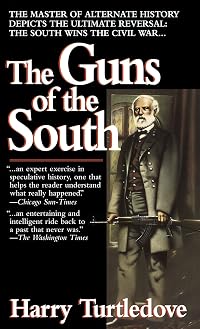
Harry Turtledove introduced me to the whole alternate history genre way back in the early nineties with The Guns of the South, his brilliant take on the American Civil War. Turtledove is all over the alternate history map with books that even include aliens invading Earth during WWII, and the like, but my other favorite of his, Ruled Britannia, sees William Shakespeare using his writing skills to motivate the populace to overthrow their Spanish oppressors. It is only fitting then that Mr. Turtledove is the editor of this collection of some of the alternate history stories considered to be the best ones written last century.
The Best Alternate History Stories of the 20th Century includes fourteen stories (one of which is 100 pages long) show more that offer “what if” re-imaginings of everything from the dropping of the atomic bomb on Japan, to George McGovern’s Vietnam-era election victory over Richard Nixon, to Shakespeare lost in the New World and living with an Indian tribe, and on to more commonly-themed tales involving a German victory in World War II and a Southern one in the Civil War.
The longest, and oldest, of the stories (“Bring the Jubilee”) dates to 1952 and the most recent (this collection was published in 2001) was written in 2000 – with the majority of the tales having been first published in the eighties and nineties. Some of the more recognizable author names are: Harry Turtledove, Kim Stanley Robinson, Larry Niven, Greg Bear, Poul Anderson, and Ward Moore.
My personal favorite is one of the more oddball ones in the collection, a story by Nicholas A. DiChario called “The Winterberry,” in which John F. Kennedy survives the head-wounds he suffered in Dallas on November 22, 1963. It is a touching tale of innocence, family love and loyalty, and overwhelming sadness. Even if you never read another alternate history story, I think the ones like this one – the non-military themed ones – will appeal to most any reader. And, who knows? You just might find yourself intrigued enough to read others in this fun genre.
Rated at: 3.0 show less
The Best Alternate History Stories of the 20th Century includes fourteen stories (one of which is 100 pages long) show more that offer “what if” re-imaginings of everything from the dropping of the atomic bomb on Japan, to George McGovern’s Vietnam-era election victory over Richard Nixon, to Shakespeare lost in the New World and living with an Indian tribe, and on to more commonly-themed tales involving a German victory in World War II and a Southern one in the Civil War.
The longest, and oldest, of the stories (“Bring the Jubilee”) dates to 1952 and the most recent (this collection was published in 2001) was written in 2000 – with the majority of the tales having been first published in the eighties and nineties. Some of the more recognizable author names are: Harry Turtledove, Kim Stanley Robinson, Larry Niven, Greg Bear, Poul Anderson, and Ward Moore.
My personal favorite is one of the more oddball ones in the collection, a story by Nicholas A. DiChario called “The Winterberry,” in which John F. Kennedy survives the head-wounds he suffered in Dallas on November 22, 1963. It is a touching tale of innocence, family love and loyalty, and overwhelming sadness. Even if you never read another alternate history story, I think the ones like this one – the non-military themed ones – will appeal to most any reader. And, who knows? You just might find yourself intrigued enough to read others in this fun genre.
Rated at: 3.0 show less
A very enlightening and entertaining group of tales. This prompted me to investigate some areas of history, as I found I was so unfamiliar with the period in question that I was unable to pinpoint how the story differed from reality. A couple, particularly one set in the future, I question their categorization as an 'alternate history' tale.
Are they the "best"? I'm not sure.
Appreciated the inclusion of author bios with the entry. Some either omit these entirely or stick them all at the end.
Are they the "best"? I'm not sure.
Appreciated the inclusion of author bios with the entry. Some either omit these entirely or stick them all at the end.
A mixed bag as other reviews have said. I was surprised that a few of the stories had only a very tenous link to alternative history and one or two no connection at all that I could see.
Still, some good reads. [Come the Jubilee] by Ward Moore was the best in my opinion. A novella that is set in an America where the south has won the civil war (I know, been done before, but Ward Moore did it in 1952, so it's probably one of the first) and the north is an impovrished, second-rate country. The protagonist is a historian who meets up with a woman working on a time travel machine.
Still, some good reads. [Come the Jubilee] by Ward Moore was the best in my opinion. A novella that is set in an America where the south has won the civil war (I know, been done before, but Ward Moore did it in 1952, so it's probably one of the first) and the north is an impovrished, second-rate country. The protagonist is a historian who meets up with a woman working on a time travel machine.
An intriguing collection of science fiction short stories with a common theme of alternate history. The stories themselves are a bit of a mixed bag, but generally pretty good and well-written. There are, of course, the obligatory stories about the South winning the Civil War, and Hitler winning WWII. Some of the more memorable stories are "Lucky Strike", in which the bombardier of the plane that was to drop the Bomb on Hiroshima (not, in this case, the "Enola Gay") makes a fateful decision when the time comes, and "Islands in the Sea", in which 8th-century Bulgaria must choose between Christendom and the Muslim religion, with the future of the two religions in the balance. And "The Undiscovered", in which William Shakespeare show more inadvertently ends up in young America, prisoner of a Cherokee tribe, is something of a hoot. show less
overlong and over-boring - the description applies to almost all the stories*, and it definitely applies to the anthology as a whole, which I consider a failure. I am a history buff and also a scifi fan, so I expected and wanted to love this book. But I did not.
Most stories are not badly written, on the contrary; unfortunately, they are utterly uninteresting.
*the only exception being Chalker's ”Dance Band on the Titanic”, but even that is not a 5/5 because of the lame ending.
Most stories are not badly written, on the contrary; unfortunately, they are utterly uninteresting.
*the only exception being Chalker's ”Dance Band on the Titanic”, but even that is not a 5/5 because of the lame ending.
Members
- Recently Added By
Author Information

Martin Harry Greenberg (March 1, 1941 - June 25, 2011) was an American academic and speculative fiction anthologist. In all, he compiled 1,298 anthologies. He founded Tekno Books, a packager of more than 2000 published books; he was also a co-founder of the Sci-Fi Channel. Some of his anthologies included: Past Imperfect (2001), Once Upon a Galaxy show more (2002) and Sirius: The Dog Star (2004). (Bowker Author Biography) show less

Harry Turtledove was born in Los Angeles, California on June 14, 1949. He received a Ph.D. in Byzantine history from UCLA in 1977. From the late 1970's to the early 1980's, he worked as a technical writer for the Los Angeles County Office of Education. He left in 1991 to become full-time writer. His first two novels, Wereblood and Werenight, were show more published in 1979 under the pseudonym Eric G. Iverson because his editor did not think people would believe that Turtledove was his real name. He used this name until 1985 when he published Herbig-Haro and And So to Bed under his real name. He has received numerous awards including the Homer Award for Short Story for Designated Hitter in 1990, the John Esthen Cook Award for Southern Fiction for Guns of the Southand in 1993, and the Hugo Award for Novella for Down in the Bottomlands in 1994. (Bowker Author Biography) show less
All Editions
Some Editions
Work Relationships
Contains
Common Knowledge
- Original title
- The Best Alternate History Stories of the 20th Century
- Original publication date
- 2001-10
- First words
- What if... (Introduction)
- Last words
- (Click to show. Warning: May contain spoilers.)I pray that he will be wiser than his parents.
Hilda Goebbels
Classifications
- Genres
- Fiction and Literature, Science Fiction
- DDC/MDS
- 813.087660805 — Literature & rhetoric American literature in English American fiction in English By type Genre fiction Adventure fiction Speculative fiction Fantasy Collections
- LCC
- PS648 .F3 .B46 — Language and Literature American literature American literature Collections of American literature Prose (General)
- BISAC
Statistics
- Members
- 618
- Popularity
- 47,459
- Reviews
- 10
- Rating
- (3.44)
- Languages
- English
- Media
- Paper, Ebook
- ISBNs
- 6
- ASINs
- 2