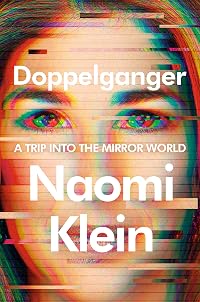
Doppelganger: A Trip into the Mirror World
by Naomi Klein
On This Page
Description
What if you woke up one morning and found you'd acquired a double? Someone almost like you, and yet not you at all? When Naomi Klein discovered that a woman who shared her first name, but had radically different, harmful views, was getting chronically mistaken for her, it seemed too ridiculous to take seriously. Then suddenly it wasn't. She started to find herself grappling with a distorted sense of reality, becoming obsessed with reading the threats on social media, the endlessly scrolling show more insults from the followers of her doppelganger. Why had her shadowy other gone down such an extreme path? Why was identity - all we have to meet the world - so unstable? To find out, Klein decided to follow her double into a bizarre, uncanny mirror world - one of conspiracy theories, anti-vaxxers and demagogue hucksters, where soft-focus wellness influencers make common cause with fire-breathing far right propagandists (all in the name of protecting 'the children'). In doing so, she lifts the lid on our own culture during this surreal moment in history, as we turn ourselves into polished virtual brands, publicly shame our enemies, watch as deep fakes proliferate and whole nations flip from democracy to something far more sinister. This is a book for our age and for all of us; a deadly serious dark comedy which invites us to view our reflections in the looking glass. It's for anyone who has lost hours down an internet rabbit hole, who wonders why our politics has become so fatally warped, and who wants a way out of our collective vertigo and back to fighting for what really matters. show lessTags
Recommendations






























Member Recommendations
Member Reviews
Klein is an engaging writer who radiates honesty and emotional openness, so I kept going even though it seemed to be little more than a collection of random thoughts about this weird age we're in where at least half the population (or more) seems to have lost its grip on reality. Starting off with the strange way that she, Naomi Klein, was for a period consistently and frustratingly confused with reality-challenged nutcase Naomi Wolf — once a respected feminist and cultural analyst, now a frequent guest on Steve Bannon's podcast and worldview ally of RFK Jr. — is a great hook, but it only goes so far. Fortunately, the last two sections of the book make up for the excessive discursiveness of the first two or three. The chapters on show more how we all, left and right, tend to see Nazis in our ideological enemies, and on the psychological aspects of modern anti-Semitism are brilliant and make convincing points I've never heard before. If you can stand reading about today's dystopian political scene at all, this is worth your time. I feel wiser for reading it. show less
This book starts with Canadian author Naomi Klein discussing her personal problem of being routinely confused with an American author who is now a high-profile conspiracy theorist. They share a first name. It quickly becomes apparent that the book is much more global in intent. In becoming obsessed with her doppelgänger, Klein has observed how information (and disinformation) spreads, particularly through social media and other online sources. The book attempts to explain why conspiracy theories have become rampant in our society, and how difficult it is to curtail them.
It helps the reader understand how several factions on the left and far right have come together through shared fears. She calls this new alliance show more “diagonalization.” Klein examines not only personal and political differences but also points out that the information age is leading to the development of a post-truth “mirror world” where reality is warped. It is almost as if Klein is “thinking out loud” as she explores a wide range of topics such as COVID-19 and its controversies, big pharma, health and wellness, the celebrity culture, self-branding, monetization of the internet, privacy, women’s issues, climate change, clickbait, Capitalism, Fascism, racism, narcissism, individualism, autism, Anti-Semitism, ethics, cults of personality, doppelgängers in literature, and much more.
The most positive aspect for me is to move toward an understanding of how we have gotten so far off track as a society with respect to critical thinking skills. I think one of the most telling aspects of how short our attention spans have become is the fact that people do not even take the time to read someone’s last name – after all, there are way more than two authors named Naomi in the world. At the very least, it has justified my own personal protest of one to stay off mass social media. show less
It helps the reader understand how several factions on the left and far right have come together through shared fears. She calls this new alliance show more “diagonalization.” Klein examines not only personal and political differences but also points out that the information age is leading to the development of a post-truth “mirror world” where reality is warped. It is almost as if Klein is “thinking out loud” as she explores a wide range of topics such as COVID-19 and its controversies, big pharma, health and wellness, the celebrity culture, self-branding, monetization of the internet, privacy, women’s issues, climate change, clickbait, Capitalism, Fascism, racism, narcissism, individualism, autism, Anti-Semitism, ethics, cults of personality, doppelgängers in literature, and much more.
The most positive aspect for me is to move toward an understanding of how we have gotten so far off track as a society with respect to critical thinking skills. I think one of the most telling aspects of how short our attention spans have become is the fact that people do not even take the time to read someone’s last name – after all, there are way more than two authors named Naomi in the world. At the very least, it has justified my own personal protest of one to stay off mass social media. show less
This could have been a really frivolous book. Anyone who writes an entire book about how they're constantly mistaken for another author/talking head with a similar name and of vaguely similar appearance could easily be accused of making much too much out of very little. Or of unrestrained navel-gazing. But "Doppelganger" is a remarkably complete and thoughtful take on the double, ranging from its role in literature, painting, and psychology to, most urgently, contemporary American politics. I'd never read Naomi (Klein) before, and I picked up my copy for just a couple of bucks, but "Doppelganger" goes deeper than I really expected it to.
Throughout the book, Klein impresses upon the reader that she took the time to do the legwork. She show more listened to countless hours of Steve Bannon's "War Room" podcast. She saw what happened to her husband's resoundingly unsuccessful semi-socialist bid for the Canadian legislature -- which happened at the height of the COVID pandemic -- close up. She dove into Twitter when it was still called Twitter. She comes out with some interesting theories, and while I don't know if they're all-the-way correct, they likely deserve your time and attention. Klein grapples with the essential cult of individuality on both the far left on the right, the attitude that unites macha-drinking health-obssessed yoga moms and gun-toting libertarians. Both of these groups resisted the very idea of vaccine mandates or widespread closures during the pandemic, and the author draws intering connections between the two groups leading back to, yes, the wandervogel proto-Nazi movement that linked the healthy great outdoors with racial purity.
The product of two committed non-institutional socialist teachers, she also posits that capitalism's own bent toward the individual leads people down conspiratorial rabbit holes when things don't work out as they'd planned. Hero stories, one of her sources notes, can easily become villian stories. It's one thing to be empowered by throwing away modern beauty standards in order to live a better life, but if the confines of that life are still dictated by purely capitalist values, there are always going to be a lot of losers wondering why they've been left out and looking for someone to blame.
This is where "Doppelganger" is at its most improbable and, perversely, perhaps, its most inspiring. Klein calls for a world that de-centers the engorged modern self, fed on social media and capitalist values, a world where we could know ourselves and each other without the sort of angst that comes with obsessing about our own identities. This is an emotionally generous vision, and while it might not be practical, Klein's call to rethink our basic, often directly contradictory values may be worth heeding, and is certainly worth reading about. Recommended. show less
Throughout the book, Klein impresses upon the reader that she took the time to do the legwork. She show more listened to countless hours of Steve Bannon's "War Room" podcast. She saw what happened to her husband's resoundingly unsuccessful semi-socialist bid for the Canadian legislature -- which happened at the height of the COVID pandemic -- close up. She dove into Twitter when it was still called Twitter. She comes out with some interesting theories, and while I don't know if they're all-the-way correct, they likely deserve your time and attention. Klein grapples with the essential cult of individuality on both the far left on the right, the attitude that unites macha-drinking health-obssessed yoga moms and gun-toting libertarians. Both of these groups resisted the very idea of vaccine mandates or widespread closures during the pandemic, and the author draws intering connections between the two groups leading back to, yes, the wandervogel proto-Nazi movement that linked the healthy great outdoors with racial purity.
The product of two committed non-institutional socialist teachers, she also posits that capitalism's own bent toward the individual leads people down conspiratorial rabbit holes when things don't work out as they'd planned. Hero stories, one of her sources notes, can easily become villian stories. It's one thing to be empowered by throwing away modern beauty standards in order to live a better life, but if the confines of that life are still dictated by purely capitalist values, there are always going to be a lot of losers wondering why they've been left out and looking for someone to blame.
This is where "Doppelganger" is at its most improbable and, perversely, perhaps, its most inspiring. Klein calls for a world that de-centers the engorged modern self, fed on social media and capitalist values, a world where we could know ourselves and each other without the sort of angst that comes with obsessing about our own identities. This is an emotionally generous vision, and while it might not be practical, Klein's call to rethink our basic, often directly contradictory values may be worth heeding, and is certainly worth reading about. Recommended. show less
Summary: Naomi Klein, a liberal activist and writer finds herself being confused with another Naomi, once a feminist now become an anti-vax advocate and darling of the extreme right.
Last summer, an anonymous pretender created a fake version of a social media page I curate, stealing a picture of me and posts I had made to the page. An alert follower contacted me and reports from me and followers stopped further posts that day. But the page remained up for several months until it was removed, attracting only about ten followers, thanks to the vigilance of people following my page. Still, I was outraged and felt that a part of me was violated, that my “brand” (my page uses the same name as this blog) was being stolen and perverted. show more Having an online “doppelganger,” even if an inactive one, and how easily it could happen, was disturbing.
Naomi Klein faced this situation in a subtler and more disturbing fashion, one that could not be eliminated by a report. Naomi Klein is an activist, academic, and writer who has focused on big corporations and their invisible control of our lives as well as writing about climate change. Naomi Wolf, a one-time liberal feminist, pursued a parallel career around a different set of issues. Then in 2019, she published a book filled with factual inaccuracies that was pulped. She was widely excoriated in the liberal establishment, suffering a kind of death. Except that she rose from the ashes during COVID-19, spouting a number of the spurious claims and conspiracy thinking of the alt-Right, becoming a darling of Steve Bannon…and being confused with Naomi Klein. Klein was stuck with trying to figure out how to say “not me.” At one point, Klein became so obsessed with following Wolf’s online antics, and her transformation, that she withdrew into a world of screens until her husband rescued her.
The experience led to her trying to understand both her own reaction to this doppelganger (who even looked something like her). Klein had always been “anti-brand,” she thought, especially of “Self as Brand” until she realized that she had built a “brand” that she wasn’t defending very well. She asks the question, “What aren’t we building when we are building our brands?” and she realizes what a convenient retreat this can be when faced with daunting challenges like our warming climate.
Looking more deeply, she realizes that her doppelganger has confronted her with a mirror world. Where she would be concerned about the corporate stripping away of privacy accelerated by our smartphones, she watches Wolf and anti-vaxxers fixate on “vaccine passports” as opening the door to our private lives. She describes a process termed “diagonalization” that destroys old left-right distinctions by playing on shared fears and concerns–“what are they putting in our food?” to “what are they putting in those vaccines?” The mirror world trades in a shared fear of the Shadow Lands, an underground effort to abuse our children and co-opt our lives. Klein observes trenchantly that these Shadow Lands, such as fears about the vaccines, covers up huge profit margins and a basic neglect of vaccine equity. A Canadian, she chronicles how truckers both caravanned in protest to indigenous child deaths in boarding schools and trucker shutdowns in Toronto over COVID regulations–often the same truckers.
She raises uncomfortable questions. We rail against Nazis and yet if we are living in a former colonial power country, our country presided over similar atrocities. The Mirror World challenges our illusions. Writing pre-October 7, she wrestles with Israel’s settler colonialism and the Shadow World built to sustain it (I wonder what her thoughts are since?). In the end, she raises equally uncomfortable questions about herself, indeed, any self. Can we hold onto a sense of identity or self? Is this not changing for all of us?
In the end, she concludes, “A bigger part of being human, though, and certainly of living a good life, is not about how we make ourselves in these shifting sands of self. It’s about what we make together.” I’m troubled by this conclusion. I could see this being taken any number of ways. I’m sure Hitler’s Germany and the settler colonists were also not just thinking of themselves but what they were making together. Equally, this was the rhetoric of Marxists and Mao.
I find myself thinking that Klein describes the post-Christian society foreseen by William Butler Yeats, in his poem, “The Second Coming.”
Turning and turning in the widening gyre
The falcon cannot hear the falconer;
Things fall apart; the centre cannot hold;
Mere anarchy is loosed upon the world,
The blood-dimmed tide is loosed, and everywhere
The ceremony of innocence is drowned;
The best lack all conviction, while the worst
Are full of passionate intensity.
If there is no center that will hold, if all we have are “the shifting sands of self,” then I find myself praying “Lord, help us” and indeed, “Come Lord Jesus.” Klein is courageous enough to ask some very hard questions. I wonder if we all will be courageous enough to wrestle with the implications of what she asks. show less
Last summer, an anonymous pretender created a fake version of a social media page I curate, stealing a picture of me and posts I had made to the page. An alert follower contacted me and reports from me and followers stopped further posts that day. But the page remained up for several months until it was removed, attracting only about ten followers, thanks to the vigilance of people following my page. Still, I was outraged and felt that a part of me was violated, that my “brand” (my page uses the same name as this blog) was being stolen and perverted. show more Having an online “doppelganger,” even if an inactive one, and how easily it could happen, was disturbing.
Naomi Klein faced this situation in a subtler and more disturbing fashion, one that could not be eliminated by a report. Naomi Klein is an activist, academic, and writer who has focused on big corporations and their invisible control of our lives as well as writing about climate change. Naomi Wolf, a one-time liberal feminist, pursued a parallel career around a different set of issues. Then in 2019, she published a book filled with factual inaccuracies that was pulped. She was widely excoriated in the liberal establishment, suffering a kind of death. Except that she rose from the ashes during COVID-19, spouting a number of the spurious claims and conspiracy thinking of the alt-Right, becoming a darling of Steve Bannon…and being confused with Naomi Klein. Klein was stuck with trying to figure out how to say “not me.” At one point, Klein became so obsessed with following Wolf’s online antics, and her transformation, that she withdrew into a world of screens until her husband rescued her.
The experience led to her trying to understand both her own reaction to this doppelganger (who even looked something like her). Klein had always been “anti-brand,” she thought, especially of “Self as Brand” until she realized that she had built a “brand” that she wasn’t defending very well. She asks the question, “What aren’t we building when we are building our brands?” and she realizes what a convenient retreat this can be when faced with daunting challenges like our warming climate.
Looking more deeply, she realizes that her doppelganger has confronted her with a mirror world. Where she would be concerned about the corporate stripping away of privacy accelerated by our smartphones, she watches Wolf and anti-vaxxers fixate on “vaccine passports” as opening the door to our private lives. She describes a process termed “diagonalization” that destroys old left-right distinctions by playing on shared fears and concerns–“what are they putting in our food?” to “what are they putting in those vaccines?” The mirror world trades in a shared fear of the Shadow Lands, an underground effort to abuse our children and co-opt our lives. Klein observes trenchantly that these Shadow Lands, such as fears about the vaccines, covers up huge profit margins and a basic neglect of vaccine equity. A Canadian, she chronicles how truckers both caravanned in protest to indigenous child deaths in boarding schools and trucker shutdowns in Toronto over COVID regulations–often the same truckers.
She raises uncomfortable questions. We rail against Nazis and yet if we are living in a former colonial power country, our country presided over similar atrocities. The Mirror World challenges our illusions. Writing pre-October 7, she wrestles with Israel’s settler colonialism and the Shadow World built to sustain it (I wonder what her thoughts are since?). In the end, she raises equally uncomfortable questions about herself, indeed, any self. Can we hold onto a sense of identity or self? Is this not changing for all of us?
In the end, she concludes, “A bigger part of being human, though, and certainly of living a good life, is not about how we make ourselves in these shifting sands of self. It’s about what we make together.” I’m troubled by this conclusion. I could see this being taken any number of ways. I’m sure Hitler’s Germany and the settler colonists were also not just thinking of themselves but what they were making together. Equally, this was the rhetoric of Marxists and Mao.
I find myself thinking that Klein describes the post-Christian society foreseen by William Butler Yeats, in his poem, “The Second Coming.”
Turning and turning in the widening gyre
The falcon cannot hear the falconer;
Things fall apart; the centre cannot hold;
Mere anarchy is loosed upon the world,
The blood-dimmed tide is loosed, and everywhere
The ceremony of innocence is drowned;
The best lack all conviction, while the worst
Are full of passionate intensity.
If there is no center that will hold, if all we have are “the shifting sands of self,” then I find myself praying “Lord, help us” and indeed, “Come Lord Jesus.” Klein is courageous enough to ask some very hard questions. I wonder if we all will be courageous enough to wrestle with the implications of what she asks. show less
From the personal to the political: a story of two Naomis develops into an interesting and and alarming look at the movements developing around conspiracy theories and at the alt right, especially in the US/North America. Klein's starting point is the constant confusion between herself and a slightly older activist writer with the same first name, Naomi Wolf. Her aim is not just to explore their biographical and political differences though, it is to examine the mirror world of conspiracy theories and the alt right to work out a way to fight against it, to rebuild a more collective struggle for change.
I have acquired several of Naomi Klein's books but this is the first one I've actually read, courtesy of the library. Time to dig out my show more copies of the others. show less
I have acquired several of Naomi Klein's books but this is the first one I've actually read, courtesy of the library. Time to dig out my show more copies of the others. show less
This remarkable book covers not only the author's constant misidentification as Naomi Wolf, another (one-time) Jewish feminist, but also thoughtfully covers the evolution of both authors, Klein to an environmentalist and Wolf to a right-wing, anti-vaxxer, Steve Bannon-buddy. There's many fine ideas here, and the final chapter, where Klein describes her personal encounter with Wolf (back in 1991; Wolf refused to be interviewed for this book), is a remarkable piece of writing. Especially revealing is the close proximity of leftist beliefs with those of conspiracy nutbags - fear of almost the same evils, but wholly different approaches to resolution - especially during the pandemic. The book itself is sometimes heavy going, in the way that show more most non-fiction is for me these days, but the quotability is monumental.
Quotes: "It was unthinkable that anyone but us (and maybe our nosy parents) would have had the slightest interest in the trivia of our young lives. The world was indifferent to us, and we had no idea how lucky we were. The Faustian bargain of the digital age- free or cheap digital conveniences in exchange for our data - was only ever explained to us after it was already a done deal."
"Much of the pressure to wear a mask and get vaccinated was framed as a duty to care for those with greater vulnerabilities. It was then that "wellness culture", with its hostility towards non-conventionally perfect bodies and "less clean" lifestyles, began to bare its teeth."
"Wolf believed strongly in giving people the tools to rise as individuals, not creating universal programs to guarantee a better life for all."
"In the neoiberal era that began in the '70s and has not yet ended, every hardship and every difficulty has been pathologized as a personal failing. Every success is lauded as proof of the relative superiority of the supposedly self-made."
"Missing was the reflection on the duties the survivors of genocide have to oppose genocide in all its forms."
"The truth is that, in our rigged systems, nothing of much consequence can be accomplished on our own. Change requires collaboration and coalition, even and especially uncomfortable coalitions."
"Capitalism lights up our most uncaring, competitive parts and is failing us on every front that matters." show less
Quotes: "It was unthinkable that anyone but us (and maybe our nosy parents) would have had the slightest interest in the trivia of our young lives. The world was indifferent to us, and we had no idea how lucky we were. The Faustian bargain of the digital age- free or cheap digital conveniences in exchange for our data - was only ever explained to us after it was already a done deal."
"Much of the pressure to wear a mask and get vaccinated was framed as a duty to care for those with greater vulnerabilities. It was then that "wellness culture", with its hostility towards non-conventionally perfect bodies and "less clean" lifestyles, began to bare its teeth."
"Wolf believed strongly in giving people the tools to rise as individuals, not creating universal programs to guarantee a better life for all."
"In the neoiberal era that began in the '70s and has not yet ended, every hardship and every difficulty has been pathologized as a personal failing. Every success is lauded as proof of the relative superiority of the supposedly self-made."
"Missing was the reflection on the duties the survivors of genocide have to oppose genocide in all its forms."
"The truth is that, in our rigged systems, nothing of much consequence can be accomplished on our own. Change requires collaboration and coalition, even and especially uncomfortable coalitions."
"Capitalism lights up our most uncaring, competitive parts and is failing us on every front that matters." show less
Definitiv ein Lesehighlight! Naomi Klein reiht sich zu den Autoren wie Silvia Federici, Yanis Varoufakis und David Graeber. Man kann in klaren Analysen mit viel Quellenarbeit viel von ihnen lernen.
Zunächst war mir nicht klar, worüber das Buch handelt. Es hat mich überrascht und hat sich gelohnt. Naomi Klein verbindet historische mit modernen Ereignissen, lässt die Pandemie Revue passieren lassen und bringt in uns Lesern ein Gefühl der Verbindung zu vielen Menschen auf, mit denen wir nicht die gleiche Meinung teilen.
Ich lernte, wie die Impfstoffe für Covid vor allem aus öffentlichen Geldern finanziert wurden. Trotz dessen waren die großen Pharmazieunternehmen nicht willig, das Patent aufzuheben. Das macht epidemiologisch einfach show more keinen Sinn. Man kann keine vernetzte Bevölkerung immunisieren, indem man nur zahlwilligen Staaten das Impfmittel verkauft.
Sie verbindet die Einhegung von kommunalen Landgut, das der Beginn unserer kapitalistischen privaten Systems ist, mit einer gewissen Einhegung für unsere Aktivitäten im Netz. (S.56) Profitorientiere Systeme sind darauf aus, unsere Daten zu sammeln und zu verkaufen. So kann uns gezielt Werbung geschaltet werden.
Zudem argumentiert sie, dass in Zeiten von Social-Media wir selbst zu Marken werden. "Welche unserer Meinungen sind echt und welche bloß Show? (...) Was wird gar nicht erst gesagt oder geteilt, weil es nicht markenkonform ist?" (S.84)
"Wenn man sich selbst erfolgreich verdinglicht, fangen andere zu glauben, dass man ein Ding ist und bewerfen einen mit allen möglichen Gegenständen, weil sie sicher sind, dass man nicht bluten wird." (S.86) Wie viel Respekt haben wir vor Menschen im Internet?
Die Unzufriedenheit mit dem Status quo wächst. Sowohl linke als auch rechte Parteien spüren das. Das ist ihre gemeinsame Ausgangslage. Leider grenzen sich linke Parteien oft grundsätzlich von rechten ab. So landen viele Menschen, die in linken Kreisen etwas Unpassendes gesagt haben, bei den Rechten. Das ist eine bedenkliche Entwicklung, die rechten Bewegungen in die Hände spielt.
Die Unzufriedenheit ist real und nicht zu leugnen. Extremrechte Parteien nutzen sie, indem sie Sündenböcke präsentieren: jüdische Eliten, angeblich bluttrinkende Eliten oder die Kommunisten in China. Naomi Klein beschreibt, wie die Rechte echte Kritik an Macht und Ungleichheit vereinnahmt:
„Jetzt wird unsere Kritik an oligarchischer Herrschaft von der extremen Rechten aufgegriffen (...) An Stelle struktureller Kapitalismuskritik treten wirre Verschwörungstheorien, die den deregulierten Kapitalismus als verkappten Kommunismus hinstellen.“ (S. 161)
Klein zeigt auch, wie linke Bewegungen manchmal selbst Spaltungen vertiefen:
„Werden darüber hinaus ganze Gruppen von Menschen auf Race und Gender reduziert und mit dem Etikett ‚privilegiert‘ versehen, bleibt wenig Raum für eine Auseinandersetzung mit den vielfältigen Formen der Ausbeutung weißer Männer und Frauen der Arbeiterklasse in unserer raubtierkapitalistischen Ordnung. Dabei verpassen linke Bewegungen viele Gelegenheiten, um Allianzen zu schmieden, die uns stärker und mächtiger machen. Das ist strategisch unklug, denn die Spiegelwelt wartet nur darauf, die von uns ins Abseits gestellten Gruppen und Personen zu ködern, ihren Mut zu loben und ihnen ein offenes Ohr zu schenken.“ (S. 164)
Sie zeigt auch, dass Hitlers Ideologie nicht im luftleeren Raum entstand. Klein erinnert daran, dass das Denken in Kategorien von „Zivilisierung“ und „Rettung“ tief in der europäischen Geschichte verwurzelt ist. Schon lange vor dem Nationalsozialismus gab es das Narrativ, andere Kulturen müssten im Namen des Fortschritts unterworfen oder ausgelöscht werden. Dieses Denken diente als moralische Rechtfertigung für Kolonialismus, Sklaverei und Missionierung. Das ist eine Logik, die Gewalt als notwendigen Schritt der „Zivilisation“ verklärt.
Diese Ideologie kehrt immer wieder zurück. Sie zeigt, dass die Ideen, die im Holocaust ihren extremsten Ausdruck fanden, bereits in der europäischen Geschichte angelegt waren: in der Inquisition, in der Vertreibung von Juden und Muslimen, in der Eroberung Amerikas und der Versklavung von Menschen. Europa wiederholt sich. Der Gedanke der „Ausrottung“ als Fortschritt zieht sich wie ein roter Faden durch die Jahrhunderte.
Hier erinnert Klein an ähnliche Analysen wie bei Silvia Federici, die in _Caliban and the Witch_ zeigt, wie Gewalt und Unterdrückung im Namen von Ordnung, Reinheit und Fortschritt immer wieder neu legitimiert werden. Beide Autorinnen machen sichtbar, dass diese Muster nicht der Vergangenheit angehören. Sie kehren in modernen Formen zurück, ob in autoritären Bewegungen, in digitalen Doppelgängern oder in der Wiederkehr kolonialer Rhetorik.
Klein macht ferner deutlich, dass kein Genozid dem anderen gleicht. Jeder hat seine eigenen historischen, ökonomischen und ideologischen Bedingungen. Doch sie erinnert daran, dass der Holocaust nicht als isoliertes Ereignis verstanden werden kann. Die europäischen Vernichtungsideologien knüpfen an ältere koloniale und imperiale Praktiken an.
Klein zeigt, wie sich die „Techniken der Vernichtung“ im Laufe der Geschichte wandelten. Die Sklaverei in Afrika und der Karibik war ein System extremer Gewalt, das zugleich hochgradig rationalisiert und organisiert war. Versicherungen, Abschreibungen, Transportkosten: die Verwaltung menschlichen Lebens war ein Vorläufer moderner Buchhaltung und Personalmanagements. Gewalt und Effizienz wurden miteinander verknüpft.
Damit greift Klein eine wichtige Einsicht auf: Der Holocaust war einzigartig, aber nicht ohne Vorgeschichte. Er entstand in einem Kontinuum kolonialer Logiken, die bereits in der europäischen Expansion, der Inquisition oder der Versklavung von Millionen Menschen angelegt waren. Diese Systeme verbanden moralische Rechtfertigung mit ökonomischer Rationalität. Ein Zusammenspiel, das bis in die Gegenwart wirkt.
Indem Klein diese Linien zieht, stellt sie nicht Gleiches neben Gleiches, sondern macht sichtbar, dass sich Europas Geschichte der Gewalt wiederholt, (leider) in immer neuen Formen und unter neuen Begründungen.
Klein erinnert daran, dass sich Europa gern auf das „Nie wieder“ beruft, dabei aber oft die eigenen Muster nicht erkennt (S.349). Der Sieg über den Nationalsozialismus wurde zum moralischen Schutzschild, hinter dem die kolonialen und wirtschaftlichen Kontinuitäten weiterliefen. Die europäischen Expansionspolitiken, die den Holocaust historisch vorbereitet hatten, blieben weitgehend unreflektiert. Diee Idee, dass Fortschritt durch Unterwerfung möglich sei, setzte sich in neuen Formen fort.
So wird klar: Die Ideologie des Vernichtens und das System der Ausbeutung sind nicht abgeschlossen. Sie kehren wieder: in der globalen Ungleichheit, im Neokolonialismus, in der Art, wie Gewalt und Profit weiterhin zusammen gedacht werden. Klein macht sichtbar, dass das Monster nicht „vor der Tür“ steht, sondern längst im Haus ist.
Ich habe noch so so viel mehr aus dem Buch gelernt, viele Seiten meiner Notizseite gefüllt. Ich empfehle das Buch weiter, als ein spannendes und gut geschriebenes Buch, das Augen öffnend ist. show less
Zunächst war mir nicht klar, worüber das Buch handelt. Es hat mich überrascht und hat sich gelohnt. Naomi Klein verbindet historische mit modernen Ereignissen, lässt die Pandemie Revue passieren lassen und bringt in uns Lesern ein Gefühl der Verbindung zu vielen Menschen auf, mit denen wir nicht die gleiche Meinung teilen.
Ich lernte, wie die Impfstoffe für Covid vor allem aus öffentlichen Geldern finanziert wurden. Trotz dessen waren die großen Pharmazieunternehmen nicht willig, das Patent aufzuheben. Das macht epidemiologisch einfach show more keinen Sinn. Man kann keine vernetzte Bevölkerung immunisieren, indem man nur zahlwilligen Staaten das Impfmittel verkauft.
Sie verbindet die Einhegung von kommunalen Landgut, das der Beginn unserer kapitalistischen privaten Systems ist, mit einer gewissen Einhegung für unsere Aktivitäten im Netz. (S.56) Profitorientiere Systeme sind darauf aus, unsere Daten zu sammeln und zu verkaufen. So kann uns gezielt Werbung geschaltet werden.
Zudem argumentiert sie, dass in Zeiten von Social-Media wir selbst zu Marken werden. "Welche unserer Meinungen sind echt und welche bloß Show? (...) Was wird gar nicht erst gesagt oder geteilt, weil es nicht markenkonform ist?" (S.84)
"Wenn man sich selbst erfolgreich verdinglicht, fangen andere zu glauben, dass man ein Ding ist und bewerfen einen mit allen möglichen Gegenständen, weil sie sicher sind, dass man nicht bluten wird." (S.86) Wie viel Respekt haben wir vor Menschen im Internet?
Die Unzufriedenheit mit dem Status quo wächst. Sowohl linke als auch rechte Parteien spüren das. Das ist ihre gemeinsame Ausgangslage. Leider grenzen sich linke Parteien oft grundsätzlich von rechten ab. So landen viele Menschen, die in linken Kreisen etwas Unpassendes gesagt haben, bei den Rechten. Das ist eine bedenkliche Entwicklung, die rechten Bewegungen in die Hände spielt.
Die Unzufriedenheit ist real und nicht zu leugnen. Extremrechte Parteien nutzen sie, indem sie Sündenböcke präsentieren: jüdische Eliten, angeblich bluttrinkende Eliten oder die Kommunisten in China. Naomi Klein beschreibt, wie die Rechte echte Kritik an Macht und Ungleichheit vereinnahmt:
„Jetzt wird unsere Kritik an oligarchischer Herrschaft von der extremen Rechten aufgegriffen (...) An Stelle struktureller Kapitalismuskritik treten wirre Verschwörungstheorien, die den deregulierten Kapitalismus als verkappten Kommunismus hinstellen.“ (S. 161)
Klein zeigt auch, wie linke Bewegungen manchmal selbst Spaltungen vertiefen:
„Werden darüber hinaus ganze Gruppen von Menschen auf Race und Gender reduziert und mit dem Etikett ‚privilegiert‘ versehen, bleibt wenig Raum für eine Auseinandersetzung mit den vielfältigen Formen der Ausbeutung weißer Männer und Frauen der Arbeiterklasse in unserer raubtierkapitalistischen Ordnung. Dabei verpassen linke Bewegungen viele Gelegenheiten, um Allianzen zu schmieden, die uns stärker und mächtiger machen. Das ist strategisch unklug, denn die Spiegelwelt wartet nur darauf, die von uns ins Abseits gestellten Gruppen und Personen zu ködern, ihren Mut zu loben und ihnen ein offenes Ohr zu schenken.“ (S. 164)
Sie zeigt auch, dass Hitlers Ideologie nicht im luftleeren Raum entstand. Klein erinnert daran, dass das Denken in Kategorien von „Zivilisierung“ und „Rettung“ tief in der europäischen Geschichte verwurzelt ist. Schon lange vor dem Nationalsozialismus gab es das Narrativ, andere Kulturen müssten im Namen des Fortschritts unterworfen oder ausgelöscht werden. Dieses Denken diente als moralische Rechtfertigung für Kolonialismus, Sklaverei und Missionierung. Das ist eine Logik, die Gewalt als notwendigen Schritt der „Zivilisation“ verklärt.
Diese Ideologie kehrt immer wieder zurück. Sie zeigt, dass die Ideen, die im Holocaust ihren extremsten Ausdruck fanden, bereits in der europäischen Geschichte angelegt waren: in der Inquisition, in der Vertreibung von Juden und Muslimen, in der Eroberung Amerikas und der Versklavung von Menschen. Europa wiederholt sich. Der Gedanke der „Ausrottung“ als Fortschritt zieht sich wie ein roter Faden durch die Jahrhunderte.
Hier erinnert Klein an ähnliche Analysen wie bei Silvia Federici, die in _Caliban and the Witch_ zeigt, wie Gewalt und Unterdrückung im Namen von Ordnung, Reinheit und Fortschritt immer wieder neu legitimiert werden. Beide Autorinnen machen sichtbar, dass diese Muster nicht der Vergangenheit angehören. Sie kehren in modernen Formen zurück, ob in autoritären Bewegungen, in digitalen Doppelgängern oder in der Wiederkehr kolonialer Rhetorik.
Klein macht ferner deutlich, dass kein Genozid dem anderen gleicht. Jeder hat seine eigenen historischen, ökonomischen und ideologischen Bedingungen. Doch sie erinnert daran, dass der Holocaust nicht als isoliertes Ereignis verstanden werden kann. Die europäischen Vernichtungsideologien knüpfen an ältere koloniale und imperiale Praktiken an.
Klein zeigt, wie sich die „Techniken der Vernichtung“ im Laufe der Geschichte wandelten. Die Sklaverei in Afrika und der Karibik war ein System extremer Gewalt, das zugleich hochgradig rationalisiert und organisiert war. Versicherungen, Abschreibungen, Transportkosten: die Verwaltung menschlichen Lebens war ein Vorläufer moderner Buchhaltung und Personalmanagements. Gewalt und Effizienz wurden miteinander verknüpft.
Damit greift Klein eine wichtige Einsicht auf: Der Holocaust war einzigartig, aber nicht ohne Vorgeschichte. Er entstand in einem Kontinuum kolonialer Logiken, die bereits in der europäischen Expansion, der Inquisition oder der Versklavung von Millionen Menschen angelegt waren. Diese Systeme verbanden moralische Rechtfertigung mit ökonomischer Rationalität. Ein Zusammenspiel, das bis in die Gegenwart wirkt.
Indem Klein diese Linien zieht, stellt sie nicht Gleiches neben Gleiches, sondern macht sichtbar, dass sich Europas Geschichte der Gewalt wiederholt, (leider) in immer neuen Formen und unter neuen Begründungen.
Klein erinnert daran, dass sich Europa gern auf das „Nie wieder“ beruft, dabei aber oft die eigenen Muster nicht erkennt (S.349). Der Sieg über den Nationalsozialismus wurde zum moralischen Schutzschild, hinter dem die kolonialen und wirtschaftlichen Kontinuitäten weiterliefen. Die europäischen Expansionspolitiken, die den Holocaust historisch vorbereitet hatten, blieben weitgehend unreflektiert. Diee Idee, dass Fortschritt durch Unterwerfung möglich sei, setzte sich in neuen Formen fort.
So wird klar: Die Ideologie des Vernichtens und das System der Ausbeutung sind nicht abgeschlossen. Sie kehren wieder: in der globalen Ungleichheit, im Neokolonialismus, in der Art, wie Gewalt und Profit weiterhin zusammen gedacht werden. Klein macht sichtbar, dass das Monster nicht „vor der Tür“ steht, sondern längst im Haus ist.
Ich habe noch so so viel mehr aus dem Buch gelernt, viele Seiten meiner Notizseite gefüllt. Ich empfehle das Buch weiter, als ein spannendes und gut geschriebenes Buch, das Augen öffnend ist. show less
Members
- Recently Added By
Lists

Macmillan Publishers
129 works; 3 members

Globe and Mail | Canadian Non-Fiction: September 23, 2023
10 works; 1 member

Globe and Mail | Canadian Non-Fiction: September 30, 2023
10 works; 1 member
Globe and Mail | Canadian Non-Fiction: October 7, 2023
10 works; 1 member

Globe and Mail | Canadian Non-Fiction: October 14, 2023
10 works; 1 member

2023
32 works; 1 member
Globe and Mail | Canadian Non-Fiction: October 21, 2023
10 works; 1 member
Globe and Mail | Canadian Non-Fiction: October 28, 2023
10 works; 1 member
Borrowed Books 2024 (Books We Have Read BUT do NOT Own)
20 works; 1 member

Books Read in 2024
4,623 works; 126 members

Best Audiobooks
240 works; 114 members

Not the NYT list of top 100 21st century books
100 works; 6 members

Books in the Bibliography of Humans: A Monstrous History by Surekha Davies
346 works; 1 member

Books Read in 2025
4,091 works; 97 members

Books cited in Progress by Samuel McDonald
160 works; 1 member

CXB Books read in 2026
5 works; 1 member
Author Information

22+ Works 20,396 Members
Naomi Klein was born in Montreal, Canada on May 8, 1970. She attended the University of Toronto and began writing there for the student newspaper, The Varsity. Klein was offered a series of editorial jobs in newspapers and magazines and this prevented her from getting a final degree from the university. She worked for The Toronto Globe and Mail show more and This Magazine. She is an author and social activist, who is known for her political analyses and criticism of corporate globalization. Her books include No Logo: Taking Aim at the Brand Bullies, Fences and Windows: Dispatches from the Front Lines of the Globalization Debate, and The Shock Doctrine: The Rise of Disaster Capitalism. She received the 2014 Hilary Weston Writers' Trust Prize for Nonfiction for This Changes Everything: Capitalism vs. the Climate. (Bowker Author Biography) show less
Awards and Honors
Awards
Distinctions
The Guardian Book of the Day (2023-09-09)
Common Knowledge
- Canonical title*
- Dubbelganger
- Original title
- Doppelganger: A Trip into the Mirror World
- Original publication date
- 2023-09-12
- People/Characters
- Naomi Klein; Naomi Wolf
- Epigraph
- A terrible multitude of duplicates had sprung into being.
—Fyodor Dostoevsky, The Double, 1846
How many of everybody is there going to be?
—Jordan Peele, Us, 2019 - Dedication
- In memoriam:
Mike Davis,
Barbara Ehrenreich,
bell hooks,
Leo Panitch - First words
- In my defense, it was never my intent to write this book. I did not have time. No one asked me to. And several people strongly cautioned against it. Not now - not with the literal and figurative fires roiling our planet. And ... (show all)certainly not about this. -Introduction: Off-Brand Me
The first time it happened I was in a stall in a public bathroom just off Wall Street in Manhattan. I was about to open the door when I heard two women talking about me.
"Did you see what Naomi Klein said?"
... (show all)> I froze, flashing back to every mean girl in high school, pre-humuliated. What had I said?
"Something about how the march today is a bad idea."
"What asked her? I really don't think she understands our demands."
Wait. I hadn't said anything about the march - or the demands. Then it hit me: I knew who had. I casually strolled to the sink, made eye contact with one of the women in the mirror, and said words I would repeat far too many times in the months and years to come.
"I think you are talking about Naomi Wolf."
-Chapter 1, Occupied - Last words
- (Click to show. Warning: May contain spoilers.)Besides, I'm not named after Ruth, the loyal one, worth seven sons. I'm named after Naomi, the one who did what it took to survive.
- Blurbers
- Miéville, China; Davis, Angela Y.
- Original language
- English
- Canonical DDC/MDS
- 302.231
- Canonical LCC
- BF637.D65
*Some information comes from Common Knowledge in other languages. Click "Edit" for more information.
Classifications
- Genres
- General Nonfiction, Biography & Memoir, Nonfiction, Technology
- DDC/MDS
- 302.231 — Society, government, & culture Social sciences, sociology & anthropology Mass Communication & Media Communication Media (Means of communication) Digital media
- LCC
- BF637 .D65 — Philosophy, Psychology and Religion Psychology Psychology Applied psychology
- BISAC
Statistics
- Members
- 1,333
- Popularity
- 17,987
- Reviews
- 46
- Rating
- (4.09)
- Languages
- 11 — Dutch, English, Finnish, French, German, Italian, Polish, Portuguese, Spanish, Swedish, Turkish
- Media
- Paper, Audiobook, Ebook
- ISBNs
- 31
- ASINs
- 11