On This Page
Description
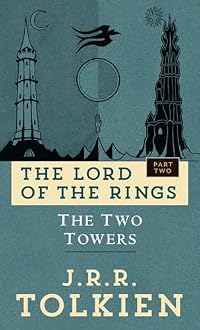
The Two Towers is the second part of J.R.R. Tolkien's epic adventure, The Lord of the Rings. Frodo and the companions of the Ring have been beset by danger during their quest to prevent the Ruling Ring from falling into the hands of the Dark Lord, Sauron, by destroying it in the Cracks of Doom. They have lost the wizard Gandalf in a battle with an evil spirit int he Mines of Moria; and at the Falls of Rauros, Boromir, seduced by the power of the Ring tried to seize it by force. While Frodo show more and Sam made their escape, the rest of the company was attacked by Orcs. Now they continue their journey alone down the great River Anduin---alone, that is, save for the mysterious creeping figure that follows wherever they go. show lessTags
Recommendations



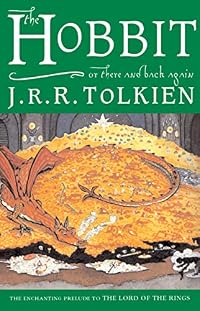



Member Recommendations
Member Reviews
"One who passed in and came at length out of the echoing tunnel, beheld a plain, a great circle, somewhat hollowed like a vast shallow bowl… Once it had been green and filled with avenues, and groves of fruitful trees, watered by streams that flowed from the mountains to a lake. But no green thing grew there in the latter days of Saruman. The roads were paved with stone-flags, dark and hard…" (pg. 191)
As the three volumes of The Lord of the Rings can be considered one long book, it is hard to write a review of its second volume, The Two Towers, that says anything new from what I said in my review of the first. Consequently, this review should properly be considered an extension of my first, as those points also apply here.
As with show more Fellowship, The Two Towers is a great imaginative adventure though lacking in deeper literary presence, and it struggles to escape the shadow of the films (with the films generally displaying better storytelling decisions). The world-building is excellent (there's a reason 'Tolkien-esque' has become a byword for it), with Rohan in particular being brought to life. There's plenty of merry singing still, which is good news for the three or four people in the world who like it, but in general it's more restrained than Fellowship, which is good news for the rest of us.
The action is drier in Two Towers, perhaps because we're not following a band of heroes into intimate skirmishes anymore, as with the Fellowship in Moria, but instead armies on plains and in castles. The Battle of Helm's Deep is a disappointment; this is particularly glaring as it was done so well on film, but even without that reference point I imagine I would be puzzled by how it develops in Tolkien's story. The build-up to the battle lacks foreboding, the siege lacks tension, and the cavalry that rides in to save the day is led by some random rather than by Éomer. The pace is just off, and the battle is dealt with rather quickly (I remember this disappointment vividly from when I first read the book as a teenager around 2004). Surprisingly, so is Saruman's fall. The awakening of the Ents is an engaging storyline (you can mark that one for the books over the films) but ironically – considering it's Treebeard – it seems hasty. "Night lies over Isengard," Treebeard declares, only a hundred pages in to the story (pg. 103).
Of course, the dramatic ebb and flow of The Two Towers would seem disorienting to fans of the films, because the films' storyboarding begins to diverge markedly from Tolkien's. Whereas Fellowship was a linear quest adventure following one group of characters and was followed very faithfully by its film adaptation, The Two Towers has seen the Fellowship broken and scattered. Most notably, Part One of the book deals with the 'War' (Aragorn, Rohan, Helm's Deep, Gandalf, etc.) and Part Two focuses solely on Frodo and Sam's journey towards Mordor. The film's concurrent approach retains pace and focus, and is undoubtedly better for its medium (though, arguably, it could be better for the book too). Both parts of the book end deep into what fans of the films would consider to be The Return of the King's domain (Pippin looking into the Palantír ends Part One, whereas it opens the third film, while the battle against Shelob ends Part Two).
I don't say this to grumble as an uncultured film fan, as was the case when I read the book as a teenager. Instead, I would make the argument now that Tolkien's storyboarding decisions rob some key scenes of their power, and I'd like to think I'd have made this observation even if there weren't already films for comparison to highlight the matter. In particular, the Redemption of Boromir, who dies nobly as a sort of Horatius at the Bridge while protecting the hobbits from the Uruk-hai attack, is anti-climactic in print. This scene, delivered impressively at the end of the Fellowship film, is in the first few pages of the first chapter of the Two Towers book. It jars, both in pace and emotion, even if the underlying idea is compelling.
And this, ultimately, is the key point to make when reviewing Tolkien's The Lord of the Rings, even if I made the same point in my Fellowship review: these are impressive underlying ideas, and the fact that the films delivered them better is not a mark against Tolkien, but a credit to his imagination. Boromir's tragic redemption, Gandalf being reborn, Théoden being reborn (so to speak), the desperate stand at Helm's Deep, the march of the Ents, the introduction of Gollum: these are all great feats of storytelling, any one of which would make a lesser writer's reputation. As with the first book, many of the great lines from the screen come from Tolkien, not the screenwriters, even if the screenplays are great at repurposing some of them (the slow-talking Ents getting no further than 'Good Morning' being one good example (pg. 94)).
There are some oddities (Sauron says 'dainty' when speaking to Pippin through the Palantír (pg. 242), which probably embarrassed the Dark Lord when he played the conversation back to himself), but it's a question of priorities. You wouldn't complain about getting a splinter from a chest filled with treasures, and even though my review has focused on the flaws, it's only because that stuff emerges more readily when you're reading, while the good stuff quietly works its magic in the background. For example, I had something to say about the plainness of some of Tolkien's writing, particularly in the second part of the book when Frodo and Sam are travelling. Tolkien seems to spend paragraphs just to move them (and Gollum) another non-descript kilometre. But then, in their parting from Faramir, Gondor's captain gestures to the landscape – "On your west is an edge where the land falls into the great vales, sometimes suddenly and sheer, sometimes in long hillsides" (pg. 377) – and you can believe it. And I realised, rather shamefacedly, what a land Tolkien has prepared for us to roam in.
"They walked on in silence for a while, passing like grey and green shadows under the old trees, their feet making no sound; above them many birds sang, and the sun glistened on the polished roof of dark leaves in the evergreen woods of Ithilien." (pg. 347) show less
As the three volumes of The Lord of the Rings can be considered one long book, it is hard to write a review of its second volume, The Two Towers, that says anything new from what I said in my review of the first. Consequently, this review should properly be considered an extension of my first, as those points also apply here.
As with show more Fellowship, The Two Towers is a great imaginative adventure though lacking in deeper literary presence, and it struggles to escape the shadow of the films (with the films generally displaying better storytelling decisions). The world-building is excellent (there's a reason 'Tolkien-esque' has become a byword for it), with Rohan in particular being brought to life. There's plenty of merry singing still, which is good news for the three or four people in the world who like it, but in general it's more restrained than Fellowship, which is good news for the rest of us.
The action is drier in Two Towers, perhaps because we're not following a band of heroes into intimate skirmishes anymore, as with the Fellowship in Moria, but instead armies on plains and in castles. The Battle of Helm's Deep is a disappointment; this is particularly glaring as it was done so well on film, but even without that reference point I imagine I would be puzzled by how it develops in Tolkien's story. The build-up to the battle lacks foreboding, the siege lacks tension, and the cavalry that rides in to save the day is led by some random rather than by Éomer. The pace is just off, and the battle is dealt with rather quickly (I remember this disappointment vividly from when I first read the book as a teenager around 2004). Surprisingly, so is Saruman's fall. The awakening of the Ents is an engaging storyline (you can mark that one for the books over the films) but ironically – considering it's Treebeard – it seems hasty. "Night lies over Isengard," Treebeard declares, only a hundred pages in to the story (pg. 103).
Of course, the dramatic ebb and flow of The Two Towers would seem disorienting to fans of the films, because the films' storyboarding begins to diverge markedly from Tolkien's. Whereas Fellowship was a linear quest adventure following one group of characters and was followed very faithfully by its film adaptation, The Two Towers has seen the Fellowship broken and scattered. Most notably, Part One of the book deals with the 'War' (Aragorn, Rohan, Helm's Deep, Gandalf, etc.) and Part Two focuses solely on Frodo and Sam's journey towards Mordor. The film's concurrent approach retains pace and focus, and is undoubtedly better for its medium (though, arguably, it could be better for the book too). Both parts of the book end deep into what fans of the films would consider to be The Return of the King's domain (Pippin looking into the Palantír ends Part One, whereas it opens the third film, while the battle against Shelob ends Part Two).
I don't say this to grumble as an uncultured film fan, as was the case when I read the book as a teenager. Instead, I would make the argument now that Tolkien's storyboarding decisions rob some key scenes of their power, and I'd like to think I'd have made this observation even if there weren't already films for comparison to highlight the matter. In particular, the Redemption of Boromir, who dies nobly as a sort of Horatius at the Bridge while protecting the hobbits from the Uruk-hai attack, is anti-climactic in print. This scene, delivered impressively at the end of the Fellowship film, is in the first few pages of the first chapter of the Two Towers book. It jars, both in pace and emotion, even if the underlying idea is compelling.
And this, ultimately, is the key point to make when reviewing Tolkien's The Lord of the Rings, even if I made the same point in my Fellowship review: these are impressive underlying ideas, and the fact that the films delivered them better is not a mark against Tolkien, but a credit to his imagination. Boromir's tragic redemption, Gandalf being reborn, Théoden being reborn (so to speak), the desperate stand at Helm's Deep, the march of the Ents, the introduction of Gollum: these are all great feats of storytelling, any one of which would make a lesser writer's reputation. As with the first book, many of the great lines from the screen come from Tolkien, not the screenwriters, even if the screenplays are great at repurposing some of them (the slow-talking Ents getting no further than 'Good Morning' being one good example (pg. 94)).
There are some oddities (Sauron says 'dainty' when speaking to Pippin through the Palantír (pg. 242), which probably embarrassed the Dark Lord when he played the conversation back to himself), but it's a question of priorities. You wouldn't complain about getting a splinter from a chest filled with treasures, and even though my review has focused on the flaws, it's only because that stuff emerges more readily when you're reading, while the good stuff quietly works its magic in the background. For example, I had something to say about the plainness of some of Tolkien's writing, particularly in the second part of the book when Frodo and Sam are travelling. Tolkien seems to spend paragraphs just to move them (and Gollum) another non-descript kilometre. But then, in their parting from Faramir, Gondor's captain gestures to the landscape – "On your west is an edge where the land falls into the great vales, sometimes suddenly and sheer, sometimes in long hillsides" (pg. 377) – and you can believe it. And I realised, rather shamefacedly, what a land Tolkien has prepared for us to roam in.
"They walked on in silence for a while, passing like grey and green shadows under the old trees, their feet making no sound; above them many birds sang, and the sun glistened on the polished roof of dark leaves in the evergreen woods of Ithilien." (pg. 347) show less
This review is written with a GPL 4.0 license and the rights contained therein shall supersede all TOS by any and all websites in regards to copying and sharing without proper authorization and permissions. Crossposted at WordPress, Blogspot & Librarything by Bookstooge’s Exalted Permission
Title: The Two Towers
Series: Lord of the Rings #2
Author: John Tolkien
Rating: 5 of 5 Stars
Genre: Fantasy
Pages: 436
Format: Digital Edition
Synopsis:
The Fellowship is broken. Gandalf and Boromir are dead, Frodo and Sam have slipped off on their own to find their way into Mordor to destroy the Ring, Merry and Pippin have been captured by Orcs and Aragorn, Legolas and Gimli must decide which set of hobbits to follow and support.
The first quarter of the show more book follows Merry and Pippin as they have their various adventures. Merry and Pippin are captured by the orcs and are on their way to Orthanc, Saruman's stronghold. Saruman knows that a hobbit holds the One Ring, but he doesn't know which one. The Orc band, however, is ambushed by the riders of Rohan and destroyed. One of the orcs from Sauron had taken the hobbits outside the orc camp to find for himself what Saruman wanted and this kept the hobbits alive during the attack. They proceed into the forest of Fangorn. There they meet the Ent Treebeard and help convince him and the other Ents that Saruman is a real threat and must be dealt with. Their part of the book ends with the Ents and their herds of trees marching off to Orthanc.
The second quarter of the book follows Aragorn, Legolas and Gimli as they try to rescue Merry and Pippin. After the breaking of the Fellowship, Aragorn is torn between following Frodo and Sam or rescuing Merry and Pippin. He chooses to rescue Merry and Pippin as he realizes that Frodo and Sam CHOSE to go off on their own. The three friends begin a tracking expedition and start running after the orcs. They find signs that the Hobbits are alive. They then run into the Riders of Rohan who destroyed the orc band. The Riders didn't see any signs of the Hobbits but the three friends are convinced that the Hobbits are still alive. The three friends find signs that the Hobbits survived the ambush and begin tracking them into the forest of Fangorn. There they meet an old man who they take for Saruman but is revealed as Gandalf returned from the dead. Gandalf lets them know that the Hobbits are safe with the Ents and they (Gandalf and the 3 friends) must begin rousing allies against both Saruman AND Sauron. They all head over to Rohan to get Theoden ready. They find him under the influence of Wormtongue, an ally of Saruman. Gandalf drives Wormtongue out and Theoden rallies his riders. Scouts bring news that Saruman's entire orc army has marched on Rohan and is destroying everything they find. Everyone heads to Helm's Deep, a fortress where the Rohirrim make their last stand. Things are looking very bad for them until a whole forest of living trees and a band of riders led by Gandalf and Theoden's nephew show up. The riders break the siege and the Forest deals with the orcs. Everyone goes to Orthanc. The Ents have destroyed Isengard (the city built around the tower of Orthanc) but Saruman has taken refuge in Orthanc. Gandalf confronts Saruman and casts him out of the Council of the Wise. Wormtongue throws a stone at them that turns out to be a Palantir, a device that allows the user to see around the world and to communicate with other Palantirs.
The final half of the book deals with Frodo and Sam and Gollum as they make their way towards Mordor. Frodo extracts a promise from Gollum to help them. Gollum leads them Mordor but they can't get in. Gollum reveals that he knows a secret way in through a tunnel in one of the mountains. On the way there the Hobbits meet Faramir, Boromir's younger brother. Faramir finds out the secret of the Ring but shows he's a better man than Boromir by not even trying to take the Ring. The Hobbits continue their journey and Gollum leads them to the secret passage. There he disappears and the Hobbits must make their way through the tunnel on their own. They are ambushed by a giant spider named Shelob, who is an evil power on her own. Gollum is her vassal and plans on taking the Ring from the corpses of Frodo and Sam once she has eaten them. With the Phial of Galadriel and Sting, Sam destroys Shelob but not before she stings Frodo. Frodo enters a deathlike state and Sam is convinced he is dead. Sam takes the Ring and realizes the burden to destroy it is now his. Some orcs come along and Sam finds out that Frodo isn't actually dead. The orcs take Frodo to their base and the book ends with Sam using the Ring to follow them so he can rescue Frodo.
My Thoughts:
For a 400+ page book, this felt incredibly short. Things just happen bam, bam, bam! It was great to be honest. Lean, sparse and yet fully fleshed out, the writing here wasn't like some of the stuff we get today, ie, “world building”. Man, save me from “world building” for world building's sake. Tolkien reveals a LOT about his world but it never becomes the point of the story and it always is secondary to the plot. It was masterfully done in my opinion.
Another thing I appreciated, that annoys me with more modern stuff, is that we stuck with one group POV for ¼, ¼ and then ½ of the book. We don't follow a character for one chapter and then skip to another. My literary feet were firmly grounded in each POV instead of jumping and whirling and generally giving me motion sickness (I'm looking at you, John Gwynne and your horrible, terrible, no-good Valor). It was also written in such a way that I wasn't thinking about the other characters not on page. I was fully invested in each group as I read about them.
I mentioned how short this felt. Not only that but the story itself sped by. If I hadn't been reading carefully, so many things are mentioned by a character that aren't fully written out, I would have missed a lot. Tolkien doesn't pad out anything and he expects his readers to be paying attention and not need everything spoon fed to them. As a grumpy “get your YA off my lawn!” man, I appreciate that. It also lends itself towards re-reads, as you will miss some things on each read or not fully grasp the import of a sentence until you've read it again years later.
All of that being said, this does feel very much like the Grandfather of Fantasy. What I expect today and what I am used to (even if I am not fully behind it, like 1000 page tomes) is very different and that colors my perception of this.
Overall, this was a great read and a fantastic way to end the month.
★★★★★ show less
Title: The Two Towers
Series: Lord of the Rings #2
Author: John Tolkien
Rating: 5 of 5 Stars
Genre: Fantasy
Pages: 436
Format: Digital Edition
Synopsis:
The Fellowship is broken. Gandalf and Boromir are dead, Frodo and Sam have slipped off on their own to find their way into Mordor to destroy the Ring, Merry and Pippin have been captured by Orcs and Aragorn, Legolas and Gimli must decide which set of hobbits to follow and support.
The first quarter of the show more book follows Merry and Pippin as they have their various adventures. Merry and Pippin are captured by the orcs and are on their way to Orthanc, Saruman's stronghold. Saruman knows that a hobbit holds the One Ring, but he doesn't know which one. The Orc band, however, is ambushed by the riders of Rohan and destroyed. One of the orcs from Sauron had taken the hobbits outside the orc camp to find for himself what Saruman wanted and this kept the hobbits alive during the attack. They proceed into the forest of Fangorn. There they meet the Ent Treebeard and help convince him and the other Ents that Saruman is a real threat and must be dealt with. Their part of the book ends with the Ents and their herds of trees marching off to Orthanc.
The second quarter of the book follows Aragorn, Legolas and Gimli as they try to rescue Merry and Pippin. After the breaking of the Fellowship, Aragorn is torn between following Frodo and Sam or rescuing Merry and Pippin. He chooses to rescue Merry and Pippin as he realizes that Frodo and Sam CHOSE to go off on their own. The three friends begin a tracking expedition and start running after the orcs. They find signs that the Hobbits are alive. They then run into the Riders of Rohan who destroyed the orc band. The Riders didn't see any signs of the Hobbits but the three friends are convinced that the Hobbits are still alive. The three friends find signs that the Hobbits survived the ambush and begin tracking them into the forest of Fangorn. There they meet an old man who they take for Saruman but is revealed as Gandalf returned from the dead. Gandalf lets them know that the Hobbits are safe with the Ents and they (Gandalf and the 3 friends) must begin rousing allies against both Saruman AND Sauron. They all head over to Rohan to get Theoden ready. They find him under the influence of Wormtongue, an ally of Saruman. Gandalf drives Wormtongue out and Theoden rallies his riders. Scouts bring news that Saruman's entire orc army has marched on Rohan and is destroying everything they find. Everyone heads to Helm's Deep, a fortress where the Rohirrim make their last stand. Things are looking very bad for them until a whole forest of living trees and a band of riders led by Gandalf and Theoden's nephew show up. The riders break the siege and the Forest deals with the orcs. Everyone goes to Orthanc. The Ents have destroyed Isengard (the city built around the tower of Orthanc) but Saruman has taken refuge in Orthanc. Gandalf confronts Saruman and casts him out of the Council of the Wise. Wormtongue throws a stone at them that turns out to be a Palantir, a device that allows the user to see around the world and to communicate with other Palantirs.
The final half of the book deals with Frodo and Sam and Gollum as they make their way towards Mordor. Frodo extracts a promise from Gollum to help them. Gollum leads them Mordor but they can't get in. Gollum reveals that he knows a secret way in through a tunnel in one of the mountains. On the way there the Hobbits meet Faramir, Boromir's younger brother. Faramir finds out the secret of the Ring but shows he's a better man than Boromir by not even trying to take the Ring. The Hobbits continue their journey and Gollum leads them to the secret passage. There he disappears and the Hobbits must make their way through the tunnel on their own. They are ambushed by a giant spider named Shelob, who is an evil power on her own. Gollum is her vassal and plans on taking the Ring from the corpses of Frodo and Sam once she has eaten them. With the Phial of Galadriel and Sting, Sam destroys Shelob but not before she stings Frodo. Frodo enters a deathlike state and Sam is convinced he is dead. Sam takes the Ring and realizes the burden to destroy it is now his. Some orcs come along and Sam finds out that Frodo isn't actually dead. The orcs take Frodo to their base and the book ends with Sam using the Ring to follow them so he can rescue Frodo.
My Thoughts:
For a 400+ page book, this felt incredibly short. Things just happen bam, bam, bam! It was great to be honest. Lean, sparse and yet fully fleshed out, the writing here wasn't like some of the stuff we get today, ie, “world building”. Man, save me from “world building” for world building's sake. Tolkien reveals a LOT about his world but it never becomes the point of the story and it always is secondary to the plot. It was masterfully done in my opinion.
Another thing I appreciated, that annoys me with more modern stuff, is that we stuck with one group POV for ¼, ¼ and then ½ of the book. We don't follow a character for one chapter and then skip to another. My literary feet were firmly grounded in each POV instead of jumping and whirling and generally giving me motion sickness (I'm looking at you, John Gwynne and your horrible, terrible, no-good Valor). It was also written in such a way that I wasn't thinking about the other characters not on page. I was fully invested in each group as I read about them.
I mentioned how short this felt. Not only that but the story itself sped by. If I hadn't been reading carefully, so many things are mentioned by a character that aren't fully written out, I would have missed a lot. Tolkien doesn't pad out anything and he expects his readers to be paying attention and not need everything spoon fed to them. As a grumpy “get your YA off my lawn!” man, I appreciate that. It also lends itself towards re-reads, as you will miss some things on each read or not fully grasp the import of a sentence until you've read it again years later.
All of that being said, this does feel very much like the Grandfather of Fantasy. What I expect today and what I am used to (even if I am not fully behind it, like 1000 page tomes) is very different and that colors my perception of this.
Overall, this was a great read and a fantastic way to end the month.
★★★★★ show less
Review of The Two Towers, by J.R.R. Tolkien. As I continue my journey through The Lord of the Rings, I have to say I love the Ents! I have always wondered about the lives of trees, how they stay in one place and grow for as much as five thousand years and are a great comfort to humans. Tolkien answers the question of what trees would be like as sentient beings with the ability to move around. He shows great empathy for trees and forests and for their plight, as civilization hacks away at them with little concern. In the words of the hobbit Pippin, “’One felt as if there was an enormous wall of them, filled up with ages of memory and long, slow, steady thinking…’” (452) At the necessary moment, the trees themselves take action show more against what threatens them.
At the opposite end of the spectrum is the blasted area around Mordor, “a land defiled, diseased beyond all healing” (617), which resembles the poisonous battle-fields of World War I and II--or the garbage pits of the post-industrial world. I thought of David Alfaro Siqueiros’ 1937 painting, The Echo of a Scream, in which a half-naked child sits on a wasteland of industrial detritus. The faceless marching minions of the Dark Lord also remind me of expressionist paintings of struggle and imperialism from the same period. The terrible pull of the Ring becomes a heavy burden for Frodo, the closer he comes to Mordor. It is both a psychological force and a physical one. The blasted landscape and armies of orcs and wraiths might become too much for the reader, if they were not leavened with moments of surprise such as the appearance of an “oliphant” (elephant), and excursions into more pleasant landscapes, such as the woods of Ithilien. Gollum, repugnant and malevolent, is yet rather touching and funny, with his babyish speech and craving for raw fish--almost as strong as his desire for his Precious, the Ring. Near the end of The Two Towers, Tolkien offers an unusual aside in which he contemplates the nature of tales, their characters, and their audience. Of Gollum, he says through the voice of the hobbit Sam, “I wonder if he thinks he’s the hero or the villain?” (697) And speaking through Frodo, Tolkien says, “You may know what kind of a tale it is, happy-ending or sad-ending, but the people in it don’t know”(696). And that’s part of the pleasure of reading The Lord of the Rings: we may know how the tale ends, but we identify so fully with Frodo and Sam and Pippin that we strongly feel their peril, their loyalty, and the uncertainty of their fate. show less
At the opposite end of the spectrum is the blasted area around Mordor, “a land defiled, diseased beyond all healing” (617), which resembles the poisonous battle-fields of World War I and II--or the garbage pits of the post-industrial world. I thought of David Alfaro Siqueiros’ 1937 painting, The Echo of a Scream, in which a half-naked child sits on a wasteland of industrial detritus. The faceless marching minions of the Dark Lord also remind me of expressionist paintings of struggle and imperialism from the same period. The terrible pull of the Ring becomes a heavy burden for Frodo, the closer he comes to Mordor. It is both a psychological force and a physical one. The blasted landscape and armies of orcs and wraiths might become too much for the reader, if they were not leavened with moments of surprise such as the appearance of an “oliphant” (elephant), and excursions into more pleasant landscapes, such as the woods of Ithilien. Gollum, repugnant and malevolent, is yet rather touching and funny, with his babyish speech and craving for raw fish--almost as strong as his desire for his Precious, the Ring. Near the end of The Two Towers, Tolkien offers an unusual aside in which he contemplates the nature of tales, their characters, and their audience. Of Gollum, he says through the voice of the hobbit Sam, “I wonder if he thinks he’s the hero or the villain?” (697) And speaking through Frodo, Tolkien says, “You may know what kind of a tale it is, happy-ending or sad-ending, but the people in it don’t know”(696). And that’s part of the pleasure of reading The Lord of the Rings: we may know how the tale ends, but we identify so fully with Frodo and Sam and Pippin that we strongly feel their peril, their loyalty, and the uncertainty of their fate. show less
The Lord of the Rings is not The Hobbit. If you have tried The Hobbit and didn't love it, you're probably not going to like The Lord of the Rings. The Hobbit is the epitome of the perfect fantasy tale. The kind you want to sit around a campfire and hear told with dramatic exaggeration. It has a dragon and dwarves, a wizard and one lone hobbit who turns out to be the bravest of them all.
But The Lord of the Rings is not The Hobbit. The Lord of the Rings is The Hobbit's meticulous, older and more serious brother who is going to sit you down and tell you an epic tale of adventure that spans four ages with maps, appendices and side trips delving into the history of many people and a world of places. If you don't like the base elements of The show more Hobbit, you're going to hate Lord of the Rings because The Lord of the Rings is just a long drawn out, denser version.
J.R.R. Tolkien has not just written a story. He's written an entire world of stories. He pretty much spent a lifetime writing and bringing to life Middle Earth and it's freaking incredible.
Is it perfect? No. But any criticisms don't detract from the highly imaginative work this is - or from my enjoyment of it.
5 stars. It's a classic.
I love The Two Towers. The Ents! Pippin and Merry! Gilmi and Legolas' friendship! I love this book. Split point of views can sometimes suck but I think splitting up the story between Frodo and Sam and the rest of the Company worked really well. The longer divide between them made it easier to follow the story and allowed me time and space to get invested into both stories.
I think it was a really good point to start the rest of the Company's story as well. Frodo and Sam (and a sneaky Gollum) have left for Mordor wrapping up their part for now and Boromir's death and the fallout add drama and action allowing Aragorn, Gilmi and Legolas to really showcase their skills and personalities. Starting with the rest of the Company allows the tension and action of the war to build giving greater urgency and importance to the second half detailing what Frodo and Sam are up to.
So Boromir dies defending Merry and Pippin who are captured and abducted by Orcs. I love that Merry and Pippin are resourceful and sneaky and manage to escape their kidnappers when the opportunity presents. And I really love that Aragorn, Gilmi and Legolas are unwilling to abandon either hobbit. It's interesting to see how fast and far the three of them can travel without unnecessary baggage.
It's also pretty funny when they find their trail.
Being pleased with his skill, he then sat down and quietly ate some waybread! That at least is enough to show that he was a hobbit, without the mallorn-leaf. (p. 489).
He was exhausted and hungry, and it is not to be wondered at that, when he had cut his bonds with the knife of his fallen enemy, he rested and ate a little before he crept away. But it is a comfort to know that he had some lembas in his pocket, even though he ran away without gear or pack; that, perhaps, is like a hobbit. (pp. 489-490).
They can tell they're hobbits because who else would stop for a snack - let alone have their snack still in their pockets when they'd left all their belongings behind. Lol. I love hobbits. No matter the danger, if they have food, they're a happy bunch.
Then of course - ENTS! I love the Ents.
‘Almost felt you liked the Forest! That’s good! That’s uncommonly kind of you,’ said a strange voice. ‘Turn round and let me have a look at your faces. I almost feel that I dislike you both, but do not let us be hasty. Turn around!’ A large knob-knuckled hand was laid on each of their shoulders, and they were twisted round, gently but irresistibly; then two great arms lifted them up. (p. 463).
They're so funny. Slow and steady, don't be hasty until you piss them off and then BOOM! I love the first meeting between Merry, Pippin and Treebeard. I love how they're all so fascinated with each other.
Hobbits: But what are you? Who are you?
Ent: I'm an Ent but you can call me Treebeard. But what are you? Who are you?
Hobbits: Well, we're hobbits.
Ent: ....and what is a hobbit?
Hobbits: ‘We always seem to have got left out of the old lists, and the old stories,’ said Merry. ‘Yet we’ve been about for quite a long time. We’re hobbits.’ ‘Why not make a new line?’ said Pippin. ‘Half-grown hobbits, the hole-dwellers. Put us in amongst the four, next to Man (the Big People) and you’ve got it.’ ‘Hm! Not bad, not bad,’ said Treebeard. ‘That would do. (p. 465).
And it cracked me up to find that Merry and Pippin drinking the ent draught has made them grow.
He laid his hand on Gimli’s head, and the Dwarf looked up and laughed suddenly. ‘Gandalf!’ he said. ‘But you are all in white!’ ‘Yes, I am white now,’ said Gandalf. ‘Indeed I am Saruman, one might almost say, Saruman as he should have been. (p. 495).
Gandalf's death and return just doesn't impact me as much having read it before. It's kind of anti-climatic when you know how it's going to end.
Gilmi and Legolas' friendship is also really sweet. I like their one upping each other. It was very amusing. And I liked that they plan to travel together. I would totally read their adventures.
‘Twenty-one!’ cried Gimli. He hewed a two-handed stroke and laid the last Orc before his feet. ‘Now my count passes Master Legolas again.’
‘Twenty-one!’ said Gimli. ‘Good!’ said Legolas. ‘But my count is now two dozen. It has been knife-work up here.’ (p. 536).
‘Forty-two, Master Legolas!’ he cried. ‘Alas! My axe is notched: the forty-second had an iron collar on his neck. How is it with you?’ ‘You have passed my score by one,’ answered Legolas. ‘But I do not grudge you the game, so glad am I to see you on your legs!’ (p. 543).
Although the meeting of Gilmi, Legolas, Aragorn, Pippin and Merry in front of Saruman's is hilarious as well.
The king and all his company sat silent on their horses, marvelling, perceiving that the power of Saruman was overthrown; but how they could not guess. And now they turned their eyes towards the archway and the ruined gates. There they saw close beside them a great rubble-heap; and suddenly they were aware of two small figures lying on it at their ease, grey-clad, hardly to be seen among the stones. There were bottles and bowls and platters laid beside them, as if they had just eaten well, and now rested from their labour. One seemed asleep; the other, with crossed legs and arms behind his head, leaned back against a broken rock and sent from his mouth long wisps and little rings of thin blue smoke. (p. 556).
‘And what about your companions? What about Legolas and me?’ cried Gimli, unable to contain himself longer. ‘You rascals, you woolly-footed and wool-pated truants! A fine hunt you have led us! Two hundred leagues, through fen and forest, battle and death, to rescue you! And here we find you feasting and idling – and smoking! Smoking! Where did you come by the weed, you villains? Hammer and tongs! I am so torn between rage and joy, that if I do not burst, it will be a marvel!’ ‘You speak for me, Gimli,’ laughed Legolas. ‘Though I would sooner learn how they came by the wine.’ ‘One thing you have not found in your hunting, and that’s brighter wits,’ said Pippin, opening an eye. ‘Here you find us sitting on a field of victory, amid the plunder of armies, and you wonder how we came by a few well-earned comforts!’ ‘Well-earned?’ said Gimli. ‘I cannot believe that!’ (p. 557).
‘You do not know your danger, Théoden,’ interrupted Gandalf. ‘These hobbits will sit on the edge of ruin and discuss the pleasures of the table, or the small doings of their fathers, grandfathers, and great-grandfathers, and remoter cousins to the ninth degree, if you encourage them with undue patience. Some other time would be more fitting for the history of smoking. (p. 558).
The nature of hobbits in general amuses me. They're so resilient when you put food and pipe weed in front of them. Or just food.
The three were soon busy with their meal; and the two hobbits, unabashed, set to a second time. ‘We must keep our guests company,’ they said. ‘You are full of courtesy this morning,’ laughed Legolas. ‘But maybe, if we had not arrived, you would already have been keeping one another company again.’ (p. 561).
Merry and Pippin: Duh. Food. Pipe-weed. What else would we be doing? We're hobbits!
Then of course you have the second half with Sam and Frodo and a sneaky Gollum travelling to Mordor. The second half is a lot more intense. Sam and Frodo are weary. They're hungry. They're thirsty. They face impossible odds. And they're in so much danger it's not even funny. Well...except when it is. Sam provides just the right amount of comic relief, lightening Frodo's load just that tiniest bit and making me chuckle with his bravery.
‘I’m going to try it,’ he said. ‘Very good!’ said Sam gloomily. ‘But I’m going first.’
‘You?’ said Frodo. ‘What’s made you change your mind about climbing?’
‘I haven’t changed my mind. But it’s only sense: put the one lowest as is most likely to slip. I don’t want to come down atop of you and knock you off – no sense in killing two with one fall.’ Before Frodo could stop him, he sat down, swung his legs over the brink, and twisted round, scrabbling with his toes for a foothold. It is doubtful if he ever did anything braver in cold blood, or more unwise.
‘No, no! Sam, you old ass!’ said Frodo. ‘You’ll kill yourself for certain, going over like that without even a look to see what to make for. Come back!’ He took Sam under the armpits and hauled him up again. ‘Now, wait a bit and be patient!’ he said. (pp. 606-607).
Plus his revelations about his rope.
‘I’m coming down to you,’ shouted Sam, though how he hoped to help in that way he could not have said.
‘No, no! wait!’ Frodo called back, more strongly now. ‘I shall be better soon. I feel better already. Wait! You can’t do anything without a rope.’
‘Rope!’ cried Sam, talking wildly to himself in his excitement and relief. ‘Well, if I don’t deserve to be hung on the end of one as a warning to numbskulls! You’re nowt but a ninnyhammer, Sam Gamgee: that’s what the Gaffer said to me often enough, it being a word of his. Rope!’ ‘Stop chattering!’ cried Frodo, now recovered enough to feel both amused and annoyed. ‘Never mind your gaffer! Are you trying to tell yourself you’ve got some rope in your pocket? If so, out with it!’
‘Yes, Mr. Frodo, in my pack and all. Carried it hundreds of miles, and I’d clean forgotten it!’ ‘Then get busy and let an end down!’ (p. 608).
It's bleak but Sam sure knows how to lighten the mood. I like Faramir. Gollum is such a creepy character though. All he's my preciousss. I gotta say I just keep picturing a cross between Dobby and Voldemort. Especially since he goes all split personality on them.
I loved Sam and Frodo's discussion about their tale becoming immortalised in the songs and lore.
Still, I wonder if we shall ever be put into songs or tales. We’re in one, of course; but I mean: put into words, you know, told by the fireside, or read out of a great big book with red and black letters, years and years afterwards. And people will say: “Let’s hear about Frodo and the Ring!” And they’ll say: “Yes, that’s one of my favourite stories. Frodo was very brave, wasn’t he, dad?” “Yes, my boy, the famousest of the hobbits, and that’s saying a lot.”’
‘It’s saying a lot too much,’ said Frodo, and he laughed, a long clear laugh from his heart. Such a sound had not been heard in those places since Sauron came to Middle-earth. To Sam suddenly it seemed as if all the stones were listening and the tall rocks leaning over them. But Frodo did not heed them; he laughed again. ‘Why, Sam,’ he said, ‘to hear you somehow makes me as merry as if the story was already written. But you’ve left out one of the chief characters: Samwise the stouthearted. “I want to hear more about Sam, dad. Why didn’t they put in more of his talk, dad? That’s what I like, it makes me laugh. And Frodo wouldn’t have got far without Sam, would he, dad?”’
‘Now, Mr. Frodo,’ said Sam, ‘you shouldn’t make fun. I was serious.’ ‘So was I,’ said Frodo, ‘and so I am. (p. 712).
I like that Frodo appreciates Sam. He deserves it. He's doing everything he can to keep Frodo on his path. He's very loyal. And Frodo's right, I just want to hear more about Sam. "That's what I like, it makes me laugh." And Frodo definitely wouldn't have gotten far without him. And the confrontation with Shelob (the giant spider..ugh) just proves it. Sam is absolutely magical. He's fierce and brave and determined. Although poor Sam. Thinking Frodo's dead when he's not. He really beats himself up for it. I didn't like that.
He sprang forward with a yell, and seized his master’s sword in his left hand. Then he charged. No onslaught more fierce was ever seen in the savage world of beasts, where some desperate small creature armed with little teeth, alone, will spring upon a tower of horn and hide that stands above its fallen mate. (p. 728).
Now splaying her legs she drove her huge bulk down on him again. Too soon. For Sam still stood upon his feet, and dropping his own sword, with both hands he held the elven-blade point upwards, fending off that ghastly roof; and so Shelob, with the driving force of her own cruel will, with strength greater than any warrior’s hand, thrust herself upon a bitter spike. Deep, deep it pricked, as Sam was crushed slowly to the ground. No such anguish had Shelob ever known, or dreamed of knowing, in all her long world of wickedness. Not the doughtiest soldier of old Gondor, nor the most savage Orc entrapped, had ever thus endured her, or set blade to her beloved flesh. A shudder went through her. Heaving up again, wrenching away from the pain, she bent her writhing limbs beneath her and sprang backwards in a convulsive leap. (p. 729).
And once again it's the perfect place to wrap up this volume.
Sam yelled and brandished Sting, but his little voice was drowned in the tumult. No one heeded him.
The great doors slammed to. Boom. The bars of iron fell into place inside. Clang. The gate was shut. Sam hurled himself against the bolted brazen plates and fell senseless to the ground. He was out in the darkness. Frodo was alive but taken by the Enemy. (p. 742).
I adored it all. I loved getting to explore the other characters in more depth. I loved getting to see Frodo and Sam travel to Mordor. It was just fantastic, fast paced, action packed, character driven - it has it all.
5 stars.
NOTE: All references refer to the following omnibus edition. Tolkien, J. R. R.. The Lord of the Rings: The Fellowship of the Ring, The Two Towers, The Return of the King. (2005) HarperCollins Publishers. Kindle Edition. show less
But The Lord of the Rings is not The Hobbit. The Lord of the Rings is The Hobbit's meticulous, older and more serious brother who is going to sit you down and tell you an epic tale of adventure that spans four ages with maps, appendices and side trips delving into the history of many people and a world of places. If you don't like the base elements of The show more Hobbit, you're going to hate Lord of the Rings because The Lord of the Rings is just a long drawn out, denser version.
J.R.R. Tolkien has not just written a story. He's written an entire world of stories. He pretty much spent a lifetime writing and bringing to life Middle Earth and it's freaking incredible.
Is it perfect? No. But any criticisms don't detract from the highly imaginative work this is - or from my enjoyment of it.
5 stars. It's a classic.
I love The Two Towers. The Ents! Pippin and Merry! Gilmi and Legolas' friendship! I love this book. Split point of views can sometimes suck but I think splitting up the story between Frodo and Sam and the rest of the Company worked really well. The longer divide between them made it easier to follow the story and allowed me time and space to get invested into both stories.
I think it was a really good point to start the rest of the Company's story as well. Frodo and Sam (and a sneaky Gollum) have left for Mordor wrapping up their part for now and Boromir's death and the fallout add drama and action allowing Aragorn, Gilmi and Legolas to really showcase their skills and personalities. Starting with the rest of the Company allows the tension and action of the war to build giving greater urgency and importance to the second half detailing what Frodo and Sam are up to.
So Boromir dies defending Merry and Pippin who are captured and abducted by Orcs. I love that Merry and Pippin are resourceful and sneaky and manage to escape their kidnappers when the opportunity presents. And I really love that Aragorn, Gilmi and Legolas are unwilling to abandon either hobbit. It's interesting to see how fast and far the three of them can travel without unnecessary baggage.
It's also pretty funny when they find their trail.
Being pleased with his skill, he then sat down and quietly ate some waybread! That at least is enough to show that he was a hobbit, without the mallorn-leaf. (p. 489).
He was exhausted and hungry, and it is not to be wondered at that, when he had cut his bonds with the knife of his fallen enemy, he rested and ate a little before he crept away. But it is a comfort to know that he had some lembas in his pocket, even though he ran away without gear or pack; that, perhaps, is like a hobbit. (pp. 489-490).
They can tell they're hobbits because who else would stop for a snack - let alone have their snack still in their pockets when they'd left all their belongings behind. Lol. I love hobbits. No matter the danger, if they have food, they're a happy bunch.
Then of course - ENTS! I love the Ents.
‘Almost felt you liked the Forest! That’s good! That’s uncommonly kind of you,’ said a strange voice. ‘Turn round and let me have a look at your faces. I almost feel that I dislike you both, but do not let us be hasty. Turn around!’ A large knob-knuckled hand was laid on each of their shoulders, and they were twisted round, gently but irresistibly; then two great arms lifted them up. (p. 463).
They're so funny. Slow and steady, don't be hasty until you piss them off and then BOOM! I love the first meeting between Merry, Pippin and Treebeard. I love how they're all so fascinated with each other.
Hobbits: But what are you? Who are you?
Ent: I'm an Ent but you can call me Treebeard. But what are you? Who are you?
Hobbits: Well, we're hobbits.
Ent: ....and what is a hobbit?
Hobbits: ‘We always seem to have got left out of the old lists, and the old stories,’ said Merry. ‘Yet we’ve been about for quite a long time. We’re hobbits.’ ‘Why not make a new line?’ said Pippin. ‘Half-grown hobbits, the hole-dwellers. Put us in amongst the four, next to Man (the Big People) and you’ve got it.’ ‘Hm! Not bad, not bad,’ said Treebeard. ‘That would do. (p. 465).
And it cracked me up to find that Merry and Pippin drinking the ent draught has made them grow.
He laid his hand on Gimli’s head, and the Dwarf looked up and laughed suddenly. ‘Gandalf!’ he said. ‘But you are all in white!’ ‘Yes, I am white now,’ said Gandalf. ‘Indeed I am Saruman, one might almost say, Saruman as he should have been. (p. 495).
Gandalf's death and return just doesn't impact me as much having read it before. It's kind of anti-climatic when you know how it's going to end.
Gilmi and Legolas' friendship is also really sweet. I like their one upping each other. It was very amusing. And I liked that they plan to travel together. I would totally read their adventures.
‘Twenty-one!’ cried Gimli. He hewed a two-handed stroke and laid the last Orc before his feet. ‘Now my count passes Master Legolas again.’
‘Twenty-one!’ said Gimli. ‘Good!’ said Legolas. ‘But my count is now two dozen. It has been knife-work up here.’ (p. 536).
‘Forty-two, Master Legolas!’ he cried. ‘Alas! My axe is notched: the forty-second had an iron collar on his neck. How is it with you?’ ‘You have passed my score by one,’ answered Legolas. ‘But I do not grudge you the game, so glad am I to see you on your legs!’ (p. 543).
Although the meeting of Gilmi, Legolas, Aragorn, Pippin and Merry in front of Saruman's is hilarious as well.
The king and all his company sat silent on their horses, marvelling, perceiving that the power of Saruman was overthrown; but how they could not guess. And now they turned their eyes towards the archway and the ruined gates. There they saw close beside them a great rubble-heap; and suddenly they were aware of two small figures lying on it at their ease, grey-clad, hardly to be seen among the stones. There were bottles and bowls and platters laid beside them, as if they had just eaten well, and now rested from their labour. One seemed asleep; the other, with crossed legs and arms behind his head, leaned back against a broken rock and sent from his mouth long wisps and little rings of thin blue smoke. (p. 556).
‘And what about your companions? What about Legolas and me?’ cried Gimli, unable to contain himself longer. ‘You rascals, you woolly-footed and wool-pated truants! A fine hunt you have led us! Two hundred leagues, through fen and forest, battle and death, to rescue you! And here we find you feasting and idling – and smoking! Smoking! Where did you come by the weed, you villains? Hammer and tongs! I am so torn between rage and joy, that if I do not burst, it will be a marvel!’ ‘You speak for me, Gimli,’ laughed Legolas. ‘Though I would sooner learn how they came by the wine.’ ‘One thing you have not found in your hunting, and that’s brighter wits,’ said Pippin, opening an eye. ‘Here you find us sitting on a field of victory, amid the plunder of armies, and you wonder how we came by a few well-earned comforts!’ ‘Well-earned?’ said Gimli. ‘I cannot believe that!’ (p. 557).
‘You do not know your danger, Théoden,’ interrupted Gandalf. ‘These hobbits will sit on the edge of ruin and discuss the pleasures of the table, or the small doings of their fathers, grandfathers, and great-grandfathers, and remoter cousins to the ninth degree, if you encourage them with undue patience. Some other time would be more fitting for the history of smoking. (p. 558).
The nature of hobbits in general amuses me. They're so resilient when you put food and pipe weed in front of them. Or just food.
The three were soon busy with their meal; and the two hobbits, unabashed, set to a second time. ‘We must keep our guests company,’ they said. ‘You are full of courtesy this morning,’ laughed Legolas. ‘But maybe, if we had not arrived, you would already have been keeping one another company again.’ (p. 561).
Merry and Pippin: Duh. Food. Pipe-weed. What else would we be doing? We're hobbits!
Then of course you have the second half with Sam and Frodo and a sneaky Gollum travelling to Mordor. The second half is a lot more intense. Sam and Frodo are weary. They're hungry. They're thirsty. They face impossible odds. And they're in so much danger it's not even funny. Well...except when it is. Sam provides just the right amount of comic relief, lightening Frodo's load just that tiniest bit and making me chuckle with his bravery.
‘I’m going to try it,’ he said. ‘Very good!’ said Sam gloomily. ‘But I’m going first.’
‘You?’ said Frodo. ‘What’s made you change your mind about climbing?’
‘I haven’t changed my mind. But it’s only sense: put the one lowest as is most likely to slip. I don’t want to come down atop of you and knock you off – no sense in killing two with one fall.’ Before Frodo could stop him, he sat down, swung his legs over the brink, and twisted round, scrabbling with his toes for a foothold. It is doubtful if he ever did anything braver in cold blood, or more unwise.
‘No, no! Sam, you old ass!’ said Frodo. ‘You’ll kill yourself for certain, going over like that without even a look to see what to make for. Come back!’ He took Sam under the armpits and hauled him up again. ‘Now, wait a bit and be patient!’ he said. (pp. 606-607).
Plus his revelations about his rope.
‘I’m coming down to you,’ shouted Sam, though how he hoped to help in that way he could not have said.
‘No, no! wait!’ Frodo called back, more strongly now. ‘I shall be better soon. I feel better already. Wait! You can’t do anything without a rope.’
‘Rope!’ cried Sam, talking wildly to himself in his excitement and relief. ‘Well, if I don’t deserve to be hung on the end of one as a warning to numbskulls! You’re nowt but a ninnyhammer, Sam Gamgee: that’s what the Gaffer said to me often enough, it being a word of his. Rope!’ ‘Stop chattering!’ cried Frodo, now recovered enough to feel both amused and annoyed. ‘Never mind your gaffer! Are you trying to tell yourself you’ve got some rope in your pocket? If so, out with it!’
‘Yes, Mr. Frodo, in my pack and all. Carried it hundreds of miles, and I’d clean forgotten it!’ ‘Then get busy and let an end down!’ (p. 608).
It's bleak but Sam sure knows how to lighten the mood. I like Faramir. Gollum is such a creepy character though. All he's my preciousss. I gotta say I just keep picturing a cross between Dobby and Voldemort. Especially since he goes all split personality on them.
I loved Sam and Frodo's discussion about their tale becoming immortalised in the songs and lore.
Still, I wonder if we shall ever be put into songs or tales. We’re in one, of course; but I mean: put into words, you know, told by the fireside, or read out of a great big book with red and black letters, years and years afterwards. And people will say: “Let’s hear about Frodo and the Ring!” And they’ll say: “Yes, that’s one of my favourite stories. Frodo was very brave, wasn’t he, dad?” “Yes, my boy, the famousest of the hobbits, and that’s saying a lot.”’
‘It’s saying a lot too much,’ said Frodo, and he laughed, a long clear laugh from his heart. Such a sound had not been heard in those places since Sauron came to Middle-earth. To Sam suddenly it seemed as if all the stones were listening and the tall rocks leaning over them. But Frodo did not heed them; he laughed again. ‘Why, Sam,’ he said, ‘to hear you somehow makes me as merry as if the story was already written. But you’ve left out one of the chief characters: Samwise the stouthearted. “I want to hear more about Sam, dad. Why didn’t they put in more of his talk, dad? That’s what I like, it makes me laugh. And Frodo wouldn’t have got far without Sam, would he, dad?”’
‘Now, Mr. Frodo,’ said Sam, ‘you shouldn’t make fun. I was serious.’ ‘So was I,’ said Frodo, ‘and so I am. (p. 712).
I like that Frodo appreciates Sam. He deserves it. He's doing everything he can to keep Frodo on his path. He's very loyal. And Frodo's right, I just want to hear more about Sam. "That's what I like, it makes me laugh." And Frodo definitely wouldn't have gotten far without him. And the confrontation with Shelob (the giant spider..ugh) just proves it. Sam is absolutely magical. He's fierce and brave and determined. Although poor Sam. Thinking Frodo's dead when he's not. He really beats himself up for it. I didn't like that.
He sprang forward with a yell, and seized his master’s sword in his left hand. Then he charged. No onslaught more fierce was ever seen in the savage world of beasts, where some desperate small creature armed with little teeth, alone, will spring upon a tower of horn and hide that stands above its fallen mate. (p. 728).
Now splaying her legs she drove her huge bulk down on him again. Too soon. For Sam still stood upon his feet, and dropping his own sword, with both hands he held the elven-blade point upwards, fending off that ghastly roof; and so Shelob, with the driving force of her own cruel will, with strength greater than any warrior’s hand, thrust herself upon a bitter spike. Deep, deep it pricked, as Sam was crushed slowly to the ground. No such anguish had Shelob ever known, or dreamed of knowing, in all her long world of wickedness. Not the doughtiest soldier of old Gondor, nor the most savage Orc entrapped, had ever thus endured her, or set blade to her beloved flesh. A shudder went through her. Heaving up again, wrenching away from the pain, she bent her writhing limbs beneath her and sprang backwards in a convulsive leap. (p. 729).
And once again it's the perfect place to wrap up this volume.
Sam yelled and brandished Sting, but his little voice was drowned in the tumult. No one heeded him.
The great doors slammed to. Boom. The bars of iron fell into place inside. Clang. The gate was shut. Sam hurled himself against the bolted brazen plates and fell senseless to the ground. He was out in the darkness. Frodo was alive but taken by the Enemy. (p. 742).
I adored it all. I loved getting to explore the other characters in more depth. I loved getting to see Frodo and Sam travel to Mordor. It was just fantastic, fast paced, action packed, character driven - it has it all.
5 stars.
NOTE: All references refer to the following omnibus edition. Tolkien, J. R. R.. The Lord of the Rings: The Fellowship of the Ring, The Two Towers, The Return of the King. (2005) HarperCollins Publishers. Kindle Edition. show less
First sentence: Aragorn sped on up the hill. Every now and again he bent to the ground. Hobbits go light, and their footprints are not easy even for a Ranger to read, but not far from the top a spring crossed the path, and in the wet earth he saw what he was seeking.
I am still enjoying my reread of Lord of the Rings. The Two Towers consists of books three and four. On this reread, I am listening to the audio book. It is narrated by Andy Serkis. The biggest difference, for me, is that I've switched up how I feel about books three and four. ON audio, I much preferred book four to book three. In print, I think I love both books, but love the third one perhaps a bit more. No matter print or audio, I ADORE SAM.
The fellowship has been show more broken, and, as a result the narrative has been completely split. The fourth book follows the adventures of Sam and Frodo (and Gollum). The third book follows the adventures of everyone else: Aragorn, Gimli, Legolas, etc.
The book opens with some drama: Merry and Pippin have been taken! Boromir has fallen valiantly in battle trying to protect them. He confesses all to Aragorn moments before he dies. (But the movie does it even better. That death scene in the extended edition is SOMETHING.)
Aragorn knelt beside him. Boromir opened his eyes and strove to speak. At last slow words came. ‘I tried to take the Ring from Frodo,’ he said. ‘I am sorry. I have paid.’ His glance strayed to his fallen enemies; twenty at least lay there. ‘They have gone: the Halflings: the Orcs have taken them. I think they are not dead. Orcs bound them.’ He paused and his eyes closed wearily. After a moment he spoke again. ‘Farewell, Aragorn! Go to Minas Tirith and save my people! I have failed.’ ‘No!’ said Aragorn, taking his hand and kissing his brow. ‘You have conquered. Few have gained such a victory. Be at peace! Minas Tirith shall not fall!’ Boromir smiled. ‘Which way did they go? Was Frodo there?’ said Aragorn. But Boromir did not speak again.
The company also learns that Sam and Frodo have left, have "broken" the fellowship. The mission has changed without a doubt, but the remaining members still have purpose.
‘The rumour of the earth is dim and confused,’ he said. ‘Nothing walks upon it for many miles about us. Faint and far are the feet of our enemies. But loud are the hoofs of the horses. It comes to my mind that I heard them, even as I lay on the ground in sleep, and they troubled my dreams: horses galloping, passing in the West. But now they are drawing ever further from us, riding northward. I wonder what is happening in this land!’ ‘Let us go!’ said Legolas.
They decide to pursue the orcs and attempt a rescue of the hobbits. In their quest to save Merry and Pippin, they meet an old friend in a surprising place!
In addition to meeting an old friend, readers also meet some new characters: Treebeard, Éomer, Théoden, and Éowyn. Merry and Pippin encounter the Ents! Aragorn, Legolas, Gimli, (and Gandalf) go to Rohan. I absolutely LOVE, LOVE, LOVE, LOVE, LOVE this third book.
The fourth book concerns Frodo, Sam, Gollum. Readers meet Boromir's brother as well. It's good, very good. But I can't help thinking that it is largely redeemed by SAM.
Favorite quotes:
Gimli ground his teeth. ‘This is a bitter end to our hope and to all our toil!’ he said. ‘To hope, maybe, but not to toil,’ said Aragorn.
‘Awake! Awake!’ he cried. ‘It is a red dawn. Strange things await us by the eaves of the forest. Good or evil, I do not know; but we are called. Awake!’
‘You may say this to Théoden son of Thengel: open war lies before him, with Sauron or against him. None may live now as they have lived, and few shall keep what they call their own.
The world is all grown strange. Elf and Dwarf in company walk in our daily fields; and folk speak with the Lady of the Wood and yet live; and the Sword comes back to war that was broken in the long ages ere the fathers of our fathers rode into the Mark! How shall a man judge what to do in such times?’ ‘As he ever has judged,’ said Aragorn. ‘Good and ill have not changed since yesteryear; nor are they one thing among Elves and Dwarves and another among Men. It is a man’s part to discern them, as much in the Golden Wood as in his own house.’ ‘True indeed,’ said Éomer. ‘But I do not doubt you, nor the deed which my heart would do. Yet I am not free to do all as I would. It is against our law to let strangers wander at will in our land, until the king himself shall give them leave, and more strict is the command in these days of peril.
There are some things that it is better to begin than to refuse, even though the end may be dark.
There are Ents and Ents, you know; or there are Ents and things that look like Ents but ain’t, as you might say. I’ll call you Merry and Pippin, if you please – nice names. For I am not going to tell you my name, not yet at any rate.’ A queer half-knowing, half-humorous look came with a green flicker into his eyes. ‘For one thing it would take a long while: my name is growing all the time, and I’ve lived a very long, long time; so my name is like a story. Real names tell you the story of the things they belong to in my language, in the Old Entish as you might say. It is a lovely language, but it takes a very long time to say anything in it, because we do not say anything in it, unless it is worth taking a long time to say, and to listen to.
‘Of course, it is likely enough, my friends,’ he said slowly, ‘likely enough that we are going to our doom: the last march of the Ents. But if we stayed at home and did nothing, doom would find us anyway, sooner or later. That thought has long been growing in our hearts; and that is why we are marching now.
‘My name!’ said the old man again. ‘Have you not guessed it already? You have heard it before, I think. Yes, you have heard it before. But come now, what of your tale?’ The three companions stood silent and made no answer. ‘There are some who would begin to doubt whether your errand is fit to tell,’ said the old man. ‘Happily I know something of it. You are tracking the footsteps of two young hobbits, I believe. Yes, hobbits. Don’t stare, as if you had never heard the strange name before. You have, and so have I. Well, they climbed up here the day before yesterday; and they met someone that they did not expect. Does that comfort you? And now you would like to know where they were taken? Well, well, maybe I can give you some news about that. But why are we standing? Your errand, you see, is no longer as urgent as you thought. Let us sit down and be more at ease.’
They all gazed at him. His hair was white as snow in the sunshine; and gleaming white was his robe; the eyes under his deep brows were bright, piercing as the rays of the sun; power was in his hand. Between wonder, joy, and fear they stood and found no words to say. At last Aragorn stirred. ‘Gandalf!’ he said. ‘Beyond all hope you return to us in our need! What veil was over my sight? Gandalf!’ Gimli said nothing, but sank to his knees, shading his eyes.
Hope is not victory. War is upon us and all our friends, a war in which only the use of the Ring could give us surety of victory. It fills me with great sorrow and great fear: for much shall be destroyed and all may be lost. I am Gandalf, Gandalf the White, but Black is mightier still.’
Go where you must go, and hope!
A king will have his way in his own hall, be it folly or wisdom.
Men need many words before deeds.
‘Yet dawn is ever the hope of men,’ said Aragorn.
That must be my hope,’ said Legolas. ‘But I wish that he had come this way. I desired to tell Master Gimli that my tale is now thirty-nine.’ ‘If he wins back to the caves, he will pass your count again,’ laughed Aragorn. ‘Never did I see an axe so wielded.’ ‘I must go and seek some arrows,’ said Legolas. ‘Would that this night would end, and I could have better light for shooting.’
‘We will have peace,’ said Théoden at last thickly and with an effort. Several of the Riders cried out gladly. Théoden held up his hand. ‘Yes, we will have peace,’ he said, now in a clear voice, ‘we will have peace, when you and all your works have perished – and the works of your dark master to whom you would deliver us. You are a liar, Saruman, and a corrupter of men’s hearts. You hold out your hand to me, and I perceive only a finger of the claw of Mordor. Cruel and cold! Even if your war on me was just – as it was not, for were you ten times as wise you would have no right to rule me and mine for your own profit as you desired – even so, what will you say of your torches in Westfold and the children that lie dead there? And they hewed Háma’s body before the gates of the Hornburg, after he was dead. When you hang from a gibbet at your window for the sport of your own crows, I will have peace with you and Orthanc. So much for the House of Eorl. A lesser son of great sires am I, but I do not need to lick your fingers. Turn elsewhither. But I fear your voice has lost its charm.’
Now, Pippin my lad, don’t forget Gildor’s saying – the one Sam used to quote: Do not meddle in the affairs of Wizards, for they are subtle and quick to anger.’
‘Don’t hurt us! Don’t let them hurt us, precious! They won’t hurt us will they, nice little hobbitses? We didn’t mean no harm, but they jumps on us like cats on poor mices, they did, precious. And we’re so lonely, gollum. We’ll be nice to them, very nice, if they’ll be nice to us, won’t we, yes, yess.’
We only wish to catch a fish, so juicy-sweet!
‘Yess, yess, nice water,’ said Gollum. ‘Drink it, drink it, while we can! But what is it they’ve got, precious? Is it crunchable? Is it tasty?’
‘I am commanded to go to the land of Mordor, and therefore I shall go,’ said Frodo. ‘If there is only one way, then I must take it. What comes after must come.’
Sam said nothing. The look on Frodo’s face was enough for him; he knew that words of his were useless. And after all he never had any real hope in the affair from the beginning; but being a cheerful hobbit he had not needed hope, as long as despair could be postponed. Now they were come to the bitter end. But he had stuck to his master all the way; that was what he had chiefly come for, and he would still stick to him. His master would not go to Mordor alone. Sam would go with him – and at any rate they would get rid of Gollum.
All hobbits, of course, can cook, for they begin to learn the art before their letters (which many never reach); but Sam was a good cook, even by hobbit reckoning, and he had done a good deal of the camp-cooking on their travels, when there was a chance. He still hopefully carried some of his gear in his pack: a small tinder-box, two small shallow pans, the smaller fitting into the larger; inside them a wooden spoon, a short two-pronged fork and some skewers were stowed; and hidden at the bottom of the pack in a flat wooden box a dwindling treasure, some salt. But he needed a fire, and other things besides. He thought for a bit, while he took out his knife, cleaned and whetted it, and began to dress the rabbits. He was not going to leave Frodo alone asleep even for a few minutes.
Sam drew a deep breath. ‘An Oliphaunt it was!’ he said. ‘So there are Oliphaunts, and I have seen one. What a life! But no one at home will ever believe me. Well, if that’s over, I’ll have a bit of sleep.’
‘I don’t like anything here at all,’ said Frodo, ‘step or stone, breath or bone. Earth, air and water all seem accursed. But so our path is laid.’ ‘Yes, that’s so,’ said Sam. ‘And we shouldn’t be here at all, if we’d known more about it before we started. But I suppose it’s often that way. The brave things in the old tales and songs, Mr. Frodo: adventures, as I used to call them. I used to think that they were things the wonderful folk of the stories went out and looked for, because they wanted them, because they were exciting and life was a bit dull, a kind of a sport, as you might say. But that’s not the way of it with the tales that really mattered, or the ones that stay in the mind. Folk seem to have been just landed in them, usually – their paths were laid that way, as you put it. But I expect they had lots of chances, like us, of turning back, only they didn’t. And if they had, we shouldn’t know, because they’d have been forgotten. We hear about those as just went on – and not all to a good end, mind you; at least not to what folk inside a story and not outside it call a good end. You know, coming home, and finding things all right, though not quite the same – like old Mr. Bilbo. But those aren’t always the best tales to hear, though they may be the best tales to get landed in! I wonder what sort of a tale we’ve fallen into?’ ‘I wonder,’ said Frodo. ‘But I don’t know. And that’s the way of a real tale. Take any one that you’re fond of. You may know, or guess, what kind of a tale it is, happy-ending or sad-ending, but the people in it don’t know. And you don’t want them to.’
Still, I wonder if we shall ever be put into songs or tales. We’re in one, of course; but I mean: put into words, you know, told by the fireside, or read out of a great big book with red and black letters, years and years afterwards. And people will say: “Let’s hear about Frodo and the Ring!” And they’ll say: “Yes, that’s one of my favourite stories. Frodo was very brave, wasn’t he, dad?” “Yes, my boy, the famousest of the hobbits, and that’s saying a lot.”’ ‘It’s saying a lot too much,’ said Frodo, and he laughed, a long clear laugh from his heart. Such a sound had not been heard in those places since Sauron came to Middle-earth. To Sam suddenly it seemed as if all the stones were listening and the tall rocks leaning over them. But Frodo did not heed them; he laughed again. ‘Why, Sam,’ he said, ‘to hear you somehow makes me as merry as if the story was already written. But you’ve left out one of the chief characters: Samwise the stouthearted. “I want to hear more about Sam, dad. Why didn’t they put in more of his talk, dad? That’s what I like, it makes me laugh. And Frodo wouldn’t have got far without Sam, would he, dad?”’ ‘Now, Mr. Frodo,’ said Sam, ‘you shouldn’t make fun. I was serious.’ ‘So was I,’ said Frodo, ‘and so I am. We’re going on a bit too fast. You and I, Sam, are still stuck in the worst places of the story, and it is all too likely that some will say at this point: “Shut the book now, dad; we don’t want to read any more.”’ show less
I am still enjoying my reread of Lord of the Rings. The Two Towers consists of books three and four. On this reread, I am listening to the audio book. It is narrated by Andy Serkis. The biggest difference, for me, is that I've switched up how I feel about books three and four. ON audio, I much preferred book four to book three. In print, I think I love both books, but love the third one perhaps a bit more. No matter print or audio, I ADORE SAM.
The fellowship has been show more broken, and, as a result the narrative has been completely split. The fourth book follows the adventures of Sam and Frodo (and Gollum). The third book follows the adventures of everyone else: Aragorn, Gimli, Legolas, etc.
The book opens with some drama: Merry and Pippin have been taken! Boromir has fallen valiantly in battle trying to protect them. He confesses all to Aragorn moments before he dies. (But the movie does it even better. That death scene in the extended edition is SOMETHING.)
Aragorn knelt beside him. Boromir opened his eyes and strove to speak. At last slow words came. ‘I tried to take the Ring from Frodo,’ he said. ‘I am sorry. I have paid.’ His glance strayed to his fallen enemies; twenty at least lay there. ‘They have gone: the Halflings: the Orcs have taken them. I think they are not dead. Orcs bound them.’ He paused and his eyes closed wearily. After a moment he spoke again. ‘Farewell, Aragorn! Go to Minas Tirith and save my people! I have failed.’ ‘No!’ said Aragorn, taking his hand and kissing his brow. ‘You have conquered. Few have gained such a victory. Be at peace! Minas Tirith shall not fall!’ Boromir smiled. ‘Which way did they go? Was Frodo there?’ said Aragorn. But Boromir did not speak again.
The company also learns that Sam and Frodo have left, have "broken" the fellowship. The mission has changed without a doubt, but the remaining members still have purpose.
‘The rumour of the earth is dim and confused,’ he said. ‘Nothing walks upon it for many miles about us. Faint and far are the feet of our enemies. But loud are the hoofs of the horses. It comes to my mind that I heard them, even as I lay on the ground in sleep, and they troubled my dreams: horses galloping, passing in the West. But now they are drawing ever further from us, riding northward. I wonder what is happening in this land!’ ‘Let us go!’ said Legolas.
They decide to pursue the orcs and attempt a rescue of the hobbits. In their quest to save Merry and Pippin, they meet an old friend in a surprising place!
In addition to meeting an old friend, readers also meet some new characters: Treebeard, Éomer, Théoden, and Éowyn. Merry and Pippin encounter the Ents! Aragorn, Legolas, Gimli, (and Gandalf) go to Rohan. I absolutely LOVE, LOVE, LOVE, LOVE, LOVE this third book.
The fourth book concerns Frodo, Sam, Gollum. Readers meet Boromir's brother as well. It's good, very good. But I can't help thinking that it is largely redeemed by SAM.
Favorite quotes:
Gimli ground his teeth. ‘This is a bitter end to our hope and to all our toil!’ he said. ‘To hope, maybe, but not to toil,’ said Aragorn.
‘Awake! Awake!’ he cried. ‘It is a red dawn. Strange things await us by the eaves of the forest. Good or evil, I do not know; but we are called. Awake!’
‘You may say this to Théoden son of Thengel: open war lies before him, with Sauron or against him. None may live now as they have lived, and few shall keep what they call their own.
The world is all grown strange. Elf and Dwarf in company walk in our daily fields; and folk speak with the Lady of the Wood and yet live; and the Sword comes back to war that was broken in the long ages ere the fathers of our fathers rode into the Mark! How shall a man judge what to do in such times?’ ‘As he ever has judged,’ said Aragorn. ‘Good and ill have not changed since yesteryear; nor are they one thing among Elves and Dwarves and another among Men. It is a man’s part to discern them, as much in the Golden Wood as in his own house.’ ‘True indeed,’ said Éomer. ‘But I do not doubt you, nor the deed which my heart would do. Yet I am not free to do all as I would. It is against our law to let strangers wander at will in our land, until the king himself shall give them leave, and more strict is the command in these days of peril.
There are some things that it is better to begin than to refuse, even though the end may be dark.
There are Ents and Ents, you know; or there are Ents and things that look like Ents but ain’t, as you might say. I’ll call you Merry and Pippin, if you please – nice names. For I am not going to tell you my name, not yet at any rate.’ A queer half-knowing, half-humorous look came with a green flicker into his eyes. ‘For one thing it would take a long while: my name is growing all the time, and I’ve lived a very long, long time; so my name is like a story. Real names tell you the story of the things they belong to in my language, in the Old Entish as you might say. It is a lovely language, but it takes a very long time to say anything in it, because we do not say anything in it, unless it is worth taking a long time to say, and to listen to.
‘Of course, it is likely enough, my friends,’ he said slowly, ‘likely enough that we are going to our doom: the last march of the Ents. But if we stayed at home and did nothing, doom would find us anyway, sooner or later. That thought has long been growing in our hearts; and that is why we are marching now.
‘My name!’ said the old man again. ‘Have you not guessed it already? You have heard it before, I think. Yes, you have heard it before. But come now, what of your tale?’ The three companions stood silent and made no answer. ‘There are some who would begin to doubt whether your errand is fit to tell,’ said the old man. ‘Happily I know something of it. You are tracking the footsteps of two young hobbits, I believe. Yes, hobbits. Don’t stare, as if you had never heard the strange name before. You have, and so have I. Well, they climbed up here the day before yesterday; and they met someone that they did not expect. Does that comfort you? And now you would like to know where they were taken? Well, well, maybe I can give you some news about that. But why are we standing? Your errand, you see, is no longer as urgent as you thought. Let us sit down and be more at ease.’
They all gazed at him. His hair was white as snow in the sunshine; and gleaming white was his robe; the eyes under his deep brows were bright, piercing as the rays of the sun; power was in his hand. Between wonder, joy, and fear they stood and found no words to say. At last Aragorn stirred. ‘Gandalf!’ he said. ‘Beyond all hope you return to us in our need! What veil was over my sight? Gandalf!’ Gimli said nothing, but sank to his knees, shading his eyes.
Hope is not victory. War is upon us and all our friends, a war in which only the use of the Ring could give us surety of victory. It fills me with great sorrow and great fear: for much shall be destroyed and all may be lost. I am Gandalf, Gandalf the White, but Black is mightier still.’
Go where you must go, and hope!
A king will have his way in his own hall, be it folly or wisdom.
Men need many words before deeds.
‘Yet dawn is ever the hope of men,’ said Aragorn.
That must be my hope,’ said Legolas. ‘But I wish that he had come this way. I desired to tell Master Gimli that my tale is now thirty-nine.’ ‘If he wins back to the caves, he will pass your count again,’ laughed Aragorn. ‘Never did I see an axe so wielded.’ ‘I must go and seek some arrows,’ said Legolas. ‘Would that this night would end, and I could have better light for shooting.’
‘We will have peace,’ said Théoden at last thickly and with an effort. Several of the Riders cried out gladly. Théoden held up his hand. ‘Yes, we will have peace,’ he said, now in a clear voice, ‘we will have peace, when you and all your works have perished – and the works of your dark master to whom you would deliver us. You are a liar, Saruman, and a corrupter of men’s hearts. You hold out your hand to me, and I perceive only a finger of the claw of Mordor. Cruel and cold! Even if your war on me was just – as it was not, for were you ten times as wise you would have no right to rule me and mine for your own profit as you desired – even so, what will you say of your torches in Westfold and the children that lie dead there? And they hewed Háma’s body before the gates of the Hornburg, after he was dead. When you hang from a gibbet at your window for the sport of your own crows, I will have peace with you and Orthanc. So much for the House of Eorl. A lesser son of great sires am I, but I do not need to lick your fingers. Turn elsewhither. But I fear your voice has lost its charm.’
Now, Pippin my lad, don’t forget Gildor’s saying – the one Sam used to quote: Do not meddle in the affairs of Wizards, for they are subtle and quick to anger.’
‘Don’t hurt us! Don’t let them hurt us, precious! They won’t hurt us will they, nice little hobbitses? We didn’t mean no harm, but they jumps on us like cats on poor mices, they did, precious. And we’re so lonely, gollum. We’ll be nice to them, very nice, if they’ll be nice to us, won’t we, yes, yess.’
We only wish to catch a fish, so juicy-sweet!
‘Yess, yess, nice water,’ said Gollum. ‘Drink it, drink it, while we can! But what is it they’ve got, precious? Is it crunchable? Is it tasty?’
‘I am commanded to go to the land of Mordor, and therefore I shall go,’ said Frodo. ‘If there is only one way, then I must take it. What comes after must come.’
Sam said nothing. The look on Frodo’s face was enough for him; he knew that words of his were useless. And after all he never had any real hope in the affair from the beginning; but being a cheerful hobbit he had not needed hope, as long as despair could be postponed. Now they were come to the bitter end. But he had stuck to his master all the way; that was what he had chiefly come for, and he would still stick to him. His master would not go to Mordor alone. Sam would go with him – and at any rate they would get rid of Gollum.
All hobbits, of course, can cook, for they begin to learn the art before their letters (which many never reach); but Sam was a good cook, even by hobbit reckoning, and he had done a good deal of the camp-cooking on their travels, when there was a chance. He still hopefully carried some of his gear in his pack: a small tinder-box, two small shallow pans, the smaller fitting into the larger; inside them a wooden spoon, a short two-pronged fork and some skewers were stowed; and hidden at the bottom of the pack in a flat wooden box a dwindling treasure, some salt. But he needed a fire, and other things besides. He thought for a bit, while he took out his knife, cleaned and whetted it, and began to dress the rabbits. He was not going to leave Frodo alone asleep even for a few minutes.
Sam drew a deep breath. ‘An Oliphaunt it was!’ he said. ‘So there are Oliphaunts, and I have seen one. What a life! But no one at home will ever believe me. Well, if that’s over, I’ll have a bit of sleep.’
‘I don’t like anything here at all,’ said Frodo, ‘step or stone, breath or bone. Earth, air and water all seem accursed. But so our path is laid.’ ‘Yes, that’s so,’ said Sam. ‘And we shouldn’t be here at all, if we’d known more about it before we started. But I suppose it’s often that way. The brave things in the old tales and songs, Mr. Frodo: adventures, as I used to call them. I used to think that they were things the wonderful folk of the stories went out and looked for, because they wanted them, because they were exciting and life was a bit dull, a kind of a sport, as you might say. But that’s not the way of it with the tales that really mattered, or the ones that stay in the mind. Folk seem to have been just landed in them, usually – their paths were laid that way, as you put it. But I expect they had lots of chances, like us, of turning back, only they didn’t. And if they had, we shouldn’t know, because they’d have been forgotten. We hear about those as just went on – and not all to a good end, mind you; at least not to what folk inside a story and not outside it call a good end. You know, coming home, and finding things all right, though not quite the same – like old Mr. Bilbo. But those aren’t always the best tales to hear, though they may be the best tales to get landed in! I wonder what sort of a tale we’ve fallen into?’ ‘I wonder,’ said Frodo. ‘But I don’t know. And that’s the way of a real tale. Take any one that you’re fond of. You may know, or guess, what kind of a tale it is, happy-ending or sad-ending, but the people in it don’t know. And you don’t want them to.’
Still, I wonder if we shall ever be put into songs or tales. We’re in one, of course; but I mean: put into words, you know, told by the fireside, or read out of a great big book with red and black letters, years and years afterwards. And people will say: “Let’s hear about Frodo and the Ring!” And they’ll say: “Yes, that’s one of my favourite stories. Frodo was very brave, wasn’t he, dad?” “Yes, my boy, the famousest of the hobbits, and that’s saying a lot.”’ ‘It’s saying a lot too much,’ said Frodo, and he laughed, a long clear laugh from his heart. Such a sound had not been heard in those places since Sauron came to Middle-earth. To Sam suddenly it seemed as if all the stones were listening and the tall rocks leaning over them. But Frodo did not heed them; he laughed again. ‘Why, Sam,’ he said, ‘to hear you somehow makes me as merry as if the story was already written. But you’ve left out one of the chief characters: Samwise the stouthearted. “I want to hear more about Sam, dad. Why didn’t they put in more of his talk, dad? That’s what I like, it makes me laugh. And Frodo wouldn’t have got far without Sam, would he, dad?”’ ‘Now, Mr. Frodo,’ said Sam, ‘you shouldn’t make fun. I was serious.’ ‘So was I,’ said Frodo, ‘and so I am. We’re going on a bit too fast. You and I, Sam, are still stuck in the worst places of the story, and it is all too likely that some will say at this point: “Shut the book now, dad; we don’t want to read any more.”’ show less
'...And people will say: "Let's hear about Frodo and the Ring!" And they will say: "Yes, that's one of my favourite stories. Frodo was very brave, wasn't he, dad?" "Yes, my boy, the famousest of the hobbits, and that's saying a lot."'
'It's saying a lot too much,' said Frodo, and he laughed, a long clear laugh from his heart. Such a sound had not been heard in those places since Sauron came to Middle-earth. To Sam suddenly it seemed as if all the stones were listening and the tall rocks leaning over them. But Frodo did not heed them; he laughed again. 'Why, Sam,' he said, 'to hear you somehow makes me as merry as if the story was already written. But you've left out one of the chief characters: Samwise the stouthearted. "I want to hear show more more about Sam, dad. Why didn't they put in more of his talk, dad? That's what I like, it makes me laugh. And Frodo wouldn't have got far without Sam, would he, dad?"'
It always amazes me how when you reread books at different points in life they are meaningful in different ways. The Two Towers really hit me with this concept. Back in the day my favorite was always the Rohan half, especially the battle of Helms Deep and Merry and Pippin's adventures with Treebeard. Even now Helm's Deep remains my favorite part of the movie. On this read through I was impressed by how engaging I found Frodo, Sam and Gollum's journey. Possibly it's because of all the lore and history revealed. Possibly it is the strength of Frodo and Sam's friendship and loyalty. Possibly it's due to being fascinated by Gollum/Smeagol's schizophrenia. Probably it is a combination of all three and more. Other than the few chapters with Faramir (which feels like a slog; Frodo being forced to deceive Gollum breaks my heart every time and I don't look forward to reading it) I blew through the second half of the book.
Tolkien sure knows how to write one hell of an exciting ending. Shelob. Enough said. It's straight to Return of the King for me. show less
'It's saying a lot too much,' said Frodo, and he laughed, a long clear laugh from his heart. Such a sound had not been heard in those places since Sauron came to Middle-earth. To Sam suddenly it seemed as if all the stones were listening and the tall rocks leaning over them. But Frodo did not heed them; he laughed again. 'Why, Sam,' he said, 'to hear you somehow makes me as merry as if the story was already written. But you've left out one of the chief characters: Samwise the stouthearted. "I want to hear show more more about Sam, dad. Why didn't they put in more of his talk, dad? That's what I like, it makes me laugh. And Frodo wouldn't have got far without Sam, would he, dad?"'
It always amazes me how when you reread books at different points in life they are meaningful in different ways. The Two Towers really hit me with this concept. Back in the day my favorite was always the Rohan half, especially the battle of Helms Deep and Merry and Pippin's adventures with Treebeard. Even now Helm's Deep remains my favorite part of the movie. On this read through I was impressed by how engaging I found Frodo, Sam and Gollum's journey. Possibly it's because of all the lore and history revealed. Possibly it is the strength of Frodo and Sam's friendship and loyalty. Possibly it's due to being fascinated by Gollum/Smeagol's schizophrenia. Probably it is a combination of all three and more. Other than the few chapters with Faramir (which feels like a slog; Frodo being forced to deceive Gollum breaks my heart every time and I don't look forward to reading it) I blew through the second half of the book.
Tolkien sure knows how to write one hell of an exciting ending. Shelob. Enough said. It's straight to Return of the King for me. show less
**If you haven’t read the book, just skip this review. I tried to avoid spoilers, but there is just too much to talk about.**
The Two Towers has always been the slowest book in the trilogy for me, but it also contains some of my favorite scenes. I particularly adore the Ents and Lady Eowyn. The book is split between three separate stories: Merry and Pippin's, Aragorn, Leogalos and Gimli's, and Frodo, Gollum and Sam's. But unlike the movie, we don't switch back-and-forth between each story. We hear about the first two groups’ stories in their entirety and then the second half of the book is devoted to Frodo and Sam's story. Their tale is at times exhausting, just in the way that their journey must have been.
At the beginning we see the show more fellowship split apart. Merry and Pippin are taken by orcs; Frodo and Sam leave on their own to take the Ring to Mordor. Boromir is killed by orcs while defending the hobbits and Leogalos, Gimli and Aragorn follow the orcs trail to rescue Merry and Pippin.
Merry and Pippin finally escape in Fangorn forest and meet Treebeard. He is one of my favorite characters in any book. He is so thoughtful with his “Hum ho hum boom barooms.” It’s Merry and Pippin’s role in the story to bring the ents into the War of the Ring. When they discover how Saruman has been destroying their trees they are furious and ent anger is no joke. I did think it was interesting that the ents say it was the elves who gave them their wisdom. I also love their names: Leaflock and Skinbark.
Meanwhile Leogalos, Gimli and Aragorn meet the Rohirrim. They also encounter a wizard that they think is Saruman. When they realize it’s actually Gandalf the relief is palpable and as a reader you’re just as thrilled to see him again. When they go all travel to Edoras to meet King Théoden they realize how bad the situation in Rohan has become. We get to meet Théoden’s niece, Eowyn, one of the most badass characters in literature.
This book also contains the destruction of Isengard, Saruman’s stronghold. His voice is one of his greatest powers. He can put his listeners under his spell with his words, but he doesn’t even think most of Middle Earth is worthy of considering a foe. His neglect to consider the ents leads to his downfall. The scene where Merry and Pippin described the destruction of Isengard by the Ents is one my favorite things in the book. The ents are absolutely terrifying in their righteous anger.
Sauron has a similar fault. He assumes his enemies will act in the same selfish, power grabbing way that he does. It never crossed his mind that the fellowship’s goal is to destroy the ring, not to struggle to rule in a position of power over all of Middle Earth with it.
Tolkien descriptions of places are so incredible. In my opinion that’s why people love the movies so much. For many authors much of the location and situation is left to your imagination. So what each reader pictures is invariably different. But Tolkien described everything is such detail that what you see in the movies feels like the books have come alive…
"There stood a tower of marvellous shape. It was fashioned by the builders of old, this moved the Ring of Isengard, and yet it seemed a thing not made by the craft of Men, but riven from the bones of the earth in the ancient torment of the hills."
… there's more than a paragraph after that which continues to describe Isengard.
I’m constantly surprised by how quickly things are happening in this book. There are only nine days between Boromir’s death and the breaking of the fellowship and the day when they all reunite in Isengard (except for Sam and Frodo)!
** As I reread the books I used “A Guide to Middle Earth: A Complete and Definitive Concordance of the Lord of the Rings” by Robert Foster. It was incredibly helpful because so many things that are called by different names. At one point they're going to see the Wizard's Vale, which when you look it up in the concordance you learn that it's also called valley of Saruman and Nan Curunír in other sections. There are a dozen more examples of the same thing and so the concordance was really helpful.
BOTTOM LINE: The adventure continues without a single lag from the first book. Frodo and Sam’s section is slow at times, but I love the whole trilogy.
“Yet do not cast all hope away. Tomorrow is unknown.”
“The brave things in the old tails and songs, Mr. Frodo: adventures, as I used to call them. I used to think that they were things the wonderful folk of the stories went out and look for, because they wanted them, because they were exciting and life is a bit though, a kind of a sport, as you might say. But that's not the way a bit with the tales that really matter, or the ones that stay in the mind. Folk seem to have been just landed in them, usually - their past relayed that way, as you put it. But I expect they had lots of chances, like us, of turning back, only they didn't. And if they had, we should know, because they'd have been forgotten.”
A few tidbits where the book differs from the film:
I feel like some of the major book to movie differences with this one are important because they speak to each characters’ motivation. These changes paint the ents, Faramir, and Gandalf in a different light and in each case I prefer the book to the film.
- When Frodo has to lure Gollum into captivity for Faramir, he tries to explain to Gollum that the men will kill him if he doesn't come quietly. I think it’s important that he’s not trying to trick Gollum.
- In the movie Gollum tries to make Frodo think Sam was stealing the food. Frodo sends Sam away because of it. That never happens on the books. Sam goes with Frodo into Shelob's lair. Also the book talks about Sauron and what he thinks of Shelob. He sees her as his pet, his cat that he lets eat orcs and prisoners.
- The Huorns (trees of Fangorn Forest) were the ones that turned the tide at Helm's Deep with Gandalf.
- Faramir knows that he can gain power and glory by taking the ring back to his city, but he chooses not to. He makes the impossible choice to send Frodo on safely and he never falters from that. In the movie he does the opposite and then later changes his mind.
- The ents decide to go to war with Saruman during their moot. In the movie they decide not to and then later Merry and Pippin convince them.
- The Palantír: In the movie Gandalf is beyond furious at Pippin, but in the book he's frustrated at first but is quickly grateful to the little hobbit even though he still calls him a fool. He says, "Maybe, I have been saved by this hobbit from a grave blunder. I had considered whether or not to probe this Stone myself to find its uses. Had I done so, I should have been revealed to him myself. I am not ready for such a trial, if indeed I shall ever be so."
- Another important note, Sam put the ring on to hide from the orcs. Even with his pure heart, he couldn't resist that temptation. show less
The Two Towers has always been the slowest book in the trilogy for me, but it also contains some of my favorite scenes. I particularly adore the Ents and Lady Eowyn. The book is split between three separate stories: Merry and Pippin's, Aragorn, Leogalos and Gimli's, and Frodo, Gollum and Sam's. But unlike the movie, we don't switch back-and-forth between each story. We hear about the first two groups’ stories in their entirety and then the second half of the book is devoted to Frodo and Sam's story. Their tale is at times exhausting, just in the way that their journey must have been.
At the beginning we see the show more fellowship split apart. Merry and Pippin are taken by orcs; Frodo and Sam leave on their own to take the Ring to Mordor. Boromir is killed by orcs while defending the hobbits and Leogalos, Gimli and Aragorn follow the orcs trail to rescue Merry and Pippin.
Merry and Pippin finally escape in Fangorn forest and meet Treebeard. He is one of my favorite characters in any book. He is so thoughtful with his “Hum ho hum boom barooms.” It’s Merry and Pippin’s role in the story to bring the ents into the War of the Ring. When they discover how Saruman has been destroying their trees they are furious and ent anger is no joke. I did think it was interesting that the ents say it was the elves who gave them their wisdom. I also love their names: Leaflock and Skinbark.
Meanwhile Leogalos, Gimli and Aragorn meet the Rohirrim. They also encounter a wizard that they think is Saruman. When they realize it’s actually Gandalf the relief is palpable and as a reader you’re just as thrilled to see him again. When they go all travel to Edoras to meet King Théoden they realize how bad the situation in Rohan has become. We get to meet Théoden’s niece, Eowyn, one of the most badass characters in literature.
This book also contains the destruction of Isengard, Saruman’s stronghold. His voice is one of his greatest powers. He can put his listeners under his spell with his words, but he doesn’t even think most of Middle Earth is worthy of considering a foe. His neglect to consider the ents leads to his downfall. The scene where Merry and Pippin described the destruction of Isengard by the Ents is one my favorite things in the book. The ents are absolutely terrifying in their righteous anger.
Sauron has a similar fault. He assumes his enemies will act in the same selfish, power grabbing way that he does. It never crossed his mind that the fellowship’s goal is to destroy the ring, not to struggle to rule in a position of power over all of Middle Earth with it.
Tolkien descriptions of places are so incredible. In my opinion that’s why people love the movies so much. For many authors much of the location and situation is left to your imagination. So what each reader pictures is invariably different. But Tolkien described everything is such detail that what you see in the movies feels like the books have come alive…
"There stood a tower of marvellous shape. It was fashioned by the builders of old, this moved the Ring of Isengard, and yet it seemed a thing not made by the craft of Men, but riven from the bones of the earth in the ancient torment of the hills."
… there's more than a paragraph after that which continues to describe Isengard.
I’m constantly surprised by how quickly things are happening in this book. There are only nine days between Boromir’s death and the breaking of the fellowship and the day when they all reunite in Isengard (except for Sam and Frodo)!
** As I reread the books I used “A Guide to Middle Earth: A Complete and Definitive Concordance of the Lord of the Rings” by Robert Foster. It was incredibly helpful because so many things that are called by different names. At one point they're going to see the Wizard's Vale, which when you look it up in the concordance you learn that it's also called valley of Saruman and Nan Curunír in other sections. There are a dozen more examples of the same thing and so the concordance was really helpful.
BOTTOM LINE: The adventure continues without a single lag from the first book. Frodo and Sam’s section is slow at times, but I love the whole trilogy.
“Yet do not cast all hope away. Tomorrow is unknown.”
“The brave things in the old tails and songs, Mr. Frodo: adventures, as I used to call them. I used to think that they were things the wonderful folk of the stories went out and look for, because they wanted them, because they were exciting and life is a bit though, a kind of a sport, as you might say. But that's not the way a bit with the tales that really matter, or the ones that stay in the mind. Folk seem to have been just landed in them, usually - their past relayed that way, as you put it. But I expect they had lots of chances, like us, of turning back, only they didn't. And if they had, we should know, because they'd have been forgotten.”
A few tidbits where the book differs from the film:
I feel like some of the major book to movie differences with this one are important because they speak to each characters’ motivation. These changes paint the ents, Faramir, and Gandalf in a different light and in each case I prefer the book to the film.
- When Frodo has to lure Gollum into captivity for Faramir, he tries to explain to Gollum that the men will kill him if he doesn't come quietly. I think it’s important that he’s not trying to trick Gollum.
- In the movie Gollum tries to make Frodo think Sam was stealing the food. Frodo sends Sam away because of it. That never happens on the books. Sam goes with Frodo into Shelob's lair. Also the book talks about Sauron and what he thinks of Shelob. He sees her as his pet, his cat that he lets eat orcs and prisoners.
- The Huorns (trees of Fangorn Forest) were the ones that turned the tide at Helm's Deep with Gandalf.
- Faramir knows that he can gain power and glory by taking the ring back to his city, but he chooses not to. He makes the impossible choice to send Frodo on safely and he never falters from that. In the movie he does the opposite and then later changes his mind.
- The ents decide to go to war with Saruman during their moot. In the movie they decide not to and then later Merry and Pippin convince them.
- The Palantír: In the movie Gandalf is beyond furious at Pippin, but in the book he's frustrated at first but is quickly grateful to the little hobbit even though he still calls him a fool. He says, "Maybe, I have been saved by this hobbit from a grave blunder. I had considered whether or not to probe this Stone myself to find its uses. Had I done so, I should have been revealed to him myself. I am not ready for such a trial, if indeed I shall ever be so."
- Another important note, Sam put the ring on to hide from the orcs. Even with his pure heart, he couldn't resist that temptation. show less
Members
- Recently Added By
Published Reviews
ThingScore 100
That 'The Lord of the Rings' should appeal to readers of the most austere tastes suggests that they too now long for the old, forthright, virile kind of narrative... the author has had intimate access to an epic tradition stretching back and back and disappearing in the mists of Germanic history, so that his story has a kind of echoing depth behind it...
added by Shortride
Lists

1001 Books You Must Read Before You Die
1,448 works; 1,131 members

Read the book and saw the movie
1,170 works; 192 members

Best Fantasy Novels
821 works; 357 members

Favourite Books
1,817 works; 316 members

20th Century Literature
1,161 works; 54 members
Favourite High Fantasy Books
113 works; 23 members
Banned Books Week 2014
268 works; 62 members

1950s
340 works; 22 members
Favorite Long Books
330 works; 42 members
Folio Society
831 works; 49 members
Time Magazine's "All-Time 100"
113 works; 15 members

Best Friendship Stories
205 works; 16 members
Banned or Challenged Books
400 works; 41 members
Ballantine Adult Fantasy Series
85 works; 8 members

Here There Be Dragons
143 works; 23 members

1,001 BYMRBYD Concensus
723 works; 27 members

The 100 Best Fantasy Books of All Time
100 works; 15 members

The Seven-League Shelf
57 works; 3 members

Books tagged favorites
390 works; 30 members

Childhood Favorites
427 works; 24 members

Top Five Books of 2017
757 works; 231 members

Books With Numbers in the Title
308 works; 13 members
Mind Expanding Books by hackerkid
581 works; 8 members

Authors from England
147 works; 4 members

Books Read in 2016
4,666 works; 199 members

Books Read in 2023
5,547 works; 145 members

1970s
657 works; 23 members
Overdue Podcast
803 works; 9 members

Books Read in 2022
5,164 works; 113 members
Everybody Has A 'Best Books List'. Here is mine.
20 works; 1 member

Books Read in 2020
4,379 works; 124 members
Nifty Fifties
129 works; 14 members

Books Read in 2017
4,249 works; 130 members

Books Read in 2024
4,623 works; 126 members

Fantasy Books Ranked
6 works; 1 member

Book club books
22 works; 1 member

Gen X Library
245 works; 4 members
Le Monde - Les 100 livres du siècle
121 works; 25 members
The Complete Rory Gilmore Reading List
506 works; 5 members

'Books You Can't Live Without: The Top 100', The Guardian, 2007
156 works; 7 members

Read in 1999–2000
24 works; 1 member

Recommended Reading : 600 Classics Reviewed, Editors of Salem Press, 2015
634 works; 6 members

Books Read in 2025
4,090 works; 97 members

Favorite Books in Translation
320 works; 133 members
Books We Love to Reread
688 works; 296 members

Read 2026 Ranked
17 works; 1 member

Mustich's 1000 Books to Read Before You Die: A Life Changing List
1,001 works; 18 members

The Art of Manliness' 100+ Books Every Man Should Read
108 works; 2 members

Books Read in 2001
194 works; 4 members
Novels/Poems/Short Stories/Anything Storytelling Related
112 works; 2 members

Books Read in 2021
5,361 works; 113 members

Books Read in 2018
4,360 works; 110 members

Swinging Seventies
255 works; 16 members

Fantasy TBR
17 works; 1 member
Honey For a Child's Heart
1,152 works; 25 members
Ambleside Books
459 works; 18 members
Best books I read in 2013
152 works; 3 members

Books Read in 2013
1,630 works; 51 members

Books Finished in 2024
12 works; 1 member
Favorite Childhood Books
1,646 works; 517 members
Survey of Fantasy Classics
111 works; 23 members
Best Children's Books You've Read
197 works; 74 members

Unread books
1,063 works; 82 members
Talk Discussions
Past Discussions
Lord of the Rings Group Read in 2019 Category Challenge (April 2021)
Author Information

A writer of fantasies, Tolkien, a professor of language and literature at Oxford University, was always intrigued by early English and the imaginative use of language. In his greatest story, the trilogy The Lord of the Rings (1954--56), Tolkien invented a language with vocabulary, grammar, syntax, even poetry of its own. Though readers have show more created various possible allegorical interpretations, Tolkien has said: "It is not about anything but itself. (Certainly it has no allegorical intentions, general, particular or topical, moral, religious or political.)" In The Adventures of Tom Bombadil (1962), Tolkien tells the story of the "master of wood, water, and hill," a jolly teller of tales and singer of songs, one of the multitude of characters in his romance, saga, epic, or fairy tales about his country of the Hobbits. Tolkien was also a formidable medieval scholar, as evidenced by his work, Beowulf: The Monster and the Critics (1936) and his edition of Anciene Wisse: English Text of the Anciene Riwle. Among his works published posthumously, are The Legend of Sigurd and Gudrún and The Fall of Arthur, which was edited by his son, Christopher. In 2013, his title, TheHobbit (Movie Tie-In) made The New York Times Best Seller List. (Bowker Author Biography) show less
Some Editions
Awards and Honors
Distinctions
Notable Lists
Series

Work Relationships
Is contained in
The J. R. R. Tolkien Deluxe Edition Collection: " The Children of Hurin " , " The Silmarillion " , " The Hobbit " and " The Lord of the Rings " by J. R. R. Tolkien (indirect)
Lord of the Rings Collection:The Hobbit-The Fellowship of the Ring-The Two Towers-Return of the King-The Silmarillion-Unfinished Tales (Lord of the Rings) by J. R. R. Tolkien (indirect)
Contains
Has the adaptation
Inspired
Has as a reference guide/companion
Common Knowledge
- Canonical title
- The Two Towers
- Original title
- The Lord of the Rings
- Alternate titles*
- O Senhor dos Anéis - Vol. 2: As duas torres
- Original publication date
- 1954-11-11; 1954; 1955
- People/Characters
- Gandalf; Gollum; Frodo Baggins; Samwise "Sam" Gamgee; Aragorn II; Saruman the White (show all 85); Faramir; Treebeard; Meriadoc "Merry" Brandybuck; Peregrin "Pippin" Took; Gimli; Legolas; Anárion; Anborn; Arod; Bilbo Baggins; Drogo Baggins; Beechbone; Beren; Tom Bombadil; Boromir; Saradoc Brandybuck; Bregalad; Brego; Celeborn; Ceorl; Cirion; Damrod; Sauron; Denethor II; Durin; Eärendil; Eärnur; Varda Elentári; Elendil; Elrohir; Elrond (Half-elven); Éomer; Éomund; Eorl; Éothain; Éowyn; Erkenbrand; Fangorn; Fëanor; Felaróf; Fimbrethil "Wandlimb"; Finglas "Leaflock"; Firefoot; Fladrif "Skinbark"; Forgoil; Galadriel; Andwise "Andy" Roper; Hamfast Gamgee; Gamling; Gárulf; Gildor Inglorion; Glóin; Gorbag; Gríma Wormtongue; Grishnákh; Gwaihir; Hador; Háma; Hasufel; Helm Hammerhand; Tobold Hornblower; Isildur; Shelob; Lúthien Tinúviel; Mablung; Mardil Voronwë; Mauhúr; Shadowfax; Shagrat; Telchar; Thengel; Théoden; Théodred; Gerontius Took; Paladin II Took; Túrin II; Ufthak; Ungoliant; Amroth
- Important places
- Middle-earth; Rohan; Gondor; Isengard; Fangorn Forest; Ithilien (show all 22); Parth Galen; Edoras, Rohan; Helm's Deep; Orthanc; Dunharrow; Paths of the Dead; Minas Tirith; Ephel Duath; Dead Marshes; Morannon; Henneth Annûn; Minas Morgul; Shelob's Lair; Cirith Ungol; Anduin; Barad-dûr
- Important events
- Battle of the Hornburg
- Related movies
- The Lord of the Rings: The Two Towers (2002 | IMDb | Peter Jackson); The Lord of the Rings (1978 | IMDb | Ralph Bakshi)
- Epigraph
- Three Rings for the Elven-kings under the sky,
Seven for the Dwarf-lords in their halls of stone,
Nine for Mortal Men doomed to die,
One for the Dark Lord on his dark throne
In the Land of Mordor where the Sha... (show all)dows lie.
One Ring to rule them all, One Ring to find them,
One Ring to bring them all and in the darkness bind them
In the Land of Mordor where the Shadows lie. - First words
- Aragorn sped on up the hill.
- Quotations
- "Not asleep, dead".
- Last words
- (Click to show. Warning: May contain spoilers.)Frodo was alive but taken by the Enemy.
- Blurbers
- Lewis, C.S.
- Original language
- English
- Canonical DDC/MDS
- 823.087661
- Canonical LCC
- PR6039.O32
- Disambiguation notice
- J.R.R. Tolkien's complete work The Lord of the Rings consists of six Books, frequently bound in three Volumes:
- Volume 1: The Fellowship of the Ring, consisting of Book I, "The Ring Sets Out" and Book II, ... (show all)"The Ring Goes South";
- Volume 2: The Two Towers, consisting of Book III, "The Treason of Isengard," and Book IV, "The Ring Goes East"; and
- Volume 3: The Return of the King, consisting of Book V, "The War of the Ring," and Book VI, "The End of the Third Age," with Appendices.
CAUTION: It appears that most copies of the title O Senhor dos Anéis: As Duas Torres in Portuguese translation are the complete Volume 2 of "The Lord of the Rings," published in English as The Two Towers. However, a Brazilian edition of the same title reportedly includes only the first part (of two) of Volume 2, roughly corresponding to Book III of the larger Work, The Treason of Isengard; see O Senhor dos Anéis. Please be mindful of the difference, and only combine records for Works having the same content. Thank you.
*Some information comes from Common Knowledge in other languages. Click "Edit" for more information.
Classifications
- Genres
- Fantasy, Fiction and Literature, General Fiction
- DDC/MDS
- 823.087661 — Literature & rhetoric English & Old English literatures English fiction By type Genre fiction Adventure fiction Speculative fiction Fantasy fiction High fantasy
- LCC
- PR6039 .O32 — Language and Literature English English Literature 1900-1960
- BISAC
Statistics
- Members
- 56,180
- Popularity
- 28
- Reviews
- 355
- Rating
- (4.40)
- Languages
- 46 — Afrikaans, Albanian, Arabic, Bable, Basque, Belarusian, Catalan, Chinese, Czech, Danish, Dutch, English, Esperanto, Estonian, Faroese, Finnish, French, Georgian, German, Galician, Greek, Hebrew, Hungarian, Icelandic, Indonesian, Italian, Latvian, Lithuanian, Macedonian, Norwegian (Bokmål), Norwegian, Farsi/Persian, Polish, Romanian, Russian, Serbian, Croatian, Slovak, Slovenian, Spanish, Swedish, Thai, Turkish, Ukrainian, Yiddish, Portuguese (Brazil)
- Media
- Paper, Audiobook, Ebook
- ISBNs
- 401
- UPCs
- 19
- ASINs
- 234