
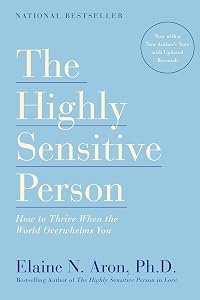
The Highly Sensitive Person. How to thrive when the world overwhelms you
by Elaine N. Aron
On This Page
Description
"Must reading. Her balanced presentation suggests new paths for making sensitivity a blessing, not a handicap."—Philip G. Zimbardo, Ph.D., author of Shyness: What It Is, What to Do About ItDo you have a keen imagination and vivid dreams? Is time alone each day as essential to you as food and water? Are you noted for your empathy? Your conscientiousness? Do noise and confusion quickly overwhelm you? If your answers are yes, you may be a highly sensitive person (HSP), and this is the show more life-changing guide you'll want in your toolbox. Over twenty percent of people have this amazing innate trait. Interestingly, a similar percentage is found in over a hundred other species—because high sensitivity is a survival strategy. It's also a way of life for HSPs.
Dr. Elaine Aron, a research and clinical psychologist and an HSP herself, helps you grasp the reality of your wonderful trait, understand your past in the light of it, and make the most of it in your future. Drawing on her many years of study and face-to-face time spent with thousands of HSPs, she explains the changes you will need to make in order to lead a fuller, richer life.
Along with a new Author's Note, the latest scientific research, and a fresh discussion of anti-depressants, this edition of The Highly Sensitive Person is more essential than ever for creating the sense of self-worth and empowerment every HSP deserves.
"Elaine Aron has not only validated and scientifically corroborated high sensitivity as a trait—she has given a level of empowerment and understanding to a large group of the planet's population. I thank Dr. Aron every day for her having brought this awareness to the world."—Alanis Morissette, artist, activist, teacher
"Aron's book is not a fly-by-night self-help tome, but in
. show less
Tags
Recommendations
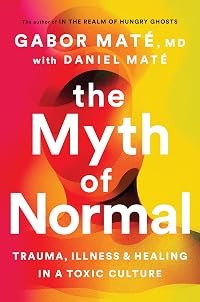
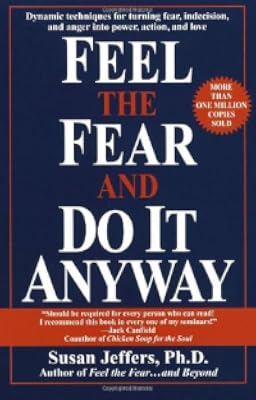
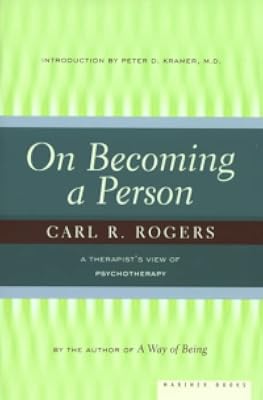
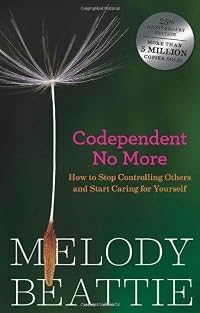

Member Recommendations
potenza Any sensitive person will recognize themselves in this engaging treatment.
by anonymous user
Member Reviews
A solid book explaining why some people are much more sensitive than others and how to deal with it if you are one of those people. The descriptions of hypersensitivity definitely resonate with my own experiences. I wish it went into much more detail on how to deal with it in real life. Aron tries to cover too many topics-- childhood experiences, work, relationships, etc.-- that makes the book seem a bit unfocused and the information/advice too general to be truly helpful in any practical way.
I was skeptical about the existence of "highly sensitive people" before I even read the book and I still am. I am as skeptical about the existence of "introverts" and "extraverts" and as Aron states, only a few people can be clearly defined as either one. This, and because one third of the "highly sensitive" are "extraverts", I find it somewhat strange that Aron excludes all but introverted HSPs from her study. (Also, she says in the book that the extraverted HSPs can only relax when surrounded by people - and I am left wondering how it is even possible for such a person to survive and does Aron understand extroverted HSPs at all?)
Although I don't identify myself with HSP or introverts/extraverts (and I don't think it is even necessary show more to have such categories), I could identify with most of the description of HSP (I believe anyone could). However, I didn't find it helpful. Perhaps I read it too late, but I think I already have traveled further into my inner world than the book could take me.
Some of the irritating traits/parts in the book:
1) References to the age (under 2 years old) that no one can possibly remember. Yes, this is the age when we are at the most vulnerable, but as I cannot remember the time, I cannot make peace with the things that took place then. I can talk to my parents, but their view point is subjective and I know what they did, they did from their hearts, no matter how wrong things might have gone. So I would rather concentrate on things that I can do something about than mourn the past. Sadly, the book gave little for this.
2) The part where Aron tells how HSPs can learn to communicate with the world. Really? Earlier she had stated (several times) how HSPs are intuitive and have an urge to please others - combine these two and you won't have to tell an HSP what other people want to hear. They should know it better than anyone - even if they are stressed and cannot act according to their knowledge. Later in the book there is a part where Aron tells hints how to talk to a doctor - similar hints could be useful for a normal conversation as well. At least I find myself so stressed in social situations that I often forget what to say and I feel a need to retreat to think over what the other person has said before I can answer.
3) The "test" where you go over your childhood traumas. I cannot understand how anyone, HSP or not, would not suffer from childhood poverty or sexual abuse. If HSPs get "traumatized" easier (or just react more strongly) to negative things than non-HSPs, I think the test should have been modified to include examples that were not so extreme - something that others perhaps didn't even notice or laughed about, but shattered the trust of someone described as HSP. There were also other "extreme" examples throughout the book that pushed me back a bit: although this book was supposed to offer some condolence, these examples just told me (once again) that "no, you cannot feel like this (or like shit) because you didn't suffer any real trauma in your childhood".
4) There are several moments when I doubt Aron actually understands people and their different motives/drivers and their distinct backgrounds at all. For example, the above mentioned "test" asks if there were fighting in your home when you were a child. For me there was no fighting, I was praying for fighting for five years, I was praying for anything that would stop the deafening silence. I hate stereotypes and simplifications and there are lots of them in this book, although it states several times that not everyone is the same.
Overall, the book had a way too condescending approach for me, and I was left wondering how so many people claim that it has changed their lives. It didn't change mine, but it still gave me something to think about (at least enough to write this). show less
Although I don't identify myself with HSP or introverts/extraverts (and I don't think it is even necessary show more to have such categories), I could identify with most of the description of HSP (I believe anyone could). However, I didn't find it helpful. Perhaps I read it too late, but I think I already have traveled further into my inner world than the book could take me.
Some of the irritating traits/parts in the book:
1) References to the age (under 2 years old) that no one can possibly remember. Yes, this is the age when we are at the most vulnerable, but as I cannot remember the time, I cannot make peace with the things that took place then. I can talk to my parents, but their view point is subjective and I know what they did, they did from their hearts, no matter how wrong things might have gone. So I would rather concentrate on things that I can do something about than mourn the past. Sadly, the book gave little for this.
2) The part where Aron tells how HSPs can learn to communicate with the world. Really? Earlier she had stated (several times) how HSPs are intuitive and have an urge to please others - combine these two and you won't have to tell an HSP what other people want to hear. They should know it better than anyone - even if they are stressed and cannot act according to their knowledge. Later in the book there is a part where Aron tells hints how to talk to a doctor - similar hints could be useful for a normal conversation as well. At least I find myself so stressed in social situations that I often forget what to say and I feel a need to retreat to think over what the other person has said before I can answer.
3) The "test" where you go over your childhood traumas. I cannot understand how anyone, HSP or not, would not suffer from childhood poverty or sexual abuse. If HSPs get "traumatized" easier (or just react more strongly) to negative things than non-HSPs, I think the test should have been modified to include examples that were not so extreme - something that others perhaps didn't even notice or laughed about, but shattered the trust of someone described as HSP. There were also other "extreme" examples throughout the book that pushed me back a bit: although this book was supposed to offer some condolence, these examples just told me (once again) that "no, you cannot feel like this (or like shit) because you didn't suffer any real trauma in your childhood".
4) There are several moments when I doubt Aron actually understands people and their different motives/drivers and their distinct backgrounds at all. For example, the above mentioned "test" asks if there were fighting in your home when you were a child. For me there was no fighting, I was praying for fighting for five years, I was praying for anything that would stop the deafening silence. I hate stereotypes and simplifications and there are lots of them in this book, although it states several times that not everyone is the same.
Overall, the book had a way too condescending approach for me, and I was left wondering how so many people claim that it has changed their lives. It didn't change mine, but it still gave me something to think about (at least enough to write this). show less
Someone suggested this book might give me ideas for my daughter. Elaine Aron is determined to confront and redefine this category of people, since as a group they tend to 'not fit in'. It opens with a test with questions such as: "I am easily overwhelmed by bright lights, strong smells, coarse fabrics, or sirens close by." and "I am conscientious." and "I get rattled when I have a lot to do in a short time." and "When people are uncomfortable in a physical environment I tend to know what needs to be done." Having established the parameters she then gives 'the facts' about being an "HSP" such as that around 20% of the population fits under this definition, that there are obvious advantages in having 'sensitives' in your group, (kind of show more like the canary in the coal mine), that, however, our present-day culture, still very much an outgrowth of the Indo-European sweep into the west values action-oriented folk more than thoughtful ones. Other cultures (she cites Japan) value sensitive people and have a place for them - as monks, shamans, etc. She then makes a distinction that annoyed me greatly during the entire book, even though I don't disagree and have thought much the same thing, namely, making a division between the warrior-kings (Arthurs) and royal advisers (Merlins). The rest of the book examines the effects of being an HSP - how it impacts childhood, schooling, college, work, relationships.... each chapter covers a bit of new ground, refers back to her main points that being sensitive is a good thing despite the fact that our culture doesn't always accommodate or honor it. Lots of strategies of different kinds, lots of suggestions and encouragement.
The most important point, not new to me, but nicely put all the same is that the sensitive person needs to respect how quickly and easily they become over-stimulated -- and how that can appear to other people, as aloofness, shyness, arrogance. The social awkwardness, lack of grace under pressure can make us look incompetent or even strangely stupid or even possible cheaters in some way (say -- doing badly on a math test after handing in perfect homework) -- some of us actually talk too much when nervous -- or are so inconsistent people don't know what to make of us. Also HSP's tend to be weirdly naive about social machinations, at school and work..... and so easily deceived or passed over for promotions and so on. It is critical therefore to understand yourself, know how you appear to others, and figure out ways around it, ways to work it to your advantage not your detriment.
I heartily recommend it to anyone with these issues and/or who have children with these issues. For one, it will help you feel vindicated about approaching teachers etc. at your child's school, being clear and firm with them about what will and won't work. I plan to buy a couple of copies to donate to my daughter's school -- for the infirmary and for the advisers. And my local library, I think. My reservations are mainly about the chirpy style and the boring format that all of these books nowadays seem to have as if we all have the attention spans of fleas..... A little info, a few anecdotes, a quiz, some exercises, lots of changes in type face, I guess it fleshes it all out into book size when the message itself isn't all that complicated. **** show less
The most important point, not new to me, but nicely put all the same is that the sensitive person needs to respect how quickly and easily they become over-stimulated -- and how that can appear to other people, as aloofness, shyness, arrogance. The social awkwardness, lack of grace under pressure can make us look incompetent or even strangely stupid or even possible cheaters in some way (say -- doing badly on a math test after handing in perfect homework) -- some of us actually talk too much when nervous -- or are so inconsistent people don't know what to make of us. Also HSP's tend to be weirdly naive about social machinations, at school and work..... and so easily deceived or passed over for promotions and so on. It is critical therefore to understand yourself, know how you appear to others, and figure out ways around it, ways to work it to your advantage not your detriment.
I heartily recommend it to anyone with these issues and/or who have children with these issues. For one, it will help you feel vindicated about approaching teachers etc. at your child's school, being clear and firm with them about what will and won't work. I plan to buy a couple of copies to donate to my daughter's school -- for the infirmary and for the advisers. And my local library, I think. My reservations are mainly about the chirpy style and the boring format that all of these books nowadays seem to have as if we all have the attention spans of fleas..... A little info, a few anecdotes, a quiz, some exercises, lots of changes in type face, I guess it fleshes it all out into book size when the message itself isn't all that complicated. **** show less
I knew from what I'd heard of this book that it was a book for and about me, so when I started to read it there was just a sort of comfortable affirmation. There were a few early chapters that were way too heavy on the psycho-babble to sit well with me, talk about regressing to your infant self and trying to imagine how you saw the world, then a whole long chapter about your "infant-body", a term that just made me want to throw the book every time I came across it (which was quite often). I've figured a lot of this out for myself over the years though, so I suppose if this was all new information to someone, this approach could be useful. I also thought the overall tone of the book was a bit coddling and/or condescending, but I suppose show more a lot of people need that kind of hand-holding in therapy, and the book was written by a psychologist.
Once I got past those chapters on early childhood there were enough moments of stunning revelation that reading this book proved to be an invaluable and life altering experience for me. Most of the experiences in my past that still troubled and/or puzzled me are re-framed in a new way now that I can see how differently things would've likely played out if I weren't such a highly sensitive person. I am deeply at peace with myself and my past like I never would've thought possible. I no longer suspect/fear I'm half crazy. Most importantly, I can see the benefits to having this kind of a nervous system, and I now have an even better awareness and some new tools for getting a grip when the world starts to overwhelm me. I am relieved, soothed, educated and prepared.
I've always thought it would be awfully handy to have an owner's manual to give to my loved ones so they might better understand why I get in certain moods and say and do certain things. I've found two books previously that filled that need extremely well, and this book is definitely volume three of my personal series of owner's manuals. I truly love this book for the changes it's brought about in how I think about myself, my history and my future. show less
Once I got past those chapters on early childhood there were enough moments of stunning revelation that reading this book proved to be an invaluable and life altering experience for me. Most of the experiences in my past that still troubled and/or puzzled me are re-framed in a new way now that I can see how differently things would've likely played out if I weren't such a highly sensitive person. I am deeply at peace with myself and my past like I never would've thought possible. I no longer suspect/fear I'm half crazy. Most importantly, I can see the benefits to having this kind of a nervous system, and I now have an even better awareness and some new tools for getting a grip when the world starts to overwhelm me. I am relieved, soothed, educated and prepared.
I've always thought it would be awfully handy to have an owner's manual to give to my loved ones so they might better understand why I get in certain moods and say and do certain things. I've found two books previously that filled that need extremely well, and this book is definitely volume three of my personal series of owner's manuals. I truly love this book for the changes it's brought about in how I think about myself, my history and my future. show less
This was a surprisingly quick read. I enjoyed learning about HSPs as I'm still trying to evaluate whether I might be one. The writing style is very accessible and the book held my interest well. Some chapters are more applicable to everyone than others.
Everyone feels overwhelmed sometimes. Too much is happening, too much information is incoming, you just can't cope. It happens to everyone.
It happens to some of us far more often than it does to most people. We are more sensitive--to sound, to lights, to activity, to voices, to some or all of them, and we need the time and space to process what we're taking in.
This is often described as "shyness," or "over-sensitivity," or "introversion," and in western culture is often considered a flaw. Confident, active extroversion is valued and admired. The lower level of sensitivity to stimulation is more common, more typical of most people.
Those of us who have the greater sensitivity may start getting negative messages very early. "You're too show more sensitive." "Don't let it get to you." "You're over-reacting." Too much of this, too early, can lead to life-long anxiety and depression. Yet this is not inevitable, and this greater sensitivity has advantages as well as disadvantages.
The highly sensitive person is taking in more information. Noticing things others don't. Processing the subtle and the easily overlooked.
Learn to use this, in yourself or in highly sensitive friends and colleagues, and you and those around you can benefit, making better decisions in both personal and professional life. Highly sensitive individuals are often the writers, musicians, artists, and can also be the people who see new opportunities, unmet needs that some innovation can meet--ways to create a new business or enhance an existing one. They may not want to be the public face of such an undertaking, but they may be the best equipped to be the creator and the beating heart of it.
Aron has a great deal to offer about the ways sensitivity can be associated with anxiety and depression, but also the ways in which that is far from inevitable. Highly sensitive children raised in families that understand their sensitivity and support them in learning how to process the world usefully grow up healthier and more stable than other children. Highly sensitive children are, on the other hand, more severely affected by childhood traumas that the less sensitive children may quickly shrug off and put in the past when they're over and life is stable again.
But, again, the amount of useful support a highly sensitive child gets in coping with those traumas can make an enormous difference.
There's some verbiage here that I find annoying and unhelpful, but that's most likely personal taste in the kind of language I like and find useful to me. There's a wealth of information and guidance here for the highly sensitive person trying to learn how to function happily and effectively in a world that often finds us weird and flawed. It's potentially a life-changing book--and yeah, there's some overblown verbiage from me, but there you go. Sometimes you need it!
Highly recommended.
I bought this book. show less
It happens to some of us far more often than it does to most people. We are more sensitive--to sound, to lights, to activity, to voices, to some or all of them, and we need the time and space to process what we're taking in.
This is often described as "shyness," or "over-sensitivity," or "introversion," and in western culture is often considered a flaw. Confident, active extroversion is valued and admired. The lower level of sensitivity to stimulation is more common, more typical of most people.
Those of us who have the greater sensitivity may start getting negative messages very early. "You're too show more sensitive." "Don't let it get to you." "You're over-reacting." Too much of this, too early, can lead to life-long anxiety and depression. Yet this is not inevitable, and this greater sensitivity has advantages as well as disadvantages.
The highly sensitive person is taking in more information. Noticing things others don't. Processing the subtle and the easily overlooked.
Learn to use this, in yourself or in highly sensitive friends and colleagues, and you and those around you can benefit, making better decisions in both personal and professional life. Highly sensitive individuals are often the writers, musicians, artists, and can also be the people who see new opportunities, unmet needs that some innovation can meet--ways to create a new business or enhance an existing one. They may not want to be the public face of such an undertaking, but they may be the best equipped to be the creator and the beating heart of it.
Aron has a great deal to offer about the ways sensitivity can be associated with anxiety and depression, but also the ways in which that is far from inevitable. Highly sensitive children raised in families that understand their sensitivity and support them in learning how to process the world usefully grow up healthier and more stable than other children. Highly sensitive children are, on the other hand, more severely affected by childhood traumas that the less sensitive children may quickly shrug off and put in the past when they're over and life is stable again.
But, again, the amount of useful support a highly sensitive child gets in coping with those traumas can make an enormous difference.
There's some verbiage here that I find annoying and unhelpful, but that's most likely personal taste in the kind of language I like and find useful to me. There's a wealth of information and guidance here for the highly sensitive person trying to learn how to function happily and effectively in a world that often finds us weird and flawed. It's potentially a life-changing book--and yeah, there's some overblown verbiage from me, but there you go. Sometimes you need it!
Highly recommended.
I bought this book. show less
The author started studying what she calls the Highly Sensitive Person (HSP) in 1992. She counts herself among HSPs and estimates it pertains to 15 to 20 percent of the population. “Most people ignore sirens, glaring lights, strange odors, clutter and chaos. HSPs are disturbed by them.”
I was interested in this book to find out more about people that experience “sensory overload” in situations with lots of sights and sounds, such as arcades, casinos, and even department stores. They need significant amounts of solitude in order to recover. The root cause is the sensitivity of the person’s nervous system, which is more easily overwhelmed in a stimulating environment.
She opens this updated version with the science behind her show more own studies and that of others. An initial test will help readers determine if they fall into the HSP category. The bulk of the narrative is targeted at self-help. The author is trained in Jungian psychology and it shows in the jargon she employs. Some of it was a bit too “New Age-y” for my personal taste, but I did find it worthwhile. If you or a significant person in your life may be an HSP, this book will provide useful information. show less
I was interested in this book to find out more about people that experience “sensory overload” in situations with lots of sights and sounds, such as arcades, casinos, and even department stores. They need significant amounts of solitude in order to recover. The root cause is the sensitivity of the person’s nervous system, which is more easily overwhelmed in a stimulating environment.
She opens this updated version with the science behind her show more own studies and that of others. An initial test will help readers determine if they fall into the HSP category. The bulk of the narrative is targeted at self-help. The author is trained in Jungian psychology and it shows in the jargon she employs. Some of it was a bit too “New Age-y” for my personal taste, but I did find it worthwhile. If you or a significant person in your life may be an HSP, this book will provide useful information. show less
Members
- Recently Added By
Lists


Author Information

32+ Works 4,224 Members
Elaine N. Aron, PhD, has published numerous articles in academic journals on the highly sensitive person, including surveys, laboratory experiments, and neuroimaging studies. Her writings on other topics include books, chapters, and journal articles on close relationships as well as co-authoring a statistics textbook. Her writing for the general show more public includes the best selling Highly Sensitive Person, The Highly Sensitive Child, and The Undervalued Self. Dr. Aron maintains a psychotherapy practice in the San Francisco Bay Area, teaches public and professional workshops, and continues her research on the trait of sensitivity. show less
Common Knowledge
- Canonical title
- The Highly Sensitive Person. How to thrive when the world overwhelms you
- Original title
- The Highly Sensitive Person. How to thrive when the world overwhelms you
- Original publication date
- 1996
- Epigraph
- I believe in aristocracy, though - if that is the right word, and if a democrat may use it. Not an aristocracy of power... but... of the sensitive, the considerate... Its members are to be found in all nations and classes, an... (show all)d all through the ages, and there is a secret understanding between them when they meet. They represent the true human tradition, the one permanent victory of our queer race over cruelty and chaos. Thousands of them perish in obscurity, a few are great names. They are sensitive for others as well as themselves, they are considerate without being fussy, their pluck is not swankiness but the power to endure...
E.M.Forster, "What I Believe," in Two Cheers for Democracy - Dedication
- To Irene Bernardicou Pettit, Ph.D. - being both poet and peasant, she knew how to plant this seed and tend it until it blossomed.
To Art, who especially loves the flowers - one more love we share. - First words
- "Cry baby!"
- Last words
- (Click to show. Warning: May contain spoilers.)But others will be affected in time, so their sensitivity can help you avoid problems later.
Classifications
Statistics
- Members
- 2,806
- Popularity
- 6,473
- Reviews
- 33
- Rating
- (3.74)
- Languages
- 13 — Danish, Dutch, English, Finnish, French, German, Hungarian, Italian, Norwegian (Bokmål), Polish, Spanish, Swedish, Portuguese (Portugal)
- Media
- Paper, Audiobook, Ebook
- ISBNs
- 56
- ASINs
- 16