On This Page
Description
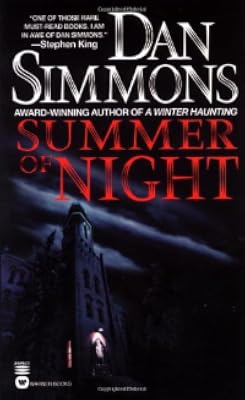
This masterfully crafted horror classic, featuring a brand-new introduction by Dan Simmons, will bring you to the edge of your seat, hair standing on end and blood freezing in your veins It's the summer of 1960 and in the small town of Elm Haven, Illinois, five twelve-year-old boys are forging the powerful bonds that a lifetime of change will not break. From sunset bike rides to shaded hiding places in the woods, the boys' days are marked by all of the secrets and silences of an idyllic show more middle-childhood. But amid the sundrenched cornfields their loyalty will be pitilessly tested. When a long-silent bell peals in the middle of the night, the townsfolk know it marks the end of their carefree days. From the depths of the Old Central School, a hulking fortress tinged with the mahogany scent of coffins, an invisible evil is rising. Strange and horrifying events begin to overtake everyday life, spreading terror through the once idyllic town. Determined to exorcize this ancient plague, Mike, Duane, Dale, Harlen, and Kevin must wage a war of blood—against an arcane abomination who owns the night... show lessTags
Recommendations
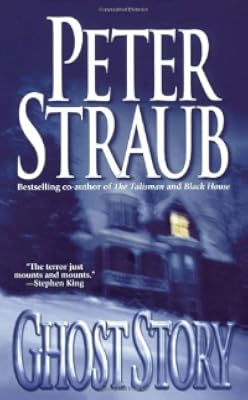
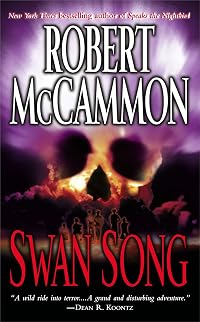
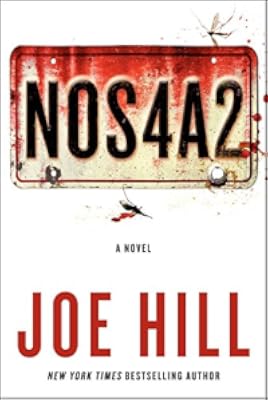
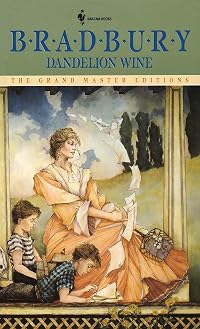
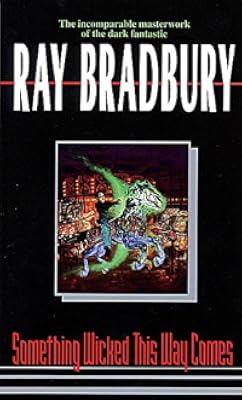
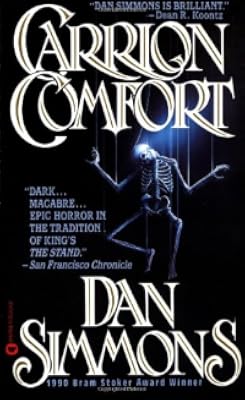
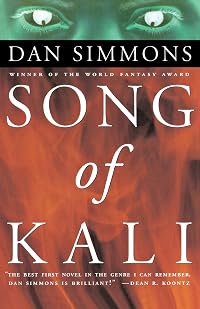
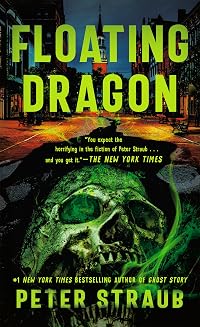




Member Recommendations
Member Reviews
I don't suppose this is *really* a 5 star book ... I mean, as good as Dan Simmons is, he's not William Faulkner, or Homer or ... sigh. Now I feel all pretentious.
Anyhoo ... I enjoyed this tremendously and am feeling generous. ;^) When I purchased it for my Kobo e-reader I'd been in search of "something scary" for a few days, and was very skeptical this would do the trick because I knew it was in the 'neighborhood kids battle evil' vein of things -- that is, somewhere in Stephen King territory -- and that's just never really done it for me: there's often an inadvertent Scooby-Doo cast to the goings-on, a sense that one of the villains is going to wind up saying, as he or she is dragged off to prison "... and I'd've gotten away with it, show more too, if it hadn't been for you meddling kids."
Ahem. But I have to say, this novel delivers. It's got some genuinely creepy, and sometimes genuinely gross set pieces, and the interest scarcely ever flags. I find myself not wanting to talk about the plot much, because I don't want to give anything away. I will say that Simmons is *not* shy of killing off loved characters. He doesn't do this with the abandon of George R. R. Martin, but he does it.
I will also say that I'd love to quiz Simmons on his personal religious beliefs. In some of his science fiction (the Hyperion novels) there is what appears to be a real excoriation of Catholicism ... that isn't present here (and there are Catholic characters), but ... I'm perturbed slightly by a sense that, yes, we are in a Judaeo-Christian universe and that the evil wouldn't be evil unless the universe had that underpinning. This often comes between me and genuine scares in books and films: I'm an atheist, so if your scares depend on God and the Devil, say, being real things, you've pretty much lost me, scare-wise. I mean, mini-spoiler(?): in this book, holy water works as a defense -- sometimes, anyway. So, Mr. Simmons?
I will definitely read A Winter Haunting, which concerns some of the same characters as adults. show less
Anyhoo ... I enjoyed this tremendously and am feeling generous. ;^) When I purchased it for my Kobo e-reader I'd been in search of "something scary" for a few days, and was very skeptical this would do the trick because I knew it was in the 'neighborhood kids battle evil' vein of things -- that is, somewhere in Stephen King territory -- and that's just never really done it for me: there's often an inadvertent Scooby-Doo cast to the goings-on, a sense that one of the villains is going to wind up saying, as he or she is dragged off to prison "... and I'd've gotten away with it, show more too, if it hadn't been for you meddling kids."
Ahem. But I have to say, this novel delivers. It's got some genuinely creepy, and sometimes genuinely gross set pieces, and the interest scarcely ever flags. I find myself not wanting to talk about the plot much, because I don't want to give anything away. I will say that Simmons is *not* shy of killing off loved characters. He doesn't do this with the abandon of George R. R. Martin, but he does it.
I will also say that I'd love to quiz Simmons on his personal religious beliefs. In some of his science fiction (the Hyperion novels) there is what appears to be a real excoriation of Catholicism ... that isn't present here (and there are Catholic characters), but ... I'm perturbed slightly by a sense that, yes, we are in a Judaeo-Christian universe and that the evil wouldn't be evil unless the universe had that underpinning. This often comes between me and genuine scares in books and films: I'm an atheist, so if your scares depend on God and the Devil, say, being real things, you've pretty much lost me, scare-wise. I mean, mini-spoiler(?): in this book, holy water works as a defense -- sometimes, anyway. So, Mr. Simmons?
I will definitely read A Winter Haunting, which concerns some of the same characters as adults. show less
A friend suggested this book to me and warned me it took a while to get into. I thought it sounded interesting so I jumped in. He was right, it takes a while for things to heat up but I loved it. I recently moved to Illinois, which is where the book took place and it was so weird, especially because I knew all the places they were talking about like spoon river and Peoria. I think I got more out of it, being from the Midwest that I would have other wise. Some of the things I've seen since moving to the Midwest, things they mention in the book like odd noiseless lightning and the descriptions of the farms, town, and all the corn; I don't think I would have been able to envision or quite understand all of it before moving out here.
This show more book deals with the summer misadventures of a group of kids. It quickly turns supernatural. The details are vivid and allow for great visuals without being overwhelming. I wish there was more of an explanation at the end. Things didn't quite wrap up the was I hoping. I am looking forward to reading more from Dan Simmons. show less
This show more book deals with the summer misadventures of a group of kids. It quickly turns supernatural. The details are vivid and allow for great visuals without being overwhelming. I wish there was more of an explanation at the end. Things didn't quite wrap up the was I hoping. I am looking forward to reading more from Dan Simmons. show less
I was unaware of Dan Simmons, admittedly terrible, politics until after I read this. I'm not sure I see it reflected in work this early, and from what I understand some of this early work actually tends to lean away from the awful stances he embraced around 9/11ish.
This book was almost unreadably slow. A kind of riff on bradbury/king-esque themes without the same level of finesse or skill. A sort of tween (11 year olds for the most part, give or take a few years) coming-of-age meets horror, in a time of social and technological transformation from the 50s/60s (though what he describes seems more like the 30s/40s?) to the 80s and small town rural life to something more modern and urbane, with dark and evil happenings laid on top of show more it.
Besides the aforementioned anachronistic problems with setting, there are a variety of flaws here. The pacing is not just slow, but glacial. Virtually nothing of importance or interest happens for hundreds of pages at a time. We get lots of nice portraits of small town life, but that's almost all we get. I get its a coming of age story, but there are hundreds of total pages devoted to the games 11 year olds play during their summers off school. Hundreds of pages are spent with the characters chasing red herrings, that even the narrators think are red herrings and a waste of time. There are loads of disparate and essentially unrelated disturbing narrative threads that get introduced for a few pages before we end up returning to endless descriptions of pickup baseball games, bullies, etc. I get that they're all technically a result of what the ultimate evil is, but the eventual unifying explanation is thin and weak at best.
I hesitate to say there are too many characters, because King handles a similar if not larger spread of young folks coming of age masterfully...so maybe it was just too many for Simmons. Only one or two of our protagonists really stand out as much more than character sketches, and some of the most interesting young people aren't even our main characters. For all they're supposed to be a tightknit, friends for years, grew up together group...they also just don't seem to like each other very much? Just like each other more than the richer kids or the homicidally violent 13 year olds? Also, I get small town life, and life in the 50s, was different, that education was different (hell, I'm an educator, I'm acutely aware)...but there are a difficult to believe number of young people described (to varying degrees of insensitivity) as having cognitive deficiencies of one degree or another, being held back multiple years and/or just quitting school before high school.
What it mostly feels like is Simmons had too many ideas and was not sure what kind of book he wanted to write. I think it could have successfully been split into a few unrelated stories of more moderate length. A Boy's Life esque coming of age. A ghost story. A rich people are the bad guys thriller. Maybe a small town slice of life. A (couple of) monster story(ies). Maybe a backwoods/rural thriller or horror of some kind. Instead its all kind of inexpertly smashed together and told at a turtle's pace.
I understand that other books of his are better, and while I won't give the nutter any money I'll try some of the more focused books from the library before I give up on him altogether. show less
This book was almost unreadably slow. A kind of riff on bradbury/king-esque themes without the same level of finesse or skill. A sort of tween (11 year olds for the most part, give or take a few years) coming-of-age meets horror, in a time of social and technological transformation from the 50s/60s (though what he describes seems more like the 30s/40s?) to the 80s and small town rural life to something more modern and urbane, with dark and evil happenings laid on top of show more it.
Besides the aforementioned anachronistic problems with setting, there are a variety of flaws here. The pacing is not just slow, but glacial. Virtually nothing of importance or interest happens for hundreds of pages at a time. We get lots of nice portraits of small town life, but that's almost all we get. I get its a coming of age story, but there are hundreds of total pages devoted to the games 11 year olds play during their summers off school. Hundreds of pages are spent with the characters chasing red herrings, that even the narrators think are red herrings and a waste of time. There are loads of disparate and essentially unrelated disturbing narrative threads that get introduced for a few pages before we end up returning to endless descriptions of pickup baseball games, bullies, etc. I get that they're all technically a result of what the ultimate evil is, but the eventual unifying explanation is thin and weak at best.
I hesitate to say there are too many characters, because King handles a similar if not larger spread of young folks coming of age masterfully...so maybe it was just too many for Simmons. Only one or two of our protagonists really stand out as much more than character sketches, and some of the most interesting young people aren't even our main characters. For all they're supposed to be a tightknit, friends for years, grew up together group...they also just don't seem to like each other very much? Just like each other more than the richer kids or the homicidally violent 13 year olds? Also, I get small town life, and life in the 50s, was different, that education was different (hell, I'm an educator, I'm acutely aware)...but there are a difficult to believe number of young people described (to varying degrees of insensitivity) as having cognitive deficiencies of one degree or another, being held back multiple years and/or just quitting school before high school.
What it mostly feels like is Simmons had too many ideas and was not sure what kind of book he wanted to write. I think it could have successfully been split into a few unrelated stories of more moderate length. A Boy's Life esque coming of age. A ghost story. A rich people are the bad guys thriller. Maybe a small town slice of life. A (couple of) monster story(ies). Maybe a backwoods/rural thriller or horror of some kind. Instead its all kind of inexpertly smashed together and told at a turtle's pace.
I understand that other books of his are better, and while I won't give the nutter any money I'll try some of the more focused books from the library before I give up on him altogether. show less
I have owned a paperback copy of this for about 15 years and while I want to kick myself for never having read it, I think I read it at the perfect time in my life.
The book is set in the fictional town of Elm Haven, IL which lies in between the non-fictional towns of Galesburg and Peoria. I have lived in Illinois for 44 of my 47 years on this earth and moved to the Peoria-area four years ago. As mentioned, reading it now was the perfect time for me.
This book is ostensibly a horror story but it's so much more..... The book is set in 1960 and chronicles that summer and the adventures of a troupe of young boys. The book has a deliberate pace as the chilling story unfolds and you could argue that it meanders a bit, but that's the show more charm.....it's paced like a lazy summer with long days and all the time in the world. Simmons' prose is fabulous and keeps you engaged even through its "meanderings."
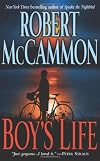
This book gets compared to Stephen King's "IT," his short story "The Body" (a.k.a. the movie "Stand By Me") and Robert R. McCammon's "Boys Life." I've only read King's works and I would agree, but this one is better. Trust me. show less
The book is set in the fictional town of Elm Haven, IL which lies in between the non-fictional towns of Galesburg and Peoria. I have lived in Illinois for 44 of my 47 years on this earth and moved to the Peoria-area four years ago. As mentioned, reading it now was the perfect time for me.
This book is ostensibly a horror story but it's so much more..... The book is set in 1960 and chronicles that summer and the adventures of a troupe of young boys. The book has a deliberate pace as the chilling story unfolds and you could argue that it meanders a bit, but that's the show more charm.....it's paced like a lazy summer with long days and all the time in the world. Simmons' prose is fabulous and keeps you engaged even through its "meanderings."
This book gets compared to Stephen King's "IT," his short story "The Body" (a.k.a. the movie "Stand By Me") and Robert R. McCammon's "Boys Life." I've only read King's works and I would agree, but this one is better. Trust me. show less
(11) Wow - Stephen King eat your heart out. This was published ~ 5 years after Stephen King's 'It' - I can't remember too much about that novel but surely it must have inspired this one. Simmons is an incredibly versatile author who is a fantastic story-teller. I have read several of his novels now (The Terror, Song of Kali, The Crook Factory, Drood) and they are all page turners and really quite different. 'The Terror' still remains my favorite but this was a pretty intriguing yarn and must be a close second.
Comparisons with 'It" are obvious - a group of close knit pre-teen boys in small town America before the dawning of the internet and social media - when bikes and baseball were Kings -- battle Evil (with a capital E) as it comes show more to their little idyllic corner of the world. In this case 'the Borgia Bell' resides in their creepy school which is about to be torn down. The boys begin to see things that are inexplicable and horrifying beginning with the last day of school when a classmate goes missing. The contextual details are amazing - The smell of the Rendering Truck, Duane's flannel shirt and the glasses he keeps adjusting on his face, the blanching relentless heat of a midsummer day, preteen half-man, half-boy confusion -- all so well-done.
It was a bit long, I think. I am not sure which parts needed to be dispensed with besides that awful sex scene with 12 year olds. But, there were times I felt like skimming to get to the action. I did think the finale in the school was a bit over the top - I think perhaps 'less is more' would have sufficed regarding all the tissue nodes, and eyes, and flesh farms everywhere. It undermined part of the excellent fear factor that had been built up with melodrama. It was its best before all was explicit such as the scene in Dale's basement, or the ones in Dale and Lawrence's room - what kid has not been horrified with 'the basement,' 'under the bed,' or the possibilities of 'the bedroom closet.'
Anyway, incredibly entertaining. I will miss Dale and Lawrence and Mike's world. I think I may seek out the sequels and ? the movie. Definitely need to read more by this author. show less
Comparisons with 'It" are obvious - a group of close knit pre-teen boys in small town America before the dawning of the internet and social media - when bikes and baseball were Kings -- battle Evil (with a capital E) as it comes show more to their little idyllic corner of the world. In this case 'the Borgia Bell' resides in their creepy school which is about to be torn down. The boys begin to see things that are inexplicable and horrifying beginning with the last day of school when a classmate goes missing. The contextual details are amazing - The smell of the Rendering Truck, Duane's flannel shirt and the glasses he keeps adjusting on his face, the blanching relentless heat of a midsummer day, preteen half-man, half-boy confusion -- all so well-done.
It was a bit long, I think. I am not sure which parts needed to be dispensed with besides that awful sex scene with 12 year olds. But, there were times I felt like skimming to get to the action. I did think the finale in the school was a bit over the top - I think perhaps 'less is more' would have sufficed regarding all the tissue nodes, and eyes, and flesh farms everywhere. It undermined part of the excellent fear factor that had been built up with melodrama. It was its best before all was explicit such as the scene in Dale's basement, or the ones in Dale and Lawrence's room - what kid has not been horrified with 'the basement,' 'under the bed,' or the possibilities of 'the bedroom closet.'
Anyway, incredibly entertaining. I will miss Dale and Lawrence and Mike's world. I think I may seek out the sequels and ? the movie. Definitely need to read more by this author. show less
The last day of school means quite a few things for the small Illinois town of Elm Haven. For most kids, it's the beginning of a well-deserved summer vacation, free from books, tests, and teachers. For the town, it brings the end of an era as the Old Central school will close its doors for the last time. But for a few twelve-year-old boys, it brings an adventure none of them could have ever imagined.
It all begins when Tubby Cooke goes missing on the last day of school. None of the other children sees him leave, though the principal and a few teachers insist that he ran off before the last bell finished echoing through the halls. Duane McBride feels differently. He's always felt that something was odd about the school, and he convinces show more his friends Mike O'Rourke, Jim Harlen, Dale and Lawrence Stewart, and Kevin Grumbacher, that Tubby didn't run away, and that the answer lies somewhere inside Old Central. While the rest of the gang spies around town, Duane tracks the history of the school and finds disturbing information about its past and a mysterious bell. But the trouble has already started: a ghostly soldier with a melting face tries to get at Mike's grandmother; the town's rendering trunk comes to life and seems Hell bent on running the boys down; the darkness beneath beds or in closets or in the far corners of basements appears almost alive; and long muddy furrows begin to appear throughout the town, emanating from Old Central and heading to each of the boys' houses.
Under cover of night, the boys must find a way to stop the darkness that's been set in motion before it consumes them and the town.
"Summer of Night" is the grand adventure we all wanted to take during summer breaks, biking and exploring with friends, but author Dan Simmons twists it into a nightmare that no one could have imagined. It's part mystery, trying to uncover the dark secrets of Old Central and the bell that hangs hidden in the boarded up belfry, and part horror, not only creating a unique monster that seems to be everywhere at once, but it touches on childhood fears of the dark. Lawrence Stewart has a terrible fear of what might be lurking beneath his bed; his brother Dale never did like the dark space behind the boiler in the basement. Simmons' nightmarish creation uses those fears against the boys with some terrifying results.
Imaginative and horrific, just the kind of tale that I enjoy, and once I started, I stayed up into the wee hours of the morning reading, not wanting to put the book down. show less
It all begins when Tubby Cooke goes missing on the last day of school. None of the other children sees him leave, though the principal and a few teachers insist that he ran off before the last bell finished echoing through the halls. Duane McBride feels differently. He's always felt that something was odd about the school, and he convinces show more his friends Mike O'Rourke, Jim Harlen, Dale and Lawrence Stewart, and Kevin Grumbacher, that Tubby didn't run away, and that the answer lies somewhere inside Old Central. While the rest of the gang spies around town, Duane tracks the history of the school and finds disturbing information about its past and a mysterious bell. But the trouble has already started: a ghostly soldier with a melting face tries to get at Mike's grandmother; the town's rendering trunk comes to life and seems Hell bent on running the boys down; the darkness beneath beds or in closets or in the far corners of basements appears almost alive; and long muddy furrows begin to appear throughout the town, emanating from Old Central and heading to each of the boys' houses.
Under cover of night, the boys must find a way to stop the darkness that's been set in motion before it consumes them and the town.
"Summer of Night" is the grand adventure we all wanted to take during summer breaks, biking and exploring with friends, but author Dan Simmons twists it into a nightmare that no one could have imagined. It's part mystery, trying to uncover the dark secrets of Old Central and the bell that hangs hidden in the boarded up belfry, and part horror, not only creating a unique monster that seems to be everywhere at once, but it touches on childhood fears of the dark. Lawrence Stewart has a terrible fear of what might be lurking beneath his bed; his brother Dale never did like the dark space behind the boiler in the basement. Simmons' nightmarish creation uses those fears against the boys with some terrifying results.
Imaginative and horrific, just the kind of tale that I enjoy, and once I started, I stayed up into the wee hours of the morning reading, not wanting to put the book down. show less
After reading THE TERROR a few years ago, I knew Dam Simmons could write, but I didn’t know how well he could write until I finished SUMMER OF NIGHT, a book that was a Christmas gift which sat on my shelf a few years too long – I was really denying myself a great read. Simmons’ mastery of character, place and time is among the best, and the traits of a true storyteller.
At first glance, SUMMER OF NIGHT appears to be nothing more than another nostalgic coming of age horror story set in a small town in 1960; the kind where only the adolescent protagonists catch on to the supernatural evil in their midst and have to fight it on their own. This plot is an old horror trope, same for the small town in America with dark secrets no one show more will talk about, where and ancient evil has lain dormant until just the right moment to come back to life, but these seeming clichés are so well handled by Simmons, the reader hardly notices. The central characters are a group of boys around the age of 12, some slightly older, others slightly younger, who are best buds in the 6th grade at the Old Central Elementary School in Elm Haven, Illinois. Their home situations are varied and different, so are their temperaments and personalities; one of the great strengths of this book is how much Simmons makes you care about and fear for Duane, Jim, Mike, Kevin, Dale and Lawrence. And their small town world is so well laid out that the reader will come to see it perfectly in their minds: the tree lined streets and the stores on Main, the dirt country roads with cornfields on either side. We can feel the heat and smell the humidity ahead of a thunder storm. One of the essentials of these stories is a well established sense of mood and place and Simmons pulls it off with flying colors.
Though it is set in the summer of 1960, Simmons does not turn it into a trip back to AMERICAN GRAFFITI, instead the nostalgia the author evokes is for a time when the most priceless thing a boy could own was a second hand bicycle, followed by a baseball glove. A time when kids had the freedom on summer vacation to walk out the door first thing in the morning and not come back until dinner was on the table and no one thought anything of it. It’s a nostalgia for a time when kids were expected to amuse themselves for hours on end in a time before childhood and adolescence were overwhelmed by a loud, overbearing and ostentatiously sexy popular culture that treated kids like consumers; a time when small towns still thrived, long before automation, outsourcing, globalization and Wal Mart were even on the horizon. It might be the summer of ‘60, but the nomination of JFK is mentioned maybe twice as an event that is happening very far away.
On the last day of school, one of the boy’s classmates, Tubby Cook, goes missing in Old Central, the same day that the peal of a long silent bell is heard. Soon our young protagonists begin to suspect that their teachers and principle were involved in the disappearance. As they try to get to the bottom of the mystery, a figure in a World War I uniform is seen lurking on the back roads, faces appear at windows in the night while other figures lurk in the darkness; shadows dart out of closets and hide under beds, things stir inside crawlspaces and basements; holes leading to tunnels under the earth are found, and as they learn more, a huge rendering truck begins to stalk the kids. Though they might be scared as hell, they also have plenty of grit, and knowing that the adults would not believe them, the boys – along with one girl - decide take on the evil in their midst, a battle that ultimately becomes a war – one that claims casualties before the final confrontation.
There is a twist about half way through the book, one that will leave many readers picking their jaws up off the floor, while others will be profoundly grief stricken. The fact that so many fans of this book have commented on their emotional reaction to this event is one sign this book has really connected. My favorite scene is when Jim and Dale turn the tables on the town’s punk ass bully and back him down when they are forced to turn to him for help in a particularly desperate moment. The section of the book where the kids attempt to bait the evil rendering truck into a showdown is among the best things I’ve read in a horror novel in a very long time. And among the well drawn supporting characters, none stands out better than Cordie Cook, one tough piece of white trash; only tell her that at your peril.
The book is not perfect, one flaw is the villain, whose motivation and objective is never made clear – it’s just an ancient evil that takes possession of those closest to it. But that is a weakness of many, many horror tomes. At least one character, Mink Harper, the town drunk, is brought in at one point to just relate, in great detail, pertinent information from the past to Mike; another trope that many horror writers use. SUMMER OF NIGHT can be described as a slow build, it takes it’s time setting the stage, but it is so well written by Simmons, that I didn’t mind; the chapters are just as long as they need to be, the character POV’s are will established and the sentence structure flows naturally, helped along with a great ear for metaphor and simile.
SUMMER OF NIGHT is often compared to Stephen King’s IT, and it is an apt comparison, but for me, SUMMER might just be the better book. It’s much shorter than King’s work and the story stays within the past, my paperback copy comes in just under 500 pages. It has been a few decades since I read IT, and though the book is one of King’s most popular, I remember it as bloated and indulgent in some parts; all of the contemporary story elements could have been edited out, leaving just the story of the kids in Derry, Maine in the 50’s, and it would have been a better book. And Simmons never lets his young heroes go off the rails like King lets his young protagonists do – I’m talking about that certain scene in the sewers, and if you’ve read King’s book, you know what I mean. One thing IT has over SUMMER is villains; nothing can top Pennywise the Clown.
One last thing, why hasn’t SUMMER OF NIGHT not been made into a movie? Its cast of young characters would be perfect for Stephen Spielberg; would love to have seen what POLTERGEIST era Tobe Hooper could have done with it. Someone in Hollywood has dropped the ball. show less
At first glance, SUMMER OF NIGHT appears to be nothing more than another nostalgic coming of age horror story set in a small town in 1960; the kind where only the adolescent protagonists catch on to the supernatural evil in their midst and have to fight it on their own. This plot is an old horror trope, same for the small town in America with dark secrets no one show more will talk about, where and ancient evil has lain dormant until just the right moment to come back to life, but these seeming clichés are so well handled by Simmons, the reader hardly notices. The central characters are a group of boys around the age of 12, some slightly older, others slightly younger, who are best buds in the 6th grade at the Old Central Elementary School in Elm Haven, Illinois. Their home situations are varied and different, so are their temperaments and personalities; one of the great strengths of this book is how much Simmons makes you care about and fear for Duane, Jim, Mike, Kevin, Dale and Lawrence. And their small town world is so well laid out that the reader will come to see it perfectly in their minds: the tree lined streets and the stores on Main, the dirt country roads with cornfields on either side. We can feel the heat and smell the humidity ahead of a thunder storm. One of the essentials of these stories is a well established sense of mood and place and Simmons pulls it off with flying colors.
Though it is set in the summer of 1960, Simmons does not turn it into a trip back to AMERICAN GRAFFITI, instead the nostalgia the author evokes is for a time when the most priceless thing a boy could own was a second hand bicycle, followed by a baseball glove. A time when kids had the freedom on summer vacation to walk out the door first thing in the morning and not come back until dinner was on the table and no one thought anything of it. It’s a nostalgia for a time when kids were expected to amuse themselves for hours on end in a time before childhood and adolescence were overwhelmed by a loud, overbearing and ostentatiously sexy popular culture that treated kids like consumers; a time when small towns still thrived, long before automation, outsourcing, globalization and Wal Mart were even on the horizon. It might be the summer of ‘60, but the nomination of JFK is mentioned maybe twice as an event that is happening very far away.
On the last day of school, one of the boy’s classmates, Tubby Cook, goes missing in Old Central, the same day that the peal of a long silent bell is heard. Soon our young protagonists begin to suspect that their teachers and principle were involved in the disappearance. As they try to get to the bottom of the mystery, a figure in a World War I uniform is seen lurking on the back roads, faces appear at windows in the night while other figures lurk in the darkness; shadows dart out of closets and hide under beds, things stir inside crawlspaces and basements; holes leading to tunnels under the earth are found, and as they learn more, a huge rendering truck begins to stalk the kids. Though they might be scared as hell, they also have plenty of grit, and knowing that the adults would not believe them, the boys – along with one girl - decide take on the evil in their midst, a battle that ultimately becomes a war – one that claims casualties before the final confrontation.
There is a twist about half way through the book, one that will leave many readers picking their jaws up off the floor, while others will be profoundly grief stricken. The fact that so many fans of this book have commented on their emotional reaction to this event is one sign this book has really connected. My favorite scene is when Jim and Dale turn the tables on the town’s punk ass bully and back him down when they are forced to turn to him for help in a particularly desperate moment. The section of the book where the kids attempt to bait the evil rendering truck into a showdown is among the best things I’ve read in a horror novel in a very long time. And among the well drawn supporting characters, none stands out better than Cordie Cook, one tough piece of white trash; only tell her that at your peril.
The book is not perfect, one flaw is the villain, whose motivation and objective is never made clear – it’s just an ancient evil that takes possession of those closest to it. But that is a weakness of many, many horror tomes. At least one character, Mink Harper, the town drunk, is brought in at one point to just relate, in great detail, pertinent information from the past to Mike; another trope that many horror writers use. SUMMER OF NIGHT can be described as a slow build, it takes it’s time setting the stage, but it is so well written by Simmons, that I didn’t mind; the chapters are just as long as they need to be, the character POV’s are will established and the sentence structure flows naturally, helped along with a great ear for metaphor and simile.
SUMMER OF NIGHT is often compared to Stephen King’s IT, and it is an apt comparison, but for me, SUMMER might just be the better book. It’s much shorter than King’s work and the story stays within the past, my paperback copy comes in just under 500 pages. It has been a few decades since I read IT, and though the book is one of King’s most popular, I remember it as bloated and indulgent in some parts; all of the contemporary story elements could have been edited out, leaving just the story of the kids in Derry, Maine in the 50’s, and it would have been a better book. And Simmons never lets his young heroes go off the rails like King lets his young protagonists do – I’m talking about that certain scene in the sewers, and if you’ve read King’s book, you know what I mean. One thing IT has over SUMMER is villains; nothing can top Pennywise the Clown.
One last thing, why hasn’t SUMMER OF NIGHT not been made into a movie? Its cast of young characters would be perfect for Stephen Spielberg; would love to have seen what POLTERGEIST era Tobe Hooper could have done with it. Someone in Hollywood has dropped the ball. show less
Members
- Recently Added By
Lists

Best Horror Books
281 works; 85 members

Bloody Good Vampire Books
394 works; 27 members

Back to School Horror Reading Challenge
10 works; 2 members

Read-alike - It by Stephen King
9 works; 1 member

Nightmare Magazine's Top 100 Horror Books
100 works; 7 members

To Read - Horror
137 works; 14 members
Spooky United States: The Scariest Books Set in Each State
50 works; 3 members

Best books read in 2011
200 works; 50 members

Books Read in 2014
2,344 works; 89 members

1960s
281 works; 16 members

Books for Fans of Stranger Things
84 works; 7 members

Jones & Newman: Best Horror Books Further Recommended Reading
577 works; 4 members

Books Read in 2024
4,727 works; 125 members

Books Read in 2025
4,128 works; 98 members
Eldritch Exarch Press - Appendix N
244 works; 1 member
Author Information

135+ Works 69,892 Members
Science fiction writer Dan Simmons was born in East Peoria, Illinois in 1948. He graduated from Wabash College in 1970 and received an M. A. from Washington University the following year. Simmons was an elementary school teacher and worked in the education field for a decade, including working to develop a gifted education program. His first show more successful short story was won a contest and was published in 1982. His first novel, Song of Kali, won a World Fantasy Award, and Simmons has also won a Theodore Sturgeon Award for short fiction, four Bram Stoker Awards, and eight Locus Awards. He is also the author of the Hyperion series, and Simmons and his work have been compared to Herbert's Dune and Asimov's Foundation series. (Bowker Author Biography) show less
Some Editions
Awards and Honors
Series

Work Relationships
Is contained in
Common Knowledge
- Canonical title
- Summer of Night
- Original title
- Summer of night
- Original publication date
- 1991
- People/Characters
- Dale Stewart; Duane McBride; Jim Harlen; Kevin Grumbacher; Mike O'Rourke
- Important places
- Elm Haven, Illinois, USA
- Dedication
- This is for Wayne, who was there when it all happened.
- First words
- Old Central School still stood upright, holding its secrets and silences firmly within.
- Last words
- (Click to show. Warning: May contain spoilers.)A minute later they were arguing baseball and shouting at each other about whether the Cubs would ever win another pennant, and Dale was only slightly aware of it as a warm breeze blew across the endless fields, rustling the silk tassels on a million stalks of corn as if promising many more weeks of summer and another hot, bright day after the short interlude of night.
- Blurbers
- King, Stephen
Classifications
Statistics
- Members
- 2,214
- Popularity
- 9,177
- Reviews
- 50
- Rating
- (3.91)
- Languages
- 12 — Chinese, Danish, Dutch, English, Finnish, French, German, Italian, Polish, Serbian, Spanish, Swedish
- Media
- Paper, Audiobook, Ebook
- ISBNs
- 41
- ASINs
- 15