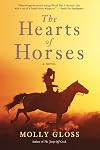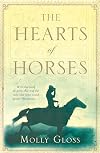
The Hearts of Horses
by Molly Gloss
On This Page
Description
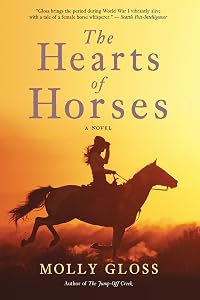
In the winter of 1917, a big-boned young woman shows up at George Bliss's doorstep. She's looking for a job breaking horses, and he hires her on. Many of his regular hands are off fighting the war, and he glimpses, beneath her showy rodeo garb, a shy but strong-willed girl with a serious knowledge of horses.So begins the irresistible tale of nineteen-year-old Martha Lessen, a female horse whisperer trying to make a go of it in a man's world. It was thought that the only way to break a horse show more was to buck the wild out of it, and broken ribs and tough falls just went with the job. But over several long, hard winter months, many of the townsfolk in this remote county of eastern Oregon witness Martha's way of talking in low, sweet tones to horses believed beyond repair-and getting miraculous, almost immediate results-and she thereby earns a place of respect in the community.Along the way, Martha helps a family save their horses when their wagon slides into a ravine. She gentles a horse for a dying man-a last gift to his young son. She clashes with a hired hand who is abusing horses in unspeakable ways. Soon, despite her best efforts to remain aloof and detached, she comes to feel enveloped by a sense of community and family that she's never had before.With the elegant sweetness of Plainsong and a pitch-perfect sense of western life reminiscent of Annie Dillard, The Hearts of Horses is a remarkable story about how people and animals make connections and touch each other's lives in the most unexpected and profound ways. show lessTags
Recommendations




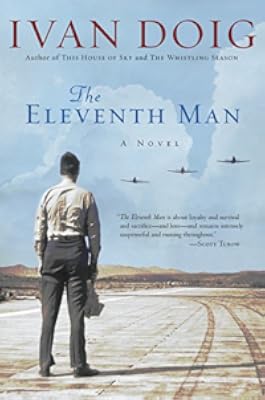
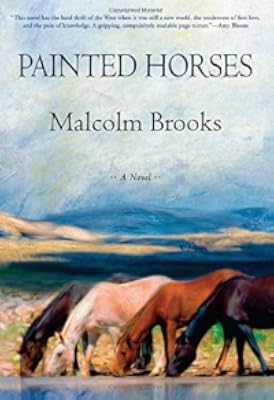
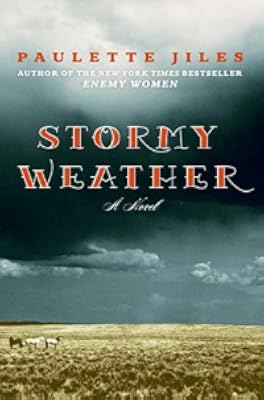
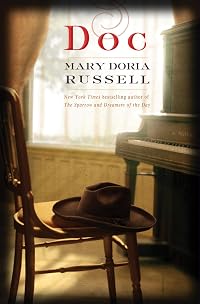
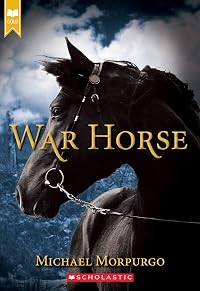
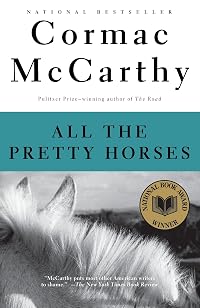
Member Recommendations
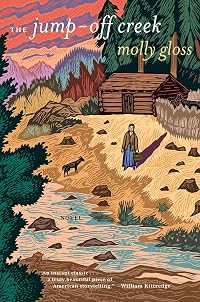
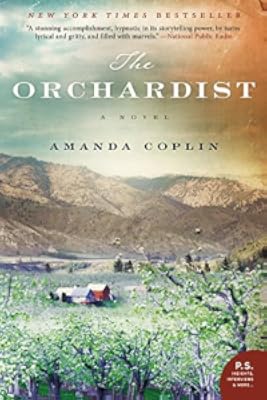
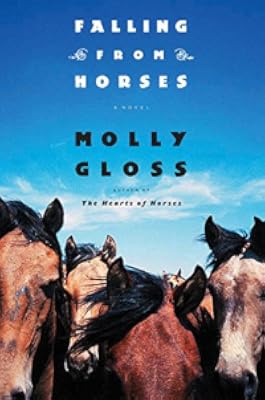
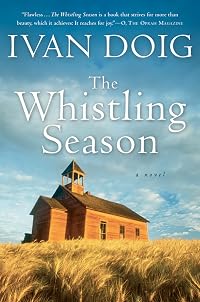
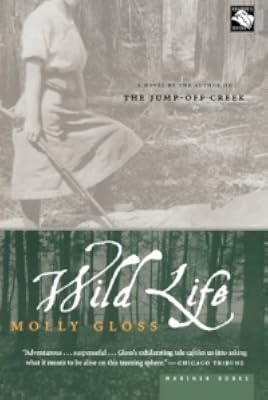
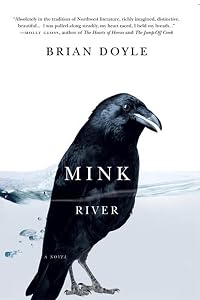
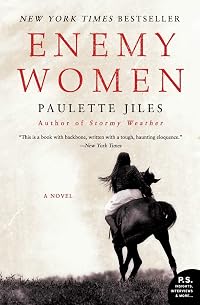
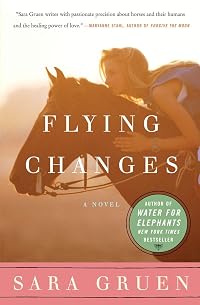
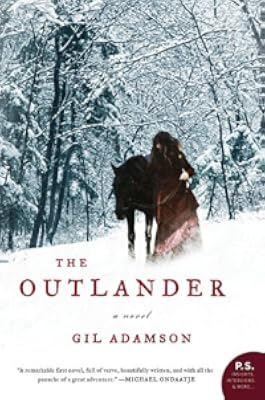
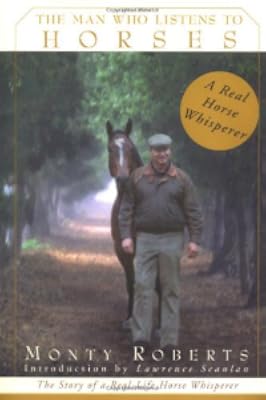
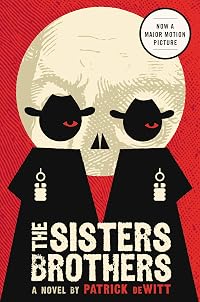
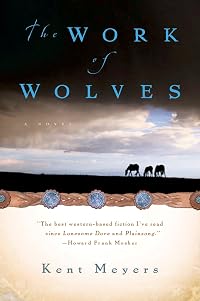
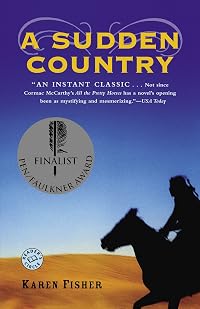
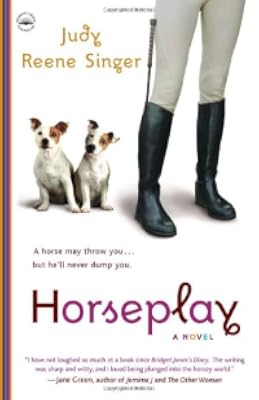
amelielyle Both novels concern independent young women who have rapport with horses--there is a secondary romantic theme to both stories.

Member Reviews
(I don't give star ratings to books by the faculty of my MFA program.)
Well, it's been proven: you can still write a novel with an omniscient narrator. I don't pretend that setting it in the historical past (the U.S. homefront during WWI) doesn't help, but it can obviously still be done, and done well.
Apart from settling that debate, The Hearts of Horses is an enjoyable read, more page-turning than its quiet, even-tempered tone would initially give you cause to guess. It may prompt you to chuckle in company, and, when pressed, explain lamely, "Just horses being horses." It gives you a sense of these horses, these people, and even this country, even though they are invented from hoof to hillock. It's a beautiful trip you'll be glad to show more have taken. show less
Well, it's been proven: you can still write a novel with an omniscient narrator. I don't pretend that setting it in the historical past (the U.S. homefront during WWI) doesn't help, but it can obviously still be done, and done well.
Apart from settling that debate, The Hearts of Horses is an enjoyable read, more page-turning than its quiet, even-tempered tone would initially give you cause to guess. It may prompt you to chuckle in company, and, when pressed, explain lamely, "Just horses being horses." It gives you a sense of these horses, these people, and even this country, even though they are invented from hoof to hillock. It's a beautiful trip you'll be glad to show more have taken. show less
n the first winter of the Great War Martha Lessen rode into Elwha County. Dolly, the mare she rode, was badly scarred but a sensible type. She also had a couple of remounts following after. Martha was looking for work. She’d left her family to try and find a job breaking horses. But she didn’t want to do it the cowboy way, busting them through bronco work. She was more interested in teaching them what was expected of them, showing them there wasn’t anything to be scared of.
I’d never heard of Molly Gloss before [a:Margo Lanagan|277536|Margo Lanagan|https://d.gr-assets.com/authors/1361153347p2/277536.jpg] mentioned this book1 in an interview. And if Margo Lanagan recommends a book and it features horses in the title then it is show more almost certain I’m going to take an interest.
And if you too are a horse story lover then you should pick this one up. Martha is a real horse lover. She understands them and wants the best for them. She tends to judge people by how they treat their animals. But she is also practical and grounded in her time and place. She knows that many people don’t think of horses the same way she does, who see nothing wrong in breaking a horse’s spirit to get it to obey. And she knows that some horses will never make it as a reliable and safe mount. But she’ll try her best keep the ones in her care from being abused.
Martha is a great character. She knows horses, but she isn’t too confident around people. Apart from wanting to break-in horses the reason she left home was to escape her abusive father and her mother, who has been worn out from childbearing. Six children in six years. Martha doesn’t want any part of that!
And for readers who don’t care about the horse-y aspect, well, don’t worry. There is still plenty to enjoy in this book. Because it is really the story of a small community on the cusp of huge change. Elwha County is a fictional place in Oregon, but the story told is a true one in many respects, World War One has just started and some men have already left to sign up. More will leave as the war worsens and America becomes more and more involved. It is also, in a way, the real end of the “Old West”. Martha may long for days when there were no fences and gates to stop and open, when wild horses streamed across the plains, but already the car has made its appearance, and many farmers are considering replacing at least some horses with tractors and automated ploughs. Soon the damage done by intensive wheat farming, to support the war effort, will strip away all the fertility from the soil and leave only dust and poverty.
The hearts of horses is a wonderfully told book, with so many little stories in it, all combining to give a flavour of what life was like in Oregon back then. I really enjoyed it and will certainly read more by Gloss in the future. show less
I’d never heard of Molly Gloss before [a:Margo Lanagan|277536|Margo Lanagan|https://d.gr-assets.com/authors/1361153347p2/277536.jpg] mentioned this book1 in an interview. And if Margo Lanagan recommends a book and it features horses in the title then it is show more almost certain I’m going to take an interest.
And if you too are a horse story lover then you should pick this one up. Martha is a real horse lover. She understands them and wants the best for them. She tends to judge people by how they treat their animals. But she is also practical and grounded in her time and place. She knows that many people don’t think of horses the same way she does, who see nothing wrong in breaking a horse’s spirit to get it to obey. And she knows that some horses will never make it as a reliable and safe mount. But she’ll try her best keep the ones in her care from being abused.
Martha is a great character. She knows horses, but she isn’t too confident around people. Apart from wanting to break-in horses the reason she left home was to escape her abusive father and her mother, who has been worn out from childbearing. Six children in six years. Martha doesn’t want any part of that!
And for readers who don’t care about the horse-y aspect, well, don’t worry. There is still plenty to enjoy in this book. Because it is really the story of a small community on the cusp of huge change. Elwha County is a fictional place in Oregon, but the story told is a true one in many respects, World War One has just started and some men have already left to sign up. More will leave as the war worsens and America becomes more and more involved. It is also, in a way, the real end of the “Old West”. Martha may long for days when there were no fences and gates to stop and open, when wild horses streamed across the plains, but already the car has made its appearance, and many farmers are considering replacing at least some horses with tractors and automated ploughs. Soon the damage done by intensive wheat farming, to support the war effort, will strip away all the fertility from the soil and leave only dust and poverty.
The hearts of horses is a wonderfully told book, with so many little stories in it, all combining to give a flavour of what life was like in Oregon back then. I really enjoyed it and will certainly read more by Gloss in the future. show less
This novel is topically so much out of my comfort zone. Nothing about it is what I would normally choose to read. The cover and the title also don't do it justice. This is really not what it seems!
But, I am so glad that I read this book because once again I am proven that sometimes the best things are where we least hope to find them.
The Hearts of Horses is a novel set in the winter of 1917, somewhere in the east of Oregon state. The main character is Martha, a young woman who escaped her abusive family to build herself a name as a "broncobuster". Through her experiences with horses, we get to know several families living in the area, whose horses Martha is training. I am amazed at how touched I was by these people and their struggles, show more even though this is not a sappy novel by any measure. There is a lot of subtle social commentary here, some big topics such as the effect of WW1 on the people who stayed behind and the myth of the American West.
Molly Gloss is just a master storyteller. The omniscient narrator works so well here and there is a great sense of time and space. Even the parts about horses were not annoying or boring, and I have zero interest in them. show less
But, I am so glad that I read this book because once again I am proven that sometimes the best things are where we least hope to find them.
The Hearts of Horses is a novel set in the winter of 1917, somewhere in the east of Oregon state. The main character is Martha, a young woman who escaped her abusive family to build herself a name as a "broncobuster". Through her experiences with horses, we get to know several families living in the area, whose horses Martha is training. I am amazed at how touched I was by these people and their struggles, show more even though this is not a sappy novel by any measure. There is a lot of subtle social commentary here, some big topics such as the effect of WW1 on the people who stayed behind and the myth of the American West.
Molly Gloss is just a master storyteller. The omniscient narrator works so well here and there is a great sense of time and space. Even the parts about horses were not annoying or boring, and I have zero interest in them. show less
A peaceful story in a world at war - This was my first exposure to the fiction of Molly Gloss. Wow! And I mean that in the most complimentary John-Denver-Rocky-Mountain-High kinda way. No, it's not the Colorado Rockies in the sixties, but the mountains of eastern Oregon in the teens, 1917-18 that is. Gloss's story, about a tomboy-ish young woman horse gentler, Martha Lessen, has such a light and sensitive touch in every way that it is hard to describe. I LOVED this book! I didn't want it to end, but when it does end it has a very right feeling, of something beautiful completed. I'm not going to summarize the story; look up top if you want that. Hearts of Horses brought to mind other books I've read - Winter Wheat, by Mildred Walker, show more which was another WWI homefront story with the same kind of peaceful beauty. And Gloss's heroine is re-reading Anna Sewell's classic Black Beauty. When Martha and Henry have what should be a very strange and awkward conversation (but it ISN'T) about what the lives of horses must be like, Black Beauty, of course comes immediately to mind; but so does Will James' western story of Smokey the Cowhorse. And there are similarities too to a more recent book I read and reviewed not long ago called Across Open Ground, by Heather Parkinson - another WWI novel.
This is such a gentle, lovely, calm, PEACEFUL tale set in the midst of a world at war that it seems almost fairy-tale surreal at times, but it's NOT. It is disturbingly real, the kind of real you'd like to walk into and get to know the people, to be their friend, to laugh with them and comfort them - THAT kind of real. I guess it's pretty obvious by now that Gloss's book has made me nearly inarticulate with admiration. Here's a typical sample that rendered me speechless; the book's title comes from this passage in which Martha and Henry talk about the horses shipped overseas to the front -
"... about the terrible plight of the horses over there - how they died on the transport ships from fear and trampling; how they pined with homesickness and consequently took cold or pneumonia and died at the remount depots before they ever got to the front; how they were often starved and thirsty to the point of eating harness or chewing their stablemate's blankets; how as many horses were invalided by war nerves as were killed in battle - their hearts and minds not able, any more than the men's, to bear the airplane bombs and grenades, falling fuses, the shrieks of wounded men and animals."
The Hearts of Horses has, I think, a kind of quiet Quaker sensibility, a plain people quality that cannot fail to touch your heart. I'm so glad I found it. What a book!
- Tim Bazzett, author of the memoir, REED CITY BOY show less
This is such a gentle, lovely, calm, PEACEFUL tale set in the midst of a world at war that it seems almost fairy-tale surreal at times, but it's NOT. It is disturbingly real, the kind of real you'd like to walk into and get to know the people, to be their friend, to laugh with them and comfort them - THAT kind of real. I guess it's pretty obvious by now that Gloss's book has made me nearly inarticulate with admiration. Here's a typical sample that rendered me speechless; the book's title comes from this passage in which Martha and Henry talk about the horses shipped overseas to the front -
"... about the terrible plight of the horses over there - how they died on the transport ships from fear and trampling; how they pined with homesickness and consequently took cold or pneumonia and died at the remount depots before they ever got to the front; how they were often starved and thirsty to the point of eating harness or chewing their stablemate's blankets; how as many horses were invalided by war nerves as were killed in battle - their hearts and minds not able, any more than the men's, to bear the airplane bombs and grenades, falling fuses, the shrieks of wounded men and animals."
The Hearts of Horses has, I think, a kind of quiet Quaker sensibility, a plain people quality that cannot fail to touch your heart. I'm so glad I found it. What a book!
- Tim Bazzett, author of the memoir, REED CITY BOY show less
I wasn’t expecting to love this book as much as I did. I’m not fond of Westerns and I’ve never been big on horse stories. But I do love me some strong women characters, and this book is full of them. Plus, the story held my interest throughout and the writing is superb. I’ve read two other Molly Gloss books: Wild Life and Jump-Off Creek (both also with strong women characters). This is my favorite.
It is 1918. Martha Lessen rides into (fictional) Elwha County in northeast Oregon intent on breaking horses and living the life of an itinerant cowboy. She is in her early twenties and has left home for reasons we find out later in the story. Her methods for breaking horses are not standard; she eschews any brutality toward the show more animals. Her talent lies with “gentling” the horses.
She finds a temporary place with George and Louise Bliss, a couple who run a small ranch, and she makes herself at home in their barn. She has very few creature comforts and is elated when Louise loans her a stack of books:
She cleared a shelf in the tack room, crowding the veterinary goods into other boxes and onto other shelves to make room for the books. Their variously colored spines, arranged along the cleared shelf, made a small, distinct change in the room. (Page 36.)
The Blisses grow fond of the tall, shy, tomboyish woman and, after she proves herself to be a skilled horse trainer, introduce her to other ranchers in the valley, securing more work for her.
Martha develops tentative relationships with the people she works for. She is painfully shy and often feels out of place in social situations. But because she spends time every week at various ranches, and because of the nature of community in the early part of the twentieth century, she becomes involved in the lives of the people who hire her.
The writing is simple, the story is simple, the lives straightforward, yet the complexities of the greater world are always in the background – WWI, illness, environmental destruction, racism. Since the story is told by an omniscient narrator sometime in the future, there are glimpses of events that will impact the land and the lives of the characters, such as the Dust Bowl and the Depression. Gloss did an astounding amount of research for this novel. The reader will learn quite a bit about horses, tack, life on a small ranch in a bygone era, the hardships and joys of being a horse whisperer and of being a woman alone in a man's world. Highly recommended. show less
It is 1918. Martha Lessen rides into (fictional) Elwha County in northeast Oregon intent on breaking horses and living the life of an itinerant cowboy. She is in her early twenties and has left home for reasons we find out later in the story. Her methods for breaking horses are not standard; she eschews any brutality toward the show more animals. Her talent lies with “gentling” the horses.
She finds a temporary place with George and Louise Bliss, a couple who run a small ranch, and she makes herself at home in their barn. She has very few creature comforts and is elated when Louise loans her a stack of books:
She cleared a shelf in the tack room, crowding the veterinary goods into other boxes and onto other shelves to make room for the books. Their variously colored spines, arranged along the cleared shelf, made a small, distinct change in the room. (Page 36.)
The Blisses grow fond of the tall, shy, tomboyish woman and, after she proves herself to be a skilled horse trainer, introduce her to other ranchers in the valley, securing more work for her.
Martha develops tentative relationships with the people she works for. She is painfully shy and often feels out of place in social situations. But because she spends time every week at various ranches, and because of the nature of community in the early part of the twentieth century, she becomes involved in the lives of the people who hire her.
The writing is simple, the story is simple, the lives straightforward, yet the complexities of the greater world are always in the background – WWI, illness, environmental destruction, racism. Since the story is told by an omniscient narrator sometime in the future, there are glimpses of events that will impact the land and the lives of the characters, such as the Dust Bowl and the Depression. Gloss did an astounding amount of research for this novel. The reader will learn quite a bit about horses, tack, life on a small ranch in a bygone era, the hardships and joys of being a horse whisperer and of being a woman alone in a man's world. Highly recommended. show less
As the United States enters World War I, the final remnants of the Old West can still be found in eastern Oregon. Nineteen-year-old Martha Lessen rides into Elwha County with a string of horses and a dream of making her way as a horse gentler. In ranch and farm country depleted of young men heading off to war, Martha finds an unusual niche as she begins making her rounds training horses in a circuit. Her unusual garb and ways with horses are a spectacle to behold, but slowly, Martha's soothing ways show results with her horses--and in the families she encounters.
I must say, I wasn't too sure about this book as I started. The third-person omniscient narrator knows all, referring to events far in the future and beyond the scope of the show more book, even going so far far as to mention when some folks die; that jolted me out of the story more than once. Martha is the main character, but the story follows a varied cast of very real people. Actually, I would say this is one of the finest books I've read as far as creating genuine characters. Everyone and everything about this book grew on me as I read. As the blurbs at the front said, the title may say it' s about the hearts of horses but it's really about the hearts of humans, too. Martha is slow and awkward in her conversations as the book begins, relating to horses better than people. Her maturity is beautiful to behold.
There was one chapter in this book that almost drove me to sobs. I've read a lot of books. Some make me tear up. But this? Oh my gosh. I read at the end that the author's husband died and she stopped writing for three years until she started on this book. I think that single chapter channels much of her grief, and it's absolutely devastating.
If you love horses, if you love studies of humanity, if you're curious about an in-depth look at the American rural home front during World War I... read this book. I hope it touches you as it did me. show less
I must say, I wasn't too sure about this book as I started. The third-person omniscient narrator knows all, referring to events far in the future and beyond the scope of the show more book, even going so far far as to mention when some folks die; that jolted me out of the story more than once. Martha is the main character, but the story follows a varied cast of very real people. Actually, I would say this is one of the finest books I've read as far as creating genuine characters. Everyone and everything about this book grew on me as I read. As the blurbs at the front said, the title may say it' s about the hearts of horses but it's really about the hearts of humans, too. Martha is slow and awkward in her conversations as the book begins, relating to horses better than people. Her maturity is beautiful to behold.
There was one chapter in this book that almost drove me to sobs. I've read a lot of books. Some make me tear up. But this? Oh my gosh. I read at the end that the author's husband died and she stopped writing for three years until she started on this book. I think that single chapter channels much of her grief, and it's absolutely devastating.
If you love horses, if you love studies of humanity, if you're curious about an in-depth look at the American rural home front during World War I... read this book. I hope it touches you as it did me. show less
I'm starting to see historical fiction as an escape these days, a more pleasant read for these times, even if that historical fiction takes place during World War One. And this is a pleasant book, even if there are sometimes hard themes. Martha escapes her crowded family by heading to Oregon to become a broncobuster -- gentling wild horses for the reins and saddle. A circle ride to train a bunch of horses at once is an easy way to meet the neighbors in a community, and was a great narrative device here. It reminded me a bit of a historical 'Olive Kitteridge' by Elizabeth Strout with its polyphonic way of storytelling. I'm glad I picked this up!
Members
- Recently Added By
Lists

Best Contemporary Literary Fiction (Around the Last 30 Years)
400 works; 122 members

Best Westerns
20 works; 6 members

Top Five Books of 2017
757 works; 231 members

BingoDOG - Animals in Adult Fiction
78 works; 20 members

Best Horse Stories or "Back in the Saddle Again"
82 works; 17 members

Best Books About Animals
143 works; 48 members

The Five Books That Represent Us
391 works; 150 members
Talk Discussions
Past Discussions
woman horse breaker in 1800's in Name that Book (June 2012)
Author Information

15+ Works 2,069 Members
Molly Gloss was a finalist for the PEN/Faulkner Award. She teaches writing and literature of the American West at Portland State University and lives in Portland, Oregon. (Bowker Author Biography)
Awards and Honors
Work Relationships
Is contained in
Common Knowledge
- Original publication date
- 2007
- People/Characters
- Martha Lessen; Henry Frazer; Louise Bliss; George Bliss
- Important places
- Oregon, USA; Elwha County, Oregon, USA
- Important events
- World War I
- Dedication
- For Ed, this last gift
- First words
- In those days, even before the war had swept up all the young men from the ranches, there were girls who came through the country breaking horses.
- Last words
- (Click to show. Warning: May contain spoilers.)Here I am in my old age and just at the beginning of figuring out what that means, or what to do about it.
- Blurbers
- Haruf, Kent; Grandin, Temple; Barrett, Andrea
Classifications
Statistics
- Members
- 665
- Popularity
- 43,487
- Reviews
- 48
- Rating
- (4.05)
- Languages
- English
- Media
- Paper, Audiobook, Ebook
- ISBNs
- 16
- UPCs
- 1
- ASINs
- 7