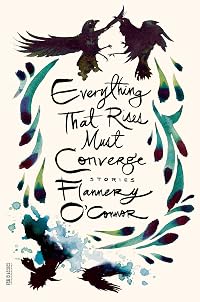
Everything That Rises Must Converge: Stories
by Flannery O'Connor 
On This Page
Description
This collection of nine short stories by Flannery O'Connor was published posthumously in 1965. The flawed characters of each story are fully revealed in apocalyptic moments of conflict and violence that are presented with comic detachment. The title story is a tragicomedy about social pride, racial bigotry, generational conflict, false liberalism, and filial dependence. The protagonist, Julian Chestny, is hypocritically disdainful of his mother's prejudices, but his smug selfishness is show more replaced with childish fear when she suffers a fatal stroke after being struck by a black woman she has insulted out of oblivious ignorance rather than malice. Similarly, "The Comforts of Home" is about an intellectual son with an Oedipus complex. Driven by the voice of his dead father, the son accidentally kills his sentimental mother in an attempt to murder a harlot. The other stories are "A View of the Woods," "Parker's Back," "The Enduring Chill," "Greenleaf," "The Lame Shall Enter First," "Revelation," and "Judgment Day." Flannery O'Connor was working on Everything That Rises Must Converge at the time of her death. This collection is an exquisite legacy from a genius of the American short story, in which she scrutinizes territory familiar to her readers: race, faith, and morality. The stories encompass the comic and the tragic, the beautiful and the grotesque; each carries her highly individual stamp and could have been written by no one else. show lessTags
Recommendations














Member Reviews
Flannery O'Connor's final short story collection was compiled and published after her death. All except for one story, Parker's Back, were published previously and the final story in the collection, Judgement Day, is a reworked version of her first published story. It does help to know that O'Connor did not choose the stories or place them in the order they appear in the book.
The titular story starts things off and it's O'Connor at her biting best. A woman has her son accompany her on a bus trip in Atlanta, feeling she needs protection now that the buses are integrated. The son is resentful, both of this small task and of his mother, who raised him on her own and continues to support him. As he stews and sulks, she becomes increasingly show more outgoing and everything becomes more and more uncomfortable. And then it all ends very badly. It's both brilliant and immediately recognizable as being written by O'Connor.
The following stories continue in this vein, pitting hard-working yet silly mothers against idle sons who resent them. And then things always end very badly. In lesser hands, this would result in stories that feel too similar, but O'Connor's returning to the same ground results in a feeling of cohesion. And then there are the variations -- a man both resents his wife and longs to win her admiration in Parker's Back, a widower takes in a homeless young man with a club foot and soon prefers him over his own son, a lonely ten-year-old who misses his mother. But don't confuse heart-rending circumstances for authorial empathy; O'Connor eviscerates her characters, leaving them not a shred of dignity as she explores their darkest weaknesses.
My one quibble with this collection lays with the final story, Judgement Day. Even in descriptions of her given by admirers, her racism is evident. Yet her stories aren't racist -- she's equally willing to lay bare all the dirty hate and hypocrisy of a well-heeled racist in a new hat as she is to call out someone setting themselves in opposition to racism, but benefitting from it. But this final story, of an elderly man living in his daughter's New York apartment and longing for home, is the exception. Not only does the n-word appear numerous times in each paragraph, the Black characters all conform to a Southern racist's stereo-types. All the justifications, all the she-was-a-product-of-her-time excuses can't cover up what is going on in this story. Other than that, and it's a pretty big other-than-that, this collection is brilliant. Approach with caution. show less
The titular story starts things off and it's O'Connor at her biting best. A woman has her son accompany her on a bus trip in Atlanta, feeling she needs protection now that the buses are integrated. The son is resentful, both of this small task and of his mother, who raised him on her own and continues to support him. As he stews and sulks, she becomes increasingly show more outgoing and everything becomes more and more uncomfortable. And then it all ends very badly. It's both brilliant and immediately recognizable as being written by O'Connor.
The following stories continue in this vein, pitting hard-working yet silly mothers against idle sons who resent them. And then things always end very badly. In lesser hands, this would result in stories that feel too similar, but O'Connor's returning to the same ground results in a feeling of cohesion. And then there are the variations -- a man both resents his wife and longs to win her admiration in Parker's Back, a widower takes in a homeless young man with a club foot and soon prefers him over his own son, a lonely ten-year-old who misses his mother. But don't confuse heart-rending circumstances for authorial empathy; O'Connor eviscerates her characters, leaving them not a shred of dignity as she explores their darkest weaknesses.
My one quibble with this collection lays with the final story, Judgement Day. Even in descriptions of her given by admirers, her racism is evident. Yet her stories aren't racist -- she's equally willing to lay bare all the dirty hate and hypocrisy of a well-heeled racist in a new hat as she is to call out someone setting themselves in opposition to racism, but benefitting from it. But this final story, of an elderly man living in his daughter's New York apartment and longing for home, is the exception. Not only does the n-word appear numerous times in each paragraph, the Black characters all conform to a Southern racist's stereo-types. All the justifications, all the she-was-a-product-of-her-time excuses can't cover up what is going on in this story. Other than that, and it's a pretty big other-than-that, this collection is brilliant. Approach with caution. show less
I was first turned on to Flannery O'Connor by, of all things, Lost. In a late episode, a character is seen reading the book on a park bench, and it inspired me to pick the collection up next time I was in a bookstore. Like Lost, the stories here run the gamut of people who seem simple on the surface, but harbor deep and often devastating truths underneath. And, in my opinion, it is also like Lost in that it begs not to be put down, and is simply stunning.
The stories are not interconnected in any way, but merely explore the worst characteristics of human beings and the consequences those traits have on the characters that possess them. The tales are filled with racism, hate, faith, education, sadness, anger, and death, and O'Connor's show more skill is in upending the expectations of how she will handle each of these motifs. The title story, for example, centers around two characters that appear to be little more than types: the old, set-in-her-ways racist and her enlightened, wiser son. In the end, the comeuppance is swift, unprecedented, and appropriate, and forces the reader to consider which view, if either, is truly correct.
Many of the early stories in the collection have a certain degree of predictability about them, though none of them lose any of their impact as a result. In tales like "Greenleaf," "A View of the Woods," and "The Comforts of Home," acts of violence punctuate the tension that has built throughout, but each has a drastically different effect on the reader, ranging from horror to despair. It's a testament to O'Connor's skill that though she at times feels as if she is operating within a formula, she can manipulate the scenes and figures to make the emotions ring true and the stories feel fresh.
O'Connor also deals marvelously with the notion of ambiguity, something that populates these tales very obviously. "The Lame Shall Enter First" is a masterful display of misdirection, with an O. Henry-style final paragraph that forces the reader to reconsider the true nature of the goodliness the story seems to be exploring. So too is "Revelation," in which a outburst of violent rage is the catalyst that drives a simple, racist woman to consider her life and what she is. In the end, it's hard to tell what if anything she has learned, but it invites us to consider our own flaws and if we expect or deserve to be defined by them.
While some of the stories are stronger than others, each carries a particular punch that pushes you to want to continue reading on. Each story too is characterized by a writing style that feels so deceptively simple and straightforward that it practically demands another reading. In short, Everything That Rises Must Converge is a masterful collection of stories by an author who understood humanity remarkably well, and in whose short life and career left an astonishing legacy. show less
The stories are not interconnected in any way, but merely explore the worst characteristics of human beings and the consequences those traits have on the characters that possess them. The tales are filled with racism, hate, faith, education, sadness, anger, and death, and O'Connor's show more skill is in upending the expectations of how she will handle each of these motifs. The title story, for example, centers around two characters that appear to be little more than types: the old, set-in-her-ways racist and her enlightened, wiser son. In the end, the comeuppance is swift, unprecedented, and appropriate, and forces the reader to consider which view, if either, is truly correct.
Many of the early stories in the collection have a certain degree of predictability about them, though none of them lose any of their impact as a result. In tales like "Greenleaf," "A View of the Woods," and "The Comforts of Home," acts of violence punctuate the tension that has built throughout, but each has a drastically different effect on the reader, ranging from horror to despair. It's a testament to O'Connor's skill that though she at times feels as if she is operating within a formula, she can manipulate the scenes and figures to make the emotions ring true and the stories feel fresh.
O'Connor also deals marvelously with the notion of ambiguity, something that populates these tales very obviously. "The Lame Shall Enter First" is a masterful display of misdirection, with an O. Henry-style final paragraph that forces the reader to reconsider the true nature of the goodliness the story seems to be exploring. So too is "Revelation," in which a outburst of violent rage is the catalyst that drives a simple, racist woman to consider her life and what she is. In the end, it's hard to tell what if anything she has learned, but it invites us to consider our own flaws and if we expect or deserve to be defined by them.
While some of the stories are stronger than others, each carries a particular punch that pushes you to want to continue reading on. Each story too is characterized by a writing style that feels so deceptively simple and straightforward that it practically demands another reading. In short, Everything That Rises Must Converge is a masterful collection of stories by an author who understood humanity remarkably well, and in whose short life and career left an astonishing legacy. show less
Flannery O'Connor's short stories are like the crack of the whip dangerously close to your head. Sometimes humorous, sometimes peculiar, often times violent, but always breathtakingly true. Imagine the nervous laughter that bubbles up when you realize that whip has missed your face. You laugh because you want it to be a skillful miss as opposed to a clumsy mistake. Imagine the quirkiness of characters who are dangerously misunderstood. There is always something a little sinister about O'Connor. She enjoys the abrupt turn of events that take her readers by surprise. She holds us witness to the good, the bad, and the ugly of humanity.
Everything That Rises Must Converge is a compilation of nine short stories.
Everything That Rises Must Converge is a compilation of nine short stories.
Assigning stars proved to be a challenge for this title. This collection of short stories bears little resemblance to my limited exposure to O'Conner's writing, namely "The Gift of the Magi". She writes with confidence shaping believable characters creating places and situations that ring true. However, these stories lack a single sympathetic character. Each one -- man, woman, child or adult -- is uniquely blind, bigoted, selfish, calculating, arrogant, and often sinister. As a reward some unique death or living death awaits them all.
I read/listened to A Good Man is Hard to Find and Other Stories and Everything That Rises Must Converge back-to-back and have to say that I found the tone of this book a bit softer than A Good Man. While both books share a dearth of characters vying for sainthood, this last volume written before her death at least seems to offer some hope for humanity. Still O'Connor’s prose offers us an insight into the human condition that is unparalleled in American literature. As Thomas Merton said after her death in 1964, “I write her name with honor, for all the truth and all the craft with which she shows man’s fall and his dishonor.”
I suspect that her stories will stay with me for many years to come. Some, like the tragic The Lame Shall show more Enter First, may never leave me.
FYI: On a 5-point scale I assign stars based on my assessment of what the book needs in the way of improvements:
*5 Stars – Nothing at all. If it ain’t broke, don’t fix it.
*4 Stars – It could stand for a few tweaks here and there but it’s pretty good as it is.
*3 Stars – A solid C grade. Some serious rewriting would be needed in order for this book to be considered great or memorable.
*2 Stars – This book needs a lot of work. A good start would be to change the plot, the character development, the writing style and the ending.
*1 Star - The only thing that would improve this book is a good bonfire. show less
I suspect that her stories will stay with me for many years to come. Some, like the tragic The Lame Shall show more Enter First, may never leave me.
FYI: On a 5-point scale I assign stars based on my assessment of what the book needs in the way of improvements:
*5 Stars – Nothing at all. If it ain’t broke, don’t fix it.
*4 Stars – It could stand for a few tweaks here and there but it’s pretty good as it is.
*3 Stars – A solid C grade. Some serious rewriting would be needed in order for this book to be considered great or memorable.
*2 Stars – This book needs a lot of work. A good start would be to change the plot, the character development, the writing style and the ending.
*1 Star - The only thing that would improve this book is a good bonfire. show less
Holy crap!
Or really, I ought to say that these stories are all about crappy holier-than-thou jerkwads all coming to gloriously nasty ends. And/or despair. As desert.
I expected something of this before I read it, of course. I've heard that Flannery O'Connor is one of the masters of the short fiction and nothing I've read is telling me any else. But what can we really expect?
TONS of racism. A mountain of some of the very worst humanity has to offer handed to us in our very own PoVs. This is fifties and sixties stuff, so prepare yourself. The most grace I see in them usually comes from the really delightful ends. A death here or there. Despair is good. And often these nasty people don't even know why.
We do. Or I'd like to think we, as show more readers, do.
Hell, this is why I'm such a big fan of Stephen King. We get to know these jerks and then we start cheering when the bad happens to them. Glory, glory, hallelujah!
Well worth the read. show less
Or really, I ought to say that these stories are all about crappy holier-than-thou jerkwads all coming to gloriously nasty ends. And/or despair. As desert.
I expected something of this before I read it, of course. I've heard that Flannery O'Connor is one of the masters of the short fiction and nothing I've read is telling me any else. But what can we really expect?
TONS of racism. A mountain of some of the very worst humanity has to offer handed to us in our very own PoVs. This is fifties and sixties stuff, so prepare yourself. The most grace I see in them usually comes from the really delightful ends. A death here or there. Despair is good. And often these nasty people don't even know why.
We do. Or I'd like to think we, as show more readers, do.
Hell, this is why I'm such a big fan of Stephen King. We get to know these jerks and then we start cheering when the bad happens to them. Glory, glory, hallelujah!
Well worth the read. show less
A collection of short stories about the most miserable assemblage of humanity imaginable.
I’m giving myself permission not to like Flannery O’Connor. I read some of her work in college, and later picked up this volume in a used bookstore. It took me years to get around to it, and I must admit that I found reading it a struggle. It’s so very depressing. There’s not a likable character in the book, and reading about deplorable people getting what they deserve is not exactly uplifting. Lots of people like O’Connor’s writing; I am not one of them.
I’m giving myself permission not to like Flannery O’Connor. I read some of her work in college, and later picked up this volume in a used bookstore. It took me years to get around to it, and I must admit that I found reading it a struggle. It’s so very depressing. There’s not a likable character in the book, and reading about deplorable people getting what they deserve is not exactly uplifting. Lots of people like O’Connor’s writing; I am not one of them.
Members
- Recently Added By
Lists

1001 Books You Must Read Before You Die
1,448 works; 1,134 members

20th Century Literature
1,161 works; 54 members

National Book Award Finalists - Fiction
377 works; 12 members

Female Author
1,235 works; 67 members
Southern Fiction
212 works; 52 members
1960s, Best books published therein
254 works; 22 members

1,001 BYMRBYD Concensus
723 works; 27 members
LibraryThingers' 1001 Books You Must Read Before You Die
442 works; 30 members

Five star books
1,757 works; 108 members

Favorite Books from the 1960s
34 works; 3 members

Books Read in 2009
464 works; 11 members
American Lit for Eng 11 Research Project
368 works; 6 members

Short Story and Novella Collections
47 works; 6 members

Books Read in 2011
684 works; 20 members

Books With Complete Sentence Titles
374 works; 15 members

Favorite Book Titles
35 works; 1 member

Beginner's Guide to Southern Gothic
22 works; 4 members

Recommended Reading : 600 Classics Reviewed, Editors of Salem Press, 2015
634 works; 6 members

Library List 4.5
25 works; 1 member

Library List - Pulitzer Adjacent
40 works; 1 member
Author Information

168+ Works 29,901 Members
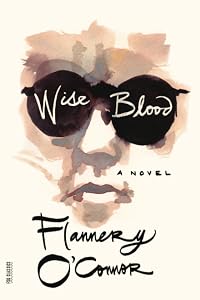
Flannery O'Connor was born in Savannah, Georgia. She had a quiet, bookish life as a child before attending Georgia State College for Women and going on tot he Writers Workshop at the State University of Iowa, where she earned a Master of Fine Arts degree. Her 1949 dissertation consisted of six short stories, one of which she developed into her show more first novel, Wise Blood (1952). Wise Blood is the story of a fanatical, wandering preacher who sets out to found a "church of truth without Jesus Christ crucified." The book introduces some of the religious themes that run throughout O'Connor's later work. Her second novel, The Violent Bear It Away (1960), is the story of murder involving a Tennessee backwoods preacher and a small boy. Once again, O'Connor explores unusual manifestation of religion and human eccentricities. Although O'Connor produced only a small body of work during her relatively brief lifetime, she has received much critical attention. O'Connor suffered from lupus, an inherited disease, which crippled her and cut short her life, and so her creative work was largely compressed within a decade of the 1950's. Her father also dies of Lupus when she was 15 years old. O'Connor is frequently praised as being the most creative and distinctive writer of this period. The two most notable aspects of her fiction are its religious themes and its commentary on the oppressive traditions of the mid-twentieth-century Deep South. (Bowker Author Biography) show less
Flannery O'Connor has a Legacy Library. Legacy libraries are the personal libraries of famous readers, entered by LibraryThing members from the Legacy Libraries group.
Some Editions
Awards and Honors
Awards
Distinctions
Series
Belongs to Publisher Series
Work Relationships
Common Knowledge
- Canonical title
- Everything That Rises Must Converge: Stories
- Original publication date
- 1965
- Disambiguation notice
- Collection of nine short stories. Please do not combine with the eponymous short story. Contains:
- Everything That Rises Must Converge
- The Comforts of Home
- A View of the Woods
- Parker's Back <... (show all)li>The Enduring Chill
- Greenleaf
- The Lame Shall Enter First
- Revelation
- Judgment Day
Classifications
Statistics
- Members
- 2,638
- Popularity
- 7,104
- Reviews
- 55
- Rating
- (4.15)
- Languages
- 7 — Chinese, Dutch, English, Estonian, German, Portuguese, Swedish
- Media
- Paper, Audiobook, Ebook
- ISBNs
- 32
- ASINs
- 35