On This Page
Description
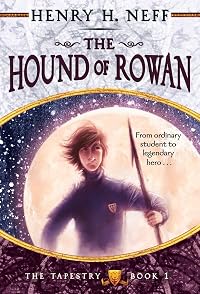
After glimpsing a hint of his destiny in a mysterious tapestry, twelve-year-old Max McDaniels becomes a student at Rowan Academy, where he trains in "mystics and combat" in preparation for war with an ancient enemy that has been kidnapping children like him.Tags
Recommendations



Member Recommendations
infiniteletters The Hound of Rowan is modern, but it shares aspects of Welsh mythology.
Member Reviews
During an annual museum trip with his Dad, Max McDaniels discovers he has potential. But his “potential” is not your normal everyday kid potential. Nope. Max’s potential is magical, and a chance encounter with a golden threaded tapestry in the museum opens up a whole new world for the boy. Max eventually ends up at Rowan, an exclusive school for other Potentials, but not after being attacked by an odd little woman with hard, sparkly eyes. Once at school, Max discovers a number of pronounced talents — he can Amplify like nobody’s business (picture Superman’s quick trip around the Earth to turn back time when Lois dies on that highway in Superman: the Movie) and bears an odd similarity to Cuchulain, the Hound of Ulster from show more Irish mythology. As expected, a darkness is rising, and Max and his roommate David appear to be the duo that will save the world. Despite their efforts, however, the Darkness (in this case, Astaroth) does rise again, opening the door for more adventures.
The Hound of Rowan is awash in mythology, both modern and ancient, and Neff pays tribute to Those Who Have Gone Before. There are plenty of similarities to Harry Potter — the impetuous boy destined to save the world, the magic school, odd creatures, the village sweet shop — but there is a welcome and refreshing blending of imagery from other sources as varied as The Dark is Rising, Half Magic, The Mabinogion, Star Trek, Tron, and even Bedknobs and Broomsticks! I was particularly taken with the “Courses” students are required to master that use a concept similar to Star Trek: the next generation holodeck mashed up with the psychedelic bing-bing of Tron. The courses run “scenarios” that teach the students things like strategy and agility. And of course, the obligatory school sports game — not Quidditch but Euclidean Soccer — played remarkably like the soccer game on the Island of Naboomboo in Bedknobs & Broomsticks.
The copy I read was an advanced reading copy, and as expected there were a few things that needed to be fixed. I hope the final version provides a better characterization of David, Max’s roommate, as well as the backstory for Ronin (think Sirius Black). On the whole, however, Hound of Rowan is a total and complete romp, well worth your time, and highly recommended for grades 4 and up. show less
The Hound of Rowan is awash in mythology, both modern and ancient, and Neff pays tribute to Those Who Have Gone Before. There are plenty of similarities to Harry Potter — the impetuous boy destined to save the world, the magic school, odd creatures, the village sweet shop — but there is a welcome and refreshing blending of imagery from other sources as varied as The Dark is Rising, Half Magic, The Mabinogion, Star Trek, Tron, and even Bedknobs and Broomsticks! I was particularly taken with the “Courses” students are required to master that use a concept similar to Star Trek: the next generation holodeck mashed up with the psychedelic bing-bing of Tron. The courses run “scenarios” that teach the students things like strategy and agility. And of course, the obligatory school sports game — not Quidditch but Euclidean Soccer — played remarkably like the soccer game on the Island of Naboomboo in Bedknobs & Broomsticks.
The copy I read was an advanced reading copy, and as expected there were a few things that needed to be fixed. I hope the final version provides a better characterization of David, Max’s roommate, as well as the backstory for Ronin (think Sirius Black). On the whole, however, Hound of Rowan is a total and complete romp, well worth your time, and highly recommended for grades 4 and up. show less
In Henry H. Neff's The Hound of Rowan: Book One of the Tapestry, we are introduced to Max McDaniels, a thirteen year old boy who stumbles upon a room in the Chicago Institute of Art where he finds a strange tapestry, whose pictures seem to move and produce music. After discovering the tapestry, he finds a note in his pocket telling him to expect a visitor who happens to work for Rowan Academy, a school that specializes in nurturing the talents of kids with special abilities.
Setting aside the inevitable HP comparison, I found myself enjoying this book immensely. The book follows Max's first year at Rowan, where he discovers that he may be in possession of powerful magic. There is a great, ancient evil that was thought destroyed but may show more not be, and a legion of followers who are working to help the ancient evil regain control. There are several other similarities to HP; Max turns out to be extraordinarily good at the school's chosen sport; he has the possibility of having a huge amount of power at his disposal that he is unaware of; the school becomes his safe haven from the Enemy; the town next door is privy to the secrets of the school, and the students are allowed to spend some of their free time there; there is even a kind-hearted giant who the kids befriend (in this case, a reformed ogre who works in the kitchens); there are some other similarities to HP, but revealing those would give away some of the story. For as much as the book does seem to mirror HP, there are just as many differences within the story to make it stand on its own; Max loves his family and doesn't want to stay at the school; the magic is tied directly to ancient Irish lore rather than a more fabricated background; there is also some science tied in with the magic behind the school, so while I can see where people would jump to the conclusion that Neff is trying to create his own version of HP, I just can't see it that way. He is trying to create a world that is entirely his, and just so happens to be using some of the same techniques that JK Rowling herself borrowed from other stories to create hers; because in all fairness JKR didn't come up with these ideas all on her own. She's just become really famous for it.
I'm giving it 4 stars because Neff knows how to move his story along and ties up the plot lines nicely, leaving just enough questions to make the sequel worthwhile. I would like to see fewer plot devices akin to HP; while I understand that it is hard to not compare YA books to HP these days, there did seem to be a few too many similarities. Neff has proven that he can create a world all his own, now I'd like to see him take it further in his own direction. show less
Setting aside the inevitable HP comparison, I found myself enjoying this book immensely. The book follows Max's first year at Rowan, where he discovers that he may be in possession of powerful magic. There is a great, ancient evil that was thought destroyed but may show more not be, and a legion of followers who are working to help the ancient evil regain control. There are several other similarities to HP; Max turns out to be extraordinarily good at the school's chosen sport; he has the possibility of having a huge amount of power at his disposal that he is unaware of; the school becomes his safe haven from the Enemy; the town next door is privy to the secrets of the school, and the students are allowed to spend some of their free time there; there is even a kind-hearted giant who the kids befriend (in this case, a reformed ogre who works in the kitchens); there are some other similarities to HP, but revealing those would give away some of the story. For as much as the book does seem to mirror HP, there are just as many differences within the story to make it stand on its own; Max loves his family and doesn't want to stay at the school; the magic is tied directly to ancient Irish lore rather than a more fabricated background; there is also some science tied in with the magic behind the school, so while I can see where people would jump to the conclusion that Neff is trying to create his own version of HP, I just can't see it that way. He is trying to create a world that is entirely his, and just so happens to be using some of the same techniques that JK Rowling herself borrowed from other stories to create hers; because in all fairness JKR didn't come up with these ideas all on her own. She's just become really famous for it.
I'm giving it 4 stars because Neff knows how to move his story along and ties up the plot lines nicely, leaving just enough questions to make the sequel worthwhile. I would like to see fewer plot devices akin to HP; while I understand that it is hard to not compare YA books to HP these days, there did seem to be a few too many similarities. Neff has proven that he can create a world all his own, now I'd like to see him take it further in his own direction. show less
On the aniversery of his mother's dissapearence, Max and his father visit Chicago's modern art museum, where Max's life is changed forever. In an hidden room Max sees a tapestry that comes to life under his gaze. Max is an Apprentice and is accepted into Rowan Acadamy, a special boarding school where Apprentices are trained to fight the Enemy. At Rowan, Max learns how to utilize his new found abilities and re-evaluates what he thought he knew about the world and his place in it. A war is coming, the Enemy is on the move and somehoe Max's destiny is tangled up with the furture of Rowan and its guardians. Reader's cannot help but compare this book with the Harry Potter series, since it is a adolescent boy who discovers he has magic show more powers. However, Neff has delivered a superbly crafted, highly imaginative work that only superficially shadows Harry's first adventure. Max and the other characters are well-crafted and the reader is given tantalizing glimpses of the inner workings of various characters throughout the book. Magic is approached in an atypical manner. No wands or magic words, just will and thought and training, which is a nice change of pace. I would recommend this book to readers who enjoy magic and the battle between good and evil. I look forward to Neff's next novel. show less
On the aniversery of his mother's dissapearence, Max and his father visit Chicago's modern art museum, where Max's life is changed forever. In an hidden room Max sees a tapestry that comes to life under his gaze. Max is an Apprentice and is accepted into Rowan Acadamy, a special boarding school where Apprentices are trained to fight the Enemy. At Rowan, Max learns how to utilize his new found abilities and re-evaluates what he thought he knew about the world and his place in it. A war is coming, the Enemy is on the move and somehoe Max's destiny is tangled up with the furture of Rowan and its guardians. Reader's cannot help but compare this book with the Harry Potter series, since it is a adolescent boy who discovers he has magic show more powers. However, Neff has delivered a superbly crafted, highly imaginative work that only superficially shadows Harry's first adventure. Max and the other characters are well-crafted and the reader is given tantalizing glimpses of the inner workings of various characters throughout the book. Magic is approached in an atypical manner. No wands or magic words, just will and thought and training, which is a nice change of pace. I would recommend this book to readers who enjoy magic and the battle between good and evil. I look forward to Neff's next novel. show less
Has some of the same elements that made Harry P. so popular: the discovery of hidden magical talents, a special school, and a myriad of diverting characters. If the writing never quite comes to life like the best of this genre, it is still a good new series to recommend.
RATING: 2.5 estrelas.
Quando me foi proposta a leitura deste livro, fiz alguma pesquisa sobre o mesmo e descobri várias opiniões no Goodreads que o caracterizavam como sendo parecido com Harry Potter mas não desprovido do seu próprio encanto.
Parti então para a leitura com algum entusiasmo pois a saga de Harry Potter é uma das minhas preferidas e se "O Guardião de Rowan" tinha o mesmo tipo de premissa isso só podia significar que ia ser um livro agradável.
Infelizmente, não foi o caso. Ao contrário de outros leitores não achei o mundo construído por Henry H. Neff particularmente interessante; nem o mundo, nem o enredo e nem mesmo as personagens.
Mas comecemos pelo principio. A história faz realmente lembrar a do Harry Potter. show more O protagonista, Max McDaniels, está de visita a um museu quando se depara com uma velha e puída tapeçaria numa sala meio escondida. Quando se aproxima, a tapeçaria parece mudar: as cores avivam-se, cenas bucólicas desenham-se, os fios brilham em várias cores... enfim, basicamente a tapeçaria transforma-se. E pouco depois Max recebe uma carta informando-o que é um "Potencial". E é assim que a vida deste jovem de 12 anos muda para sempre... indivíduos estranhos aparecem de repente, alguns para lhe fazer mal, outros para lhe dizer que fora aceite na Escola de Magia e Feitiçaria de Hogwa... Academia de Rowan.
Quando chega à escola, Max aprende que é um "Místico" e que pode manipular energia. E não, não é preciso varinhas como os professores salientam peremptoriamente.
Esta é, em linhas gerais, a história do primeiro livro que me parece ser um livro introdutório à série, uma vez que a acção é escassa. Muito pouco acontece que não esteja relacionado com o funcionamento normal de uma escola em regime de internato. Isto tornou a leitura um pouco morosa, por vezes.
Max ingressa então na Academia, um local misterioso carregado de 'Magia Antiga', onde as divisões mudam de aspecto para acomodar quem lá está dentro; os seus testes indicam que tem qualquer coisa de invulgar, mas não se sabe bem o quê. Quase de início, Max e os colegas são confrontados com um trio de alunos arrogantes do segundo ano que persistem em gozar com eles. Bailes e banquetes a celebrar o dia das Bruxas ou o Dia dos Namorados sucedem-se... e, claro, todos os alunos têm de cuidar e conviver com criaturas mágicas, inventadas pelo autor e que, para serem distintas das apresentadas numa certa série são... bem, ridículas. O "lymrill", por exemplo, é uma misturaça tão grande de espécies que não fui capaz de criar qualquer imagem mental do animal. O único ponto positivo que tenho a apontar é a utilização de engenhos tecnológicos lado a lado com a magia.
Como podem ver o enredo é assustadoramente reminiscente do de Harry Potter; a triste diferença é que Neff não é, nem de perto nem de longe um escritor tão imaginativo como Rowling. É por isso que o seu mundo falha e que não consegue imprimir às suas criaturas ou à sua misteriosa academia o ambiente mágico e arcano que caracterizam os livros de Rowling. A prática da 'magia' é escassa no livro e Max utiliza mais a sua misteriosa força sobre-humana do que os seus supostos dons de místico.
Também a mitologia é confusa. O autor utiliza mitologia Irlandesa e Escocesa para explicar a constante mas antiga batalha entre os Místicos "bons" e os "maus" (também comummente designados como "O Inimigo"), metendo os Tuatha Dé Danann pelo meio; Cúchulain entra também na história para explicar porque é que Max é especial, mas sinceramente as explicações são tão atabalhoadas e incompletas que não se percebe bem a relação.
As personagens também têm muito pouco que se recomende. Não estão particularmente bem desenvolvidas e em termos comportamentais são semelhantes às de Rowling (temos David, o Místico prodígio e a Directora que trata Max como o Dumbledore trata o Harry). Max distingue-se de Harry Potter na medida em que parece ter mais garra e ser um pouco mais volúvel emocionalmente. Mas de resto não há nenhuma personagem que se destaque.
No geral: "A Tapeçaria - O Guardião de Rowan" é mais um livro dirigido aos leitores que apreciaram Harry Potter. Atenção, digo aos que apreciaram e não aos fans. Isto porque o universo criado por Henry H. Neff é tão similar ao de Rowling que um fan desta depressa estaria a comparar as duas obras. E a de Neff sai claramente a perder pois falta-lhe o encanto e complexidade que caracterizam os livros de J.K. Rowling. Confesso que este livro não me cativou particularmente por achar o enredo previsível e o mundo pouco interessante e mal desenvolvido. Destaco, no entanto, a escrita acessível do autor e as belíssimas ilustrações espalhadas pelo livro. Talvez o segundo livro tenha mais detalhes sobre o mundo em que as personagens se movem. show less
Quando me foi proposta a leitura deste livro, fiz alguma pesquisa sobre o mesmo e descobri várias opiniões no Goodreads que o caracterizavam como sendo parecido com Harry Potter mas não desprovido do seu próprio encanto.
Parti então para a leitura com algum entusiasmo pois a saga de Harry Potter é uma das minhas preferidas e se "O Guardião de Rowan" tinha o mesmo tipo de premissa isso só podia significar que ia ser um livro agradável.
Infelizmente, não foi o caso. Ao contrário de outros leitores não achei o mundo construído por Henry H. Neff particularmente interessante; nem o mundo, nem o enredo e nem mesmo as personagens.
Mas comecemos pelo principio. A história faz realmente lembrar a do Harry Potter. show more O protagonista, Max McDaniels, está de visita a um museu quando se depara com uma velha e puída tapeçaria numa sala meio escondida. Quando se aproxima, a tapeçaria parece mudar: as cores avivam-se, cenas bucólicas desenham-se, os fios brilham em várias cores... enfim, basicamente a tapeçaria transforma-se. E pouco depois Max recebe uma carta informando-o que é um "Potencial". E é assim que a vida deste jovem de 12 anos muda para sempre... indivíduos estranhos aparecem de repente, alguns para lhe fazer mal, outros para lhe dizer que fora aceite na Escola de Magia e Feitiçaria de Hogwa... Academia de Rowan.
Quando chega à escola, Max aprende que é um "Místico" e que pode manipular energia. E não, não é preciso varinhas como os professores salientam peremptoriamente.
Esta é, em linhas gerais, a história do primeiro livro que me parece ser um livro introdutório à série, uma vez que a acção é escassa. Muito pouco acontece que não esteja relacionado com o funcionamento normal de uma escola em regime de internato. Isto tornou a leitura um pouco morosa, por vezes.
Max ingressa então na Academia, um local misterioso carregado de 'Magia Antiga', onde as divisões mudam de aspecto para acomodar quem lá está dentro; os seus testes indicam que tem qualquer coisa de invulgar, mas não se sabe bem o quê. Quase de início, Max e os colegas são confrontados com um trio de alunos arrogantes do segundo ano que persistem em gozar com eles. Bailes e banquetes a celebrar o dia das Bruxas ou o Dia dos Namorados sucedem-se... e, claro, todos os alunos têm de cuidar e conviver com criaturas mágicas, inventadas pelo autor e que, para serem distintas das apresentadas numa certa série são... bem, ridículas. O "lymrill", por exemplo, é uma misturaça tão grande de espécies que não fui capaz de criar qualquer imagem mental do animal. O único ponto positivo que tenho a apontar é a utilização de engenhos tecnológicos lado a lado com a magia.
Como podem ver o enredo é assustadoramente reminiscente do de Harry Potter; a triste diferença é que Neff não é, nem de perto nem de longe um escritor tão imaginativo como Rowling. É por isso que o seu mundo falha e que não consegue imprimir às suas criaturas ou à sua misteriosa academia o ambiente mágico e arcano que caracterizam os livros de Rowling. A prática da 'magia' é escassa no livro e Max utiliza mais a sua misteriosa força sobre-humana do que os seus supostos dons de místico.
Também a mitologia é confusa. O autor utiliza mitologia Irlandesa e Escocesa para explicar a constante mas antiga batalha entre os Místicos "bons" e os "maus" (também comummente designados como "O Inimigo"), metendo os Tuatha Dé Danann pelo meio; Cúchulain entra também na história para explicar porque é que Max é especial, mas sinceramente as explicações são tão atabalhoadas e incompletas que não se percebe bem a relação.
As personagens também têm muito pouco que se recomende. Não estão particularmente bem desenvolvidas e em termos comportamentais são semelhantes às de Rowling (temos David, o Místico prodígio e a Directora que trata Max como o Dumbledore trata o Harry). Max distingue-se de Harry Potter na medida em que parece ter mais garra e ser um pouco mais volúvel emocionalmente. Mas de resto não há nenhuma personagem que se destaque.
No geral: "A Tapeçaria - O Guardião de Rowan" é mais um livro dirigido aos leitores que apreciaram Harry Potter. Atenção, digo aos que apreciaram e não aos fans. Isto porque o universo criado por Henry H. Neff é tão similar ao de Rowling que um fan desta depressa estaria a comparar as duas obras. E a de Neff sai claramente a perder pois falta-lhe o encanto e complexidade que caracterizam os livros de J.K. Rowling. Confesso que este livro não me cativou particularmente por achar o enredo previsível e o mundo pouco interessante e mal desenvolvido. Destaco, no entanto, a escrita acessível do autor e as belíssimas ilustrações espalhadas pelo livro. Talvez o segundo livro tenha mais detalhes sobre o mundo em que as personagens se movem. show less
It’s hard not to compare this with Harry Potter. However the stories are somewhat similar you just can’t help it. There are definitely some aspects of the book you often wonder to yourself if you’re just reading another version of Harry Potter. However there are some aspects of the book where the similarities end and there is a difference between the two books after all.
The storyline is interesting and although it has magical elements and mythology into the plot, there is no hidden magical world. The magic just stays hidden and the faculty of the academy do what they can to cover up chaotic moments with perfect excuses. It does work well and the charade is well played. What I did enjoy is the care of animals which is part of the show more school curriculum, and when the pairing of the animals to the students was described, I thought that was an interesting read. There was a lot of emphasis and description on the Academy itself - which was nice to read because although it is set in the real world, the school was like a different place altogether.
The story also tends to take a little darker turn than usual especially towards the climax of the book. It does get more interesting and the action is well done, the emphasis on Celtic mythology is mentioned and adds a nice little spin to the book. The Prophecy bit is a little tedious and overdone, but is to be expected to keep the series going. The arc with Max’s mother is what keeps me curious about this series. There’s obviously more to that part and I hope it will tie in nicely as the series progresses.
Character-wise, Max was all right. There wasn’t anything to dislike about him and his nemesis, Alex is your typical jerk. Max also has his own little circle of friends but neither of them really stood out for me. Although I thought David was rather interesting. Mum and Bob are the ones that stand out the most (the kitchen staff). I thought they provided the comic relief and were a fun read. I also liked the relationship between Max and his father. I thought it was nice to see a parent character play such a main role into the main character’s life. It’s something I don’t usually see in these kinds of novels and it’s definitely a nice change to see.
So, with this book you’ll either like it. Or absolutely hate it. Those that are absolute Harry Potter purists should not read this book. The similarities are VERY close and there are many (quite a lot actually) and reading it would probably make your blood pressure pop. However readers that are looking for something that is similar to the Harry Potter style should pick this book up. It’s good enough for me to continue reading this series, however there should be more effort on the author’s part to make things different and think of new creative ways to move the plot ahead. It doesn’t look good if the book is a total rehash of ideas that have already been thought of. show less
The storyline is interesting and although it has magical elements and mythology into the plot, there is no hidden magical world. The magic just stays hidden and the faculty of the academy do what they can to cover up chaotic moments with perfect excuses. It does work well and the charade is well played. What I did enjoy is the care of animals which is part of the show more school curriculum, and when the pairing of the animals to the students was described, I thought that was an interesting read. There was a lot of emphasis and description on the Academy itself - which was nice to read because although it is set in the real world, the school was like a different place altogether.
The story also tends to take a little darker turn than usual especially towards the climax of the book. It does get more interesting and the action is well done, the emphasis on Celtic mythology is mentioned and adds a nice little spin to the book. The Prophecy bit is a little tedious and overdone, but is to be expected to keep the series going. The arc with Max’s mother is what keeps me curious about this series. There’s obviously more to that part and I hope it will tie in nicely as the series progresses.
Character-wise, Max was all right. There wasn’t anything to dislike about him and his nemesis, Alex is your typical jerk. Max also has his own little circle of friends but neither of them really stood out for me. Although I thought David was rather interesting. Mum and Bob are the ones that stand out the most (the kitchen staff). I thought they provided the comic relief and were a fun read. I also liked the relationship between Max and his father. I thought it was nice to see a parent character play such a main role into the main character’s life. It’s something I don’t usually see in these kinds of novels and it’s definitely a nice change to see.
So, with this book you’ll either like it. Or absolutely hate it. Those that are absolute Harry Potter purists should not read this book. The similarities are VERY close and there are many (quite a lot actually) and reading it would probably make your blood pressure pop. However readers that are looking for something that is similar to the Harry Potter style should pick this book up. It’s good enough for me to continue reading this series, however there should be more effort on the author’s part to make things different and think of new creative ways to move the plot ahead. It doesn’t look good if the book is a total rehash of ideas that have already been thought of. show less
Members
- Recently Added By
Lists

Best Fantasy Novels
821 works; 361 members

Magic schools
51 works; 8 members

Best School Stories
219 works; 22 members

Magic School Kidlit
43 works; 3 members

al.vick-series
381 works; 2 members

Best Audiobooks
240 works; 114 members
Talk Discussions
Past Discussions
YA Fantasy in Name that Book (April 2012)
Fantasy novel about a kid kind of mix between harry potter and lightning theif, written in the last in Name that Book (August 2010)
Author Information

8+ Works 2,097 Members
Some Editions
Awards and Honors
Awards
Series

Common Knowledge
- Canonical title
- The Hound of Rowan
- Original publication date
- 2007
- People/Characters
- Max McDaniels; Nigel Bristow; Mrs. Richter; David Menlo; Bob; Mom (show all 11); Miss Boon; Mrs. Kraken; Ronin; Augur; Astaroth
- Important places
- Rowan Academy (imaginary)
- Dedication
- For my family, friends, and students
- First words
- Max McDaniels pressed his forehead against the train window and watched storm clouds race across the yellow sky.
- Last words
- (Click to show. Warning: May contain spoilers.)Max reached for his glove. His first throw was high.
Classifications
Statistics
- Members
- 896
- Popularity
- 30,033
- Reviews
- 31
- Rating
- (3.65)
- Languages
- 8 — Czech, Dutch, English, German, Italian, Japanese, Portuguese, Spanish
- Media
- Paper, Audiobook, Ebook
- ISBNs
- 38
- ASINs
- 11