On This Page
Description
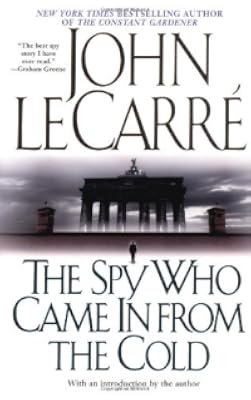
A veteran spy wants to "come in from the cold" to retirement. He undertakes one last assignment in which he pretends defection and provides the enemy with sufficient evidence to label their leader a double agent.Tags
Recommendations















Member Recommendations

Member Reviews
Good, gritty, resolutely unglamorous espionage story. Anyone who enjoyed the British series Callan would love this. It was my first Le Carré - I'd be happy to read more in a similar vein.
Interesting how totally the political and cultural landscape has changed in the 50 years since this was written. This world is still recognisable to me, but to anyone a bit younger it would probably would seem as alien as the Victorian era. The detailed depictions of spy rings, and how they do their jobs, also seems like something from a bygone age - complicated but at the same time strikingly basic. Maybe things have not changed so much - but I think there was something unique about the paranoia instilled by having two such powerful and evenly-matched show more sides, living on top of each other as in Berlin, where everyone is suspect and you assume that you are constantly watched.
The plot itself is very well crafted. Le Carré carefully keeps you from knowing exactly what's going on, which is the exact situation that his compelling lead character, Alec Leamas, is in. It brings empathy with a difficult-to-like character, and leaves you wide open for the inevitable reverses and reveals. show less
Interesting how totally the political and cultural landscape has changed in the 50 years since this was written. This world is still recognisable to me, but to anyone a bit younger it would probably would seem as alien as the Victorian era. The detailed depictions of spy rings, and how they do their jobs, also seems like something from a bygone age - complicated but at the same time strikingly basic. Maybe things have not changed so much - but I think there was something unique about the paranoia instilled by having two such powerful and evenly-matched show more sides, living on top of each other as in Berlin, where everyone is suspect and you assume that you are constantly watched.
The plot itself is very well crafted. Le Carré carefully keeps you from knowing exactly what's going on, which is the exact situation that his compelling lead character, Alec Leamas, is in. It brings empathy with a difficult-to-like character, and leaves you wide open for the inevitable reverses and reveals. show less
I don't read spy novels, but I've always been curious about John le Carré and chose this as my sample of his work. He identifies it as one of his best, and it's hailed as a classic. I can see why.
I've almost no experience with the genre, so my only basis of comparison is James Bond. The differences are obvious. James Bond is a no-nonsense superman who any man can idolize, the 'ideal spy' in a black-and-white world. Alex Leamas, on the other hand, is an everyman, just trying to do his job and hating it a good amount of the time. He gets fired from a senior posting, only to receive a second chance as an undercover operative. He has to go to extremes to establish this cover that would be far below Bond's dignity, and must resign himself show more to his role as expendable pawn in an enormous game he doesn't understand the full workings of.
Alex has no special gadgets at his disposal, and he can't fight his way out of his problems. He shies away from discussion about right and wrong because it makes him uncomfortable. He recognizes his enemy is a mirror image of himself. He feels the toll his work takes on his life, he feels the sacrifices, and he knows fear.
With James Bond, we wish we were in his shoes. With Alex, we're very glad we're not. That difference made this novel a hit when it was published in 1963, hailed as a landmark for its very human and realistic portrayal of unglamorous international espionage that probably opened a lot of people's eyes. Maybe someone who reads contemporary spy thrillers will find nothing unique here, since I'd imagine it must have set a template for many acts to follow, but it will always remain a quick read and well told story. show less
I've almost no experience with the genre, so my only basis of comparison is James Bond. The differences are obvious. James Bond is a no-nonsense superman who any man can idolize, the 'ideal spy' in a black-and-white world. Alex Leamas, on the other hand, is an everyman, just trying to do his job and hating it a good amount of the time. He gets fired from a senior posting, only to receive a second chance as an undercover operative. He has to go to extremes to establish this cover that would be far below Bond's dignity, and must resign himself show more to his role as expendable pawn in an enormous game he doesn't understand the full workings of.
Alex has no special gadgets at his disposal, and he can't fight his way out of his problems. He shies away from discussion about right and wrong because it makes him uncomfortable. He recognizes his enemy is a mirror image of himself. He feels the toll his work takes on his life, he feels the sacrifices, and he knows fear.
With James Bond, we wish we were in his shoes. With Alex, we're very glad we're not. That difference made this novel a hit when it was published in 1963, hailed as a landmark for its very human and realistic portrayal of unglamorous international espionage that probably opened a lot of people's eyes. Maybe someone who reads contemporary spy thrillers will find nothing unique here, since I'd imagine it must have set a template for many acts to follow, but it will always remain a quick read and well told story. show less
I'd like to start by saying "woah" and various other exclamations of surprise and wonder. This was a book that completely changed the way I view spy novels. My previous prejudice stems from quite an obvious source - Ian Fleming - who never gave me anything much of what I would want to read about or what I even find remotely interesting. Big guns, fast cars, hot girls... surely every teenage boy's wet dream, but not what tends to be my cup of tea.
Fleming, like most writers of spy novels, caters exclusively for the straight male reader. His books were never intended to be read by women because in real life women don't fall back with their legs in the air for every guy in a tux who says "shaken, not stirred". Laughable.
And, yes, there is a show more point hidden somewhere amidst the waffle... John le Carre is a genius, an inventive and wonderful writer. I effin loved this book... it was gripping, sad and funny! Alec didn't waste his time drinking martinis and shagging his way through the women of Europe, he had emotion and he had personality. Alec Leamas would run rings around James Bond any day and in every way possible.
Written in 1963, it was inevitably entwined with the Cold War and the darkest side of East German Intelligence. There's nothing like fiction with aspects of historical and/or political truth! And I guess what I'm really trying to say is that I simply adored it... and I want more of John le Carre right now. Highly recommended, even to you chick-lit lovers who will automatically think "no thanks", trust me you want to give this one a chance. show less
A brilliant spy novel. It dips into the psyche of the protagonist from time to time, and one can never be sure about whom to trust which is an inherent feature of the world of spies. Above all, the reader realizes how helpless even the best of spies can feel which contrasts very well with the resourcefulness they have to display all the time. Morality is always on the line and one starts to wonder how much of it to give up when chasing the 'greater good'.
The writing is great. The twists and turns come after the right amount of build-up and even if sometimes things get a tad slow when reaching them, the pay-offs are always huge!
It is especially interesting, of course, for those who like mystery and suspense in general. It also presented show more something refreshingly different from detective fiction (like Sherlock and Agatha Christie) which I usually drown myself in. A must read! show less
The writing is great. The twists and turns come after the right amount of build-up and even if sometimes things get a tad slow when reaching them, the pay-offs are always huge!
It is especially interesting, of course, for those who like mystery and suspense in general. It also presented show more something refreshingly different from detective fiction (like Sherlock and Agatha Christie) which I usually drown myself in. A must read! show less
The Spy Who Came In From The Cold by John Le Carre is a brilliant literary thriller that was originally published in 1963. This book exposes the dirty, messy business of spies on both sides of the Cold War and is totally unlike James Bond with his martini on one side and a beautiful woman on the other. In this book we meet Alec Leamas, a disillusioned British spy who is both mentally and physically fatigued. He is being used as a faux defector to help a British mole from being exposed.
It’s obvious that the author has a strong understanding of how the British intelligence worked during the Cold War and the result is a unique and flawlessly crafted story. His characters are complex and nuanced to give the book a feeling of authenticity. show more As disturbing as the story content is, I was even more upset by the casual immorality of the characters. They go about their shadowy dealings much like playing a game, there is no sense of right or wrong in the unethical world of espionage.
The Spy Who Came In From the Cold is my first book by this author and I am now looking forward to reading more. This was an intelligent and dark story that shows how the line between good and evil can be blurred and the many twists and turns it takes, along with the excellent writing rises this book beyond the “spy genre” into the Classic it has become. show less
It’s obvious that the author has a strong understanding of how the British intelligence worked during the Cold War and the result is a unique and flawlessly crafted story. His characters are complex and nuanced to give the book a feeling of authenticity. show more As disturbing as the story content is, I was even more upset by the casual immorality of the characters. They go about their shadowy dealings much like playing a game, there is no sense of right or wrong in the unethical world of espionage.
The Spy Who Came In From the Cold is my first book by this author and I am now looking forward to reading more. This was an intelligent and dark story that shows how the line between good and evil can be blurred and the many twists and turns it takes, along with the excellent writing rises this book beyond the “spy genre” into the Classic it has become. show less
Pretty typical of this author. No guts and inner workings – just action. No time for political reasons, except at the end. Even then, not everything was clear.
Actually it is clear. This is an updated review from 2011. I can't remember when I wrote the above, but probably around 1990.
Because it’s been so long since I first read this, my re-reading was blank enough to be essentially a fresh one. One thing that struck me this time was the terrific rhythm Le Carre’s prose has. I even read some of it aloud to better appreciate it.
Leamas is a tough person to root for because he doesn’t really seem to root for himself. He does his masters’ bidding without question and sometimes even enthusiastically. I disagree with whoever wrote show more that old synopsis up there that Leamas is trying to come to terms with his Service. To me he seems all too aware of what they'll do and how little he means to them in the grand scheme of things. Only when it comes to Liz does he muster any outrage or rebellion. The overall tone of the novel isn’t uplifting and so while the very end does give us glimmers of hope in our sentimental selves, our rational selves know there is no hope. The audacity and casual cruelty is the real cold in the title, I think. It is pretty galling how seemingly without compunction the Circus can set up and do away with one of their star performers. Considering what happened to Karl though, it isn’t surprising at all.
Another thing I really appreciated is how focused the story is. Unlike a lot of writers today (and even of yesterday, I’m thinking of Eric Ambler here) Le Carre doesn’t fill out his story with a lot of inner monologue, back-story or sub-plots. All the action has purpose and moves the story along at an relentless pace. All the people, their actions and their interactions have meaning and are important to the story. Remove any one of them and the whole operation comes apart. I wish more writers told their stories this way.
Read more: http://thebookmarque.blogspot.com/2011/11/spy-who-came-in-from-cold-by-john-le.h... show less
Actually it is clear. This is an updated review from 2011. I can't remember when I wrote the above, but probably around 1990.
Because it’s been so long since I first read this, my re-reading was blank enough to be essentially a fresh one. One thing that struck me this time was the terrific rhythm Le Carre’s prose has. I even read some of it aloud to better appreciate it.
Leamas is a tough person to root for because he doesn’t really seem to root for himself. He does his masters’ bidding without question and sometimes even enthusiastically. I disagree with whoever wrote show more that old synopsis up there that Leamas is trying to come to terms with his Service. To me he seems all too aware of what they'll do and how little he means to them in the grand scheme of things. Only when it comes to Liz does he muster any outrage or rebellion. The overall tone of the novel isn’t uplifting and so while the very end does give us glimmers of hope in our sentimental selves, our rational selves know there is no hope. The audacity and casual cruelty is the real cold in the title, I think. It is pretty galling how seemingly without compunction the Circus can set up and do away with one of their star performers. Considering what happened to Karl though, it isn’t surprising at all.
Another thing I really appreciated is how focused the story is. Unlike a lot of writers today (and even of yesterday, I’m thinking of Eric Ambler here) Le Carre doesn’t fill out his story with a lot of inner monologue, back-story or sub-plots. All the action has purpose and moves the story along at an relentless pace. All the people, their actions and their interactions have meaning and are important to the story. Remove any one of them and the whole operation comes apart. I wish more writers told their stories this way.
Read more: http://thebookmarque.blogspot.com/2011/11/spy-who-came-in-from-cold-by-john-le.h... show less
'The Spy Who Came In From The Cold' (1963) was John le Carré's third book and his breakthrough novel. Together with Len Deighton's 'Ipcress File' published a year earlier, it changed the tone of spy fiction, moving away from the glamorous image of espionage created by Fleming and, to some extent, Graham Greene, towards something grimly seedy, morally bankrupt and totally credible. Le Carré made the Cold War real, stripping it of its ideological trimmings and displaying it for the covert but ruthlessly brutal conflict that it was.
John Le Carré
Le Carré worked as a British Intelligence Officer in the early 1960s, in Bonn and Hamburg. His career ended a year after 'The Spy Who Came In From The Cold' was published when the double agent show more Kim Philby gave the names of British agents to the KGB. This first-hand experience may explain the confident mastery of an insider's view of a secret world that makes 'The Spy Who Came In From The Cold' seem so authentic.
Although I've read many of Le Carré's later spy novels, I've never read his Cold War stories before. His later stories seem to me to be sophisticated, a little world-weary and totally unromantic but his main protagonists, usually men of few illusions, still find a way to muddle through and at least mitigate disaster. 'The Spy Who Came In From The Cold' isn't like that. It is unremittingly bleak. It's clever, so clever that I didn't see the twists coming, but it's also fundamentally repugnant. There are no heroes in this book, just players and the people being played and you don't know who is which until the novel ends. The novel is as compelling as a slow-motion car wreck, you know it won't end well but you can't look away.
Some of the grimness is simply a reflection of England as it was in the early 1960s, still struggling to achieve more than survival seven years after the end of the war. Some of it comes from a brutal Realpolitik that placed national interest ahead of ideology or personal integrity. Class also plays its part. Alec Leamas, the spy of the title, is, from the point of view of people who run the security service, 'not one of us'. He didn't go to the right schools. He's not a member of the right clubs. He is valued only to the extent that he is successful. If he stops being successful, he will lose all value. That Leamas knows and accepts this only makes everything more depressing. Leamas is a man who does not value himself. He's resilient and persistent but more from an ingrained habit of aggressive belligerence than from any belief in change. I didn't like Leamas but I understood him and believed in him completely. As a character, he's a remarkable achievement.
The plot of 'The Spy Who Came In From The Cold' is fiendishly clever both in its content and its exposition. Even when I knew the outcome I found myself staggered by the depth of deception and the ruthlessness of the execution.
The only false note in the story for me was Elizabeth's love for Alec Leamas. I could see that the plot required it but I struggled to believe it. Partly that was because I couldn't see what there was about Leamas that attracted her. He was significantly older, emotionally withdrawn, secretive, bad-tempered, sometimes violent and often drunk. What was the appeal? I felt that, by comparison to the portrait Le Carré painted of Leamas, Elizabeth was little more than a pencil sketch, an accessory rather than a person.
Even so, most of the novel was strong and it has encouraged me to read the rest of the Cold War books. show less
Members
- Recently Added By
Published Reviews
En este clásico, el autor recrea un mundo jamás conocido antes en la novela de suspense. Con los conocimientos acumulados durante sus años en el servicio de inteligencia británica, le Carré saca a la luz los interiores un tanto turbios del espionaje internacional de la mano de Alec Leamas, un agente británico durante los primeros años de la guerra fría en Berlín. Leamas es responsable show more de mantener a sus agentes dobles protegidos y con vida, pero los alemanes del Este empiezan a matarlos, por lo que su superior, Control, le pide que vuelva a Londres no para echarle del cuerpo sino para encargarle una misión un tanto complicada. Con esta novela clásica de suspense, le Carré cambió las reglas del juego. Esta es la historia de un último encargo que recae sobre un agente que desea desesperadamente retirarse de su carrera de espionaje. show less
added by Pakoniet
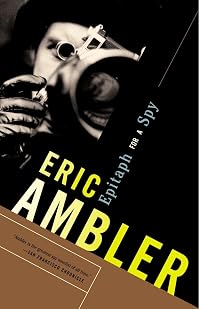
The best spy story I have ever read," says Graham Greene, and I am not too far from agreeing with him. Whether "The Spy Who Came in From the Cold" is better than Eric Ambler's "Epitaph for a Spy" or Somerset Maugham's "Ashenden" or Mr. Greene's own "The Confidential Agent" is inconsequential. What matters is that it belongs on the same shelf. Here is a book a light year removed from the show more sometimes entertaining trivia which have (in the guise of spy novels) cluttered the publishers' lists for the past year. show less
added by John_Vaughan
Lists

1001 Books You Must Read Before You Die
1,448 works; 1,134 members

The Guardian's 1000 Novels Everyone Must Read
1,005 works; 547 members
501 Must-Read Books
529 works; 72 members

Best Spy Fiction
153 works; 102 members

Read the book and saw the movie
1,170 works; 195 members

Recommend the 20 best books you've read in the last five years
2,168 works; 606 members

Top Five Books of 2013
1,562 works; 715 members
Best Espionage (Fiction)
55 works; 20 members
20th Century Literature
1,161 works; 54 members

100 Mysteries and Thrillers to Read in a Lifetime
99 works; 22 members

Favorite Literary Love Stories
182 works; 100 members

1960s, Best books published therein
254 works; 22 members

Books With a Twist
69 works; 46 members
Time Magazine's "All-Time 100"
113 works; 15 members

Top Five Books of 2020
982 works; 350 members

The Top 100 Crime Novels of All Time
100 works; 15 members

Canon de la narrativa universal del siglo XX
254 works; 6 members

100 Best Thrillers of All Time
100 works; 6 members

1,001 BYMRBYD Concensus
723 works; 27 members
TML 200 Best Books 1950-1999
202 works; 10 members
Time's All-Time 100 Novels
100 works; 27 members

Fiction For Men
142 works; 11 members

Top Five Books of 2015
811 works; 241 members

NPRs your picks: top 100 Killer Thrillers
100 works; 17 members
Top 100 Mystery Novels of All Time
98 works; 9 members

Survey of Mysteries and Crime Fiction
96 works; 17 members

Books set in Berlin
46 works; 4 members

Favorite Audiobooks Listened to in 2011
33 works; 11 members

Publisher's Weekly Bestsellers - Part II - 1940 - 1979
355 works; 5 members
discontinued
24 works; 4 members

Books Read in 2017
4,249 works; 129 members
Overdue Podcast
806 works; 9 members

Mad Men Reading List
25 works; 5 members

Books Read in 2015
3,299 works; 126 members

Books Read in 2018
4,360 works; 110 members

Retrospective of 20th- and 21st-century literature
154 works; 1 member

Books We Couldn't Put Down
443 works; 197 members

.
194 works; 2 members

Books Read in 2026
1,914 works; 66 members
My Mad Men Reading List
47 works; 1 member
Tozai Mystery Best 100 | The Top 100 Mystery Novels
111 works; 3 members

GREAT 1960s BOOKS
37 works; 1 member
.
396 works; 1 member

The Modern Library (The Two Hundred Best Novels....
202 works; 1 member

Fiction: Thriller
78 works; 1 member

Las mejores obras literarias releídas en 2022 (R. D.)
19 works; 1 member

Biggest Disappointments
606 works; 163 members
Canon de la narrativa universal del s. XX (cicutadry)
499 works; 3 members
Books We Love to Reread
688 works; 296 members

The 100 Best Crime Novels and Thrillers since 1945
100 works; 6 members

Books Read in 2011
684 works; 20 members

Mustich's 1000 Books to Read Before You Die: A Life Changing List
1,001 works; 19 members

Crime Writers' Association Daggers
76 works; 4 members

Best books I read in 2013
152 works; 3 members

Thrillers to read
21 works; 2 members

Edgar Award
418 works; 15 members

Books mentioned in Julian Symons’ Bloody Murder
438 works; 6 members

Anthony Boucher's Best Crime Fiction of the Year
115 works; 5 members

Books - Le Carre, John: George Smiley
10 works; 1 member
Author Information

215+ Works 98,993 Members
David John Moore Cornwell was born in Poole, Dorsetshire, England in 1931. He attended Bern University in Switzerland from 1948-49 and later completed a B.A. at Lincoln College, Oxford. He taught at Eton from 1956-58 and was a member of the British Foreign Service from 1959 to 1964. He writes espionage thrillers under the pseudonym John le Carré. show more The pseudonym was necessary when he began writing, in the early 1960s because, at that time, he held a diplomatic position with the British Foreign Office and was not allowed to publish under his own name. When his third book, The Spy Who Came in from the Cold, became a worldwide bestseller in 1964, he left the foreign service to write full time. His other works include Call for the Dead; A Murder of Quality; Tinker, Tailor, Soldier, Spy; The Honourable Schoolboy; and Smiley's People. He has received numerous awards for his writing, including the Grand Master Award from the Mystery Writers of America in 1986 and the Diamond Dagger from the Crime Writers Association in 1988. In 2011 he accepted the Goethe Medal. And in 2020, he accepted the Olof Palme Prize. Ten of his books have been adapted for television and motion pictures including The Spy Who Came in from the Cold, The Russia House, The Constant Gardener, A Most Wanted Man, and Our Kind of Traitor. Le Carré's memoir, The Pigeon Tunnel: Stories from my Life, became a New York Times bestseller in 2016. In 2019, he published a spy thriller, Agent Running in the Field. John Le Carré died on December 12, 2020 from pneumonia at the age of 89. (Bowker Author Biography) John le Carre was born in 1931. After attending the univesities of Berne and Oxford, he spent five years in the British Foreign Service. He's the author of eighteen novels, translated into twenty-five languages. He lives in England. (Publisher Provided) show less
Some Editions
Awards and Honors
Awards
Distinctions
Notable Lists
Series

Belongs to Publisher Series
Work Relationships
Is contained in
Call for the Dead + A Murder of Quality + The Spy who came in from the Cold + The Looking-Glass War + A Small Town in Germany by John le Carré
Three Complete Novels: The Spy Who Came in from the Cold / A Small Town in Germany / The Looking Glass War by John le Carré
The spy who came in from the cold; Nightmare '66; The looking-glass war; The growth of Marie-Louise; George Smiley goes home by John le Carré
The Spy who came In from the Cold + The Looking Glass War + Tinker, Tailor, Soldier, Spy by John LeCarre
Call for the Dead + A Murder of Quality + The Spy who came in from the Cold + The Looking Glass War by John LeCarre
Is retold in
Has the adaptation
Is abridged in
Reader's Digest Best Sellers 1965: Captain Newman, M.D. | When the Cheering Stopped | Spy Who Came in From the Cold | Song of Sixpence by Reader's Digest
De overwinning op de Dru; Spion aan de muur; De stille strijd; Erfgenaam van Kirkland by Reader's Digest
Reader's Digest Condensed Books: The Island / Wolfpack / Joy in the Morning / The Spy Who Came in From the Cold by Reader's Digest
Has as a reference guide/companion
Has as a study
Common Knowledge
- Canonical title
- The Spy Who Came in from the Cold
- Original title
- The Spy Who Came in from the Cold
- Original publication date
- 1963-09-01
- People/Characters
- Alec Leamas; Control; Jens Fiedler; Liz Gold; Hans-Dieter Mundt; Karl Riemeck (show all 7); George Smiley
- Important places
- East Berlin, German Democratic Republic; West Berlin, Federal Republic of Germany; Berlin, Germany; Germany
- Important events
- Cold War
- Related movies
- The Spy Who Came in from the Cold (1965 | IMDb)
- First words
- The American handed Leamas another cup of coffee and said, "Why don't you go back and sleep? We can ring you if he shows up."
- Quotations
- "What do you think spies are: priests, saints and martyrs? They're a squalid procession of vain fools, traitors too, yes; pansies, sadists and drunkards, people who play cowboys and Indians to brighten their rotten lives."
- Last words
- (Click to show. Warning: May contain spoilers.)As he fell, Leamas saw a small car smashed between great lorries, and the children waving cheerfully through the window.
- Blurbers
- Boucher, Anthony; Greene, Graham; Prescott, Orville; Priestley, J. B.; Waugh, Alec
- Original language
- English
- Canonical DDC/MDS
- 823.914
- Disambiguation notice
- This work includes the full text audiobooks read by a single narrator..
The radio dramatizations, acted by a cast, should NOT be combined here.
Classifications
- Genres
- Fiction and Literature, Suspense & Thriller, General Fiction
- DDC/MDS
- 823.914 — Literature & rhetoric English & Old English literatures English fiction 1900- 1901-1999 1945-1999
- LCC
- PZ4 .L4526 — Language and Literature Fiction and juvenile belles lettres Fiction and juvenile belles lettres Fiction in English
- BISAC
Statistics
- Members
- 9,874
- Popularity
- 1,019
- Reviews
- 270
- Rating
- (4.00)
- Languages
- 26 — Basque, Catalan, Chinese, Danish, Dutch, English, Estonian, Finnish, French, German, Hebrew, Hungarian, Italian, Korean, Lithuanian, Norwegian (Bokmål), Norwegian, Polish, Portuguese, Romanian, Russian, Serbian, Sinhalese, Spanish, Swedish, Turkish
- Media
- Paper, Audiobook, Ebook
- ISBNs
- 222
- UPCs
- 1
- ASINs
- 146