On This Page
Description
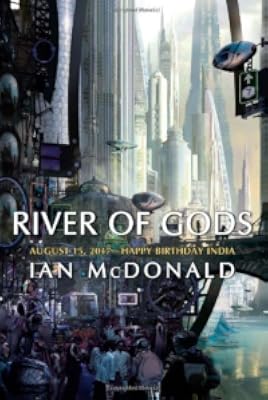
As Mother India approaches her centenary, nine people are going about their business — a gangster, a cop, his wife, a politician, a stand-up comic, a set designer, a journalist, a scientist, and a dropout. And so is Aj — the waif, the mind-reader, the prophet — when she one day finds a man who wants to stay hidden. In the next few weeks, they will all be swept together to decide the fate of the nation. River of Gods teems with the life of a country choked with peoples and cultures — show more one and a half billion people, twelve semi-independent nations, nine million gods. Ian McDonald has written the great Indian novel of the new millennium, in which a war is fought, a love betrayed, a message from a different world decoded, as the great river Ganges flows on. show lessTags
Recommendations






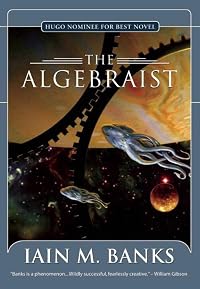
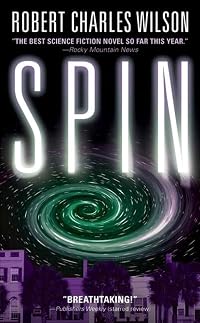
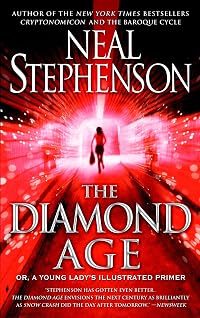
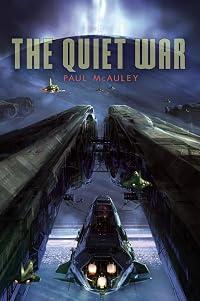
Member Recommendations

Member Reviews
So many aspects of River of Gods are so excellent; the setting in Varanasi, India, vividly rendered; the characters, more than adequate for this kind of book, the plot, complicated but not impossible to make sense of. The thematic content - the question of what we will do about our ever more clever machines when they achieve consciousness, sentience is a common one, but as far as I'm concerned it can't be explored enough, as this seems a more likely possibility than being invaded by aliens. There's a conundrum here - We, frail humans, may create something infinitely more intelligent and long-lived than ourselves; we may become Gods of a sort who turn around horrified and even terrified by what we have created. Knowing ourselves, will we show more assume that they will fear us, want to destroy us? My only quibble with it is that I think one too many characters gets offed in the end. If and when you read it you will know who I mean. It was a gratuitous death, not necessary to anything at all. This is a 'fashion' these days on TV and elsewhere, to kill someone just because you can. And to make sure no one gets the idea you might be the least bit mushy. But I think 600 pages can absorb a smallish amount of mush. **** show less
Rating: 5* of five
The Publisher Says: As Mother India approaches her centenary, nine people are going about their business—a gangster, a cop, his wife, a politician, a stand-up comic, a set designer, a journalist, a scientist, and a dropout. And so is—the waif, the mind reader, the prophet—when she one day finds a man who wants to stay hidden.
In the next few weeks, they will all be swept together to decide the fate of the nation.
River of Gods teems with the life of a country choked with peoples and cultures—one and a half billion people, twelve semi-independent nations, nine million gods. Ian McDonald has written the great Indian novel of the new millennium, in which a war is fought, a love betrayed, a message from a different show more world decoded, as the great river Ganges flows on.
My Review: Ian McDonald. This is a name to conjure with, boys and girls. This is one fearless Irishman. This is a major major talent doing major major things. How dare he, how dare I, warble his praises when he, a white guy from the colonial oppressor state, has the temerity to write a science fiction novel about INDIA?!? There are scads of Indian writers and it's their country! Let *them* write their stories!
Codswallop.
Read the book. Then come and tell me it should have remained unwritten because of some nonsensical national pride hoo-hah.
It's got every damn thing a reader could want: A new gender, the nutes, pronoun “yt;” a wholly new form of energy harvested from other universes; a political scandal-ridden politician who falls for our main nute character, despite his long marriage, and pursues yt desperately; a civil war a-brewin' over water rights in the now fragmented subcontinental political world; aeais (artificial intelligences) that are forbidden by law to exceed the Turing Test that establishes whether an entity is human or human-passable; and, as with any law, the lawbreakers who inevitably arise are hunted by a new breed of law enforcement officers, here called “Krishna cops.” Krishna being the Original God, Supreme Being, One Source in many parts of India, there is some justice to that, one supposes.
Recapitulating the plot is pointless. This is a sprawling story, one that takes nine (!) main characters to tell. I felt there were two too many, and would entirely prune Lisa, the American physicist, and Ajmer, the spooky girl who sees the future, because those story lines were pretty much just muddying the waters for me. I thought the physicist on a quest, who then makes a giant discovery, which leads her back to the inventor of the aeais, could easily have been a novel all on its own, one that would fit in this universe that McDonald has summoned into being. I simply didn't care for or about Ajmer.
The aeais' parent, Thomas Lull, is hidden away from the world in a dinky South Indian village. Yeah, right! Like the gummints of the world would let that happen! I know why McDonald did this, plot-wise, but it's just not credible to me. He could be demoted from player to bit part and simplify the vastness of the reader's task thereby.
So why am I giving this book a perfect score? Because. If you need explanations:
--The stories here are marvelously written.
Some of my favorite passages I can't put here, because they contain some of the many, many words and concepts that one needs—and I do mean needs—the glossary in the back of the book to fully appreciate.
The concept of the book is breathtaking. Westerners don't usually see India as anything other than The Exotic Backdrop. McDonald sees the ethnic and religious tensions that India contains, barely, as we look at her half-century of independence ten years on (review written 2007) and contemplate the results of the Partition. He also sees the astounding and increasing vigor of the Indian economy, its complete willingness to embrace and employ any and all new ideas and techniques and leverage the staggeringly immense pool of talent the country possesses.
McDonald also extrapolates the rather quiet but very real and strong trend towards India as a medical tourism destination: First-world trained doctors offering third-world priced medical care. This is the genesis of the nutes, people who voluntarily have all external gender indicators and all forms of gender identification surgically removed, their neural pathways rewired, and their social identities completely reinvented.
Think about that for a minute.
If your jaw isn't on the floor, if your imagination isn't completely boggled, then this book isn't for you and you should not even pick it up in the library to read the flap copy. If you're utterly astonished that an Irish dude from Belfast could winkle this kind of shit up from his depths, if you're so intrigued that you think it will cause you actual physical pain not to dive right in to this amazing book, you're my kind of people.
Welcome, soul sibling, India 2047 awaits. May our journey never end. show less
The Publisher Says: As Mother India approaches her centenary, nine people are going about their business—a gangster, a cop, his wife, a politician, a stand-up comic, a set designer, a journalist, a scientist, and a dropout. And so is—the waif, the mind reader, the prophet—when she one day finds a man who wants to stay hidden.
In the next few weeks, they will all be swept together to decide the fate of the nation.
River of Gods teems with the life of a country choked with peoples and cultures—one and a half billion people, twelve semi-independent nations, nine million gods. Ian McDonald has written the great Indian novel of the new millennium, in which a war is fought, a love betrayed, a message from a different show more world decoded, as the great river Ganges flows on.
My Review: Ian McDonald. This is a name to conjure with, boys and girls. This is one fearless Irishman. This is a major major talent doing major major things. How dare he, how dare I, warble his praises when he, a white guy from the colonial oppressor state, has the temerity to write a science fiction novel about INDIA?!? There are scads of Indian writers and it's their country! Let *them* write their stories!
Codswallop.
Read the book. Then come and tell me it should have remained unwritten because of some nonsensical national pride hoo-hah.
It's got every damn thing a reader could want: A new gender, the nutes, pronoun “yt;” a wholly new form of energy harvested from other universes; a political scandal-ridden politician who falls for our main nute character, despite his long marriage, and pursues yt desperately; a civil war a-brewin' over water rights in the now fragmented subcontinental political world; aeais (artificial intelligences) that are forbidden by law to exceed the Turing Test that establishes whether an entity is human or human-passable; and, as with any law, the lawbreakers who inevitably arise are hunted by a new breed of law enforcement officers, here called “Krishna cops.” Krishna being the Original God, Supreme Being, One Source in many parts of India, there is some justice to that, one supposes.
Recapitulating the plot is pointless. This is a sprawling story, one that takes nine (!) main characters to tell. I felt there were two too many, and would entirely prune Lisa, the American physicist, and Ajmer, the spooky girl who sees the future, because those story lines were pretty much just muddying the waters for me. I thought the physicist on a quest, who then makes a giant discovery, which leads her back to the inventor of the aeais, could easily have been a novel all on its own, one that would fit in this universe that McDonald has summoned into being. I simply didn't care for or about Ajmer.
The aeais' parent, Thomas Lull, is hidden away from the world in a dinky South Indian village. Yeah, right! Like the gummints of the world would let that happen! I know why McDonald did this, plot-wise, but it's just not credible to me. He could be demoted from player to bit part and simplify the vastness of the reader's task thereby.
So why am I giving this book a perfect score? Because. If you need explanations:
--The stories here are marvelously written.
“And you make me a target as well,” Bernard hisses. “You don't think. You run in and shout and expect everyone to cheer because you're the hero.”
“Bernard, I've always known the only ass you're ultimately interested in is your own, but that is a new low.” But the barb hits and hooks. She loves the action. She loves the dangerous seduction that it all looks like drama, like action movies. Delusion. Life is not drama. The climaxes and plot transitions are coincidence, or conspiracy. The hero can take a fall. The good guys can all die in the final reel. None of us can survive a life of screen drama. “I don't know where else to go,” she confesses weakly. He goes out shortly afterwards. The closing door sends a gust of hot air, stale with sweat and incense, through the rooms. The hanging nets and gauzes billow around the figure curled into a tight foetus. Najia chews at scaly skin on her thumb, wondering if she can do anything right.
Krishan barely feels the rain. More than anything he wants to take Parvati away from this dying garden, out the doors down on to the street and never look back. But he cannot accept what he is being given. He is a small suburban gardener working from a room in his parents' house with a little three-wheeler van and a box of tools, who one day took a call from a beautiful woman who lived in a tower to build her a garden in the sky.
Some of my favorite passages I can't put here, because they contain some of the many, many words and concepts that one needs—and I do mean needs—the glossary in the back of the book to fully appreciate.
The concept of the book is breathtaking. Westerners don't usually see India as anything other than The Exotic Backdrop. McDonald sees the ethnic and religious tensions that India contains, barely, as we look at her half-century of independence ten years on (review written 2007) and contemplate the results of the Partition. He also sees the astounding and increasing vigor of the Indian economy, its complete willingness to embrace and employ any and all new ideas and techniques and leverage the staggeringly immense pool of talent the country possesses.
McDonald also extrapolates the rather quiet but very real and strong trend towards India as a medical tourism destination: First-world trained doctors offering third-world priced medical care. This is the genesis of the nutes, people who voluntarily have all external gender indicators and all forms of gender identification surgically removed, their neural pathways rewired, and their social identities completely reinvented.
Think about that for a minute.
If your jaw isn't on the floor, if your imagination isn't completely boggled, then this book isn't for you and you should not even pick it up in the library to read the flap copy. If you're utterly astonished that an Irish dude from Belfast could winkle this kind of shit up from his depths, if you're so intrigued that you think it will cause you actual physical pain not to dive right in to this amazing book, you're my kind of people.
Welcome, soul sibling, India 2047 awaits. May our journey never end. show less
The "river" of this amazing work of science fiction is not merely Ganga Mata--the goddess who is the river Ganges--but also the flow of human life and experience on which the god-like artificial intelligences of the novel are borne. The human characters begin as separate tributaries, and their stories twist and merge with each other as they rush down into the watershed of an imagined history of the mid-21st-century. These characters inhabit niches throughout the spectrum from the absolute top to very nearly the bottom of Varanasi society, with a couple of American academics and an Afghani-Swedish journalist thrown in for good measure. Although the book takes place on the eve of the centennial of Indian Independence from Britain, its show more political situation describes a balkanized subcontinent in which independent Bharati and Awadhi states are on the brink of war for control of water resources. (It goes without McDonald's saying, that the epochal drought is a function of climate change and the exhaustion of Himalayan glaciers.)
The futurological scenario of this book doesn't feel at all dated, despite the fact that it was first published seven years ago--a long time at today's pace of cultural and technological change. The two tiny clinkers naturally relate to personal electronics: McDonald's "palmers" failed to anticipate that everyone's pocket computer would be subordinated to the concept of a phone, and his use of "the Tablet" to denote a unique piece of espionage data hardware falls a little flat in the wake of iPads and their competitors.
The novel's setting presupposes an assortment of post-human types, in addition to great masses of "ordinary" humans with virtual-reality headsets and nanotechnologically engineered pharmocopoeia. There are genetically enhanced "brahmins" who age at half the ordinary human rate, with immunity to many degenerative diseases. The oldest of these are in their early twenties, all with great influence, money, and native intelligence, but they look like ten-year-olds. There are "nutes," who have "stepped away" from masculine and feminine gender identification into a third sex, surgically created, with erogenous cues tied to subdermal buds on their forearms. And there are artificial intelligences ("aeais") beyond generation 2.5, the point where they are smart enough to pass a Turing Test, and to know when it is in their interest to fail one.
This is a big book: a 600-page doorstop, but it reads fast like a rushing river. Where the events of McDonald's lovely debut novel Desolation Road take place over three human generations, the course of River of Gods spans a mere three weeks. And into that it packs political intrigue, edge-of-the-envelope scientific speculation, love stories, violent deaths, profound disillusionment, and, gosh, other stuff besides. The plot is full of semi-surprises; McDonald is an artful stylist who provides enough information to sometimes create dramatic irony by giving the intelligent reader an edge on the characters, but often stuff just happens in ways that are jaw-dropping at the time, but seem inevitable in retrospect.
Anyone who can enjoy thoughtful science fiction should love this book. show less
The futurological scenario of this book doesn't feel at all dated, despite the fact that it was first published seven years ago--a long time at today's pace of cultural and technological change. The two tiny clinkers naturally relate to personal electronics: McDonald's "palmers" failed to anticipate that everyone's pocket computer would be subordinated to the concept of a phone, and his use of "the Tablet" to denote a unique piece of espionage data hardware falls a little flat in the wake of iPads and their competitors.
The novel's setting presupposes an assortment of post-human types, in addition to great masses of "ordinary" humans with virtual-reality headsets and nanotechnologically engineered pharmocopoeia. There are genetically enhanced "brahmins" who age at half the ordinary human rate, with immunity to many degenerative diseases. The oldest of these are in their early twenties, all with great influence, money, and native intelligence, but they look like ten-year-olds. There are "nutes," who have "stepped away" from masculine and feminine gender identification into a third sex, surgically created, with erogenous cues tied to subdermal buds on their forearms. And there are artificial intelligences ("aeais") beyond generation 2.5, the point where they are smart enough to pass a Turing Test, and to know when it is in their interest to fail one.
This is a big book: a 600-page doorstop, but it reads fast like a rushing river. Where the events of McDonald's lovely debut novel Desolation Road take place over three human generations, the course of River of Gods spans a mere three weeks. And into that it packs political intrigue, edge-of-the-envelope scientific speculation, love stories, violent deaths, profound disillusionment, and, gosh, other stuff besides. The plot is full of semi-surprises; McDonald is an artful stylist who provides enough information to sometimes create dramatic irony by giving the intelligent reader an edge on the characters, but often stuff just happens in ways that are jaw-dropping at the time, but seem inevitable in retrospect.
Anyone who can enjoy thoughtful science fiction should love this book. show less
In the ancient city of Varanasi in the country of Bharat in the former nation of India it is 2047, the Age of Kali, and gods are being hunted there.
Those gods are artificial intelligences, aeais, who hide in the networks of businesses, sundarbans where illegal software is written, and even in the computing infrastructure of Town and Country, the nation's wildly popular soap opera. American pressure and international treaties forbid all those aeais above a certain level of intelligence. Krishna Cops like Mr. Nandha hunt them down and perform a lethal "excommunication". But in the burned out remanents of one sundarban he finds subtle evidence of a new monster.
The war between the new and regulated, man and the creatures emerging from the show more cybersphere of his world, ultimately snares many characters beside Mr. Nandha. There are Shiv and Yogendra, two hoods with a serious debt problem after their organ legging business has dried up. Shaheen Badoor Khan advises the Prime Minister about a water war with Awadh, another state born of India's fragmentation, after it dams the Ganges. Vishram Ray's stand up comedy career is aborted when his father, founder of the country's premier energy company, Ray Power, pulls a King Lear and divides the company up between his three sons. Naji, the Afghan-born journalist, has ambition and bloodlust and the determination to make a name for herself whether it's interviewing one of the aeais who plays a character on Town and Country or leaking information in a political war between fundamentalist Hindi politician N. K Jivanjee and the Prime Minister.
Also playing their part in this war, this drama where aeais and humans are gods in each other's worlds, are two Americans generally in favor of advanced artificial intelligences. Lull has dropped out of academic life to hang out in India where he encounters Aj, a young woman with creepy knowledge of people's lives and a disturbing ability to control machines. And looking for Lull is one Lisa Darnau, proxy for the American government, who would like to know why her and her former colleague's picture are in an alien asteroid seven billion years old.
And there is Tal, a nute, a new gender born of extensive surgery, their lives precisely and deliberately scripted with hormones, their sexuality push button. Joining nutes and aeais are Brahmins. They are children of the rich, engineered to avoid the decrepitudes of old age even if it means their bodies - but not their minds - age half as fast as normal. The fears and hopes around those creations and the aeais form a major theme of this novel.
Artificial intelligences as gods, nutes, Brahmins, alien asteroids, water wars - none of these are original ideas to McDonald. What he has done is sampled these ideas and set them in a totally new context - a future India. McDonald has made something of a career picking novel settings, specifically Third World settings. Terminal Cafe (a future Mexico), the Chaga novels (a future Kenya), and Brasyl all remind us that people in those parts of the world will have their own futures affected by advancing technology or alien encounters.
That does not mean McDonald's novel is a tiresome attack on the West, a guilty paean to a culture not his own. His India has its problems. Muslims and Hindi, after years of peaceful co-existence, go suddenly murderous. More than one character calls India a "deformed society", and it is not just the presence of Brahmins, a new untouchable caste, that has deformed it. It is the practice of selective abortion which has deformed it, the shunting of educated and talented woman out of public life to the purdah. McDonald confronts India on its own terms and acknowledges its energy and contradictions.
And, yes, McDonald does actually use Hindu mythology in this story. Certain characters gradually come to be associated with certain Hindu gods though the correspondence between god and character is not as explicit as it would be in a Roger Zelazny novel. And the story, with its many betrayals being a major theme, seldom forsakes the gritty world on the banks of the Ganges for a virtual world or cyberspace.
There are some minor flaws. McDonald leaves the fate of one of his gods a bit unclear, and Tal seems less like a member of a new gender than a gay man. The scenes of violence sometimes seem, on the aeais' part, too slow and the combat seems a bit too much like mecha anima at times. Still, I admired this novel very much and will return to this fascinating universe with McDonald's anthology Cyberabad Days. show less
Those gods are artificial intelligences, aeais, who hide in the networks of businesses, sundarbans where illegal software is written, and even in the computing infrastructure of Town and Country, the nation's wildly popular soap opera. American pressure and international treaties forbid all those aeais above a certain level of intelligence. Krishna Cops like Mr. Nandha hunt them down and perform a lethal "excommunication". But in the burned out remanents of one sundarban he finds subtle evidence of a new monster.
The war between the new and regulated, man and the creatures emerging from the show more cybersphere of his world, ultimately snares many characters beside Mr. Nandha. There are Shiv and Yogendra, two hoods with a serious debt problem after their organ legging business has dried up. Shaheen Badoor Khan advises the Prime Minister about a water war with Awadh, another state born of India's fragmentation, after it dams the Ganges. Vishram Ray's stand up comedy career is aborted when his father, founder of the country's premier energy company, Ray Power, pulls a King Lear and divides the company up between his three sons. Naji, the Afghan-born journalist, has ambition and bloodlust and the determination to make a name for herself whether it's interviewing one of the aeais who plays a character on Town and Country or leaking information in a political war between fundamentalist Hindi politician N. K Jivanjee and the Prime Minister.
Also playing their part in this war, this drama where aeais and humans are gods in each other's worlds, are two Americans generally in favor of advanced artificial intelligences. Lull has dropped out of academic life to hang out in India where he encounters Aj, a young woman with creepy knowledge of people's lives and a disturbing ability to control machines. And looking for Lull is one Lisa Darnau, proxy for the American government, who would like to know why her and her former colleague's picture are in an alien asteroid seven billion years old.
And there is Tal, a nute, a new gender born of extensive surgery, their lives precisely and deliberately scripted with hormones, their sexuality push button. Joining nutes and aeais are Brahmins. They are children of the rich, engineered to avoid the decrepitudes of old age even if it means their bodies - but not their minds - age half as fast as normal. The fears and hopes around those creations and the aeais form a major theme of this novel.
Artificial intelligences as gods, nutes, Brahmins, alien asteroids, water wars - none of these are original ideas to McDonald. What he has done is sampled these ideas and set them in a totally new context - a future India. McDonald has made something of a career picking novel settings, specifically Third World settings. Terminal Cafe (a future Mexico), the Chaga novels (a future Kenya), and Brasyl all remind us that people in those parts of the world will have their own futures affected by advancing technology or alien encounters.
That does not mean McDonald's novel is a tiresome attack on the West, a guilty paean to a culture not his own. His India has its problems. Muslims and Hindi, after years of peaceful co-existence, go suddenly murderous. More than one character calls India a "deformed society", and it is not just the presence of Brahmins, a new untouchable caste, that has deformed it. It is the practice of selective abortion which has deformed it, the shunting of educated and talented woman out of public life to the purdah. McDonald confronts India on its own terms and acknowledges its energy and contradictions.
And, yes, McDonald does actually use Hindu mythology in this story. Certain characters gradually come to be associated with certain Hindu gods though the correspondence between god and character is not as explicit as it would be in a Roger Zelazny novel. And the story, with its many betrayals being a major theme, seldom forsakes the gritty world on the banks of the Ganges for a virtual world or cyberspace.
There are some minor flaws. McDonald leaves the fate of one of his gods a bit unclear, and Tal seems less like a member of a new gender than a gay man. The scenes of violence sometimes seem, on the aeais' part, too slow and the combat seems a bit too much like mecha anima at times. Still, I admired this novel very much and will return to this fascinating universe with McDonald's anthology Cyberabad Days. show less
I thoroughly enjoyed this book on a variety of levels. It had enough futuristic wonderment for me, but enough of a dystopian edge that I could recommend it to my friend Bob (who has always enjoyed the slit-my-wrist kind of futures). It seemed to me to be thoroughly grounded in Indian culture (but how would I be sure?) without talking down to a Western audience. (There was a glossary of Indian terms, but because I was reading it in ebook form, I didn't find it until I was finished with the story.) It has a grand philosophical scope, speculating on the nature of artificial intelligence and possible multiverses. At the same time, the characters are well-fleshed and believable, with virtues and faults on a normal scale (for the most show more part).
Initially, I was reading this at the same time as McDonald's collection set in the same future India, [b:Cyberabad Days|3428255|Cyberabad Days (Paperback)|Ian McDonald|http://photo.goodreads.com/books/1267999185s/3428255.jpg|3469135]. I don't recommend doing that. I was learning things in advance of their exposition in River of Gods that would have perhaps been better left to discover as McDonald intended. So I laid Cyberabad Days aside until finishing the novel first.
I will definitely be reading more of McDonald's work. Looking at what's out there, I'm not sure which would be best. Any suggestions? show less
Initially, I was reading this at the same time as McDonald's collection set in the same future India, [b:Cyberabad Days|3428255|Cyberabad Days (Paperback)|Ian McDonald|http://photo.goodreads.com/books/1267999185s/3428255.jpg|3469135]. I don't recommend doing that. I was learning things in advance of their exposition in River of Gods that would have perhaps been better left to discover as McDonald intended. So I laid Cyberabad Days aside until finishing the novel first.
I will definitely be reading more of McDonald's work. Looking at what's out there, I'm not sure which would be best. Any suggestions? show less
I've re-read this a number of times now, and it has never failed to please. McDonald does two things with this book that are both very difficult to do (particularly in a genre dominated by the derivative) -
1) He writes a really good science-fiction story that is genuinely gripping and challenging, with interesting and imaginative characters.
2) He writes a well informed book about India.
If you've never been to India then this (and the follow up stories "Cyberabad days") may seem the bizarre and fantastic creations of a gifted sci-fi author, but anyone who has stood on the Dasaswamedh Ghat in Varanasi, or walked through the old streets of Kashi will know exactly how much of this book comes from a genuine appreciation (and a deep love, I show more suspect) of India. Unlike other authors in the Genre (and I'm thinking here of Dan Simmon's utterly ghastly "Dance of Kali"), McDonald manages to write a future for India that emerges from a profound understanding of where India is now; and that a genuine and balanced one. Neither the uncomprehending critique of a profoundly alien culture, nor the glassy eyed acceptance of the "spiritual paradise of the mystic east", but an understanding of the deep mystery of contemporary India, where so many of the characters and attitudes from this book draw their inspiration.
It is a master-work for both of those reasons - but to combine the two in one novel lifts it to a sublime height. show less
1) He writes a really good science-fiction story that is genuinely gripping and challenging, with interesting and imaginative characters.
2) He writes a well informed book about India.
If you've never been to India then this (and the follow up stories "Cyberabad days") may seem the bizarre and fantastic creations of a gifted sci-fi author, but anyone who has stood on the Dasaswamedh Ghat in Varanasi, or walked through the old streets of Kashi will know exactly how much of this book comes from a genuine appreciation (and a deep love, I show more suspect) of India. Unlike other authors in the Genre (and I'm thinking here of Dan Simmon's utterly ghastly "Dance of Kali"), McDonald manages to write a future for India that emerges from a profound understanding of where India is now; and that a genuine and balanced one. Neither the uncomprehending critique of a profoundly alien culture, nor the glassy eyed acceptance of the "spiritual paradise of the mystic east", but an understanding of the deep mystery of contemporary India, where so many of the characters and attitudes from this book draw their inspiration.
It is a master-work for both of those reasons - but to combine the two in one novel lifts it to a sublime height. show less
In some ways this deserves a high 4 star rating - but! it! doesn't! make! any! sense!! Two of the main viewpoint characters do hardly anything to move the plot along, The resolution doesn't do anything for the fundamental existential problem - it will happen all over again guys - and why do we have another white guy setting his story on the Indian Subcontinent? I enjoyed reading it, and loved the neuts and the alien cultures, but thought most of the women total wimps or bitches - of course the males had their issues, but they weren't dependents or betrayers.
Members
- Recently Added By
Published Reviews
ThingScore 100
In a book that winds itself around a discussion of God and the Machine, India—with its ready acceptance of supernatural beings and its increasing footprint in the Information Age—is well suited to be the focal point of this discourse. It is what mythologist Mircea Eliade called the "ephipany"—the point where the sacred touches the profane and God manifests Itself.
added by paradoxosalpha
It captures the frenetic essence of India as manifested in the ear-splitting shriek of air horns on monstrous hurtling Indian lorries, the everyday roar of urban streets out your window pummeling you like the sound of a soccer stadium in full frenzy, the flatulent impudence of motorized rickshaws and scooters, the rivers of people, and life flowing inexorably to and from Mata Ganga, Mother show more Ganges, the river of life, and river of death. show less
added by paradoxosalpha
As readers have come to expect from McDonald, the storyline works so well because he creates such excellent characters, sharply delineated one from the other, each an individual that we can understand and empathise with (even a vicious gangster). By hopping from one character to another in the early chapters, McDonald both introduces the people of his story, and sketches in the society which show more they inhabit. Then he hits the accelerator, the storyline goes into top gear, and events send his characters into each others' orbits. show less
added by paradoxosalpha
Lists

Best Science Fiction Novels
816 works; 427 members

Best Cyberpunk
41 works; 7 members

Top Five Books of 2013
1,562 works; 721 members

Beginner's Guide to Climate Fiction
24 works; 7 members

S.F. Masterworks (Complete)
229 works; 15 members

SF Masterworks
193 works; 8 members

speculative fiction to read
4 works; 1 member

Arthur C. Clarke Award Winners and Shortlisted Books
219 works; 14 members

Speculative Fiction to Read
706 works; 32 members

Best Books Read for TIOLI
49 works; 14 members

Best Historical Fiction
620 works; 259 members

Urban Fiction
74 works; 7 members

Broderick and Di Filippo's Science Fiction: The 101 Best Novels 1985-2010
103 works; 7 members

Books Read in 2020
4,379 works; 124 members
Books We Couldn't Put Down
443 works; 197 members
Author Information

98+ Works 11,076 Members
Some Editions
Awards and Honors
Awards
Distinctions
Notable Lists
Series


Belongs to Publisher Series
Work Relationships
Is contained in
Has the (non-series) sequel
Common Knowledge
- Canonical title*
- Le fleuve des dieux
- Original title
- River of Gods
- Original publication date
- 2004
- People/Characters
- Aj; Thomas Lull; Mr. Nandha; Vishram Ray; Tal
- Important places
- India; Varanasi, India
- First words
- The body turns in the stream.
- Last words
- (Click to show. Warning: May contain spoilers.)Out on the water, a flaw of wind, a current catches the garland of marigolds and turns it and carries it out into the dark river.
- Original language*
- Englisch
- Disambiguation notice
- The German translation of River of Gods is "Cyberabad" (and "roman" just means novel) please do not remove these to combine with Cyberabad Days, that's the wrong work.
*Some information comes from Common Knowledge in other languages. Click "Edit" for more information.
Classifications
Statistics
- Members
- 1,729
- Popularity
- 12,736
- Reviews
- 47
- Rating
- (3.91)
- Languages
- 6 — Czech, English, French, German, Polish, Spanish
- Media
- Paper, Audiobook, Ebook
- ISBNs
- 18
- ASINs
- 9