On This Page
Description
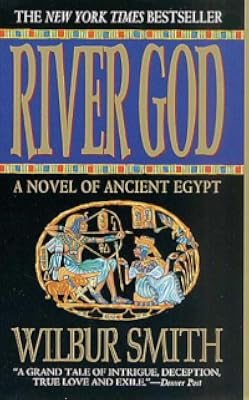
The first book in the epic Egyptian series The first book in the epic Egyptian series. 'Fame and popularity breed envy in high places, and the adulation of the mob is fickle. they often take as much pleasure in tearing down the idols that they have grown tired of, as they did in elevating them in the first place. It is safer by far to live unseen and unremarked, as I always attempt to do' An ancient kingdom. An incredible destiny. Taita is a humble sale; an expert in art, poetry, medicine, show more and engineering, as well as keeping important secrets, he is the most treasure possession of Lord Intef. Yet when Intef's beautiful daughter Lostris is married to the Pharaoh, Taita is commanded to follow her, and swiftly finds himself deeper than he ever could have imagined in a world of deception and treachery. But outside the palace, the great kingdom of Egypt is divided, and in even greater danger. Enemies threaten on all sides, and only Taita holds the power to save them all... show lessTags
Recommendations







Member Recommendations

paradoxosalpha Smith's Egypt has plenty of politics, intrigue, battle, and invention, but Mailer's has magic -- and more interesting sex.
Member Reviews
The conceit of this massive novel is that it is an elaborated translation of the chronicle of the Queen Regent Lostris of Egypt (ca. 1800 BCE) as narrated by her slave Taita. The latter is really the focus of the tale, as he is responsible for a multitude of stratagems and accomplishments of statecraft, warfare, and technology. Over the course of the book he invents indoor plumbing, Egyptian floral motifs, the spoked wheel, and bio-warfare, among other exhibitions of cleverness. If your credulity can bear up under that, the story is a sweeping epic with fairly vivid characters.
Ultimately, though, the impression delivered to the reader is that the Egyptians of four millenia gone were not so different from "us," and Smith makes this show more moral explicit in his epilogue. In this respect, I find the book diametrically opposed to the volume to which I am most tempted to compare it, Norman Mailer's Egyptian saga Ancient Evenings. Mailer impressed me with his ability to insinuate the reader's understanding into a culture profoundly alien to modern "scientific" materialism. Smith seems to have done the reverse: keeping the events of remote antiquity within a moral and cultural compass that is already conveniently accessible to the modern reader. show less
Ultimately, though, the impression delivered to the reader is that the Egyptians of four millenia gone were not so different from "us," and Smith makes this show more moral explicit in his epilogue. In this respect, I find the book diametrically opposed to the volume to which I am most tempted to compare it, Norman Mailer's Egyptian saga Ancient Evenings. Mailer impressed me with his ability to insinuate the reader's understanding into a culture profoundly alien to modern "scientific" materialism. Smith seems to have done the reverse: keeping the events of remote antiquity within a moral and cultural compass that is already conveniently accessible to the modern reader. show less
The River God is a rousing tale of ancient Egypt. This story is epic in scope with forbidden love, devastating strife, a daunting enemy, and an exodus into an unknown land. It's narrated by Taita, the eunuch slave, who tells the story of his life as events unfold in Egypt thousands of years ago. He works for Lord Intef, a tyrannical ruler who is second only to the Pharaoh. Taita is also responsible for raising and educating Intef's daughter Lostris whom he loves more than life. He is also a close confidant to Tanus, young soldier and mighty warrior leader of the Blue Crocodile division of the Pharaoh's fleet. Tanus and Lostris fall in love but evil Lord Intef refuses to let them wed.
River God is well written and is less of a historical show more novel than a epic action adventure story. Readers can criticize the historical facts, but no one can criticize how stirring and emotional it is. The author takes us on a journey through Egypt which is depicted with such astonishing detail the reader will think they are on the Nile. There were so many great scenes including the hippopotamus hunt at the very beginning and the invasion of the Hyksos with their indomitable chariots and horses, defeating the Egyptian forces and causing our heroes to flee up the Nile. Years will pass before they are able to return.
It is a sweeping saga that is well written and very imaginative. Taita's unequaled intelligence was a bit unbelievable but this eventually seems important for the development of the plot. I don't recommend this for the squeamish because there are lots of animal deaths and some discussion of Intef's sexual interest in young boys that might be disturbing. I found them to be brief and easy to skim through because the story was so gripping. It was a great piece of storytelling and I'm already picking up the second book in the trilogy (Seven Scrolls) which takes place 4000 years later. I should note that I listened to this and maybe that was part of the reason I enjoyed it so much. show less
River God is well written and is less of a historical show more novel than a epic action adventure story. Readers can criticize the historical facts, but no one can criticize how stirring and emotional it is. The author takes us on a journey through Egypt which is depicted with such astonishing detail the reader will think they are on the Nile. There were so many great scenes including the hippopotamus hunt at the very beginning and the invasion of the Hyksos with their indomitable chariots and horses, defeating the Egyptian forces and causing our heroes to flee up the Nile. Years will pass before they are able to return.
It is a sweeping saga that is well written and very imaginative. Taita's unequaled intelligence was a bit unbelievable but this eventually seems important for the development of the plot. I don't recommend this for the squeamish because there are lots of animal deaths and some discussion of Intef's sexual interest in young boys that might be disturbing. I found them to be brief and easy to skim through because the story was so gripping. It was a great piece of storytelling and I'm already picking up the second book in the trilogy (Seven Scrolls) which takes place 4000 years later. I should note that I listened to this and maybe that was part of the reason I enjoyed it so much. show less
This book I read second in the row, instead of starting off with it as no.1.
That didn't harm reading pleasure, though. Despite the books belong together, being both about Taita and his life, they can be read as seperate books.
Well, about the book. I liked it, as I had expected. I liked the story, the descriptions of Egypt life in ancient times, the machinations that seem to be part of royal and political life in all times. What I did wonder about, is that a slave has so much influence, not to say power in the household he works for. If I doubt anything to be true from this story, that would be the part.
In other ancient times slaves didn't have so much influence and despite he could have searched it through plotting and scheming, I'm show more not sure he would have pulled it off like Taita describes he did.
Taita, the man I'm talking about, portaits himself as a genius, having brilliant ideas, living only for the well being of his mistress and her family.
I'm reading this as a work of fiction though. Maybe Egyptian life in about 1700 BC is portayed well, maybe not. I have no intention to prove it or attack what has been written about that. It was a well constructed, believable, interesting, thrilling book at times. A very nice book to read :-) show less
That didn't harm reading pleasure, though. Despite the books belong together, being both about Taita and his life, they can be read as seperate books.
Well, about the book. I liked it, as I had expected. I liked the story, the descriptions of Egypt life in ancient times, the machinations that seem to be part of royal and political life in all times. What I did wonder about, is that a slave has so much influence, not to say power in the household he works for. If I doubt anything to be true from this story, that would be the part.
In other ancient times slaves didn't have so much influence and despite he could have searched it through plotting and scheming, I'm show more not sure he would have pulled it off like Taita describes he did.
Taita, the man I'm talking about, portaits himself as a genius, having brilliant ideas, living only for the well being of his mistress and her family.
I'm reading this as a work of fiction though. Maybe Egyptian life in about 1700 BC is portayed well, maybe not. I have no intention to prove it or attack what has been written about that. It was a well constructed, believable, interesting, thrilling book at times. A very nice book to read :-) show less
The narrator of this book is an amazing all-in-one product, a mastery of the human race. He's the Leonardo da Vinci of his day, a self-proclaimed doctor, architect, priest, tutor, charioteer, playwright, painter, cook, tracker, astrologist, marathon runner, and all-around scholar. The only things he isn't, really, are two: a soldier (even he admits he's a coward), and a man (he's a eunuch).
Taita, the slave, singlehandedly changes the course of ancient Egyptian history - more than once. He is the reason for failed revolts, the downfall of gangs of thieves, various brilliant surgical techniques, the mastery of the wheel, improved naval tactics, and oh yeah, you know those flower pillars in Egyptian temples? He came up with those.
By the show more time I'd reached the middle of RIVER GOD, Taita had already come to be like an old friend - I could always trust him to bust out some adventure and suitable knowledge or craftiness to save the day. In fact, everything in this book is extremely Taita-centered. He never fails. Not once. What Taita the slave sets out to do, Taita the slave succeeds in doing.
Whether that's good or bad is up to you. But if anything, this character serves as a vital tool in being able to fully experience every facet of ancient Egyptian life. The amount of detail packed in illuminates Egypt remarkably, and I'd recommend this to anyone looking to get a feel for every day life back then.
Despite Smith's vivid detail, however, the endless episodes of war and hunting began to weary me. It seemed that every dozen pages someone would die, but the main problem? I didn't care for any of them. The characters are flat as the Earth was in the year 1407. There's the dazzling prince, the beautiful maiden (or two), the coldly nefarious villain, etc. etc. They each do exactly what's expected of them. And the only refuge from this is, well, the action.
RIVER GOD is a daring book that sets out to breathe life and adventure into times of political uprising, intrigue, and brutality. It's a well-researched, relatively exciting jaunt through ancient Egypt, but at the core of everything, it takes on the tone of the obligingly violent action flick. For ancient Egyptian literature with mind-boggling political intrigue and great characters, check out works by Pauline Gedge such as Child of the Morning. For just another enjoyable day reading, RIVER GOD will do the job. show less
Taita, the slave, singlehandedly changes the course of ancient Egyptian history - more than once. He is the reason for failed revolts, the downfall of gangs of thieves, various brilliant surgical techniques, the mastery of the wheel, improved naval tactics, and oh yeah, you know those flower pillars in Egyptian temples? He came up with those.
By the show more time I'd reached the middle of RIVER GOD, Taita had already come to be like an old friend - I could always trust him to bust out some adventure and suitable knowledge or craftiness to save the day. In fact, everything in this book is extremely Taita-centered. He never fails. Not once. What Taita the slave sets out to do, Taita the slave succeeds in doing.
Whether that's good or bad is up to you. But if anything, this character serves as a vital tool in being able to fully experience every facet of ancient Egyptian life. The amount of detail packed in illuminates Egypt remarkably, and I'd recommend this to anyone looking to get a feel for every day life back then.
Despite Smith's vivid detail, however, the endless episodes of war and hunting began to weary me. It seemed that every dozen pages someone would die, but the main problem? I didn't care for any of them. The characters are flat as the Earth was in the year 1407. There's the dazzling prince, the beautiful maiden (or two), the coldly nefarious villain, etc. etc. They each do exactly what's expected of them. And the only refuge from this is, well, the action.
RIVER GOD is a daring book that sets out to breathe life and adventure into times of political uprising, intrigue, and brutality. It's a well-researched, relatively exciting jaunt through ancient Egypt, but at the core of everything, it takes on the tone of the obligingly violent action flick. For ancient Egyptian literature with mind-boggling political intrigue and great characters, check out works by Pauline Gedge such as Child of the Morning. For just another enjoyable day reading, RIVER GOD will do the job. show less
L'egitto mi ha sempre affascinato, quindi sapevo che questo romanzo prima o poi sarebbe stata una lettura quasi obbligata.
Conosco Smith da molti anni ma, forse pena la scelta dei romanzi peggiore dell'autore, non sono mai riuscito a concludere un suo libro.
Questo non significa che non l'abbia apprezzato.
Ci sono due cose di Smith che colpiscono: lo stile (soprattutto nel rendere vivida l'Africa) e l'Africa stessa che trasuda dalle sue pagine. La grande dote di questo narratore (come ama definirsi) e di conoscere molto bene la sua terra e di saperci ambientare sapientemente vicende che magari non hanno mai un respiro grandioso, ma che nel loro piccolo sanno essere grandi eventi
Ma veniamo a "Il dio del fiume". E' ambientato alla fine del show more Medio Regno quando la tribù nomade degli hyksos invasero l'Egitto e lo dominarono per circa duecento anni.
I personaggi di Smith sono incredibili: colpiscono dritto al cuore. Taita che è comunque una figura iperbolica...esagerata (è architetto, medico, sapiente, profeta, artigiano etc etc quasi un Leonardo ante litteram pur essendo in sostanza uno schiavo). Ma si soffre, si goisce si vive il romanzo con lui. Le sue aspirazioni diventano le nostre, i suoi intrighi e le sue motivazioni diventano parte del nostro modo di pensare alla vicenda.
La vicenda appunto... parte in sordina in modo banale. Sembra erroneamente una semplice classsicissima storia d'amore tormentata. Ma diventa di più: il ritratto di un popolo in fuga e in lotta per la propria terra, per la propria libertà. Sullo sfondo del placido e grande fiume che è il cuore dell'Egitto. show less
Conosco Smith da molti anni ma, forse pena la scelta dei romanzi peggiore dell'autore, non sono mai riuscito a concludere un suo libro.
Questo non significa che non l'abbia apprezzato.
Ci sono due cose di Smith che colpiscono: lo stile (soprattutto nel rendere vivida l'Africa) e l'Africa stessa che trasuda dalle sue pagine. La grande dote di questo narratore (come ama definirsi) e di conoscere molto bene la sua terra e di saperci ambientare sapientemente vicende che magari non hanno mai un respiro grandioso, ma che nel loro piccolo sanno essere grandi eventi
Ma veniamo a "Il dio del fiume". E' ambientato alla fine del show more Medio Regno quando la tribù nomade degli hyksos invasero l'Egitto e lo dominarono per circa duecento anni.
I personaggi di Smith sono incredibili: colpiscono dritto al cuore. Taita che è comunque una figura iperbolica...esagerata (è architetto, medico, sapiente, profeta, artigiano etc etc quasi un Leonardo ante litteram pur essendo in sostanza uno schiavo). Ma si soffre, si goisce si vive il romanzo con lui. Le sue aspirazioni diventano le nostre, i suoi intrighi e le sue motivazioni diventano parte del nostro modo di pensare alla vicenda.
La vicenda appunto... parte in sordina in modo banale. Sembra erroneamente una semplice classsicissima storia d'amore tormentata. Ma diventa di più: il ritratto di un popolo in fuga e in lotta per la propria terra, per la propria libertà. Sullo sfondo del placido e grande fiume che è il cuore dell'Egitto. show less
L'egitto mi ha sempre affascinato, quindi sapevo che questo romanzo prima o poi sarebbe stata una lettura quasi obbligata.
Conosco Smith da molti anni ma, forse pena la scelta dei romanzi peggiore dell'autore, non sono mai riuscito a concludere un suo libro.
Questo non significa che non l'abbia apprezzato.
Ci sono due cose di Smith che colpiscono: lo stile (soprattutto nel rendere vivida l'Africa) e l'Africa stessa che trasuda dalle sue pagine. La grande dote di questo narratore (come ama definirsi) e di conoscere molto bene la sua terra e di saperci ambientare sapientemente vicende che magari non hanno mai un respiro grandioso, ma che nel loro piccolo sanno essere grandi eventi
Ma veniamo a "Il dio del fiume". E' ambientato alla fine del show more Medio Regno quando la tribù nomade degli hyksos invasero l'Egitto e lo dominarono per circa duecento anni.
I personaggi di Smith sono incredibili: colpiscono dritto al cuore. Taita che è comunque una figura iperbolica...esagerata (è architetto, medico, sapiente, profeta, artigiano etc etc quasi un Leonardo ante litteram pur essendo in sostanza uno schiavo). Ma si soffre, si goisce si vive il romanzo con lui. Le sue aspirazioni diventano le nostre, i suoi intrighi e le sue motivazioni diventano parte del nostro modo di pensare alla vicenda.
La vicenda appunto... parte in sordina in modo banale. Sembra erroneamente una semplice classsicissima storia d'amore tormentata. Ma diventa di più: il ritratto di un popolo in fuga e in lotta per la propria terra, per la propria libertà. Sullo sfondo del placido e grande fiume che è il cuore dell'Egitto. show less
Conosco Smith da molti anni ma, forse pena la scelta dei romanzi peggiore dell'autore, non sono mai riuscito a concludere un suo libro.
Questo non significa che non l'abbia apprezzato.
Ci sono due cose di Smith che colpiscono: lo stile (soprattutto nel rendere vivida l'Africa) e l'Africa stessa che trasuda dalle sue pagine. La grande dote di questo narratore (come ama definirsi) e di conoscere molto bene la sua terra e di saperci ambientare sapientemente vicende che magari non hanno mai un respiro grandioso, ma che nel loro piccolo sanno essere grandi eventi
Ma veniamo a "Il dio del fiume". E' ambientato alla fine del show more Medio Regno quando la tribù nomade degli hyksos invasero l'Egitto e lo dominarono per circa duecento anni.
I personaggi di Smith sono incredibili: colpiscono dritto al cuore. Taita che è comunque una figura iperbolica...esagerata (è architetto, medico, sapiente, profeta, artigiano etc etc quasi un Leonardo ante litteram pur essendo in sostanza uno schiavo). Ma si soffre, si goisce si vive il romanzo con lui. Le sue aspirazioni diventano le nostre, i suoi intrighi e le sue motivazioni diventano parte del nostro modo di pensare alla vicenda.
La vicenda appunto... parte in sordina in modo banale. Sembra erroneamente una semplice classsicissima storia d'amore tormentata. Ma diventa di più: il ritratto di un popolo in fuga e in lotta per la propria terra, per la propria libertà. Sullo sfondo del placido e grande fiume che è il cuore dell'Egitto. show less
Taita is almost as bad as Ayla when it comes to inventing stuff way earlier than it was actually invented, and the reason is even more annoying -- instead of showing off all the research, like Auel did, Smith uses Taita's ridiculous talent to skimp on worldbuilding. Also this book wobbles on the line between absorbing and melodramatic and sometimes falls to one side.
Members
- Recently Added By
Lists

Best Historical Fiction
620 works; 261 members

Books Read in 2020
4,379 works; 124 members

Stories set on African soil
183 works; 2 members
Talk Discussions
Past Discussions
The River God - Wilbur Smith- opinions? in Historical Mysteries (May 2010)
Author Information

152+ Works 38,538 Members
Some Editions
Awards and Honors
Distinctions
Notable Lists
Series

Belongs to Publisher Series
Work Relationships
Is contained in
Contains
Is abridged in
Common Knowledge
- Canonical title
- River God
- Original title
- River God
- Original publication date
- 1993
- People/Characters
- Taita; Tanus; Lostris
- Important places
- Egypt; Thebes, Egypt; Memphis, Egypt; Elephantine, Egypt
- Dedication
- This book is for my wife and the jewel of my life Mokhiniso with all my love and gratitude for the enchanted years that I have been married to her.
- First words
- The river lay heavily upon the desert, bright as a spill of molten metal from a furnace.
- Last words
- (Click to show. Warning: May contain spoilers.)I wish that I could rest with her in this tomb, for I am sick and weary with grief. But I still have my two princesses and my king to care for. They need me.
- Original language
- English
- Canonical DDC/MDS
- 823. 1119
Classifications
Statistics
- Members
- 3,540
- Popularity
- 4,658
- Reviews
- 54
- Rating
- (3.94)
- Languages
- 16 — Czech, Danish, Dutch, English, Finnish, French, German, Greek, Hungarian, Italian, Norwegian (Bokmål), Polish, Portuguese, Spanish, Swedish, Turkish
- Media
- Paper, Audiobook, Ebook
- ISBNs
- 133
- UPCs
- 3
- ASINs
- 28