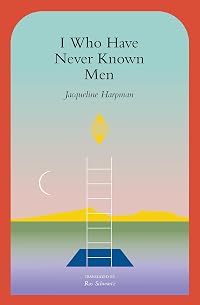
I Who Have Never Known Men
by Jacqueline Harpman
On This Page
Description
"Deep underground, thirty-nine women live imprisoned in a cage. Watched over by guards, the women have no memory of how they got there, no notion of time, and only a vague recollection of their lives before. As the burn of electric light merges day into night and numberless years pass, a young girl--the fortieth prisoner--sits alone and outcast in the corner. Soon she will show herself to be the key to the others' escape and survival in the strange world that awaits them above ground. show more Jacqueline Harpman was born in Etterbeek, Belgium, in 1929, and fled to Casablanca with her family during WWII. Informed by her background as a psychoanalyst and her youth in exile, I Who Have Never Known Men is a haunting, heartbreaking post-apocalyptic novel of female friendship and intimacy, and the lengths people will go to maintain their humanity in the face of devastation. Back in print for the first time since 1997, Harpman's modern classic is an important addition to the growing canon of feminist speculative literature."--Back cover. show lessTags
Recommendations

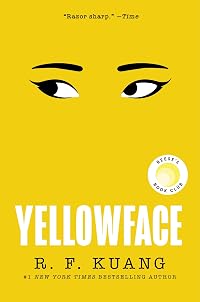
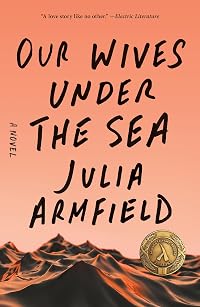
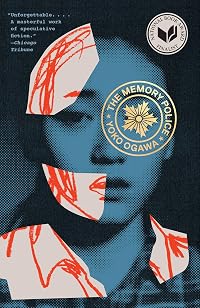


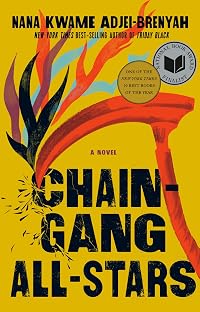


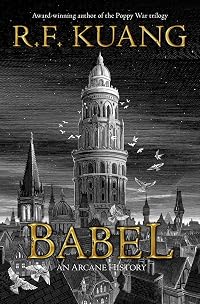
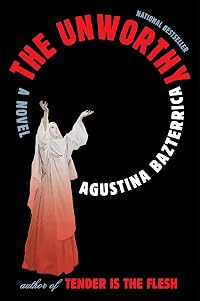
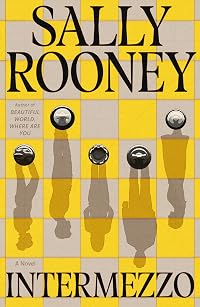










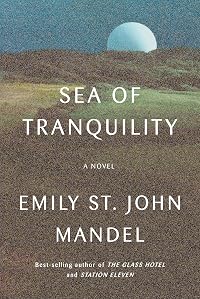
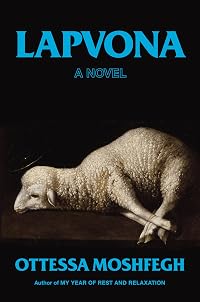
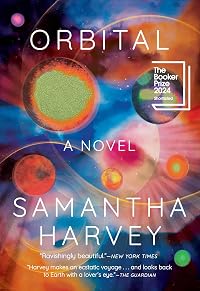
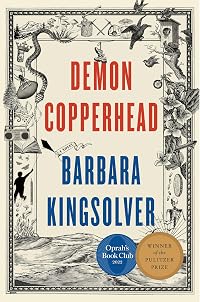
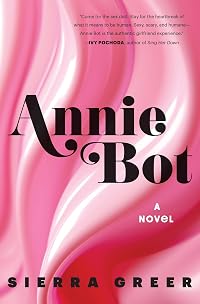
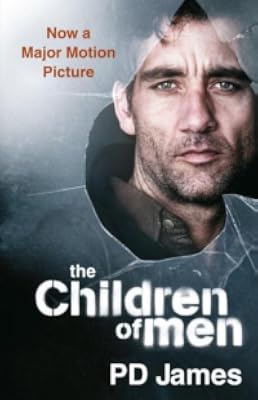

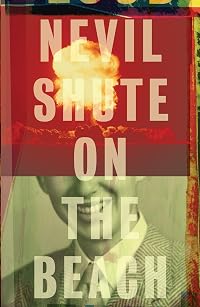
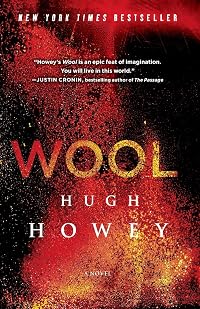


Member Recommendations
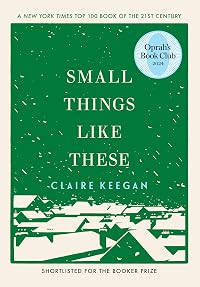
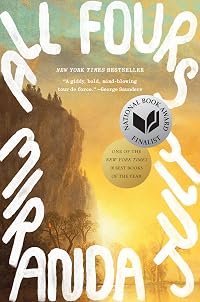
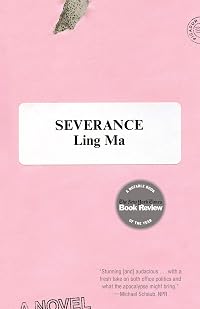
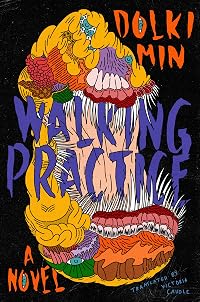
tottman Both are dystopian novels with engaging and driven main characters. They are bleak but extraordinarily moving and compelling.
Also recommended by Tanglewood
20

JessiAdams Sort of similar in that they deal with a dystopian time where a small group of people are held in captivity.
20

Member Reviews
A book that now lives in my head.
I can say, with almost perfect certainty, barring dementia, I will remember the story in this remarkable dystopian novel for the rest of my life.
It's just that kind of book. One that, without any dillydallying ado, grabs you from the first page and takes you on its journey of ideas, mystery, empathy, anger, wonderment, repulsion, tears and fears. From page 1 I was thinking continually about the plight of these 40 women. Well, 39 women and 1 teen girl; the teen is the narrator. The fact that she is a teen among women is vitally important. Vitally important in their circumstance.
You'll see what I mean.
I'm dying to tell you more about it. But I won't. I can't. Almost everything I could say would be a show more spoiler, spoiling your experience of it.
More translations of Harpman's work into English, s'il vous plait!
show less
I can say, with almost perfect certainty, barring dementia, I will remember the story in this remarkable dystopian novel for the rest of my life.
It's just that kind of book. One that, without any dillydallying ado, grabs you from the first page and takes you on its journey of ideas, mystery, empathy, anger, wonderment, repulsion, tears and fears. From page 1 I was thinking continually about the plight of these 40 women. Well, 39 women and 1 teen girl; the teen is the narrator. The fact that she is a teen among women is vitally important. Vitally important in their circumstance.
You'll see what I mean.
I'm dying to tell you more about it. But I won't. I can't. Almost everything I could say would be a show more spoiler, spoiling your experience of it.
More translations of Harpman's work into English, s'il vous plait!
show less
A timeless exploration of humanity in inhuman circumstances, with gentle introspection, determination, and hope, rather than graphic suffering. The nameless narrator opens by saying she rarely goes outside these days and that she no longer speaks because there is no one to hear her. In some ways, it becomes as much a utopia as a dystopia.
It’s a book of absence: of reason, of men, of authority, of family, of answers. But in the gaps, life and meaning bloom.
Image: Yellow flowers growing amid rocks (Source)
“I never thought about the past. I lived in a perpetual present.”
Her memory begins with being a child, imprisoned in an underground cage with 39 women, guarded by men who never speak or look directly at them - but who crack their show more whips at the suggestion of any rule-breaking (touching, whispering, attempting suicide).
The women remember their lives and families (though they don’t like talking of them), but not when or why or how they came to be in the bunker. None of them previously knew each other, and they are from different places.
“The child”, as they refer to the narrator, is largely excluded by the women. She has a thirst for knowledge, but they have little education and see no point in telling her about things she will never experience - or:
“Did they only keep me in ignorance so they could pretend they weren’t entirely powerless?”
She does learn a bit, but comes to realise that knowledge can be a poisoned chalice. Could the prison be a sort of Eden?!
The urge to survive is strong, especially without the means to end life.
“Survival is no more than putting off the moment of death.”
When things change, survival is ingrained. The women organise. Community and culture emerge. They resurrect rituals and many form couples.
Imagine seeing your first sunrise.
Feeling your first drizzle.
Hearing the unfamiliar rustle of leaves.
Her unique circumstances give her a unique voice. This is a story that can only be told in the first person, even if a survivor's journal is a common narrative form.
But not all prisons have bars, and if you have no experience of loving or being loved, can you be truly human? The narrator’s compulsion to document her story in case someone might one day find it suggests she was.
“I will only be truly dead if nobody ever comes… As long as the sheets of paper covered in my handwriting lie on this table, I can become a reality in someone’s mind.”
Each of the few discoveries they make just prompts even more questions. The slow reveal actually reveals very little. If you like resolution to your stories, this is not for you.
Image: Alone: the back of a woman with the shadow of hands, as if in an embrace, by Mortena Yousefi (Source)
Quotes
• “Is what one recollects less important than the act of remembering?”
• “The appalling threat of death, always promised, never given.”
• “Men mean you’re alive… What are we, without a future, without children?”
• “There is no continuity and the world I have come from is utterly foreign to me.”
Puzzling
Unexplained oddities abound. They are never interrogated; they are just kept there, year after year, but with “days” that seem to be only 15-18 hours, followed by 6 hours of sleep. The guards’ shifts don’t correspond, and they don’t sleep on site.
A siren goes off, a woman grabs the keys, and all trace of the guards has gone within 11 minutes.
They climb spiral stairs and find themselves in a rock-strewn wilderness, without birds, trees, animals, or insects. Barren, like the narrator, whose periods never start. They discover bunker after identical bunker, with 40 dead prisoners (all men or all women - why is she the only child in any of the bunkers?), with no sign of guards (just their lockers), and limitless food in freezers that never run out of power, despite no pylons, batteries, or power stations. Who paid for all this, and why?
In the guards’ lockers, they find clothes and boots - but never any socks, and in the freezers, a huge range of food - but never any bread.
In subsequent decades, they walk miles, but never find signs of anyone, other than dead prisoners. They’re not even sure if they’re on Earth.
Eventually, the narrator, by now alone as she always knew she would be, finds a bus, on an overgrown road to nowhere, with the skeletons of uniformed guards. Gas masks, but no signs of panic or struggle. In every kit bag is “A Condensed Gardening Handbook”.
Finally, she finds a bunker that is a luxurious, carpeted home, rather than a prison. It has chairs, crockery, cutlery and glasses for guests at the table, but only one bed, and no clothes in the wardrobe. Joys include books, pencils, paper, hot water, and soap. She has physical comfort and security, and intellectual stimulation (Shakespeare, Cervantes, Dostoyevsky), but “feelings remain a mystery to me”. She has only ever known 39 people, all of them women.
(There are inconsistencies: no trees, then the rustle of leaves (shrubs, perhaps?), no birds, then birdsong, no insects, but flowers, all in a landscape that never changes. Maybe it’s a translation issue.)
See also
This tale of a woman in a bleak dystopian world, with no past, discovering new things, is somewhat the opposite of two equally good novels I read recently:
• Yōko Ogawa’s The Memory Police, which I reviewed HERE.
• Paul Auster’s In the Country of Last Things, which I reviewed HERE.
Other thoughts:
• For another solitary woman’s account of surviving alone, with limited resources, after an unknown disaster, see Marlen Haushofer’s The Wall, which I reviewed HERE.
• In a much lighter vein, figuring out the artefacts of an unfamiliar culture reminded me of Nathan W Pyle’s Strange Planet. His website is HERE. show less
It’s a book of absence: of reason, of men, of authority, of family, of answers. But in the gaps, life and meaning bloom.
Image: Yellow flowers growing amid rocks (Source)
“I never thought about the past. I lived in a perpetual present.”
Her memory begins with being a child, imprisoned in an underground cage with 39 women, guarded by men who never speak or look directly at them - but who crack their show more whips at the suggestion of any rule-breaking (touching, whispering, attempting suicide).
The women remember their lives and families (though they don’t like talking of them), but not when or why or how they came to be in the bunker. None of them previously knew each other, and they are from different places.
“The child”, as they refer to the narrator, is largely excluded by the women. She has a thirst for knowledge, but they have little education and see no point in telling her about things she will never experience - or:
“Did they only keep me in ignorance so they could pretend they weren’t entirely powerless?”
She does learn a bit, but comes to realise that knowledge can be a poisoned chalice. Could the prison be a sort of Eden?!
The urge to survive is strong, especially without the means to end life.
“Survival is no more than putting off the moment of death.”
When things change, survival is ingrained. The women organise. Community and culture emerge. They resurrect rituals and many form couples.
Imagine seeing your first sunrise.
Feeling your first drizzle.
Hearing the unfamiliar rustle of leaves.
Her unique circumstances give her a unique voice. This is a story that can only be told in the first person, even if a survivor's journal is a common narrative form.
But not all prisons have bars, and if you have no experience of loving or being loved, can you be truly human? The narrator’s compulsion to document her story in case someone might one day find it suggests she was.
“I will only be truly dead if nobody ever comes… As long as the sheets of paper covered in my handwriting lie on this table, I can become a reality in someone’s mind.”
Each of the few discoveries they make just prompts even more questions. The slow reveal actually reveals very little. If you like resolution to your stories, this is not for you.
Image: Alone: the back of a woman with the shadow of hands, as if in an embrace, by Mortena Yousefi (Source)
Quotes
• “Is what one recollects less important than the act of remembering?”
• “The appalling threat of death, always promised, never given.”
• “Men mean you’re alive… What are we, without a future, without children?”
• “There is no continuity and the world I have come from is utterly foreign to me.”
Puzzling
Unexplained oddities abound.
A siren goes off, a woman grabs the keys, and all trace of the guards has gone within 11 minutes.
They climb spiral stairs and find themselves in a rock-strewn wilderness, without birds, trees, animals, or insects. Barren, like the narrator, whose periods never start. They discover bunker after identical bunker, with 40 dead prisoners (all men or all women - why is she the only child in any of the bunkers?), with no sign of guards (just their lockers), and limitless food in freezers that never run out of power, despite no pylons, batteries, or power stations. Who paid for all this, and why?
In the guards’ lockers, they find clothes and boots - but never any socks, and in the freezers, a huge range of food - but never any bread.
In subsequent decades, they walk miles, but never find signs of anyone, other than dead prisoners. They’re not even sure if they’re on Earth.
Eventually, the narrator, by now alone as she always knew she would be, finds a bus, on an overgrown road to nowhere, with the skeletons of uniformed guards. Gas masks, but no signs of panic or struggle. In every kit bag is “A Condensed Gardening Handbook”.
Finally, she finds a bunker that is a luxurious, carpeted home, rather than a prison. It has chairs, crockery, cutlery and glasses for guests at the table, but only one bed, and no clothes in the wardrobe. Joys include books, pencils, paper, hot water, and soap. She has physical comfort and security, and intellectual stimulation (Shakespeare, Cervantes, Dostoyevsky), but “feelings remain a mystery to me”. She has only ever known 39 people, all of them women.
(There are inconsistencies: no trees, then the rustle of leaves (shrubs, perhaps?), no birds, then birdsong, no insects, but flowers, all in a landscape that never changes. Maybe it’s a translation issue.)
See also
This tale of a woman in a bleak dystopian world, with no past, discovering new things, is somewhat the opposite of two equally good novels I read recently:
• Yōko Ogawa’s The Memory Police, which I reviewed HERE.
• Paul Auster’s In the Country of Last Things, which I reviewed HERE.
Other thoughts:
• For another solitary woman’s account of surviving alone, with limited resources, after an unknown disaster, see Marlen Haushofer’s The Wall, which I reviewed HERE.
• In a much lighter vein, figuring out the artefacts of an unfamiliar culture reminded me of Nathan W Pyle’s Strange Planet. His website is HERE. show less
An unnamed adolescent narrator lives in an underground cell with 39 older women. Male guards continuously patrol the outside of the area, providing food daily and, more irregularly, cooking implements or worn cloth for the prisoners to care for themselves. The guards never speak, and the women are forbidden from touching one another. The older women remember something of their lives before, but the narrator remembers only the cell. Monotonous days turn into monotonous years...until one day a siren sounds as their food is being delivered. The guards rush out, leaving keys behind in the cell door.
I loved the originality of the premise as well as the unusual narrative style. The story also ticked a few other boxes for me, including its show more dystopian setting and the element of survival. The narrative flows uninterrupted by any chapter breaks, which can make the pacing feel challenging with nothing to break up text periodically, but the book is relatively short and so not too grueling. I'm drawn to stories where the secret nature of the world in which it takes place is part of the overall mystery, and I enjoyed that aspect very much, but in this case I ultimately found myself kind of disappointed that there was no big reveal explaining the circumstances. show less
I loved the originality of the premise as well as the unusual narrative style. The story also ticked a few other boxes for me, including its show more dystopian setting and the element of survival. The narrative flows uninterrupted by any chapter breaks, which can make the pacing feel challenging with nothing to break up text periodically, but the book is relatively short and so not too grueling. I'm drawn to stories where the secret nature of the world in which it takes place is part of the overall mystery, and I enjoyed that aspect very much, but in this case I ultimately found myself kind of disappointed that there was no big reveal explaining the circumstances. show less
I think the only word I can use to describe this book is haunting. I knew most of the basic plot going into it all, but around halfway through there was this twist in my stomach that never left until I finished. This is a book that will definitely stay with me for a while.
It's a very slow read, something that's not for everyone and it reminded me a lot of Memory Police in the way that the story focuses more on a simple, mundane life for our protagonist instead of answering the big questions about the world. Instead, it asks what makes someone human. What makes someone alive? Happy? Sad? Loved? How do you describe someone who has never known men?
The bittersweet bleakness of it all was addicting to read. Jacqueline Harpman also writes show more beautiful prose which allows for a compelling narrator as we follow through her thought process as the world around her changes over many years. I can't believe it took me this long to read it (though I'm blaming the absolutely insane hold line at my library). show less
It's a very slow read, something that's not for everyone and it reminded me a lot of Memory Police in the way that the story focuses more on a simple, mundane life for our protagonist instead of answering the big questions about the world. Instead, it asks what makes someone human. What makes someone alive? Happy? Sad? Loved? How do you describe someone who has never known men?
The bittersweet bleakness of it all was addicting to read. Jacqueline Harpman also writes show more beautiful prose which allows for a compelling narrator as we follow through her thought process as the world around her changes over many years. I can't believe it took me this long to read it (though I'm blaming the absolutely insane hold line at my library). show less
This was a "wow" book for me. I don't read much dystopian/science fiction literature, but this I really connected with.
The premise is that a group of 40 women (one a girl child) is contained in an underground cell, guarded by a group of men. Except for the child, our narrator, the women have vague memories of life before their imprisonment, but no recollection of how they got there, why they are there, or what led to their captivity. After at least a decade of this, a siren sounds and luck plus a bit of quick-thinking lead to their escape. As they navigate the world they emerge in, they wonder if they are still on Earth. They find no other humans except for the occasional holding cell that mirrors theirs, with all the women and show more sometimes all the guards deceased. They have plenty of food because the electricity in these cabins continues to work and there are deep freezers filled with food. I'll stop there with the plot points, but it continues to be fascinating and a compulsive read.
The book is narrated by the child and she is clearly at the end of her life while writing. This book worked for me because it never pretends that it is going to give you a lot of answers. Instead, it provides just enough detail to let your imagination work and leaves room for plenty of questions and themes to emerge.
I really loved it and will be thinking about it for a long time. Unlike most books, where I forget the plot almost immediately upon finishing, this one will stick with me for a long time.
I'm glad Transit Books has reissued this and I hope it continues to be read. show less
The premise is that a group of 40 women (one a girl child) is contained in an underground cell, guarded by a group of men. Except for the child, our narrator, the women have vague memories of life before their imprisonment, but no recollection of how they got there, why they are there, or what led to their captivity. After at least a decade of this, a siren sounds and luck plus a bit of quick-thinking lead to their escape. As they navigate the world they emerge in, they wonder if they are still on Earth. They find no other humans except for the occasional holding cell that mirrors theirs, with all the women and show more sometimes all the guards deceased. They have plenty of food because the electricity in these cabins continues to work and there are deep freezers filled with food. I'll stop there with the plot points, but it continues to be fascinating and a compulsive read.
The book is narrated by the child and she is clearly at the end of her life while writing. This book worked for me because it never pretends that it is going to give you a lot of answers. Instead, it provides just enough detail to let your imagination work and leaves room for plenty of questions and themes to emerge.
I really loved it and will be thinking about it for a long time. Unlike most books, where I forget the plot almost immediately upon finishing, this one will stick with me for a long time.
I'm glad Transit Books has reissued this and I hope it continues to be read. show less
I who Have Never Known Men is a gem of a book. Jacqueline Harpman has managed to create a world on a planet that may or may not be Earth, but probably isn’t. The world that Harpman has created is totally believable and internally consistent. The story is told in first person by “The Child”, a nameless female possibly the last of her species. The setting is post-apocalyptic. The community is a group of forty women initially housed in a bunker guarded by men. Except for The Child, they all have past lives which they only vaguely remember. They are not allowed to touch each other, and escape seems out of the question when the book starts.
Meanwhile,The Child grows up motherless, sans culture, sans books, sans love, sans everything. show more Eventually the guards disappear and the women manage to escape, and set up a community of sorts. It appears that the guards have disappeared for good, and although they find other bunkers with women, they all contain only corpses. It is up to the escaped group to continue, to do their best to survive. They form a community and look after their physical needs.
The women have no memory of being put into the bunker or of how they were transported there. They do not even know where they are. There is a moon but is it Earth’s moon? They can’t remember what it looks like, , having come from cities where they never really looked at Earth’s moon. They know little of geography, math, or how to measure time. They can’t remember whether all the Earth days were the same length or not. The terrain is devoid of forests and the earth is soulless and bleak. There are no birds.
Being of critical mind, I tried to find flaws in the environment that Harpman had enticed me into. I couldn’t. There were no contradictions. It all made horrifying sense.
What I found intriguing about the book was the idea that a human could survive without knowledge of her own body or of the environment in which she has somehow entered. Having had no education at all, and being unable to write things down, though she has a concept of words and spelling and seems to know about the existence of books, The Child knows nothing. She cannot imagine the world in which her companions once lived.
As The Child matures and the community of women settle in makeshift villages where they make everything by hand, she tries to make sense of her world. She has not experienced love or touch in the bunker, and her only contact with men was that of the bunker guards that she could only see from a distance. Not only can she never know men but she is sterile. There is no hope for humanity continuing, and no desire for it to do so. She cannot love as she has never known love. In the bunker she was virtually ignored by the women and though in adolescence when she was still in the bunker, she felt a tingling of sexual desire and gazed at a young guard, she had no understanding of what this meant.
Though the women told her very little in the bunker, after fleeing, The Child is able to learn more. The group naturally breaks into sub-groups. Leaders emerge based on native intelligence and inherent wisdom. Without simple skills like long division and a basic knowledge of geography - the women attempt to discover the length of days and nights, light and dark, and the progression of seasons. But lacking the fundamentals this understanding is denied them. They are essentially living in a pre-Copernican world that has been parched of most life.
I really enjoyed the book and found the concept interesting. The story flows easily, and it was a book that I did not want to end. I highly recommend this book and I’ve no hesitation in giving it 4.5 stars. show less
Meanwhile,The Child grows up motherless, sans culture, sans books, sans love, sans everything. show more Eventually the guards disappear and the women manage to escape, and set up a community of sorts. It appears that the guards have disappeared for good, and although they find other bunkers with women, they all contain only corpses. It is up to the escaped group to continue, to do their best to survive. They form a community and look after their physical needs.
The women have no memory of being put into the bunker or of how they were transported there. They do not even know where they are. There is a moon but is it Earth’s moon? They can’t remember what it looks like, , having come from cities where they never really looked at Earth’s moon. They know little of geography, math, or how to measure time. They can’t remember whether all the Earth days were the same length or not. The terrain is devoid of forests and the earth is soulless and bleak. There are no birds.
Being of critical mind, I tried to find flaws in the environment that Harpman had enticed me into. I couldn’t. There were no contradictions. It all made horrifying sense.
What I found intriguing about the book was the idea that a human could survive without knowledge of her own body or of the environment in which she has somehow entered. Having had no education at all, and being unable to write things down, though she has a concept of words and spelling and seems to know about the existence of books, The Child knows nothing. She cannot imagine the world in which her companions once lived.
As The Child matures and the community of women settle in makeshift villages where they make everything by hand, she tries to make sense of her world. She has not experienced love or touch in the bunker, and her only contact with men was that of the bunker guards that she could only see from a distance. Not only can she never know men but she is sterile. There is no hope for humanity continuing, and no desire for it to do so. She cannot love as she has never known love. In the bunker she was virtually ignored by the women and though in adolescence when she was still in the bunker, she felt a tingling of sexual desire and gazed at a young guard, she had no understanding of what this meant.
Though the women told her very little in the bunker, after fleeing, The Child is able to learn more. The group naturally breaks into sub-groups. Leaders emerge based on native intelligence and inherent wisdom. Without simple skills like long division and a basic knowledge of geography - the women attempt to discover the length of days and nights, light and dark, and the progression of seasons. But lacking the fundamentals this understanding is denied them. They are essentially living in a pre-Copernican world that has been parched of most life.
I really enjoyed the book and found the concept interesting. The story flows easily, and it was a book that I did not want to end. I highly recommend this book and I’ve no hesitation in giving it 4.5 stars. show less
A little girl is placed in a jail cell with thirty-nine older women and kept there. Over the years, she grows into an adolescent in this strange environment where no one is allowed to touch another person. There are men who patrol the perimeter of the cell, but never speak. One day, the girl learns to rebel, just a little, and establishes her place within this hierarchy of women, none of whom know where they are or why they are being held.
This is an odd tale, and a fascinating one. There are no explanations, none of it makes sense, the conclusions drawn seem drawn from nothing, and yet this is a book that sticks in the mind and demands consideration. It's a look at how people might behave in intolerable circumstances, but also at how a show more women-only group might structure themselves. First published back in 1995 and now translated and republished by Transit Books, this is a great example of how small presses are making our literary landscape richer. show less
This is an odd tale, and a fascinating one. There are no explanations, none of it makes sense, the conclusions drawn seem drawn from nothing, and yet this is a book that sticks in the mind and demands consideration. It's a look at how people might behave in intolerable circumstances, but also at how a show more women-only group might structure themselves. First published back in 1995 and now translated and republished by Transit Books, this is a great example of how small presses are making our literary landscape richer. show less
Members
- Recently Added By
Lists

Best Feminist Science Fiction
188 works; 35 members

Best Science Fiction Originally Published in a Language Other Than English
449 works; 34 members

Favorite Science Fiction by Women Authors
737 works; 202 members

Best Science Fiction Novels
816 works; 430 members

Dystopian and Apocalyptic Literature
350 works; 74 members
SF & Fantasy in Translation
95 works; 18 members

Overdue Podcast
806 works; 9 members

Speculative Fiction from around the World
610 works; 18 members

Books discovered on LibraryThing
256 works; 36 members

French SF / SF française
52 works; 1 member

Survey suggestions
16 works; 2 members

Widely acclaimed, one book per year
105 works; 3 members

el
1,139 works; 1 member
Talk Discussions
Past Discussions
french science fiction novel, women imprisoned but a group accidently set free in Name that Book (February 2012)
Author Information

32+ Works 4,181 Members
Some Editions
Awards and Honors
Awards
Distinctions
Notable Lists
Series
Belongs to Publisher Series
Harvill (236)
Work Relationships
Has as a commentary on the text
Common Knowledge
- Canonical title
- I Who Have Never Known Men
- Original title
- Moi qui n'ai pas connu les hommes
- Alternate titles
- The Mistress of Silence
- Original publication date
- 1995
- People/Characters
- Child; Anthea; Dorothy; Greta
- Dedication
- To Denise Geilfus In friendship
- First words
- Since I barely venture outside these days, I spend a lot of time in one of the armchairs, rereading the books.
- Last words
- (Click to show. Warning: May contain spoilers.)It is strange that I am dying from a diseased womb, I who have never had periods and who have never known men.
- Original language
- French
Classifications
- Genres
- Fiction and Literature, Science Fiction, General Fiction
- DDC/MDS
- 843.914 — Literature & rhetoric French Literature French fiction 1900- 20th Century 1945-1999
- LCC
- PQ2668 .A65 .M6513 — Language and Literature French, Italian, Spanish and Portuguese literatures French literature Modern literature 1961-2000
- BISAC
Statistics
- Members
- 3,642
- Popularity
- 4,470
- Reviews
- 119
- Rating
- (4.13)
- Languages
- 13 — Catalan, Danish, Dutch, English, Finnish, French, German, Italian, Lithuanian, Polish, Spanish, Swedish, Portuguese (Portugal)
- Media
- Paper, Audiobook, Ebook
- ISBNs
- 39
- ASINs
- 20