
The Sea Wolf
by Jack London
On This Page
Description
Jack London's novel The Sea Wolf became an instant bestseller on its release in 1904. Ambrose Bierce wrote "The great thing - and it is among the greatest of things - is that tremendous creation, Wolf Larsen... the hewing out and setting up of such a figure is black for a man to do in one lifetime." The Sea Wolf tells the story of intellectual Humphrey van Weyden's toughening and growth in the face of brutality and hardship. Set adrift after his ferry collides in fog and sinks, van Weyden is show more pulled out of the sea by Wolf Larsen.. show less
Tags
Recommendations


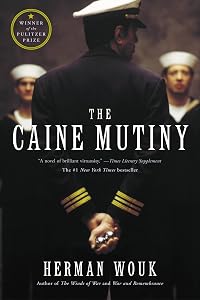
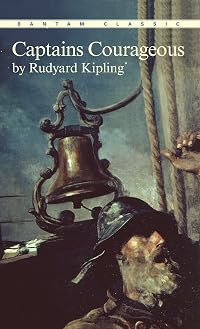

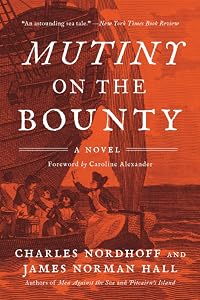




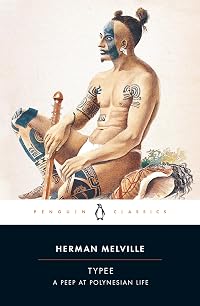

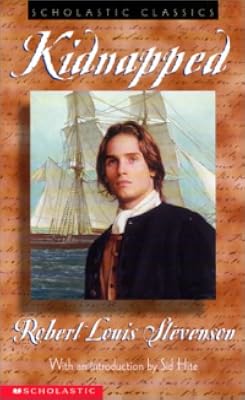
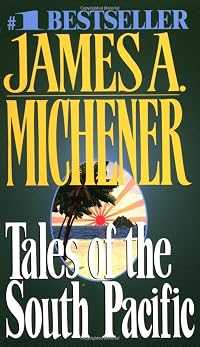

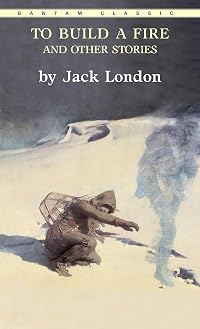


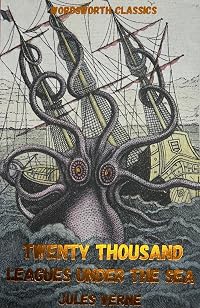

















Member Recommendations

Member Reviews
My reactions to reading this novel in 1991. Some spoilers follow.
A very enjoyable novel to read -- for about the first half. Brutal, brilliant, relentlessly Darwinian Wolf Larsen, captain of the Ghost, is one of fiction’s great characters. His utter reasoned, selfishness, malicious ruthlessness, and passion for life’s struggle are charismatic. Brutal he may be (and London explicitly compares him to Milton’s Lucifer) but, like Humphrey van Weyden and Maud Brewster, we are fascinated by him, his body, mind, and the soul he would deny. Larsen stands as an eloquent exponent of the pure Darwinian struggle where a man is rewarded by elation for living, for moving. He owes only himself gratification (“piggishness” as Larsen calls it) show more and knows he must live by preying on other life. But, unlike van Weyden, he makes no distinction between man and the rest of life. Man struggles and preys and is as amoral as any other animal. This great story of dramatized philosophical conflict between Larsen and “sissy” van Weyden’s bookish (Larsen is impressively versed in many matters), civilized, spiritual values is compelling.
Then the character of Maud Brewster is introduced and the novel degenerates. It is not enough that, through contrived coincidence, Brewster and van Weyden know each other. They have to develop a sappily described romance. Granted their demeanor may have seemed natural to London, and Gilligan's introduction indicates his displeasure, but he says London’s personal life was often filled with such nonsense. Brewster is Larsen’s antithesis. This is explicitly stated, and London does an implicit contrast between Larsen’s finely developed body and Brewster’s perceived fraility. Larsen's materialism is compared with Brewster's spirituality. But the dialogue and romantic description is overblown to modern ears. I think London could have portrayed the same events in less grating, shorter ways.
Gilligan is also right in seeing this as sort of a brutal, adult Captain Courageous where Larsen, in his own words, teaches van Weyden to stand “on his own legs”. Unlike Gilligan, I don’t have any particular problems with van Weyden transforming from scrawny, pretensious, bookish, isolated, pampered literary critic to hardened, practical man of the sea who has seen man’s brutality and accepted a bit of the vista Larsen has shown of life. He is willing to revert to the primitive in protecting his “woman”.
This savagery of the animal kingdom shows up elsewhere in the novel. Leach’s constant challenges to Larsen seem like a young pup challenging the alpha wolf of a pack. Van Weyden’s protectiveness of Brewster is mirrored in the seal bulls protecting their harem. But Brewster is annoying. I kept hoping Wolf would throw her over the side or somehow shut her up. And both van Weyden and Brewster refuse, being the sensitive, civilized, literary types they are, to gun Larsen down. A shortcoming that Larsen himself berates and mocks. He mocks van Weyden’s squimishness, his inability to act out of self-interest to preserve his interest, to forsake morality and convention for self-gain, to forsake, I suppose, government for anarchy (Larsen, towards the novel’s end, calls himself an anarchist).
I find the conflict for van Weyden’s soul between Larsen and Brewster interesting in terms of London’s own values. To an atheist, materialist Larsen represents a view of life’s struggle, its self-contained value apart from notions of immortality and soul and life’s unfairness towards those less fortunate and the tragedy of brilliance like Larsen’s wasted due to the circumstances its born into. Larsen is unswayed by Brewster sentimental, spiritual arguments right up to the end, even though his body is imprisoning him and the essential quality of life for him -- movement -- is being taken. To London, Brewster’s caring, her gentleness, even towards Larsen, must temper the Darwinian universe and make it a better place for man, but he personally rejected her and van Weyden’s religious values. A brilliant character in Larsen that transcends the book’s faults -- including the Ghost coincidentally showing up on Endeavor Island or the obvious symbology in Larsen’s illness. show less
A very enjoyable novel to read -- for about the first half. Brutal, brilliant, relentlessly Darwinian Wolf Larsen, captain of the Ghost, is one of fiction’s great characters. His utter reasoned, selfishness, malicious ruthlessness, and passion for life’s struggle are charismatic. Brutal he may be (and London explicitly compares him to Milton’s Lucifer) but, like Humphrey van Weyden and Maud Brewster, we are fascinated by him, his body, mind, and the soul he would deny. Larsen stands as an eloquent exponent of the pure Darwinian struggle where a man is rewarded by elation for living, for moving. He owes only himself gratification (“piggishness” as Larsen calls it) show more and knows he must live by preying on other life. But, unlike van Weyden, he makes no distinction between man and the rest of life. Man struggles and preys and is as amoral as any other animal. This great story of dramatized philosophical conflict between Larsen and “sissy” van Weyden’s bookish (Larsen is impressively versed in many matters), civilized, spiritual values is compelling.
Then the character of Maud Brewster is introduced and the novel degenerates. It is not enough that, through contrived coincidence, Brewster and van Weyden know each other. They have to develop a sappily described romance. Granted their demeanor may have seemed natural to London, and Gilligan's introduction indicates his displeasure, but he says London’s personal life was often filled with such nonsense. Brewster is Larsen’s antithesis. This is explicitly stated, and London does an implicit contrast between Larsen’s finely developed body and Brewster’s perceived fraility. Larsen's materialism is compared with Brewster's spirituality. But the dialogue and romantic description is overblown to modern ears. I think London could have portrayed the same events in less grating, shorter ways.
Gilligan is also right in seeing this as sort of a brutal, adult Captain Courageous where Larsen, in his own words, teaches van Weyden to stand “on his own legs”. Unlike Gilligan, I don’t have any particular problems with van Weyden transforming from scrawny, pretensious, bookish, isolated, pampered literary critic to hardened, practical man of the sea who has seen man’s brutality and accepted a bit of the vista Larsen has shown of life. He is willing to revert to the primitive in protecting his “woman”.
This savagery of the animal kingdom shows up elsewhere in the novel. Leach’s constant challenges to Larsen seem like a young pup challenging the alpha wolf of a pack. Van Weyden’s protectiveness of Brewster is mirrored in the seal bulls protecting their harem. But Brewster is annoying. I kept hoping Wolf would throw her over the side or somehow shut her up. And both van Weyden and Brewster refuse, being the sensitive, civilized, literary types they are, to gun Larsen down. A shortcoming that Larsen himself berates and mocks. He mocks van Weyden’s squimishness, his inability to act out of self-interest to preserve his interest, to forsake morality and convention for self-gain, to forsake, I suppose, government for anarchy (Larsen, towards the novel’s end, calls himself an anarchist).
I find the conflict for van Weyden’s soul between Larsen and Brewster interesting in terms of London’s own values. To an atheist, materialist Larsen represents a view of life’s struggle, its self-contained value apart from notions of immortality and soul and life’s unfairness towards those less fortunate and the tragedy of brilliance like Larsen’s wasted due to the circumstances its born into. Larsen is unswayed by Brewster sentimental, spiritual arguments right up to the end, even though his body is imprisoning him and the essential quality of life for him -- movement -- is being taken. To London, Brewster’s caring, her gentleness, even towards Larsen, must temper the Darwinian universe and make it a better place for man, but he personally rejected her and van Weyden’s religious values. A brilliant character in Larsen that transcends the book’s faults -- including the Ghost coincidentally showing up on Endeavor Island or the obvious symbology in Larsen’s illness. show less
“Do you know the only value life has is what life puts upon itself? And it is of course overestimated, for it is of necessity prejudiced in its own favour. Take that man I had aloft. He held on as if he were a precious thing, a treasure beyond diamonds of rubies. To you? No. To me? Not at all. To himself? Yes. But I do not accept his estimate. He sadly overrates himself. There is plenty more life demanding to be born. Had he fallen and dripped his brains upon the deck like honey from the comb, there would have been no loss to the world. The supply is too large.”
I remember watching the tv adaptation of Jack London's The Sea-Wolf with my gran, but all I remember are images of sails and the ocean. I don't remember anything of the story show more from that time. So, when The Sea-Wolf came up as a buddy read, I jumped right on it.
The story is told by Humphrey van Weyden, a wannabe author and self-professed gentleman, who is shipwrecked and picked up by the crew of The Ghost and their Captain - Wolf Larsen. Contrary to Humphrey's (Hump's) expectations, he is not set ashore but is Shanghaied by Larsen, who is short of crew and short of time.
While on board, Hump transforms from a man of thought into a man of action, while witnessing the brutality of life at sea and especially the brutality of The Sea-Wolf, Captain Larsen.
“Wolf - tis what he is. He's not blackhearted like some men. 'Tis no heart he has at all.”
It's an interesting book in which London explores human motivation and philosophises about the meaning of life and the value that society attaches to one profession over another. It is not always easy to follow, London's train of thought, however, and it is not at all clear whether some of the views are the author's own.
In some ways, I was reminded of Verne's 20,000 Leagues under the Sea, with its anti-hero Captain Nemo, whose disdain for human society somewhat parallels that of Larsen - except that Nemo had reason that are more relatable than those of Larsen.
The Sea-Wolf remains a mystery until the end.
Despite this, tho, the story works - even as just a simple story of adventure.
The only aspect that really grated on me was that London felt it necessary to add an element of romance into the adventure and side Hump with a lady journalist, who he falls in love with. This is not the grating bit. The grating bit is that she's a pretty strong character and her falling for Hump - who is a patronising wimp - is pretty unlikely. It's Hump's interaction with the lady journalist and his description of her as feeble and weak, even though she does more than her fair share of manual labour on the ship, that really made me want to kick him over-board.
“You are one with a crowd of men who have made what they call a government, who are masters of all the other men, and who eat the food the other men get and would like to eat themselves. You wear the warm clothes. They made the clothes, but they shiver in rags and ask you, the lawyer, or business agent who handles your money, for a job.
'But that is beside the matter,' I cried.
Not at all. It is piggishness and it is life. Of what use or sense is an immortality of piggishness? What is the end? What is it all about? You have made no food. Yet the food you have eaten or wasted might have saved the lives of a score of wretches who made the food but did not eat it. What immortal end did you serve? Or did they?” show less
I remember watching the tv adaptation of Jack London's The Sea-Wolf with my gran, but all I remember are images of sails and the ocean. I don't remember anything of the story show more from that time. So, when The Sea-Wolf came up as a buddy read, I jumped right on it.
The story is told by Humphrey van Weyden, a wannabe author and self-professed gentleman, who is shipwrecked and picked up by the crew of The Ghost and their Captain - Wolf Larsen. Contrary to Humphrey's (Hump's) expectations, he is not set ashore but is Shanghaied by Larsen, who is short of crew and short of time.
While on board, Hump transforms from a man of thought into a man of action, while witnessing the brutality of life at sea and especially the brutality of The Sea-Wolf, Captain Larsen.
“Wolf - tis what he is. He's not blackhearted like some men. 'Tis no heart he has at all.”
It's an interesting book in which London explores human motivation and philosophises about the meaning of life and the value that society attaches to one profession over another. It is not always easy to follow, London's train of thought, however, and it is not at all clear whether some of the views are the author's own.
In some ways, I was reminded of Verne's 20,000 Leagues under the Sea, with its anti-hero Captain Nemo, whose disdain for human society somewhat parallels that of Larsen - except that Nemo had reason that are more relatable than those of Larsen.
The Sea-Wolf remains a mystery until the end.
Despite this, tho, the story works - even as just a simple story of adventure.
The only aspect that really grated on me was that London felt it necessary to add an element of romance into the adventure and side Hump with a lady journalist, who he falls in love with. This is not the grating bit. The grating bit is that she's a pretty strong character and her falling for Hump - who is a patronising wimp - is pretty unlikely. It's Hump's interaction with the lady journalist and his description of her as feeble and weak, even though she does more than her fair share of manual labour on the ship, that really made me want to kick him over-board.
“You are one with a crowd of men who have made what they call a government, who are masters of all the other men, and who eat the food the other men get and would like to eat themselves. You wear the warm clothes. They made the clothes, but they shiver in rags and ask you, the lawyer, or business agent who handles your money, for a job.
'But that is beside the matter,' I cried.
Not at all. It is piggishness and it is life. Of what use or sense is an immortality of piggishness? What is the end? What is it all about? You have made no food. Yet the food you have eaten or wasted might have saved the lives of a score of wretches who made the food but did not eat it. What immortal end did you serve? Or did they?” show less
Book source ~ Audio purchased at Chirp
I listened to this back in August and it has stuck with me. Wolf Larsen is such a brutal man. I don’t care how harsh the conditions out there on the open sea, his brutality is extreme. Yikes. What an asshole. I do admire how he educated himself though and bought himself a ship to hunt seals. Humphrey van Weyden sure gets an education himself at the hands of the Sea-Wolf. The addition of a lady love to the mix strains credulity and the ending is a bit too tidy, but overall this is a tale that has settled into my psyche and I don’t think it will leave for a very long time.
I listened to this back in August and it has stuck with me. Wolf Larsen is such a brutal man. I don’t care how harsh the conditions out there on the open sea, his brutality is extreme. Yikes. What an asshole. I do admire how he educated himself though and bought himself a ship to hunt seals. Humphrey van Weyden sure gets an education himself at the hands of the Sea-Wolf. The addition of a lady love to the mix strains credulity and the ending is a bit too tidy, but overall this is a tale that has settled into my psyche and I don’t think it will leave for a very long time.
"The first two-thirds of this book is great fun... a battle of mind versus muscle, altruism versus hedonism, fought between Humphrey van Weyden and Wolf Larson. Van Weyden is the pansiest pansy who’d ever got an inheritance and a manicure and Larson is all that is Man. Had I been reading tawdry slash fan fiction instead of a well-respected classic of literature, the homo-eroticism between van Weyden and Larson would have ended in syrupy confessions of love and much making out.
And then Maude Brewster entered the scene. She has to be one of the most insipid, unlikable characters I’ve ever read and she ruined what was a perfectly good gay sea adventure. Van Weyden forgets to ogle Larson entirely, spending most of the last 80 pages show more ruminating on how “fragile,” “delicate,” and “womanly” Brewster was. Ugh."
Bryce
--------------------------------------------------------------------------------------------------------------------------------------------------------------------------------------
I am sorry to say that this is not my work of genus above but this review fits my assessment to a T. For the first two thirds of the book its all great fun and then "Ms. Maude" shows up and spoils it all, it goes from a great swashbuckling sea adventure interspersed with some of the most fascinating philosophical dialogue to a horrid sappy love story for the last third. All storyline issues aside though, Wolf Larson is one of the single most wonderful antagonists I have ever read or probably ever will read, he's like the evil Count in "The Women in White" he is horrible but you can't help but love him. Humphrey van Weyden is almost a complete opposite except in intellectual where-withal and the conversation between them is always fun and the not-so-sub text is even more fun. show less
And then Maude Brewster entered the scene. She has to be one of the most insipid, unlikable characters I’ve ever read and she ruined what was a perfectly good gay sea adventure. Van Weyden forgets to ogle Larson entirely, spending most of the last 80 pages show more ruminating on how “fragile,” “delicate,” and “womanly” Brewster was. Ugh."
Bryce
--------------------------------------------------------------------------------------------------------------------------------------------------------------------------------------
I am sorry to say that this is not my work of genus above but this review fits my assessment to a T. For the first two thirds of the book its all great fun and then "Ms. Maude" shows up and spoils it all, it goes from a great swashbuckling sea adventure interspersed with some of the most fascinating philosophical dialogue to a horrid sappy love story for the last third. All storyline issues aside though, Wolf Larson is one of the single most wonderful antagonists I have ever read or probably ever will read, he's like the evil Count in "The Women in White" he is horrible but you can't help but love him. Humphrey van Weyden is almost a complete opposite except in intellectual where-withal and the conversation between them is always fun and the not-so-sub text is even more fun. show less
This is only my second book by Jack London. I am slowly making my way through his works. The Sea-Wolf is starkly different in contrast to his other works and just as engaging. The story of a man unused to physical labor, nature’s elements or the wiles of the treachery his fellow man can be capable of. The Sea-Wolf highlights all the elements of human nature at its worst and most demanding. Pressed into service on a ship loaded with rogues our main character finds himself at the whims of a world he could never have imagined. The character development is amazingly done. The Captain of the Ghost is a man unable to be described, the devil himself. What makes the Captain so dangerous is not only his brimstone manner but his intelligence show more and desire. This is a wonderful story of resolution, desire, sacrifice and staring the odds down…even when they have the foot of fate on your neck. One of Jack London’s strong points is attitude in the light of adversity. Great Classic Literature.
The better part of my adult years and childhood has been spent on and around boats and ships. The latter part consisting of eight shipboard deployments to the Middle East and South East Asia. This book has the smell and the lure of all those factors which enticed me to the Sea. I honestly feel a tad bit coy having just now read it. Better late than never. show less
The better part of my adult years and childhood has been spent on and around boats and ships. The latter part consisting of eight shipboard deployments to the Middle East and South East Asia. This book has the smell and the lure of all those factors which enticed me to the Sea. I honestly feel a tad bit coy having just now read it. Better late than never. show less
The Sea Wolf is the book I read to shreds when I was 12 and it was probably at least indirectly responsible for all the time I spent in my late teens-early twenties riding in not-particularly-seaworthy ferries, or working in fish canneries and pickle factories, or generally spending a lot of time having adventures i.e. bumming around. Even though I'm now a suburban mama of two this book totally still calls to me, I'm only partly embarrassed to admit. Its only flaw is the character of Maude Brewster, who should have stayed on dry land and entirely out of this book.
Shear genius! This is one of my new all-time favorites. Who knew London could write like this after laboring through "White Fang," which was good but not great. But this, this is as captivating as Wolf Larsen's eyes and behavior! Only through London's imaginative descriptions could I marvel at an entire page about a man's eyes.
“The eyes—and it was my destiny to know them well—were large and handsome, wide apart as the true artist’s are wide, sheltering under a heavy brow and arched over by thick black eyebrows. The eyes themselves were of that baffling protean grey which is never twice the same; which runs through many shades and colourings like intershot silk in sunshine; which is grey, dark and light, and greenish-grey, and show more sometimes of the clear azure of the deep sea. They were eyes that masked the soul with a thousand guises, and that sometimes opened, at rare moments, and allowed it to rush up as though it were about to fare forth nakedly into the world on some wonderful adventure,—eyes that could brood with the hopeless sombreness of leaden skies; that could snap and crackle points of fire like those which sparkle from a whirling sword; that could grow chill as an arctic landscape, and yet again, that could warm and soften and be all a-dance with love-lights, intense and masculine, luring and compelling, which at the same time fascinate and dominate women till they surrender in a gladness of joy and of relief and sacrifice.”
Excerpt From: London, Jack. “The Sea Wolf.” iBooks.
This material may be protected by copyright.
Most of the book was like this. I was glad to be on my iPad so I could look up a lot of words to get the full expression of his writing. Fun read. I devoured it faster than usual. I could actually read it again to absorb the dialogue better. The many discussions about the ferment of humanity are awesome and there's even a bit of Ayne Rand philosophy in Wolf Larsen's attitude about altruism. Love this book! show less
“The eyes—and it was my destiny to know them well—were large and handsome, wide apart as the true artist’s are wide, sheltering under a heavy brow and arched over by thick black eyebrows. The eyes themselves were of that baffling protean grey which is never twice the same; which runs through many shades and colourings like intershot silk in sunshine; which is grey, dark and light, and greenish-grey, and show more sometimes of the clear azure of the deep sea. They were eyes that masked the soul with a thousand guises, and that sometimes opened, at rare moments, and allowed it to rush up as though it were about to fare forth nakedly into the world on some wonderful adventure,—eyes that could brood with the hopeless sombreness of leaden skies; that could snap and crackle points of fire like those which sparkle from a whirling sword; that could grow chill as an arctic landscape, and yet again, that could warm and soften and be all a-dance with love-lights, intense and masculine, luring and compelling, which at the same time fascinate and dominate women till they surrender in a gladness of joy and of relief and sacrifice.”
Excerpt From: London, Jack. “The Sea Wolf.” iBooks.
This material may be protected by copyright.
Most of the book was like this. I was glad to be on my iPad so I could look up a lot of words to get the full expression of his writing. Fun read. I devoured it faster than usual. I could actually read it again to absorb the dialogue better. The many discussions about the ferment of humanity are awesome and there's even a bit of Ayne Rand philosophy in Wolf Larsen's attitude about altruism. Love this book! show less
Members
- Recently Added By
Lists

Great American Novels
158 works; 42 members

20th Century Literature
1,161 works; 55 members

Favourite Books
1,819 works; 316 members

Best Adventure Stories
66 works; 15 members

Top Five Books of 2014
1,064 works; 398 members

SHOULD Read Books!
354 works; 9 members

The Works of Jack London
44 works; 1 member

Blue Pyramid 1,276 Best Books of All Time
1,248 works; 32 members

Books Read in 2021
5,361 works; 114 members

Shaykh Hamza's Book Recommendations
439 works; 3 members

Recommended Reading : 600 Classics Reviewed, Editors of Salem Press, 2015
634 works; 6 members
Author Information

1,806+ Works 81,859 Members
One of the pioneers of 20th century American literature, Jack London specialized in tales of adventure inspired by his own experiences. London was born in San Francisco in 1876. At 14, he quit school and became an "oyster pirate," robbing oyster beds to sell his booty to the bars and restaurants in Oakland. Later, he turned on his pirate show more associates and joined the local Fish Patrol, resulting in some hair-raising waterfront battles. Other youthful activities included sailing on a seal-hunting ship, traveling the United States as a railroad tramp, a jail term for vagrancy and a hazardous winter in the Klondike during the 1897 gold rush. Those experiences converted him to socialism, as he educated himself through prolific reading and began to write fiction. After a struggling apprenticeship, London hit literary paydirt by combining memories of his adventures with Darwinian and Spencerian evolutionary theory, the Nietzchean concept of the "superman" and a Kipling-influenced narrative style. "The Son of the Wolf"(1900) was his first popular success, followed by 'The Call of the Wild" (1903), "The Sea-Wolf" (1904) and "White Fang" (1906). He also wrote nonfiction, including reportage of the Russo-Japanese War and Mexican revolution, as well as "The Cruise of the Snark" (1911), an account of an eventful South Pacific sea voyage with his wife, Charmian, and a rather motley crew. London's body broke down prematurely from his rugged lifestyle and hard drinking, and he died of uremic poisoning - possibly helped along by a morphine overdose - at his California ranch in 1916. Though his massive output is uneven, his best works - particularly "The Call of the Wild" and "White Fang" - have endured because of their rich subject matter and vigorous prose. (Bowker Author Biography) show less
Some Editions
Awards and Honors
Awards
Notable Lists
Series
Belongs to Publisher Series
Airmont Classics (64)
Gallimard, Folio (7233)
Work Relationships
Is contained in
Has the adaptation
Is abridged in
Has as a commentary on the text
Has as a student's study guide
Common Knowledge
- Canonical title
- The Sea Wolf
- Original title
- The Sea Wolf
- Original publication date
- 1904
- People/Characters
- Humphrey Van Weyden; Wolf Larsen; Maud Brewster
- Important places
- San Francisco, California, USA; California, USA
- Related movies
- The Sea Wolf (1913 | IMDb); The Sea Wolf (1920 | IMDb); The Sea Wolf (1926 | IMDb); The Sea Wolf (1930 | IMDb); The Sea Wolf (1941 | IMDb); Wolf Larsen (1958 | IMDb) (show all 13); Der Seewolf (1971 | IMDb); Il lupo dei mari (1975 | IMDb); Morskoy volk (1991 | IMDb); The Sea Wolf (1993 | IMDb); The Sea Wolf (1997 | IMDb); Der Seewolf (2008 | IMDb); Barricade (1950 | IMDb)
- First words
- I scarcely know where to begin, though I sometimes facetiously place the cause of it all to Charley Furuseth’s credit. He kept a summer cottage in Mill Valley, under the shadow of Mount Tamalpais, and never occupied it exc... (show all)ept when he loafed through the winter mouths and read Nietzsche and Schopenhauer to rest his brain.
- Quotations
- “One kiss, dear love,” I whispered. “One kiss more before they come.”
“And rescue us from ourselves,” she completed, with a most adorable smile, whimsical as I had never seen it, for it was whimsical with l... (show all)ove. - Last words
- (Click to show. Warning: May contain spoilers.)My days are peaceful now, and my night's sleep deep.
- Original language
- English
- Disambiguation notice
- This is the unabridged original. Please do not combine with adaptations or abridgements. Please also do not combine with editions containing other works.
This ISBN 0883017466 appears to be an abridged version, and should not be combined with the main, unabridged, work.
Classifications
Statistics
- Members
- 5,097
- Popularity
- 2,731
- Reviews
- 61
- Rating
- (3.85)
- Languages
- 20 — Czech, Danish, Dutch, English, Estonian, Finnish, French, German, Greek, Hungarian, Italian, Lithuanian, Norwegian (Bokmål), Norwegian, Polish, Romanian, Spanish, Swedish, Turkish, Portuguese (Portugal)
- Media
- Paper, Audiobook, Ebook
- ISBNs
- 477
- UPCs
- 4
- ASINs
- 183