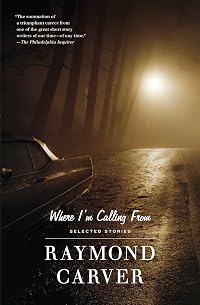
Where I'm Calling From: New and Selected Stories
by Raymond Carver
On This Page
Description
By the time of his early death in 1988, Raymond Carver had established himself as one of the great practitioners of the American short story, a writer who had not only found his own voice but imprinted it in the imaginations of thousands of readers. Where I'm Calling From, his last collection, encompasses classic stories from Cathedral, What We Talk About When We Talk About Love, and earlier Carver volumes, along with seven new works previously unpublished in book form. Together, these show more thirty-seven stories give us a superb overview of Carver's life work and show us why he was so widely imitated but never equaled. show lessTags
Recommendations












Member Recommendations
by ursula
Member Reviews
"Maxine said it was another tragedy in a long line of low-rent tragedies"
This is a quote from one of the 37 short stories featured in this collection and could summarise many of those stories. [Where I'm Calling from] was published in 1988 the year of Carver's death and features stories that appeared in magazines and earlier collections published between 1971 and 1987. The main subject of the stories is American suburban life, but one might also add alcoholism. Many have an unnerving feel of real life situations as characters fight or succumb to events that appear largely out of their control. They fight against taking another drink or succumb to having another shot, always looking over their shoulder, but never quite becoming show more destitute. Men cheat on their wives, on their girlfriends and occasionally the women fight back. It is a tawdry selection of subjects on which Carver has chosen to base his stories, but they are so well written and so convincing that they draw the reader in.
Carver appears to have been an alcoholic for much of his adult life, in the mid 1970's he claimed that he had given up writing and had taken to full time drinking. In his stories almost everyone drinks and as a good proportion of them are written in the first person they have an autobiographical feel to them. His characters are exceptionally well drawn and their dialogue hits the mark almost every-time. Couples argue and fight, cheat and deceive, pretend they do not see what is right in front of their eyes. They act like people in a TV soap opera, but are totally convincing. Some of the stories are mere snapshots of events in his characters lives, but have a lasting impression, there is often not a clear resolution and God forbid there should be happy ending.
Almost all the characters are white Americans, lower middle class or blue collar workers, none of them are out and out criminals, but often choose to act out of pure self interest or are dumbed down by the need to earn a living in a society that takes few prisoners. Mostly it is not a pretty picture and like people who suffer with alcoholism there appears to be an overlying trait of self deception. It is a sobering collection.
Carver when he was able, taught literature at colleges and was a guest lecturer as creative writing courses, but took on miscellaneous jobs when he needed. He states in the preface to this collection that his chosen medium was short stories and was interested in paring the stories down to precise images that reflected the real situations that he was depicting. How far he succeeded in this and how near he came to presenting a culture of a section of life in 1970's America will probably depend on each readers own experiences. Sexist and occasionally racist in accordance with the unenlightened 1970's but good short story writing that can be uncomfortable to read: 4 stars. show less
This is a quote from one of the 37 short stories featured in this collection and could summarise many of those stories. [Where I'm Calling from] was published in 1988 the year of Carver's death and features stories that appeared in magazines and earlier collections published between 1971 and 1987. The main subject of the stories is American suburban life, but one might also add alcoholism. Many have an unnerving feel of real life situations as characters fight or succumb to events that appear largely out of their control. They fight against taking another drink or succumb to having another shot, always looking over their shoulder, but never quite becoming show more destitute. Men cheat on their wives, on their girlfriends and occasionally the women fight back. It is a tawdry selection of subjects on which Carver has chosen to base his stories, but they are so well written and so convincing that they draw the reader in.
Carver appears to have been an alcoholic for much of his adult life, in the mid 1970's he claimed that he had given up writing and had taken to full time drinking. In his stories almost everyone drinks and as a good proportion of them are written in the first person they have an autobiographical feel to them. His characters are exceptionally well drawn and their dialogue hits the mark almost every-time. Couples argue and fight, cheat and deceive, pretend they do not see what is right in front of their eyes. They act like people in a TV soap opera, but are totally convincing. Some of the stories are mere snapshots of events in his characters lives, but have a lasting impression, there is often not a clear resolution and God forbid there should be happy ending.
Almost all the characters are white Americans, lower middle class or blue collar workers, none of them are out and out criminals, but often choose to act out of pure self interest or are dumbed down by the need to earn a living in a society that takes few prisoners. Mostly it is not a pretty picture and like people who suffer with alcoholism there appears to be an overlying trait of self deception. It is a sobering collection.
Carver when he was able, taught literature at colleges and was a guest lecturer as creative writing courses, but took on miscellaneous jobs when he needed. He states in the preface to this collection that his chosen medium was short stories and was interested in paring the stories down to precise images that reflected the real situations that he was depicting. How far he succeeded in this and how near he came to presenting a culture of a section of life in 1970's America will probably depend on each readers own experiences. Sexist and occasionally racist in accordance with the unenlightened 1970's but good short story writing that can be uncomfortable to read: 4 stars. show less
Carver writes haunting stories, and in many ways they are sort of mundane horror tales, as in the horrors of everyday life and everyday troubles and marital strife and whatnot. They are stories of anxiety and depression and the characters feeling like they just can't take it anymore, whatever that "it" may be.
Reading an entire volume of 30 or so of these stories is difficult, so I'd recommend sprinkling two to five stories in between novels or other reading ventures. But still, the man's skill is undeniable, and some of the stories stay with you for a long time afterward.
Some of the most memorable for me were the first two, "Nobody Said Anything" and "Bicycles, Muscles, Cigarettes," along with "What Do You Do in San Francisco?", show more "Neighbors," "Gazebo," "Chef's House," and "Elephant." Two of his best stories, in my opinion, are two of the most optimistic, the uplifting "Fever" and the tragic but hopeful "A Small, Good Thing." And perhaps the most fascinating is the last story, "Errand," a radical departure for Carver of historical fiction concerning the death of Chekhov.
In sum, great stuff, but hard to handle for a long sitting. show less
Reading an entire volume of 30 or so of these stories is difficult, so I'd recommend sprinkling two to five stories in between novels or other reading ventures. But still, the man's skill is undeniable, and some of the stories stay with you for a long time afterward.
Some of the most memorable for me were the first two, "Nobody Said Anything" and "Bicycles, Muscles, Cigarettes," along with "What Do You Do in San Francisco?", show more "Neighbors," "Gazebo," "Chef's House," and "Elephant." Two of his best stories, in my opinion, are two of the most optimistic, the uplifting "Fever" and the tragic but hopeful "A Small, Good Thing." And perhaps the most fascinating is the last story, "Errand," a radical departure for Carver of historical fiction concerning the death of Chekhov.
In sum, great stuff, but hard to handle for a long sitting. show less
You can't knock Raymond Carver's craftsmanship. The care he took to set up his stories, the details he included that spoke volumes about his characters' lives, and his determination to find stories in the sort ordinary rural and suburban towns that were well off the cultural map during most of his life are all admirable. I can't help but respect him as a writer. But I can't say I enjoy his stuff.
My problem with Carver is something I suspect that other people like him for: his stories are perfectly composed. They're so perfectly composed that I sometimes can't find the life in them. Their plot elements complement and balance each other so perfectly that his stories often feel like they were designed to be discussed in a college English show more course. Reading the stories in "Where I'm Calling From," I sometimes imagined that I could sense the author setting traps for the reader. The questions are already prepared for us: what is the pain that that man is hiding? Why can't that woman see what's right in front of her? They feel, sometimes, not like stories but like puzzles. Beautifully constructed puzzles, but still small, self-contained devices that start somewhere, end somewhere, and take few left turns between those points. Somewhere in here, you can sense the stirrings of that lamentable, self-conscious, ostentatiously minimalist genre that's sometimes referred to as "New Yorker fiction."
I think that Carver's stories also might, somewhat uncharitably, be described as a succession of twentieth-century Americans interacting in living rooms, workplaces, fields, and commercial spaces in unremarkable towns, described in prose so austerely minimal that it verges on reportage. The settings' ordinariness seems to follow the prose's no-nonsense spareness. There's a particular Hopper-esque American realism to many of them, minus much of the sunshine: cocktails are drunk, jobs done, cigarettes -- and the occasional joint -- are continually smoked. Characters cheat on their boyfriends or girlfriends, break up their marriages, get into arguments, discipline their children, make mistakes, and, sometimes, reach small oases of peace within their lives. It's difficult, sometimes, to argue that real life as we live it consists of much else, but this stuff is unlikely to speak to readers who'd prefer to focus on fiction's wider possibilities. Carver's characters -- and particularly his male characters -- belong, I think, to an older, often Midwestern, American type that came along well-before its culture became psychologized and infinitely more communicative: they're often stoic, responsible, closed-mouthed, and unwilling to voice their feelings and, often, unlikely to empathize with others. And perhaps these portraits are accurate. And in some of his stories, such as "What We Talk About When We Talk About Love," "A Small Good Thing," and the title story, some light and looseness starts to creep into Carver's work. But they wore on me after a while. I can see, I think, why Carver has his fans: as examples of short stories, much of what's here is just terrific. But most of them never really connected with me, and I'm not sure they meant to. Maybe I'm more of a sentimental reader than I imagined, but, praise them as I might, I just can't love them. show less
My problem with Carver is something I suspect that other people like him for: his stories are perfectly composed. They're so perfectly composed that I sometimes can't find the life in them. Their plot elements complement and balance each other so perfectly that his stories often feel like they were designed to be discussed in a college English show more course. Reading the stories in "Where I'm Calling From," I sometimes imagined that I could sense the author setting traps for the reader. The questions are already prepared for us: what is the pain that that man is hiding? Why can't that woman see what's right in front of her? They feel, sometimes, not like stories but like puzzles. Beautifully constructed puzzles, but still small, self-contained devices that start somewhere, end somewhere, and take few left turns between those points. Somewhere in here, you can sense the stirrings of that lamentable, self-conscious, ostentatiously minimalist genre that's sometimes referred to as "New Yorker fiction."
I think that Carver's stories also might, somewhat uncharitably, be described as a succession of twentieth-century Americans interacting in living rooms, workplaces, fields, and commercial spaces in unremarkable towns, described in prose so austerely minimal that it verges on reportage. The settings' ordinariness seems to follow the prose's no-nonsense spareness. There's a particular Hopper-esque American realism to many of them, minus much of the sunshine: cocktails are drunk, jobs done, cigarettes -- and the occasional joint -- are continually smoked. Characters cheat on their boyfriends or girlfriends, break up their marriages, get into arguments, discipline their children, make mistakes, and, sometimes, reach small oases of peace within their lives. It's difficult, sometimes, to argue that real life as we live it consists of much else, but this stuff is unlikely to speak to readers who'd prefer to focus on fiction's wider possibilities. Carver's characters -- and particularly his male characters -- belong, I think, to an older, often Midwestern, American type that came along well-before its culture became psychologized and infinitely more communicative: they're often stoic, responsible, closed-mouthed, and unwilling to voice their feelings and, often, unlikely to empathize with others. And perhaps these portraits are accurate. And in some of his stories, such as "What We Talk About When We Talk About Love," "A Small Good Thing," and the title story, some light and looseness starts to creep into Carver's work. But they wore on me after a while. I can see, I think, why Carver has his fans: as examples of short stories, much of what's here is just terrific. But most of them never really connected with me, and I'm not sure they meant to. Maybe I'm more of a sentimental reader than I imagined, but, praise them as I might, I just can't love them. show less
Miles Davis once said, when asked why he played such minimalist, modal melodies when his contemporaries were going for the more fevered, manic sound of be-bop, "I try to only play the notes that matter."
That's Raymond Carver. Sparse, deceptively simple, and capable of tearing your soul out by hitting the right notes, consistently, and with purity.
Some of these stories didn't even strike me as I read them. I'd put the book down, walk away, and hours later, not be able to shake the images. Other times, I'd read a line, and feel ashamed for my abuse of adjectives and hyperbole as a writer, right then and there. Carver cuts through it all, and delivers the literary version of "Kind of Blue" in the process.
That's Raymond Carver. Sparse, deceptively simple, and capable of tearing your soul out by hitting the right notes, consistently, and with purity.
Some of these stories didn't even strike me as I read them. I'd put the book down, walk away, and hours later, not be able to shake the images. Other times, I'd read a line, and feel ashamed for my abuse of adjectives and hyperbole as a writer, right then and there. Carver cuts through it all, and delivers the literary version of "Kind of Blue" in the process.
The whole thrust of this review was going to be that Raymond Carver was a writer of a narrow scope. But within that scope he was a master. However, after finishing this collection, I realize now how wrong I was. Carver is, was, and forever shall be a fantastic writer. While he (I think anyways) mainly be remembered for his working class fiction involving hard living and people under the hard thumb of circumstances, this was merely the realm he chose to inhabit, and he did so fantastically. But give this collection a chance and you will see that there was a lot more to this writer than popular conception. Worth every minute.
Where I’m Calling From is a masterpiece of short fiction, a collection of 37 stories by one of the most influential American writers of the 20th century, and my favourite author, Raymond Carver. The stories span his entire career, from his early works that explore the lives of ordinary people struggling with alcoholism, poverty, and loneliness, to his later works that show more hope and redemption. Carver’s style is minimalist, precise, and realistic, often using dialogue and details to reveal the emotions and conflicts of his characters. The stories deal with themes such as love, loss, addiction, family, and death, and often end with an epiphany or a twist. Some of the most famous stories in the book are “Cathedral”, “A show more Small, Good Thing”, and of course the devastating “What We Talk About When We Talk About Love.” If you are new to Carver, this is an excellent place to begin. If you are a lifelong fan, this is the perfect book to add to your collection. show less
August 2, 1988 was one of the saddest days of my life. It was the day Raymond Carver died of lung cancer. He was fifty years old and, in the course of his relatively short life, he’d set the literary world spinning on a new course with his sparse-but-intense short stories. "Where I’m Calling From" collects the best works published during Carver’s lifetime and adds seven new unpublished stories.
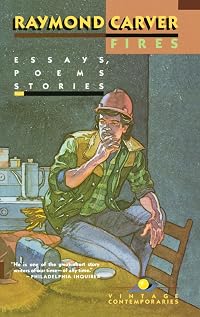
Carver shattered the literary world, but he also sent an earthquake rumbling through my own life. I was in my early 20s, struggling as a new husband, father and working-class wage-earner, when I first read something by Carver. It was an essay called "Fires" in a collection of essays, stories and poems of the same name. I can’t remember show more what I was doing at the time, but I know that at some point while reading "Fires," my knees buckled and I had to sit down. Somehow, Carver had captured my life in his words. In the essay, he describes his early days as a struggling writer (yep, I thought, that’s me) and having to compete for a dryer at a public laundromat (yep, been there, too, Ray). And then he wrote:
"I remember thinking at that moment, amid the feelings of helpless frustration that had me close to tears, that nothing—and, brother, I mean nothing—that ever happened to me on this earth could come anywhere close, could possibly be as important to me, could make as much difference, as the fact that I had two children. And that I would always have them and always find myself in this position of unrelieved responsibility and permanent distraction."
Unrelieved responsibility and permanent distraction. I gulped and looked over my shoulder to see if Carver was standing there, taking notes on my life.
Since that day, I’ve read everything Carver ever wrote and I have never failed to be impressed at how well he captures the heart and soul of American life. His characters are always burdened with things like divorce, alcoholism and that unrelieved responsibility of life. Yet, glum as this sounds, there’s also a spirit of hope threaded throughout his stories. There is pain, but there is love, too.
Carver was not the first writer to use the minimalist style he became notorious for (neither, for that matter, was Hemingway), but he did bring a refreshing voice to American literature at a time when it so desperately needed renewal (the late 1970s and early 1980s).
Some of the best stories in "Where I’m Calling From" include "One More Thing," "What We Talk About When We Talk About Love," "Distance" and "Cathedral." My favorite Carver story is also here—"A Serious Talk," in which the image of a pumpkin pie dropped in a driveway carries so much thematic weight. I could read this story once a week for the rest of my life and still be moved. The same goes for the short-short called "Little Things" (elsewhere, it bears the title "Popular Mechanics"). In the space of about 500 words, Carver delivers a deeply shattering modern fable about the effects of child custody. The whole collection ends with "Errand," the last story Carver wrote. It’s a change of pace, fleshier and more lyrical and, for the first time, not set in twentieth-century America. "Errand" is about the last night in the life of Anton Chekhov, the great Russian short story writer. It is an elegy which, ironically, shadows Carver’s own death shortly after he wrote it. It’s also fitting that Chekhov was the subject of Carver’s last work. If anyone is worthy of the Russian’s crown, it is Carver.
In "…When We Talk About Raymond Carver," a collection of interviews with Carver’s friends and fellow writers, Richard Ford says that in his writing, Carver "attempted to give language to things—to moments in life—which, until you read his story, you never realized existed…His stories made you pay close attention to life."
"Where I’m Calling From" is filled with those kind of moments. On every page, there is a fresh revelation about the way we live our lives. And everywhere, you’ll see the big generous heart of Carver himself.
I’ll miss you, Ray. show less
Carver shattered the literary world, but he also sent an earthquake rumbling through my own life. I was in my early 20s, struggling as a new husband, father and working-class wage-earner, when I first read something by Carver. It was an essay called "Fires" in a collection of essays, stories and poems of the same name. I can’t remember show more what I was doing at the time, but I know that at some point while reading "Fires," my knees buckled and I had to sit down. Somehow, Carver had captured my life in his words. In the essay, he describes his early days as a struggling writer (yep, I thought, that’s me) and having to compete for a dryer at a public laundromat (yep, been there, too, Ray). And then he wrote:
"I remember thinking at that moment, amid the feelings of helpless frustration that had me close to tears, that nothing—and, brother, I mean nothing—that ever happened to me on this earth could come anywhere close, could possibly be as important to me, could make as much difference, as the fact that I had two children. And that I would always have them and always find myself in this position of unrelieved responsibility and permanent distraction."
Unrelieved responsibility and permanent distraction. I gulped and looked over my shoulder to see if Carver was standing there, taking notes on my life.
Since that day, I’ve read everything Carver ever wrote and I have never failed to be impressed at how well he captures the heart and soul of American life. His characters are always burdened with things like divorce, alcoholism and that unrelieved responsibility of life. Yet, glum as this sounds, there’s also a spirit of hope threaded throughout his stories. There is pain, but there is love, too.
Carver was not the first writer to use the minimalist style he became notorious for (neither, for that matter, was Hemingway), but he did bring a refreshing voice to American literature at a time when it so desperately needed renewal (the late 1970s and early 1980s).
Some of the best stories in "Where I’m Calling From" include "One More Thing," "What We Talk About When We Talk About Love," "Distance" and "Cathedral." My favorite Carver story is also here—"A Serious Talk," in which the image of a pumpkin pie dropped in a driveway carries so much thematic weight. I could read this story once a week for the rest of my life and still be moved. The same goes for the short-short called "Little Things" (elsewhere, it bears the title "Popular Mechanics"). In the space of about 500 words, Carver delivers a deeply shattering modern fable about the effects of child custody. The whole collection ends with "Errand," the last story Carver wrote. It’s a change of pace, fleshier and more lyrical and, for the first time, not set in twentieth-century America. "Errand" is about the last night in the life of Anton Chekhov, the great Russian short story writer. It is an elegy which, ironically, shadows Carver’s own death shortly after he wrote it. It’s also fitting that Chekhov was the subject of Carver’s last work. If anyone is worthy of the Russian’s crown, it is Carver.
In "…When We Talk About Raymond Carver," a collection of interviews with Carver’s friends and fellow writers, Richard Ford says that in his writing, Carver "attempted to give language to things—to moments in life—which, until you read his story, you never realized existed…His stories made you pay close attention to life."
"Where I’m Calling From" is filled with those kind of moments. On every page, there is a fresh revelation about the way we live our lives. And everywhere, you’ll see the big generous heart of Carver himself.
I’ll miss you, Ray. show less
Members
- Recently Added By
Lists

Pulitzer Prize for Fiction - Finalists
88 works; 9 members

TML 200 Best Books 1950-1999
202 works; 10 members
Read These Too
458 works; 9 members

Blue Pyramid 1,276 Best Books of All Time
1,248 works; 32 members

Harold Bloom - The Western Canon: D. The Chaotic Age
833 works; 24 members

Short Story and Novella Collections
47 works; 6 members

Hulk's Essential Reading List
38 works; 1 member
Stephen King's 'On Writing' reading list
95 works; 4 members
Books in Riverdale
123 works; 3 members

The Modern Library (The Two Hundred Best Novels....
202 works; 1 member
Author Information

208+ Works 20,686 Members
Born in 1938 in an Oregon logging town, Raymond Carver grew up in Yakima, From California he went to Iowa to attend the Iowa Writers Workshop. Soon, however, he returned to California, where he worked at a number of unskilled jobs before obtaining a teaching position. Widely acclaimed as the most important short story writer of his generation, show more Carver writes about the kind of lower-middle-class people whom he knew growing up. His characters are waitresses, mechanics, postmen, high school teachers, factory workers, door-to-door salesmen who lead drab lives because of limited funds. Critics have said that may have the most distinctive vision of the working class. Nominated posthumously for both a National Book Critics Circle Award (1988) and a Pulitzer Prize (1989) for Where I'm Calling From: New and Selected Stories (1988), Carver is one of a handful of writers credited with reviving the short story form. Some have put Carver in the tradition of Ernest Hemingway and Stephen Crane. Carver's stories tend to be brief, with enigmatic endings, although never erupting. Violence is often just below the surface. An air of quiet desperation pervades his stories, as Carver explores the collapse of human relationships in bleak circumstances. In later works, Carver strikes a note of redemption, unheard at the beginning of his career. But for readers who are not attuned to Carver's voice of resignation, these moments may sound sentimental and unconvincing. Carver died of lung cancer in 1988. (Bowker Author Biography) show less
Some Editions
Awards and Honors
Awards
Distinctions
Notable Lists
Series
Belongs to Publisher Series
Harvill (157)
Keltainen kirjasto (305)
Work Relationships
Contains
Common Knowledge
- Canonical title
- Where I'm Calling From: New and Selected Stories
- Original title
- Where I'm Calling From
- Alternate titles
- Where I'm Calling From: Selected Stories; Where I'm Calling From: Stories; Tres rosas amarillas
- Original publication date
- 1988
- People/Characters
- Anton Chekhov; Rainer Maria Rilke; Claire Kane (wife of Stuart Kane); Stuart Kane (husband of Claire Kane); Dean Kane (son of Claire and Stuart Kane)
- Epigraph
We can never know what to want,
because, living only one life, we can neither
compare it with our previous lives
nor perfect it in our lives to come.

                                  -Milan Kundera
... (show all) The Unbearable Lightness of Being- Dedication
- To Tess Gallagher
- First words
- I could hear them out in the kitchen.
- Last words
- (Click to show. Warning: May contain spoilers.)But at that moment the young man was thinking of the cork still resting near the toe of his shoe. To retrieve it he would have to bend over, still gripping the vase. He would do this. He leaned over. Without looking down, he reached out and closed it in his hand.
- Original language
- English
- Disambiguation notice
- Please distinguish this Raymond Carver short story collection, Where I'm Calling From: New and Selected Stories (1988), from the short story of the same title, "Where I'm Calling From" (1983).
Classifications
Statistics
- Members
- 3,649
- Popularity
- 4,443
- Reviews
- 42
- Rating
- (4.31)
- Languages
- 11 — Chinese, Danish, English, Finnish, French, Italian, Japanese, Korean, Portuguese, Spanish, Swedish
- Media
- Paper, Audiobook, Ebook
- ISBNs
- 40
- ASINs
- 26