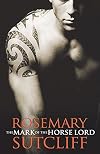
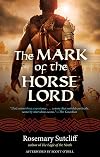
The Mark of the Horse Lord
by Rosemary Sutcliff
On This Page
Description
"There was a smell of blood mingling with the smell of burning that still clung about scorched timber and blackened thatch, and a great wailing rose from the watching crowd. The old High Priest dipped a finger in the blood and made a sign with it on Phaedrus's forehead, above the Mark of the Horse Lord." So began the ceremony that was to make young Phaedrus, ex-slave and gladiator, Horse Lord of the Dalriadain. Phaedrus had come a long way since the fight in the arena that gained him his show more freedom. He had left behind his old Roman life and identity and had entered another, more primitive, world-that of the British tribes in the far north. In this world of superstition and ancient ritual, of fierce loyalties and intertribal rivalry, Phaedrus found companionship and love, and something more-a purpose and a meaning to his life as he came fully to understand the significance of the Mark of the Horse Lord. First published in 1965 but long out of print, The Mark of the Horse Lord has been acclaimed by many readers as the finest of Rosemary Sutcliff's many novels, imparting true insight into the nature of leadership, identity, heroism, loyalty, and sacrifice. show lessTags
Recommendations













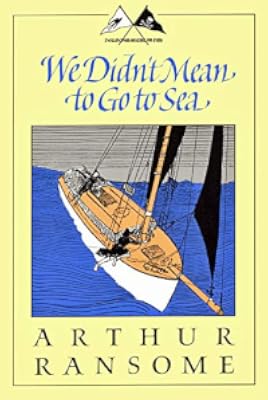


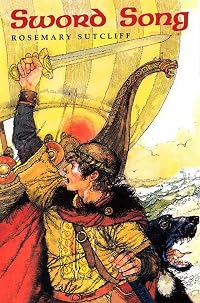




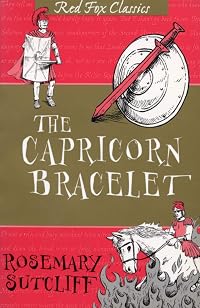

Member Recommendations
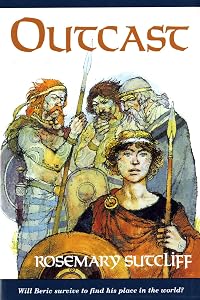
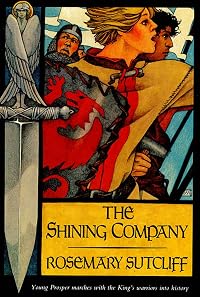
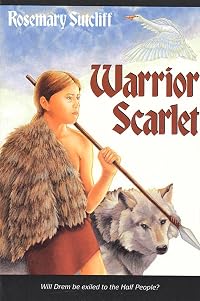
Crypto-Willobie another good de-Piction...

JenMacPen Rosemary Sutcliff's explanation for the White Horse of Uffington.
11

themulhern Two very different impersonation novels.
Member Reviews
Well, that was... wow. An enslaved gladiator wins his freedom by killing his friend, but after a disastrous first night, is drafted to take the place of the heir to the kingship of a northern tribe. His journey from slave to king is an extraordinary one, from intrigue to uprising to mysterious ceremonies to war to sacrifice; it's epic, told with precision and toughness and pathos.
More on the Celtic than the Roman side of the Romano-British books of Rosmary Sutcliff, this is the best of them that I have read this year, with a strong moving core that pushes pass the co-incidence of appearance that involves Phaedrus with the Dalriadains, to create a cohesive and telling narrative. There is a really great chariot battle scene!
This perfectly written piece of historical fiction is worthy of its author, the inimitable Rosemary Sutcliff. In The Mark of the Horse Lord, she weaves a compelling tale of a gladiator turned king among the Dalriads of Roman Scotland. Phaedrus, freed from the arena, is soon drawn into another and perhaps deadlier arena of war between the Pictish tribes, who are struggling for supremacy between the worship of the Sun God and that of the Earth Mother.
It's been too long since I have savored Sutcliff's writing. Her dialogue rings true, her history is flawless, and she doesn't shy away from the harsher, bloodier aspects of the period. Yet somehow her characters never lose their touch with the reader. They remain relatable across oceans of show more time, custom, and religion and I always come away from her novels feeling slightly awed at her ability to balance historical fidelity with more modern sensibilities.
Without giving anything away, I was rooting very hard for a different ending. But it was beautifully done. show less
It's been too long since I have savored Sutcliff's writing. Her dialogue rings true, her history is flawless, and she doesn't shy away from the harsher, bloodier aspects of the period. Yet somehow her characters never lose their touch with the reader. They remain relatable across oceans of show more time, custom, and religion and I always come away from her novels feeling slightly awed at her ability to balance historical fidelity with more modern sensibilities.
Without giving anything away, I was rooting very hard for a different ending. But it was beautifully done. show less
A couple things: Phaedrus was a stand-up dude, clearly. But I wondered why his final deed as gladiator didn't come back to haunt him more than it did later on. The other thing was Liadhan. For how interesting and relatively complex the key characters were, and the fine attention given to the politics and power games necessary to running kingdoms (see Romans), I'd hoped she'd get an equal(ish) shake. She was assigned the narrow role of The Ultimate Evil & Power-hungry Queen, but not given room to say her piece. Almost all of the time, she was running away off-page while everyone else talked about how Evil she was.
However!!! This was a totally engrossing story, and it is just beautifully written. You get an incredibly complete sense of show more time and place. show less
However!!! This was a totally engrossing story, and it is just beautifully written. You get an incredibly complete sense of show more time and place. show less
Rosemary Sutcliff at the height of her powers. I read this as a youngster, but have got far more out of it as an adult. This edition however lacks Charles Keeping's bold black Sixties style illustrations which I remember added to the atmosphere. Vivid, fast-paced adventure set amongst warring Picts and Scots in the parts of Scotland the Romans never managed to subdue, north of the Antonine Wall. Phaedrus the gladiator accepts his destiny, to become leader of the clan of the Horse Lord, having an uncanny likeness to their lost chieftain Midir. There's a witch-goddess woman to defeat, and a love interest with the witch's daughter. Builds to a tragic yet triumphant ending.
An ex-gladiator in prison for brawling is offered a way out by impersonating the rightful king of the Dalriad, deposed by his aunt.
More high adventure beyond the Roman Wall from Rosemary Sutcliffe. Once again her sense of place and landscape stands out as much as the story and characters.
More high adventure beyond the Roman Wall from Rosemary Sutcliffe. Once again her sense of place and landscape stands out as much as the story and characters.
Rosemary Sutcliff is at the top of her form, in this story of adventure on the northern frontier of the Roman empire in the fourth century. An interesting story of Romans trying to substitute one of their own for a chieftain of the Scotti, there's betrayal, and noble self sacrifice. Even adults find this one interesting.
Members
- Recently Added By
Lists

Roman Britain
42 works; 12 members

Books Read in 2017
4,249 works; 129 members

Huxley's Reading Log 2018
37 works; 1 member

Five star books
1,755 works; 107 members

Animals in the Title
498 works; 11 members

Books Read in 2015
3,299 works; 126 members

Books That Changed Our Perspective
423 works; 168 members

The Five Books That Represent Us
391 works; 148 members

Best Children's Books You've Read
197 works; 74 members
Author Information

84+ Works 22,301 Members
Rosemary Sutcliff was on born December 14, 1920 in East Clandon in Surrey, England. As a child she had Still's Disease, a form of juvenile arthritis. The effect of this led to many stays in hospital for painful remedial operations. She ended her formal education at fourteen, and went to Bideford Art School. She passed the City and Guilds show more examination and worked as a painter of miniatures. She felt cramped by the small canvas of miniature painting and turned to writing. Her first two books, The Chronicles of Robin Hood and The Queen Elizabeth Story, were published in 1950. Her other works included The Eagle of the Ninth, The Silver Branch, Sword Song, and the autobiography Blue Remembered Hills. She won the annual Carnegie Medal from the Library Association for The Lantern Bearers in 1959 and the annual Horn Book Award for Tristan and Iseult in 1971. She won inaugural Phoenix Award in 1985 for The Mark of the Horse Lord and again in 2010 for The Shining Company. In 1975, she was appointed an Officer of the Order of the British Empire for services to children's literature, and was promoted to be a Commander of the Order of the British Empire in 1992. She died on July 23, 1992. (Bowker Author Biography) show less
Some Editions
Awards and Honors
Series
Belongs to Publisher Series
Work Relationships
Common Knowledge
- Canonical title*
- Een koning voor de Dalriaden
- Original title
- The Mark of the Horse Lord
- Alternate titles*
- Het koningsteken
- Original publication date
- 1965
- People/Characters
- Phaedrus the Red; Midir; Sinnoch; Gault the Strong; Dergdian; Murna (show all 10); Liadhan; Conory; Logiore; Titus Hilarion
- Important places
- Britannia, Roman Empire; England, UK; Dál Riata (Argyll and Bute and parts of Northern Ireland); Argyll and Bute, Scotland, UK
- First words
- In the long cavern of the changing-room, the light of the fat-oil lamps cast jumping shadows on the walls; skeleton shadows of the spear-stacked arms-racks, giant shadows of the men who crowded the benches or moved about stil... (show all)l busy with their weapons and gear; here and there the stallion shadow of a plume-crested helmet.
- Last words
- (Click to show. Warning: May contain spoilers.)He never felt the jagged stones in the ditch.
- Original language*
- Engels
*Some information comes from Common Knowledge in other languages. Click "Edit" for more information.
Classifications
- Genres
- Fiction and Literature, Children's Books, Young Adult
- DDC/MDS
- 823.914 — Literature & rhetoric English & Old English literatures English fiction 1900- 1901-1999 1945-1999
- LCC
- PZ7 .S966 .M — Language and Literature Fiction and juvenile belles lettres Fiction and juvenile belles lettres Juvenile belles lettres
- BISAC
Statistics
- Members
- 442
- Popularity
- 69,303
- Reviews
- 12
- Rating
- (4.03)
- Languages
- Dutch, English, German
- Media
- Paper, Ebook
- ISBNs
- 17
- ASINs
- 7