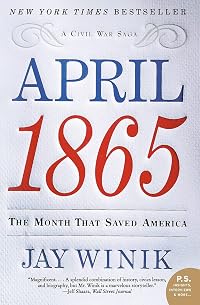
April 1865: The Month That Saved America
by Jay Winik
On This Page
Description
One month in 1865 witnessed the frenzied fall of Richmond, a daring last-ditch Southern plan for guerrilla warfare, Lee's harrowing retreat, and then, Appomattox. It saw Lincoln's assassination just five days later and a near-successful plot to decapitate the Union government, followed by chaos and coup fears in the North, collapsed negotiations and continued bloodshed in the South, and finally, the start of national reconciliation. In the end, April 1865 emerged as not just the tale of the show more war's denouement, but the story of the making of our nation. Jay Winik offers a brilliant new look at the Civil War's final days that will forever change the way we see the war's end and the nation's new beginning. Uniquely set within the larger sweep of history and filled with rich profiles of outsize figures, fresh iconoclastic scholarship, and a gripping narrative, this is a masterful account of the thirty most pivotal days in the life of the United States. show lessTags
Recommendations












Member Recommendations
Member Reviews
One thing we history buffs love is a big, thick book on a subject we love, the kind of deep dive that requires us to plow through hundreds upon hundreds of pages. APRIL 1865, THE MONTH THAT SAVED AMERICA by Jay Winik, is not that kind of history book, and that is just fine. Coming in at just under 400 pages, this is the kind of read that people who can’t manage detailed descriptions of troop movements, battlefield strategy, and lots of exposition will enjoy, while at the same time, satisfy those who have exhausted Bruce Catton and Shelby Foote, but still can’t resist going back to the American Civil War one more time. As per the title, Winik’s book deals with the last month of the war, which saw the fall of Richmond, Lee’s show more surrender at Appomattox, Lincoln’s assassination, the capitulation of the last major Confederate forces in North Carolina, and the first halting steps toward a national reconciliation after four years of endless bloodshed, and furious rancor. In the popular imagination, the Civil War ended with the surrender of Robert E. Lee to Ulysses S. Grant in the parlor of the McLean house in Appomattox, Virginia on April 9th, 1865; the rest of the Confederate armies followed Lee’s example, disbanding, with everyone going home, resolving to be one nation again, one filled with good Americans. But Winik sets out to prove this a gross simplification, and that if things had gone just a little different, if revenge and retribution had triumphed in the hearts of the North, or resistance and defiance had steeled the backs of the South, then American history would have been much different.
The book makes the case that by April of 1865, the Confederacy was on its knees, with Grant’s army at the gates of Richmond, and Sherman’s forces marching into North Carolina, but that it was far from beaten, and years of guerrilla warfare, and a bitter resistance to Federal occupation, was a very real option for the Confederate forces still in the field. This kind of war, which would have resulted in unimaginable destruction and loss of life, did hold the possibility of victory for the South, if the North could ultimately be convinced that the price was too great to keep on fighting year after year. Whether this would happen or not, rested not only in the hands of Lee and Grant, but also Lincoln and Jefferson Davis, William T. Sherman and Joseph E. Johnston, and even disreputable characters like Nathan Bedford Forrest, and downright evil ones, like John Wilkes Booth. Winik labors hard to tell us who they were, what brought them to be where they were, and to hold such responsibility at that place and that time, and why what they did matters so much, even after more than a century and a half.
I think Winik makes his points well, giving us not only the who and the where, but very much the why, specifically why the reconciliation that occurred, bitter and grudging on behalf of some, in the final month of the war came about. That these men who fought each other so hard, so long, both Confederate and Union, were sick and tired of war, Winik makes plain, that in their hearts, their fondest desire was to go home to their families, and never again hear a gun fired in anger. And upon this desire to be done with the bloody business of slavery and secession, a new sense of nationhood took root in the United States. That is far from an original conclusion, but I have not seen it better asserted than in Winik’s book.
This book is as much a civics lesson as it is a recounting of history. One can easily quarrel with Winik’s conclusions, as some reviewers have over his handling of slavery, and the challenges of Reconstruction are given only a quick pass, as others have also pointed out, many feeling that this is the real story. These are contentious subjects, and button pushers for many, proving yet again, as William Faulkner said, “The past is not dead, it’s not even past.”
Jay Winik wrote APRIL 1865 twenty years ago now, when America was still enjoying the aftermath of the Cold War; and for me, the cheery conclusion of the book reads like something written before 9/11, the long wars in Afghanistan and Iraq, the Great Recession, before the ferocious tribalism of 21st Century politics. These days we live in virtuous times, where the compromises and hard fought decisions of the past are disdained and dismissed. The complexities and paradoxes of the Civil War have no place in the public square or popular culture. Men who lived and died, and gave their last full measure for a country they loved as much as anyone alive today are found wanting by a modern morality, and judged harshly. APRIL 1865, whatever its faults, is a book that tries to make us understand a very difficult piece of American history, the kind of understanding that leads to common ground, something earlier generations of Americans knew and shared with one another; something forgotten, but perhaps yet remembered. show less
The book makes the case that by April of 1865, the Confederacy was on its knees, with Grant’s army at the gates of Richmond, and Sherman’s forces marching into North Carolina, but that it was far from beaten, and years of guerrilla warfare, and a bitter resistance to Federal occupation, was a very real option for the Confederate forces still in the field. This kind of war, which would have resulted in unimaginable destruction and loss of life, did hold the possibility of victory for the South, if the North could ultimately be convinced that the price was too great to keep on fighting year after year. Whether this would happen or not, rested not only in the hands of Lee and Grant, but also Lincoln and Jefferson Davis, William T. Sherman and Joseph E. Johnston, and even disreputable characters like Nathan Bedford Forrest, and downright evil ones, like John Wilkes Booth. Winik labors hard to tell us who they were, what brought them to be where they were, and to hold such responsibility at that place and that time, and why what they did matters so much, even after more than a century and a half.
I think Winik makes his points well, giving us not only the who and the where, but very much the why, specifically why the reconciliation that occurred, bitter and grudging on behalf of some, in the final month of the war came about. That these men who fought each other so hard, so long, both Confederate and Union, were sick and tired of war, Winik makes plain, that in their hearts, their fondest desire was to go home to their families, and never again hear a gun fired in anger. And upon this desire to be done with the bloody business of slavery and secession, a new sense of nationhood took root in the United States. That is far from an original conclusion, but I have not seen it better asserted than in Winik’s book.
This book is as much a civics lesson as it is a recounting of history. One can easily quarrel with Winik’s conclusions, as some reviewers have over his handling of slavery, and the challenges of Reconstruction are given only a quick pass, as others have also pointed out, many feeling that this is the real story. These are contentious subjects, and button pushers for many, proving yet again, as William Faulkner said, “The past is not dead, it’s not even past.”
Jay Winik wrote APRIL 1865 twenty years ago now, when America was still enjoying the aftermath of the Cold War; and for me, the cheery conclusion of the book reads like something written before 9/11, the long wars in Afghanistan and Iraq, the Great Recession, before the ferocious tribalism of 21st Century politics. These days we live in virtuous times, where the compromises and hard fought decisions of the past are disdained and dismissed. The complexities and paradoxes of the Civil War have no place in the public square or popular culture. Men who lived and died, and gave their last full measure for a country they loved as much as anyone alive today are found wanting by a modern morality, and judged harshly. APRIL 1865, whatever its faults, is a book that tries to make us understand a very difficult piece of American history, the kind of understanding that leads to common ground, something earlier generations of Americans knew and shared with one another; something forgotten, but perhaps yet remembered. show less
It’s unbelievable how much hangs on the simplest details. An error in a shipping order, an individual’s mood, these things can affect the fate of a nation. In April 1865 we’re given an in-depth look at the final days of the Civil War and the resonating effect they had on the USA.
One of the things that stood out to me was how vital the character of the leaders was. If Grant or Lee or some of the others had wanted the war to continue they could have made very different choices. They men on both sides truly wanted peace in the end and their magnanimous actions prevented further bloodshed.
Before reading this I had a pretty good grasp of both Lincoln and Lee’s personal histories, but I knew very little about Grant’s background. show more This book expanded my knowledge on all three men and gave me a much better understanding of the parts they all played. It also taught me just how controversial some of their decisions were.
Winik’s voice worked well for me. He balanced the details and the big picture, giving just enough of both. He focused on individual’s motivations, not just outcomes. He delved farther back, into the creation of our nation and Jefferson’s role in that, to set the stage for the Civil War. If you want to learn more about the Civil War and America’s history, this book does a wonderful job. show less
One of the things that stood out to me was how vital the character of the leaders was. If Grant or Lee or some of the others had wanted the war to continue they could have made very different choices. They men on both sides truly wanted peace in the end and their magnanimous actions prevented further bloodshed.
Before reading this I had a pretty good grasp of both Lincoln and Lee’s personal histories, but I knew very little about Grant’s background. show more This book expanded my knowledge on all three men and gave me a much better understanding of the parts they all played. It also taught me just how controversial some of their decisions were.
Winik’s voice worked well for me. He balanced the details and the big picture, giving just enough of both. He focused on individual’s motivations, not just outcomes. He delved farther back, into the creation of our nation and Jefferson’s role in that, to set the stage for the Civil War. If you want to learn more about the Civil War and America’s history, this book does a wonderful job. show less
Most people know that Lincoln was assassinated in April 1865, and that Lee surrendered to Grant at Appomattox that same month. What most people don't know (but I learned from Winik's excellent book) is that the military and political leadership of both the Union and the Confederacy were involved in momentous decisions in April that helped bring the war to an end, and bring the country back together. These were decisions that, had they been made differently, could've resulted in catastrophe for our nation. Even if the Union had won the war, and the South readmitted, our identity as a unified country might have been in jeopardy. As Winik points out, using contemporary examples, some countries and regions never fully recover from civil show more wars. To increase the probability of long-lasting peace, Lincoln and Grant chose to disregard the railings of those who would bring shame and severe punishment on the heads of their conquered enemy. Though Jefferson Davis was all for a last-ditch attempt at preserving the Confederacy by sending the army into the hills for prolonged guerrilla warfare, Lee chose the high road, knowing the impact of a sustained war would only make matters far worse than they already were. Winik covers both the strengths and faults of Lincoln, Grant, Lee, Sherman, Johnson, Davis, and Forrest, and shows that despite these faults, they made the decisions at the end of the war that enabled the U.S. to come back together.
The only thing I wish Winik had not omitted was a discussion of Lincoln's presidential pardons for high-ranking Confederate officers and officials, and how that played out with Andrew Johnson once he assumed the presidency. I believe Lincoln's policies in this regard played an important role in achieving peace, and Johnson's policies almost aborted this.
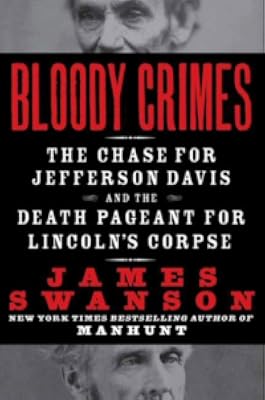
For a different but equally engaging account of events in April and May 1865, I highly recommend James L. Swanson's Bloody Crimes: The Chase for Jefferson Davis and the Death Pageant for Lincoln's Corpse. show less
The only thing I wish Winik had not omitted was a discussion of Lincoln's presidential pardons for high-ranking Confederate officers and officials, and how that played out with Andrew Johnson once he assumed the presidency. I believe Lincoln's policies in this regard played an important role in achieving peace, and Johnson's policies almost aborted this.
For a different but equally engaging account of events in April and May 1865, I highly recommend James L. Swanson's Bloody Crimes: The Chase for Jefferson Davis and the Death Pageant for Lincoln's Corpse. show less
vivid incidents and portraits of the leading players. colourful occasionally purple writing but insightful too. Intriguing points: The frequency of earlier secession threats by various States before the big one; the Civil War brought that to an end. J Davis was a poor political leader while Lincoln was great one; Lee might well have fought for the North; The risk of continuing partisan warfare after the defeat of the South. The South effectively emancipated their slaves towards war's end - so what were they really fighting for?
April 1865 is about the end of the Civil War. It describes the history that lead to the particular events that occurred, starting with the constitution and continuing through the final surrender. At every step, the lecturer discusses what it means to the nation, as a whole.
Jay Winik, the author and lecturer, is a professor of history and has served in national security. His work has involved him in numerous civil wars around the globe.
I wasn't sure what to make of this, I picked it up at Barnes and Noble during one of their 75%-off sales. My first impression wasn't strong, the lecturer was almost monotonic and the content seemed weak. But that impression was quickly replaced when he provided, not just the historical facts, but full show more background and motivations; then he made it all sound interesting!
Jay Winik builds the story mostly chronologically, discussing each of a large number of major characters. For each, he provides a background, discusses strengths and weaknesses, and his position in the power and political pictures of the period. He made the people come to life, they were no longer names in a book, but real people. He brought the struggles, defined the relationships between the different people, and build their personalities.
There is so much information that we never learned, I strongly recommend this lecture series for anyone interested in history. For any US Civil War buffs, it is a must. show less
Jay Winik, the author and lecturer, is a professor of history and has served in national security. His work has involved him in numerous civil wars around the globe.
I wasn't sure what to make of this, I picked it up at Barnes and Noble during one of their 75%-off sales. My first impression wasn't strong, the lecturer was almost monotonic and the content seemed weak. But that impression was quickly replaced when he provided, not just the historical facts, but full show more background and motivations; then he made it all sound interesting!
Jay Winik builds the story mostly chronologically, discussing each of a large number of major characters. For each, he provides a background, discusses strengths and weaknesses, and his position in the power and political pictures of the period. He made the people come to life, they were no longer names in a book, but real people. He brought the struggles, defined the relationships between the different people, and build their personalities.
There is so much information that we never learned, I strongly recommend this lecture series for anyone interested in history. For any US Civil War buffs, it is a must. show less
Why didn't the Civil War turn the US into a gaggle of petty republics? The author recounts the many ways the US could have disintegrated during April 1865, and examines why it didn't. The best book I've read all year.
A fast paced bio-history of the month that altered the course not only of American history, but of world history.
In "April 1865: The Month That Saved America", author Jay Winik breaks down the aforementioned month into the events that took places and the central characters that participated in each event during the month. The entire book is not all about what took place during the fourth month of ’65; the author gives the reader history of a particular subject when needed or required. I found Winik's writing style is very readable and unrelenting. He keeps the imagination fully engaged with the what-ifs, what could have beens, and what was.
I consider this to be a must for any American Civil War enthusiast, history buff, or those who show more just enjoy a good book. show less
In "April 1865: The Month That Saved America", author Jay Winik breaks down the aforementioned month into the events that took places and the central characters that participated in each event during the month. The entire book is not all about what took place during the fourth month of ’65; the author gives the reader history of a particular subject when needed or required. I found Winik's writing style is very readable and unrelenting. He keeps the imagination fully engaged with the what-ifs, what could have beens, and what was.
I consider this to be a must for any American Civil War enthusiast, history buff, or those who show more just enjoy a good book. show less
Members
- Recently Added By
Lists

Books bought at library sales
98 works; 4 members

Mustich's 1000 Books to Read Before You Die: A Life Changing List
1,001 works; 19 members

THE WAR ROOM
813 works; 24 members

Books in the Bibliography of Freethinkers by Susan Jacoby
155 works; 1 member
Author Information

6+ Works 3,193 Members
Jay Winik, one of the nation's leading historians, is renowned for his gifted and creative approaches to history. He is the author of The New York Times and #1 bestseller April 1865 (2001), which received wide international acclaim and became an award-wining documentary on the History Channel, watched by 50 million viewers. The Great Upheaval: show more America and the Birth of the Modern World 1788-1800 (HarperCollins, 2007), was a New York Times bestseller and a Best Book of the Year for both USA Today and the Christian Science Monitor, as well as a main selection of the Book of the Month club and the History Book club. In the UK it was also selected for the prestigious Financial Times list of best books of the year. Winik was in 2013 the Historical Advisor to the National Geographic Channels, and among a number of projects, worked on an epic six-part history of the 1980s with the renowned, award-winning Nutopia film company, which premiered to critical acclaim in over 100 countries. Frequently asked to write or speak about Presidential Leadership and Abraham Lincoln, Winik recorded a series of 14 lectures on the Civil War for the Barnes and Noble Great Lectures series, and he is one of the lead authors of Presidential Leadership: Rating the Best and the Worst of the White House (Wall Street Journal Books, 2004); What Ifs? Of American History: Eminent Historians Imagine What Might Have Been (Putnam, 2003); BookNotes on American Character (PublicAffairs, 2004); I Wish I¿d Been There: Distinguished Historians Travel Back In Time, (Doubleday, 2006); and Abraham Lincoln: Great American Historians on our 16th president (Public Affairs/C-SPAN, 2008). Born in Connecticut, Winik is a graduate of Yale College, and holds an M.Sc. with distinction from the London School of Economics and a Ph.D. from Yale University. Represented by Michael Carlisle in New York City, and the Washington Speakers Bureau, he is a member of the Council on Foreign Relations, is an elected Fellow of the Society of American Historians, and served or serves on the Governing Council of the National Endowment for the Humanities, a presidential appointment, as well as the boards for American Heritage magazine and the journal, World Affairs; he is also a trustee or advisory board member of a number of non-profit boards, including National History Day, the Civil War Preservation Trust; Ford¿s Theatre; The Abraham Lincoln Bicentennial Commission; The Lincoln Legacy Project, the Washington Tennis and Education Foundation; the Lincoln Forum; and earlier the Potomac School, and the Advisory Council of the James Madison Book Award. He is a nominator for the largest prize in the humanities, the $1.5 million John W Kluge award. He has also provided advice to the National Constitution Center in Philadelphia, and was a juror for the prestigious George Washington book prize in 2008, and a recommender for the Heinz awards. His latest book, 1944: FDR and the Year That Changed History (Simon & Schuster 2015) made it to the NY Times Bestseller List. (Bowker Author Biography) show less
Awards and Honors
Distinctions
Notable Lists
Common Knowledge
- Canonical title
- April 1865: The Month That Saved America
- Original publication date
- 2001
- People/Characters
- Thomas T. Accrete; Abigail Adams; Charles Francis Adams, Jr.; John Quincy Adams; Warren Akin (Congressman); Edward Porter Alexander (show all 304); Henry W. Allen (Governor of Louisiana); William Allen, 31st Governor of Ohio; Stephen Ambrose; Abraham Anderson; Bill Anderson; Isaac N. Arnold; Samuel B. Arnold; Les Aspin; George A. Atzerodt; Thomas J. Azy; Nathaniel Bacon; George Bancroft; Ethelbert Barksdale (Congressman); Joseph K. Barnes; P. T. Barnum; Alexander Graham Bell; Judah P. Benjamin; James Bennett; Thomas Hart Benton; Ike Berry; Albert Bierstadt; Montgomery Blair (Postmaster General); Daniel Boorstin; Edwin Booth; John Wilkes Booth; Junius Brutus Booth; James Bowdin; Mathew Brady; Braxton Bragg; John Cabell Breckinridge; Noah Brooks; John Brown, abolitionist; James Buchanan; Ambrose E. Burnside; Nathan Burwell; Susan Emmaline Jeffords Caldwell; John C. Calhoun; Simon Cameron; John A. Campbell; Edward R. S. Canby; Andrew Carnegie; Joshua Lawrence Chamberlain; Salmon P. Chase; I. Q. Chenowith; James Chesnut, Jr.; Mary Boykin Chesnut; T. Morris Chester; Marcellus Clark; Henry Clay; Patrick Ronayne Cleburne; Samuel Langhorne Clemens (as Sam Clemens, Mark Twain); Grover Cleveland; Howell Cobb; Edward Coles; Schuyler Colfax; Joel Colton; Thomas Conrad; Thomas Cook; Charles Cornwallis, 1st Marquess Cornwallis ( (); Edward S. Corwin; James Cox (Judge); William Cranch (Judge); George Crook (General); George Armstrong Custer; Mary Custis Lee (as Mary Custis); Charles A. Dana (as Charles Dana); Henry Winter Davis; Jefferson Davis; Varina Howell Davis; John Jackson Dickison; Stephen A. Douglas; Frederick Douglass; Jubal A. Early; Thomas Edison; Ralph Waldo Emerson; Richard S. Ewell; Ellen Ewing Sherman (as Ellen Ewing); Thomas Ewing; Leonard Farwell; Champ Ferguson; Millard Fillmore; Benjamin F. Ficklin (as Benjamin Finklin); Mary Fontaine; Charles Forbes; John S. Ford (Colonel); Henry Ford; William Ford; Nathan Bedford Forrest; Benjamin Franklin; Douglas Southall Freeman; Mittie Freeman; Henry Clay Frick; Albert Gallatin; James Abram Garfield; Richard Garrett; Wendell Phillips Garrison; William Lloyd Garrison; William Ewart Gladstone; William Winkins Glenn; Samuel Gompers; John B. Gordon (General); Jesse Grant; Julia Dent Grant; Matthew Grant; Noah Grant; Priscilla Grant; Ulysses S. Grant; Horace Greeley; Nathaniel Green (General); John Gregg (General); Phineas Densmore Gurley; Lucy Lambert Hale; Marat Halstead; Alexander Hamilton; Hannibal Hamlin; S. P. Hanscom; Clara Harris Rathbone; Ira Harris (Senator); William Henry Harrison; Harry Hawk; Isham Haynie (General); Patrick Henry; William Henry Herndon; Davy Herold; Joyce Heth; Sam Hildebrand; A. P. Hill; John H. Hinton; Moses Hoge; Houston Holloway; Oliver Wendell Holmes (Captain); John Bell Hood; Joseph Hooker; Sam Houston; William Howard; Robert M. T. Hunter; Andrew Jackson; Stonewall Jackson; Frank James; Jesse James; Thomas Jefferson (referenced); Andrew Johnson; Joseph E. Johnston; J. B. Jones; Samuel Jones (Major General); Thomas Jones; George Julian; Laura Keene; Benjamin F. Kelley; Kate King; Ward Hill Lamon; John T. Lampkin (Representative); Francis Lawley; Charles A. Leale; Custis Lee; Lighthorse Harry Lee; Mary Custis Lee; Robert E. Lee; Margaret Leech; Uriah Phillips Levy; Francis Lieber; Abraham Lincoln; Mary Todd Lincoln; Robert Todd Lincoln; Tad Lincoln; Willie Lincoln; James Longstreet; Walter Lowrie (Senator); James Madison; William Mahone (as General Bill Mahone); Francis Marion (Colonel); Marquis de Chambrun; Marquis de Lafayette; Charles Marshall (Lieutenant Colonel); Joseph Mayo (Mayor); George B. McClellan; Alexander Kelly McClure; Irvin McDowell; Wilmer McLean; Jesse McNeill (as Jesse McNeil); James B. McPherson (as James McPherson); George Gordon Meade; Charles Minnergerode; James Monroe; John Hunt Morgan; John Singleton Mosby; Lucretia Mott; Samuel A. Mudd; John Murrin; Charles Eliot Norton; Adolph Ochs; Richard J. Oglesby (Governor); Michael O'Laughlen; Frederick Law Olmsted; James O'Neal; Edward O. C. Ord; Mary Owens; R. R. Palmer; Elijah Parish; Ely Parker; John F. Parker; William J. Pegram (as Colonel Willy Pegram); William Peterson; Wendell Phillips; Andrew Pickens; Thomas Pickering; George E. Pickett; Franklin Pierce; Charles Pinckney; James Knox Polk; John Pope (General); David Dixon Porter; Horace Porter; Lewis Powell (as Lewis Paine); Gabriel Prosser; William Clarke Quantrill; Henry Reed Rathbone; John Rawlins; Henry J. Raymond; Frederic Remington; Hiram R. Revels; Richard Richardson; Thomas Ritchie; John Roebling; William S. Rosecrans; John D. Sanborn (General); Eliza Scantling; Winfield Scott; John Locke Scripps; Richard Warren Sears; Augustus Seward; Frederick William Seward; Frances Miller Seward; William Henry Seward; Philip Henry Sheridan; William Tecumseh Sherman; Edmund Kirby Smith; William "Extra Billy" Smith; Edman Spangler; James Speed; Edwin M. Stanton; Elizabeth Cady Stanton; George L. Stearns; Alexander H. Stephens; Thaddeus Stevens; Ezra Stiles; Robert King Stone; Edwin H. Stoughton; Harriet Beecher Stowe; J. E. B. Stuart; Charles Sumner; Thomas Sumter; John Harrison Surratt, Jr.; Roger Brooke Taney; Benjamin Tappan (Senator); Sue Tarleton; Richard L. Taylor; Joseph Taylor; Zachary Taylor; Walter Taylor; M. Jeff Thompson; John Thrailkill; Charles Lewis Tiffany; George Todd; Robert Toombs; Anthony Trollope; Ella Turner; Nat Turner; Samuel Langhorne Clemens (Mark Twain); John Tyler; Martin van Buren; Mary Vaughn; Otto von Bismarck; Karl von Clausewitz; Benjamin Franklin Wade (as Benjamin Wade); Martin Waldseemuller; William Wallace (governor of Idaho Territory); Gouverneur K. Warren; Booker T. Washington; George Washington; Martha Custis Washington; Stand Watie; Sam Watkins; Daniel Webster; Godfrey Weitzel; Gideon Welles; John Wesley; Joseph Wheeler; Walt Whitman; Eli Whitney; Tom Wicker; Louis T. Wigfall; Garry Wills; James W. Wilson; John Winthrop; Henry A. Wise; Frank Woolworth; Coleman Younger
- Important places
- Appomattox Court House, Virginia, USA; Cold Harbor, Virginia, USA; Richmond, Virginia, USA; Washington, D.C., USA
- Important events
- Surrender at Appomattox; Assassination of Abraham Lincoln
- Dedication
- For Lyric, my North and South, and East and West
- First words
- Atlanta had been overwhelmed. (introduction)
- Last words
- (Click to show. Warning: May contain spoilers.)It continues still. (epilogue)
- Blurbers
- Shaara, Jeff; Goodwin, Doris Kearns; Ignatius, David; McPherson, James M.; Johnson, Paul; Norman, Geoffrey (show all 10); Mallon, Thomas; Brinkley, Douglas; Smith, Richard Norton; Decter, Midge
Classifications
Statistics
- Members
- 1,877
- Popularity
- 11,442
- Reviews
- 25
- Rating
- (4.16)
- Languages
- English
- Media
- Paper, Audiobook, Ebook
- ISBNs
- 16
- UPCs
- 1
- ASINs
- 8