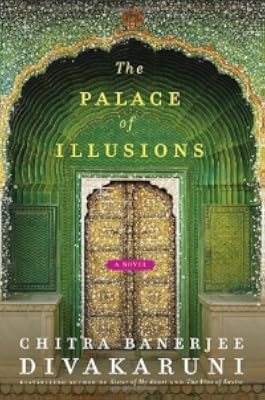
The Palace of Illusions
by Chitra Banerjee Divakaruni
On This Page
Description
The Palace of Illusions takes us back to a time that is half history, half myth, and wholly magical. It is told by Panchaali, wife of the Pandavas brothers, a fiery female redefining for us a world of warriors, gods, and the ever-manipulating hands of fate. The novel traces the princess Panchaali's life, beginning with her birth in fire and following her spirited balancing act as a woman with five husbands who have been cheated out of their father's kingdom. Panchaali is swept into their show more quest to reclaim their birthright, remaining at their side through years of exile and a terrible civil war involving all the important kings of India. Meanwhile, we never lose sight of her strategic duels with her mother-in-law, her complicated friendship with the enigmatic Krishna, or her secret attraction to the mysterious man who is her husbands' most dangerous enemy. show lessTags
Recommendations



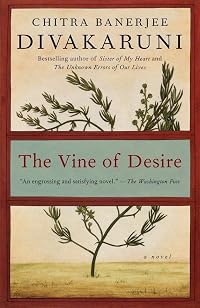
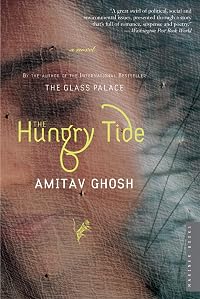
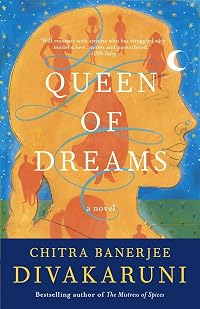
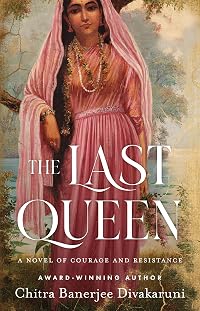







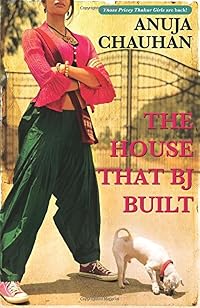
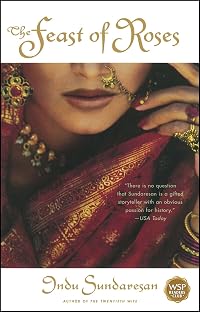
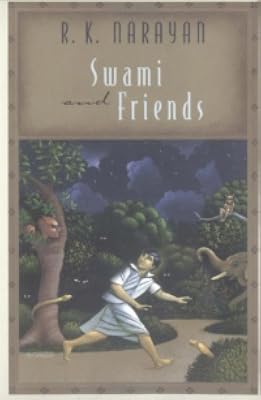

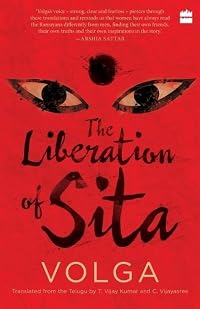

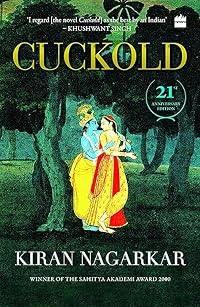

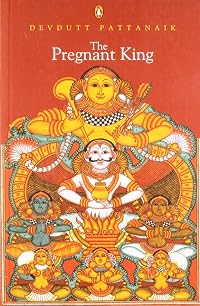
Member Recommendations
Member Reviews
The Palace of Illusions is a retelling of the ancient Indian epic, the Mahabharata, from the perspective of the wife of the five Pandava brothers. It is a feminist reimagining told through the eyes of a fascinating female protagonist, Panchaali (Draupadi). The novel begins with her unusual birth from fire, and follows her life, which is marked by prophecies, passions, exile, war, and multiple tragedies.
This is a beautifully written novel. Divakaruni's prose is lyrical. She creates an atmospheric flowing narrative that weaves together mythic and historical events with intimate personal moments of Panchaali's inner life. Panchaali is intelligent, proud, and determined to forge her own destiny despite the constraints placed upon women in show more her society. We learn about Panchaali's complicated relationship with Krishna (the mortal incarnation of Vishnu), her conflicted feelings toward her five husbands, and her forbidden attraction to Karna (her husbands’ enemy).
The titular palace is built by the architect of the gods for the Pandavas. It serves as a metaphor for the impermanence of power and wealth, and perhaps life itself. I must admit that I have heard of the Mahabharata but have not read it. Despite this lack of familiarity, I easily became immersed in this story. I’m sure it would provide even more insights for those who know the epic well. It speaks to contemporary concerns about gender, power, and self-determination. It has inspired me to seek out more information about the original. show less
This is a beautifully written novel. Divakaruni's prose is lyrical. She creates an atmospheric flowing narrative that weaves together mythic and historical events with intimate personal moments of Panchaali's inner life. Panchaali is intelligent, proud, and determined to forge her own destiny despite the constraints placed upon women in show more her society. We learn about Panchaali's complicated relationship with Krishna (the mortal incarnation of Vishnu), her conflicted feelings toward her five husbands, and her forbidden attraction to Karna (her husbands’ enemy).
The titular palace is built by the architect of the gods for the Pandavas. It serves as a metaphor for the impermanence of power and wealth, and perhaps life itself. I must admit that I have heard of the Mahabharata but have not read it. Despite this lack of familiarity, I easily became immersed in this story. I’m sure it would provide even more insights for those who know the epic well. It speaks to contemporary concerns about gender, power, and self-determination. It has inspired me to seek out more information about the original. show less
I'd give it six stars if I could.
Peak reading experiences come all too seldom in life. I think one knows it's a peak when it's almost too painful to endure that the book is ending, but almost too painful to endure to put it down and turn out the light. Then the book comes to you in your dreams, the characters and the situations work their magical way into your receptive dream-mind, and make not only waking hours painfully happy with the reading or anticipation of reading but the sleeping hours more vivid and more real and more alive than ever.
That's what happened to me as I read The Palace of Illusions. I've dreamed of its characters, I've lived vicariously its plot and its many eventful twists for a month of nights, and I truly can't show more express to you how much pleasure it's given me to do so. I wish for everyone that experience, if not with this book then with another, and soon. It makes a whole new level of appreciation come, or come back, to you when you come across one of these books.
I have had the life-changing experience twice before, and I still treasure those memories. I will treasure this one equally. I suppose the idea of the book, retelling a classic Indian foundational myth called Mahabharat from the point-of-view of a female character, is in keeping with today's popular trend of reimagining myths from all angles and stances. I certainly am aware that telling any Indian myth from a female point of view is a departure from the cultural norms of that society, and to be applauded for that reason alone; but what Divakaruni wrought in doing this is nothing short of creating a new foundation myth on the stones of the old one.
I think a woman who has five husbands wished on her as she comes into this world from a fiery column is worth hearing more about; so did Divakaruni; and thus the tale told here. The myth merely mentions her in passing, which is a curious piece of patriarchal doublethink that never ceases to amaze me when I encounter it. A little like Eve's untold story in Christian myth, and the odd absence of Hera stories as separate from Zeus and his philandering. Extraordinary men need extraordinary women, and simply not telling me-the-reader about them doesn't make them not exist; it merely hides them in deep and scary shadows until a woman with the right eyes comes along, sees the real story, and sets about telling it.
We are all of us readers the richer for Divakaruni's gift of this book to us. I do not, however, recommend it to all readers; I don't think its power is in its broad appeal but in its complete appeal. I suspect that some whose reading preferences are more aimed at comfort and at the satisfactions of reinforcement and reassurance would find this an unpleasant book to read. But I truly wish for each of you that you give it a try, let it at least make a start on working its beautiful enchantment on you. I hope it will be able to speak its way into your dreams the way it did mine. show less
Peak reading experiences come all too seldom in life. I think one knows it's a peak when it's almost too painful to endure that the book is ending, but almost too painful to endure to put it down and turn out the light. Then the book comes to you in your dreams, the characters and the situations work their magical way into your receptive dream-mind, and make not only waking hours painfully happy with the reading or anticipation of reading but the sleeping hours more vivid and more real and more alive than ever.
That's what happened to me as I read The Palace of Illusions. I've dreamed of its characters, I've lived vicariously its plot and its many eventful twists for a month of nights, and I truly can't show more express to you how much pleasure it's given me to do so. I wish for everyone that experience, if not with this book then with another, and soon. It makes a whole new level of appreciation come, or come back, to you when you come across one of these books.
I have had the life-changing experience twice before, and I still treasure those memories. I will treasure this one equally. I suppose the idea of the book, retelling a classic Indian foundational myth called Mahabharat from the point-of-view of a female character, is in keeping with today's popular trend of reimagining myths from all angles and stances. I certainly am aware that telling any Indian myth from a female point of view is a departure from the cultural norms of that society, and to be applauded for that reason alone; but what Divakaruni wrought in doing this is nothing short of creating a new foundation myth on the stones of the old one.
I think a woman who has five husbands wished on her as she comes into this world from a fiery column is worth hearing more about; so did Divakaruni; and thus the tale told here. The myth merely mentions her in passing, which is a curious piece of patriarchal doublethink that never ceases to amaze me when I encounter it. A little like Eve's untold story in Christian myth, and the odd absence of Hera stories as separate from Zeus and his philandering. Extraordinary men need extraordinary women, and simply not telling me-the-reader about them doesn't make them not exist; it merely hides them in deep and scary shadows until a woman with the right eyes comes along, sees the real story, and sets about telling it.
We are all of us readers the richer for Divakaruni's gift of this book to us. I do not, however, recommend it to all readers; I don't think its power is in its broad appeal but in its complete appeal. I suspect that some whose reading preferences are more aimed at comfort and at the satisfactions of reinforcement and reassurance would find this an unpleasant book to read. But I truly wish for each of you that you give it a try, let it at least make a start on working its beautiful enchantment on you. I hope it will be able to speak its way into your dreams the way it did mine. show less
The Palace of Illusions by Chitra Banerjee Divakaruni is unlike any book I've read before.. It begins with the main character and her brother being born in fire in a religious ceremony, with it foretold that she will change the course of history, and he will avenge their royal father. Had I picked up (on Richard's recommendation) a fantasy, or a romance, or some hybrid creation?
Nope. This novel is derived from the Indian epic The Mahabharata, and has a vast scope that Homer would have enjoyed. The author has prized loose the female story threads from the epic and rewoven them into a compelling novel. Although there are many fantastic occurrences along the way, the story is driven by basic human urges - love, ambition, pride, vengeance show more and resistance to oppression. Princess Panchaali will not be treated as a dependent girl, and mostly successfully insists on receiving a man's education like her brother Dhri. Over time she'll prove the cleverest and most dominating of them all, save perhaps for the divine incarnation Krishna, who cajoles and criticizes her, in a kind way, from a loftier perspective. She increasingly realizes how important his presence is to her, and I always found his appearances in the book uplifting, too.
Important promises are made and broken, a kingdom is stolen by trickery and through weakness, and vengeance is sworn. Panchaali improbably is married to five husbands at once, as is foretold, and finds her way to the dream-like Palace of Illusions created in the desert, beautifully described by the author. Some who are high are brought low, and fight to regain what they had lost. Panchaali balances her own thirsts for revenge with her obligations to her husbands and her people, and struggles with exchanging her ardor and anger for the more tranquil and far-reaching views provided by Krishna. She has a strong voice and develops a prickly reputation because of it. Like a reverse Helen of Troy, her curse on the unrighteous may lead to a massive war. The fight will not be over the beauty of Panchaali, but over the truth and irresistibility of her anger.
Yet we believe in and follow Panchaali for smaller reasons provided by the author - her thwarted love for another, her struggles with male oppression and court politics, her sense of honor, her love for the beautiful palace, her wisdom when faced with difficulty, her recognition of her faults.
"The princess who longed for acceptance, the guilty girl whose heart wouldn't listen, the wife who balanced her fivefold role precariously, the rebellious daughter-in-law, the queen who ruled in the most magical of palaces, the distracted mother, the beloved companion of Krishna, who refused to learn the lessons he offered, the woman obsessed with vengeance - none of them were the true Panchaali.
If not, who was I?"
I was caught up in the same question. And the question of how Panchaali fit within the ethical and religious threads of The Mahabharata woven through the story. Like Homer's Greek poems, this is a brave and bloody story. As epic battles rage, who are the real winners and losers? The finale of the book brings it all into a buoyant and beautifully rendered perspective that flat knocked me out. show less
Nope. This novel is derived from the Indian epic The Mahabharata, and has a vast scope that Homer would have enjoyed. The author has prized loose the female story threads from the epic and rewoven them into a compelling novel. Although there are many fantastic occurrences along the way, the story is driven by basic human urges - love, ambition, pride, vengeance show more and resistance to oppression. Princess Panchaali will not be treated as a dependent girl, and mostly successfully insists on receiving a man's education like her brother Dhri. Over time she'll prove the cleverest and most dominating of them all, save perhaps for the divine incarnation Krishna, who cajoles and criticizes her, in a kind way, from a loftier perspective. She increasingly realizes how important his presence is to her, and I always found his appearances in the book uplifting, too.
Important promises are made and broken, a kingdom is stolen by trickery and through weakness, and vengeance is sworn. Panchaali improbably is married to five husbands at once, as is foretold, and finds her way to the dream-like Palace of Illusions created in the desert, beautifully described by the author. Some who are high are brought low, and fight to regain what they had lost. Panchaali balances her own thirsts for revenge with her obligations to her husbands and her people, and struggles with exchanging her ardor and anger for the more tranquil and far-reaching views provided by Krishna. She has a strong voice and develops a prickly reputation because of it. Like a reverse Helen of Troy, her curse on the unrighteous may lead to a massive war. The fight will not be over the beauty of Panchaali, but over the truth and irresistibility of her anger.
Yet we believe in and follow Panchaali for smaller reasons provided by the author - her thwarted love for another, her struggles with male oppression and court politics, her sense of honor, her love for the beautiful palace, her wisdom when faced with difficulty, her recognition of her faults.
"The princess who longed for acceptance, the guilty girl whose heart wouldn't listen, the wife who balanced her fivefold role precariously, the rebellious daughter-in-law, the queen who ruled in the most magical of palaces, the distracted mother, the beloved companion of Krishna, who refused to learn the lessons he offered, the woman obsessed with vengeance - none of them were the true Panchaali.
If not, who was I?"
I was caught up in the same question. And the question of how Panchaali fit within the ethical and religious threads of The Mahabharata woven through the story. Like Homer's Greek poems, this is a brave and bloody story. As epic battles rage, who are the real winners and losers? The finale of the book brings it all into a buoyant and beautifully rendered perspective that flat knocked me out. show less
This unique perspective of the Mahabharata, from a woman, was so beautiful and refreshing! I loved this retelling, because I felt like I had a little more insight to the story outside the battle and the telling of the Gita.
Draupadi's narrative on Kunti, her relationship with her sons, on karna and his attitude to everyone, the inner nuances in the palace - it was so well presented and perfectly paced. I was moved to tears during the battle as well. I also enjoyed how Krishna's divinity was described, so subtle yet so poetic. 5 stars!
Draupadi's narrative on Kunti, her relationship with her sons, on karna and his attitude to everyone, the inner nuances in the palace - it was so well presented and perfectly paced. I was moved to tears during the battle as well. I also enjoyed how Krishna's divinity was described, so subtle yet so poetic. 5 stars!
Spin me a story that pulls its foundation from an ancient epic tale and I will either be completely enraptured or bored out of my mind. The good news is that Divakaruni’s recasting of the Mahabharata – the epic Indian Sanskrit story – caught my attention right from the start and never let go. This mystical tale is a rich tapestry of all things that make a story spellbinding: emotions of unrequited love, deception, greed and envy; peopled with sages and other semi-divine beings, wise kings and righteous warriors; a prophesy that foretells a major change, heroic deeds and magical weapons, all told in true epic proportions. I have never read the [Mahabharata] so this review does not provide any kind of “compare/contrast” but I show more have to say that Divakaruni’s has a wonderful way of taking fantasy characters and making them appear as real, flesh and blood individuals. The setting is beautifully depicted, making it possible for me to glimpse the “Palace of Illusions” in all its wonder. Of course, I am also a fan of epic tales where the lead is a strong female. Draupadi is a dynamic character, even if she does have her moments of self-serving pride and arrogance. The story never lets up, racing the reader along at a steady clip as Draupadi journeys towards her destiny.
A truly epic tale and a very worthy read! show less
A truly epic tale and a very worthy read! show less
Creating a world of myth and magic; prophecy and war; The Palace of Illusions is a wonderful piece of storytelling. A retelling of part of the Mahabharata from one of the female characters point of view. Many ancient myths and legends seem to disregard women except as wives and mothers; peripheral to the conflict of men and their honour. Divarakuni takes some of these women and fleshes them out to have their own dreams and desires; their own flaws; their own regrets.
Born from a ritual meant to bring a son to avenge the king, Panchaali is the unexpected daughter of Drupad and is first named Draupadi - which merely means daughter of Drupad. Born from fire she becomes a turning point in history. Her story is the centre of this book. Her show more longing for a place of her own; her desire to be loved for herself; the mistakes she makes; the decisions that shape a world.
This is a beautifully written story that reminds me that it is well past time for me to read the mythology that inspired it. show less
Born from a ritual meant to bring a son to avenge the king, Panchaali is the unexpected daughter of Drupad and is first named Draupadi - which merely means daughter of Drupad. Born from fire she becomes a turning point in history. Her story is the centre of this book. Her show more longing for a place of her own; her desire to be loved for herself; the mistakes she makes; the decisions that shape a world.
This is a beautifully written story that reminds me that it is well past time for me to read the mythology that inspired it. show less
I was never particularly drawn to the heroine of [The Palace of Illusions], by Chitra Banerjee Divakaruni, but I loved to watch her story unfold. As with many great women, she made choices that distanced herself from the masses (and me!), but hers was not an ordinary road. Who else do you know that was married to five royal brothers at the same time? I have never read the classic Indian tale Mahabharat, on which this book is based, but it was great to read a feminist version of life in the monarchy, with all its political intrigues and the complex weaving of gender roles, birthrights, castes and gods. Told with great imagination and a strong sense of humor. Four stars.
Members
- Recently Added By
Lists

Recommend the 20 best books you've read in the last five years
2,168 works; 606 members

Books Read in 2014
2,343 works; 89 members

Nonhuman Protagonists
243 works; 35 members

Novels featuring siblings
133 works; 8 members

Christmas haul 2013
15 works; 2 members

Books Received As Gifts in 2013
20 works; 3 members

A Good Read (Radio 4)
287 works; 1 member

Speculative Fiction from around the World
610 works; 18 members

Fantasy by Women Who Broke Away from Europe
144 works; 12 members

Books Read in 2013
1,630 works; 51 members

I Could Live There
185 works; 12 members

16 Books About Gods and Mythology
16 works; 1 member

Around the World in 80 Books
79 works; 4 members

BBC World Book Club
265 works; 5 members
Author Information

35+ Works 11,036 Members
Chitra Banerjee Divakaruni was born in India and later moved to the United States to attend college. She earned a M. A. at Wright State University and a Ph.D. from the University of California at Berkeley. Divakaruni held many odd jobs until she was able to become an accomplished writer. She was the president of MAITRI, a crisis hotline for female show more South Asian victims of domestic abuse, and is currently a professor at Foothill College in California. Her works have been recognized in more than 50 magazines and 30 anthologies. She also has been awarded two PEN Syndicated Fiction Project Awards, a Pushcart Prize, and the Allen Ginsberg Poerty Prize. Divakaruni's books include Arranged Marriage and The Mistress of Spices. Her Title One Amazing Thing made The New York Times Best Seller List. (Bowker Author Biography) Chitra Divakaruni is the author of the bestselling novels "The Mistress of Spices" & "Sister of My Heart", the story collection "Arranged Marriage", which won several awards, including the American Book Award, & four collections of poetry. Her work has appeared in "The New Yorker", "The Atlantic Monthly", "Ms.", & other publications. Born in India, she lives in the San Francisco area. (Bowker Author Biography) show less

Chitra Banerjee Divakaruni is a LibraryThing Author, an author who lists their personal library on LibraryThing.
Some Editions
Awards and Honors
Awards
Work Relationships
Is contained in
Is a retelling of
Mahabharata by Vyasa
Common Knowledge
- Canonical title
- The Palace of Illusions
- Original title
- The Palace of Illusions
- Original publication date
- 2008
- People/Characters
- Draupadi; Arjuna; Krishna; Bheeshma; Karna
- Important places
- India
- First words
- Through the long, lonely years of my childhood, when my father's palace seemed to tighten its grip around me until I couldn't breathe, I would go to my nurse and ask for a story.
- Last words
- (Click to show. Warning: May contain spoilers.)We rise; the shapes cluster around us in welcome, dissolving and forming and dissolving again like fireflies in a summer evening.
- Original language
- English
Classifications
- Genres
- Fiction and Literature, General Fiction, Historical Fiction, Fantasy
- DDC/MDS
- 813.54 — Literature & rhetoric American literature in English American fiction in English 1900-1999 1945-1999
- LCC
- PS3554 .I86 .P35 — Language and Literature American literature American literature Individual authors 1961-
- BISAC
Statistics
- Members
- 1,304
- Popularity
- 18,598
- Reviews
- 46
- Rating
- (4.01)
- Languages
- 8 — Bengali, English, French, German, Gujarati, Hindi, Italian, Spanish
- Media
- Paper, Audiobook, Ebook
- ISBNs
- 34
- ASINs
- 9