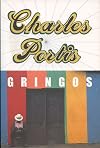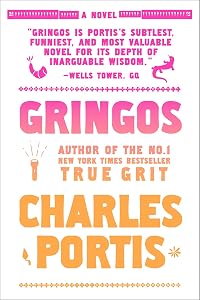
Gringos
by Charles Portis
On This Page
Description
Jimmy Burns is an expatriate American living in Mexico who has an uncommonly astute eye for the absurd little details that comprise your average American. For a time, Jimmy spent his days unearthing pre-Colombian artifacts. Now he makes a living doing small trucking jobs and helping out with the occasional missing person situation-whatever it takes to remain "the very picture of an American idler in Mexico, right down to the grass-green golfing trousers.†? But when Jimmy's laid-back show more lifestyle is seriously imposed upon by a ninety-pound stalker called Louise, a sudden wave of "hippies†? (led by a murderous ex-con guru) in search of psychic happenings, and a group of archaeologists who are unearthing (illegally) Mayan tombs, his simple South-of-the-Border existence faces a clear and present danger.|Charles Portis lives in Arkansas, where he was born and educated. He served in the Marine Corps during the Korean War, was the London bureau chief of the New York Herald-Tribune, and was a writer for The New Yorker. show lessTags
Recommendations






























Member Recommendations
Member Reviews
When I first finished the book I was vaguely disappointed. True Grit is sui generis, but of the "spiritual trinity" of Norwood, The Dog of the South, and this one, I thought the picaresque structure, the easygoing plain-spoken main character, the straight-faced jokes, and the easy asides and insights in Gringos seemed to have the least impact on me. The whole book is as laid-back as its protagonist, a Portis stand-in named Jimmy Burns living in Mexico who gets tangled up in a scheme to rescue a stray gringo from a bunch of hippie cultists in the ruins of the Mayan pyramids. The pacing seemed so slow, the characters so blurrily defined, and the ending so anticlimactic, that I didn't really like it. It actually almost seemed like a show more partial autobiography - the constant sprinklings of Spanish phrases, the trademark car talk, the obvious deep immersion in Mexican culture - with all the potential for dead spots that implies. Then, and this sounds like a really stupid epiphany, I started thinking about it while I was eating at at a Mexican restaurant and I realized that the point of the book was right in the title. It's really about what happens to Americans when they come to Mexico, and the way they find meaning in this endlessly adaptable country, conveniently close yet still foreign enough to offer new possibilities. For Jimmy, Mexico offers the possibility of the quiet life of a voluntary expatriate, of doing odd jobs and escaping the pressures of his home country. For the pyramid hippies, Mexico's ruins have a convenient penumbra of mystery for their attempts to find religious meaning in that vanished Mayan culture. For the archaeologists, each dig site is another opportunity for a power trip, to one-up their colleagues and impress everyone else with the work they imagine they're doing.
Everyone in the book is coming to Mexico for their own reasons, but keep falling back into the patterns of the culture they came from. You can never really shake off the habits of your home, and so when a bunch of flakes show up in this country, many of them use it to indulge their worst habits. It's Ugly American Syndrome, basically, and Portis is his usual wry self about it. The reason why this occurred to me at a Mexican restaurant (bear with me) is because one thing I like about the city I live in is its excellent food - it's had a lot of Mexican immigrants importing big chunks of their culture, and it's therefore very easy to eat cheaply and well. I get to enjoy some of the benefits of Mexico and all of the benefits of the US, but others make different choices depending on their natures. I wouldn't say that Portis is any more thrilled with human nature of the American variety than he normally is, but he's still able to throw a few chuckle-worthy scenes, and of course if you live in the Southwest you'll be able to relate to it a lot more. show less
Everyone in the book is coming to Mexico for their own reasons, but keep falling back into the patterns of the culture they came from. You can never really shake off the habits of your home, and so when a bunch of flakes show up in this country, many of them use it to indulge their worst habits. It's Ugly American Syndrome, basically, and Portis is his usual wry self about it. The reason why this occurred to me at a Mexican restaurant (bear with me) is because one thing I like about the city I live in is its excellent food - it's had a lot of Mexican immigrants importing big chunks of their culture, and it's therefore very easy to eat cheaply and well. I get to enjoy some of the benefits of Mexico and all of the benefits of the US, but others make different choices depending on their natures. I wouldn't say that Portis is any more thrilled with human nature of the American variety than he normally is, but he's still able to throw a few chuckle-worthy scenes, and of course if you live in the Southwest you'll be able to relate to it a lot more. show less
Jimmy Burns is a former marine living in Merida, Mexico. He makes a living doing some trucking and locating bail jumpers and missing persons. He used to deal in artifacts but got out of the business. Jimmy is a clear-headed veteran that can take care of himself - and others that need it - without getting too conscience-stricken afterwards. His character is revealed slowly and skillfully.
Like two of Charles Portis’ other novels, Norwood and Dog of the South, a large portion of Gringos consists of a road trip. Jimmy takes his confidant, Refugio, and two archeologists to find the husband of a friend who has wandered off toward Guatemala in search of UFOs and an unspecified New Year cosmic gathering.
Portis keeps the story moving with show more exceptional details and observations supplied by Jimmy. Every character is vivid and unique unless there’s a reason for them not to be, as in the case of two baldheaded henchmen (henchboys really) of an ex-convict fake hippie shaman. Gringos, like other Portis novels, is about as good as fiction gets. show less
Like two of Charles Portis’ other novels, Norwood and Dog of the South, a large portion of Gringos consists of a road trip. Jimmy takes his confidant, Refugio, and two archeologists to find the husband of a friend who has wandered off toward Guatemala in search of UFOs and an unspecified New Year cosmic gathering.
Portis keeps the story moving with show more exceptional details and observations supplied by Jimmy. Every character is vivid and unique unless there’s a reason for them not to be, as in the case of two baldheaded henchmen (henchboys really) of an ex-convict fake hippie shaman. Gringos, like other Portis novels, is about as good as fiction gets. show less
*** Mild Spoilers***
Charles Portis is the funniest American writer currently at work—I hope. Gringos, published in 1991, seems to be his last entrada, as Doc Flandin calls his voyage into the selva throughout the book. And while True Grit may be his best novel and Masters of Atlantis and The Dog of the South tied dead even for his funniest (or the funniest by anyone, anywhere), Gringos is my favorite.
I had the chance to teach the novel for a few years when I was teaching high-school AP Literature. One day, a student said to me, “Admit it—you want to be Jimmy Burns.” She had me there, dead to rights. Prufrock knew he was not meant to be Hamlet—but who could? That’s like aspiring to be Beowulf or Bond: the task is too great show more for any normal person. But Jimmy Burns is at least visible on the horizon of literary heroes one could emulate. He’s tough, he’s ironic, and he’s a good man. He gets himself into one situation after another because he’s trying to help other people and he only complains to the reader. A month doesn’t go by without my quoting him or thinking, “This is right out of Gringos.”
Gringos, like life, seems to read as an episodic series of set pieces, unlike True Grit which barrels along at a fast pace and ends in a terrific shootout. But, again like life, when one looks back at the action, one senses a pattern in all of it. Jimmy prides himself on his keen powers of observation, working for Gilbert, finding fugitives, but there are other things he can’t see, such as Alma’s opinion of him or the nature of Rudy and Louise’s relationship.
And, for all of the jokes, the novel is one of the most realistic I’ve ever read in terms of how the major moments are handled. When Jimmy realizes that Big Dan and the Jumping Jacks are behind the City of Dawn business and that Red is a runaway in over her head, he prays—mid-paragraph, mind you—in a way wholly convincing:
We have no reason to assume Jimmy is insincere—and he keeps his promise of not taking any money. A similarly realistic moment is the shooting that occurs atop the pyramid. Thousands of other authors would have offered some banter, some ironic detachment in that scene, but Portis is too good. The shooting happens, and then the characters begin screaming at each other because their adrenalin has been increased a hundredfold.
Other moments are exactly like these in tone and spirit: Jimmy’s visit to Doc’s house when he learns of Doc's illness, the gathering of vets and the hippies at Shep's, the ways that Beth patronizes Jimmy, the barroom attempts at "marks of distinction," Jimmy’s quoting Art and Mike, and Jimmy’s marriage. How he gets married makes perfect sense and the couple at the end of the book strikes me as far more believable—and likable—than others found on other pages. Jimmy reasons, “You had to plant a tree somewhere,” and this novel of how a 41 year-old man ends up planting his tree is a masterpiece. This is probably the tenth or eleventh time I've read it from start to finish. My only regret is that the Coen brothers can’t make it because the man born to play Jimmy Burns, Tommy Lee Jones, has aged out of the role. show less
Charles Portis is the funniest American writer currently at work—I hope. Gringos, published in 1991, seems to be his last entrada, as Doc Flandin calls his voyage into the selva throughout the book. And while True Grit may be his best novel and Masters of Atlantis and The Dog of the South tied dead even for his funniest (or the funniest by anyone, anywhere), Gringos is my favorite.
I had the chance to teach the novel for a few years when I was teaching high-school AP Literature. One day, a student said to me, “Admit it—you want to be Jimmy Burns.” She had me there, dead to rights. Prufrock knew he was not meant to be Hamlet—but who could? That’s like aspiring to be Beowulf or Bond: the task is too great show more for any normal person. But Jimmy Burns is at least visible on the horizon of literary heroes one could emulate. He’s tough, he’s ironic, and he’s a good man. He gets himself into one situation after another because he’s trying to help other people and he only complains to the reader. A month doesn’t go by without my quoting him or thinking, “This is right out of Gringos.”
Gringos, like life, seems to read as an episodic series of set pieces, unlike True Grit which barrels along at a fast pace and ends in a terrific shootout. But, again like life, when one looks back at the action, one senses a pattern in all of it. Jimmy prides himself on his keen powers of observation, working for Gilbert, finding fugitives, but there are other things he can’t see, such as Alma’s opinion of him or the nature of Rudy and Louise’s relationship.
And, for all of the jokes, the novel is one of the most realistic I’ve ever read in terms of how the major moments are handled. When Jimmy realizes that Big Dan and the Jumping Jacks are behind the City of Dawn business and that Red is a runaway in over her head, he prays—mid-paragraph, mind you—in a way wholly convincing:
But my poor head was so muddled that I didn’t work it out until that moment in the pyramid steps. It came to me all at once. I stopped dead in my tracks and took off my hat in this driving rain and offered up a prayer of my own. I asked God to let me find the little girl, LaJoye Mishell Teeter, promising to not let her out of my hands this time. I promised not to take any money for her recover. The wind was fierce up here against the forest canopy.
We have no reason to assume Jimmy is insincere—and he keeps his promise of not taking any money. A similarly realistic moment is the shooting that occurs atop the pyramid. Thousands of other authors would have offered some banter, some ironic detachment in that scene, but Portis is too good. The shooting happens, and then the characters begin screaming at each other because their adrenalin has been increased a hundredfold.
Other moments are exactly like these in tone and spirit: Jimmy’s visit to Doc’s house when he learns of Doc's illness, the gathering of vets and the hippies at Shep's, the ways that Beth patronizes Jimmy, the barroom attempts at "marks of distinction," Jimmy’s quoting Art and Mike, and Jimmy’s marriage. How he gets married makes perfect sense and the couple at the end of the book strikes me as far more believable—and likable—than others found on other pages. Jimmy reasons, “You had to plant a tree somewhere,” and this novel of how a 41 year-old man ends up planting his tree is a masterpiece. This is probably the tenth or eleventh time I've read it from start to finish. My only regret is that the Coen brothers can’t make it because the man born to play Jimmy Burns, Tommy Lee Jones, has aged out of the role. show less
Hilarious, witty and written with shocking clarity. A strange, mad-cap romp thru the jungles of Mexico (and the surrounding borders), unearthing Aztec ruins, forgotten cities, oddball conspiracies and UFO theorists.
As far as plot goes, Jimmy Burns travels thru life as an aloof and facetious observer. He is essentially an everyman character who keeps his hilarious musings private. He drifts from one vignette to another, eventually getting married when a female friend moves into his gifted aluminum trailer and says, 'Why not?'
Plotwise, GRINGOS is slim pickens. Not a whole lot 'happens' in terms of narrative thrust, but the little vignettes do a good job of keeping you interested until the very last page.
The real beauty of this novel is show more Portis' voice. His fiction is essentially what you'd imagine from the Coen Brothers mixed with a little Barry Hannah.
From here on I will be reading everything else he's done. show less
As far as plot goes, Jimmy Burns travels thru life as an aloof and facetious observer. He is essentially an everyman character who keeps his hilarious musings private. He drifts from one vignette to another, eventually getting married when a female friend moves into his gifted aluminum trailer and says, 'Why not?'
Plotwise, GRINGOS is slim pickens. Not a whole lot 'happens' in terms of narrative thrust, but the little vignettes do a good job of keeping you interested until the very last page.
The real beauty of this novel is show more Portis' voice. His fiction is essentially what you'd imagine from the Coen Brothers mixed with a little Barry Hannah.
From here on I will be reading everything else he's done. show less
My sense is that Gringos is a guys' novel, like the work of Cormac McCarthy, and I'm curious to see if my wife will get past the first 25 pages. It lacks deep character development and a strong plot. These aren't necessarily criticisms. I found it a quick and enjoyable read. The writing is brisk and Portis writes wittily about a caste of misfit American expatriates living and working in Merida, Mexico: "hippies", archeological professors, UFO hunters, retirees, new age types, grave robbers, etc. As a former Peace Corps volunteer I'm familiar with people that feel more "at home" abroad than in the U.S. It's hard to sort out the caste of supporting characters but that's not really the point. I believe Portis sketched a world he knows (he show more frequently travels to Mexico) in a light and lively way. If you can enjoy his dry humor and appreciate the steamy third world conjured in these pages you'll enjoy the trip. show less
This wasn't Portis' best work; still, nothing to snivel at. Hippies galore are congregating around Mérida AND vicinity, for a supposed last day of the world and a chance to meet El Mago. THe main character makes his living by searching out runaways and doing chandlering for archaeological digs. It seems as if he puts up with a lot from his fellow characters in the book, but it wasn't easy to get a fix on what he was really like. I certainly enjoyed the scenery that filled the book.
Jimmy Burns is an ex-Marine, an ex-dealer in stolen pre-Columbian artifacts, and an American expat living the simple life deep inside Mexico in a little town called Merida. He does manage to make a living using his old beat up truck to do small hauling jobs to the jungle for archaeologists and others seeking to exploit the country’s buried past, but he is easily distracted. Jimmy enjoys his down time and is not overly concerned about his future, contented to take life one day at a time.
While he may be an idler, Jimmy does care about the people closest to him and he has a keen sense of the absurd. This is a good thing since his little corner of Mexico is about to be invaded by some of the most absurd Americans imaginable, a group of show more hippies and slackers who barely know where they are, much less why they are.
Gringos centers around Jimmy’s search for Rudy Kurle, a young man for whom Jimmy feels responsible after allowing him to wander away from a dangerously isolated dig site. Jimmy’s search takes him and his crew to an ancient holy site just when dozens of the worthless hippies converge there in expectation of some major revelation. Here the search grows complicated, and changes focus entirely, when Jimmy is forced to rescue two children who will not otherwise survive the night’s weirdness.
Gringos is one of those novels that suffer from a lack of likable characters to such a degree that it is difficult to care what happens to any of them, including the novel’s supposed hero/narrator. The whole novel, at times, seems as tired and pointless as the lives led by its characters, making its ending, in which Jimmy unresistingly drifts into the next phase of his life, unsurprising.
Readers captivated by the renewed interest in Charles Portis novels (following the recent success of the movie remake of True Grit) will want to take a look at Gringos since Portis has written so few books. I would, however, suggest that they might want to read this one after having first sampled other Portis novels.
Rated at: 2.0 show less
While he may be an idler, Jimmy does care about the people closest to him and he has a keen sense of the absurd. This is a good thing since his little corner of Mexico is about to be invaded by some of the most absurd Americans imaginable, a group of show more hippies and slackers who barely know where they are, much less why they are.
Gringos centers around Jimmy’s search for Rudy Kurle, a young man for whom Jimmy feels responsible after allowing him to wander away from a dangerously isolated dig site. Jimmy’s search takes him and his crew to an ancient holy site just when dozens of the worthless hippies converge there in expectation of some major revelation. Here the search grows complicated, and changes focus entirely, when Jimmy is forced to rescue two children who will not otherwise survive the night’s weirdness.
Gringos is one of those novels that suffer from a lack of likable characters to such a degree that it is difficult to care what happens to any of them, including the novel’s supposed hero/narrator. The whole novel, at times, seems as tired and pointless as the lives led by its characters, making its ending, in which Jimmy unresistingly drifts into the next phase of his life, unsurprising.
Readers captivated by the renewed interest in Charles Portis novels (following the recent success of the movie remake of True Grit) will want to take a look at Gringos since Portis has written so few books. I would, however, suggest that they might want to read this one after having first sampled other Portis novels.
Rated at: 2.0 show less
Members
- Recently Added By
Lists

Books Read in 2024
4,727 works; 128 members

2025 Books
19 works; 1 member
Author Information

15+ Works 8,050 Members
Charles Portis lives in Arkansas, where he was born (1933) and educated. Portis served as a reporter for the New York Herald-Tribune and was also its London bureau chief. His first novel, Norwood, was published in 1966. His other novels are True Grit, The Dog of the South, Masters of Atlantis, and Gringos. True Grit has been made into a movie two show more times, once in 1969 with John Wayne (who won his only academy award by playing the main character of Rooster Cogburn), and a second time in 2010 with Jeff Bridges as the main character. Mr. Bridges was nominated for the Rooster Cogburn role, but did not win. Charles Portis died on February 17, 2020 in Little Rock, Arkansas at age 86. He had been under hospice care for two years. (Bowker Author Biography) show less
Work Relationships
Common Knowledge
- Original publication date
- 1991
- People/Characters
- Jimmy Burns; Rudy Kurle
- Important places
- Mérida, Yucatán, Mexico
Classifications
Statistics
- Members
- 384
- Popularity
- 81,689
- Reviews
- 9
- Rating
- (3.84)
- Languages
- English
- Media
- Paper, Ebook
- ISBNs
- 7
- ASINs
- 5