
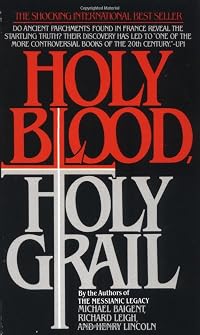
Holy Blood, Holy Grail
by Michael Baigent (Author), Richard Leigh (Author), Henry Lincoln (Author)
Holy Blood Holy Grail (1)
On This Page
Description
A revolutionary study explores the startling information uncovered in mysterious parchments unearthed in a small French church that reveal new insight into the mystery of the Holy Grail.Tags
Recommendations



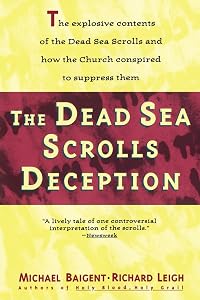
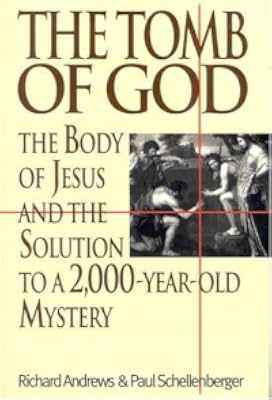

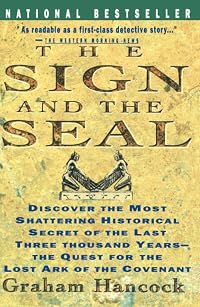

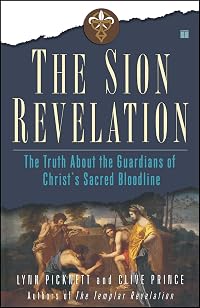





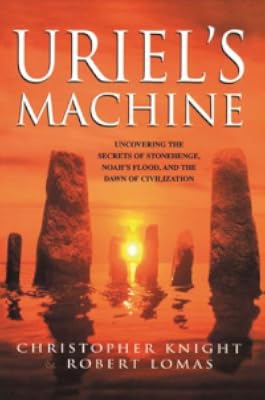
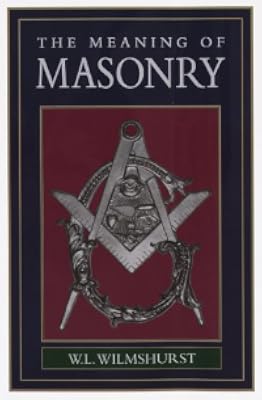
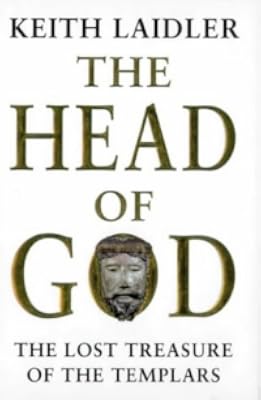
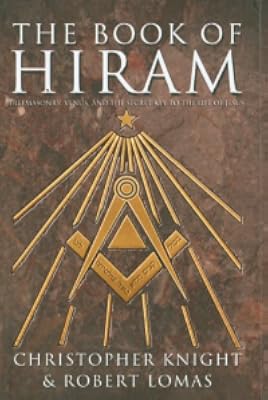

Member Recommendations

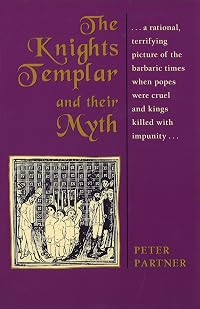
Z-Ryan A good general survey of the Templars without pseudo-historical speculation, it makes a good complement with the folkloric approach of Holy Blood, Holy Grail. Not for more serious history readers, however.
12
Philogos These two books complement each other. The Gnostics is less speculative but they both turn on the development of orthodoxy and the suppression of dissenting views.
23


Member Reviews
A relative sent me a copy of the book several years ago (before The Da Vinci Code, which plays off this book's claims). It's utterly ludicrous, but a textbook example of how to play a con game with the public using little-known or half-remembered episodes and characters from ancient and medieval history.
The trick is to come up with a fictional past that people will want to believe in (in this case: Jesus married Mary Magdalene, and just as you always suspected, the whole church establishment is a fraud). Then write a tedious narrative full of mystifying language about how we, the authors, were inexorably drawn to believe this theory in despite of all our dry-as-dust scholarly colleagues with their timorous reliance on careful sourcing. show more
All this padding is essential; it adds heft to your book, which increases its air of authority. But be sure to spice it up here and there with quick-moving passages that assert really wild and sexy claims (like, a lineal descendant of Jesus will someday assert a claim to rule all of Europe). These will be the only parts most readers will absorb, so give them arresting subheadings.
Readers will underline these passages and email their friends, then ask their ministers about them. Soon one or two scandalized churchmen can be counted on to rail against your book on TV. You'll be invited to appear as well, for the sake of balance, and all you have to do is act the role of a maverick but dedicated scholar.
Then the paperback comes out, graced with a lengthy introduction in which you express, with cherubic innocence, your shock at all the uproar about your humble and sincere efforts to uncover the truth. History Channel, here we come. show less
The trick is to come up with a fictional past that people will want to believe in (in this case: Jesus married Mary Magdalene, and just as you always suspected, the whole church establishment is a fraud). Then write a tedious narrative full of mystifying language about how we, the authors, were inexorably drawn to believe this theory in despite of all our dry-as-dust scholarly colleagues with their timorous reliance on careful sourcing. show more
All this padding is essential; it adds heft to your book, which increases its air of authority. But be sure to spice it up here and there with quick-moving passages that assert really wild and sexy claims (like, a lineal descendant of Jesus will someday assert a claim to rule all of Europe). These will be the only parts most readers will absorb, so give them arresting subheadings.
Readers will underline these passages and email their friends, then ask their ministers about them. Soon one or two scandalized churchmen can be counted on to rail against your book on TV. You'll be invited to appear as well, for the sake of balance, and all you have to do is act the role of a maverick but dedicated scholar.
Then the paperback comes out, graced with a lengthy introduction in which you express, with cherubic innocence, your shock at all the uproar about your humble and sincere efforts to uncover the truth. History Channel, here we come. show less
This is a good book overall, and seems to be very well researched.
What I like is the rather dry manner in which the authors have written the book. Anyone expecting shocking revelations at the turn of every page will be disappointed.
While the dry style is good, it also means that there are times when your attention wavers, and can make grasping the complex links a bit challenging.
The main conclusion is, however, tenuous in my opinion. Establishing a bloodline with genetic data is difficult enough, and to establish a 2,000 year old bloodline on the basis of documents even more so. I would think that there is some speculation here.
That Jesus Christ was a mortal man, married, and was deified later is entirely possible. I have my own show more country, and the myths of Rama and Krishna to attest to this possibility. show less
What I like is the rather dry manner in which the authors have written the book. Anyone expecting shocking revelations at the turn of every page will be disappointed.
While the dry style is good, it also means that there are times when your attention wavers, and can make grasping the complex links a bit challenging.
The main conclusion is, however, tenuous in my opinion. Establishing a bloodline with genetic data is difficult enough, and to establish a 2,000 year old bloodline on the basis of documents even more so. I would think that there is some speculation here.
That Jesus Christ was a mortal man, married, and was deified later is entirely possible. I have my own show more country, and the myths of Rama and Krishna to attest to this possibility. show less
When I bought and read this book in the 1980s I was younger, more gullible, and less cynical; I lapped it up, couldn't put it down, felt myself gasping at each new 'revelation', each new historical link that seemed to show that Christianity (or what we know of it now) was based on a Big Lie, each unfolding of a centuries' old "secret society".
It has had two legacies. One, the birth of a sadder, more cynical me when I discovered through BBC documentary that the so-called 'secret' Prieuré Du Sion - supposedly the guardians of the knowledge of Jesus's "descendants" : the "Holy Blood" of the title - was nothing more than a scam dreamed up by French con-men in the 1950s, fed to and swallowed whole by British researchers in the 70s. This was show more later picked up by Dan Brown and woven into The Da Vinci Code, though he was cleared of plagiarism by British courts (presumably only because a lie cannot be plagiarised!).
And yet... there is another legacy too. The role of the Emperor Constantine in shaping what we now recognise as "The Church", was never so sharply brought into focus before this book, and has never receded since. Some of the book rehashes popular myth, other parts breathe new life into long-forgotten historical eras (the Merovingian dynasty, the Cathars), and for the latter we should be grateful.
The way to approach this book is complex : it is a highly captivating semi-fictional detective story; it is a vivid document of historical phases of the Christian era; it deals in shams that have now been exposed. What it never fails to do is to make you question 'inherited certainties', and for that, we owe it a vote of thanks. And Dan Brown owes it a far bigger vote of thanks as without it, The Da Vinci Code could never have been written. show less
It has had two legacies. One, the birth of a sadder, more cynical me when I discovered through BBC documentary that the so-called 'secret' Prieuré Du Sion - supposedly the guardians of the knowledge of Jesus's "descendants" : the "Holy Blood" of the title - was nothing more than a scam dreamed up by French con-men in the 1950s, fed to and swallowed whole by British researchers in the 70s. This was show more later picked up by Dan Brown and woven into The Da Vinci Code, though he was cleared of plagiarism by British courts (presumably only because a lie cannot be plagiarised!).
And yet... there is another legacy too. The role of the Emperor Constantine in shaping what we now recognise as "The Church", was never so sharply brought into focus before this book, and has never receded since. Some of the book rehashes popular myth, other parts breathe new life into long-forgotten historical eras (the Merovingian dynasty, the Cathars), and for the latter we should be grateful.
The way to approach this book is complex : it is a highly captivating semi-fictional detective story; it is a vivid document of historical phases of the Christian era; it deals in shams that have now been exposed. What it never fails to do is to make you question 'inherited certainties', and for that, we owe it a vote of thanks. And Dan Brown owes it a far bigger vote of thanks as without it, The Da Vinci Code could never have been written. show less
Way back when I was much more ignorant of the world around me, I went looking for a book about the history of the Knights Templar, found "Holy Blood and the Holy Grail" and got far more than what I expected.
For instead of a history of the Knights Templar, "Holy Blood and the Holy Grail" uncovered the greatest conspiracy of all time. That the direct descendants of Jesus and a group of high profile supporters throughout history have secretly controlled the world throughout the millennia, and will reveal themselves at a crucial moment in history (suggested to be the year 2000). Some of you may have noticed that the year 2000 has come and gone without such a reveal but in those balmy days of the last millennium when I read this, it all show more seemed amazingly possible. Of course, examining the claims in the cold light of day shows that the Priory of Sion (the shadowy organisation at the centre of the claims) and related claims were all, to use scientific jargon, hooey.
Still, if you put all the hooeyness aside, it's an entertaining read. show less
For instead of a history of the Knights Templar, "Holy Blood and the Holy Grail" uncovered the greatest conspiracy of all time. That the direct descendants of Jesus and a group of high profile supporters throughout history have secretly controlled the world throughout the millennia, and will reveal themselves at a crucial moment in history (suggested to be the year 2000). Some of you may have noticed that the year 2000 has come and gone without such a reveal but in those balmy days of the last millennium when I read this, it all show more seemed amazingly possible. Of course, examining the claims in the cold light of day shows that the Priory of Sion (the shadowy organisation at the centre of the claims) and related claims were all, to use scientific jargon, hooey.
Still, if you put all the hooeyness aside, it's an entertaining read. show less
I picked up this book to get a little more historical insight (not delivered by the pedantic Robert Langdon) on the theories depicted in the Da Vinci Code.
In some ways this book was very interesting. Certain arguments were very plausible (particularly some of those related to Jesus' crucifixion and marriage) and brought well-thought-out and well-explained ideas to the discussion.
Primarily, though, I was disappointed. For every interesting hypothesis I found, there was a multitude of uninteresting filler 'facts' that were unconvincing and unnecessary additions. The idea that the authors were taking us along their path of reasoning only served to highlight the immense jumps of reasoning and gaps of knowledge that they had entertained in show more their 'research'. On the whole the book would have been much more interesting (not to mention convincing) without that format.
The conspiracy theory is a whopper requiring us to believe that a secret society has been pulling the strings of the entirety of Western civilization for the past 1000 years.
The bottom line is that this book presents some interesting ideas, but very few that Dan Brown did not present in more readable and distilled form. In addition, had I turned in a work written and supported like this one as my college thesis, I never would have graduated, not because of the controversial nature of the hypothesis, but because of the abominable presentation fraught with unimportant miscellania that detracts from the central argument. show less
In some ways this book was very interesting. Certain arguments were very plausible (particularly some of those related to Jesus' crucifixion and marriage) and brought well-thought-out and well-explained ideas to the discussion.
Primarily, though, I was disappointed. For every interesting hypothesis I found, there was a multitude of uninteresting filler 'facts' that were unconvincing and unnecessary additions. The idea that the authors were taking us along their path of reasoning only served to highlight the immense jumps of reasoning and gaps of knowledge that they had entertained in show more their 'research'. On the whole the book would have been much more interesting (not to mention convincing) without that format.
The conspiracy theory is a whopper requiring us to believe that a secret society has been pulling the strings of the entirety of Western civilization for the past 1000 years.
The bottom line is that this book presents some interesting ideas, but very few that Dan Brown did not present in more readable and distilled form. In addition, had I turned in a work written and supported like this one as my college thesis, I never would have graduated, not because of the controversial nature of the hypothesis, but because of the abominable presentation fraught with unimportant miscellania that detracts from the central argument. show less
it was a long 300 pages of foundation building to get to what i thought was the most interesting stuff. i liked the authors' explanation in the introduction that admittedly gives them a bit of leeway in their position, about how of course any time you're talking about something that happened 2000 years ago you're going to have to make some assumptions. (see below as it's worth quoting.) like starbird's book the woman and the alabaster jar, i find most of the main claims to be completely plausible - that jesus was actually "just" a man, that he was born the way we're all born, that he was sexually active, that he married mary magdalen, that they had at least 1 child, that there is therefore a bloodline that exists today that could be show more traced back to jesus. to me, a nonchristian, none of this seems hard to believe, or even that it should matter to the church - except for the fact that there would be a coverup or a number of lies to explain. the other ideas (or main idea) postulated seems to have less to back it up, and more religious reason to dismiss it, and therefore is a little harder to believe, even for someone who is not steeped in christian theology or a christian upbringing. still, the possibility that jesus did not die on the cross (which, with their step by step explanation, even using the gospels -!-, of how this could happen isn't nearly as far fetched as it first sounds) and was squirreled away to safety with or without mary magdalen and lazarus and martha (?) and maybe a couple of others who went to france or was replaced by someone else (probably simon of cyrene or simon something) on the cross and therefore wasn't crucified at all is intriguing and not outside the realm of possibilities, although is something even i dismissed out of hand when hearing this statement without any of the historical basis for it. the former of these possibilities was better supported in the book, but it seems that the authors likely believe in the latter (especially based on later published works). along the way they also cite any number of other historians and their postulations and (usually) agreement with the assessment the authors make. still, knowing these aren't the only 3 people in the world to see the historical record this way lends them credibility, in my mind.
anyway, the beginning of this was interesting, then it got a bit tedious as it went through the detailed info of secret society information and generational info (a little, i thought, like the begat info in the bible) but once it got to the gospels and religious historical information i thought it was quite interesting. both in the information and in how you have to go about doing research and making assumptions and some leaps when the historical record is so incomplete.
what the authors say about it:
"We had propounded a hypothesis, and hypotheses must necessarily rest on speculation. The sheer scarcity of reliable information on biblical matters obliges any researcher of the subject to speculate, if he is not to remain mute. Granted, one must not speculate wildly; one must confine one's speculation to the framework of known historical information. Within this framework, though, one has no choice but to speculate - to interpret the meager and often opaque evidence that exists. All biblical scholarship entails speculation, as does theology. The Gospels are sketchy, ambiguous, and often contradictory documents. People have argued, have even waged wars throughout the course of the last two thousand years about what particular passages might mean. In the coalescence of Christian tradition there is one principle that has continually obtained: In the past, when certain historic individuals were confronted with any of the varied biblical ambiguities, they speculated about it's meaning. Their conclusions, when accepted, were enshrined as dogma and came to be regarded over the centuries - quite erroneously - as established fact. Such conclusions, however, are not fact at all. On the contrary they are speculation and interpretation congealed into a tradition, and it is this tradition that is constantly mistaken for fact." show less
anyway, the beginning of this was interesting, then it got a bit tedious as it went through the detailed info of secret society information and generational info (a little, i thought, like the begat info in the bible) but once it got to the gospels and religious historical information i thought it was quite interesting. both in the information and in how you have to go about doing research and making assumptions and some leaps when the historical record is so incomplete.
what the authors say about it:
"We had propounded a hypothesis, and hypotheses must necessarily rest on speculation. The sheer scarcity of reliable information on biblical matters obliges any researcher of the subject to speculate, if he is not to remain mute. Granted, one must not speculate wildly; one must confine one's speculation to the framework of known historical information. Within this framework, though, one has no choice but to speculate - to interpret the meager and often opaque evidence that exists. All biblical scholarship entails speculation, as does theology. The Gospels are sketchy, ambiguous, and often contradictory documents. People have argued, have even waged wars throughout the course of the last two thousand years about what particular passages might mean. In the coalescence of Christian tradition there is one principle that has continually obtained: In the past, when certain historic individuals were confronted with any of the varied biblical ambiguities, they speculated about it's meaning. Their conclusions, when accepted, were enshrined as dogma and came to be regarded over the centuries - quite erroneously - as established fact. Such conclusions, however, are not fact at all. On the contrary they are speculation and interpretation congealed into a tradition, and it is this tradition that is constantly mistaken for fact." show less
It's not much fun to read a "shocking international bestseller" when one knows at the beginning the conclusion drawn by its authors. So I concentrated on the journey rather than the outcome, and thoroughly enjoyed the many paths and byways the authors wandered to gather information and form their hypothesis. Lots of historical trivia and little-known facts went into the authors' analysis: a truly fascinating trip through time with unexpected associations and sometimes implausible leaps of logic.
Do I believe their conclusion? No.
Do I admit it's at least possible? Well. Yes.
Do I believe their conclusion? No.
Do I admit it's at least possible? Well. Yes.
Members
- Recently Added By
Published Reviews
Knjiga je nastala kao rezultat zainteresovanost autora za misteriju Rene-I-Šatoa, odnosno ruševina srednjovekovne tvrđave u njegovoj blizini. Tragajući za odgovorima na ovu misteriju oni su nas uveli u mističan svet vitezova templara, tajnih pergamenata, mistike u tajnim društvima, njihovim ritualima, odvodeći nas do samih osnova hrišćanstva i pitanja da li je ono što nam govori show more današnja Biblija istina ili spretni falcifikat. Rasvetljavajući nam same početke hrišćanstva kroz materijalne dokaze koji su odoleli vremenu i uništavanju od strane onih kojima nije odgovaralo izvorno hrišćanstvo. show less
added by Sensei-CRS
Lists

Christianity Books You've Read
179 works; 19 members

Secret Histories
28 works; 6 members

French Books
102 works; 15 members
Author Information

Michael Baigent was born in Christchurch, New Zealand in 1948. He studied religion and psychology at the University of Canterbury, where he graduated in 1972. Before becoming an author, he was a commercial photographer. His first book, The Holy Blood and the Holy Grail, which was released in the United States as Holy Blood, Holy Grail, was written show more with Richard Leigh and Henry Lincoln and was published in 1982. The book hypothesized that Jesus had married Mary Magdalene and that their descendants were protected by a secretive group called the Priory of Sion. He and co-author Richard Leigh unsuccessfully sued Random House UK for copyright infringement, over similarities between their work and The Da Vinci Code by Dan Brown. Baigent's other works included The Dead Sea Scrolls Deception, The Jesus Papers, and Racing toward Armageddon. He died of a brain hemorrhage on June 17, 2013 at the age of 65. (Bowker Author Biography) show less


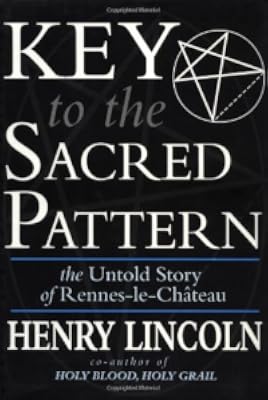
Henry Lincoln is a noted documentary filmmaker. In addition to Holy Blood, Holy Grail, he is coauthor of The Messianic Legacy, Key to the Sacred Pattern, and The Templars' Secret Island.
Some Editions
Awards and Honors
Distinctions
Series

Belongs to Publisher Series
Work Relationships
Has the (non-series) sequel
Is a (non-series) prequel to
Common Knowledge
- Canonical title
- Holy Blood, Holy Grail
- Original title
- The Holy Blood and the Holy Grail
- Alternate titles
- Holy Blood Holy Grail
- Original publication date
- 1982-01-18
- People/Characters
- Knights Templar; Mary Magdalene; Merovingian Dynasty; Priory of Sion; Dagobert II; Freemasons (show all 12); Henri Lobineau; Godfrey of Bouillon; Sigebert IV; Cathars; Jesus of Nazareth; Rosicrucians
- Important places
- Rennes-le-Château, Occitanie, France; Languedoc, France; Kingdom of Jerusalem; Abbey of Our Lady of Mount Zion; Razès, Aude département, Occitania, France
- Important events
- Crusades; The Cutting of the Elm at Gisors
- Epigraph
- Le jour du mi-ệtệ tranquille
Brửle au centre de l’estoile,
Oừ miroitéela mare dedans
Son Coeur doré Nymphaea montre clair
Nostres dmes adorées
Dans l’heure fleurie
Dissoudent les Ombres téné... (show all)breuses du Temps.
Jehan L’Ascuiz - First words
- On January 18, 1982 The Holy Blood and the Holy Grail was published in England.
(Introduction to Paperback Edition)
In 1969, en route for a summer holiday in the Cévennes, I made the casual purchase of a paperback.
(Introduction)
We believed at first that we were dealing with a strictly local mystery—one confined to a village in the south of France.
(Body Text, Chapter 1) - Last words
- (Click to show. Warning: May contain spoilers.)To a receptive audience, it might be a kind of Second Coming.
--Body text
(Click to show. Warning: May contain spoilers.)Most convincing of all, however, is his signature appended to the statutes of Prieuré de Sion.
--Appendix - Original language
- English
- Canonical DDC/MDS
- 930.18
Classifications
- Genres
- Religion & Spirituality, Nonfiction, History, General Nonfiction
- DDC/MDS
- 930.18 — History & geography History of ancient world (to ca. 499) Ancient History: China, Egypt, Rome, Greece Archaeology Pseudo-archeology
- LCC
- DC40 .B33 — History of Europe, Asia, Africa and Oceania France – Andorra – Monaco History of France History General
- BISAC
Statistics
- Members
- 4,795
- Popularity
- 2,960
- Reviews
- 80
- Rating
- (3.25)
- Languages
- 20 — Czech, Danish, Dutch, English, Estonian, Finnish, French, German, Hungarian, Italian, Norwegian (Bokmål), Norwegian, Polish, Portuguese, Russian, Serbian, Slovenian, Spanish, Swedish, Turkish
- Media
- Paper, Audiobook, Ebook
- ISBNs
- 79
- ASINs
- 34