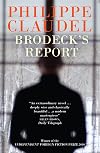
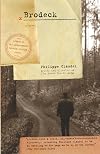
Brodeck's Report
by Philippe Claudel
On This Page
Description
When a stranger with unusual manners is murdered for his unflattering and insightful illustrations, a government report writer and concentration camp survivor writes an official, whitewashed account of the incident while secretly penning the truth in a parallel narrative.Tags
Recommendations















Member Recommendations


Member Reviews
I have thought for a very long time about how to describe this book and I cannot do so at all easily. That is, in fact, a tribute to just how extraordinary this book is. A dark allegory about fear and tolerance and guilt...almost fable-like. I have liked every book by Claudel I have read but this one is exceptional. There are some very brief incidents/stories within the novel that are so indelible that I will remember them forever. His ability to create real people with real psychologies is remarkable. The adjective "chilling" is often used to describe a work that is exceptionally horrifying. The word is inadequate to Claudel's achievement which is all the more successful for being written in such low-key, modest--almost show more lyrical--language.
And I think one reason it is successful (or so successful) is that Claudel is extremely careful to strip the narrative of identifiying references, though it is abundantly clear that this story recounts a Holocaust experience. But even its setting, though likely to be eastern France, is disguised and never named. I don’t believe the word “Nazi” or “Jew” ever appears. Nor, indeed, do “German” or “French” or “Russian.” Claudel indeed goes to great lengths to universalize his story. (I think it is one small measure of his success that the five-star reviews on Goodreads are in so many languages, from Dutch to Arabic, Lithuanian to Portuguese, French and Spanish to Hebrew and Vietnamese.)
The story, and it’s an extraordinary one, is simple: Brodeck must write a report for the authorities about the Anderer (the “Other”), a stranger who came to their little town and was murdered. In fact, the story is about Brodeck and it is Brodeck who is the “Other,” as is made clear by his own story. I have not read many novels in fifty-plus years of reading fiction that forced me to think about the questions and issues Claudel raises. But this is one of them. Claudel is merciless and if you read this book, you cannot avoid thinking about these questions. show less
And I think one reason it is successful (or so successful) is that Claudel is extremely careful to strip the narrative of identifiying references, though it is abundantly clear that this story recounts a Holocaust experience. But even its setting, though likely to be eastern France, is disguised and never named. I don’t believe the word “Nazi” or “Jew” ever appears. Nor, indeed, do “German” or “French” or “Russian.” Claudel indeed goes to great lengths to universalize his story. (I think it is one small measure of his success that the five-star reviews on Goodreads are in so many languages, from Dutch to Arabic, Lithuanian to Portuguese, French and Spanish to Hebrew and Vietnamese.)
The story, and it’s an extraordinary one, is simple: Brodeck must write a report for the authorities about the Anderer (the “Other”), a stranger who came to their little town and was murdered. In fact, the story is about Brodeck and it is Brodeck who is the “Other,” as is made clear by his own story. I have not read many novels in fifty-plus years of reading fiction that forced me to think about the questions and issues Claudel raises. But this is one of them. Claudel is merciless and if you read this book, you cannot avoid thinking about these questions. show less
I am Brodeck, and I had nothing to do with it.So begins Philippe Claudel's brilliant novel about xenophobia, narrated by the eponymous Brodeck. Of an ambiguous national identity, living in an unspecified country just on the heels of World War II, Brodeck is the outsider par excellence: a man who has spent time in the concentration camps to return home to the same villagers to find their attitudes toward him altered, his position always uncertain and unclear. This is also underscored by his changed familial relations upon returning from the camps.
Brodeck begins post de facto: The "it" with which Brodeck claims emphatically that he has had nothing to do only becomes clear by the end of the text. An incident has occurred, and the villagers show more have unanimously enlisted Brodeck to write a report of the events leading up to it, an act of rhetorical self-defense for the village. The collective guilt and shame the villagers feel to make such a report necessary are juxtaposed in liquid prose with Brodeck's own individualized feelings of guilt and shame, a "conflict between knowledge and ignorance, between solitude and numbers."
As he undertakes to write this report ("a cross which was not made for my shoulders and which didn't concern me"), Claudel allows Brodeck to tap into questions of reality versus fiction, what makes something true or false (depending on the amount of people who claim something is true despite it being far from it), and also a kind of Freudian analysis of group psychology: the group's word is gospel, and Brodeck is being forced to write for a group of which he is not truly a part. How can a person speak for another, or for a group of others, when one's subjective truth is at variance with the account expected of those who hold and wield power?
I thought about History, capitalized, and about my history, our history. Do those who write the first know anything about the second? Why do some people retain in their memory what others have forgotten or never seen? Which is right: he who can't reconcile himself to leaving the past in obscurity, or he who thrusts into darkness everything that doesn't suit him?Brodeck's work on the report dredges up memories of his past—not only are we privy to his pre-war memories, but we also experience along with him a resurgence of violence as his horrific piecing together of events at the camp which cause him to realize that he has been lying to himself: "of all dangers, memory's one of the most terrible." As such, we see made manifest the latent and repressed content of an individual's life, brought to the level of consciousness, a task that is related to his vocation as a writer and one that requires Brodeck's narrative to follow no logical in the way of temporality, but one that also involved a kind of subterfuge (even from oneself):
I keep going backward and forward, jumping over time like a hurdle, getting lost on tangents, and maybe even, without wishing to, concealing what's essential.While Brodeck becomes more conscious of his own life narrative, and his complicity, this is a self-awareness that Claudel develops alongside a group of others who are asking him to do the exact opposite—namely, to repress, to document falsities, to erase, to render into nothingness. Claudel's prose is fluid, brisk, and lucid as he allows the reader, by way of Brodeck, to experience revelation and annihilation, individual growth and group oppression:
I think we've become, and will remain until the day we die, the memory of humanity destroyed. We're wounds that will never heal.I cannot recommend this book highly enough: it will stay with you long after you've finished journeying along with Brodeck, haunting you, making you ponder the nature of subjective truth as unwaveringly and as bravely as Brodeck does here, reconciling the horrific with the sublime: "Sometimes you love your own scars." show less
Is collaboration in wartime an act of self-preservation or an opportunity to let out one’s secret distrust of The Other? Is collusion a collective, social act or a collection of single, personal decisions? How do you live with betrayal?
These are some of the questions explored in Philippe Claudel’s book, Brodeck’s Report. In a fairy tale village in the woods, a stranger has been murdered. Brodeck, a man recently returned from the camps, is asked to represent the village and write an official report of what occurred. At the same time, Brodeck writes a secret report, in his own voice, about what he learns and about his own life and the decisions he has made. The book begins:
I’m Brodeck and I had nothing to do with it.
I insist on show more that. I want everyone to know.
I had no part in it, and once I learned what had happened, I would have preferred never to mention it again, I would have liked to bind my memory fast and keep it that way, as subdued and still as a weasel in an iron trap.
But the others forced me.
From the first lines, before the reader even knows what has happened, she is asked to take sides. Is Brodeck innocent? Should some memories be allowed to fade away, or is there a moral imperative or human compulsion to share the truth?
I loved this book for the very ambiguity that makes the answers to these questions so difficult. In haunting imagery and beautiful language, Claudel leads Brodeck to the brink of the abyss and asks the reader to join him in looking in. A Holocaust novel without ever saying the words, Brodeck’s Report is easily one of the best books I’ve read this year, and I recommend it for its plot, its language, and most importantly for its ability to make me think. show less
These are some of the questions explored in Philippe Claudel’s book, Brodeck’s Report. In a fairy tale village in the woods, a stranger has been murdered. Brodeck, a man recently returned from the camps, is asked to represent the village and write an official report of what occurred. At the same time, Brodeck writes a secret report, in his own voice, about what he learns and about his own life and the decisions he has made. The book begins:
I’m Brodeck and I had nothing to do with it.
I insist on show more that. I want everyone to know.
I had no part in it, and once I learned what had happened, I would have preferred never to mention it again, I would have liked to bind my memory fast and keep it that way, as subdued and still as a weasel in an iron trap.
But the others forced me.
From the first lines, before the reader even knows what has happened, she is asked to take sides. Is Brodeck innocent? Should some memories be allowed to fade away, or is there a moral imperative or human compulsion to share the truth?
I loved this book for the very ambiguity that makes the answers to these questions so difficult. In haunting imagery and beautiful language, Claudel leads Brodeck to the brink of the abyss and asks the reader to join him in looking in. A Holocaust novel without ever saying the words, Brodeck’s Report is easily one of the best books I’ve read this year, and I recommend it for its plot, its language, and most importantly for its ability to make me think. show less
Ha pasado un año del final de la Guerra y en este pequeño pueblo aislado situado en las montañas entre Francia y Alemania, han asesinado a un hombre, un extraño, un extranjero al que llaman "Der Anderer" - el otro, en Alemán -, es a Brodeck a quien le piden redacte el informe de los acontecimientos.
Brodeck comienza así su investigación sobre los últimos días de el Anderer, así como quien o quienes estuvieron involucrados, mientras redacta su informe, nos cuenta su vida, su llegada a este pueblo, su ida a la universidad, el comienzo de la guerra, su experiencia en el campo de concentración, de donde milagrosamente, sale vivo y logra regresar al pueblo.
Las miserias humanas, la cobardía individual que se convierte en valentía show more masiva, la ignorancia y todo eso que nos define como humanidad están reflejadas en este libro en un pequeño pueblo.
Brodeck, quien en busca de la poca humanidad que le queda, decide seguir el camino de la lealtad y del perdón, es un hombre que lo peor que ha sufrido no es haber estado en un campo de concentración, si no vivir en carne propia la bajeza, la vileza, la maldad y la crueldad de los seres humanos.
Una historia que dice más en lo que no dice, mas allá de las palabras dichas, son los silencios los que gritan y es lo que los actores no dicen lo importante en esta historia.
Extraordinariamente escrita, con una narrativa rica y cadenciosa, este libro nos lleva a la historia de un hombre cualquiera en un entorno que, desgraciadamente, no es nada extraordinario.
Un libro que es absolutamente recomendable. show less
Brodeck comienza así su investigación sobre los últimos días de el Anderer, así como quien o quienes estuvieron involucrados, mientras redacta su informe, nos cuenta su vida, su llegada a este pueblo, su ida a la universidad, el comienzo de la guerra, su experiencia en el campo de concentración, de donde milagrosamente, sale vivo y logra regresar al pueblo.
Las miserias humanas, la cobardía individual que se convierte en valentía show more masiva, la ignorancia y todo eso que nos define como humanidad están reflejadas en este libro en un pequeño pueblo.
Brodeck, quien en busca de la poca humanidad que le queda, decide seguir el camino de la lealtad y del perdón, es un hombre que lo peor que ha sufrido no es haber estado en un campo de concentración, si no vivir en carne propia la bajeza, la vileza, la maldad y la crueldad de los seres humanos.
Una historia que dice más en lo que no dice, mas allá de las palabras dichas, son los silencios los que gritan y es lo que los actores no dicen lo importante en esta historia.
Extraordinariamente escrita, con una narrativa rica y cadenciosa, este libro nos lleva a la historia de un hombre cualquiera en un entorno que, desgraciadamente, no es nada extraordinario.
Un libro que es absolutamente recomendable. show less
This book begins as quietly as a whisper, albeit with a murder, and I almost thought it was going to be boring. But the author so cleverly peels away layer after layer of the facade of the idyllic mountain village in which this novel is set, that I was stunned by the rotten core ultimately revealed.
Brodeck has just returned to the village after surviving an unnamed war in a horrific prison camp. He endured the dangers and degradations of his internment by focusing on his beloved wife Amelia back in the village. Shortly after his return, the 'Anderer' (the Other) arrives in the village. It is the murder of the Anderer that occurs in the opening pages of the novel, and Brodeck is required to write an official report to explain the show more 'Ereignies', 'a curious word, full of mists and ghosts; it means more or less, 'the thing that happened,'...a word to describe the indescribable.'
This book is a fable about how and why people do evil things; it is about the innate fear of the unknown, even the unknown within ourselves, and it is about remembering, not forgetting. show less
Brodeck has just returned to the village after surviving an unnamed war in a horrific prison camp. He endured the dangers and degradations of his internment by focusing on his beloved wife Amelia back in the village. Shortly after his return, the 'Anderer' (the Other) arrives in the village. It is the murder of the Anderer that occurs in the opening pages of the novel, and Brodeck is required to write an official report to explain the show more 'Ereignies', 'a curious word, full of mists and ghosts; it means more or less, 'the thing that happened,'...a word to describe the indescribable.'
This book is a fable about how and why people do evil things; it is about the innate fear of the unknown, even the unknown within ourselves, and it is about remembering, not forgetting. show less
Actually 3.5 stars. I reserved this book months ago from the library and now that I finally got it, I can't remember why I reserved it. It took me quite a while to get into it but in the end I really liked it. It is set in a European village after "a great war" and told the story of what happened to Brodeck and his village because of the war and the fears created by the war. It's hard to explain what it's really about. I would say it is a fairly dark story that takes a while to come together, but in the end comes together in a quite disturbing and depressing way. With every turn of events I just found myself wondering how humanity can be so cruel and fearful of outsiders and differences. Not exactly an uplifting read, but interesting show more and well written. show less
A remarkable book, an allegorical fable that reads at times like Kafka and at times like Primo Levi. It clearly depicts the Holocaust in Central Europe, notwithstanding the somewhat thin veneer of a quasi-mythical setting outside of any particular time or place. The narrator has a combination of naivete, sophistication, insight, and apathy that is memorable. And perhaps the most memorable scene of dead horses since Anna Karenina. Overall highly recommended.
Members
- Recently Added By
Published Reviews
ThingScore 100
Uncertainty is a major theme of Claudel's novel, which is both fable-like and documentary in style. While it is concerned with difference and intolerance as abstract, universal themes, Brodeck's Report is also a historical novel about a camp survivor (Brodeck) and the effect of Nazism on a specific place, assumed to be a German dialect-speaking part of Alsace Lorraine.
added by kidzdoc
“La estupidez es una enfermedad que casa con el miedo. Una y otro se alimentan mutuamente, creando una gangrena que sólo pide propagarse…” Philippe Claudel
Apenas acabada la guerra, una muerte rompe la tranquilidad de un pequeño pueblo perdido en las montañas. El único extranjero del lugar, que un día llego al pueblo, vestido a la antigua, con gran lujo y acompañado de un caballo y show more un asno, a quien llaman Der Anderer —el Otro, en alemán—, ha sido asesinado y todos los hombres de la localidad se confiesan autores del crimen. Todos menos Brodeck.
Esta historia no constata la realidad de los hechos, pues los testigos, abren a sus ojos diferentes puntos de vista, que la camuflan, para hacerla torpe, innoble y ciertamente falsa. show less
Apenas acabada la guerra, una muerte rompe la tranquilidad de un pequeño pueblo perdido en las montañas. El único extranjero del lugar, que un día llego al pueblo, vestido a la antigua, con gran lujo y acompañado de un caballo y show more un asno, a quien llaman Der Anderer —el Otro, en alemán—, ha sido asesinado y todos los hombres de la localidad se confiesan autores del crimen. Todos menos Brodeck.
Esta historia no constata la realidad de los hechos, pues los testigos, abren a sus ojos diferentes puntos de vista, que la camuflan, para hacerla torpe, innoble y ciertamente falsa. show less
added by esabateq
Lists

EU Fiction: 1950-2022
223 works; 70 members

Les 50 meilleurs livres de langue française de 1900 à aujourd’hui
69 works; 2 members

Top Five Books of 2025
954 works; 303 members

A wishlist of books I will read in 2026
53 works; 1 member

Keeping track of the books I read in 2026
27 works; 1 member

Favorite French Fiction
131 works; 59 members
Author Information

49+ Works 4,804 Members
Some Editions
Awards and Honors
Series
Belongs to Publisher Series
Work Relationships
Has the adaptation
Common Knowledge
- Canonical title
- Brodeck's Report
- Original title
- Le Rapport de Brodeck
- Alternate titles
- Brodeck
- Original publication date
- 2007
- People/Characters
- Brodeck; the Anderer
- Important places*
- Dombasle-sur-Meurthe, Grand-Est, France; France
- Epigraph
- I'm nothing, I know it, but my nothing comprises a little bit of everything. - Victor Hugo, The Rhine
- Dedication
- For all those who think they're nothing
For my wife and my daughter, without whom I wouldn't be much - First words
- I'm Brodeck and I had nothing to do with it.
- Last words
- (Click to show. Warning: May contain spoilers.)Brodeck.
- Original language
- French
*Some information comes from Common Knowledge in other languages. Click "Edit" for more information.
Classifications
- Genres
- Fiction and Literature, General Fiction, Historical Fiction
- DDC/MDS
- 843.92 — Literature & rhetoric French Literature French fiction 1900- 2000-
- LCC
- PQ2663 .L31148 .R3713 — Language and Literature French, Italian, Spanish and Portuguese literatures French literature Modern literature 1961-2000
- BISAC
Statistics
- Members
- 997
- Popularity
- 26,341
- Reviews
- 57
- Rating
- (4.14)
- Languages
- 15 — Catalan, Czech, Danish, Dutch, English, Finnish, French, German, Hebrew, Italian, Norwegian (Bokmål), Portuguese, Spanish, Swedish, Turkish
- Media
- Paper, Audiobook, Ebook
- ISBNs
- 45
- ASINs
- 11