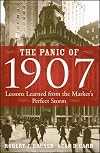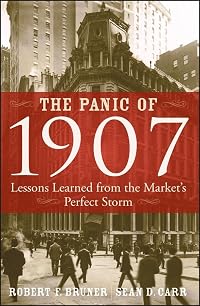
The Panic of 1907: Lessons Learned from the Market's Perfect Storm
by Robert F. Bruner, Sean D. Carr
On This Page
Description
An authoritative "biography" of one of history's great financial crises with enduring lessons about contemporary finance In this newly-revised second edition, offering 50% entirely new material, The Panic of 1907: Heralding a New Era of Finance, Capitalism, and Democracy, delivers a groundbreaking examination of one of the most consequential crises in financial history. Deftly weaving historical evidence, insightful analysis, and compelling narrative, The Panic of 1907 explains how and why a show more financial panic unfolds, with lessons that can be applied to our understanding of present-day financial and monetary systems. In the book, you'll find: the reasons why, despite today's stronger monetary regime and risk-mitigation tools, our modern institutions are not immune to future crises; explanations about the development of the United States' Federal Reserve System, which was created in 1913 in direct response to the Panic of 1907; and an engaging and entertaining account of an innately fascinating period in financial and economic history, with remarkable leaders and a gallery of rogues. An indispensable tale that belongs on the shelves of anyone with an interest in American or financial history, The Panic of 1907 is an expert retelling of one of the most important, but least well-known crises of the last 200 years show lessTags
Recommendations
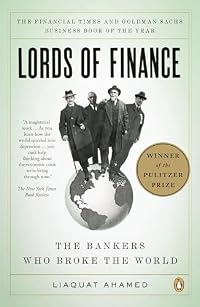
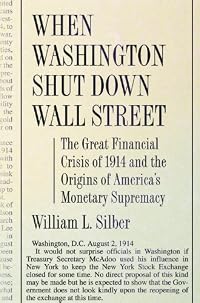
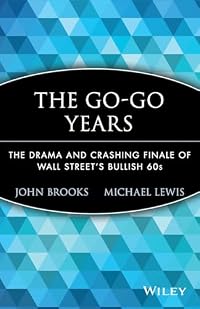
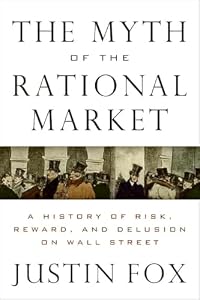









Member Reviews
Well written account of this financial debacle and helped my understanding of the importance of our Federal Reserve system. Thorough explanation of what constitutes a "liquidity crisis" and how it could still be a danger in today's financial world
I often hear comparisons of the recession/panic of 2008 with the Great Depression redirected to a comparison with the Panic of 1907.In terms of character, duration, and impetus, I would have to agree that the characterization of 2008 as a panic similar to 1907 make sense.This book was released in August 31, 2007 and makes reference [in the Coda] to "oil rising to $100 per barrel" and uncertainty whether credit derivatives would dampen or amplify a panic.The conclusions in the book point to several ingredients in creating a perfect storm for a panic, but also admit to a Keynesian bias in presenting preventative measures and corrective action.The narrative is interesting if [necessarily] dry, and while the construction of the cause thesis show more is reasonable, the conclusions didn't seem to follow through.This book is available on Audible. show less
well written and informative. Provides interesting comparisons
The panic of 1907 was the last serious economic and financial crisis in the US prior to introduction of the Federal reserve. It is widely known among conservators as the crisis prevented by JP Morgan and as a clear view of dangers of ‘money trust’ among radicals. He authors’ approach is to combine two usual ways of describing the crisis: (1) as a unique event (2) as just another example of booms and busts. They instead both note both generalities and peculiarities.
Each chapter follows the development of a particular firm or action, roughly in chronological order, with notable amount of quotations from contemporary sources. Overall quite interesting read for a wide audience interested in the not only economic but general history of show more the early XX century. show less
Each chapter follows the development of a particular firm or action, roughly in chronological order, with notable amount of quotations from contemporary sources. Overall quite interesting read for a wide audience interested in the not only economic but general history of show more the early XX century. show less
Received from Helen
Ratings
Members
- Recently Added By
Author Information

13 Works 551 Members
1 Work 282 Members
Common Knowledge
- Original title
- The Panic of 1907. Lessons Learned form the Market's Perfect Storm
- Original publication date
- 2007
- People/Characters*
- J. P. Morgan
- Important places*
- New York, USA
- Original language*
- English
*Some information comes from Common Knowledge in other languages. Click "Edit" for more information.
Classifications
- Genres
- Economics, Nonfiction, Business, History, General Nonfiction
- DDC/MDS
- 330.973 — Society, Government, and Culture Economics Jobs & Careers Economic geography and history North America United States
- LCC
- HB3717 — Social sciences Economic theory. Demography Economic theory. Demography Business cycles. Economic fluctuations
- BISAC
Statistics
- Members
- 284
- Popularity
- 113,039
- Reviews
- 5
- Rating
- (3.65)
- Languages
- English, German
- Media
- Paper, Audiobook, Ebook
- ISBNs
- 11
- ASINs
- 4