Ancient Egypt: A Very Short Introduction
by Ian Shaw
On This Page
Description
In this introduction, Ian Shaw describes how our current ideas about Egypt are based not only on the discoveries made by early Egyptologists but also on fascinating new kinds of evidence produced by modern scientific and linguistic analyses. He also explores the changing influences on our responses to these finds.Tags
Recommendations











Member Recommendations
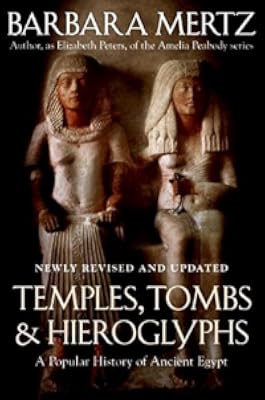
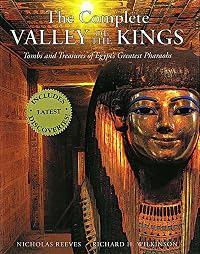
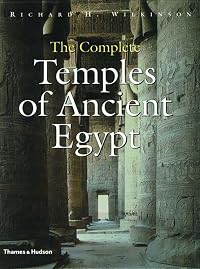
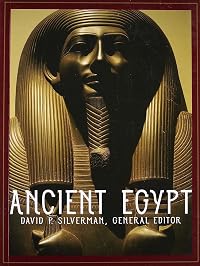
themulhern A similar book, a bit better written.
Member Reviews
This entry in Oxford's 'Very Short Introduction' series does a serviceable job in dealing with a very big subject in a relatively short amount of space. Like many of these guides, it is well illustrated with a good list for further reading and ancillary material.
Why it is interesting is in its tough honesty about how little we know of how ancient Egyptians structured their lives and thought despite the vast amounts of data that will, perhaps, reveal more when artificial intelligence can be applied to its analysis.
The problem is that both archaeological and even textual data may seem large but it is only a small portion of over 3,000 years of history and heavily skewed to certain contexts - chief of which are obviously funerary contexts show more but increasingly settlement patterns.
Shaw's honesty allows him to explore critically the way that Egyptology has invented (not always without reason in many cases) an Egypt that relects some contemporary reality. Stripping away these layers does not solve the problem that there may not be much of a 'there' there.
This is not to say that a lot has not been discovered but only that caution is required in interpreting it. He is certainly 'brave' in removing two awkward accretions that are unhelpful - the desire to link Egypt to Biblical Studies and the Afrocentrist nonsense that would have Egypt as a 'black' civilisation.
In fact, race was probably not a great issue to Egyptians. Elsewhere we discover that African genes did enter into the population slowly and increasingly over time but were never a majority and certainly the inbreeding Greek Ptolemaic elite (including Cleopatra) was thoroughly European in origin.
There are some weaknesses to the book. The first is that building his narrative on the Narmer Palette in order to try and hold things together might have seemed like a good organisational idea at the time but it does not hold the narrative well as it unfolds. It eventually becomes forced.
The second is an embarrassing slight defensiveness about facing off various absurdities. He is too kind in tone to Afrocentrism and Pyramidology although he does show their absurdity but you can tell a professional anxiety about not going to far down the road of alienating the politically correct.
The book was published in 2004 just as left-liberalism was moving into place as hegemonic in the universities (a place it may be rapidly losing after the Trump Revolution). He would not be alone in bearing in mind that the practice of a profession required some caution in stating positions.
Finally, because he wants to show how Ancient Egypt has been used to meet contemporary needs at different stages, he fails to use the space provided to explain more of the civilisation but drifts instead into a cultural history that is still treated rather cursorily - for reasons of space.
It would have been far better to have encouraged Oxford to produce another book on the 'influence of Ancient Egypt' or as a more significant section of a book on 'Orientalism' than neglect to explain more of what we might know or surmise about Egyptian social structures and philosophy.
One gap is explaining the process by which the five-fold nature of the individual disintegrates and then reintegrates in the 'other world' or underworld. Similarly, the question of popular enslavement and free labour and of grain management and irrigation are left more open that we might like.
Of course, not everything can be covered in a book like this. There is a separate Very Short Introduction on Egyptian Myth but this book seemed unable to decide whether its remit was the story of Ancient Egypt or the story of Egyptology.
Having said this, the book is still useful and even thought-provoking not only in triggering questions about reasonable scepticism not only in archaeology but in historical literary studies and history but in making the reader interested in the subject and wanting to know more. show less
Why it is interesting is in its tough honesty about how little we know of how ancient Egyptians structured their lives and thought despite the vast amounts of data that will, perhaps, reveal more when artificial intelligence can be applied to its analysis.
The problem is that both archaeological and even textual data may seem large but it is only a small portion of over 3,000 years of history and heavily skewed to certain contexts - chief of which are obviously funerary contexts show more but increasingly settlement patterns.
Shaw's honesty allows him to explore critically the way that Egyptology has invented (not always without reason in many cases) an Egypt that relects some contemporary reality. Stripping away these layers does not solve the problem that there may not be much of a 'there' there.
This is not to say that a lot has not been discovered but only that caution is required in interpreting it. He is certainly 'brave' in removing two awkward accretions that are unhelpful - the desire to link Egypt to Biblical Studies and the Afrocentrist nonsense that would have Egypt as a 'black' civilisation.
In fact, race was probably not a great issue to Egyptians. Elsewhere we discover that African genes did enter into the population slowly and increasingly over time but were never a majority and certainly the inbreeding Greek Ptolemaic elite (including Cleopatra) was thoroughly European in origin.
There are some weaknesses to the book. The first is that building his narrative on the Narmer Palette in order to try and hold things together might have seemed like a good organisational idea at the time but it does not hold the narrative well as it unfolds. It eventually becomes forced.
The second is an embarrassing slight defensiveness about facing off various absurdities. He is too kind in tone to Afrocentrism and Pyramidology although he does show their absurdity but you can tell a professional anxiety about not going to far down the road of alienating the politically correct.
The book was published in 2004 just as left-liberalism was moving into place as hegemonic in the universities (a place it may be rapidly losing after the Trump Revolution). He would not be alone in bearing in mind that the practice of a profession required some caution in stating positions.
Finally, because he wants to show how Ancient Egypt has been used to meet contemporary needs at different stages, he fails to use the space provided to explain more of the civilisation but drifts instead into a cultural history that is still treated rather cursorily - for reasons of space.
It would have been far better to have encouraged Oxford to produce another book on the 'influence of Ancient Egypt' or as a more significant section of a book on 'Orientalism' than neglect to explain more of what we might know or surmise about Egyptian social structures and philosophy.
One gap is explaining the process by which the five-fold nature of the individual disintegrates and then reintegrates in the 'other world' or underworld. Similarly, the question of popular enslavement and free labour and of grain management and irrigation are left more open that we might like.
Of course, not everything can be covered in a book like this. There is a separate Very Short Introduction on Egyptian Myth but this book seemed unable to decide whether its remit was the story of Ancient Egypt or the story of Egyptology.
Having said this, the book is still useful and even thought-provoking not only in triggering questions about reasonable scepticism not only in archaeology but in historical literary studies and history but in making the reader interested in the subject and wanting to know more. show less
Grateful that the edition of the book that I read was the one from 2004, not 2021. I listened to the second edition and I think the first is better.
The book is structured around the Narmer palette, about which I know, now, vastly more than I used to.
The last chapter, about Egyptomania and the new popular culture takes on Egypt, is so wearying.
But there are lots of interesting remarks, and updates about, e.g., Minoan painting discovered in the Nile delta, or enormous quantities of cuneiform correspondence during the reign of Akhenaten.
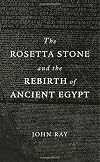
John Ray's book, "The Rosetta Stone and the Rebirth of Ancient Egypt" is roughly the same size, and more enjoyable. Of course, it takes as its central artifact the Rosetta Stone, from the Macedonian era, show more not the Narmer palette, which is pre-Dynastic, so the focus is different. show less
The book is structured around the Narmer palette, about which I know, now, vastly more than I used to.
The last chapter, about Egyptomania and the new popular culture takes on Egypt, is so wearying.
But there are lots of interesting remarks, and updates about, e.g., Minoan painting discovered in the Nile delta, or enormous quantities of cuneiform correspondence during the reign of Akhenaten.
John Ray's book, "The Rosetta Stone and the Rebirth of Ancient Egypt" is roughly the same size, and more enjoyable. Of course, it takes as its central artifact the Rosetta Stone, from the Macedonian era, show more not the Narmer palette, which is pre-Dynastic, so the focus is different. show less
Ian Shaw provides an overview of Egyptian civilization by way of a single proto-Dynastic antiquity called the Narmer Palette. Especially interesting for this reader was his emphasis on the way in which our perception of Pharonic Egypt is skewed because of the almost random traces left behind by that civilization. He suggests that it was not necessarily a death-focused culture, as our modern day view has it, but one very much involved in life and the perpetuation of the state. How else could it have lasted 3600 years? There can be no systematic approach in a book so short, but it was enjoyable getting Shaw's "roundup," if you will, on a number of issues, including changing methods of excavation, various points of scholarly disagreement show more today, what we can and cannot know about Egypt by virtue of limitations inherent in the archaeological record, and--most amusingly--the impact of Ancient Egypt on present-day culture. Shaw's style is straightforward. Instead of a Further Reading section there is a handy list of relevant websites. show less
As often true for books in this series, this book isn't what the title suggests. While it does cover the topic, the focus is more about Egyptology than Egypt. He does cover Ancient Egypt, not chronologically but topically, and he does a decent job given the vastness of the topic & shortness of the book. But my guess is if you know nothing on the topic, this book will be very confusing. However, if you do know the general outlines of Egyptian history, this book gives you interesting insights into both how contemporary scholarship sees the state of the art as well as the fascinating phenomenon of Egyptology itself & its influence on contemporary culture.
Als Kind hatte ich mich für eine gewisse Zeit mit dem alten Ägypten beschäftigt, doch leider aus Zeitgründen wieder aus den Augen verloren. Da meine alten Bücher eher für Kinder und Jugendliche konzipiert sind und ich in das Thema wiedereinsteigen wollte habe ich mir dieses Buch zugelegt.
Erwartet hatte ich dem Untertitel gemäß, eine Einführung in das Alte Ägypten die alle Sparten abdeckt. Nicht unbedingt detailliert aber so das der Leser einen generellen Überblick über die Geschichte, Religion, Sitten und Gebräuche der alten Ägypter und ähnliches erfährt.
Inhaltlich ist das Buch in mehrere Kapitel unterteilt, unter anderem zur Geschichte, Religion, Totenkult sowie der Agyptomanie im 19. und 20. Jahrhundert.
Nun, ich würde show more nicht unbedingt sagen das meine Erwartungen enttäuscht wurden, aber schon nach einigen Kapitel gewann ich den Eindruck das dass Buch eher eine Einführung in die Ägyptologie darstellt inklusive Methoden, Konflikte und Interpretationsmöglichkeiten in dieser Wissenschaft.
Shaw erklärt anschaulich anhand eines archäologischen Artefakts- Der "Narmer-Palette" wie archäologische Funde in Ägypten zu bewerten und beurteilen sind, und welche Schlüße wir aus ihnen ziehen können. Dies hört sich viel trockener an als es eigentlich ist- Denn obwohl das Buch mehr die Ägyptologie an sich behandelt, vergisst Shaw nicht hier und da interessante historische Fakten zu erwähnen. Vom Stil her ist das Buch angenehm zu lesen und je nach Thema manchmal sogar amüsant.
Alles in allem bereue ich nicht dieses Buch gekauft zu haben, es wird meiner Meinung nach nur falsch beworben. Untertitel und Klappentext geben den Eindruck das man einfache, destillierte Kentnisse über das Leben im Alten Ägypten kriegt. Stattdessen versteht es Shaw den Leser darauf aufmerksam zu machen das hinter jedem Bereich der Ägyptologie, jedem Artefakt und jeder Persönlichkeit viele verschiedene Meinungen und Methoden stehen. Schon allein Shaws Ausführungen zu Echnaton und wie sich sein Image in den letzten 200 Jahren gwandelt hat sind faszinierend.
Fazit: Ein gutes Begleitbuch zum alten Ägypten. Wer sich über die Geschichte der Ägyptologie, ihrer Methoden, Grenzen und Probleme innerhalb der Disziplin schlau machen will ist hier gut bedient. Es erweitert den eigenen Horizont ungemein und erinnert immer wieder daran das vieles was wir lesen, selbst wenn es schon lange als Fakt gilt, leider nicht immer aus objektiven Quellen stammt. Das werde ich mir auf jeden Fall für meine weitere Lektüre zu Herzen nehmen ! show less
Erwartet hatte ich dem Untertitel gemäß, eine Einführung in das Alte Ägypten die alle Sparten abdeckt. Nicht unbedingt detailliert aber so das der Leser einen generellen Überblick über die Geschichte, Religion, Sitten und Gebräuche der alten Ägypter und ähnliches erfährt.
Inhaltlich ist das Buch in mehrere Kapitel unterteilt, unter anderem zur Geschichte, Religion, Totenkult sowie der Agyptomanie im 19. und 20. Jahrhundert.
Nun, ich würde show more nicht unbedingt sagen das meine Erwartungen enttäuscht wurden, aber schon nach einigen Kapitel gewann ich den Eindruck das dass Buch eher eine Einführung in die Ägyptologie darstellt inklusive Methoden, Konflikte und Interpretationsmöglichkeiten in dieser Wissenschaft.
Shaw erklärt anschaulich anhand eines archäologischen Artefakts- Der "Narmer-Palette" wie archäologische Funde in Ägypten zu bewerten und beurteilen sind, und welche Schlüße wir aus ihnen ziehen können. Dies hört sich viel trockener an als es eigentlich ist- Denn obwohl das Buch mehr die Ägyptologie an sich behandelt, vergisst Shaw nicht hier und da interessante historische Fakten zu erwähnen. Vom Stil her ist das Buch angenehm zu lesen und je nach Thema manchmal sogar amüsant.
Alles in allem bereue ich nicht dieses Buch gekauft zu haben, es wird meiner Meinung nach nur falsch beworben. Untertitel und Klappentext geben den Eindruck das man einfache, destillierte Kentnisse über das Leben im Alten Ägypten kriegt. Stattdessen versteht es Shaw den Leser darauf aufmerksam zu machen das hinter jedem Bereich der Ägyptologie, jedem Artefakt und jeder Persönlichkeit viele verschiedene Meinungen und Methoden stehen. Schon allein Shaws Ausführungen zu Echnaton und wie sich sein Image in den letzten 200 Jahren gwandelt hat sind faszinierend.
Fazit: Ein gutes Begleitbuch zum alten Ägypten. Wer sich über die Geschichte der Ägyptologie, ihrer Methoden, Grenzen und Probleme innerhalb der Disziplin schlau machen will ist hier gut bedient. Es erweitert den eigenen Horizont ungemein und erinnert immer wieder daran das vieles was wir lesen, selbst wenn es schon lange als Fakt gilt, leider nicht immer aus objektiven Quellen stammt. Das werde ich mir auf jeden Fall für meine weitere Lektüre zu Herzen nehmen ! show less
Sep 1, 2010German
De bedoeling was om een boek te kopen dat een overzicht geeft van de geschiedenis van Egypte. Dit boek doet een poging om duidelijk te maken hoe de hoofdlijnen van het leven in het oude Egypte er uit zagen. In zoverre is het wel geslaagd. Maar als je aan het lezen bent wordt al snel duidelijk dat het oude Egypte niet eenvoudig is samen te vatten. Dus daar loopt ook dit boek een beetje op stuk.
Mar 10, 2012Dutch
Ratings
Members
- Recently Added By
Author Information

13+ Works 2,086 Members
Ian Shaw is Lecturer in Egyptian Archaeology at the University of Liverpool.
Series
Belongs to Publisher Series
Very Short Introductions (112)
Common Knowledge
- Canonical title
- Ancient Egypt: A Very Short Introduction
- Original title
- Ancient Egypt: A Very Short Introduction
- Original publication date
- 2004
- People/Characters
- Akhenaten; Amenhotep II; Cleopatra; Hatshepsut; Nefertiti; Ramesses II
- Important places
- Ancient Egypt
- Dedication
- For my parents
- First words
- In 1898 the British Egyptologists James Quibell and Frederick Green uncovered a slab of greenish-grey slate-like stone in the ruins of an early temple at the Upper Egyptian site of Hierakonpolis.
- Last words
- (Click to show. Warning: May contain spoilers.)Those old Pharaohs must have been wonderful fellows.
- Original language
- English
Classifications
Statistics
- Members
- 370
- Popularity
- 85,206
- Reviews
- 6
- Rating
- (3.50)
- Languages
- Dutch, English, German
- Media
- Paper, Audiobook, Ebook
- ISBNs
- 12
- UPCs
- 1
- ASINs
- 4