On This Page
Description
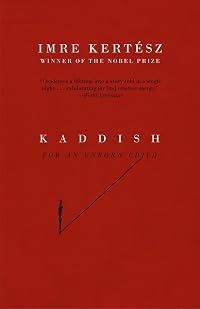
A Jew's lament to explain why he has not fathered a child: after the Holocaust it is impossible for a Jew to have a normal life. But as his lament continues it becomes clear the roots of his nihilism lie in his childhood. By a Hungarian writer, author of Fateless.Tags
Recommendations
















Member Reviews
The back of the book describes it as 'one of the most eloquent meditations ever written on the Holocaust.' To associate the Hungarian Kertész with the Shoah is, of course, inevitable, considering that as a teenager he survived life in Auschwitz. However, to place The Holocaust as a monolith in the foreground when describing Kertész's writing is misleading. Some critics of Kertész's novel Fatelessness (or Fateless, depending on the translation) complained that it was boring, and not what they expected of a book describing life in a series of concentration camps. Yet Kertész was doing just that, as part of his efforts to show how in the camps that life went on and because life went on, that even in a concentration camp one could be show more bored. With Fatelessness, Kertész tried to bring the Shoah within the realm of understanding of the reader who did not live through it. It would make sense that some readers would be uncomfortable with that or even confused by such an approach, for many of us were conditioned from a young age to have a certain type of reaction to The Holocaust as an idea, a concept, something terrible in the past that we cannot adequately conceive of from where we sit now in history.
At one point in this book, when someone at a party brings up a quote, 'There is no explanation for Auschwitz', from a recent book and everyone at the party solemnly accepts this, Kertész's narrator launches on a tirade, for to him, when looking at the world and the people in power, Auschwitz has a perfectly logical explanation. Later, he tells his (ex-)wife that 'Auschwitz seemed to me to be just an exaggeration of the very same virtues to which I had been educated since early childhood' and certainly that he didn't need to be at Auschwitz to 'learn about this age and this world'.
It is this insistence on treating the Shoah as something comprehensible that marks Kertész's work in such a powerful way. While it may always be in the shadows of his writing, and thus his reputation as a writer, it is never the focal point, and instead this placement beyond the reader's constant roving eye broadens the significance of his work. Once the Shoah is fixed as reality in the continuum of humanity's capabilities, and indeed accepted as a comprehensible outcome of the course that humanity marches forth on, the dynamics and directions of conversation shift away from the light to confront the darkness head on. (In fact, Kertész has criticized the film 'Schindler's List' for avoiding just this type of conversation.)
Readers of Thomas Bernhard will likely find a similarity in style here, as Kertész also strings together long, circuitous sentences bursting with digression, repetition, and rephrasing wielded as a hammer to drive home his nail-hard points. He even quotes Bernhard in a few places within the text (Kertész has translated Bernhard). There is in fact a Bernhardian sense permeating the book as a whole. A kinship between these two writers would make sense, for they both survived horrible childhood experiences (WWII, boarding school, parent issues, and for Bernhard, lung disease), both of them in turn struck by the absurdity of their own survival while also accepting it as the impetus for their work, both of them wedded to this work, to writing, unyielding in their need to write. And finally, both of them indignant at the unwillingness of people to confront and engage with the reality of humanity's darkness, for it is this indignance juxtaposed with their own willingness to engage with this darkness, and indeed accept it as a natural outcome, that is at the crux of both writers' work.
The book is short, though deceptively so. It was not instantly engaging, requiring some adjustment in the reading mind, but once in focus, it felt like a home, like Kertész's austere city apartment to be exact. Kertész touches on a lot of themes, and one of the most compelling threads is his narrator's ongoing description of his writing life, what feeds it and what stifles it, how it affects and is affected by his relationships, how it is representative of his identity and, as such, something to be protected 'from all intruders', how his work saved him, though saved him only for destruction.
During those years I dreamed I also became aware of the true nature of my work, which in essence is nothing other than to dig, dig further and to the end, the grave that others started to dig for me in the clouds, the winds, the nothingness.
Note: Merits of the translations of Kertész's earlier novels, including this one and Fatelessness, are a subject of ongoing debate. Both of these books were first translated by Christopher and Katharina Wilson and later by Tim Wilkinson. For this book I read the Wilkinson, and for Fatelessness I had read the Wilson translation. I didn't find serious issue with either book's translation, so won't comment on that, but this review provides some interesting commentary. Additional information can be found online easily enough. (For what it's worth, Kertész objected to the earlier Wilson translations, though not sure if he's commented publicly on the comparative merits of Wilkinson's work, which itself has also drawn criticism.) show less
Kertész se recusa a ter filhos após Auschwitz - não só porque não pode prometer ao seu filho hipotético que ele não passará pelo mesmo sofrimento, não só porque um mundo em que existiu Auschwitz não é um mundo que valha a pena. Kertész não quer ser a autoridade suprema, o Auschwitz de alguém.
Muito interessante, bem argumentado e bem escrito. Quero ler mais livros desse autor.
Muito interessante, bem argumentado e bem escrito. Quero ler mais livros desse autor.
I lived in such a way that the Germans might return at any time; thus I didn't quite live. (p. 45)
This book is a holocaust survivor's first-person narrative exploring the impact of imprisonment at Auschwitz on his adult life.
Then she asked me whether I suffered or perhaps even still suffer from my Jewishness aside from what I had to suffer in the past. I answered ... that I have carried this sin as my sin even though I have never committed it. (p. 56)
As the title indicates, the narrator is mourning the child he never had. His marriage fell apart after he emphatically refused to have children: No -- it should never happen to another child, what happened to me: my childhood. (p. 71)
This is a short book written in a free-form style, and show more yet was not an easy read. It is probably best read in small pieces and then digested through contemplation. I was not in the mood for this kind of book and probably should have set it aside. Nonetheless, I could see that, if read with proper attention, it could be a quite powerful book. show less
This book is a holocaust survivor's first-person narrative exploring the impact of imprisonment at Auschwitz on his adult life.
Then she asked me whether I suffered or perhaps even still suffer from my Jewishness aside from what I had to suffer in the past. I answered ... that I have carried this sin as my sin even though I have never committed it. (p. 56)
As the title indicates, the narrator is mourning the child he never had. His marriage fell apart after he emphatically refused to have children: No -- it should never happen to another child, what happened to me: my childhood. (p. 71)
This is a short book written in a free-form style, and show more yet was not an easy read. It is probably best read in small pieces and then digested through contemplation. I was not in the mood for this kind of book and probably should have set it aside. Nonetheless, I could see that, if read with proper attention, it could be a quite powerful book. show less
This piercing unbroken paragraph novella ups the emotional and philosophical ante concerning the Shoah and leaves only scorched earth and tattered memories in its wake. Throughout the work there a number of nods to Bernhard, whereas Kertesz further gilds the homage to the Austrian with trademark recurrences and stilted rhythms. These circumstances extend beyond, of course. The decision reached is also an imperative, one which still bears considerable weight.
Definition: Mourner’s Kaddish expresses love of God and acceptance of God’s will, even while the mourner is feeling sorrow over the death of a loved one. [See the actual English translation at the end of this review.]
Nobel laureate Imre Kertesz, survivor of both Auschwitz and Buchenwald, is a brilliant writer. As I was reading this short work, I found that I wanted to quote almost the entire book for this review. In the story, a man at a writer’s conference explains to a colleague why he refused his ex-wife a child because he doesn’t want to bring a child into a world where an Auschwitz is allowed to occur. In fact the very first word of the novel is “No,” a reference to a question on whether or not he has children. He then show more expounds on his reasons for that decision, and on his childhood, his marriage, and his survival experiences.
“No!” something screamed, howled within me, immediately and forthwith, and it was only gradually, after many, many years had quieted it down, that my cramp gave way to a quiet but persistent pain, until slowly and maliciously, like a malignant sickness, a question began to take distinct shape with me: “Were you to be a dark-eyed little girl? With pale spots of scattered freckles around your little nose? Or a stubborn boy? With cheerful, hard eyes like blue-gray pebbbles?” Yes, my existence in the context of your potentiality.
I’ve had family members also question the wisdom of bringing children into the world, and the first time it was put to me, I didn’t understand the reasoning behind this stance at all. Perhaps I was too naive then, though, because I do understand it now. I am a mother; I’m grateful to be a mother; but, unfortunately, there is much evil in this world, and while not my choice, I understand why people would question whether to subject their potential children to it.
1990, [1999 for English trans.], 95 pp.
Rating: 4.5/5
English Translation of the Mourner’s Kaddish
May His illustrious name become increasingly great and holy
In the world that He created according to His will,
and may He establish His kingdom
In your lifetime and in your days
and in the lifetime of all the house of Israel
Speedily and soon. And let us say amen.
May His illustrious name be blessed always and forever.
Blessed, praised, glorified, exalted, extolled
Honoured, raised up and acclaimed
be the name of the Holy one blessed be He
beyond every blessing hymn, praise and consolation
that is uttered in the world. And let us say amen.
May abundant peace from heaven, and life
Be upon us and upon all Israel.
http://1morechapter.com/2008/04/10/review-kaddish-for-a-child-not-born/ show less
Nobel laureate Imre Kertesz, survivor of both Auschwitz and Buchenwald, is a brilliant writer. As I was reading this short work, I found that I wanted to quote almost the entire book for this review. In the story, a man at a writer’s conference explains to a colleague why he refused his ex-wife a child because he doesn’t want to bring a child into a world where an Auschwitz is allowed to occur. In fact the very first word of the novel is “No,” a reference to a question on whether or not he has children. He then show more expounds on his reasons for that decision, and on his childhood, his marriage, and his survival experiences.
“No!” something screamed, howled within me, immediately and forthwith, and it was only gradually, after many, many years had quieted it down, that my cramp gave way to a quiet but persistent pain, until slowly and maliciously, like a malignant sickness, a question began to take distinct shape with me: “Were you to be a dark-eyed little girl? With pale spots of scattered freckles around your little nose? Or a stubborn boy? With cheerful, hard eyes like blue-gray pebbbles?” Yes, my existence in the context of your potentiality.
I’ve had family members also question the wisdom of bringing children into the world, and the first time it was put to me, I didn’t understand the reasoning behind this stance at all. Perhaps I was too naive then, though, because I do understand it now. I am a mother; I’m grateful to be a mother; but, unfortunately, there is much evil in this world, and while not my choice, I understand why people would question whether to subject their potential children to it.
1990, [1999 for English trans.], 95 pp.
Rating: 4.5/5
English Translation of the Mourner’s Kaddish
May His illustrious name become increasingly great and holy
In the world that He created according to His will,
and may He establish His kingdom
In your lifetime and in your days
and in the lifetime of all the house of Israel
Speedily and soon. And let us say amen.
May His illustrious name be blessed always and forever.
Blessed, praised, glorified, exalted, extolled
Honoured, raised up and acclaimed
be the name of the Holy one blessed be He
beyond every blessing hymn, praise and consolation
that is uttered in the world. And let us say amen.
May abundant peace from heaven, and life
Be upon us and upon all Israel.
http://1morechapter.com/2008/04/10/review-kaddish-for-a-child-not-born/ show less
Like its author, Hungarian novelist Kertesz (Fateless, LJ 10/15/92), the narrator in this disturbing yet lyrical novel is a writer/translator and Holocaust survivor. Middle-aged and out of harmony with everyone, including himself, he makes a final effort to explain his disconnectedness to life and his refusal to bring a child into a world where horrors like the Holocaust can occur. He recalls the pivotal events of his unhappy past in a seamless burst of introspection that is painful in its intensity and despair. For him, life is nothing more than the process of digging his own grave, using his writing tools to draw closer to death. The work is well titled, for the narrator truly mourns his unborn child(ren), and there is in his show more powerlessness a faint reflection of the acceptance of divine will appropriate for a mourner's kaddish. But he is a man without religious faith, numbed by the blows of fate, and his lament is not a doxology but a confession and a cry for death. Kertesz has re-created a memorable, frail life in a slender work that is occasionally rambling but always compelling in its exploration of identity and the will to survive. Recommended for all collections of contemporary literature.?Sister M. Anna Falbo
Kertesz, a Hungarian Jew, was imprisoned in Auschwitz during his youth. His novel Fateless was translated into English in 1992 and told the story of a Jewish boy's experiences in the concentration camps and his attempts to reconcile himself to those experiences after World War II. Kaddish was originally published in Hungarian in 1990 and in German in 1992. The narrator of Kaddish is a middle-aged survivor of the Holocaust who has become a writer and literary translator. At a writer's retreat he explains to his friend, a professor of philosophy, why he can't bring a child into the world after the horror of the Holocaust. He talks of his failed marriage, of his former wife's new family and children, of his unsuccessful career, and of his Jewishness. Like the previous novel, Kaddish is brilliantly written, revealing anew the ferocious hold the Holocaust has on its survivors. George Cohen show less
Kertesz, a Hungarian Jew, was imprisoned in Auschwitz during his youth. His novel Fateless was translated into English in 1992 and told the story of a Jewish boy's experiences in the concentration camps and his attempts to reconcile himself to those experiences after World War II. Kaddish was originally published in Hungarian in 1990 and in German in 1992. The narrator of Kaddish is a middle-aged survivor of the Holocaust who has become a writer and literary translator. At a writer's retreat he explains to his friend, a professor of philosophy, why he can't bring a child into the world after the horror of the Holocaust. He talks of his failed marriage, of his former wife's new family and children, of his unsuccessful career, and of his Jewishness. Like the previous novel, Kaddish is brilliantly written, revealing anew the ferocious hold the Holocaust has on its survivors. George Cohen show less
Come si puo’ cambiare il proprio destino?
… provaci ancora Imre!
Kaddish per il bambino non nato va alla stregua di tanti altri soliloqui letterari …
ma Sisifo e’ sempre lontano da raggiungere...
Alcuni brani (in non ordine):
… e questo confermo’ la mia opinione sul fatto che le frasi di cui abbiamo bisogno prima o poi vengono a cercarci… Chi non sa mettersi a sedere sulla soglia dell’attimo, dimenticando tutte le cose passate, chi non e’ capace di star ritto su un punto senza vertigini … non sapra’ mai che cosa sia la felicita’...
(72)
(gli ultimi due passaggi sono di Nietzsche e chiaramente anche i libri vengono a cercarci).
… non conosciamo il fine della nostra presenza, e non sappiamo perche’ dobbiamo show more scomparire, se una volta siamo apparsi…
(61)
… Suonare piu’ cupo i violini e salirete
come fumo nell’aria
e avrete una tomba nelle nubi la’ non
si giace stretti.
Celan, Fuga di morte.
(7)
… questo mondo non e’ fatto contro di noi, e se anche ci sono dei pericoli, dobbiamo provare ad amarli;
(16)
… non si potrebbe essere semplicemente a causa delle cose accadute e del continuo accadere delle cose accadute, contentiamoci di questo, come pretesto e’ piu’ che sufficiente;
(18)
… ora state attenti perche’ quello che e’ realmente irrazionale e per il quale veramente non c’e’ spiegazione non e’ il male, al contrario: e’ il bene.
(41) show less
… provaci ancora Imre!
Kaddish per il bambino non nato va alla stregua di tanti altri soliloqui letterari …
ma Sisifo e’ sempre lontano da raggiungere...
Alcuni brani (in non ordine):
… e questo confermo’ la mia opinione sul fatto che le frasi di cui abbiamo bisogno prima o poi vengono a cercarci… Chi non sa mettersi a sedere sulla soglia dell’attimo, dimenticando tutte le cose passate, chi non e’ capace di star ritto su un punto senza vertigini … non sapra’ mai che cosa sia la felicita’...
(72)
(gli ultimi due passaggi sono di Nietzsche e chiaramente anche i libri vengono a cercarci).
… non conosciamo il fine della nostra presenza, e non sappiamo perche’ dobbiamo show more scomparire, se una volta siamo apparsi…
(61)
… Suonare piu’ cupo i violini e salirete
come fumo nell’aria
e avrete una tomba nelle nubi la’ non
si giace stretti.
Celan, Fuga di morte.
(7)
… questo mondo non e’ fatto contro di noi, e se anche ci sono dei pericoli, dobbiamo provare ad amarli;
(16)
… non si potrebbe essere semplicemente a causa delle cose accadute e del continuo accadere delle cose accadute, contentiamoci di questo, come pretesto e’ piu’ che sufficiente;
(18)
… ora state attenti perche’ quello che e’ realmente irrazionale e per il quale veramente non c’e’ spiegazione non e’ il male, al contrario: e’ il bene.
(41) show less
Members
- Recently Added By
Published Reviews
ThingScore 100
added by nagel175
Da Politiken i februar 2005 spurgte lyrikeren og bachelor i litteraturvidenskab Adda Djørup om hvad der har været hendes største læseoplevelse det sidste år, svarede hun: "Kaddish for et ufødt barn af Imre Kertész. Den er blændende godt skrevet - hjertegribende og knivskarp. Som jeg læser den, er den et klartseende blik på den vestlige kultur og dennes iboende tendens til totalitær show more tænkning og voldelig - for ikke at sige moderisk - adfærd. Og den er skrevet af et menneske, der selv har oplevet dette i yderste konsekvens. Men samtidig peger den på det godes mysterium; på det forhold, at selv i de hæsligste og mest livstruende omstændigheder kan mennesket udføre helt uselviske handlinger. den gav mig på samme tid en kugle og et lys i hjertet. show less
added by 2810michael
Ungareren Imre Kertész er i den europæiske superliga for ordkunstnere. Hans uhyggelige værk om KZ-lejrens virkelighed sætter overbevisende de største spørgsmål i spil.
Litterært er der tale om en triumf: Kunsten får hos Celan som hos Kertész orkestreret grusomheden. Ordene graver graven i vinden, så læseren kan stå og meditere ved den og måske blive klogere.
Men det er samtidig en show more bittert uafgjort triumf: Hvad er det dog med dén kunst, at den mest monumentale grusomhed lader sig transponere til noget, der i sidste ende er smukt? Hvordan kan litteratur være et rungende nej til livet og fremtiden og samtidig fremstå livsbekræftende i sin trods?
Kertész er ungarer og jøde, kan man læse i Peter Nielsens gode efterskrift. Han har selv levet igennem først nazisternes dødslejre, så kommunisternes diktaturer, så han ved nok, hvad han skriver om. Bønnen over det ufødte barn viser ham også som en forfatter i den europæiske superliga for ordkunstnere.
Han er - uden sammenligning i øvrigt - æstetisk avanceret og genreoverskridende knivskarp lidt på samme måde som de unge danske prosaister, som en del ældre danske kritikere er så vrede på.
Men samtidig har hans frygtelige og musikalske kværn solidt fat i de store spørgsmål, som vi er nødt til at blive ved at stille. Formentlig kan disse spørgsmål netop kun holdes åbne ved, at folk som Kertész sætter dem på spil i kunstens form show less
Litterært er der tale om en triumf: Kunsten får hos Celan som hos Kertész orkestreret grusomheden. Ordene graver graven i vinden, så læseren kan stå og meditere ved den og måske blive klogere.
Men det er samtidig en show more bittert uafgjort triumf: Hvad er det dog med dén kunst, at den mest monumentale grusomhed lader sig transponere til noget, der i sidste ende er smukt? Hvordan kan litteratur være et rungende nej til livet og fremtiden og samtidig fremstå livsbekræftende i sin trods?
Kertész er ungarer og jøde, kan man læse i Peter Nielsens gode efterskrift. Han har selv levet igennem først nazisternes dødslejre, så kommunisternes diktaturer, så han ved nok, hvad han skriver om. Bønnen over det ufødte barn viser ham også som en forfatter i den europæiske superliga for ordkunstnere.
Han er - uden sammenligning i øvrigt - æstetisk avanceret og genreoverskridende knivskarp lidt på samme måde som de unge danske prosaister, som en del ældre danske kritikere er så vrede på.
Men samtidig har hans frygtelige og musikalske kværn solidt fat i de store spørgsmål, som vi er nødt til at blive ved at stille. Formentlig kan disse spørgsmål netop kun holdes åbne ved, at folk som Kertész sætter dem på spil i kunstens form show less
added by 2810michael
Lists

Jewish Books
367 works; 24 members

Allie's Wishlist
217 works; 2 members

Writers at Risk
106 works; 17 members

Alphabetical Books
211 works; 3 members
Author Information

191+ Works 6,033 Members
Imre Kertész was born in Budapest, Hungary on November 9, 1929. He was only 14 years old when he was deported with 7,000 other Hungarian Jews to the Auschwitz concentration camp in Poland in 1944. He survived that camp and later was transferred to the Buchenwald camp from where he was liberated in 1945. After returning to his native Budapest, he show more worked as a journalist and translator. He translated the works of Friedrich Nietzsche, Sigmund Freud, Ludwig Wittgenstein and Elias Canetti into Hungarian. He wrote several novels that drew largely from his experience as a teenage prisoner in Nazi concentration camps. His novels included Fateless, Fiasco, Kaddish for a Child Not Born, Someone Else, The K File, Europe's Depressing Heritage, and Liquidation. He also wrote the screenplay for the film version of Fateless in 2005. While his work was ignored by both the communist authorities and the public in Hungary where awareness of the Holocaust remained negligible, his work was recognized in other parts of the world. He received awards including the Brandenburg Literature Prize in 1995, The Book Prize for European Understanding, the Darmstadt Academy Prize in 1997, the World Literature Prize in 2000, and the Nobel Prize for Literature for fiction in 2002. He died after a long illness on March 31, 2016 at the age of 86. (Bowker Author Biography) show less
Some Editions
Awards and Honors
Notable Lists
Series

Belongs to Publisher Series
Work Relationships
Is contained in
Has as a student's study guide
Common Knowledge
- Canonical title
- Kaddish for an Unborn Child
- Original title
- Kaddis a meg nem született gyermekért
- Alternate titles
- Kaddish for a Child Not Born
- Original publication date
- 1990 (original Hungarian) (original Hungarian); 1990; 1997 (English: Wilson) (English: Wilson)
- Epigraph*
- "...streicht dunkler die Geigen dann stiegt ihr als Rauch in die Luft / dann habt ihr ein Grab in den Wolken da liegt man nicht eng" - Paul Celan: "Todesfuge"
- First words*
- "Nej!"
- Last words*
- (Click to show. Warning: May contain spoilers.)Amen.
*Some information comes from Common Knowledge in other languages. Click "Edit" for more information.
Classifications
- Genres
- Fiction and Literature, General Fiction
- DDC/MDS
- 894.511334 — Literature & rhetoric Literatures of other languages Literatures of Altaic, Uralic, Hyperborean, Dravidian languages; literatures of miscellaneous languages of south Asia Finno-Ugric languages Ugric languages Hungarian Hungarian fiction 1900–2000 Late 20th century 1945–2000
- LCC
- PH3281 .K3815 .K313 — Language and Literature Uralic languages. Basque language Uralic. Basque Hungarian
- BISAC
Statistics
- Members
- 851
- Popularity
- 32,159
- Reviews
- 17
- Rating
- (3.89)
- Languages
- 22 — Catalan, Czech, Danish, Dutch, English, Finnish, French, German, Greek, Hebrew, Hungarian, Italian, Norwegian (Bokmål), Norwegian, Polish, Portuguese, Russian, Slovak, Slovenian, Spanish, Swedish, Turkish
- Media
- Paper, Audiobook, Ebook
- ISBNs
- 50
- ASINs
- 9