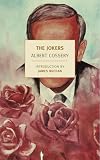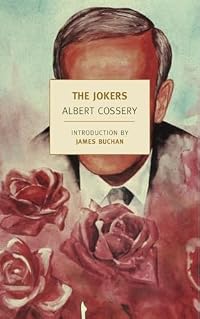
The Jokers
by Albert Cossery
On This Page
Description
Who are the jokers?The jokers are the government, and the biggest joker of all is the governor, a bug-eyed, strutting, rapacious character of unequaled incompetence who presides over the nameless Middle Eastern city where this effervescent comedy by Albert Cossery is set.
The jokers are also the revolutionaries, no less bumbling and no less infatuated with the trappings of power than the government they oppose.
And the jokers are Karim, Omar, Heykal, Urfy, and their friends, free spirits show more who see the other jokers for the jokers they are and have cooked up a sophisticated and, most important, foolproof plan to enliven public life with a dash of subversive humor.
The joke is on them all.
. show less
Tags
Recommendations
























Member Reviews
Albert Cossery writes:
Khaled Omar ate his loukoum, bobing his head and gazing rapturously at Heykal.
“I recognized you right away.”
“I have to admit that pleases me,” responded Heykal.
“You were should I would, weren’t you?”
“What makes you think so?”
“Well, I thought it strange that you wanted to meet this way,” said Khaled Omar. “I couldn’t see why you’d want to make things difficult – our friend Karim could easily have introduced us. But in any case, his description of you didn’t steer me wrong. I don’t mean that he described the way you look or your clothes; no, he spoke only of your ideas. And that was enough for me to recognize you.”
“So my ideas show on my face?” asked Heykal.
“It’s hard to show more explain. I saw you walking across the square, and I said to myself: That’s him. You had the look of someone who knows more than everyone else.”
“I know two very simple thing,” Heykal said. “The rest is of no importance.”
“I wonder if they’re the same two things I know myself.”
“I’m sure they are. It’s why I’m here, and it’s why we can speak frankly.”
“So tell me what the first thing is. I’m listening.”
Khaled Oman hastily re-knotted his tie and smoothed his well-groomed mustache with his fingers, as if whatever he was about to hear merited an impeccable appearance. There was a gleam of amusement in his eyes and a hint of anxiety on his face.
“Number one is that the world we live in is governed by the most revolting bunch of crooks to ever defile the soil of this planet.”
“I couldn’t agree more. And number two?”
“Number two is that you must never take them seriously, for that is exactly what they want.”
“Agreed!” said Khaled Omar, and burst into a long, resounding laugh.
The laughter was contagious. As it spread to the surrounding tables, it grew even louder, outrageously loud. Khaled Omar turned from one neighbor to the next, winking as if to thank them for participating in his hilarity while encouraging their continued pursuit of such joyful delirium. Finally he got hold of himself; the others, however, were still convulsed with the mirth he so inconsiderately unleashed. Heykal had been unmoved by the general hilarity; he remained seated, stiff and aloof, observing his new friend with satisfaction. He was utterly delighted with this jovial little potbellied man, with his gleaming pomaded mustache and strong scent of violet-scented perfume. How unusual! A man whose success hadn’t corrupted him one bit. He acted just as he had when he’d gone barefoot and slept in the street. His bizarre outfit was only a disguise; all the riches in the world would never tame the crude joy and artless affability of his every gesture. His big, mocking laugh was an outright defiance launched in the face of power.
“You see?” Khaled continued. “There’s all you need to know!”
“Yes,” said Heykal. “But still, not enough people get it.”
“Who cares? Don’t tell me you’re the kind who wants to make the world a better place?”
“God, no!” Heykal responded. “I have no interest in bettering anything. There’s nothing worse than a reformer. They’re all careerists.”
“I thought you’d say that, but I’m relieved to hear it,” said Khaled Omar. “I had this misfortune of encountering that kind in prison. They were no better than my jailers. So righteous – and as full of themselves as pregnant women. They made prison such a depressing place!”
“They’re utterly tiresome,” said Heykal, with something close to hatred. “All they want is to replace one government with another, ostensibly more-just one. They all dream of becoming ministers. Ministers! Can you imagine a filthier ambition! Please, I beg you, don’t speak to me of those people!” show less
Khaled Omar ate his loukoum, bobing his head and gazing rapturously at Heykal.
“I recognized you right away.”
“I have to admit that pleases me,” responded Heykal.
“You were should I would, weren’t you?”
“What makes you think so?”
“Well, I thought it strange that you wanted to meet this way,” said Khaled Omar. “I couldn’t see why you’d want to make things difficult – our friend Karim could easily have introduced us. But in any case, his description of you didn’t steer me wrong. I don’t mean that he described the way you look or your clothes; no, he spoke only of your ideas. And that was enough for me to recognize you.”
“So my ideas show on my face?” asked Heykal.
“It’s hard to show more explain. I saw you walking across the square, and I said to myself: That’s him. You had the look of someone who knows more than everyone else.”
“I know two very simple thing,” Heykal said. “The rest is of no importance.”
“I wonder if they’re the same two things I know myself.”
“I’m sure they are. It’s why I’m here, and it’s why we can speak frankly.”
“So tell me what the first thing is. I’m listening.”
Khaled Oman hastily re-knotted his tie and smoothed his well-groomed mustache with his fingers, as if whatever he was about to hear merited an impeccable appearance. There was a gleam of amusement in his eyes and a hint of anxiety on his face.
“Number one is that the world we live in is governed by the most revolting bunch of crooks to ever defile the soil of this planet.”
“I couldn’t agree more. And number two?”
“Number two is that you must never take them seriously, for that is exactly what they want.”
“Agreed!” said Khaled Omar, and burst into a long, resounding laugh.
The laughter was contagious. As it spread to the surrounding tables, it grew even louder, outrageously loud. Khaled Omar turned from one neighbor to the next, winking as if to thank them for participating in his hilarity while encouraging their continued pursuit of such joyful delirium. Finally he got hold of himself; the others, however, were still convulsed with the mirth he so inconsiderately unleashed. Heykal had been unmoved by the general hilarity; he remained seated, stiff and aloof, observing his new friend with satisfaction. He was utterly delighted with this jovial little potbellied man, with his gleaming pomaded mustache and strong scent of violet-scented perfume. How unusual! A man whose success hadn’t corrupted him one bit. He acted just as he had when he’d gone barefoot and slept in the street. His bizarre outfit was only a disguise; all the riches in the world would never tame the crude joy and artless affability of his every gesture. His big, mocking laugh was an outright defiance launched in the face of power.
“You see?” Khaled continued. “There’s all you need to know!”
“Yes,” said Heykal. “But still, not enough people get it.”
“Who cares? Don’t tell me you’re the kind who wants to make the world a better place?”
“God, no!” Heykal responded. “I have no interest in bettering anything. There’s nothing worse than a reformer. They’re all careerists.”
“I thought you’d say that, but I’m relieved to hear it,” said Khaled Omar. “I had this misfortune of encountering that kind in prison. They were no better than my jailers. So righteous – and as full of themselves as pregnant women. They made prison such a depressing place!”
“They’re utterly tiresome,” said Heykal, with something close to hatred. “All they want is to replace one government with another, ostensibly more-just one. They all dream of becoming ministers. Ministers! Can you imagine a filthier ambition! Please, I beg you, don’t speak to me of those people!” show less
Can it be I'm getting tired of Albert Cossery? There is no reason why I should like this book less than the two I read earlier this year, Proud Beggars and The Colors of Infamy: Cossery's wit is just as satiric and ironic, his writing just as good, his portrayal of character and place just as sharp. But it's starting to seem like he's writing the same book, even though the plot is different. In this case, the group of male friends who eschew seriousness and like to find humor in everything are scheming to bring down the governor of an unnamed Egyptian city (that seems to be Alexandria, not Cairo) through a campaign to praise him excessively. As one of the characters muses about a revolutionary who does not share the protagonists' show more perspective, "He didn't want the police to take him for a joker -- that was all he cared about. . . . He needed those criminals to respect him. How pathetic for a rebel! Even he couldn't break out of the vicious cycle of power. . . . He was more of a prisoner than a prisoner in his cell because he shared the same myths of his adversary . . ." Had I read this novel first, I am sure I would have been as enthusiastic about it as I was about the others, and I did enjoy it, but just not with the same thrill of discovery.
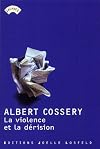
By the way, the literal translation of the French title is "violence and derision," which has a much sharper tone than the one given it in English. show less
By the way, the literal translation of the French title is "violence and derision," which has a much sharper tone than the one given it in English. show less
While this book had an engaging writing style and an interesting premise, there were way too many sexist comments/characters for such a short book. The intro, which I read after finishing, mentioned Cossery’s contempt for women which unfortunately came through in his writing. The main plot – a group of disillusioned and intelligent opponents of the current government protest by excessively praising the governor – is fun at first but I felt more time should be spent on that instead of all the random relationships. It also peters out at the end in a rather abrupt manner.
The four conspirators are a varied lot – Karim, a formerly passionate dissident who has now embraced irony and satire; Heykal, the laid-back and aristocratic show more leader; Omar, a cheerily vulgar criminal millionaire; and Urfy, a nervous teacher distracted by his mother’s descent into dementia. Heykal annoyed me as he seemed to be almost too-perfect – not that he didn’t have problems, but everyone looked up to him and acted like he was the only person worth knowing. The descriptions of their plot to anonymously hang posters with over-the-top praise of the governor, send in fatuously glowing letters to the newspaper and propose funding a statue of the governor are interesting but various side characters get in the way.
A dilettante trying to get an in with Heykal, a former associate of Karim’s and obviously the governor are shown in a negative light but every female character is a sexist stereotype. Karim’s attitude toward prostitutes that he uses is pretty disgusting and a girl from a good family who Heykal uses for information is shown throwing herself at him while he criticizes her for thinking only of love instead of politics. Another, frankly creepy scene has Heykal checking out an 8-year-old girl. Urfy’s mother – a self-sacrificing woman in the past, it is implied – is mainly there to let Heykal muse on how madness is the ultimate freedom and the “crazy old woman” also fits with stereotypical glimpses of other old women as nagging and ugly. Unfortunately, all the sexism and the distractions from the main plot meant that I enjoyed the book less and less as it went on. show less
The four conspirators are a varied lot – Karim, a formerly passionate dissident who has now embraced irony and satire; Heykal, the laid-back and aristocratic show more leader; Omar, a cheerily vulgar criminal millionaire; and Urfy, a nervous teacher distracted by his mother’s descent into dementia. Heykal annoyed me as he seemed to be almost too-perfect – not that he didn’t have problems, but everyone looked up to him and acted like he was the only person worth knowing. The descriptions of their plot to anonymously hang posters with over-the-top praise of the governor, send in fatuously glowing letters to the newspaper and propose funding a statue of the governor are interesting but various side characters get in the way.
A dilettante trying to get an in with Heykal, a former associate of Karim’s and obviously the governor are shown in a negative light but every female character is a sexist stereotype. Karim’s attitude toward prostitutes that he uses is pretty disgusting and a girl from a good family who Heykal uses for information is shown throwing herself at him while he criticizes her for thinking only of love instead of politics. Another, frankly creepy scene has Heykal checking out an 8-year-old girl. Urfy’s mother – a self-sacrificing woman in the past, it is implied – is mainly there to let Heykal muse on how madness is the ultimate freedom and the “crazy old woman” also fits with stereotypical glimpses of other old women as nagging and ugly. Unfortunately, all the sexism and the distractions from the main plot meant that I enjoyed the book less and less as it went on. show less
An amazing book. Should be required reading for all potential "revolutionaries." Funny &moving with deep insights into the human condition.
> Cossery, Albert. La Violence et la dérision. Paris: Julliard, 1964. Pp. 231.
Se reporter au compte rendu de Martin SCHWARZ
In: The French Review, Vol. 39, No. 4 (Feb., 1966), pp. 666-667… ; (en ligne),
URL : https://drive.google.com/file/d/1NKpVzu13AE-IU3mssJQqjg3ZnGgKCq5W/view?usp=shari...
Se reporter au compte rendu de Martin SCHWARZ
In: The French Review, Vol. 39, No. 4 (Feb., 1966), pp. 666-667… ; (en ligne),
URL : https://drive.google.com/file/d/1NKpVzu13AE-IU3mssJQqjg3ZnGgKCq5W/view?usp=shari...
Oct 12, 2020French
Ratings
Members
- Recently Added By
Author Information

24+ Works 1,035 Members
Some Editions
Awards and Honors
Series
Belongs to Publisher Series
Common Knowledge
- Canonical title
- The Jokers
- Original title
- La violence et la dérision
- Alternate titles
- Violence and Derision
- Original publication date
- 1964
- People/Characters
- Karim; Amar; Heykal; Soad; Taher
- First words
- The day promised to be exceptionally torrid.
- Last words
- (Click to show. Warning: May contain spoilers.)He had turned an executioner into a victim, a glorious example of civic virtue and self-sacrifice for generations to come, thus perpetuating the eternal fraud.
- Original language
- French
Classifications
- Genres
- Fiction and Literature, General Fiction
- DDC/MDS
- 843.912 — Literature & rhetoric French & related literatures French fiction 1900- 20th Century 1900-1945
- LCC
- PQ2605 .O725 .V513 — Language and Literature French, Italian, Spanish and Portuguese literatures French literature Modern literature 1900-1960
- BISAC
Statistics
- Members
- 241
- Popularity
- 134,253
- Reviews
- 5
- Rating
- (3.56)
- Languages
- 6 — English, French, Italian, Polish, Portuguese, Spanish
- Media
- Paper, Ebook
- ISBNs
- 8
- ASINs
- 1