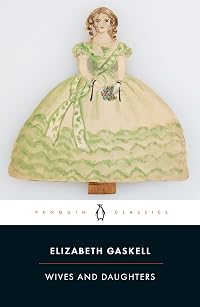
Wives and Daughters
by Elizabeth Gaskell
On This Page
Description
Can't get enough of nineteenth-century British romance? Lovers of books like Pride and Prejudice and Wuthering Heights should give Elizabeth Gaskell's Wives and Daughters a try. This tale follows the romantic ups and downs of Molly Gibson, a doctor's daughter who lives in a small English village and is trying desperately to find the right husband..
Tags
Recommendations





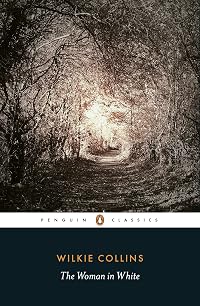
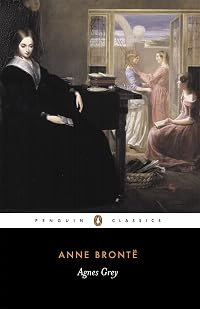
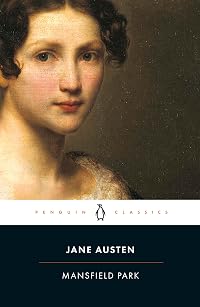
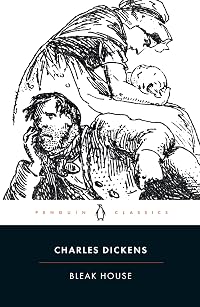

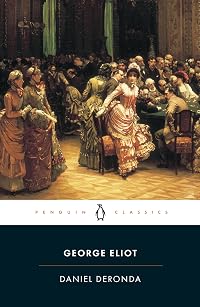
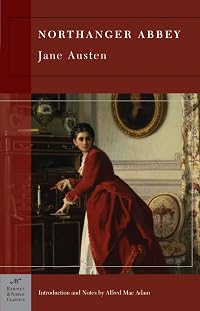
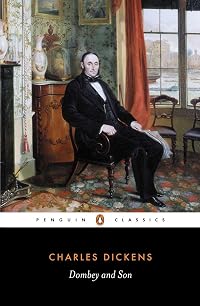
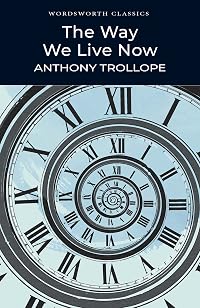

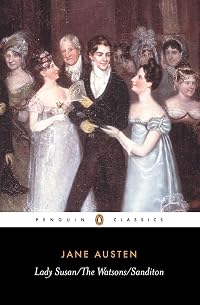
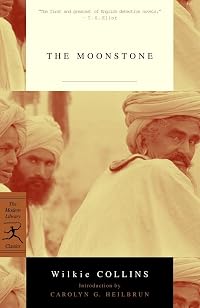
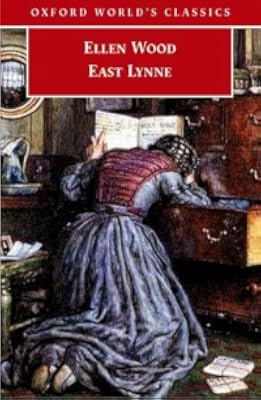

Member Recommendations
Shuffy2 In addition to North and South by Gaskell, Wives and Daughters is another great read for people who love Austen's Persusion and Sense and Sensibility!
100

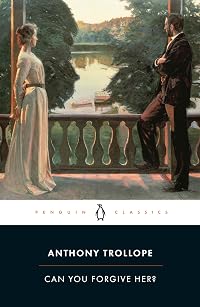
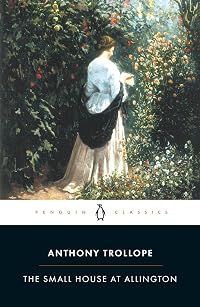
atimco Trollope's Mary Thorne and Gaskell's Molly Gibson have much in common: both their father-figures are country doctors with connections to the local nobility, both fall in love with a man above them in station and wealth, both face undeserved public shame in their social circles, and both are sensible, intelligent heroines.
60
Member Reviews
Molly Gibson has been raised by her widowed father, the town doctor. As she approaches the end of her teens, he feels he needs to remarry to have a woman around to help his daughter navigate this coming of age. Enter Mrs Kirkpatrick, aka “Clare”, the governess at The Towers. She has a daughter, Cynthia, of about the same age as Molly. The two of them bond as they navigate their new situation and gain maturity.
I ended up really enjoying this. It was a pleasure to read a classic novel centred on women, and in this one particularly the cast of characters came to life. I adored Molly for her bookishness and her desire to do right and act on moral principles, rather than what society deemed proper. Mrs Gibson as she became was incredibly show more annoying but well drawn in that annoyingness. And as the concluding remarks to my edition stated, the portrayal of Osborne and Roger Hamley was very well done indeed. They were brothers highly different in temperament, but still believable as brothers.
I was reading this on Serial Reader (which sends daily “issues” of public-domain books) and ended up binge-reading the last 15 issues so that I could find out what happened at the end. And then I found out that Gaskell had died before she could finish the book! Nooooooo! The concluding remarks in my edition gave a brief summary of where she’d intended to go with the story, so that was pretty good, but what a shame that she died before she could just finish that off!
This book is highly recommended if you want to read a classic with female protagonists. I really felt like this story was about *people*, not just those of a particular gender. I may have to re-read this someday, but in the meantime I’m definitely going through more of Gaskell’s work. show less
I ended up really enjoying this. It was a pleasure to read a classic novel centred on women, and in this one particularly the cast of characters came to life. I adored Molly for her bookishness and her desire to do right and act on moral principles, rather than what society deemed proper. Mrs Gibson as she became was incredibly show more annoying but well drawn in that annoyingness. And as the concluding remarks to my edition stated, the portrayal of Osborne and Roger Hamley was very well done indeed. They were brothers highly different in temperament, but still believable as brothers.
I was reading this on Serial Reader (which sends daily “issues” of public-domain books) and ended up binge-reading the last 15 issues so that I could find out what happened at the end. And then I found out that Gaskell had died before she could finish the book! Nooooooo! The concluding remarks in my edition gave a brief summary of where she’d intended to go with the story, so that was pretty good, but what a shame that she died before she could just finish that off!
This book is highly recommended if you want to read a classic with female protagonists. I really felt like this story was about *people*, not just those of a particular gender. I may have to re-read this someday, but in the meantime I’m definitely going through more of Gaskell’s work. show less
Firstly, I can't believe I didn't know Elizabeth Gaskell died before finishing this book?
Secondly, I can't believe I didn't know Elizabeth Gaskell died before finishing this book??
So to prevent anyone else from feeling the same pain I felt after reading one of the cutest chapters I've ever read and then seeing . . . nothing but tragic news I'm putting this right up at the top of my review.
Book content warnings:
racism
antisemitism
manipulation/abuse/whatever you'd call how Mr. Preston used Cynthia
This has always been one of my favorite English "period dramas" that one of my friends introduced me to. Of course I've never actually read the original book until now (thanks to a reading challenge, mostly). But I'm surprised how much I liked show more Elizabeth Gaskell's writing and characterization. People and places have so much life to them. I would've rated this much higher if not for the racism. "But think of when it was written!" Yeah, okay, but it's still gross--and it makes me uncomfortable enough to make me like the book/author less.
I never know what to say about these Classics because I'm not what you'd call an ""intellectual"", and I'm not the best at the academic language that seem to fill their review pages. But I see a disturbing amount of people talking about how Cynthia manipulated and took advantage of "simple" and good-natured Molly, and while she may have taken advantage her, people are ignoring Mr. Preston in this entire equation (or are even saying Mr. Preston is the victim in his affair with Cynthia as well?).
It may have been an awful scandal on Cynthia's part back in the 1800s, but dang, if Cynthia's situation had taken place today, she might have been better understood. Her childhood shaped her entire character (and I'm about 200% sure she's aromantic from her own words, shaped by trauma or otherwise--she even gets a happy ending with someone who understands her, which is fantastic for someone who'd like to read a novel with great aro rep). Cynthia tries to explain to Molly that her mother's negligence has hurt her so much so that it's pretty much traumatic. No, it's not an excuse for some of her . . . not-so-great actions to Molly, but she might have been better understood where Mr. Preston is concerned because he pretty much took advantage of her when she was penniless and in a very low point in her life. He gave her money, as a gift from a friend, and then later persuaded him to marry him because of his gift.
"But she liked him then!" Yeah, okay, but she was a child, as she said. That he should later blackmail her and hold her letters over her is basically proof that he's one hell of a skeevy character. I can't believe I see reviews that basically state "poor Mr. Preston," or something like that. Or "that flirt Cynthia used Mr. Preston and Roger and Molly!" without ever taking Cynthia's perspective into question, and it just makes me seethe.
So . . . that aside, it's just one example of how the characters in this book are so fully fleshed and individual without being caricatures. They're so different from each other (like Cynthia from Molly), but still love and accent each other enough so that they work well together. It's also probably my favorite thing about this book (besides how it handles grief). show less
Secondly, I can't believe I didn't know Elizabeth Gaskell died before finishing this book??
So to prevent anyone else from feeling the same pain I felt after reading one of the cutest chapters I've ever read and then seeing . . . nothing but tragic news I'm putting this right up at the top of my review.
Book content warnings:
racism
antisemitism
manipulation/abuse/whatever you'd call how Mr. Preston used Cynthia
This has always been one of my favorite English "period dramas" that one of my friends introduced me to. Of course I've never actually read the original book until now (thanks to a reading challenge, mostly). But I'm surprised how much I liked show more Elizabeth Gaskell's writing and characterization. People and places have so much life to them. I would've rated this much higher if not for the racism. "But think of when it was written!" Yeah, okay, but it's still gross--and it makes me uncomfortable enough to make me like the book/author less.
I never know what to say about these Classics because I'm not what you'd call an ""intellectual"", and I'm not the best at the academic language that seem to fill their review pages. But I see a disturbing amount of people talking about how Cynthia manipulated and took advantage of "simple" and good-natured Molly, and while she may have taken advantage her, people are ignoring Mr. Preston in this entire equation (or are even saying Mr. Preston is the victim in his affair with Cynthia as well?).
It may have been an awful scandal on Cynthia's part back in the 1800s, but dang, if Cynthia's situation had taken place today, she might have been better understood. Her childhood shaped her entire character (and I'm about 200% sure she's aromantic from her own words, shaped by trauma or otherwise--she even gets a happy ending with someone who understands her, which is fantastic for someone who'd like to read a novel with great aro rep). Cynthia tries to explain to Molly that her mother's negligence has hurt her so much so that it's pretty much traumatic. No, it's not an excuse for some of her . . . not-so-great actions to Molly, but she might have been better understood where Mr. Preston is concerned because he pretty much took advantage of her when she was penniless and in a very low point in her life. He gave her money, as a gift from a friend, and then later persuaded him to marry him because of his gift.
"But she liked him then!" Yeah, okay, but she was a child, as she said. That he should later blackmail her and hold her letters over her is basically proof that he's one hell of a skeevy character. I can't believe I see reviews that basically state "poor Mr. Preston," or something like that. Or "that flirt Cynthia used Mr. Preston and Roger and Molly!" without ever taking Cynthia's perspective into question, and it just makes me seethe.
So . . . that aside, it's just one example of how the characters in this book are so fully fleshed and individual without being caricatures. They're so different from each other (like Cynthia from Molly), but still love and accent each other enough so that they work well together. It's also probably my favorite thing about this book (besides how it handles grief). show less
Wives and Daughters is surely unique among Victorian novels featuring scientists, in that the scientist turns out to be an excellent romantic choice. (I'm actually working on verifying this.) And it's because he's a scientist that he's an excellent romantic choice. What woman wouldn't want to marry Roger Hamley? His scientific powers of perception carry straight over into his personal life, where he knows what you're thinking and what you're worried about and how to take care of it. Of course, he can't tell that you are the one he is meant to be in love with and not your flashy stepsister, but I suppose we can't have everything.
I was struck by the contrast between the two scientific characters, Roger and Mr. Gibson, and Mrs. show more Gibson. Mrs. Gibson is no scientist, just a woman, but her self-interest is far stronger than either of theirs-- as is her rationality. She does things not because they are morally right, but because they will help her, or because she is socially obligated to. Mr. Gibson, a surgeon, spends his time with dying patients, but she criticizes him, pointing out that he doesn't help them at all, it just makes the family feel better. "Rational self-interest," as we might call this attitude, is then not aligned with scientists, but with people who are not scientists: a scientist's perception of others is too acute for him to behave this way. Similarly, the poet Osborne Hamley is constantly described as "sensitive," and normally we'd expect an author to like a poet more than a scientist, but Osborne is sensitive to no one other than himself.
Wives and Daughters is a cute romance, though by no means is it little; it's Gaskell's longest book, and she died before finishing it! Had she finished it, I am confident it would be her best book, filled with a level of psychological insight that only George Eliot exceeded her at, but also plenty of charm and humor. The book's opening chapter, where young Molly Gibson spends a fairy-tale night at "the Towers," is probably the best bit, but it is all good. Sometimes wishes Molly might do a bit more, but she is as well-realized internally as any of Gaskell's uniformly excellent heroines. show less
I was struck by the contrast between the two scientific characters, Roger and Mr. Gibson, and Mrs. show more Gibson. Mrs. Gibson is no scientist, just a woman, but her self-interest is far stronger than either of theirs-- as is her rationality. She does things not because they are morally right, but because they will help her, or because she is socially obligated to. Mr. Gibson, a surgeon, spends his time with dying patients, but she criticizes him, pointing out that he doesn't help them at all, it just makes the family feel better. "Rational self-interest," as we might call this attitude, is then not aligned with scientists, but with people who are not scientists: a scientist's perception of others is too acute for him to behave this way. Similarly, the poet Osborne Hamley is constantly described as "sensitive," and normally we'd expect an author to like a poet more than a scientist, but Osborne is sensitive to no one other than himself.
Wives and Daughters is a cute romance, though by no means is it little; it's Gaskell's longest book, and she died before finishing it! Had she finished it, I am confident it would be her best book, filled with a level of psychological insight that only George Eliot exceeded her at, but also plenty of charm and humor. The book's opening chapter, where young Molly Gibson spends a fairy-tale night at "the Towers," is probably the best bit, but it is all good. Sometimes wishes Molly might do a bit more, but she is as well-realized internally as any of Gaskell's uniformly excellent heroines. show less
Elizabeth Gaskell's depiction of 19th century English society rivals Jane Austen at her best, especially in her mild mockery of pretentiousness and restrictive customs. But she excels in her portrayal of personalities; their complexities, introspections and bonds with one another. At the end of Wives and Daughters I had a stronger emotional investment in the characters and their futures than I had with Pride and Prejudice. It's the kind of book I wish could go on forever.
Brimming with incredible insights into human psychology, the novel is measured and purposeful in its depiction of the relationships between the inhabitants of a small sleepy English town. The nuanced characterisations - the understanding that flaws and strengths are often two sides of the same coin -, along with the sporadic interrupting wit of the authorial comments, elevate what could have been just another frivolous period drama.
As the title itself suggests, the story revolves mostly around women, but also as the title suggests, it is mostly about their roles in relation to men. Nevertheless, the range of women from forthright to meek, from artful to artless, populate and drive the plots from disasters, and it is clear that they show more could have truly been independent were it not for the patriarchal setting. For example, Clare, though the blurb/story deigns her vain and manipulative - which really is just another way of saying she knows the value of appearances and getting people to do what she wants -, would have been a brilliant and successful boss.
Then there is Molly, who is presented as a simple, country girl but is also capable of amazing underhanded threats while also being irrational in her unrequited love to the point of reacting to Roger's romantic interest in Cynthia with "but his dying mother once called me by the name of his dead sister!" The psychology behind the compatibility between Osborne and Aimée - the needy and the need to be needed - is the one of the most scathing and realistic accounts of (fictional) relationships I have ever read.
Of course, the novel is not without its flaws, even with its strength in understandably flawed characters. Roger's casual, abnormal perfection - senior wrangler, published researcher of physiology, amateur estate lawyer, now at the forefront of a scientific expedition and breakthrough - is mindboggling. At one point, the story even seemed to be replaying the ridiculous misfortunes-and-deaths domino effect of the Hales from North and South.
For a plot which could be summed up sensationally in three lines, it is all the more impressive how substantial and fully fleshed out the characters are, that we are able to understand and justify their motives in every step. I particularly enjoyed the unintended abrupt ending, which, far from discrediting all that has happened beforehand, imbues the novel with an ineffable quality. show less
As the title itself suggests, the story revolves mostly around women, but also as the title suggests, it is mostly about their roles in relation to men. Nevertheless, the range of women from forthright to meek, from artful to artless, populate and drive the plots from disasters, and it is clear that they show more could have truly been independent were it not for the patriarchal setting. For example, Clare, though the blurb/story deigns her vain and manipulative - which really is just another way of saying she knows the value of appearances and getting people to do what she wants -, would have been a brilliant and successful boss.
Then there is Molly, who is presented as a simple, country girl but is also capable of amazing underhanded threats while also being irrational in her unrequited love to the point of reacting to Roger's romantic interest in Cynthia with "but his dying mother once called me by the name of his dead sister!" The psychology behind the compatibility between Osborne and Aimée - the needy and the need to be needed - is the one of the most scathing and realistic accounts of (fictional) relationships I have ever read.
Of course, the novel is not without its flaws, even with its strength in understandably flawed characters. Roger's casual, abnormal perfection - senior wrangler, published researcher of physiology, amateur estate lawyer, now at the forefront of a scientific expedition and breakthrough - is mindboggling. At one point, the story even seemed to be replaying the ridiculous misfortunes-and-deaths domino effect of the Hales from North and South.
For a plot which could be summed up sensationally in three lines, it is all the more impressive how substantial and fully fleshed out the characters are, that we are able to understand and justify their motives in every step. I particularly enjoyed the unintended abrupt ending, which, far from discrediting all that has happened beforehand, imbues the novel with an ineffable quality. show less
Set in the 1830’s, at a time when society was in flux, but the separations between the gentry and the commoner still tightly drawn, Wives and Daughters is a captivating glimpse into the lives of two girls, thrown into a blended family. Our main heroine, Molly Gibson, is a simple and honest girl, brought up by her father, a physician, and raised without the influence of a mother. Upon her father’s remarriage, she is introduced not only to the restrictiveness of a shallow and grating step-mother but is also given a new sister exactly her age, Cynthia Kirkpatrick.
Molly is a lovely creation, that one cannot help admiring and liking very much, but Cynthia is one of the most interesting characters I have encountered for quite some time. show more She is so flawed, so in need of love and guidance (which she has certainly never received from her mother), so inconstant in her dealings with others and so terribly human. Yet, she is loveable and sweet and kind in so many ways, and her genuine love for Molly redeems her of being seen as unfeeling or conniving. Cynthia’s vacillation contrasts so starkly with Molly’s steady sureness. If ever you had a friend, you would wish it to someone of Molly’s ilk.
In parallel to this, Mrs. Gaskell weaves the stories of two brothers, Osbourne and Roger, of an ancient lineage and whose father has not quite made his way into the modern time in which he lives. The quality of character of these men is explored, as well, and they form an important part of the courting machinations that transpire. One cannot help thinking of Jane Austen when watching this ritual unfold that revolves far more in the mind of Mrs. Gibson than in any of the young people.
From the beginning of this novel, Elizabeth Gaskell had my full attention. The story moves rapidly despite its length and the various threads are all tied neatly together, so that even the minor characters fit into the puzzle in very pleasing ways. Unfortunately, Mrs. Gaskell died with the final chapter or two unwritten. So, while all the major plot lines are satisfied and you do not feel left hanging, there is still a sense of something unfinished at the end. I was not prepared for this and it felt quite more jarring than it might have had I realized it was an unfinished work. Even with this, I would not hesitate to recommend reading this novel. I think Elizabeth Gaskell deserves to be regarded perhaps a bit more highly than she has been and holds her own with her contemporaries, the Brontes. show less
Molly is a lovely creation, that one cannot help admiring and liking very much, but Cynthia is one of the most interesting characters I have encountered for quite some time. show more She is so flawed, so in need of love and guidance (which she has certainly never received from her mother), so inconstant in her dealings with others and so terribly human. Yet, she is loveable and sweet and kind in so many ways, and her genuine love for Molly redeems her of being seen as unfeeling or conniving. Cynthia’s vacillation contrasts so starkly with Molly’s steady sureness. If ever you had a friend, you would wish it to someone of Molly’s ilk.
In parallel to this, Mrs. Gaskell weaves the stories of two brothers, Osbourne and Roger, of an ancient lineage and whose father has not quite made his way into the modern time in which he lives. The quality of character of these men is explored, as well, and they form an important part of the courting machinations that transpire. One cannot help thinking of Jane Austen when watching this ritual unfold that revolves far more in the mind of Mrs. Gibson than in any of the young people.
From the beginning of this novel, Elizabeth Gaskell had my full attention. The story moves rapidly despite its length and the various threads are all tied neatly together, so that even the minor characters fit into the puzzle in very pleasing ways. Unfortunately, Mrs. Gaskell died with the final chapter or two unwritten. So, while all the major plot lines are satisfied and you do not feel left hanging, there is still a sense of something unfinished at the end. I was not prepared for this and it felt quite more jarring than it might have had I realized it was an unfinished work. Even with this, I would not hesitate to recommend reading this novel. I think Elizabeth Gaskell deserves to be regarded perhaps a bit more highly than she has been and holds her own with her contemporaries, the Brontes. show less
Elizabeth Gaskell is a fine writer, who penned admirable heroines and sensitive heroes, but she definitely peaked with 'North and South' - 'Mary Barton', her first novel, is far too melodramatic, and I'm afraid I found 'Wives and Daughters', her final (and unfinished) work, too slow. I class this sort of Austenesque pastoral satire as 'Sunday evening fodder', the sort of gentle, harmless period drama that is a staple production of the BBC around autumn, when the nights are drawing in and the weather is terrible. Like 'Cranford' (which I won't be adding to my Gaskell library), these adaptations usually feature Dame Judi Dench in a bonnet and conclude with a wedding or two. I much prefer Gaskell's 'northern' novels, which are a more show more engaging and instructive blend of humour, romance and social commentary - the body count is usually considerably higher (imagine, only one death in 'Wives and Daughters'!), but on the plus side, there are fewer old women in bonnets.
That said, I did persevere with this story, because the central characters are well drawn and Gaskell knows how to pace a domestic drama with teasers - what is Cynthia's secret? When will Obsbourne's father find out what his son has been up to? Molly Gibson, the pure and selfless heroine, is far too good for my liking, but I loved Cynthia's 'Estella Syndrome', as I termed her fickle behaviour (now there's a girl who knows how to keep her options open!) Cynthia Kirkpatrick is my favourite type of heroine, or perhaps anti-heroine - beautiful, charming, sharp as tack, and ruthless! She knows that men of every age and station find her irresistible, and employs her natural talents to bait them and then reel them in - but only if they can be of advantage to her. And she's so thoroughly attractive that everyone forgives her for using them! Wonderful. Molly truly fell flat compared to her wicked stepsister. And I felt sorry for the oily Mr Preston, but not Roger Hamley, who must have been either gullible or shallow.
From the supporting cast of thousands, I adored Mr Gibson, who marries in haste and repents at leisure, and Squire Hamley, and found in Lady Harriet the strength lacked by Molly and the generosity missing in Cynthia. The rest of the caricatures - Cynthia's sycophantic and self-centred mother, and her aristocratic match Lady Cumnor, ailing Osbourne and blockhead Roger, and of course the usual gaggle of spinsters - were mildly entertaining but only pale imitations of Austen's stock-in-trade. Although some of the characters and devices reminded me of 'North and South' - a dark-haired heroine with 'soft grey eyes' who dotes on her father, invalid mothers, brothers with secret wives, many misunderstandings, and even a Dr Donaldson! - I missed the earnest grounding in social concerns of real importance that give meaning and impact to Gaskell's 'northern' novels. If I wanted to read about the romantic entanglements of swooning girls in white dresses, I would choose 'Sense and Sensibility'.
And if Gaskell used the phrase 'tete-a-tete' once, she must have used it a thousand times - the constant repetition made me laugh at first, and then slowly started to annoy me.
All in all, a pleasant, if rather lengthy, comedy of manners, for fans of Austen and Heyer. show less
That said, I did persevere with this story, because the central characters are well drawn and Gaskell knows how to pace a domestic drama with teasers - what is Cynthia's secret? When will Obsbourne's father find out what his son has been up to? Molly Gibson, the pure and selfless heroine, is far too good for my liking, but I loved Cynthia's 'Estella Syndrome', as I termed her fickle behaviour (now there's a girl who knows how to keep her options open!) Cynthia Kirkpatrick is my favourite type of heroine, or perhaps anti-heroine - beautiful, charming, sharp as tack, and ruthless! She knows that men of every age and station find her irresistible, and employs her natural talents to bait them and then reel them in - but only if they can be of advantage to her. And she's so thoroughly attractive that everyone forgives her for using them! Wonderful. Molly truly fell flat compared to her wicked stepsister. And I felt sorry for the oily Mr Preston, but not Roger Hamley, who must have been either gullible or shallow.
From the supporting cast of thousands, I adored Mr Gibson, who marries in haste and repents at leisure, and Squire Hamley, and found in Lady Harriet the strength lacked by Molly and the generosity missing in Cynthia. The rest of the caricatures - Cynthia's sycophantic and self-centred mother, and her aristocratic match Lady Cumnor, ailing Osbourne and blockhead Roger, and of course the usual gaggle of spinsters - were mildly entertaining but only pale imitations of Austen's stock-in-trade. Although some of the characters and devices reminded me of 'North and South' - a dark-haired heroine with 'soft grey eyes' who dotes on her father, invalid mothers, brothers with secret wives, many misunderstandings, and even a Dr Donaldson! - I missed the earnest grounding in social concerns of real importance that give meaning and impact to Gaskell's 'northern' novels. If I wanted to read about the romantic entanglements of swooning girls in white dresses, I would choose 'Sense and Sensibility'.
And if Gaskell used the phrase 'tete-a-tete' once, she must have used it a thousand times - the constant repetition made me laugh at first, and then slowly started to annoy me.
All in all, a pleasant, if rather lengthy, comedy of manners, for fans of Austen and Heyer. show less
Members
- Recently Added By
Lists

Favourite Books
1,820 works; 316 members

Female Author
1,234 works; 66 members

Classics you know you should have read but probably haven't
421 works; 409 members

Recommend the 20 best books you've read in the last five years
2,168 works; 608 members

Favorite Literary Love Stories
182 works; 101 members
Comfort Reads
221 works; 41 members

Best family sagas
244 works; 34 members
Books tagged favorites
390 works; 30 members

Top Five Books of 2016
795 works; 229 members
Literature About Women and Girls
426 works; 41 members

Books Read in 2014
2,344 works; 89 members

Blue Pyramid 1,276 Best Books of All Time
1,248 works; 32 members
Favorite Coming of Age Novels.
164 works; 51 members
Books Set in Small Towns and Villages
278 works; 16 members

covers with paintings / paintings as covers .
37 works; 1 member

Books Read in 2022
5,226 works; 115 members

Reading LIst
648 works; 1 member

Books Read in 2024
4,727 works; 128 members

thinking of reading in 2016
99 works; 1 member

Famously Incomplete Novels
16 works; 1 member

Books Read in 2021
5,361 works; 114 members

Allie's Wishlist
217 works; 2 members

KayStJ's to-read list
1,616 works; 11 members

Books Read in 2026
2,150 works; 70 members
Author Information

233+ Works 30,612 Members
Elizabeth Gaskell was born on September 29, 1810 to a Unitarian clergyman, who was also a civil servant and journalist. Her mother died when she was young, and she was brought up by her aunt in Knutsford, a small village that was the prototype for Cranford, Hollingford and the setting for numerous other short stories. In 1832, she married William show more Gaskell, a Unitarian clergyman in Manchester. She participated in his ministry and collaborated with him to write the poem Sketches among the Poor in 1837. Our Society at Cranford was the first two chapters of Cranford and it appeared in Dickens' Household Words in 1851. Dickens liked it so much that he pressed Gaskell for more episodes, and she produced eight more of them between 1852 and 1853. She also wrote My Lady Ludlow and Lois the Witch, a novella that concerns the Salem witch trials. Wives and Daughters ran in Cornhill from August 1864 to January 1866. The final installment was never written but the ending was known and the novel exists now virtually complete. The story centers on a series of relationships between family groups in Hollingford. Most critics agree that her greatest achievement is the short novel Cousin Phillis. Gaskell was also followed by controversy. In 1853, she offended many readers with Ruth, which explored seduction and illegitimacy that led the "fallen woman" into ostracism and inevitable prostitution. The novel presents the social conduct in a small community when tolerance and morality clash. Critics praised the novel's moral lessons but Gaskell's own congregation burned the book and it was banned in many libraries. In 1857, The Life of Charlotte Brontë was published. The biography was initially praised but angry protests came from some of the people it dealt with. Gaskell was against any biographical notice of her being written during her lifetime. After her death on November 12, 1865, her family refused to make family letters or biographical data available. (Bowker Author Biography) show less
All Editions
Some Editions
Series
Belongs to Publisher Series
Work Relationships
Is contained in
Common Knowledge
- Canonical title
- Wives and Daughters
- Original title
- Wives and Daughters
- Original publication date
- 1865
- People/Characters
- Molly Gibson; Mr. Gibson; Cynthia Kirkpatrick; Roger Hamley; Squire Hamley; Osborne Hamley (show all 7); Hyacinth Kirkpatrick
- Important places
- Hollingford, Cheshire, England, UK
- Related movies
- Wives and Daughters (1999 | IMDb | TV); Wives and Daughters (1971 | IMDb | TV)
- First words
- To begin with the old rigmarole of childhood.
- Quotations
- The answer was silly enough, logically; but forcible in fact. Cynthia was Cynthia, and not Venus herself could have been her substitute. In this one thing Mr. Preston was more really true than many worthy men, who, seeking to... (show all) be married, turn with careless facility from the unattainable to the attainable, and keep their feelings and fancy tolerably loose till they find a woman who consents to be their wife. But no one would ever be to Mr. Preston what Cynthia had been, and was; and yet he could have stabbed her in certain of his moods.
- Last words
- (Click to show. Warning: May contain spoilers.)And now cover me up close, and let me go to sleep, and
dream about my dear Cynthia and my new shawl!' - Publisher's editor*
- Everyman Paperbacks
*Some information comes from Common Knowledge in other languages. Click "Edit" for more information.
Classifications
Statistics
- Members
- 4,598
- Popularity
- 3,175
- Reviews
- 95
- Rating
- (4.15)
- Languages
- 14 — Bulgarian, Dutch, English, French, German, Hungarian, Italian, Japanese, Polish, Romanian, Spanish, Swedish, Portuguese (Portugal), Chinese, traditional
- Media
- Paper, Audiobook, Ebook
- ISBNs
- 166
- UPCs
- 2
- ASINs
- 60