On This Page
Description
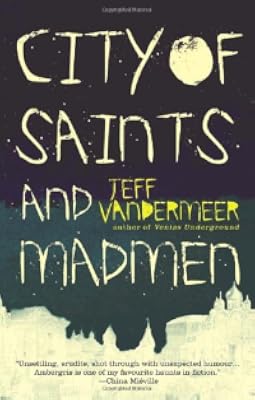
In City of Saints and Madmen, Jeff VanderMeer has reinvented the literature of the fantastic. You hold in your hands an invitation to a place unlike any you've ever visited--an invitation delivered by one of our most audacious and astonishing literary magicians.City of elegance and squalor. Of religious fervor and wanton lusts. And everywhere, on the walls of courtyards and churches, an incandescent fungus of mysterious and ominous origin. In Ambergris, a would-be suitor discovers that a show more sunlit street can become a killing ground in the blink of an eye. An artist receives an invitation to a beheading--and finds himself enchanted. And a patient in a mental institution is convinced he's made up a city called Ambergris, imagined its every last detail, and that he's really from a place called Chicago....
By turns sensuous and terrifying, filled with exotica and eroticism, this interwoven collection of stories, histories, and "eyewitness" reports invokes a universe within a puzzlebox where you can lose--and find--yourself again.
From the Trade Paperback edition.
. show less
Tags
Recommendations
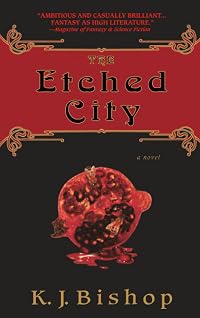
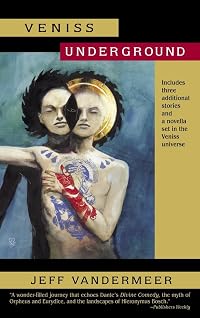
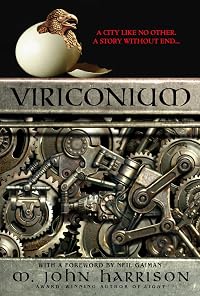
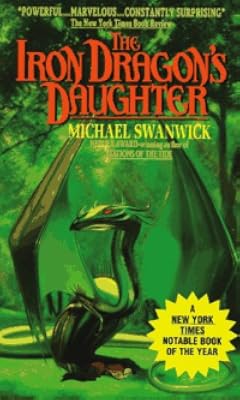
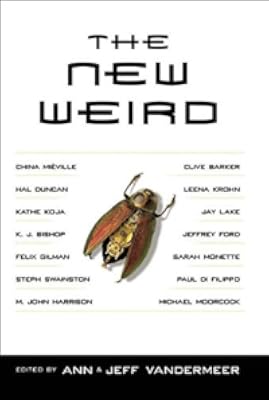

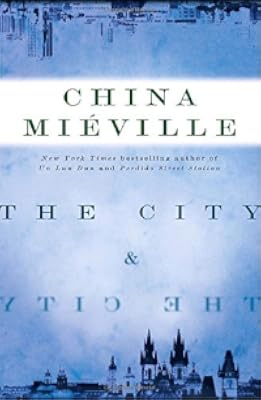
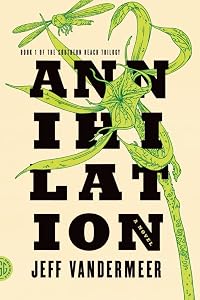

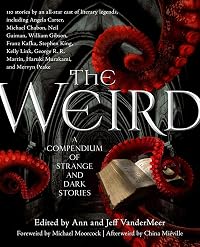













Member Recommendations
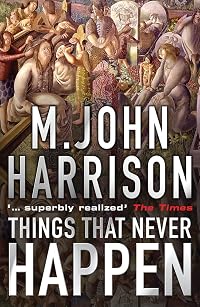
Viriconium: "The Pastel City", "A Storm of Wings", "In Viriconium", "Viriconium Nights" by M. John Harrison
whiten06 Viriconium was clearly an inspiration for City of Saints and Madmen.
40

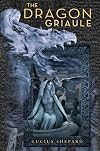
by anonymous user
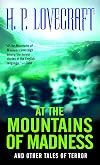
tetrachromat Seems likely Vandermeer was inspired by Lovecraft. Both have "subterranean terrors". Tons of other similarities too, though thankfully lacking Lovecraft's racist commentary.
Member Reviews
The city of Ambegris, a strange, vibrant, terrifying place or a metatextual vehicle for literary playfulness that can be as funny as they can be horrifying. And, not or. I should have said and, because this is both. Four novellas and a bunch of stories, one of the novellas a history pamphlet, one a scientific treatise and bibliography and one a glossary - well, that contains a host of hints and glimpses of stories. Ambergris is strange, Weird, in fact, full of terrible secrets and violence and intrigue and fungus. There are also squid and artists and historians and madmen and they all blend together. This collection, or fix-up, is unique, original, erudite, brilliantly written with prose by turns lush and acerbic. It's as addictive and show more delightful and filled with nightmares and unnameable terrors. i loved it. The only weak note was 'Leaving The Flesh,' one of the first of the stories written, and in some ways a precursor to the rest, it seems to merely be set in our world with a sprinkling of Ambergris set-dressing, deriving no tension from the overlap, unlike 'The Case of X,' which given the rest of the book, comes across as a lack of commitment rather than anything else. Otherwise, the whole thing is brilliant. show less
Here's the problem with this book. I really liked it. I appreciate intricate world building, I love the postmodern fantasy stuff, and I'm a sucker for any fiction with footnotes. The problem is, Ambergris still operates in a patriarchy (or at least, there's no reason to assume it doesn't) and this book fails the Bechdel test so hard it's like an F minus. I don't require that books take place in an all-women lesbian feminist utopia (would be nice to live there, but kind of boring to read about) but when so much design and creativity has been put into a book, it's an embarrassing oversight to not address gender as something that could also be rewritten.
First off, this book requires time. It's incredibly dense and varied in it's story telling approach. I found myself, despite the eloquence of the prose, drifting from time to time. Throw in footnotes and illustrations. Interviews and bibliographies. Stories that shift from history to prose. Letters and glossaries. You'll run across all of these forms and more before you've reached the final page. It's a book that would be good to own and digest in pieces rather than taking in whole, cover to cover. The amount of information revealed about Ambergris is astounding. Vandermeer has obviously done an extensive amount of work in imagining the city and the detail spills onto the page. One criticism I had was that in allowing the city to take show more center stage, often the stories were like standing over a miniature, picking out someone to follow until something surprising happens and then moving on. The detail in which Ambergris is rendered therefore becomes fractured and is never a cohesive vision. Another gripe is that many of the more interesting elements, the festival for example, receive only fleeting space inside of a story telling piece and are mainly relegated to expository, faux-non-fiction.
I am hopeful that the next two entries in the Ambergris cycle allow a more fleshed out vehicle for this intriguing world. I was encouraged that, despite almost fawning detail of other subjects (ie squid), the author revealed only glimpses of the gray caps, preserving their essential mysteries to be uncovered in a more compelling format.
My misgivings mainly amount to gripes about the presentation. It's a testament to the creation that I cared enough about the world presented to want a more competent telling of it's minutia. Vandermeer has succeeded in creating a grand vision and I'm excited to delve deeper. show less
I am hopeful that the next two entries in the Ambergris cycle allow a more fleshed out vehicle for this intriguing world. I was encouraged that, despite almost fawning detail of other subjects (ie squid), the author revealed only glimpses of the gray caps, preserving their essential mysteries to be uncovered in a more compelling format.
My misgivings mainly amount to gripes about the presentation. It's a testament to the creation that I cared enough about the world presented to want a more competent telling of it's minutia. Vandermeer has succeeded in creating a grand vision and I'm excited to delve deeper. show less
The four stories contained in this book are not only astounding because of their stories, but also because of how they are written. Literary format can be as important as the contents and language of the story itself, and canderMeer's experiments have paid off. Each story is written slightly differently, but each plays with the boundaries of meta-fiction by pairing the main story with a non-fiction sounding frame that emphasizes the sense of madness-inducing reality of the city of Ambergris. I particularly enjoyed that the story of Martin Lake pairs the actual events (presumed) of his life with what an Ambergrisian art historian has interpreted about his life from his paintings. The frame story sounds like a work of non-fiction, but show more since the speaker cannot know the details of Martin Lake's actual life it becomes a fictionalized account as well, while the main story becomes a work of non-fiction because the reader must presume that this speaker (an omniscient narrator) knows what actually happenned to Martin Lake. show less
After breakfast, necklace and map in hand, Dradin wandered into the religious quarter, known by the common moniker of Pejora's Folly after Midan Pejora, the principal early architect, to whose credit or discredit could be placed the slanted walls, the jumble of Occidental and accidental, northern and southern, baroque and pure jungle, styles. Buildings battled for breath and space like centuries-slow soldiers in brick-to-brick combat. To look into the revolving spin of a kaleidoscope while heavily intoxicated, Dradin thought, would not be half so bad.
What a marvellous book! Starting with a story about a newcomer to Ambergris who is caught up in the madness of the Festival of the Freshwater Squid, the reader is gradually introduced to show more the secret undercurrents of this weirdest of cities via stories, non-fiction pamphlets on history and natural history, advertisements and the notes of a madman incarcerated in an Ambergris mental hospital. The author himself seems strangely entangled with his imaginary world. I would advise you not to read this book if you are phobic about mushrooms or mould - you could find yourself peering suspiciously into dark corners looking for signs of fungal growth.
Updated August 2015:
Eleven years after I first read it I had forgotten a lot about this book, so I decided that I would re-read it before starting Finch. But now I have discovered that there is another book between them, so I need to get hold of a copy of Shriek: An Afterword to read first.
World building always sticks in my mind better than plot, so I remembered that Ambergris seems like a colonial European city in the midst of South East Asian jungles, a bit about the squids and a lot more about the grey caps and their relationship to the city. Although I remembered the story called The Cage really well, the only other event I really remembered was what Dradin finds when he enters Hoegbotton & Sons at the end of Dradin in Love.
I love the footnotes to The Hoegbotton Guide to the Early History of Ambergris, whose author is Duncan Shriek, a waspish elderly historian who thinks writing tourist guides is beneath him: We could wish that Lacond had done more research on the subject before venturing an opinion, but then we would be bereft of his marvelous stupidity. Another high point is Madnok's pamphlet about the King Squid, which contains fantastic illustrations, although I am not totally convinced that Madnok is the expert he thinks he is.
One of the best things about City of Saints and Madmen is the way one person's madness bleeds into another's, and the Ambergris Glossary at the end of the book helps to link all the stories together by giving a different angle on people, places and events that were mentioned earlier in the book, including one very interesting entry that suggests a possible explanation for Dradin's odd behaviour in the first story. Some entries are much longer than others, with the Festival of the Freshwater Squid getting an entirely inadequate single sentence, although mentions of it elsewhere in the glossary provide a more truthful impression of its dangers (don't forget to pick up a copy of the Hoegbotton Guide to Festival Safehouses as soon as you arrive if you decide to visit Ambergris at festival time). Some of the glossary entries are very funny, as Duncan Shriek gives vent to his contempt for his fellow historians and others, and I especially liked the description of the saltwater buzzard.
So there's no change to my rating as City of Saints and Madmen remains a 5 star book for me. show less
What a marvellous book! Starting with a story about a newcomer to Ambergris who is caught up in the madness of the Festival of the Freshwater Squid, the reader is gradually introduced to show more the secret undercurrents of this weirdest of cities via stories, non-fiction pamphlets on history and natural history, advertisements and the notes of a madman incarcerated in an Ambergris mental hospital. The author himself seems strangely entangled with his imaginary world. I would advise you not to read this book if you are phobic about mushrooms or mould - you could find yourself peering suspiciously into dark corners looking for signs of fungal growth.
Updated August 2015:
Eleven years after I first read it I had forgotten a lot about this book, so I decided that I would re-read it before starting Finch. But now I have discovered that there is another book between them, so I need to get hold of a copy of Shriek: An Afterword to read first.
World building always sticks in my mind better than plot, so I remembered that Ambergris seems like a colonial European city in the midst of South East Asian jungles, a bit about the squids and a lot more about the grey caps and their relationship to the city. Although I remembered the story called The Cage really well, the only other event I really remembered was what Dradin finds when he enters Hoegbotton & Sons at the end of Dradin in Love.
I love the footnotes to The Hoegbotton Guide to the Early History of Ambergris, whose author is Duncan Shriek, a waspish elderly historian who thinks writing tourist guides is beneath him: We could wish that Lacond had done more research on the subject before venturing an opinion, but then we would be bereft of his marvelous stupidity. Another high point is Madnok's pamphlet about the King Squid, which contains fantastic illustrations, although I am not totally convinced that Madnok is the expert he thinks he is.
One of the best things about City of Saints and Madmen is the way one person's madness bleeds into another's, and the Ambergris Glossary at the end of the book helps to link all the stories together by giving a different angle on people, places and events that were mentioned earlier in the book, including one very interesting entry that suggests a possible explanation for Dradin's odd behaviour in the first story. Some entries are much longer than others, with the Festival of the Freshwater Squid getting an entirely inadequate single sentence, although mentions of it elsewhere in the glossary provide a more truthful impression of its dangers (don't forget to pick up a copy of the Hoegbotton Guide to Festival Safehouses as soon as you arrive if you decide to visit Ambergris at festival time). Some of the glossary entries are very funny, as Duncan Shriek gives vent to his contempt for his fellow historians and others, and I especially liked the description of the saltwater buzzard.
So there's no change to my rating as City of Saints and Madmen remains a 5 star book for me. show less
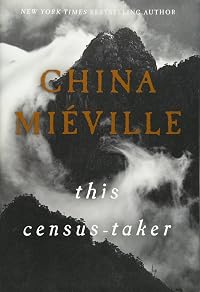
This is the weirdest book I have ever read. It is weirder than People of Paper, in which the characters declared war on the author. It is weirder than everything China Mieville has ever cooked up.
I love weird books--or rather, I love weird books that work. Weird books that fail are depressing to read, although I do respect their attempts. Luckily, City of Saints and Madmen does work.
City of Saints and Madmen firmly plants its feet in the genre of urban fantasy, so much so that the book's narrative is that of the city of Ambergris instead of its inhabitants. The book is composed of a series of vignettes: a few novellas, a handful of short stories, a transcript, two letters, two pamphlets, an annotated bibliography, a glossary, and a show more detailed description of the various fonts used in the book. A few characters resurface in different stories, but the protagonist is always and only Ambergris itself.
And what a city Ambergris is. Unlike Mieville's gloriously grotesque New Crobuzon or Scott Lynch's Venician-esque Camorr, Ambergris has no obvious city of inspiration. My best guess is Prague, and if I'm right it's a very distant inspiration. Located along the large Moth River, constantly plagued by the damp and the ever-encroaching fungus (not to mention the indigenous mushroom-like grey caps, who've never quite forgiven the human inhabitants for massacring thousands of them upon founding the city), reliant on giant freshwater squid who may or may not be extremely intelligent, Ambergris is unique, delightful, and horrifying in turns.
The book itself alternates between nightmarishly terrifying to absolutely hilarious, often crossing between the two with little warning (never has an annotated bibliography been so funny). There's a lot of material, and it's easy to skip parts that look less interesting. Don't. Read everything.
I can't believe it took me this long to find this incredible and wholly bizarre book. Read this. Now. show less
I love weird books--or rather, I love weird books that work. Weird books that fail are depressing to read, although I do respect their attempts. Luckily, City of Saints and Madmen does work.
City of Saints and Madmen firmly plants its feet in the genre of urban fantasy, so much so that the book's narrative is that of the city of Ambergris instead of its inhabitants. The book is composed of a series of vignettes: a few novellas, a handful of short stories, a transcript, two letters, two pamphlets, an annotated bibliography, a glossary, and a show more detailed description of the various fonts used in the book. A few characters resurface in different stories, but the protagonist is always and only Ambergris itself.
And what a city Ambergris is. Unlike Mieville's gloriously grotesque New Crobuzon or Scott Lynch's Venician-esque Camorr, Ambergris has no obvious city of inspiration. My best guess is Prague, and if I'm right it's a very distant inspiration. Located along the large Moth River, constantly plagued by the damp and the ever-encroaching fungus (not to mention the indigenous mushroom-like grey caps, who've never quite forgiven the human inhabitants for massacring thousands of them upon founding the city), reliant on giant freshwater squid who may or may not be extremely intelligent, Ambergris is unique, delightful, and horrifying in turns.
The book itself alternates between nightmarishly terrifying to absolutely hilarious, often crossing between the two with little warning (never has an annotated bibliography been so funny). There's a lot of material, and it's easy to skip parts that look less interesting. Don't. Read everything.
I can't believe it took me this long to find this incredible and wholly bizarre book. Read this. Now. show less
This type of narrative is typically a difficult sell for me.
CSM contains a number of shorter stories (novellas and novelettes) which are loosely connected, and weaves a single narrative thread through them. The reason I find this sort of thing difficult is because no sooner have I become attached to one character, they are gone and time has skipped on, sometimes by centuries. I prefer a lengthier investment.
Not all the stories are equal. The first is the weakest, imo, though it picks up towards the end. Martin Lake's tale stood out to me, though it had no surprises, because the enjoyment (much of it, anyway) comes between the comparisons of what we know to be true of his experience, and what historians believe to be true of his show more influences.
Some of the passages were a little too dry, too "rpg splat book" for my preference. I skimmed any and all endnotes, glossaries, and the pages of fake academic references. A nice touch, but not really readable in story terms. If, however, you are the kind of reader who likes to extract every iota of detail, every hidden nugget or sly joke, every tiny puzzle piece of the vast mystery that is Ambergris, then all of that is certainly there for the harvesting.
I mentioned the RPG splat book feel; the sense that this is more a fantasy setting with some stories attached. It's another reason why this sort of book is generally a hard sell for me (although, I feel compelled to add, it is exactly the sort of thing my partner loves reading.) How you feel about this aspect will be completely specific to you and your tastes. If you are the sort of person who reads RPG books for fun, this is probably something of a motherload.
###
Still, I've given it 5 stars, after spending a night thinking about it... so reasons why this made the 5 star list:
- I didn't enjoy every story equally, but I did enjoy every story, and each one build on previous stories to add layers, richness, metatextuality, and depth
- the metatextual elements were of course a big draw, and the novel's engagement with metafiction, surreality, horror was satisfying to me. A lot of analysis went into this book and there is a lot to get out of it, if you wish to do so.
- the writing is lovely. Maybe this goes without saying in a Vandermeer book but on the other hand, good writing is always worth singing praises for.
- the humor really appealed to me. I've highlighted one particular chapter where the insulting tone of the narrator had me laughing out loud.
- it's just so *complete* as a book. The worldbuilding is breathtaking, the scale and depth and layers to it. As someone who is a weak, half-assed worldbuilder, I was duly impressed, and (I hope) I learned a lot from this read. Ambergris feels very real, both present and distant, both fantastical and believable. That in itself is a lovely achievement
- It kept me very interested and engaged despite, as I said before, this not being quiiite the type of book I usually enjoy. Nice to push the boundaries, of course. show less
CSM contains a number of shorter stories (novellas and novelettes) which are loosely connected, and weaves a single narrative thread through them. The reason I find this sort of thing difficult is because no sooner have I become attached to one character, they are gone and time has skipped on, sometimes by centuries. I prefer a lengthier investment.
Not all the stories are equal. The first is the weakest, imo, though it picks up towards the end. Martin Lake's tale stood out to me, though it had no surprises, because the enjoyment (much of it, anyway) comes between the comparisons of what we know to be true of his experience, and what historians believe to be true of his show more influences.
Some of the passages were a little too dry, too "rpg splat book" for my preference. I skimmed any and all endnotes, glossaries, and the pages of fake academic references. A nice touch, but not really readable in story terms. If, however, you are the kind of reader who likes to extract every iota of detail, every hidden nugget or sly joke, every tiny puzzle piece of the vast mystery that is Ambergris, then all of that is certainly there for the harvesting.
I mentioned the RPG splat book feel; the sense that this is more a fantasy setting with some stories attached. It's another reason why this sort of book is generally a hard sell for me (although, I feel compelled to add, it is exactly the sort of thing my partner loves reading.) How you feel about this aspect will be completely specific to you and your tastes. If you are the sort of person who reads RPG books for fun, this is probably something of a motherload.
###
Still, I've given it 5 stars, after spending a night thinking about it... so reasons why this made the 5 star list:
- I didn't enjoy every story equally, but I did enjoy every story, and each one build on previous stories to add layers, richness, metatextuality, and depth
- the metatextual elements were of course a big draw, and the novel's engagement with metafiction, surreality, horror was satisfying to me. A lot of analysis went into this book and there is a lot to get out of it, if you wish to do so.
- the writing is lovely. Maybe this goes without saying in a Vandermeer book but on the other hand, good writing is always worth singing praises for.
- the humor really appealed to me. I've highlighted one particular chapter where the insulting tone of the narrator had me laughing out loud.
- it's just so *complete* as a book. The worldbuilding is breathtaking, the scale and depth and layers to it. As someone who is a weak, half-assed worldbuilder, I was duly impressed, and (I hope) I learned a lot from this read. Ambergris feels very real, both present and distant, both fantastical and believable. That in itself is a lovely achievement
- It kept me very interested and engaged despite, as I said before, this not being quiiite the type of book I usually enjoy. Nice to push the boundaries, of course. show less
Members
- Recently Added By
Lists

Weird and Weirder Fiction
270 works; 34 members

Magic Realism
371 works; 52 members

Favorite Short Fiction
228 works; 99 members

Read These Too
458 works; 9 members

New Weird Fiction
69 works; 11 members

Cryptology - non-fiction and fiction
57 works; 4 members

Books Read in 2017
4,249 works; 130 members

Metafiction
84 works; 22 members

Books Read in 2019
4,052 works; 110 members

Jones & Newman: Best Horror Books Further Recommended Reading
577 works; 4 members

Books We Love to Reread
688 works; 296 members
Book Worlds We'd Like To Visit
322 works; 158 members
Author Information

162+ Works 39,414 Members
Jeffrey Scott VanderMeer was born in Bellefonte, Pennsylvania on July 7, 1968. He is an editor, writer, teacher, and publisher. He is the founding editor and publisher of the Ministry of Whimsy Press. He is the author of several books including City of Saints, Madmen, Finch, and The Southern Reach Trilogy. His novel Annihilation won the Nebula show more Award for Best Novel in 2014. (Bowker Author Biography) show less
Some Editions
Awards and Honors
Awards
Notable Lists
Series

Work Relationships
Is contained in
Common Knowledge
- Canonical title*
- Stadt der Heiligen & Verrückten
- Original title
- City of Saints and Madmen
- Original publication date
- 2002-07
- People/Characters
- Martin Lake; Janice Shriek; The Kalif; M. Kodfan; Frederick Madnok; Duncan Shriek (show all 9); Mary Sabon; Dradin Kashmir; Dvorak
- Important places
- Ambergris; Stockton; Morrow; Albumuth Boulevard; Borges Bookstore; River Moth
- Epigraph
- "What can be said about Ambergris that has not already been said? Every minute section of the city, no matter how seemingly superfluous, has a complex, even devious, part to play in the communal life. And no matter how ofte... (show all)n I stroll down Albumuth Boulevard, I never lose my sense of the city's incomparable splendor--its love of ritual, its passion for music, its infinite capacity for the beautiful cruelty."
--Voss Bender, Memoirs of a Composer, Vol. No. 1, page 558, Ministry of Whimsy Press - Dedication
- For Ann, who means more to me than words
- First words
- Dradin, in love, beneath the window of his love, staring up at her while crowds surge and seethe around him, bumping and bruising him all unawares in their bright-roughed thousands.
- Quotations
- A footnote on the purpose of these footnotes: This text is rich with footnotes to avoid inflicting upon you, the idle tourist, so much knowledge that, bloated with it, you can no longer proceed to the delights of the city wit... (show all)h your customary mindless abandon.
- Last words
- (Click to show. Warning: May contain spoilers.)The briny aftertaste is particularly unpleasant, reminiscent of the frequent (and didactic) postscripts Dr. V's mother added to the letters she sent him when he was a student at the Blythe Academy so many years ago.
- Blurbers
- Mieville, China; Ford, Jeffrey; Ducornet, Rikki; Somtow, S.P.
- Original language
- English
- Canonical DDC/MDS
- 813.54
- Canonical LCC
- PS3572.A4284
- Disambiguation notice
- "City of Saints and Madmen: The Book of Ambergris" is a different work from "City of Saints and Madmen".
CITY OF SAINTS AND MADMEN is a separate work to CITY OF SAINTS AND MADMEN: THE BOOK OF AMBERGRIS (ISBN 1587154366)
*Some information comes from Common Knowledge in other languages. Click "Edit" for more information.
Classifications
Statistics
- Members
- 2,234
- Popularity
- 9,005
- Reviews
- 51
- Rating
- (3.99)
- Languages
- 6 — English, Finnish, French, German, Polish, Russian
- Media
- Paper, Audiobook, Ebook
- ISBNs
- 24
- ASINs
- 14