
When You Are Engulfed in Flames
by David Sedaris
On This Page
Description
Once again, David Sedaris brings together a collection of essays so uproariously funny and profoundly moving that his legions of fans will fall for him once more. He tests the limits of love when Hugh lances a boil from his backside, and pushes the boundaries of laziness when, finding the water shut off in his house in Normandy, he looks to the water in a vase of fresh cut flowers to fill the coffee machine. From armoring the windows with LP covers to protect the house from neurotic show more songbirds to the awkwardness of having a lozenge fall from your mouth into the lap of a sleeping fellow passenger on a plane, David Sedaris uses life's most bizarre moments to reach new heights in understanding love and fear, family and strangers. Culminating in a brilliantly funny account of his venture to Tokyo in order to quit smoking, David Sedaris's sixth essay collection will be avidly anticipated.--From publisher description. show lessTags
Recommendations
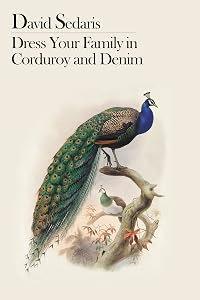










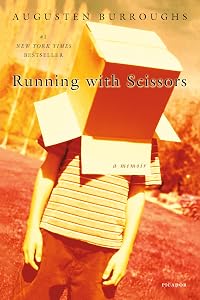





































Member Recommendations

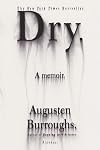
sweetiegherkin These two nonfiction books deal with giving up a vice (alcohol and, to a lesser extent, drugs for Burroughs; cigarettes for Sedaris) and both do so with dark humor scattered throughout their memoirs. That being said, Sedaris's work is more funny than serious while the opposite is true for Burroughs's. Also, Sedaris's book is largely short stories/vignettes while Burroughs's follows a more traditional narrative. Both men are homosexual and that plays some factor in their books, although it's not the overarching story and/or theme.
Member Reviews
Having had, like many, my initial exposure to David Sedaris's wit on public radio (in the initial 1992 airing of "The Santaland Diaries," in fact) it is nearly impossible for me to read his essays without hearing his voice. I'm not sure if that makes them funnier or not--it's just a condition of my reading. There are plenty of laugh-out-loud moments in this collection, even if the general tone is fairly dark.
My Other Reader says she wouldn't bother to re-read any of these essays, because the value of their effect is rooted in shock and surprise. I don't think I agree. Partly, I go for the extreme contrast between the feeling shown in his insightful reflection on human limitations, and his callous exploitation of those limitations for show more yucks in practically the same paragraph. For sheer entertainment, I like the deadpan frankness, whether it's honest or blankfaced lying.
It's certainly difficult to know what a reader can credit as fact. The sustained use of the subjunctive mood at the end of an essay on the development of the author's sexual identity leaves an attentive reader inferring a bleak reality. And on the very next page, he launches into the hyperbolically fictitious account of his studies at Princeton during the Stone Age. (71-73) If my dad had struck me on the head with a big spoon at the dinner table because I had laughed at my grandmother's flatulence, I'd like to think that I or anyone else would quit laughing long before the spoon drew blood. (227)
At any rate, all of these essays are eminently readable, and the book is full of characters too odd to be entirely fictitious, not least Sedaris himself. show less
My Other Reader says she wouldn't bother to re-read any of these essays, because the value of their effect is rooted in shock and surprise. I don't think I agree. Partly, I go for the extreme contrast between the feeling shown in his insightful reflection on human limitations, and his callous exploitation of those limitations for show more yucks in practically the same paragraph. For sheer entertainment, I like the deadpan frankness, whether it's honest or blankfaced lying.
It's certainly difficult to know what a reader can credit as fact. The sustained use of the subjunctive mood at the end of an essay on the development of the author's sexual identity leaves an attentive reader inferring a bleak reality. And on the very next page, he launches into the hyperbolically fictitious account of his studies at Princeton during the Stone Age. (71-73) If my dad had struck me on the head with a big spoon at the dinner table because I had laughed at my grandmother's flatulence, I'd like to think that I or anyone else would quit laughing long before the spoon drew blood. (227)
At any rate, all of these essays are eminently readable, and the book is full of characters too odd to be entirely fictitious, not least Sedaris himself. show less
Bráðskemmtilegt smásagnasafn sem Sedaris byggir á húmorískri og kaldhæðinni sýn sinni á eigið líf. Hlustaði á hljóðbók sem Sedaris las sjálfur frábærlega enda var hann verðlaunaður fyrir vikið. Grét af hlátri yfir fyndnustu sögunum enda voru þar hljóðupptökur af fyrirlestrum þar sem hann las viðkomandi sögu fyrir fullum sal af fólki sem veltist um af hlátri t.a.m. þegar hann fyrir misskilning settist inn á biðstofu sjúkrahúss á nærbuxunum einum fata. Aðrar voru tragískari en líka magnaðar þar sem hann fjallaði t.d. um baráttu sína við að hætta að reykja eða vináttu sína við eldri nágrannakonu sem var sannkölluð grýla.
Nothing will ever top Me Talk Pretty One Day but for anyone needing a dose of Sedaris, this book hits the right spots with all his trademark observations for the absurd in the everyday (or rather, the way he manages to just encounter the absurd portion of life and avoid the everyday). My favourite stories are the ones where Hugh makes an appearance (Sedaris' mock mock-affection - the performance of love you put on for people who don't really know you - for his characterisation of Hugh makes me idealise their daily relationship) while the last section about quitting smoking feels like a preview to his latest publication Theft by Finding, the idea of which feels like more editing would be required for the non-diehard Sedaris fan.
As this show more book (and all his other books) can attest, it is also mildly comforting to think that even if your life is aimless and ridiculous right now, maybe ten, twenty years later it will turn out to be a great treasure trove of materials for stories. show less
As this show more book (and all his other books) can attest, it is also mildly comforting to think that even if your life is aimless and ridiculous right now, maybe ten, twenty years later it will turn out to be a great treasure trove of materials for stories. show less
In my opinion, there is only one way to read this book, and that's with your ears. Sedaris' most recent collection of stories is an absolute gem that glows even brighter when narrated on compact disc by its author. Sedaris is a master of verbal pause and nuance, and his unique voice -- thin, reedy, and whimsically childlike despite the fact that he is now in his fifties -- bestows a gentle quality that softens his sharper observations and brings a smile to the listener's face even in the absence of obvious humor. Do yourself a favor and go audible on this one.
Sedaris' childlike voice notwithstanding, this book is his most mature collection of stories yet. He takes on some sobering subjects -- illness, death, the joys and burdens of show more monogamy, the unpredictable nature of life -- and treats them with a deepening sense of humanity that has always underpinned his humor, while making the listener laugh all the while -- an amazing feat, when you contemplate the subject matter.
Young writers, on the whole, tend to be more brash and judgmental than older ones, and the arc of their craft usually bends one of two ways: they become more prickly and acerbic in their later years, or they mellow with age and decide to make peace with humankind and all of its (and their) foibles. Sedaris has chosen the latter path, as best exemplified by one of my favorite stories in this collection: "The Understudy." In "The Understudy," David's parents go on an adult vacation and leave him and his young siblings in the care of Mrs. Peacock, an overweight, unkempt woman from "across the tracks" who proceeds to tend her young charges by sleeping all hours of the day in a darkened bedroom, downing every bottle of Coca Cola in the house, and occasionally cooking up a skillet of sloppy joes when the kids resort to howling in desperation (9 p.m.: "If y'all was hungry, why didn't you say nothing? I'm not a mind reader, you know"). Worst of all, she insists that the children take turns scratching her back with a long plastic rod that ends in a miniature, fingernailed "hand" resembling an arthritic monkey paw. They gag in disgust as she lays on the bed, stomach down, her tattered, soiled slip pulled down to her waist, sighing in ecstasy as they scrape the vile paw across her oily, pock-marked back. When one of them can't resist commenting on the hairs between her shoulders, she retorts "Y'all's got the same damn thing, only they ain't poked out yet."
Just at the point when Sedaris's caricature of Mrs. Peacock borders on merciless, he pivots. Mrs. Peacock packs the kids into the car and makes a trip to her house (the beloved back scratcher has been broken and must be replaced with a backup model). The siblings realize that Mrs. Peacock's house, an obvious shack to them, is a subject of great pride for her. The backyard garden is beautifully tended, albeit filled with plastic gewgaws and garden gnomes, and she cautions them not to touch her beloved doll collection ("They's my doll babies") as they enter the back door. She shows them her collection of miniatures, and points out two little troll dolls, each sitting in a house slipper by her bathroom, their hair combed back as if blown by a stiff wind: "See, it's like they's riding in boats!" Sedaris' ability to connect the listener with Mrs. Peacock's sense of individuality and self in the face of obvious poverty is powerful; he simultaneously portrays her as an object of comedic derision and a human being deserving of sincere compassion. I laughed until I had tears in my eyes while I listened to "The Understudy," and yet I'll never look at the denizens of Walmart again without wondering whether they, too, have their own version of a doll baby collection at home, or a carefully tended plant collection on their disintegrating back porch. Sedaris ends the story with an adult observation that Mrs. Peacock was probably clinically depressed the entire time she tended him and his siblings, thus the naps, poor hygiene, etc.
Several of Sedaris's stories involve severely dysfunctional people --an aging apartment neighbor with all the charm of a cornered badger, a disabled war veteran accused of molesting his grandchildren, a boarding house full of social outcasts -- but you never get the feeling that Sedaris would prefer a world without them. He even manages to be amazingly gentle and humorous in relating the potentially traumatic story of a middle-aged truck driver who picked up him up when he was a young hitchhiker and then proceeded to proposition him sexually while the truck flew down the road at 65 miles per hour (Sedaris escaped with his virginity). He's content with the rich adventure of a life that forces you to interact with the good and the bad, the tolerant and the hateful, the beautiful and the plain, and then gives you the gift of grace to smile at it all in the end, just as he smiles at his own strengths and weaknesses. How can you not like a person who is honest and self-deprecating enough to invite you to laugh with him at the fact that he once made use of a prosthetic buttocks to flush out his own flat rear end, abandoning it only when the summer heat, combined with latex, caused intolerable sweating?
There's an old saying that laughing is good for the heart. Sedaris brings new meaning to this saying with his humanist/humorist approach to the world. Spend a few hours with "When You Are Engulfed in Flames" over the next few weekends. You'll like what it does for you. show less
Sedaris' childlike voice notwithstanding, this book is his most mature collection of stories yet. He takes on some sobering subjects -- illness, death, the joys and burdens of show more monogamy, the unpredictable nature of life -- and treats them with a deepening sense of humanity that has always underpinned his humor, while making the listener laugh all the while -- an amazing feat, when you contemplate the subject matter.
Young writers, on the whole, tend to be more brash and judgmental than older ones, and the arc of their craft usually bends one of two ways: they become more prickly and acerbic in their later years, or they mellow with age and decide to make peace with humankind and all of its (and their) foibles. Sedaris has chosen the latter path, as best exemplified by one of my favorite stories in this collection: "The Understudy." In "The Understudy," David's parents go on an adult vacation and leave him and his young siblings in the care of Mrs. Peacock, an overweight, unkempt woman from "across the tracks" who proceeds to tend her young charges by sleeping all hours of the day in a darkened bedroom, downing every bottle of Coca Cola in the house, and occasionally cooking up a skillet of sloppy joes when the kids resort to howling in desperation (9 p.m.: "If y'all was hungry, why didn't you say nothing? I'm not a mind reader, you know"). Worst of all, she insists that the children take turns scratching her back with a long plastic rod that ends in a miniature, fingernailed "hand" resembling an arthritic monkey paw. They gag in disgust as she lays on the bed, stomach down, her tattered, soiled slip pulled down to her waist, sighing in ecstasy as they scrape the vile paw across her oily, pock-marked back. When one of them can't resist commenting on the hairs between her shoulders, she retorts "Y'all's got the same damn thing, only they ain't poked out yet."
Just at the point when Sedaris's caricature of Mrs. Peacock borders on merciless, he pivots. Mrs. Peacock packs the kids into the car and makes a trip to her house (the beloved back scratcher has been broken and must be replaced with a backup model). The siblings realize that Mrs. Peacock's house, an obvious shack to them, is a subject of great pride for her. The backyard garden is beautifully tended, albeit filled with plastic gewgaws and garden gnomes, and she cautions them not to touch her beloved doll collection ("They's my doll babies") as they enter the back door. She shows them her collection of miniatures, and points out two little troll dolls, each sitting in a house slipper by her bathroom, their hair combed back as if blown by a stiff wind: "See, it's like they's riding in boats!" Sedaris' ability to connect the listener with Mrs. Peacock's sense of individuality and self in the face of obvious poverty is powerful; he simultaneously portrays her as an object of comedic derision and a human being deserving of sincere compassion. I laughed until I had tears in my eyes while I listened to "The Understudy," and yet I'll never look at the denizens of Walmart again without wondering whether they, too, have their own version of a doll baby collection at home, or a carefully tended plant collection on their disintegrating back porch. Sedaris ends the story with an adult observation that Mrs. Peacock was probably clinically depressed the entire time she tended him and his siblings, thus the naps, poor hygiene, etc.
Several of Sedaris's stories involve severely dysfunctional people --an aging apartment neighbor with all the charm of a cornered badger, a disabled war veteran accused of molesting his grandchildren, a boarding house full of social outcasts -- but you never get the feeling that Sedaris would prefer a world without them. He even manages to be amazingly gentle and humorous in relating the potentially traumatic story of a middle-aged truck driver who picked up him up when he was a young hitchhiker and then proceeded to proposition him sexually while the truck flew down the road at 65 miles per hour (Sedaris escaped with his virginity). He's content with the rich adventure of a life that forces you to interact with the good and the bad, the tolerant and the hateful, the beautiful and the plain, and then gives you the gift of grace to smile at it all in the end, just as he smiles at his own strengths and weaknesses. How can you not like a person who is honest and self-deprecating enough to invite you to laugh with him at the fact that he once made use of a prosthetic buttocks to flush out his own flat rear end, abandoning it only when the summer heat, combined with latex, caused intolerable sweating?
There's an old saying that laughing is good for the heart. Sedaris brings new meaning to this saying with his humanist/humorist approach to the world. Spend a few hours with "When You Are Engulfed in Flames" over the next few weekends. You'll like what it does for you. show less
Try the reading challenges. Without one of these I would never have discovered the work of Sedaris, probably the funniest American author after the first Roth, the one who wrote Portnoy's Lament. After all, Sedaris also comes from an ethnic minority, the Greek minority, and ethnic minorities often develop a certain kind of cutting humour as a form of self-defence against the majority of their fellow citizens. In Sedaris' case, the target of this humour is often himself, in a sort of self-deprecating self-celebration. Hence the hyperbole about his addictions, about being gay, about being untidy, especially in relation to his partner, a model of order and precision. The sketches that make up this collection are part of the writer's daily show more life, and range from the acute to the scathing, with moments so hilarious that you risk falling out of bed with laughter. A marvellous discovery. show less
The first few essays fit my general view of Sedaris, humorous observation often with an edge, and often at the expense of his family or partner, but with the piece "That's Amore" about a neighbor in New York, an ill-tempered harpy of a woman, the tone shifts. The essays (mostly) slow down and become less humorous and more thoughtful. Sedaris admits a preoccupation with mortality, not unexpected given the title, approaching it the way you approach the Atlantic ocean on a northern beach on a windy day, a toe in here and there. Several of the essays, including 'That's Amore" were moving. One, "The Man in the Hut" was about a man who was shunned (for good reason) in his neighborhood in the Normandy, again a strange and unpleasant person and show more yet, so lonely. Another is about sitting beside a man on a plane, a man who cries hopelessly the entire way across the Atlantic, aptly named "Crybaby". Sedaris makes no fun of any of these sad people although he uses some humor to illustrate his own fascination with them -- acknowledging that proper adults turn a blind eye to these kinds of people and avoid them but he can't--and that doesn't make him a better or worse person than anyone else, it is just who he is. The masterpiece is the final essay about giving up smoking, almost long enough to be a novella of a sort. Weeks can pass by here in Vermont without seeing anyone with a cigarette, so I think of cigarettes mostly as a thing of the past, but Sedaris smoked into his forties even though his mother died of lung cancer. He quit on a trip to Japan and kept a journal of that three month long time. Perhaps Sedaris is growing up at long last. A good thing, because he sure can write well. **** show less
Sedaris' dark humor tackles all things human and keeps the narrative alive. His characters are regular people (or pet insects) that come to life through Sedaris' eyes. He sees the extraordinary in common things, and describes the doubts and flaws of humanity in all its splendor - from a mean grumpy neighbor to members of his own family, no one escapes his piercing words.
Additionally, his narrative is woven in such a way that you feel like loosely traveling through a labyrinth of events that make you wander farther and farther away from where you started, but you only notice it when suddenly you are back to the beginning, tying and tightening all the knots.
This was the second book I read by Sedaris, and he still gives me loud belly show more laughs - even when I'm in public spaces. show less
Additionally, his narrative is woven in such a way that you feel like loosely traveling through a labyrinth of events that make you wander farther and farther away from where you started, but you only notice it when suddenly you are back to the beginning, tying and tightening all the knots.
This was the second book I read by Sedaris, and he still gives me loud belly show more laughs - even when I'm in public spaces. show less
Members
- Recently Added By
Lists

Top Five Books of 2013
1,562 works; 721 members

Amusing Book Titles
146 works; 39 members

Best Satire
188 works; 29 members

Books Read in 2013
1,630 works; 51 members

Books Read in 2015
3,299 works; 129 members

Authors from the United States
245 works; 3 members

Books Read in 2021
5,361 works; 114 members

Books Read in 2008
335 works; 8 members

Phoebe Bridgers
29 works; 1 member

Unread books
1,063 works; 87 members
Author Information

62+ Works 92,346 Members
David Sedaris was born in Binghamton, New York on December 26, 1956, but he grew up in Raleigh, North Carolina. Much of Sedaris' humor is autobiographical and self-deprecating, and it often concerns his family life, his middle class upbringing in the suburbs of North Carolina. He graduated from the Art Institute of Chicago in 1987. He is a popular show more radio commentator, essayist, and short story writer. He held many part-time and odd jobs before getting a job reading excerpts from his diaries on National Public Radio in 1992. His first collection of essays and short stories, Barrel Fever, was published in 1994. His other works include Naked, Holidays on Ice, Dress Your Family in Corduroy and Denim, When You Are Engulfed in Flames, Squirrel Seeks Chipmunk: A Modest Bestiary, Theft by Finding: Diaries (1977-2002), and Calypso. Me Talk Pretty One Day won the Thurber Prize for American Humor in 2001. He has also written several plays with his sister Amy Sedaris including Stump the Host, Stitches, and The Little Frieda Mysteries. In 2014 her title, Let's Explore Diabetes with Owls, made The New York Times Best Seller List. (Bowker Author Biography) show less
Some Editions
Awards and Honors
Awards
Distinctions
Series
Belongs to Publisher Series
Work Relationships
Is contained in
Contains
Common Knowledge
- Canonical title*
- Je suis très à cheval sur les principes
- Original title
- When You Are Engulfed in Flames
- Original publication date
- 2008-06-03
- People/Characters
- David Sedaris
- Important places
- Japan; France; Tokyo, Japan; Normandy, France; Paris, France
- Dedication
- For Ronnie Ruedrich
- First words
- My friend Patsy was telling me a story.
- Last words
- (Click to show. Warning: May contain spoilers.)I'm simply afraid that on taking one between my fingers, I'll somehow snap to and remember, with clarity, just how good a cigarette would taste right now.
- Original language
- English
- Canonical DDC/MDS
- 813.6
*Some information comes from Common Knowledge in other languages. Click "Edit" for more information.
Classifications
Statistics
- Members
- 9,904
- Popularity
- 1,015
- Reviews
- 284
- Rating
- (3.89)
- Languages
- 7 — Dutch, English, French, German, Italian, Portuguese, Spanish
- Media
- Paper, Audiobook, Ebook
- ISBNs
- 43
- ASINs
- 34