
Amy and Isabelle
by Elizabeth Strout
On This Page
Description
Fiction. Literature. HTML:Before there was Olive Kitteridge, there was Amy and Isabelleâ?¦â??A novel of shining integrity and humor, about the bravery and hard choices of what is called ordinary life.â?â??Alice Munro
Pulitzer Prize winning author Elizabeth Stroutâ??s bestselling and award winning debut, Amy and Isabelleâ??adapted for television by Oprah Winfreyâ?? evokes a teenager's alienation from her distant motherâ??and a parent's rage at the discovery of her daughter's show more sexual secrets.
In most ways, Isabelle and Amy are like any mother and her 16-year-old daughter, a fierce mix of love and loathing exchanged in their every glance. That they eat, sleep, and work side by side in the gossip-ridden mill town of Shirley Fallsâ??a location fans of Strout will recognize from her critically acclaimed novel, The Burgess Boysâ??only increases the tension. And just when it appears things can't get any worse, Amy's sexuality begins to unfold, causing a vast and icy rift between mother and daughter that will remain unbridgeable unless Isabelle examines her own secretive and shameful past.
A Reader's Guide is included in the paperback edition of this powerful first novel by the author who brought Olive Kitterid show less
Tags
Recommendations

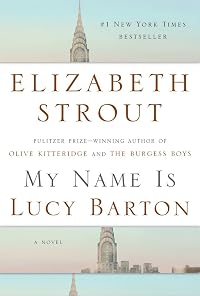
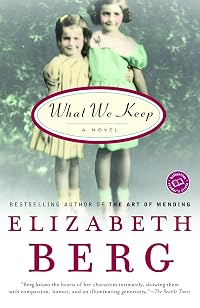


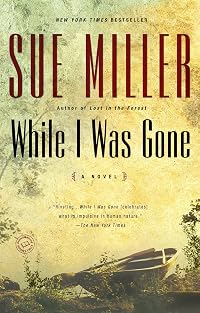


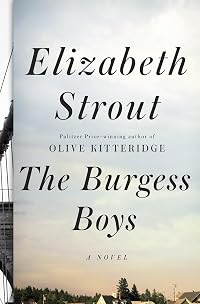
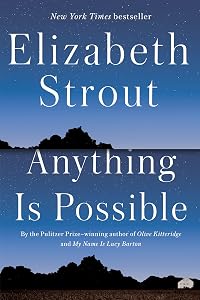





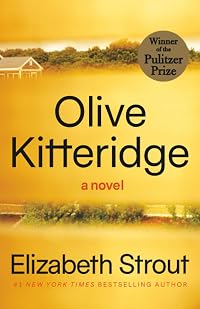



















Member Recommendations


Member Reviews
At least as good as Olive Kitteridge, with just as many perfectly drawn characters, and more of a story line. Some of the scenes in this novel will stay with me a long time; I feel as though I have already seen the movie. Strout's talent lies in nailing the way real people speak to each other, and in understating the drama of an ordinary life in such a way that we realize there truly is no such thing as "ordinary".
Review written in August 2008
Review written in August 2008
***NO SPOILERS***
A ruminative story about loneliness, missed opportunities, envy, yearning, and hope set in a small New England town, Amy and Isabelle focuses on the complex relationship between an unassuming mother and her reticent teenage daughter. Amy is the obedient, respectful daughter until her fortysomething substitute math teacher begins molesting her regularly. When Isabelle finds out, mother and daughter find their relationship suddenly strained and tense. Seemingly for the first time, Amy feels deep resentment, even hatred, toward her mother, and surprisingly, Isabelle realizes she feels similarly toward Amy.
Author Elizabeth Strout divided the narrative into two sections, with one focusing on Isabelle and the other on Amy. show more Although this kind of split organization is often not only unnecessary but also shortchanging, fortunately in this book it works, allowing both characters to be properly fleshed out. Amy and Isabelle are multi-dimensional, with complicated feelings (mainly their vulnerabilities and respective disappointments) coloring everyday goings-on.
What doesn’t work so well is Isabelle’s story. It has less spark than Amy’s. Where Amy’s is scandalous and bold, Isabelle’s is limp and depressed. Each character’s story mainly unfolds in the settings they spend the most time in. For Isabelle this is a secretarial job in a mill. For Amy this is in the local high school and all that concerns the school. There’s not much of interest to say about a workaday secretarial job. A high school, though...it has life and natural drama. Strout did try to infuse drama into Isabelle’s work setting via a cast of co-workers who sit around and gossip, but the gossip is inane and the co-workers uninteresting. Meanwhile, back in Amy’s world the story is taking a shocking turn.
Amy and Isabelle is filled with heartbreak. This is something Strout did well; she made this book very much a feeling book. Best of all, she concluded it with a quiet kind of happily ever after: a conclusion promising hope and huge possibility. It ends on just the right note.
NOTE: This review is cross-posted on The Story Graph and Goodreads. show less
A ruminative story about loneliness, missed opportunities, envy, yearning, and hope set in a small New England town, Amy and Isabelle focuses on the complex relationship between an unassuming mother and her reticent teenage daughter. Amy is the obedient, respectful daughter until her fortysomething substitute math teacher begins molesting her regularly. When Isabelle finds out, mother and daughter find their relationship suddenly strained and tense. Seemingly for the first time, Amy feels deep resentment, even hatred, toward her mother, and surprisingly, Isabelle realizes she feels similarly toward Amy.
Author Elizabeth Strout divided the narrative into two sections, with one focusing on Isabelle and the other on Amy. show more Although this kind of split organization is often not only unnecessary but also shortchanging, fortunately in this book it works, allowing both characters to be properly fleshed out. Amy and Isabelle are multi-dimensional, with complicated feelings (mainly their vulnerabilities and respective disappointments) coloring everyday goings-on.
What doesn’t work so well is Isabelle’s story. It has less spark than Amy’s. Where Amy’s is scandalous and bold, Isabelle’s is limp and depressed. Each character’s story mainly unfolds in the settings they spend the most time in. For Isabelle this is a secretarial job in a mill. For Amy this is in the local high school and all that concerns the school. There’s not much of interest to say about a workaday secretarial job. A high school, though...it has life and natural drama. Strout did try to infuse drama into Isabelle’s work setting via a cast of co-workers who sit around and gossip, but the gossip is inane and the co-workers uninteresting. Meanwhile, back in Amy’s world the story is taking a shocking turn.
Amy and Isabelle is filled with heartbreak. This is something Strout did well; she made this book very much a feeling book. Best of all, she concluded it with a quiet kind of happily ever after: a conclusion promising hope and huge possibility. It ends on just the right note.
NOTE: This review is cross-posted on The Story Graph and Goodreads. show less
Isabelle Goodrow lives in a small cottage in Shirley Falls with her teenage daughter, Amy. Isabelle works as secretary to the head of the local mill. She longs for more, from him and from life itself. But her real concern is with and for her daughter. Yet her daughter is also filled with longing, and in the absence of better guidance bestows her affections on the substitute math teacher, Mr. Robertson. Both women are naive and vulnerable in their own way and their disappointments, when they arise, complicate their already entwined lives. Surviving this unbearably hot summer in Shirley Falls is hard to conceive. Surviving life itself is even harder.
Elizabeth Strout’s first foray into the lives of the denizens of Shirley Falls is a show more sprawling, sultry novel of awakenings. Young Amy is unprepared for the emotions and sexual yearning that she is about to encounter. But Strout suggests that none of the residents of Shirley Falls is prepared in any real sense for the events in their lives. Is unpreparedness the condition of all life? Perhaps. But more to the point is the differing ways in which each of responds to these contingencies. Both understanding and misunderstanding our closest and dearest. And yet somehow, for the most part, we muddle through.
Very easy to recommend. show less
Elizabeth Strout’s first foray into the lives of the denizens of Shirley Falls is a show more sprawling, sultry novel of awakenings. Young Amy is unprepared for the emotions and sexual yearning that she is about to encounter. But Strout suggests that none of the residents of Shirley Falls is prepared in any real sense for the events in their lives. Is unpreparedness the condition of all life? Perhaps. But more to the point is the differing ways in which each of responds to these contingencies. Both understanding and misunderstanding our closest and dearest. And yet somehow, for the most part, we muddle through.
Very easy to recommend. show less
Wow, that was one intense and emotional read.
In Amy and Isabelle, a mother (Isabelle) struggles with her 16-year-old daughter Amy's emerging sexuality. Isabelle is a single parent, focused on making ends meet and doing what's right for her daughter. But she is completely unaware of Amy's true thoughts and feelings, and of what she gets up to during and after school. Amy falls hard for her new math teacher, Mr. Robertson, and he takes advantage of her. The story opens after their relationship is discovered, fills in the months leading up to that point, and then addresses the aftermath of discovery.
This was an emotionally charged story on many levels. Amy's naiveté, her strong desire for independence, her loathing of parental authority, show more and her immaturity that led to unhealthy decisions ... these all rang true to me. And Isabelle. Poor Isabelle, trying so hard to forge a healthy relationship with her daughter, but alienating her instead, and unwittingly passing on some of her own life mistakes. As the mother of teenage daughters myself, I could feel her pain. Isabelle's response to Amy's relationship with Mr. Robertson absolutely tore me apart: a single act of uncontrolled anger nearly destroyed her relationship with Amy.
In the wrong hands, this story could be trite and overblown. But Elizabeth Strout has amazing talent. First, she writes beautiful descriptive prose, putting the reader right into the scene:
It rained lightly for two more days and then the sky suddenly cleared just as darkness fell, leaving for a few moments a strip of luminescent afterglow along the horizon from a sunset that had not been seen. ... By early morning a delicate strip of clouds high overhead looked like a thin layer of frosting spread across the side of some blue ceramic bowl. Mourning doves cooed unseen in the fine light; cardinals and hermit thrushes darted from one tree to another, calling out. (p. 246)
Strout also develops rich, complex characters and relationships. Take, for example, the women Isabelle works with in the office at a local mill:
So there were a variety of joys, large and small, taking place throughout the town, including a hearty laugh between Dottie Brown and Fat Bev as they sat at their desks in the office room, the kind of laugh (in this case regarding Dottie Brown's mother-in-law) that comes from two women who have known each other for many years, who take comfort and joy in the small, familiar expressions of one another, and who feel, once the laugh has run its course -- with an occasional small giggle still left, and a tissued patting of the eyes -- a lingering warmth of human connection, the belief that one is not, after all, so very much alone. (p. 125)
But perhaps most powerful is her unique way of foreshadowing. She'll drop a tiny detail into the story, one that seems inconsequential until she adds another tiny detail, and then another, each many pages apart. It's a bit like adding hot sauce to chili: add a drop, taste, add another drop, taste, add another drop, and suddenly your mouth is on fire. I found myself scrutinizing every tiny detail: was this one important? Where was she going with this? She's not going there, is she?! In this way she built up parallel stories of mother and daughter to an intense climax. And at that point I had to set the book aside, breathe deeply, and go hug my own daughters. show less
In Amy and Isabelle, a mother (Isabelle) struggles with her 16-year-old daughter Amy's emerging sexuality. Isabelle is a single parent, focused on making ends meet and doing what's right for her daughter. But she is completely unaware of Amy's true thoughts and feelings, and of what she gets up to during and after school. Amy falls hard for her new math teacher, Mr. Robertson, and he takes advantage of her. The story opens after their relationship is discovered, fills in the months leading up to that point, and then addresses the aftermath of discovery.
This was an emotionally charged story on many levels. Amy's naiveté, her strong desire for independence, her loathing of parental authority, show more and her immaturity that led to unhealthy decisions ... these all rang true to me. And Isabelle. Poor Isabelle, trying so hard to forge a healthy relationship with her daughter, but alienating her instead, and unwittingly passing on some of her own life mistakes. As the mother of teenage daughters myself, I could feel her pain. Isabelle's response to Amy's relationship with Mr. Robertson absolutely tore me apart: a single act of uncontrolled anger nearly destroyed her relationship with Amy.
In the wrong hands, this story could be trite and overblown. But Elizabeth Strout has amazing talent. First, she writes beautiful descriptive prose, putting the reader right into the scene:
It rained lightly for two more days and then the sky suddenly cleared just as darkness fell, leaving for a few moments a strip of luminescent afterglow along the horizon from a sunset that had not been seen. ... By early morning a delicate strip of clouds high overhead looked like a thin layer of frosting spread across the side of some blue ceramic bowl. Mourning doves cooed unseen in the fine light; cardinals and hermit thrushes darted from one tree to another, calling out. (p. 246)
Strout also develops rich, complex characters and relationships. Take, for example, the women Isabelle works with in the office at a local mill:
So there were a variety of joys, large and small, taking place throughout the town, including a hearty laugh between Dottie Brown and Fat Bev as they sat at their desks in the office room, the kind of laugh (in this case regarding Dottie Brown's mother-in-law) that comes from two women who have known each other for many years, who take comfort and joy in the small, familiar expressions of one another, and who feel, once the laugh has run its course -- with an occasional small giggle still left, and a tissued patting of the eyes -- a lingering warmth of human connection, the belief that one is not, after all, so very much alone. (p. 125)
But perhaps most powerful is her unique way of foreshadowing. She'll drop a tiny detail into the story, one that seems inconsequential until she adds another tiny detail, and then another, each many pages apart. It's a bit like adding hot sauce to chili: add a drop, taste, add another drop, taste, add another drop, and suddenly your mouth is on fire. I found myself scrutinizing every tiny detail: was this one important? Where was she going with this? She's not going there, is she?! In this way she built up parallel stories of mother and daughter to an intense climax. And at that point I had to set the book aside, breathe deeply, and go hug my own daughters. show less
Amy and Isabelle arrived at a more satisfying conclusion than I expected it to as I was going along, but I was still fairly disappointed with it. The novel is carefully observed and the characters sharply drawn, but there is an air about the thing of a fiddly preciseness which sucks the life out of both the story and the prose. All elements of the plot--indeed, of the very sentences--slot together so cloyingly perfectly that no surprise, no joy, no anticipation, no heart, lives on the page. And life itself, in Amy and Isabelle, seems to be small, dreary, hopeless, and without joys. This is partly the point of Amy and Isabelle as characters, and there is some glimmer of hope of its lifting for Isabelle at least in the end. But by God show more does it make for wearisome, frustrating, teeth-grinding reading. Eat a cookie, Isabelle! Pick a flower! Do something. I do not expect, or even want, my books to be all teacups and rose petals, but I am suspicious when every character who populates a novel is less happy than everyone I know. People, whole towns, do not live like this, surely, not even in books?
In my review of Prep the other week I said that I kept waiting for Lee to grow up, and I'm itching to say something to the same effect here about adolescent Amy and her (pathetic, blind, aching) love for (creepy, smarmy, hateful) Mr. Robertson. But maybe it's the opposite that we need. Grow down! Footie jimjams and adventures under the stairs for everyone! Be happy! And don't, for the love of all things holy, lose your faith in everyone. And eat a GD cookie. show less
In my review of Prep the other week I said that I kept waiting for Lee to grow up, and I'm itching to say something to the same effect here about adolescent Amy and her (pathetic, blind, aching) love for (creepy, smarmy, hateful) Mr. Robertson. But maybe it's the opposite that we need. Grow down! Footie jimjams and adventures under the stairs for everyone! Be happy! And don't, for the love of all things holy, lose your faith in everyone. And eat a GD cookie. show less
On the surface, this is the story of an awful summer, so unbearably hot that crops don't grow and the river smells like death. A teenage girl is caught in a compromising situation with her teacher and this drives a wedge between her and her prim, socially awkward single mother. As mother and daughter spend the summer working together in the office of the local mill factory, they find themselves entangled in not only their own quiet drama, but those of the other women who work there.
I picture Shirley Falls as Grover's Corners 60 years after [b:Our Town|205476|Our Town|Thornton Wilder|https://d.gr-assets.com/books/1442891231s/205476.jpg|3119231]. Things have gotten a whole lot less wholesome, but the small town New England surface is show more still there. The church ladies are trying to keep up appearances while one battles breast cancer and another has an affair. Two lonely educators are caught in a quiet, desperate love affair. The mill office ladies all have their own quiet (and sometimes not so quiet) troubles, including my favorite, "Fat Bev." Strout does the quiet follow-up (telling the reader what the future holds for various characters) thing that I love.
While the larger story of Shirley Falls plays an important role in the novel, Amy and Isabelle, the girl and her mother, are the beating heart. Their loneliness and heartbreak are palpable.
This was my first Elizabeth Strout novel, but it's such a strong debut that it won't be my last. show less
I picture Shirley Falls as Grover's Corners 60 years after [b:Our Town|205476|Our Town|Thornton Wilder|https://d.gr-assets.com/books/1442891231s/205476.jpg|3119231]. Things have gotten a whole lot less wholesome, but the small town New England surface is show more still there. The church ladies are trying to keep up appearances while one battles breast cancer and another has an affair. Two lonely educators are caught in a quiet, desperate love affair. The mill office ladies all have their own quiet (and sometimes not so quiet) troubles, including my favorite, "Fat Bev." Strout does the quiet follow-up (telling the reader what the future holds for various characters) thing that I love.
While the larger story of Shirley Falls plays an important role in the novel, Amy and Isabelle, the girl and her mother, are the beating heart. Their loneliness and heartbreak are palpable.
This was my first Elizabeth Strout novel, but it's such a strong debut that it won't be my last. show less
Wow - großartig. Ich war ja erst skeptisch, weil ich eigentlich keine Lust auf eine Geschichte mit einer Affäre zwischen einem Lehrer und einer Schülerin hatte, aber das Buch hat mich doch sehr schnell in seinen Bann gezogen. Sowohl Mutter als auch Tochter waren glaubwürdig dargestellt, Amy hat mich gelegentlich fast zur Verzweiflung gebracht mit ihrem Verhalten (das für ein Mädchen ihres Alters völlig normal ist) und ihrer Naivität, mit der sie glaubt, in ihrem Mathelehrer die große Liebe und den Mann fürs Leben gefunden zu haben. Aber auch ihre Mutter Isabelle ist nicht ganz einfach - verklemmt, hoffnungslos verliebt in ihren verheirateten Chef und viel zu sehr fixiert darauf, was ihr Umfeld von ihr halten könnte. Ich show more hätte mir in der Mitte des Buches nicht vorstellen können, wie die Geschichte für die beiden gut ausgehen könnte.
Eine absolute Leseempfehlung - kommt in meinen Augen an die Olive Kitteridge Reihe der Autorin heran. Außerdem habe ich hier wahrscheinlich meine Nebenfigur dieses Jahres gefunden - die Kollegin Fat Bev ist in so vielerlei Hinsicht eine großartige Figur. show less
Eine absolute Leseempfehlung - kommt in meinen Augen an die Olive Kitteridge Reihe der Autorin heran. Außerdem habe ich hier wahrscheinlich meine Nebenfigur dieses Jahres gefunden - die Kollegin Fat Bev ist in so vielerlei Hinsicht eine großartige Figur. show less
Members
- Recently Added By
Published Reviews
ThingScore 75
Mutter-Tochter-Romane laufen schnell Gefahr, ins Triviale abzudriften, aber Strout gelingt es, diese Klippen zu umschiffen, indem sie sich nicht klaustrophobisch auf ihre Hauptfiguren konzentriert, sondern zugleich das Porträt einer Kleinstadt entwirft, deren Bewohner mit den vielfältigsten, ganz eigenen Stolpersteinen des Lebens umzugehen haben.
added by Indy133
Lists

Pen/Faulkner Winners and Finalists
178 works; 9 members

Mothers and Daughters
114 works; 11 members

Books Set in Small Towns and Villages
278 works; 16 members

Works referenced in Welcome to the Hyunam-Dong Bookshop
19 works; 1 member
Author Information

23+ Works 33,384 Members
Elizabeth Strout (born January 6, 1956) is an American author of fiction. She was born in Portland, Maine. After graduating from Bates College, she spent a year in Oxford, England. In 1982 she graduated with honors, and received both a law degree from the Syracuse University College of Law and a Certificate of Gerontology from the Syracuse School show more of Social Work. Strout wrote Amy and Isabelle over the course of six or seven years, which when published was shortlisted for the 2000 Orange Prize and nominated for the 2000 PEN/Faulkner Award for fiction. Amy and Isabelle was made into a television movie starring Elisabeth Shue and was produced by Oprah Winfrey's studio, Harpo Films. Strout was a NEH (National Endowment for the Humanities) professor at Colgate University during the Fall Semester of 2007, where she taught creative writing. She was also on the faculty of the MFA program at Queens University of Charlotte in Charlotte, North Carolina. In 2009 Strout was honored with a Pulitzer Prize for Fiction for Olive Kitteridge, a collection of connected short stories she wrote about a woman and her immediate family who lived on the coast of Maine. Strout also wrote The Burgess Boys in 2013 which made The New York Times Best Seller List. Ms. Strout's title, My name is Lucy Barton, made the New York Times Best Seller List in 2016. Her newest title, Anything is Possible (2017), won the 2018 Story Prize. (Bowker Author Biography) show less
Some Editions
Awards and Honors
Series
Belongs to Publisher Series
Work Relationships
Is contained in
Common Knowledge
- Canonical title
- Amy and Isabelle
- Original title
- Amy and Isabelle
- Original publication date
- 1998
- People/Characters
- Amy Goodrow; Isabelle Goodrow; Mr. Robertson (Thomas)
- Important places
- Shirley Falls, Maine, USA
- Related movies
- Amy & Isabelle (2001 | IMDb)
- Dedication
- For Zarina
- First words
- It was terribly hot that summer Mr. Robertson left town, and for a long while the river seemed dead.
- Quotations
- Some thought the world might be coming to an end, and even those women not inclined to go that far had to admit it might not have been a good idea sending men into space, that we had no business, really, walking around up the... (show all)re on the moon.
But the heat was relentless and the fans rattling in the windows seemed to be doing nothing at all, and eventually the women ran out of steam, sitting at their big wooden desks with their legs slightly apart, lifting their ha... (show all)ir from the back of their necks.
"I can't shut up for five minutes," she said, and Amy, keeping an eye on the clock one day, found this to be true.
Here was something new to fear—her daughter's pity for her ignorance.
What followed was something that Isabelle would speak of only once, years later, when her life had become a very different one. Amy, on the other hand, would later in her adulthood tell a number of people, until she realized... (show all) finally that it was one story in a million and ultimately didn't matter to anyone.
So for Amy and Isabelle—their lives had changed completely. When they spoke to one another, their words seemed pushed through the air like blocks of wood.
Isabelle, lying on her bed in the summer darkness, a darkness that seemed porous and soft and something you could almost put your hand into, found it necessary, as she did on some of these nights, to go over it all once more ... (show all)in her head, as though this dreadful and wearying process of repetition was the only way she could absorb her—and her daughter's—present state.
The rain began during the night. It began softly, so softly that at first it did not seem to be falling from the sky as much as simply appearing in the darkened air.
It was like she had done a murder—it was like that.
Someone separate, Isabelle thought again, touching tentatively a lock of hair that fell across Amy's cheek.
Lives, flimsy as fabric, could be snipped capriciously with the shears of random moments of self-interest.
But what could you do? Only keep going. People kept going; they had been doing it for thousands of years. You took the kindness offered, letting it seep as far in as it could go, and the remaining dark crevices you carried ar... (show all)ound with you, knowing that over time they might change into something almost bearable.
"We've destroyed your living room," Fat Bev said to Isabelle. "We might as well make pancakes and wreck your kitchen."
Bewildering that you could harm a child without even knowing, thinking all the while you were being careful, conscientious.
All the love in the world couldn't prevent the awful truth: You passed on who you were.
'What we do matters' is a thought Isabelle had again and again, as though just now, well into adult years, she was figuring this out.
She would pray, "Oh please, God. Help us to be merciful to ourselves."
But why, thought Peg Dunlap, rushing down the street, should love be so hard?
Most of them did the best they could.
And not Isabelle Goodrow either, who, in spite of moments of coherence and hope, watched her daughter's anxious face in the evenings and knew that she had failed the girl in numerous ways; who, in driving to a small cemetery ... (show all)in Hennecock and hunting out a small girl's grave, knew that she was placing flowers there not only for the murdered child, but somehow for her own child, too, and for the mother of Debby Kay Dorne, who Isabelle imagined was living her own lifetime of private, ravaging regrets.
Always in her memory the leaves would be golden, the turnpike lined with golden-leaved trees, showered in the sunlight of morning, stiff with autumn.
Amy raised both eyebrows and drew her breath in sharply as she smiled, as though to say, "Okay, let's go," and for a moment they were united, as if they had both agreed to blast off in a rocket and it was countdown time. For ... (show all)years Isabelle would remember that moment and wish she had spoken, had told the girl she loved her and always would, because for Isabelle, as she pulled out onto the highway, it began to feel more and more that it was Amy who was blasting off, Amy who was leaving forever, that Isabelle was only there now to pilot the ship, deliver the girl into the lap of her family, of siblings, of relatives who were hers, not Isabelle's.
It marked for her the endless days of Amy's solitary childhood, and those endless hot days of that terrible summer. All that had once been endless would by then have ended, and Isabelle, at different places and moments in the... (show all) years to come, would sometimes be surrounded by silence and find in herself on the repeated word "Amy." - Last words
- (Click to show. Warning: May contain spoilers.)"Amy," she would think, "Amy," remembering this day's chilly golden air.
(Click to show. Warning: May contain spoilers.)"Amy," she would think, "Amy," remembering this day's chilly, golden air. - Blurbers
- Munro, Alice
- Original language*
- englanti
*Some information comes from Common Knowledge in other languages. Click "Edit" for more information.
Classifications
Statistics
- Members
- 2,425
- Popularity
- 8,025
- Reviews
- 90
- Rating
- (3.71)
- Languages
- 12 — Catalan, Danish, Dutch, English, Finnish, French, German, Italian, Norwegian, Polish, Spanish, Swedish
- Media
- Paper, Audiobook, Ebook
- ISBNs
- 46
- ASINs
- 23