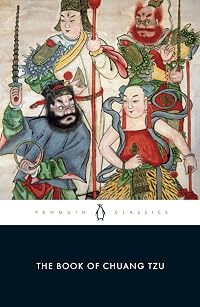
The Book of Chuang Tzu
by Zhuangzi
On This Page
Description
"The Book of Chuang Tzu" is an ancient and important Chinese spiritual text dating from the 4th century BC. Together with the "Tao Te Ching", "The Book of Chuang Tzu" is an important foundational text for the Taoist philosophy. Notable for its stark difference with the Chinese philosophy of Confucius, Taoism does not encourage one to live a strict life according to a rigid set of principles, but rather values following a more flexible path that can adapt to the irregular rhythms of life, or show more the "way". Scholars believe that some of "The Book of Chuang Tzu" was, written by Chuang Tzu himself, a minor official, during the Warring States period of Chinese history who attracted national attention with his brilliant prose and poetry. Chuang Tzu's work has withstood the test of time with its humorous and clever anecdotes, its lyrical and poetic observations of the natural world, and its startlingly wise insight into human nature. With an emphasis on living a less human-focused life that is more, in tune with nature, "The Book of Chuang Tzu" had a profound influence on the development of Zen Buddhism and continues to be a source of guidance and wisdom to countless readers the world over. This edition follows the translation of Herbert A. Giles. show lessTags
Recommendations









Member Recommendations

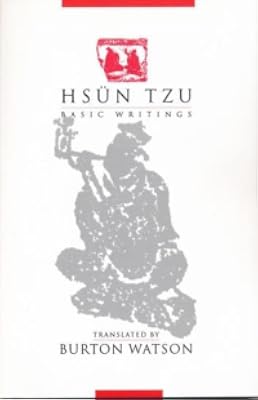
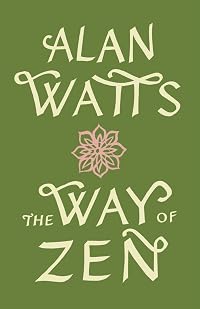
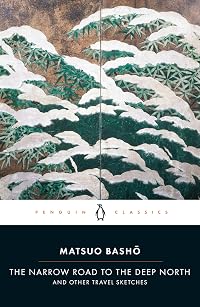
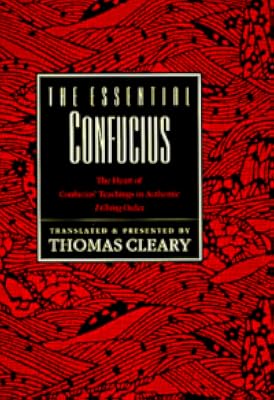
JuliaMaria Schleichert erklärt die chinesische Philosophie einfach gut, darunter auch den Zhuangzi.
Member Reviews
Chuang Tzu was, with Lao Tzu, one of the main thinkers of Taoism. If Lao Tzu left us the Tao Te Ching, a poetical collection of verses, beautiful but, honestly, at time quite difficult to fully get, Chuang Tzu deepen his philosophy by taking a completely different approach: gathering stories and anecdotes portraying a whole set of historical or fictional characters, so as to shape a funny, original, and subversive anthology. The Butterfly Dream, the metaphor of the frog trapped in a well... They are all in here!
Sure, scholars still quarrel in between themselves deciding which tales were actually written by him and which ones by his disciples. But who cares? They read as a whole, and their messages won't fail to strike a few chords.
He show more obviously defends the three golden treasures (humility, simplicity, compassion). He invites us to let go, guided by the Tao yet aware of everything that could threaten our internal peace and happiness. He, above all, goes even further; by rejecting those 'intellectualising' the Tao, these scholars of the Hundred Schools that he accuses of overcomplicating it all and so confusing us. Confucius, especially, gets his fare share of criticism! Chaung Tzu indeed had no patience for conventions and rituals, that he thoughts were killing off spontaneity and freedom.
Obviously, as an Ancient text it has its fair share of misguided outlook. For instance, he believed mankind to be born with the Skies and Earth, and so man to be naturally good and perfectly capable to live in full harmony with a supposed compassionate environment. Yet, it can also be strikingly insightful; as when he laughs at our arrogance in defining ourselves as the pinacle of Creation, mocking by the same token our constant and silly anthropocentrism when looking at the world. You get it: there are in here some lessons for everyone...
Radical, funny and sharp, these little stories surely are provocative. Here's a witty collection that deserves to be discovered! show less
Sure, scholars still quarrel in between themselves deciding which tales were actually written by him and which ones by his disciples. But who cares? They read as a whole, and their messages won't fail to strike a few chords.
He show more obviously defends the three golden treasures (humility, simplicity, compassion). He invites us to let go, guided by the Tao yet aware of everything that could threaten our internal peace and happiness. He, above all, goes even further; by rejecting those 'intellectualising' the Tao, these scholars of the Hundred Schools that he accuses of overcomplicating it all and so confusing us. Confucius, especially, gets his fare share of criticism! Chaung Tzu indeed had no patience for conventions and rituals, that he thoughts were killing off spontaneity and freedom.
Obviously, as an Ancient text it has its fair share of misguided outlook. For instance, he believed mankind to be born with the Skies and Earth, and so man to be naturally good and perfectly capable to live in full harmony with a supposed compassionate environment. Yet, it can also be strikingly insightful; as when he laughs at our arrogance in defining ourselves as the pinacle of Creation, mocking by the same token our constant and silly anthropocentrism when looking at the world. You get it: there are in here some lessons for everyone...
Radical, funny and sharp, these little stories surely are provocative. Here's a witty collection that deserves to be discovered! show less
Chuang Tzu is the author of the first seven chapters, and they are brilliantly chaotic and muddy. In other words, he invented a style of writing that reflects the character of the Taoist sage as described in the Tao Te Ching. It seems as though he has turned everything on its head; however, if you read these passages carefully and recognize the intended humor, they'll make sense to you. The remaining chapters are believed to be by his students. They are not nearly as clever. Burton Watson's introduction is helpful in pointing the way to understanding this extraordinary book.
A lot of fun to read and looking forward to reading more. Nothing conveys a philosophy better than laying out the supposed world it speaks to than through a series of poems, stories, discourses and expositions. Initially grabbed this due to a quote in Feyerabend's Discourses and reading it in context made it all the more interesting and enlightening, so I'll complete this short comment with the same (though many others were tempting, you just can't beat this concision):
> The Emporer of the South Sea is known as Change. The Emperor of the North Sea is called Dramatic. The Emperor of the Centre is called Chaos. Change and Dramatic met every so often in the region of Chaos. Chaos always treated them kindly and virtuously. Change and show more Dramatic said, "Everyone has seven orifices so they can see, hear, eat and breathe. Chaos does not have these. Let us bore some holes into him." Each day they bored a hole into Chaos…, but on the seventh day Chaos died.
So many potential goodies packed into one story told in one paragraph. show less
> The Emporer of the South Sea is known as Change. The Emperor of the North Sea is called Dramatic. The Emperor of the Centre is called Chaos. Change and Dramatic met every so often in the region of Chaos. Chaos always treated them kindly and virtuously. Change and show more Dramatic said, "Everyone has seven orifices so they can see, hear, eat and breathe. Chaos does not have these. Let us bore some holes into him." Each day they bored a hole into Chaos…, but on the seventh day Chaos died.
So many potential goodies packed into one story told in one paragraph. show less
I'm a budding biologist taking a pit stop in my course work to enjoy some eastern philosophy. I found the Tao Te Ching to be too detached and esoteric from the every day. The Chuang Tzu seems to be a cure. Involving anthropomorphic creatures and humorous personages belonging to cicadas and doves as well as humans. Its refreshing and enjoyable. The common sense employed by Chuang Cho is sharp and cuts to the bone.
Sigh, another work of philosophy that I just couldn't finish. Perhaps I am a victim of Western linear thinking, but endless anecdotes that don't make any sense just make me run out of steam. Add to that the footnotes which make it clear that much of the translation is educated guesswork and I wonder what the point is.
Chuang Tzu, rightly called "Genius of the Absurd" is unquestionably the father of a new type of a philosophy and satire united in a complementary union. Unknown to the West until the nineteen century
he must be regarded, in part, as an ancient predecessor of our modern western philosophical-satirical literature ... there are also many brilliant flashes of philosophical insight.
he must be regarded, in part, as an ancient predecessor of our modern western philosophical-satirical literature ... there are also many brilliant flashes of philosophical insight.
By the founder of Taoism; anti-Confucian; need more research on translation.
Members
- Recently Added By
Lists

100 Books to Read in a Lifetime (That Are Older Than 200 Years)
415 works; 176 members

Greatest Books, allegedly
484 works; 9 members

Philip Ward's Lifetime Reading Plan
592 works; 22 members
Author Information

Some Editions
Awards and Honors
Awards
Series
Belongs to Publisher Series
Work Relationships
Is contained in
Contains
Has the adaptation
Common Knowledge
- Canonical title
- The Book of Chuang Tzu
- Original title
- 南華經; The Complete Works of Chuang Tzu
- Original publication date
- 1968 (English translation ∙ B. Watson) (English translation ∙ B. Watson); 2007 (Nederlandse vertaling / K. Schipper) (Nederlandse vertaling / K. Schipper)
- Canonical DDC/MDS
- 299.514
Classifications
- Genres
- Philosophy, Religion & Spirituality, Nonfiction
- DDC/MDS
- 299.514 — Religion Other religions Shintoism/Taoism/Other Mythologies Of Asian Origin Religions of Chinese Origin Taoism
- LCC
- BL1900 .C46 .E5 — Philosophy, Psychology and Religion Religions. Mythology. Rationalism Religions. Mythology. Rationalism History and principles of religions Asian. Oriental By region or country China Taoism
- BISAC
Statistics
- Members
- 1,068
- Popularity
- 24,084
- Reviews
- 13
- Rating
- (4.12)
- Languages
- 7 — Chinese, Dutch, English, French, German, Italian, Spanish
- Media
- Paper, Ebook
- ISBNs
- 48
- ASINs
- 20