On This Page
Description
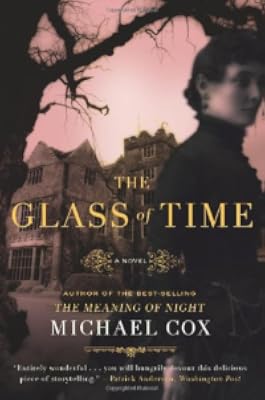
Taking a job as a Victorian lady's maid in the household of baroness Tansor, nineteen-year-old orphan Esperanza Gorst hides the truth about her mission to uncover her mistress's secrets about a past injustice that has affected Esperanza's own life. By the author of The Meaning of Night.Tags
Recommendations


























Member Recommendations
historycycles "The Meaning of Night" is required reading in order to enjoy "The Glass of Time," which is the sequel.
40

sskwire The greatest novel by one of the greatest Victorian suspense writers. I suspect Cox is a huge fan, and anyone who likes his work won't be able to put down "The Woman in White."
40
Member Reviews
Like The Meaning of Night, its predecessor, The Glass of Time is a page turning period mystery about identity, the nature of secrets, and what happens when past obsessions impose themselves on an unwilling present.
In the autumn of 1876, nineteen year-old orphan Esperanza Gorst arrives at the great country house of Evenwood to become a lady's maid to the twenty-sixth Baroness Tansor. But Esperanza is no ordinary servant. She has been sent by her guardian, the mysterious Madame de l'Orme, to uncover the secrets that her new mistress has sought to conceal, and to set right a past injustice in which Esperanza's own life is bound up. At Evenwood she meets Lady Tansor's two dashing sons, Perseus and Randolph, and finds herself enmeshed in a show more complicated web of seduction, intrigue, deceit, betrayal, and murder.
Few writers are as gifted at evoking the sensibility of the nineteenth century as Michael Cox, who has made the world of Charles Dickens and Wilkie Collins his own. Stunning book but I would recommend you read The Meaning of Night for a richer experience.
The narrator, young Esperanza, has an extraordinary voice - spirited, witty, and intelligent. The author’s incredible storytelling with vivid language and lush imagery such as tiptoeing around a vast, dark mansion at night with a flickering candle and the horror of getting locked in a marbled mausoleum making this a delicious slice of Victorian Gothic. It is a story full of lies, letters, guilt and revenge; but above all love … “Love, and the secrets it spawned, betrayed us all.”
Michael Cox is badly missed. show less
In the autumn of 1876, nineteen year-old orphan Esperanza Gorst arrives at the great country house of Evenwood to become a lady's maid to the twenty-sixth Baroness Tansor. But Esperanza is no ordinary servant. She has been sent by her guardian, the mysterious Madame de l'Orme, to uncover the secrets that her new mistress has sought to conceal, and to set right a past injustice in which Esperanza's own life is bound up. At Evenwood she meets Lady Tansor's two dashing sons, Perseus and Randolph, and finds herself enmeshed in a show more complicated web of seduction, intrigue, deceit, betrayal, and murder.
Few writers are as gifted at evoking the sensibility of the nineteenth century as Michael Cox, who has made the world of Charles Dickens and Wilkie Collins his own. Stunning book but I would recommend you read The Meaning of Night for a richer experience.
The narrator, young Esperanza, has an extraordinary voice - spirited, witty, and intelligent. The author’s incredible storytelling with vivid language and lush imagery such as tiptoeing around a vast, dark mansion at night with a flickering candle and the horror of getting locked in a marbled mausoleum making this a delicious slice of Victorian Gothic. It is a story full of lies, letters, guilt and revenge; but above all love … “Love, and the secrets it spawned, betrayed us all.”
Michael Cox is badly missed. show less
A history of mystery and secrets, “The Glass of Time” is fluid and consistently kept in its own time period of the 19th century. It is also a tragic love story with catastrophic reverberations constantly rippling outward. A story in 5 Acts, it unfolds seamlessly through the voice of Esperanza Alice Gorst and the exchanges of letters and written recollections she receives. From the moment her guardian Madame de l’Orme tells her there is a mystery, but not what the mystery is, she takes on a new life in a new country with one goal in mind, the completion of the “Great Task”. Esperanza has been cared for by her guardian and her tutor Mr. Basil Thornhaugh all her life until this point. Now they have compelled her at the age of 19 show more to go to England and apply to become a lady’s maid, specifically to the twenty-sixth Baroness Tansor, in order to spy and yet become the confidante of her Ladyship.
In the Prologue we first meet Esperanza, and she invites the reader into her life right away. The reader becomes a part of the story in a sense. She keeps a “Book of Secrets” as a record of what she discovers. Even though there were times throughout the book that I anticipated certain of the reveals, it did not take away from the journey and in fact enhanced it. Such intrigue, murder, mayhem, stolen birthright; all the qualities one might expect to find in a 19th century novel! Michael Cox has written this book so fluently in the language, conduct and customs of the times that I found myself surprised at the end of the book that it had been written by a man even though I knew that at the start, it read so much like a lady’s journal. The unfolding of the history of Esperanza and the Duport family is like peeling an onion, layers upon layers of duplicity. In each Act Esperanza, now referred to as Alice, finds a little more of her history is revealed to her by letters from her guardian. There are three main letters which will contain what is required of her next in her performance of the “Great Task” with a hint of her reason for being there.
The characters are well-described and grow throughout the book. The method of revealing secrets over a period of time is tantalizing. I enjoyed the book very much and would recommend it to fans of historical fiction, historical mysteries, or any other mysteries. show less
In the Prologue we first meet Esperanza, and she invites the reader into her life right away. The reader becomes a part of the story in a sense. She keeps a “Book of Secrets” as a record of what she discovers. Even though there were times throughout the book that I anticipated certain of the reveals, it did not take away from the journey and in fact enhanced it. Such intrigue, murder, mayhem, stolen birthright; all the qualities one might expect to find in a 19th century novel! Michael Cox has written this book so fluently in the language, conduct and customs of the times that I found myself surprised at the end of the book that it had been written by a man even though I knew that at the start, it read so much like a lady’s journal. The unfolding of the history of Esperanza and the Duport family is like peeling an onion, layers upon layers of duplicity. In each Act Esperanza, now referred to as Alice, finds a little more of her history is revealed to her by letters from her guardian. There are three main letters which will contain what is required of her next in her performance of the “Great Task” with a hint of her reason for being there.
The characters are well-described and grow throughout the book. The method of revealing secrets over a period of time is tantalizing. I enjoyed the book very much and would recommend it to fans of historical fiction, historical mysteries, or any other mysteries. show less
I'm sorry I'm finished this book! I enjoyed so many aspects of it. The setting of the Victorian Era, the intelligence and strength with which the characters were endowed, the manner in which the story progressed and unfolded, and the voice with which the story was told.
The heroine is kept in darkness as much as the reader and together you discover all the many twists, turns, and secrets that this narrative is packed full with. Esperanza comes to her employment at the great country house of Evenwood, home of the 26th Baroness Tansor, already aware of a great mystery that will impact her life once all is revealed. Such begins the unraveling of a complicated web of intrigue, deceit, murder, and betrayal.
This is not a fast-moving, show more hard-hitting story, but it does move along at a consistent pace. I found myself totally involved with the characters and trying to put the clues together to uncover the secrets. A definite challenge since some secrets aren't revealed until the end. I enjoyed the writing style of Michael Cox to such an extent that I've already been looking for his previous novel in local bookstores, but have so far been unsuccessful.
I recommend this book to anyone who has a love for the Victorian Era, and enjoys solving a mystery. show less
The heroine is kept in darkness as much as the reader and together you discover all the many twists, turns, and secrets that this narrative is packed full with. Esperanza comes to her employment at the great country house of Evenwood, home of the 26th Baroness Tansor, already aware of a great mystery that will impact her life once all is revealed. Such begins the unraveling of a complicated web of intrigue, deceit, murder, and betrayal.
This is not a fast-moving, show more hard-hitting story, but it does move along at a consistent pace. I found myself totally involved with the characters and trying to put the clues together to uncover the secrets. A definite challenge since some secrets aren't revealed until the end. I enjoyed the writing style of Michael Cox to such an extent that I've already been looking for his previous novel in local bookstores, but have so far been unsuccessful.
I recommend this book to anyone who has a love for the Victorian Era, and enjoys solving a mystery. show less
Enormously satisfying sequel, of sorts, to Cox's The Meaning of Night, though it can be read independently from the earlier novel. In 1876, twenty years after the previous novel's action concludes, 19-year-old Esperanza Gorst arrives at Evenwood hoping to be hired as lady's maid to the 26th Baroness Tansor, Emily Duport (formerly Carteret). Esperanza obtains the position and quickly works her way into the affections of her employer and the entire Duport family, gaining favour and privilege while learning secret after secret as the months and seasons pass. Cox employs every conceivable plot device of the Victorian period gothic mystery to stunning effect. The period setting is beautifully evoked, and even the minor characters are quirky show more and memorable. Filled with danger and suspense, this novel is utterly absorbing. A masterful performance. show less
I loved this as I loved its prequel 'The Meaning of Night.' This is Esperanza Gorst's Book of Secrets she keeps as she works 'undercover,' so to speak, as a ladies maid to Lady Tansor - the former Miss Emily Cateret - whom readers of 'The Meaning of Night' are well familiar with. Esperanza, an orphan, brought up like a lady in Paris, is sent in to the heart of Evenwood by her mysterious guardian and her tutor on a venture that is only slowly revealed to her as the chapters fly by.
I love Cox's Victorian gothic style. The secrets only the servants know, the old estate, the haunting past, the letters, dying young, forbidden loves, inheritance, revenge. . . The story develops slowly but lusciously. At times, I thought it was more show more predictable than its predecessor, and I guessed alot of the big reveals - but it really did not take away any of my enjoyment. I think I liked the first novel a touch better because of the charismatic Edward Glyver; Esperanza is not quite his equal - but still fabulous!
I am sad to hear that Mr. Cox is deceased. His writing is right in my wheelhouse and the type of novel I enjoy most. Intelligent, excellent characterization, authentic period detail, intricate plot. Lovers of the modern Gothic such as those written by Sarah Waters should not miss Cox's two mini-masterieces. Lovers of the originals from which this novel draws inspiration - 'Bleak House,' 'The Woman in White' etc.. should check this out. Definitely read 'The Meaning of Night' first, though. show less
I love Cox's Victorian gothic style. The secrets only the servants know, the old estate, the haunting past, the letters, dying young, forbidden loves, inheritance, revenge. . . The story develops slowly but lusciously. At times, I thought it was more show more predictable than its predecessor, and I guessed alot of the big reveals - but it really did not take away any of my enjoyment. I think I liked the first novel a touch better because of the charismatic Edward Glyver; Esperanza is not quite his equal - but still fabulous!
I am sad to hear that Mr. Cox is deceased. His writing is right in my wheelhouse and the type of novel I enjoy most. Intelligent, excellent characterization, authentic period detail, intricate plot. Lovers of the modern Gothic such as those written by Sarah Waters should not miss Cox's two mini-masterieces. Lovers of the originals from which this novel draws inspiration - 'Bleak House,' 'The Woman in White' etc.. should check this out. Definitely read 'The Meaning of Night' first, though. show less
This is sort of sequel to Cox's earlier The Meaning of Night, but works more or less independently--I have read The Meaning of Night but couldn't really remember the details, only that I found it really absorbing at the time. This one didn't have the same effect, and felt like going over the old ground and in a much less engaging fashion. Esperanza as a protagonist seemed a bit flat, and had no chance of becoming an interesting character on her own right because her only role was that of a tool of putting old injustices to right. And when I'm reading a mystery, I like being taken by surprise, and with this one I was able to anticipate a fair bit--although I think if you had read The Meaning of Night you were supposed to, but still, some show more things seemed too predictable. Not bad as light summer reading, but not as good as I hoped. show less
This is the sequel to Michael Cox's The Meaning of Night. Although I don't think it's absolutely necessary to read the books in the correct order, it would make sense to do so. You'll definitely get the most out of this book if you've read the previous novel first and are already familiar with the plot and the characters.
The way The Meaning of Night ended had left me feeling dissatisfied, but The Glass of Time provides the perfect continuation to the story. Our narrator is Esperanza Gorst, an orphan who has been raised in France by her father's friend Madame L'Orme and her tutor Mr Thornhaugh. When she is nineteen years old, she is sent by her guardians to the beautiful estate of Evenwood in England, where she will work as lady's maid show more to Emily Carteret, the 26th Baroness Tansor. At first Esperanza doesn't know why she has been sent to Evenwood and is told only that it is part of Madame L'Orme's 'Great Task'. As she learns more about her mission, however, Esperanza begins to unravel the mysteries of both her own past and Lady Tansor's.
I enjoyed The Meaning of Night but I loved The Glass of Time even more. I thought Esperanza was a more likeable character than Edward Glyver (the narrator of The Meaning of Night), and the story also seemed to move at a faster pace. I literally didn't want to put this book down and finished it in two days (considering it's over 500 pages long that should indicate how much I was enjoying it).
While I was reading this book there were times when I could almost have believed it really had been written in the 19th century, as the setting, atmosphere and language are all flawlessly 'Victorian'. Charles Dickens was clearly one of Cox's biggest influences and he gives his characters Dickensian names, from Armitage Vyse and Billy Yapp to Perseus Duport and Sukie Prout. I also noticed lots of similarities to Dickens' Bleak House: the young orphan searching for the truth of her parentage; the noblewoman with a dark secret; the way the story moves between an idyllic country house and the dark, dangerous streets of Victorian London; the intricate plot and the cleverly interlocking storylines.
I could also recognise elements of various Wilkie Collins novels (Esperanza Gorst is even seen reading No Name at one point). In both writing style and structure this book does feel very like one of Collins' sensation novels, filled with cliffhangers and plot twists – and with parts of the mystery being revealed through letters, diary entries and newspaper clippings. I did find some of the twists very predictable but that didn't matter to me, because it was actually fun to be one step ahead of Esperanza, waiting for her to discover what I had already guessed.
It's so sad that there won't be any more books from Michael Cox, as he died of cancer in 2009, but together these two novels are the best examples of neo-Victorian fiction I've read: complex, atmospheric and beautifully written. show less
The way The Meaning of Night ended had left me feeling dissatisfied, but The Glass of Time provides the perfect continuation to the story. Our narrator is Esperanza Gorst, an orphan who has been raised in France by her father's friend Madame L'Orme and her tutor Mr Thornhaugh. When she is nineteen years old, she is sent by her guardians to the beautiful estate of Evenwood in England, where she will work as lady's maid show more to Emily Carteret, the 26th Baroness Tansor. At first Esperanza doesn't know why she has been sent to Evenwood and is told only that it is part of Madame L'Orme's 'Great Task'. As she learns more about her mission, however, Esperanza begins to unravel the mysteries of both her own past and Lady Tansor's.
I enjoyed The Meaning of Night but I loved The Glass of Time even more. I thought Esperanza was a more likeable character than Edward Glyver (the narrator of The Meaning of Night), and the story also seemed to move at a faster pace. I literally didn't want to put this book down and finished it in two days (considering it's over 500 pages long that should indicate how much I was enjoying it).
While I was reading this book there were times when I could almost have believed it really had been written in the 19th century, as the setting, atmosphere and language are all flawlessly 'Victorian'. Charles Dickens was clearly one of Cox's biggest influences and he gives his characters Dickensian names, from Armitage Vyse and Billy Yapp to Perseus Duport and Sukie Prout. I also noticed lots of similarities to Dickens' Bleak House: the young orphan searching for the truth of her parentage; the noblewoman with a dark secret; the way the story moves between an idyllic country house and the dark, dangerous streets of Victorian London; the intricate plot and the cleverly interlocking storylines.
I could also recognise elements of various Wilkie Collins novels (Esperanza Gorst is even seen reading No Name at one point). In both writing style and structure this book does feel very like one of Collins' sensation novels, filled with cliffhangers and plot twists – and with parts of the mystery being revealed through letters, diary entries and newspaper clippings. I did find some of the twists very predictable but that didn't matter to me, because it was actually fun to be one step ahead of Esperanza, waiting for her to discover what I had already guessed.
It's so sad that there won't be any more books from Michael Cox, as he died of cancer in 2009, but together these two novels are the best examples of neo-Victorian fiction I've read: complex, atmospheric and beautifully written. show less
Members
- Recently Added By
Lists

Literature About Social Class
134 works; 19 members

Epistolary Books
105 works; 27 members

Books Read in 2012
816 works; 34 members

KayStJ's to-read list
1,616 works; 11 members
Author Information

23+ Works 5,501 Members
Michael Cox was born on August 30 1948 in Northamptonshire, England. In 1989 he started work at the Oxford University Press. In 1983, Cox published his first book, a biography M. R. James, a Victorian ghost story writer. Between 1983 and 1997 he compiled and edited several anthologies of Victorian short stories for Oxford University Press. His show more first novel, The Meaning of Night, was published in 2006. Michael Cox died of cancer on March 31, 2009. (Bowker Author Biography) show less
Awards and Honors
Series

Common Knowledge
- Canonical title
- The Glass of Time
- Original title
- The Glass of Time
- Original publication date
- 2008-10-17
- People/Characters
- Esperanza Alice Gorst; Emily Grace Duport, 26th Baroness Tansor; Dr. Portage; Rector Thripp; Charlie Skinner; Sukie Prout (show all 31); Perseus Duport; Randolph Duport; Madame de l'Orme; Mr. Thornhaugh; Phoebus Daunt; Jonah Barrington; Lucian Slake; Henry Creswick; Mrs. Jane Battersby; John Lazarus; Timothy Maggs; Mr. Pocock; John Brimley; Arthur Applegate; Montagu Wraxall; Barbarina Kraus; Inspector Alfred T. Gully; Billy "Sweeney" Yapp; Soloman Pilgrim; Elizabeth Ridpath; Roderick Sillito; Margarite Blantyre; Colonel Zaluski; Conrad Kraus; Edward Glyver
- Important places
- Northamptonshire, England, UK; London, England, UK; Madeira, Portugal; Florence, Tuscany, Italy; Paris, France
- Epigraph
- For Truth is like a lone bird singing,
On the edge of day and night —
The unseen herald, ever bringing
Certainty of Light.
—P. Verney Duport
From Merlin and Nimue
Privated Printed... (show all) (1876), Canto III
We twayne are one too many (quoth I) for men saie,
Three maie keepe a counsell, if two be awaie.
JOHN HEYWOOD, Dialogue of Proverbs (1546) - Dedication
- For Dizzy — again
Dedicated also to the Memory of
Pat Riccioni
Melissa Allen
Chris Davenport - First words
- I wish you, first of all, to imagine that you are standing beside me, peeping over the rail of an arched and curtained gallery, set — like the stage of some aerial theatre — high above a long and imposing room.
- Last words
- (Click to show. Warning: May contain spoilers.)'Do you remember your Latin?' asked Mr Wraxall. 'Yes,' I said. 'I remember. I shall always remember.'
- Blurbers
- Palliser, Charles; Dirda, Michael
Classifications
Statistics
- Members
- 820
- Popularity
- 33,696
- Reviews
- 48
- Rating
- (3.98)
- Languages
- 5 — Dutch, English, French, German, Spanish
- Media
- Paper, Audiobook, Ebook
- ISBNs
- 28
- ASINs
- 6