On This Page
Description
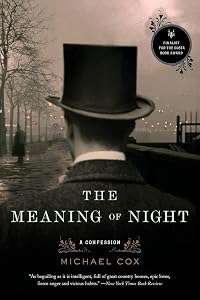
"After killing the red-haired man, I took myself off to Quinn's for an oyster supper." So begins the "enthralling" (Booklist, starred review) and "ingenious" (Boston Globe) story of Edward Glyver, booklover, scholar, and murderer. As a young boy, Glyver always believed he was destined for greatness. A chance discovery convinces him that he was right: greatness does await him, along with immense wealth and influence. Overwhelmed by his discovery, he will stop at nothing to win back a prize show more that he knows is rightfully his.Glyver's path to reclaim his prize leads him from the depths of Victorian London, with its foggy streets, brothels, and opium dens, to Evenwood, one of England's most beautiful and enchanting country houses, and finally to a consuming love for the beautiful but enigmatic Emily Carteret. His is a story of betrayal and treachery, of death and delusion, of ruthless obsession and ambition. And at every turn, driving Glyver irresistibly onward, is his deadly rival: the poet-criminal Phoebus Rainsford Daunt.The Meaning of Night is an enthralling novel that will captivate readers right up to its final thrilling revelation. show lessTags
Recommendations
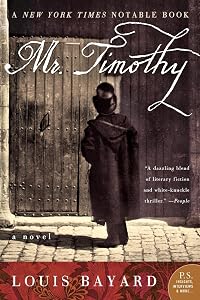
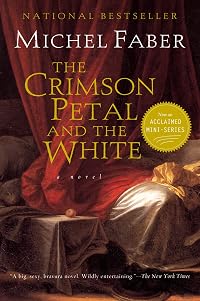
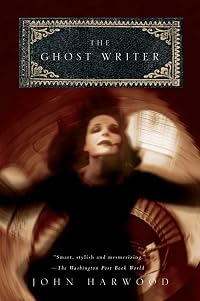
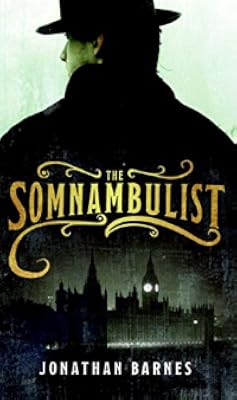
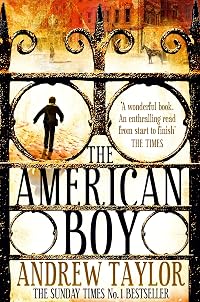
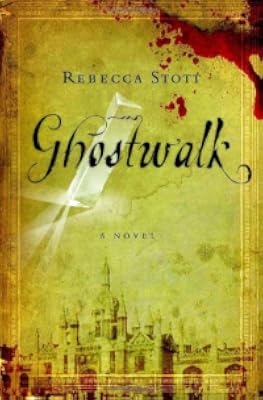
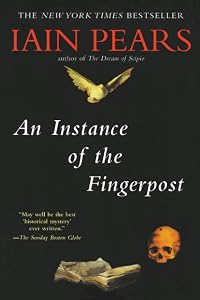
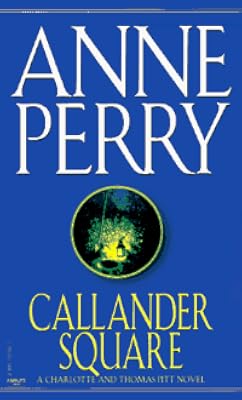
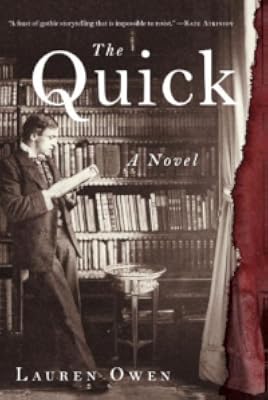
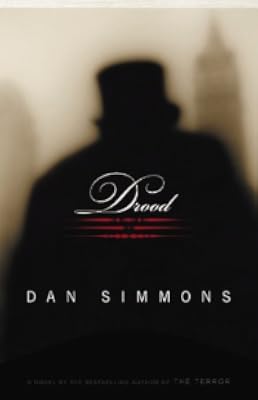

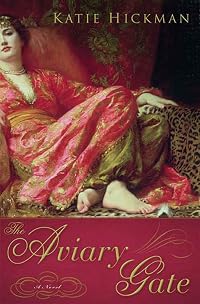
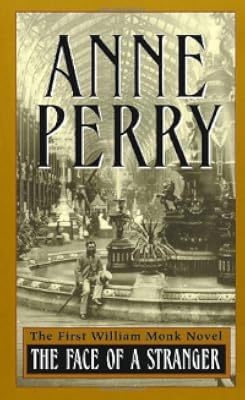
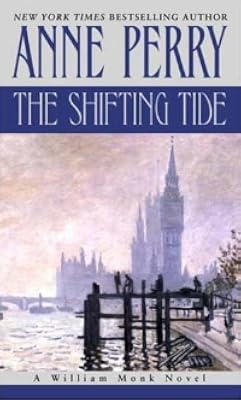
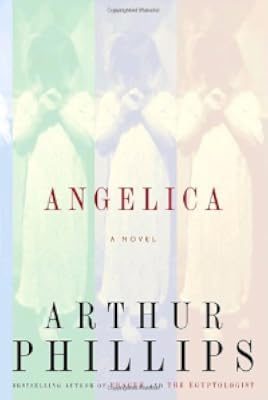

Member Recommendations
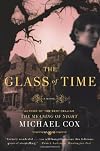
historycycles "The Meaning of Night" is required reading in order to enjoy "The Glass of Time," which is the sequel.
40

ExVivre Another vision of the gritty back alleys of London set against the well-heeled upper classes.
20
Bookmarque Victorian pastiche novel written with a unique perspective.
citygirl Another detailed, intricately plotted revenge tale.
Member Reviews
At some point in this novel the protagonist is warned to ‘trust no one’ something the reader should do as well. From the outset I did not trust Edward or G as his best friend calls him. This was his story told from his perspective and so it seemed wise to take what he said with a grain of salt. Besides that, he already confessed to murdering a stranger in the first sentence. But I did fall into the same trap he did and was shocked and a little sickened when I shouldn’t have been. At that point, I knew that the tale wouldn't end well.
G reminded me of Mersault – he was a complete egoist and self-involved, but with a streak of reasonable humanity that kept him from being completely loathed. Other readers compare him to Raskolnikov, show more but G’s lack of whining about his situation kept me from making that same connection. No, G’s attitude to his predicament is fairly sanguine, but determined to make it right. He places blame, but strives to rectify the situation rather than just wallow in self-pity. He believes that he is worthy of his rightful inheritance, but knows he’s not perfect. He has the love of a woman and cannot return it, but he leads her on to get what he wants. He has the trust of his employer, but does not return that by revealing his true identity (Tredgold already knows this, but still G’s omission is telling). He routinely uses opium and whores to relieve the tension of his situation. He has no qualms about using anyone as a tool to get what he wants. He is sympathetic because we eventually believe he has been cheated, but not so much that we’re sad when this wrong is not righted.
He’s not the only character drawn this way – realistically for a change. Tredgold is an upright citizen and very learned, but he keeps G on to do some dirty work for the firm and loves it when G gives him a volume to add to his collection of 19th century pornography. His friend and lover, Bella, is forthright and trustworthy, beautiful and loyal, but also a whore by trade. Daunt’s public persona of poet and business whiz is false, while he is actually a cheat, liar and murderer. The minor players were also fun, like his downstairs neighbor (ultimately revealed as an ally of Daunt’s) – oily and unctuous he reminded me of Uriah Heep and I think he met a similar end.
The atmosphere in this book fairly drips off the pages. The footnotes were a great device to further the idea that this is an actual 19th century document, unearthed, researched and ultimately published by the equally fictional editor. They were also useful as a tool to decipher some of the place names, events and people G peppers throughout his narrative. It sets the framework and the time period perfectly while maintaining the illusion of authenticity. Nice trick. show less
G reminded me of Mersault – he was a complete egoist and self-involved, but with a streak of reasonable humanity that kept him from being completely loathed. Other readers compare him to Raskolnikov, show more but G’s lack of whining about his situation kept me from making that same connection. No, G’s attitude to his predicament is fairly sanguine, but determined to make it right. He places blame, but strives to rectify the situation rather than just wallow in self-pity. He believes that he is worthy of his rightful inheritance, but knows he’s not perfect. He has the love of a woman and cannot return it, but he leads her on to get what he wants. He has the trust of his employer, but does not return that by revealing his true identity (Tredgold already knows this, but still G’s omission is telling). He routinely uses opium and whores to relieve the tension of his situation. He has no qualms about using anyone as a tool to get what he wants. He is sympathetic because we eventually believe he has been cheated, but not so much that we’re sad when this wrong is not righted.
He’s not the only character drawn this way – realistically for a change. Tredgold is an upright citizen and very learned, but he keeps G on to do some dirty work for the firm and loves it when G gives him a volume to add to his collection of 19th century pornography. His friend and lover, Bella, is forthright and trustworthy, beautiful and loyal, but also a whore by trade. Daunt’s public persona of poet and business whiz is false, while he is actually a cheat, liar and murderer. The minor players were also fun, like his downstairs neighbor (ultimately revealed as an ally of Daunt’s) – oily and unctuous he reminded me of Uriah Heep and I think he met a similar end.
The atmosphere in this book fairly drips off the pages. The footnotes were a great device to further the idea that this is an actual 19th century document, unearthed, researched and ultimately published by the equally fictional editor. They were also useful as a tool to decipher some of the place names, events and people G peppers throughout his narrative. It sets the framework and the time period perfectly while maintaining the illusion of authenticity. Nice trick. show less
I think readers who love Wilkie Collins’ The Woman in White or Michel Faber’s Crimson Petal and the White will also love this one. Cox skillfully provides readers with a revenge mystery not only set in Victorian England – and filled with characters with Dickensian names – but also accurately reproduces the style of a Victorian-era sensation novel. The “gimmick” to this one is that the story is presented in the format of a genuine 19th century manuscript, complete with footnotes. The story has all of the atmospheric experience of the seedier underside of 1850’s London, juxtaposed against the pristine and awe inspiring Evenwood country estate. If the Victorian atmosphere doesn’t draw you in, then maybe the ”complicated show more web of happenstance, circumstance and conspiracy” will. If not that, there is always the suspense as Cox sends his characters on an intricate waltz of secrets, deceits and greed. Whether our narrator Glyver is a reliable character deserving of a reader’s sympathy or just a madman ranting, you will have to read this one to reach your own conclusions.
Overall, a richly complex and engrossing Victorian-styled read. show less
Overall, a richly complex and engrossing Victorian-styled read. show less
The Meaning of Night: A Confession is a victorian-style novel, published under the premise of a “confession” being written by a man whose obsession is revenge. It is very well-written and stays true to the style of something that might have been written in victorian-era London. Throughout the novel, the mystery unfolds, in great detail. In the first half, the story is interesting, and alludes to a greater, darker plot. There are details (in excess, perhaps) leading up to the actual mystery, but it really takes off at the half-way point. Very Victorian/gothic – shadows, secrets, ancient books, murder, spying house maids, untrustworthy heros and heroines… I found it quite intriguing.
There’s nothing worse than reading a lengthy show more book only to have it come to a weak or unsatisfying conclusion. The Meaning of Night, however, concludes in such a surprising but satisfying way, that although it is not initially what I expected, or perhaps even hoped for, it did leave me feeling that the 700-pager was well worth reading. I won’t entirely spoil the ending for anyone else, but I will say that the climax of the story, which comes some 400 pages into the novel, is quite surprising, and the author flawlessly conveys the main character’s sense of everything falling spectacularly apart. After this, I wanted even more for the dubious hero – Edward – to exact revenge on his nemesis, for all that he had taken from him over time. Despite his dark and violent intentions, I found myself rooting for Edward as he regains the strength to do what must be done. I had initially expected a clean and happy wrap-up, with the “hero” getting everything he wanted, but I actually enjoyed the twist that concludes the story. This story has characters I loved, and loved to hate, an underlying sense of “everything is not as it seems,” a wonderful plot, and characters whose passion as bibliophiles makes for interesting conversations laced throughout the mystery. While the first half is heavy with background story and build-up to the main actions of the story, it is well-worth muddling through it to get to the second half. A fantastic intellectual mystery! show less
There’s nothing worse than reading a lengthy show more book only to have it come to a weak or unsatisfying conclusion. The Meaning of Night, however, concludes in such a surprising but satisfying way, that although it is not initially what I expected, or perhaps even hoped for, it did leave me feeling that the 700-pager was well worth reading. I won’t entirely spoil the ending for anyone else, but I will say that the climax of the story, which comes some 400 pages into the novel, is quite surprising, and the author flawlessly conveys the main character’s sense of everything falling spectacularly apart. After this, I wanted even more for the dubious hero – Edward – to exact revenge on his nemesis, for all that he had taken from him over time. Despite his dark and violent intentions, I found myself rooting for Edward as he regains the strength to do what must be done. I had initially expected a clean and happy wrap-up, with the “hero” getting everything he wanted, but I actually enjoyed the twist that concludes the story. This story has characters I loved, and loved to hate, an underlying sense of “everything is not as it seems,” a wonderful plot, and characters whose passion as bibliophiles makes for interesting conversations laced throughout the mystery. While the first half is heavy with background story and build-up to the main actions of the story, it is well-worth muddling through it to get to the second half. A fantastic intellectual mystery! show less
Once I started reading this book, as I got deeper and deeper into it, I started thinking that I've read this one before. Then I realized that the author sounded like a cross between Wilkie Collins and Charles Palliser (his novel Quincunx), but if you can imagine, even more sinister and despairing. Considering that the novel is modern, it's amazing...he's captured Wilkie Collins' tone and (if I may be so bold to say this) the darkness that one feels when reading Sheridan LeFanu's gothic novels. I was so amazed, and so drawn into this novel that I had trouble putting it down. If you like Victorian gothic style, you're going to LOVE this one.
As I mentioned, the novel is set in the Victorian period, in London. The story opens with a show more particularly cold-blooded murder, confessed to by the murderer. The author of this novel turns to the "story within a story" device, in which one Edward Glapthorne is giving over a confession, which basically encompasses his entire life story, lasting for about 600 more pages. At every turn there is some dark or nefarious deed, so much so that at times I was afraid to keep reading, feeling like I was witnessing two trains about to collide head on and knowing there was absolutely nothing I could do but to continue watching. That's the feel of this book...very very dark in tone. I kept thinking "this is not going to turn out well," and just when there seemed to be a light at the end of the tunnel, it got darker again.
If I give away details, it will spoil it; suffice it to say that if you are a fan of gothic novels, you're going to delight in this one. I can't recommend it enough; it will take you some time to get through it, but it is well worth every second. show less
As I mentioned, the novel is set in the Victorian period, in London. The story opens with a show more particularly cold-blooded murder, confessed to by the murderer. The author of this novel turns to the "story within a story" device, in which one Edward Glapthorne is giving over a confession, which basically encompasses his entire life story, lasting for about 600 more pages. At every turn there is some dark or nefarious deed, so much so that at times I was afraid to keep reading, feeling like I was witnessing two trains about to collide head on and knowing there was absolutely nothing I could do but to continue watching. That's the feel of this book...very very dark in tone. I kept thinking "this is not going to turn out well," and just when there seemed to be a light at the end of the tunnel, it got darker again.
If I give away details, it will spoil it; suffice it to say that if you are a fan of gothic novels, you're going to delight in this one. I can't recommend it enough; it will take you some time to get through it, but it is well worth every second. show less
Loved this. This has shown up on a lot of "recommended for you" lists for me, so I finally read it. Now I know why. Fabulous Victorian London setting a la 'The Crimson Petal and the White' with a little of 'The Woman in White' and 'Bleak House' thrown in. This is the story of Edward Glyver - who he believes he is, and how he sets out to prove it. His attempt to vanquish the man he sees as his enemy - the famous poet and soon to be heir to the Tansor fortune and barony, Phoebus Daunt. The story is presented as his written "confession" published in modern times and it is hard to tell fact from fiction as our charming, intelligent, murderous narrator spins his tale.
The novel is so engaging from the first sentence, I never wanted it to end. show more In addition to flawless period detail, intelligent prose, and a plot, Cox delivers one of the best characters to ever tell a story in Edward Glyver. Any reader has to be charmed by him although he is clearly pathological, deviant, drug-addled. You just can't help but route for him. He is a fabulous 'unreliable narrator' though it is hard to really suss out what is for real and what is his fantasy. Is it all real? Does everything happen the way he said it did? Do his friends really see him the way he sees his self? I found the tone of the whole novel delightfully Nabokovian because of this narration. I also found it fascinating that we saw everything through Glyver's lens as it were, yet in many instances were able to see more than him (i.e. Miss Cateret.) Clever writing, that.
Anyway, I loved it. Right up my alley. I would definitely read a sequel. Highly recommended for those who like Victorian mysteries as the ones I mentioned at the outset, as well as Sarah Waters, Arthur Phillips, Nabokov's 'Pale Fire,' Fowles' 'The French Lieutenant's Woman.' One of the most enjoyable books I've read in a while. show less
The novel is so engaging from the first sentence, I never wanted it to end. show more In addition to flawless period detail, intelligent prose, and a plot, Cox delivers one of the best characters to ever tell a story in Edward Glyver. Any reader has to be charmed by him although he is clearly pathological, deviant, drug-addled. You just can't help but route for him. He is a fabulous 'unreliable narrator' though it is hard to really suss out what is for real and what is his fantasy. Is it all real? Does everything happen the way he said it did? Do his friends really see him the way he sees his self? I found the tone of the whole novel delightfully Nabokovian because of this narration. I also found it fascinating that we saw everything through Glyver's lens as it were, yet in many instances were able to see more than him (i.e. Miss Cateret.) Clever writing, that.
Anyway, I loved it. Right up my alley. I would definitely read a sequel. Highly recommended for those who like Victorian mysteries as the ones I mentioned at the outset, as well as Sarah Waters, Arthur Phillips, Nabokov's 'Pale Fire,' Fowles' 'The French Lieutenant's Woman.' One of the most enjoyable books I've read in a while. show less
It took me a long time to get through this book, which checks in at 700 pages, but it was worth it. The Meaning of Night is a faux Victorian-era psychological thriller, published in 2006 but written in the style of 19th-century English murder novels. Cox knew what he was writing about, having been a scholar of the period, a biographer of early ghost-story writer M. R. James, and an editor of ghost and murder-story collections for Oxford University Press. Replications of Victorian-era literary practices abound, such as the book's format as a recently discovered manuscript containing this long "confession." The book starts with a murder, committed by the protagonist only as a rehearsal for the real murder he's planning, that of his show more life-long "enemy." The narrative then goes although back to the narrator's early life, telling a story of identity stolen, misplaced wrath and slow-turning tragedy until it finally reaches again the instant of the story's beginning, then hurtles forward toward its satisfying conclusion. The book begins as sort of a Victorian English Crime and Punishment, but along the way settles into a rhythm and style all its own. The story, as well, starts out slowly but soon gathers steam, and the characters move from seeming caricatures to interesting along the way. For the first 100 pages I wondered whether I was going to get through this, but by page 200 or so I was quite involved. Lots of fun in the long run, and worth the time, at least for me. show less
Summary: Our narrator, one Mr. Edward Glapthorn (or is he?) starts his confession by describing how he killed a stranger, simply to see if he had the constitution and nerve required of him to kill his "enemy" when he finally had the opportunity to wreak his revenge. That enemy is Phoebus Daunt, known to the narrator since they were at school together, whose life has been from that point fatefully intertwined with that of our narrator. From the murder of the very first pages, our narrator slowly unfolds for us his history - a tale of secrets, deceit, violence, treachery, love, betrayal, inheritances won and lost, the stratified social life of 1850s London, death, theft, and ultimately, revenge.
Review: Most of the other reviews of this show more novel that I've seen trot out the word "Dickensian" within the first few lines (and now I'm no exception!). Having only ever read A Christmas Carol myself, I can't really comment on that front, but it's clear that the first and foremost achievement of this novel is to so precisely hit its tone that it is remarkable that this book was published in 2006 and not 150 years before. The trappings of Victoriana are all there, as are the standard inheritance/class/revenge story points, but the dialogue, mood, subject matter, and writing style are so masterfully crafted that it pulls off the feat of being a historical novel in modern times, and expertly treads the fine line of seeming to belong to another era without feeling out of date, of replicating Victorian literary conventions while still feeling like something new.
The book is long, no question, but I found myself being pulled along unhesitatingly. By about halfway through, I didn't really like any of the characters, and yet I still really cared about the outcome. The Meaning of Night is one of those interesting cases where I wasn't really sure who to root for... Phoebus Daunt unquestionably deserves to have some vengeance wreaked upon him, but Edward, our narrator, is such a smug, remorseless, arrogant asshole, most of whose troubles are brought upon himself, that I couldn't wholeheartedly support him, either. The ending was satisfying enough, although I didn't particularly like the way the penultimate "twist" was handled - I don't know if the author intended it to come off as sexist as it did, or if that's just another echo of earlier times.
The audiobook was excellently done; I thought the narration matched the tone of the writing style perfectly. However, note that the text version contains a lot of footnotes that don't appear in the audiobook. 4 out of 5 stars.
Recommendation: Absorbing neo-Victorian mystery, although it was a bit strange to listen to it on beautiful sunny spring days... but it would be well worth looking into if you're hunting for something curl up with on a dark and stormy night. show less
Review: Most of the other reviews of this show more novel that I've seen trot out the word "Dickensian" within the first few lines (and now I'm no exception!). Having only ever read A Christmas Carol myself, I can't really comment on that front, but it's clear that the first and foremost achievement of this novel is to so precisely hit its tone that it is remarkable that this book was published in 2006 and not 150 years before. The trappings of Victoriana are all there, as are the standard inheritance/class/revenge story points, but the dialogue, mood, subject matter, and writing style are so masterfully crafted that it pulls off the feat of being a historical novel in modern times, and expertly treads the fine line of seeming to belong to another era without feeling out of date, of replicating Victorian literary conventions while still feeling like something new.
The book is long, no question, but I found myself being pulled along unhesitatingly. By about halfway through, I didn't really like any of the characters, and yet I still really cared about the outcome. The Meaning of Night is one of those interesting cases where I wasn't really sure who to root for... Phoebus Daunt unquestionably deserves to have some vengeance wreaked upon him, but Edward, our narrator, is such a smug, remorseless, arrogant asshole, most of whose troubles are brought upon himself, that I couldn't wholeheartedly support him, either. The ending was satisfying enough, although I didn't particularly like the way the penultimate "twist" was handled - I don't know if the author intended it to come off as sexist as it did, or if that's just another echo of earlier times.
The audiobook was excellently done; I thought the narration matched the tone of the writing style perfectly. However, note that the text version contains a lot of footnotes that don't appear in the audiobook. 4 out of 5 stars.
Recommendation: Absorbing neo-Victorian mystery, although it was a bit strange to listen to it on beautiful sunny spring days... but it would be well worth looking into if you're hunting for something curl up with on a dark and stormy night. show less
Members
- Recently Added By
Published Reviews
ThingScore 55
"But The Meaning of Night is by no means a sensational Victorian pastiche. It is substandard, ersatz hokum. The only way to stay the course of its 600 pages is to treat the over-egged writing as tenaciously tongue-in-cheek."
added by ExVivre
"It works on many different levels, being satisfyingly thrilling without the "deadly nullification" of thought and language so attendant on most thrillers (especially Da Vinci Code imitators) ...."
added by ExVivre
"Although a weighty 700 pages, the story is unfailingly suspenseful."
added by ExVivre
Lists

Historical Fiction
889 works; 91 members

Unread books
1,063 works; 82 members

seedy victorian novels
16 works; 4 members

MysteryCAT: Historical Crime
27 works; 7 members

KayStJ's to-read list
1,616 works; 11 members

2025 Reading List
51 works; 2 members
Talk Discussions
Past Discussions
Michael Cox -The Meaning of Night in Historical Mysteries (February 2009)
Author Information

23+ Works 5,501 Members
Michael Cox was born on August 30 1948 in Northamptonshire, England. In 1989 he started work at the Oxford University Press. In 1983, Cox published his first book, a biography M. R. James, a Victorian ghost story writer. Between 1983 and 1997 he compiled and edited several anthologies of Victorian short stories for Oxford University Press. His show more first novel, The Meaning of Night, was published in 2006. Michael Cox died of cancer on March 31, 2009. (Bowker Author Biography) show less
Some Editions
Awards and Honors
Awards
Distinctions
Series

Common Knowledge
- Original title
- The Meaning of Night
- Original publication date
- 2006
- People/Characters
- Edward Glyver; Phoebus Rainsford Daunt; Emily Grace Carteret; Paul Stephen Carteret; Christopher Tredgold; Julius Duport, 25th Baron Tansor (show all 11); Isabella "Bella" Gallini; Josiah Pluckrose; Willoughby Le Grice; Lady Laura Duport nee Fairmile; Achilles B. Daunt
- Important places
- London, England, UK; Northamptonshire, England, UK
- Epigraph
- The words of his mouth were smoother than butter,
but war was in his heart:
his words were softer than oil,
yet were they drawn swords.
—Psalm 55:21
I find, to him that the tale is told,
belief only makes the difference betwixt a truth, and a lie.
—Owen Felltham, Resolves or, Excogitations.
A Second Centurie (1629),
iv ('Of Lies and ... (show all)Untruths')
For Death is the meaning of night;
The eternal shadow
Into which all lives must fall,
All hopes expire.
—P. Rainsford Daunt, 'From the Persian', Rosa Mundi; and Other Poems (1854)
What a skein of ruffled silk
is the uncomposed man.
Owen Felltham, Resolves (1623),
ii, 'Of Resolution' - Dedication
- For Dizzy. For everything.
TO MY UNKNOWN READER.
Ask not Pilate's question.
For I have sought, not truth, but meaning.
E.G. - First words
- The following work, printed here for the first time, is one of the lost curiosities of nineteenth-century literature.
After killing the red-haired man, I took myself off to Quinn's for an oyster supper. - Last words
- (Click to show. Warning: May contain spoilers.)I long for sleep, and for soft English rain. But they do not come. E.G.
- Blurbers
- Dirda, Michael; Eder, Richard; Miller, Laura
Classifications
Statistics
- Members
- 2,571
- Popularity
- 7,393
- Reviews
- 109
- Rating
- (3.76)
- Languages
- 11 — Catalan, Danish, Dutch, English, French, German, Italian, Norwegian (Bokmål), Portuguese, Spanish, Swedish
- Media
- Paper, Audiobook, Ebook
- ISBNs
- 42
- ASINs
- 10