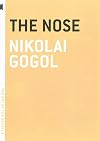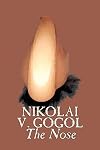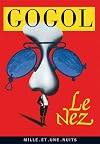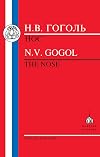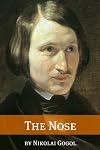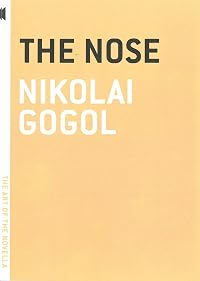
The Nose
by Nikolaj Gogol
On This Page
Description
"The Nose" by Nikolai Gogol is a satirical short story that follows Collegiate Assessor Kovalyov, who wakes up one day to discover that his nose has inexplicably vanished. Even more bizarrely, he encounters his nose in the form of a higher-ranking officia.Tags
Recommendations























Member Recommendations
by anonymous user
Member Reviews
What a strange little story The Nose by Nikolai Gogol turned out to be. This is a satirical short story about a St. Petersburg official called Kovalyov, whose nose leaves his face and develops a life of its own. Apparently Gogol himself had an oddly shaped nose and was often teased about this. The sheer absurdity of this story relies on humor and social commentary to draw the reader in.
Highlighting the desire for social ranking, in this story, the Nose actually surpasses the position of the owner causing him much embarrassment and although the nose apparently can change in size, it is always clearly identified as belonging to Kovalyov which spearheads that characters feelings of inferiority and jealousy.
It is never explained fully how show more the nose made it’s escape or how it came to be re-attached but instead leaves that up to the imagination of the reader. Using this type of magical realism highlights the surreal nature of the story but the author definitely included plenty of social references about Russia and human nature in general. Personally I found The Nose to be both hilarious and insightful. show less
Highlighting the desire for social ranking, in this story, the Nose actually surpasses the position of the owner causing him much embarrassment and although the nose apparently can change in size, it is always clearly identified as belonging to Kovalyov which spearheads that characters feelings of inferiority and jealousy.
It is never explained fully how show more the nose made it’s escape or how it came to be re-attached but instead leaves that up to the imagination of the reader. Using this type of magical realism highlights the surreal nature of the story but the author definitely included plenty of social references about Russia and human nature in general. Personally I found The Nose to be both hilarious and insightful. show less
Absurd tale of a disembodied nose running amok in St. Petersburg. A barber discovers a nose in a loaf of bread. He recognizes it as belonging to one of his clients. Major Kovalyov wakes up one morning with a flat space where his nose should be. He searches for the nose and tries to advertise for its return.
I really enjoyed this creative short story. The author breaks the fourth wall, pointing out such things as the farcical notion of an “owner” wanting to advertise the loss of his nose in the local paper. It is humorous and makes fun of the rank, class, and structure in Russia at the time, a brilliant way to avoid stating anything directly. The Nose achieves a higher rank than the person who “lost” it. It is only 60 pages, so I show more read two English translations from the Russian (one by Ronald Wilks, the other by Claude Field) to get a better feel for the story. show less
I really enjoyed this creative short story. The author breaks the fourth wall, pointing out such things as the farcical notion of an “owner” wanting to advertise the loss of his nose in the local paper. It is humorous and makes fun of the rank, class, and structure in Russia at the time, a brilliant way to avoid stating anything directly. The Nose achieves a higher rank than the person who “lost” it. It is only 60 pages, so I show more read two English translations from the Russian (one by Ronald Wilks, the other by Claude Field) to get a better feel for the story. show less
Brilliant. What an idea! Someone’s nose is found in some bread. A man wakes up to find his nose gone and begins a desperate search. He discovers it living a life of its own, a life far more privileged in status than it’s owner. Then it returns but there’s a twist.
I loved Gogol’s short story because it contrasts so strongly with every other piece of Russian lit. that I’ve read… and I’ve read a ton. Usually, they’re painstakingly detailed (Tolstoy), deeply psychological (Dostoevsky), heavily political (Solzhenitsyn) or deeply emotional (Goncharov, Pushkin, Turgenev, Lermontov, etc. aka everything else). But this is satire to rival Swift or Cervantes… from the pen of a Russian! Wonderful.
Analyses of the short story that show more I’ve read online tend towards searching the text for underlying psychological motives, for a political edge, for something, well, Russian about it. But I think Gogol just wanted to send a message to the literary community and say, “Life isn’t all misery and deeply felt meaning, you know!” And I think he said it very well.
The story is bonkers and total fun. There isn’t a single character in it who isn’t farcical, and it doesn’t really have a point (no pun intended). And you, yes you, with that twitch in your right index finger. Step away from the mouse. I know you are dying to comment and tell me what the point is about The Nose. Gogol wrote this for you, to show you that you can just read a story to enjoy it for its own sake without worrying about what it means. If you’ve missed that, go and read it again… go on.
Brilliant. show less
I loved Gogol’s short story because it contrasts so strongly with every other piece of Russian lit. that I’ve read… and I’ve read a ton. Usually, they’re painstakingly detailed (Tolstoy), deeply psychological (Dostoevsky), heavily political (Solzhenitsyn) or deeply emotional (Goncharov, Pushkin, Turgenev, Lermontov, etc. aka everything else). But this is satire to rival Swift or Cervantes… from the pen of a Russian! Wonderful.
Analyses of the short story that show more I’ve read online tend towards searching the text for underlying psychological motives, for a political edge, for something, well, Russian about it. But I think Gogol just wanted to send a message to the literary community and say, “Life isn’t all misery and deeply felt meaning, you know!” And I think he said it very well.
The story is bonkers and total fun. There isn’t a single character in it who isn’t farcical, and it doesn’t really have a point (no pun intended). And you, yes you, with that twitch in your right index finger. Step away from the mouse. I know you are dying to comment and tell me what the point is about The Nose. Gogol wrote this for you, to show you that you can just read a story to enjoy it for its own sake without worrying about what it means. If you’ve missed that, go and read it again… go on.
Brilliant. show less
🥸 Absurdist fiction
👃🏼 What if one day your nose was gone, & when you next saw it, had a higher rank than you?
🪆Satire of stratification in Russian society
🇺🇦 Classic by Ukrainian author
I really had no idea what to expect walking into this one. I forgot how FANTASTICALLY WEIRD so much classic Russian fiction is!
This is a book you are going to have to be able to just run with. If you are the kind of person who is going to get hung up on something like "wait, how does a nose wear a uniform?" then this book is going to frustrate you! (I did. I did struggle a bit. And then I let go.)
This book also had a little meta fourth-wall breaking at the end, which was both charming and helps to remind the reader what kind of political show more climate this was written in. (Hopefully not bearing too much resemblance to the direction we are moving in soon.)
Short, silly, near-slapstick. But with a message! show less
👃🏼 What if one day your nose was gone, & when you next saw it, had a higher rank than you?
🪆Satire of stratification in Russian society
🇺🇦 Classic by Ukrainian author
I really had no idea what to expect walking into this one. I forgot how FANTASTICALLY WEIRD so much classic Russian fiction is!
This is a book you are going to have to be able to just run with. If you are the kind of person who is going to get hung up on something like "wait, how does a nose wear a uniform?" then this book is going to frustrate you! (I did. I did struggle a bit. And then I let go.)
This book also had a little meta fourth-wall breaking at the end, which was both charming and helps to remind the reader what kind of political show more climate this was written in. (Hopefully not bearing too much resemblance to the direction we are moving in soon.)
Short, silly, near-slapstick. But with a message! show less
Absurd tale of a disembodied nose running amok in St. Petersburg. A barber discovers a nose in a loaf of bread. He recognizes it as belonging to one of his clients. Major Kovalyov wakes up one morning with a flat space where his nose should be. He searches for the nose and tries to advertise for its return.
I really enjoyed this creative short story. The author breaks the fourth wall, pointing out such things as the farcical notion of an “owner” wanting to advertise the loss of his nose in the local paper. It is humorous and makes fun of the rank, class, and structure in Russia at the time, a brilliant way to avoid stating anything directly. The Nose achieves a higher rank than the person who “lost” it. It is only 60 pages, so I show more read two English translations from the Russian (one by Ronald Wilks, the other by Claude Field) to get a better feel for the story. show less
I really enjoyed this creative short story. The author breaks the fourth wall, pointing out such things as the farcical notion of an “owner” wanting to advertise the loss of his nose in the local paper. It is humorous and makes fun of the rank, class, and structure in Russia at the time, a brilliant way to avoid stating anything directly. The Nose achieves a higher rank than the person who “lost” it. It is only 60 pages, so I show more read two English translations from the Russian (one by Ronald Wilks, the other by Claude Field) to get a better feel for the story. show less
Amusing short story, with moments of true hilarity. I was surprised that Gogol had such a sense of humor. On the other hand, the story lacks any real depth and Gogol makes no attempt whatsoever to explain the absurd happenings.
A recommended read, but do not expect to take away anything of significance.
A recommended read, but do not expect to take away anything of significance.
Short story about a St. Petersburg official, Kovalyov, who's nose leaves his face and becomes separate entity with it's own life. This is an absurd story with humor and is a commentary on social ranking.A rather humorous short story about a man who lost his nose for awhile. A tale of cutting your nose off to spite your face or perhaps the ultimate tale of a brownnoser. The official seemed quite concerned about his personal image and how that was going to affect him. It is a short (about 50 pages) of a classic Russian author. It is considered a precursor to magical realism.
Members
- Recently Added By
Lists

1001 Books You Must Read Before You Die
1,448 works; 1,134 members

Best of World Literature
435 works; 52 members

Favourite Books
1,819 works; 316 members

Western World's Greatest Books - Project Gutenberg
295 works; 15 members

Books Read in 2023
5,547 works; 145 members

Speculative Fiction from around the World
610 works; 18 members

Books Read in 2013
1,630 works; 51 members

My TBR
371 works; 3 members

Favourite Short Stories
22 works; 2 members

1,001 BYMRBYD Concensus
723 works; 27 members

Books Read in 2024
4,623 works; 126 members
Author Information

589+ Works 28,978 Members
Nikolai Vasilevich Gogol was born in 1809 in the Ukraine. His father was an amateur playwright who had a small estate with a number of serfs. From the ages of 12 to 19, young Gogol attended a boarding school where he became known for his sharp wit and ability to amuse his classmates. After school he worked as a government clerk. He soon began show more writing memories of his childhood. His quaint depictions of the Ukrainian countryside marked his style and helped to make him famous. Gogol quickly gained fame and formed a friendship with the influential poet, Aleksandr Pushkin. Gogol is largely remembered for his realistic characterizations, his rich imagination, and his humorous style. His works include Mirgorod, a collection of short stories including Taras Bulba. Gogol's wit is evident in his short story, The Nose, where a man's nose wanders off around town in a carriage. Gogol's masterpiece is the novel Dead Souls. In this work, a swindler plots to buy from landowners their dead serfs. Towards the end of Gogol's life, his creative powers faded and he fled to Moscow. Here, he came under the power of a fanatical priest. Ten days before his death he burned some manuscripts of the second part of Dead Souls. He died of starvation in 1852, on the cusp of madness. (Bowker Author Biography) show less
Some Editions
Awards and Honors
Notable Lists
Series
Belongs to Publisher Series
Work Relationships
Is contained in
The Overcoat, The Nose, Nevsky Prospect, Carriage, The Portrait, Diary of a Madman, Rome (Russian language) (Russian Edition) by Nikolai Vasilevich Gogol
Works of Nikolai Gogol. Dead Souls, Taras Bulba, The Inspector General, The Nose, Viy & more (mobi) by Nikolai Vasilievich Gogol
The Diary of a Madman, The Government Inspector, and Selected Stories (Penguin Classics) by Nikolai Gogol
Tales from Gogol. Translated by Rosa Portnova (Sorochinsky Fair. The Coach. Christmas Eve. Nevsky Prospect. How the Ivans Quarrelled. The Nose.) (Illustrated by Robert Turner.) by Nikolai Vasilevich Gogol
A Swim in a Pond in the Rain: In Which Four Russians Give a Master Class on Writing, Reading, and Life by George Saunders
George Saunders Collection 3 Books Set (A Swim in a Pond in the Rain, Tenth of December, Lincoln in the Bardo) by George Saunders (indirect)
Has the adaptation
Common Knowledge
- Canonical title*
- Die Nase [Erzählung]
- Original title
- Нос
- Original publication date
- 1836
- People/Characters
- Ivan Yakovlevich; Kovaliov; The Nose
- Important places
- St. Petersburg, Russia
- First words
- On the 25th March, 18—, a very strange occurrence took place in St Petersburg.
- Last words
- (Click to show. Warning: May contain spoilers.)Whatever may be said to the contrary, such cases do occur—rarely, it is true, but now and then actually.
- Original language
- Russian
*Some information comes from Common Knowledge in other languages. Click "Edit" for more information.
Classifications
- Genres
- General Fiction, Fiction and Literature
- DDC/MDS
- 891.733 — Literature & rhetoric Literatures of other languages East Indo-European and Celtic literatures Russian and East Slavic languages Russian fiction 1800–1917
- LCC
- PG3333 .H62 — Language and Literature Slavic languages and literatures. Baltic languages. Albanian language Slavic. Baltic. Albanian Russian literature Individual authors and works 1800-1870 Gogol'
- BISAC
Statistics
- Members
- 507
- Popularity
- 59,314
- Reviews
- 26
- Rating
- (3.63)
- Languages
- 14 — Catalan, Dutch, English, Finnish, French, German, Hungarian, Italian, Farsi/Persian, Portuguese (Portugal), Russian, Spanish, Swedish, Turkish
- Media
- Paper, Audiobook, Ebook
- ISBNs
- 80
- ASINs
- 26