On This Page
Description
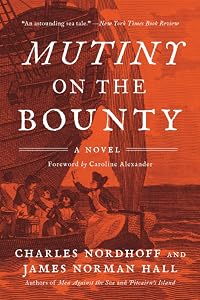
Based on the famous mutiny carried out by the crew of the "Bounty," a British war vessel, in 1787.Tags
Recommendations






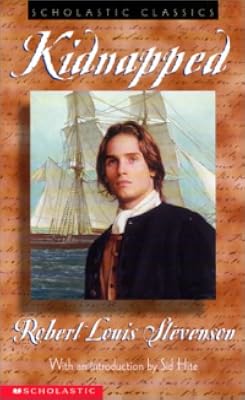









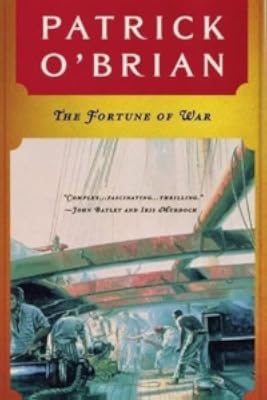


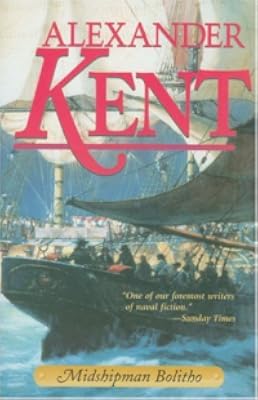

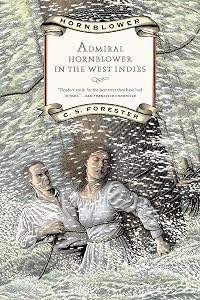
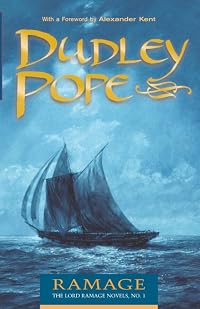
Member Recommendations
Member Reviews
This fascinating look at the true story of the infamous Bounty mutiny is hard to forget. Midshipman Roger Byam (a fictional character based on crew member Peter Heyward) comes along to Tahiti as an interpreter and linguist. Captain William Bligh presents a fair enough face on shore, but quickly devolves into a quarrelsome, stingy, explosive tyrant at sea. Finally, on the voyage home first mate Fletcher Christian leads an unpremeditated mutiny that forever changes the lives of the men aboard. Though not part of the mutiny, Byam is left aboard the Bounty and later stands trial for his life.
I was not expecting to have so much sympathy for Christian and the mutineers. Bligh treated his subordinates shamefully and you really can't help but show more see Christian as the more noble man of the two. But the stigma of mutiny is hard to erase. I was also much struck at the horrifying punishments regularly meted out even for trifling offenses. The first of these we see, the flogging through the fleet of a captured deserter, is simply beyond belief. And yet it happened all the time.
I was forcibly reminded of Nathaniel Philbrick's In the Heart of the Sea and I'm sure that comparison would only grow stronger with the next book of the trilogy. A compelling read. show less
I was not expecting to have so much sympathy for Christian and the mutineers. Bligh treated his subordinates shamefully and you really can't help but show more see Christian as the more noble man of the two. But the stigma of mutiny is hard to erase. I was also much struck at the horrifying punishments regularly meted out even for trifling offenses. The first of these we see, the flogging through the fleet of a captured deserter, is simply beyond belief. And yet it happened all the time.
I was forcibly reminded of Nathaniel Philbrick's In the Heart of the Sea and I'm sure that comparison would only grow stronger with the next book of the trilogy. A compelling read. show less
Mutiny on the Bounty is one of those books that somehow managed to seep into my consciousness without ever actually having read it. I'm sure I saw one of the movie versions at some point, which gave me the basic outline of the plot. But that bare-bones version of the story that I thought I knew doesn't hold a candle to the actual novel, which is rich, riveting, and extremely well told. When I picked it up I didn't think it would be one of those books I had a difficult time putting down, but I very nearly read it all in one sitting.
For the first time in 50 years, I have just finished rereading Mutiny on the Bounty. After all that time, it still retained its vividness and pace. It remains a great adventure story. And it still appeals to me.
A few things to remark upon regarding what I see in its origins and structure:
First, the power of the storytelling is immense. The narrative is clean, punctuated with just the right moves to advance to the next level of the tale. I'm imagining that the strong structure of the novel is due to Nordhoff more than Hall. At least that is the point Paul Briand made in his double biography of the two authors--that Nordhoff at the beginning of their partnership and later supplied the discipline that Hall needed.
Second, early in his show more career Nordhoff became a successful author of boys adventures books. There is a trace of that lingering in Mutiny on the Bounty. But with the narration of Mutiny being through the eyes of young Roger Byam, having a touch of the boys adventure creep into the pages actually works to the benefit of giving the novel its verisimilitude.
Third, the syntax, vocabulary, rhythm of the language seems perfectly to fit to the 18th century subject matter. There is a touch of the archaic to it that is effective in detail and in overall effect.
------------------------------
Now, below, is the review I made of Mutiny on the Bounty some years ago. This is how I remembered it. Turns out that my memory was strong and accurate, for I still stand by it.
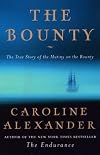
This is what I read for adventure when I was twelve years old. Still a good choice. Inspired by the Clark Gable/Charles Laughton film, I found my way to the trilogy and discovered Men Against the Sea and Pitcairn's Island to be the equal of the first book. Together, all three volumes elevate the story of the mutineers and their captain to mythological heights, all the while providing fertile ground for the germination of the South Sea idyll stories that followed in its wake, both on film and in literature. I've yet to read Caroline Alexander's The Bounty: The True Story of the Mutiny on the Bounty, which apparently debunks much of that earlier romantic myth-making, especially concerning the character and motivations of the principals. No, this version is to deeply etched into my memory to disturb, I think. show less
A few things to remark upon regarding what I see in its origins and structure:
First, the power of the storytelling is immense. The narrative is clean, punctuated with just the right moves to advance to the next level of the tale. I'm imagining that the strong structure of the novel is due to Nordhoff more than Hall. At least that is the point Paul Briand made in his double biography of the two authors--that Nordhoff at the beginning of their partnership and later supplied the discipline that Hall needed.
Second, early in his show more career Nordhoff became a successful author of boys adventures books. There is a trace of that lingering in Mutiny on the Bounty. But with the narration of Mutiny being through the eyes of young Roger Byam, having a touch of the boys adventure creep into the pages actually works to the benefit of giving the novel its verisimilitude.
Third, the syntax, vocabulary, rhythm of the language seems perfectly to fit to the 18th century subject matter. There is a touch of the archaic to it that is effective in detail and in overall effect.
------------------------------
Now, below, is the review I made of Mutiny on the Bounty some years ago. This is how I remembered it. Turns out that my memory was strong and accurate, for I still stand by it.
This is what I read for adventure when I was twelve years old. Still a good choice. Inspired by the Clark Gable/Charles Laughton film, I found my way to the trilogy and discovered Men Against the Sea and Pitcairn's Island to be the equal of the first book. Together, all three volumes elevate the story of the mutineers and their captain to mythological heights, all the while providing fertile ground for the germination of the South Sea idyll stories that followed in its wake, both on film and in literature. I've yet to read Caroline Alexander's The Bounty: The True Story of the Mutiny on the Bounty, which apparently debunks much of that earlier romantic myth-making, especially concerning the character and motivations of the principals. No, this version is to deeply etched into my memory to disturb, I think. show less
https://nwhyte.livejournal.com/2927397.html
Mutiny on the Bounty, is narrated by Byam, the fictional midshipman played by Franchot Tone in the film; the Bligh of the book is if anything even more monstrous than the Bligh of the film, and the confusion of the mutiny itself - a ten-minute spurt of late-night impulse which had long-lasting effects - better conveyed. The Tahitians are referred to invariably as "Indians", but otherwise treated as a dignified culture which the English sailors disrupt by their presence; the only cannibal joke is directed against the cheapskate purveyors of Portsmouth, who allegedly look out for black sailors to add to their mix.
However, it's an anti-Semitic novel - an aspect completely dropped from the film. At show more Spithead, when we first encounter the Bounty, "sharp-faced Jews, in their wherries, hovered alongside, eager to lend money at interest against pay day, or to sell on credit the worthless trinkets on their trays" and the second in command declares that "I'd like to sink the lot of those Jews". Samuel, Bligh's clerk, is described as "a smug, tight-lipped little man, of a Jewish cast of countenance" and later explicitly as "a London Jew". In fact, the real Samuel appears to have been from Edinburgh, where a George Samuel was a burgess in 1699; so this anti-Semitism is entirely gratuitously introduced to the historical record by Nordhoff and Hall. (As indeed are many of Bligh's portrayed acts of tyranny.)
Given what is said about so many historical characters, it's a bit odd that Nordhoff and Hall chose to disguise the real midshipman Peter Heywood as the fictional Alexander Byam.
One of the shock moments in the film is that when the Pandora comes to Tahiti to arrest the mutineers, it turns out that Bligh is in command. In the book, as in history, he was by then on another assignment elsewhere. Otherwise the film sticks pretty closely to the book. show less
Mutiny on the Bounty, is narrated by Byam, the fictional midshipman played by Franchot Tone in the film; the Bligh of the book is if anything even more monstrous than the Bligh of the film, and the confusion of the mutiny itself - a ten-minute spurt of late-night impulse which had long-lasting effects - better conveyed. The Tahitians are referred to invariably as "Indians", but otherwise treated as a dignified culture which the English sailors disrupt by their presence; the only cannibal joke is directed against the cheapskate purveyors of Portsmouth, who allegedly look out for black sailors to add to their mix.
However, it's an anti-Semitic novel - an aspect completely dropped from the film. At show more Spithead, when we first encounter the Bounty, "sharp-faced Jews, in their wherries, hovered alongside, eager to lend money at interest against pay day, or to sell on credit the worthless trinkets on their trays" and the second in command declares that "I'd like to sink the lot of those Jews". Samuel, Bligh's clerk, is described as "a smug, tight-lipped little man, of a Jewish cast of countenance" and later explicitly as "a London Jew". In fact, the real Samuel appears to have been from Edinburgh, where a George Samuel was a burgess in 1699; so this anti-Semitism is entirely gratuitously introduced to the historical record by Nordhoff and Hall. (As indeed are many of Bligh's portrayed acts of tyranny.)
Given what is said about so many historical characters, it's a bit odd that Nordhoff and Hall chose to disguise the real midshipman Peter Heywood as the fictional Alexander Byam.
One of the shock moments in the film is that when the Pandora comes to Tahiti to arrest the mutineers, it turns out that Bligh is in command. In the book, as in history, he was by then on another assignment elsewhere. Otherwise the film sticks pretty closely to the book. show less
I didn't actually know that this was a real event...I just knew it as a movie title. This book was much more interesting than I thought it would be, perhaps because I didn't know the whole story. I was never exactly sure where it was going and found myself pretty invested in it. I found the narrator hard to get a handle on though....someone who abandons his wife and daughter and never returns to them seemed so very odd to me.
124. Mutiny on the Bounty, by Charles Nordhoff and James N. Hall (read 1943) I was totally taken by this novelistic account of the Mutiny. One could not help but feel some empathy for the mutineers, but if the women of Tahiti had not been so imbued with complicity, would the mutiny ever have happened?
Captain Bligh and his ship the Bounty are being sent to Tahiti by the English navy. Young Roger Byam jumps at a chance to go with Bligh in order to learn the language and create a Tahitian dictionary. While life on the island is pleasant for everyone, life on the ship is not. The crew's mutiny against Bligh is just the beginning of their adventures and troubles.
My dad just finished reading the whole Bounty trilogy, and he wasn't thrilled with this one, although he did like the other two better. I usually agree with him when it comes to books, so I wasn't expecting much out of this, but I was pleasantly surprised. It's a good adventure novel made more interesting because it was based on a true story, and the authors really tried to make show more the novel as close to fact as possible. I do wish the authors had explained some of the seafaring terminology better. show less
My dad just finished reading the whole Bounty trilogy, and he wasn't thrilled with this one, although he did like the other two better. I usually agree with him when it comes to books, so I wasn't expecting much out of this, but I was pleasantly surprised. It's a good adventure novel made more interesting because it was based on a true story, and the authors really tried to make show more the novel as close to fact as possible. I do wish the authors had explained some of the seafaring terminology better. show less
Members
- Recently Added By
Lists

water on the brain: maritime fiction
74 works; 18 members

Tagged by Tim or Meh!
91 works; 9 members

1930s
262 works; 5 members

Books Featured on Gilmore Girls
307 works; 21 members

Ten+ Books About Being Stranded!
14 works; 5 members

Mustich's 1000 Books to Read Before You Die: A Life Changing List
1,001 works; 19 members

The Complete Rory Gilmore Reading List
506 works; 5 members
Author Information

19+ Works 3,883 Members

43+ Works 4,309 Members
James Norman Hall, 1887 - 1951 James Norman Hall was born at Colfax, Iowa. He attended public schools in Colfax, and entered Grinnell College, Iowa, graduating in 1910. From 1910 to 1914 he was a social worker in Boston, working for Society for the Prevention of Cruelty to Children. At the outbreak of World War I, Hall joined the British Army. He show more served in the 9th Battalion Royal Fusiliers, taking part in the Battle of Loos. His war memoirs were published in 1916 under the title Kitcher's Mob and High Adventure. Hall re-enlisted in 1916 as a member of the Lafayette Flying Corps. During those years, he met Charles Nordhoff, a pilot serving in the same corps. When Hall and Nordhoff received an advance from Harper's to write travel articles, they moved to Tahiti. In 1921 their travel book Faery Lands of the South Seas was published. Eventually they parted ways, with Hall continuing with travel books and Nordhoff publishing novels. In 1929 Nordhoff's and Hall's jointly written book about flying, Falcons of France was published. Hall suggested the team start to write Mutiny on the Bounty in 1932, and ended up a trilogy that included Men against the Sea in 1933 and Pitcairn's Island in 1934. Nordhoff and Hall published six more coauthored novels, although the last three were largely composed by Hall. Several of these books were filmed. In his later years, Hall wrote children stories about Dr. Dogbody, a peg-legged old sailor, travel essays, narrative poems, and an collection of short stories. In 1950, Hall returned to the United States to accept an honorary doctorate from Grinnell University. He died the next year in Tahiti in 1951. His posthumously published memoirs, My Island Home, appeared in 1952. (Bowker Author Biography) show less
Some Editions
Awards and Honors
Notable Lists
Series

Belongs to Publisher Series
Cardinal Editions [Pocket Books] (C-37, C-456)
Limited Editions Club (S:17.04)
Zephyr Books (44)
Work Relationships
Is contained in
Has the adaptation
Is abridged in
Is parodied in
Has as a student's study guide
Common Knowledge
- Canonical title
- Mutiny on the Bounty
- Original title
- Die Meuterei auf der Bounty
- Alternate titles
- Meuterei auf der Bounty
- Original publication date
- 1932
- People/Characters
- William Bligh; Fletcher Christian; John Freyer; Matthew Quintal; Charles Churchill; William Elphinstone (show all 46); Vater Bacchus; Thomas Ledward; David Nelson; William Peckover; John Mills; William Cole; James Morrison; William Purcell; Charles Norman; Thomas McIntosh; Josef Coleman; Roger Byam; Thomas Hayard; John Hallet; Robert Tinkler; Edward Young; George Stewart; John Norton; Peter Lenkletter; George Simpson; Lawrence Lebogue; John Samuel; Robert Lamb; William Bown; John Smith; Thomas Hall; Thomas Burkitt; Matthew Quintel; John Sumner; John Millward; William McCoy; Henry Hillbrandt; Alexander Smith; John Williams; Thomas Ellison; Isaac Martin; Richard Skinner; Matthew Thompsen; William Muspratt; Michael Byrne
- Important places
- Pacific Ocean
- Important events
- Mutiny on the Bounty (1789)
- Related movies
- Mutiny on the Bounty (1935 | IMDb); Mutiny on the Bounty (1962 | IMDb); In the Wake of the Bounty (1933 | IMDb)
- Dedication
- This book is dedicated to Captain Viggo Rasmussen, Schooner Tiaré Taporo, Rarotonga and
Captain Andy Thomson, Schooner Tagua, Rarotonga — Old friends who sail the seas the Bounty sailed - First words
- The British are frequently criticized by other nations for their dislike of change, and indeed we love England for those aspects of nature and life which change the least.
- Last words
- (Click to show. Warning: May contain spoilers.)A chill night breeze came whispering down from the depths of the valley, and suddenly the place was full of ghosts,—shadows of men alive and dead,—my own among them.
- Disambiguation notice
- Please distinguish this LT work by Nordhoff & Hall from John Boyne's work also titled Mutiny on the Bounty. Thank you
Classifications
- Genres
- Fiction and Literature, General Fiction, Historical Fiction
- DDC/MDS
- 813.54 — Literature & rhetoric American literature in English American fiction in English 1900-1999 1945-1999
- LCC
- PS3527 .O437 .M8 — Language and Literature American literature American literature Individual authors 1900-1960
- BISAC
Statistics
- Members
- 1,862
- Popularity
- 11,604
- Reviews
- 22
- Rating
- (3.92)
- Languages
- 11 — Danish, Dutch, English, Finnish, French, German, Hungarian, Italian, Norwegian (Bokmål), Spanish, Swedish
- Media
- Paper, Audiobook, Ebook
- ISBNs
- 54
- UPCs
- 1
- ASINs
- 97